Wounds
COURSE NAME: Basic Concepts of
Professional Nursing
CODE (NUR117)
Level: L1
Credit Hours (2+0+0)
Updated By
Associate Prof. Ohoud El-Sheikh
IbnSina National College for Medical Studies
Overview of the Integumentary System (Skin)
Define the term “Wound”
Enumerate the causes of wounds
Outline the classifications of wounds
Define the term of “Healing”
Highlight the types of wound healing
Phases of wound healing
Describe factors affecting wound healing
Outline the complications of wounds healing
Outlines
Overview of the Integumentary System (Skin)
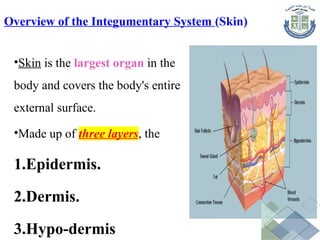
•Skin is the largest organ in the
body and covers the body's entire
external surface.
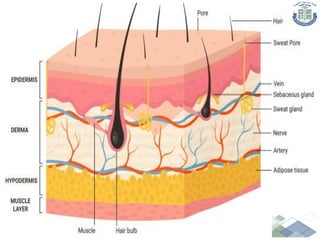
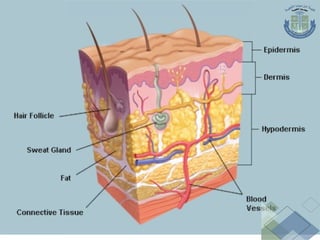
•Made up of three layers, the
1.Epidermis.
2.Dermis.
3.Hypo-dermis
Epidermis: composed of several thin layers
Dermis: composed of a thick layer of skin that contains
collagen and elastic fibers, nerve fibers, blood vessels,
sweat and sebaceous glands, and hair follicles
.
Subcutaneous Tissue/hypodermis: composed of a fatty
layer of skin that contains blood vessels, nerves, lymph,
and loose connective tissue filled with fat cells
layers of Skin
Overview of the Integumentary System (Skin)
Skin's structure is made up of an intricate/complex
network that serves as the body’s initial
barrier against:
1. Pathogens
2. UV light and chemicals
3. Mechanical injury
Regulates temperature and the amount of water
released into the environment
Overview of the Integumentary System (Skin) cont…
•A skin wound results from the breakdown of the
epidermal layer integrity.
•Wound healing mostly means healing of the skin.
•Begins immediately after an injury to the epidermal
layer and might take years.
•Has 3 overlapping phases which are inflammation,
proliferation, and remodeling.
•Any disruption leads to abnormal wound healing.
Define the term “Wound”
The definition of a wound in general is:
• Damage to the integrity of biological tissue, including
skin, mucous membranes, and organ tissues.
• Wounds can be CLASSIFIED TO:
1. Open wounds.
2. Closed wounds.
Define the term “Wound”
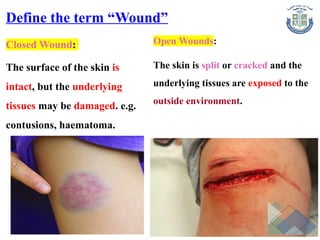
Closed Wound:
The surface of the skin is
intact, but the underlying
tissues may be damaged. e.g.
contusions, haematoma.
Open Wounds:
The skin is split or cracked and the
underlying tissues are exposed to the
outside environment.
• Wounds can be classified according to :-
1. The etiology
2. The integrity of the skin
3. Wound depth (thickness of skin loss)
4. Degree of contamination
5. Severity
6. The duration of the wound healing
Wounds classifications
1. The Etiology
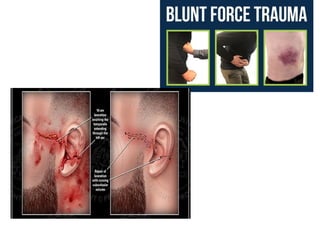
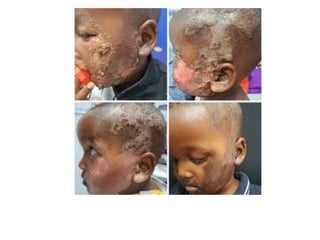
Blunt injuries
Falls, Assault, Sport injuries, Bite injuries [animal or human]
Penetrating injuries
Stab wounds, Gunshot wounds
Surgical insult
caused by a surgical procedure
Burn injuries
Chemical burn, Electrical burn, Radiation burn, Cold injury
2. The integrity of the skin
A. Open wounds
• Type of wounds in which the skin has been compromised and
underlying tissues are exposed
• Open wounds can be classified into a number of different types,
according to the object that caused the wound
• Examples include incised wounds, laceration,
Abrasion ,punctured, Avulsion wounds etc
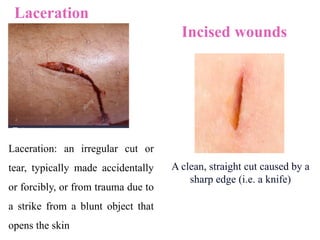
Incised wounds
A clean, straight cut caused by a
sharp edge (i.e. a knife)
Laceration
Laceration: an irregular cut or
tear, typically made accidentally
or forcibly, or from trauma due to
a strike from a blunt object that
opens the skin
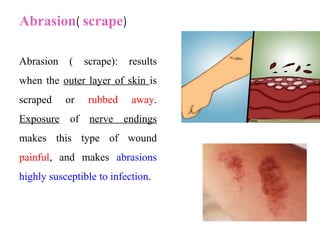
Abrasion( scrape)
Abrasion ( scrape): results
when the outer layer of skin is
scraped or rubbed away.
Exposure of nerve endings
makes this type of wound
painful, and makes abrasions
highly susceptible to infection.
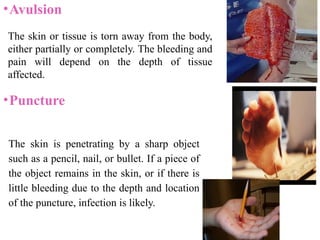
•Avulsion
•Puncture
The skin is penetrating by a sharp object
such as a pencil, nail, or bullet. If a piece of
the object remains in the skin, or if there is
little bleeding due to the depth and location
of the puncture, infection is likely.
The skin or tissue is torn away from the body,
either partially or completely. The bleeding and
pain will depend on the depth of tissue
affected.
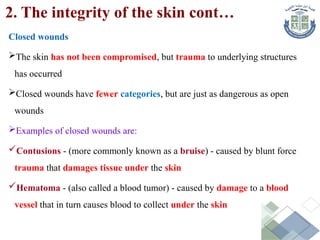
Closed wounds
The skin has not been compromised, but trauma to underlying structures
has occurred
Closed wounds have fewer categories, but are just as dangerous as open
wounds
Examples of closed wounds are:
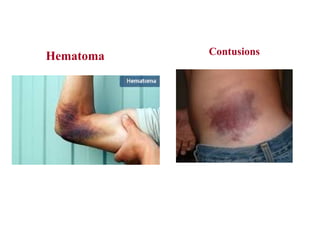
Contusions - (more commonly known as a bruise) - caused by blunt force
trauma that damages tissue under the skin
Hematoma - (also called a blood tumor) - caused by damage to a blood
vessel that in turn causes blood to collect under the skin
2. The integrity of the skin cont…
Contusions
Hematoma
3. Wound depth (thickness of skin loss)
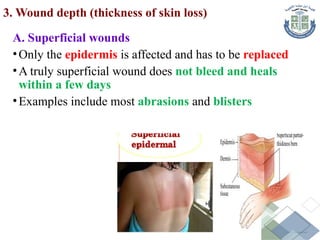
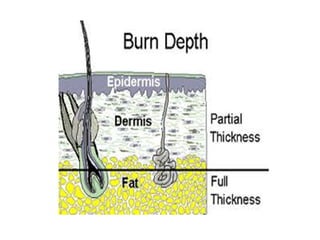
A. Superficial wounds
•Only the epidermis is affected and has to be replaced
•A truly superficial wound does not bleed and heals
within a few days
•Examples include most abrasions and blisters
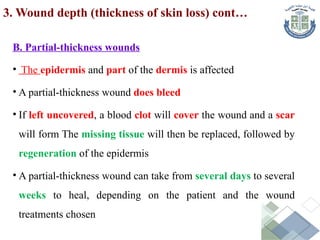
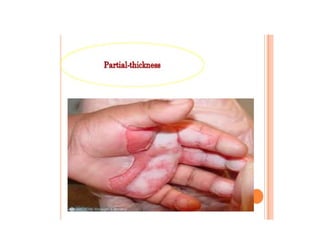
B. Partial-thickness wounds
• The epidermis and part of the dermis is affected
• A partial-thickness wound does bleed
• If left uncovered, a blood clot will cover the wound and a scar
will form The missing tissue will then be replaced, followed by
regeneration of the epidermis
• A partial-thickness wound can take from several days to several
weeks to heal, depending on the patient and the wound
treatments chosen
3. Wound depth (thickness of skin loss) cont…
c. Full-thickness wounds
• Involves the epidermis and the dermis
• The underlying fatty tissue, bones, muscles, or tendons may also be
damaged
• If full-thickness wounds cannot be sutured, the healing process will create
new tissue to fill the wound, followed by regeneration of the epidermis
• The full-thickness wound takes longer time to heal than does a partial-
thickness wound, sometimes as long as several months
3. Wound depth (thickness of skin loss) cont…
4. Degree of contamination
A. Clean wounds
• No break in aseptic technique
• Incision is made under sterile conditions
• No inflammation is encountered
• The respiratory tract, alimentary, genital or uninfected urinary
tracts are not entered
• Primary closure
• No drain
Eg. Herniorrhaphy
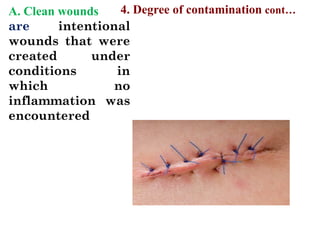
A. Clean wounds
are intentional
wounds that were
created under
conditions in
which no
inflammation was
encountered
4. Degree of contamination cont…
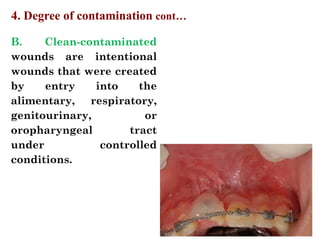
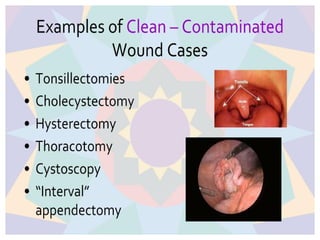
B. Clean-contaminated
wounds are intentional
wounds that were created
by entry into the
alimentary, respiratory,
genitourinary, or
oropharyngeal tract
under controlled
conditions.
4. Degree of contamination cont…
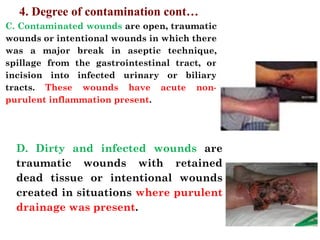
C. Contaminated wounds are open, traumatic
wounds or intentional wounds in which there
was a major break in aseptic technique,
spillage from the gastrointestinal tract, or
incision into infected urinary or biliary
tracts. These wounds have acute non-
purulent inflammation present.
D. Dirty and infected wounds are
traumatic wounds with retained
dead tissue or intentional wounds
created in situations where purulent
drainage was present.
4. Degree of contamination cont…
5. Severity
a. Simple wounds
The integrity of the skin is traumatized without loss or
destruction of tissue and without the presence of a foreign body
in the wound
b. Complex wounds
Tissue is lost or destructed by means of a crush, burn, or foreign
body in the wound
6. The duration of the wound healing
1. Acute wounds : Are usually heal in the anticipated time
frame
•Duration of the wound: immediately to few weeks
•Examples are wounds acquired as a result of trauma or an
operative procedure
2. Chronic wounds : fail to heal in the anticipated time frame and often
reoccur
• Duration of the wound > 4 weeks to 3 months
⇒
• Wounds occur as a result of an underlying condition such as extended
pressure on the tissues, poor circulation, or even poor nutrition
• examples: pressure ulcers, venous leg ulcers, and diabetic foot ulcers
6. The duration of the wound healing cont…
Define the term of “Healing”
Wound healing, or wound repair:
is the body's natural process of restoring normal
function and structure after injury
The entire wound healing process is a complex series of
events that begins at the moment of injury and can
continue for months to years
Types of Wound Healing
•Wound healing is classified as primary, secondary, and
tertiary wound healing.
•Primary Healing or primary intention
 Uncomplicated healing of a non-infected, well-
approximated wound is defined as primary healing.
e.g. Surgical wounds.
Types of Wound Healing
Secondary Healing or secondary intention
 If the wound healing course in this wound is disrupted by
infection, dehiscence, hypoxia or immune dysfunction, the
secondary healing stage begins.
 During secondary healing, granulation tissue formation and
epithelization over this new tissue take place. These types of
wounds are more susceptible to infections and poor healing.
Tertiary healing or third intention
 it is delayed primary wound healing after 4–6 days.
 This occurs when the process of secondary intention is intentionally
interrupted and the wound is mechanically closed.
 This usually occurs after granulation tissue has formed.
•Wound Healing Stages in Adults
• In adults, optimal wound healing should involve three continuous and
overlapping phases: inflammation, proliferation, and remodelling
Types of Wound Healing cont…
Inflammatory phase
Immediate to 2-5 days
Aim: to stop bleeding and to prevent further injury
Characterized by :-
 Clotting cascade-haemostasis
 Platelets aggregation
 Vasoconstriction and vasodilatation
 Increased polymorphonuclear neutrophils
A type of immune cell that has granules (small particles) with enzymes that are
released during infections
 Increased Macrophages
Phases of wound healing
• Proliferative phase
After the inflammatory stage
the proliferative stage lasts about 3 weeks (or longer, depending on the
severity of the wound)
Aim: repair of wounded tissue
Characterized by
• Angiogenesis
• Fibroplasia and granulation tissue formation
• Epithelialization
• Wound contraction
Phases of wound healing
Maturation and remodeling phase
• The maturation phase of tissue repair begin when the levels
of collagen production and degradation equalize
• The maturation phase can last for a year or longer,
depending on the size of the wound and whether it was
initially closed or left open
Phases of wound healing
Factors affecting wound healing
A. Local factors affecting wound healing
•Infection
•Surgical Technique
•Movement
•Hematoma formation
•Tissue ischemia
• Presence of foreign body
•Exposure to radiation
B. Systemic factors affecting wound healing
• Aging
• Nutritional status
• Diseases states
• Uremia
• Jaundice
• Diabetes
• Malignancies
• Immunosuppression
• Smoking
• Drugs
• Steroids
• anti-neoplastics
• NSAIDs
Factors affecting wound healing cont…
Complications of wound healing
•Evisceration (process of removing one or all of the organs
from the inside of a body)
•Hemorrhage
•Adhesions
•Infection
• Herniation
•Fistula formation
•Sinus formation
•Suture complications
•Hypertrophic scar
•Keloids (thick raised scar)
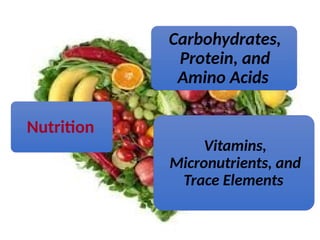
Nutrition
Carbohydrates,
Protein, and
Amino Acids
Vitamins,
Micronutrients, and
Trace Elements
wound-and healing process /Dr.Ohoud.pptx

wound-and healing process /Dr.Ohoud.pptx

  • 1.
    Wounds COURSE NAME: BasicConcepts of Professional Nursing CODE (NUR117) Level: L1 Credit Hours (2+0+0) Updated By Associate Prof. Ohoud El-Sheikh IbnSina National College for Medical Studies
  • 2.
    Overview of theIntegumentary System (Skin) Define the term “Wound” Enumerate the causes of wounds Outline the classifications of wounds Define the term of “Healing” Highlight the types of wound healing Phases of wound healing Describe factors affecting wound healing Outline the complications of wounds healing Outlines
  • 3.
    Overview of theIntegumentary System (Skin) •Skin is the largest organ in the body and covers the body's entire external surface. •Made up of three layers, the 1.Epidermis. 2.Dermis. 3.Hypo-dermis
  • 5.
    Epidermis: composed ofseveral thin layers Dermis: composed of a thick layer of skin that contains collagen and elastic fibers, nerve fibers, blood vessels, sweat and sebaceous glands, and hair follicles . Subcutaneous Tissue/hypodermis: composed of a fatty layer of skin that contains blood vessels, nerves, lymph, and loose connective tissue filled with fat cells layers of Skin
  • 7.
    Overview of theIntegumentary System (Skin) Skin's structure is made up of an intricate/complex network that serves as the body’s initial barrier against: 1. Pathogens 2. UV light and chemicals 3. Mechanical injury Regulates temperature and the amount of water released into the environment
  • 9.
    Overview of theIntegumentary System (Skin) cont… •A skin wound results from the breakdown of the epidermal layer integrity. •Wound healing mostly means healing of the skin. •Begins immediately after an injury to the epidermal layer and might take years. •Has 3 overlapping phases which are inflammation, proliferation, and remodeling. •Any disruption leads to abnormal wound healing.
  • 10.
    Define the term“Wound” The definition of a wound in general is: • Damage to the integrity of biological tissue, including skin, mucous membranes, and organ tissues. • Wounds can be CLASSIFIED TO: 1. Open wounds. 2. Closed wounds.
  • 11.
    Define the term“Wound” Closed Wound: The surface of the skin is intact, but the underlying tissues may be damaged. e.g. contusions, haematoma. Open Wounds: The skin is split or cracked and the underlying tissues are exposed to the outside environment.
  • 12.
    • Wounds canbe classified according to :- 1. The etiology 2. The integrity of the skin 3. Wound depth (thickness of skin loss) 4. Degree of contamination 5. Severity 6. The duration of the wound healing Wounds classifications
  • 13.
    1. The Etiology Bluntinjuries Falls, Assault, Sport injuries, Bite injuries [animal or human] Penetrating injuries Stab wounds, Gunshot wounds Surgical insult caused by a surgical procedure Burn injuries Chemical burn, Electrical burn, Radiation burn, Cold injury
  • 17.
    2. The integrityof the skin A. Open wounds • Type of wounds in which the skin has been compromised and underlying tissues are exposed • Open wounds can be classified into a number of different types, according to the object that caused the wound • Examples include incised wounds, laceration, Abrasion ,punctured, Avulsion wounds etc
  • 18.
    Incised wounds A clean,straight cut caused by a sharp edge (i.e. a knife) Laceration Laceration: an irregular cut or tear, typically made accidentally or forcibly, or from trauma due to a strike from a blunt object that opens the skin
  • 19.
    Abrasion( scrape) Abrasion (scrape): results when the outer layer of skin is scraped or rubbed away. Exposure of nerve endings makes this type of wound painful, and makes abrasions highly susceptible to infection.
  • 20.
    •Avulsion •Puncture The skin ispenetrating by a sharp object such as a pencil, nail, or bullet. If a piece of the object remains in the skin, or if there is little bleeding due to the depth and location of the puncture, infection is likely. The skin or tissue is torn away from the body, either partially or completely. The bleeding and pain will depend on the depth of tissue affected.
  • 21.
    Closed wounds The skinhas not been compromised, but trauma to underlying structures has occurred Closed wounds have fewer categories, but are just as dangerous as open wounds Examples of closed wounds are: Contusions - (more commonly known as a bruise) - caused by blunt force trauma that damages tissue under the skin Hematoma - (also called a blood tumor) - caused by damage to a blood vessel that in turn causes blood to collect under the skin 2. The integrity of the skin cont…
  • 22.
  • 23.
    3. Wound depth(thickness of skin loss) A. Superficial wounds •Only the epidermis is affected and has to be replaced •A truly superficial wound does not bleed and heals within a few days •Examples include most abrasions and blisters
  • 24.
    B. Partial-thickness wounds •The epidermis and part of the dermis is affected • A partial-thickness wound does bleed • If left uncovered, a blood clot will cover the wound and a scar will form The missing tissue will then be replaced, followed by regeneration of the epidermis • A partial-thickness wound can take from several days to several weeks to heal, depending on the patient and the wound treatments chosen 3. Wound depth (thickness of skin loss) cont…
  • 26.
    c. Full-thickness wounds •Involves the epidermis and the dermis • The underlying fatty tissue, bones, muscles, or tendons may also be damaged • If full-thickness wounds cannot be sutured, the healing process will create new tissue to fill the wound, followed by regeneration of the epidermis • The full-thickness wound takes longer time to heal than does a partial- thickness wound, sometimes as long as several months 3. Wound depth (thickness of skin loss) cont…
  • 28.
    4. Degree ofcontamination A. Clean wounds • No break in aseptic technique • Incision is made under sterile conditions • No inflammation is encountered • The respiratory tract, alimentary, genital or uninfected urinary tracts are not entered • Primary closure • No drain Eg. Herniorrhaphy
  • 29.
    A. Clean wounds areintentional wounds that were created under conditions in which no inflammation was encountered 4. Degree of contamination cont…
  • 30.
    B. Clean-contaminated wounds areintentional wounds that were created by entry into the alimentary, respiratory, genitourinary, or oropharyngeal tract under controlled conditions. 4. Degree of contamination cont…
  • 32.
    C. Contaminated woundsare open, traumatic wounds or intentional wounds in which there was a major break in aseptic technique, spillage from the gastrointestinal tract, or incision into infected urinary or biliary tracts. These wounds have acute non- purulent inflammation present. D. Dirty and infected wounds are traumatic wounds with retained dead tissue or intentional wounds created in situations where purulent drainage was present. 4. Degree of contamination cont…
  • 33.
    5. Severity a. Simplewounds The integrity of the skin is traumatized without loss or destruction of tissue and without the presence of a foreign body in the wound b. Complex wounds Tissue is lost or destructed by means of a crush, burn, or foreign body in the wound
  • 34.
    6. The durationof the wound healing 1. Acute wounds : Are usually heal in the anticipated time frame •Duration of the wound: immediately to few weeks •Examples are wounds acquired as a result of trauma or an operative procedure
  • 35.
    2. Chronic wounds: fail to heal in the anticipated time frame and often reoccur • Duration of the wound > 4 weeks to 3 months ⇒ • Wounds occur as a result of an underlying condition such as extended pressure on the tissues, poor circulation, or even poor nutrition • examples: pressure ulcers, venous leg ulcers, and diabetic foot ulcers 6. The duration of the wound healing cont…
  • 36.
    Define the termof “Healing” Wound healing, or wound repair: is the body's natural process of restoring normal function and structure after injury The entire wound healing process is a complex series of events that begins at the moment of injury and can continue for months to years
  • 37.
    Types of WoundHealing •Wound healing is classified as primary, secondary, and tertiary wound healing. •Primary Healing or primary intention  Uncomplicated healing of a non-infected, well- approximated wound is defined as primary healing. e.g. Surgical wounds.
  • 38.
    Types of WoundHealing Secondary Healing or secondary intention  If the wound healing course in this wound is disrupted by infection, dehiscence, hypoxia or immune dysfunction, the secondary healing stage begins.  During secondary healing, granulation tissue formation and epithelization over this new tissue take place. These types of wounds are more susceptible to infections and poor healing.
  • 39.
    Tertiary healing orthird intention  it is delayed primary wound healing after 4–6 days.  This occurs when the process of secondary intention is intentionally interrupted and the wound is mechanically closed.  This usually occurs after granulation tissue has formed. •Wound Healing Stages in Adults • In adults, optimal wound healing should involve three continuous and overlapping phases: inflammation, proliferation, and remodelling Types of Wound Healing cont…
  • 40.
    Inflammatory phase Immediate to2-5 days Aim: to stop bleeding and to prevent further injury Characterized by :-  Clotting cascade-haemostasis  Platelets aggregation  Vasoconstriction and vasodilatation  Increased polymorphonuclear neutrophils A type of immune cell that has granules (small particles) with enzymes that are released during infections  Increased Macrophages Phases of wound healing
  • 41.
    • Proliferative phase Afterthe inflammatory stage the proliferative stage lasts about 3 weeks (or longer, depending on the severity of the wound) Aim: repair of wounded tissue Characterized by • Angiogenesis • Fibroplasia and granulation tissue formation • Epithelialization • Wound contraction Phases of wound healing
  • 42.
    Maturation and remodelingphase • The maturation phase of tissue repair begin when the levels of collagen production and degradation equalize • The maturation phase can last for a year or longer, depending on the size of the wound and whether it was initially closed or left open Phases of wound healing
  • 43.
    Factors affecting woundhealing A. Local factors affecting wound healing •Infection •Surgical Technique •Movement •Hematoma formation •Tissue ischemia • Presence of foreign body •Exposure to radiation
  • 44.
    B. Systemic factorsaffecting wound healing • Aging • Nutritional status • Diseases states • Uremia • Jaundice • Diabetes • Malignancies • Immunosuppression • Smoking • Drugs • Steroids • anti-neoplastics • NSAIDs Factors affecting wound healing cont…
  • 46.
    Complications of woundhealing •Evisceration (process of removing one or all of the organs from the inside of a body) •Hemorrhage •Adhesions •Infection • Herniation •Fistula formation •Sinus formation •Suture complications •Hypertrophic scar •Keloids (thick raised scar)
  • 47.