Worldviews and Ethical Perspective   Presented by: Arnel O. Rivera
 
 
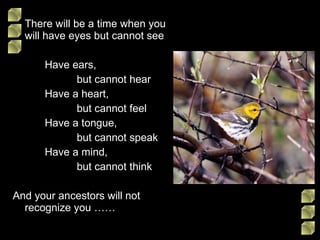
There will be a time when you will have eyes but cannot see Have ears,  but cannot hear Have a heart,  but cannot feel Have a tongue,  but cannot speak Have a mind,  but cannot think And your ancestors will not recognize you ……
What are Worldviews? It refers to our personal feelings about issues regarding the environment.  This includes our perspective on how the earth and its’ resources should be used. It is heavily influenced by the fundamental vision of reality we hold, the collection of values, perceptions and practices that organizes our lives.
Factors that influence our world views: Beliefs and practices of our family and the society Personal experiences Education
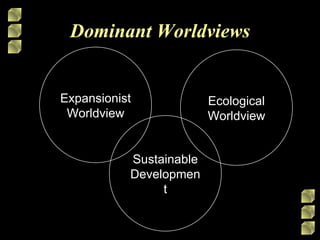
Dominant Worldviews Expansionist Worldview Ecological Worldview Sustainable Development
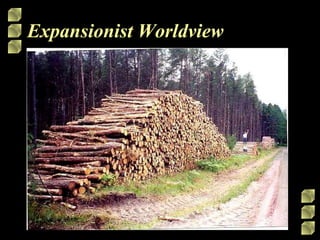
Expansionist Worldview Materials on earth are resources to be used to enhance human lives. The universe is a human machine that can be understood and manipulated to serve human lives. Endless material growth is necessary for human happiness.
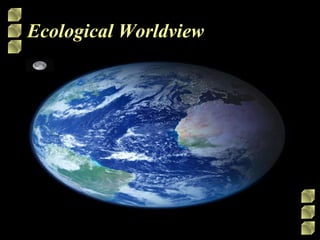
Ecological Worldview The earth is a finite system and no subsystem can exhibit endless growth. Neither the population or resource use can grow indefinitely and to behave as though it can is a threat to the natural, social and economic system.
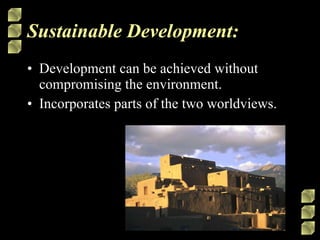
Sustainable Development: Development can be achieved without compromising the environment. Incorporates parts of the two worldviews.
Ethical Perspective Anthropocentric Stewardship Biocentric Animal Rights Ecocentric Ecofeminism
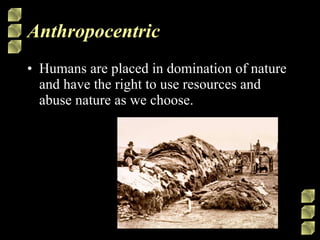
Anthropocentric Humans are placed in domination of nature and have the right to use resources and abuse nature as we choose.
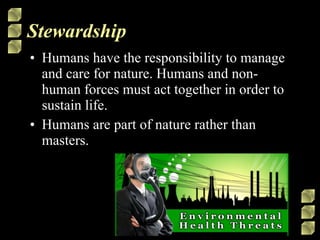
Stewardship Humans have the responsibility to manage and care for nature. Humans and non-human forces must act together in order to sustain life. Humans are part of nature rather than masters.
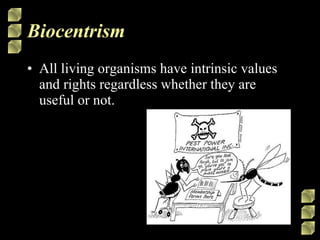
Biocentrism All living organisms have intrinsic values and rights regardless whether they are useful or not.
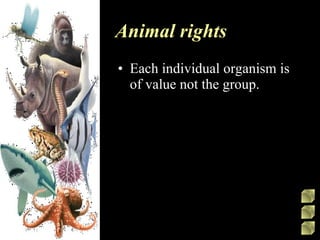
Animal rights Each individual organism is of value not the group.
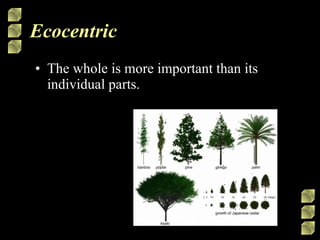
Ecocentric The whole is more important than its individual parts.
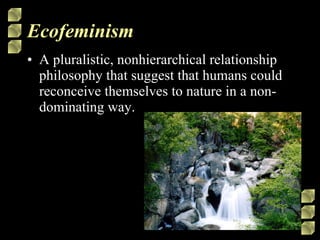
Ecofeminism A pluralistic, nonhierarchical relationship philosophy that suggest that humans could reconceive themselves to nature in a non-dominating way.
Where do you stand?
Environmetal Justice Civil rights with environmental protection to demand a safe, healthy, life-giving environment for everyone.
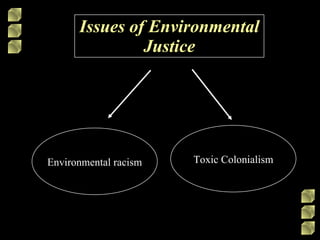
Issues of Environmental Justice Environmental racism Toxic Colonialism
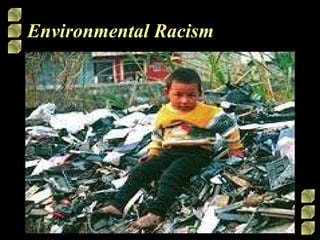
Environmental Racism Inequitable distribution of environmental hazards based on race.  Evidence of environmental racism can be seen in lead poisoning in children. Black children are more likely to suffer from lead poisoning than whites.
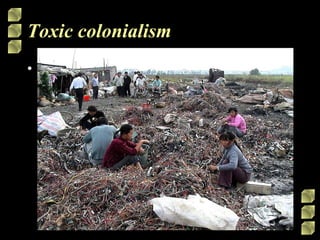
Toxic colonialism The practice of targeting poor communities for waste disposal or experimentation with risky technologies. Millions of tons of toxic waste continue to move from richer countries to poor countries. The flight of polluting industries from developed nations to third world countries.
Assignment: Make a research about the following environmental issues. Make a one-page digest and give your own reaction about the issue. Union Carbine Accident in India Chernobyl Accident in Russia JPEPA Issue between Japan and the Philippines
To download this file, go to: http://www.slideshare.net/ArnelLPU Thank Y  u!
 

Worldviews and ethical perspective

  • 1.
    Worldviews and EthicalPerspective Presented by: Arnel O. Rivera
  • 2.
  • 3.
  • 4.
    There will bea time when you will have eyes but cannot see Have ears, but cannot hear Have a heart, but cannot feel Have a tongue, but cannot speak Have a mind, but cannot think And your ancestors will not recognize you ……
  • 5.
    What are Worldviews?It refers to our personal feelings about issues regarding the environment. This includes our perspective on how the earth and its’ resources should be used. It is heavily influenced by the fundamental vision of reality we hold, the collection of values, perceptions and practices that organizes our lives.
  • 6.
    Factors that influenceour world views: Beliefs and practices of our family and the society Personal experiences Education
  • 7.
    Dominant Worldviews ExpansionistWorldview Ecological Worldview Sustainable Development
  • 8.
    Expansionist Worldview Materialson earth are resources to be used to enhance human lives. The universe is a human machine that can be understood and manipulated to serve human lives. Endless material growth is necessary for human happiness.
  • 9.
    Ecological Worldview Theearth is a finite system and no subsystem can exhibit endless growth. Neither the population or resource use can grow indefinitely and to behave as though it can is a threat to the natural, social and economic system.
  • 10.
    Sustainable Development: Developmentcan be achieved without compromising the environment. Incorporates parts of the two worldviews.
  • 11.
    Ethical Perspective AnthropocentricStewardship Biocentric Animal Rights Ecocentric Ecofeminism
  • 12.
    Anthropocentric Humans areplaced in domination of nature and have the right to use resources and abuse nature as we choose.
  • 13.
    Stewardship Humans havethe responsibility to manage and care for nature. Humans and non-human forces must act together in order to sustain life. Humans are part of nature rather than masters.
  • 14.
    Biocentrism All livingorganisms have intrinsic values and rights regardless whether they are useful or not.
  • 15.
    Animal rights Eachindividual organism is of value not the group.
  • 16.
    Ecocentric The wholeis more important than its individual parts.
  • 17.
    Ecofeminism A pluralistic,nonhierarchical relationship philosophy that suggest that humans could reconceive themselves to nature in a non-dominating way.
  • 18.
  • 19.
    Environmetal Justice Civilrights with environmental protection to demand a safe, healthy, life-giving environment for everyone.
  • 20.
    Issues of EnvironmentalJustice Environmental racism Toxic Colonialism
  • 21.
    Environmental Racism Inequitabledistribution of environmental hazards based on race. Evidence of environmental racism can be seen in lead poisoning in children. Black children are more likely to suffer from lead poisoning than whites.
  • 22.
    Toxic colonialism Thepractice of targeting poor communities for waste disposal or experimentation with risky technologies. Millions of tons of toxic waste continue to move from richer countries to poor countries. The flight of polluting industries from developed nations to third world countries.
  • 23.
    Assignment: Make aresearch about the following environmental issues. Make a one-page digest and give your own reaction about the issue. Union Carbine Accident in India Chernobyl Accident in Russia JPEPA Issue between Japan and the Philippines
  • 24.
    To download thisfile, go to: http://www.slideshare.net/ArnelLPU Thank Y u!
  • 25.