No man is an island,
entire of itself; every
man is a piece of the
continent , a part of
the main
JOHN DONNE
How do you think human activities affect the
environment?
What personal responsibilities do you have in
preserving the environment?
What steps can you take to reduce your
ecological footprint?
What emotions do do these environments
evoke in you? How important is nature to
human life?
LESSON 4
THE HUMAN PERSON
IN THE ENVIRONMENT
ENVIRONMENTAL PHILOSOPHY
Means that as a human person, we interact not
only with our fellow human beings, but also
with other living and non-living elements in our
environment.
Human kind is a part of the world, we
significally affect our environment in the same
way that changes in our environment affect us.
PHILOSOPHERS
Believe that the human person
has the ability to change the
environment to suit his purpose.
3 MAJOR VIEWS

1. ANTHROPOCENTRISM– focuses on the
significant role of human kind in the world and
considers nature as the means by which humans
are able to meet their needs and survive. This
view believes that human are the most important
species on the planet and they are free to
transform nature and use its resources.
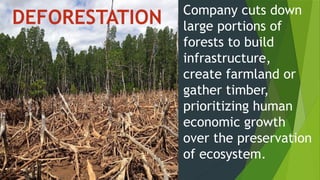
Company cuts down
large portions of
forests to build
infrastructure,
create farmland or
gather timber,
prioritizing human
economic growth
over the preservation
of ecosystem.
DEFORESTATION
2. BIOCENTRISM
Believes that humans are not the
only significant species on the
planet, and that all other organism
have internet value and should be
protected. This view advocates
ethical treatment of animals.
EXAMPLE
A community decides to protect a forested area from
being developed into commercial complex, not
because of its potential benefits to humans (like
recreation or resources), but because they recognize
the intrinsic value of the plants and animals living
there.
They believe that the forest has the right to exist and
that the animals and plants have a right to their
habitat, independent of human interests.
3. ECOCENTRISM
Places great value on ecosystems and biological
communities. This view believes that humankind
is a part of a greater biological system or
community and that we have a significant role as
stewards or guardians of nature.
This view promotes the idea that order and
balance in nature brings about stability and
beauty.
EXAMPLE
A government decides to halt a large mining project
because it would disturb the entire ecosystem of a river
valley, including not only the wildlife but also the soil,
water quality, and overall biodiversity. The decision
isn’t based solely on protecting endangered species or
preventing human health risks, but on the belief that
the ecosystem as a whole-its air, water, land, and all
forms of life – is valuable and worth preserving. The
interconnectedness of all these elements is prioritized
over short – term human economic gain.
ECOLOGICAL CRISIS
An unfair utilization
of the environment
result.
NUMEROUS THEORIES SHOW CARES THE
ENVIRONMENT
1. DEEP ECOLOGY – ecological crisis is an
outcome of anthropocentrism , which is
already discussed. The controlling
attitude of humankind is extended to
nature , when in fact , humanity is part
of nature.
EXAMPLE
MINIMALIST LIFESTYLE – significantly
reducing their consumption and
environmental impact. They implement
practices like
Growing their own food using organic
farming techniques.
Living in eco-friendly homes made of
sustainable materials.
Reducing waste by reusing and recycling
as much as possible.
Limiting their energy consumption and
choosing renewable energy sources.
2. SOCIAL ECOLOGY
This ecological crisis results from
authoritarian social structures.
Destroying nature is a reflection
wherein few people overpower others
while exploiting the environment for
profit or self-interest.
EXAMPLE
COMMUNITY FORMS A LOCAL COOPERATIVE
FARM
- Decisions are made collectively, and the food
produced is shared equally among the members. The
farm uses sustainable practices, such as organic farming
and permaculture , and avoids harmful industrial
methods that degrade the environment .
3. ECOFEMINISM
Argues that ecological
crisis is a consequences of
male dominance .
EXAMPLE
Women lead a movement to
stop the deforestation caused
by logging companies that are
destroying local forest.
ACTIVITY
Based on your own understanding ,
compare and contrast the
Anthropocentrism and Eco centrism
models.

Lesson4. Human Person in the Environment

  • 1.
    No man isan island, entire of itself; every man is a piece of the continent , a part of the main JOHN DONNE
  • 3.
    How do youthink human activities affect the environment? What personal responsibilities do you have in preserving the environment? What steps can you take to reduce your ecological footprint? What emotions do do these environments evoke in you? How important is nature to human life?
  • 4.
    LESSON 4 THE HUMANPERSON IN THE ENVIRONMENT
  • 5.
    ENVIRONMENTAL PHILOSOPHY Means thatas a human person, we interact not only with our fellow human beings, but also with other living and non-living elements in our environment. Human kind is a part of the world, we significally affect our environment in the same way that changes in our environment affect us.
  • 6.
    PHILOSOPHERS Believe that thehuman person has the ability to change the environment to suit his purpose.
  • 7.
    3 MAJOR VIEWS  1.ANTHROPOCENTRISM– focuses on the significant role of human kind in the world and considers nature as the means by which humans are able to meet their needs and survive. This view believes that human are the most important species on the planet and they are free to transform nature and use its resources.
  • 8.
    Company cuts down largeportions of forests to build infrastructure, create farmland or gather timber, prioritizing human economic growth over the preservation of ecosystem. DEFORESTATION
  • 9.
    2. BIOCENTRISM Believes thathumans are not the only significant species on the planet, and that all other organism have internet value and should be protected. This view advocates ethical treatment of animals.
  • 10.
    EXAMPLE A community decidesto protect a forested area from being developed into commercial complex, not because of its potential benefits to humans (like recreation or resources), but because they recognize the intrinsic value of the plants and animals living there. They believe that the forest has the right to exist and that the animals and plants have a right to their habitat, independent of human interests.
  • 11.
    3. ECOCENTRISM Places greatvalue on ecosystems and biological communities. This view believes that humankind is a part of a greater biological system or community and that we have a significant role as stewards or guardians of nature. This view promotes the idea that order and balance in nature brings about stability and beauty.
  • 12.
    EXAMPLE A government decidesto halt a large mining project because it would disturb the entire ecosystem of a river valley, including not only the wildlife but also the soil, water quality, and overall biodiversity. The decision isn’t based solely on protecting endangered species or preventing human health risks, but on the belief that the ecosystem as a whole-its air, water, land, and all forms of life – is valuable and worth preserving. The interconnectedness of all these elements is prioritized over short – term human economic gain.
  • 13.
    ECOLOGICAL CRISIS An unfairutilization of the environment result.
  • 14.
    NUMEROUS THEORIES SHOWCARES THE ENVIRONMENT 1. DEEP ECOLOGY – ecological crisis is an outcome of anthropocentrism , which is already discussed. The controlling attitude of humankind is extended to nature , when in fact , humanity is part of nature.
  • 15.
    EXAMPLE MINIMALIST LIFESTYLE –significantly reducing their consumption and environmental impact. They implement practices like
  • 16.
    Growing their ownfood using organic farming techniques. Living in eco-friendly homes made of sustainable materials. Reducing waste by reusing and recycling as much as possible. Limiting their energy consumption and choosing renewable energy sources.
  • 17.
    2. SOCIAL ECOLOGY Thisecological crisis results from authoritarian social structures. Destroying nature is a reflection wherein few people overpower others while exploiting the environment for profit or self-interest.
  • 18.
    EXAMPLE COMMUNITY FORMS ALOCAL COOPERATIVE FARM - Decisions are made collectively, and the food produced is shared equally among the members. The farm uses sustainable practices, such as organic farming and permaculture , and avoids harmful industrial methods that degrade the environment .
  • 19.
    3. ECOFEMINISM Argues thatecological crisis is a consequences of male dominance .
  • 20.
    EXAMPLE Women lead amovement to stop the deforestation caused by logging companies that are destroying local forest.
  • 21.
    ACTIVITY Based on yourown understanding , compare and contrast the Anthropocentrism and Eco centrism models.