Environmental EthicsIssues
and
Possible Solutions
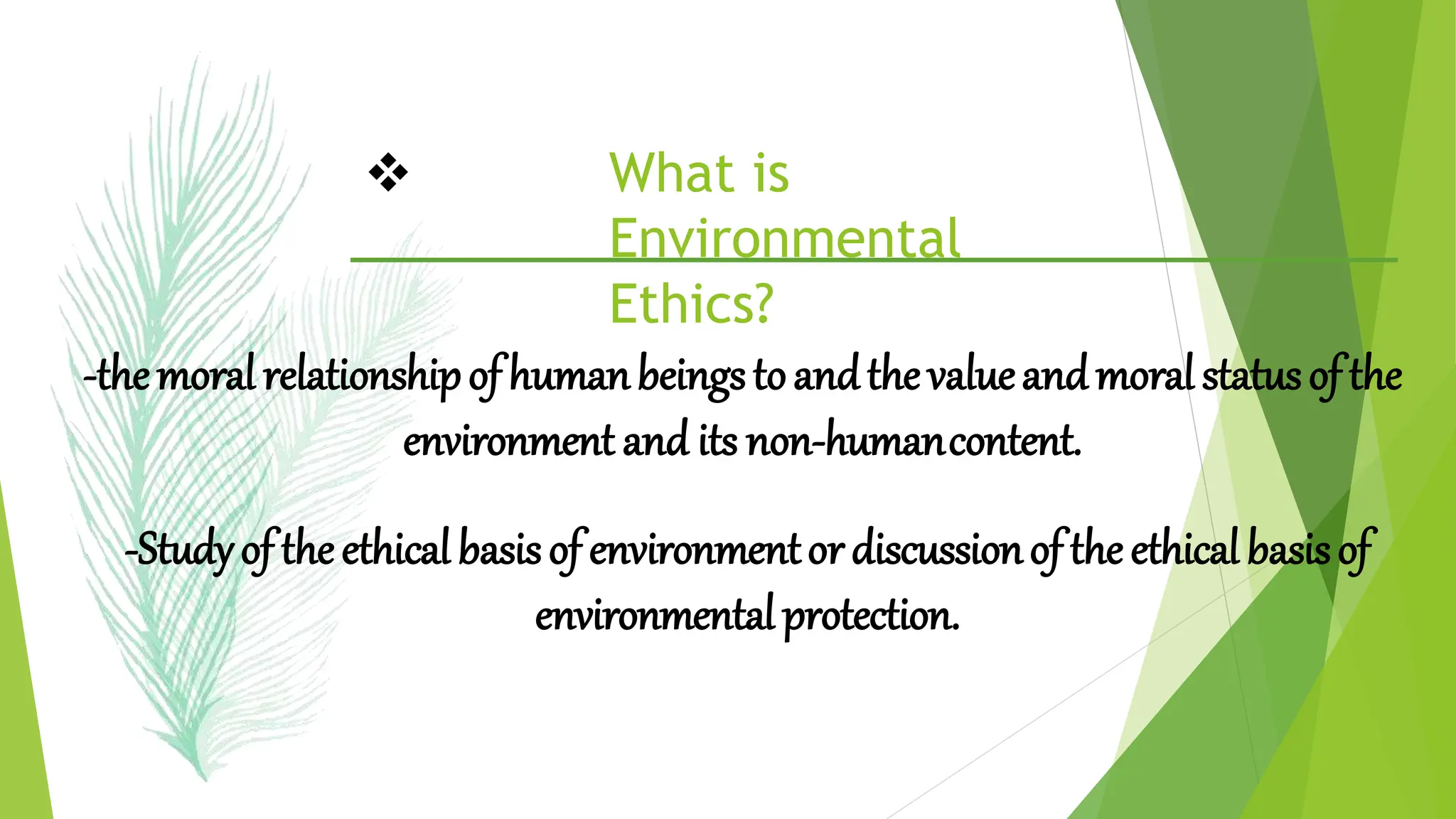
 What is
Environmental
Ethics?
-themoralrelationshipofhumanbeingstoandthevalueandmoralstatusofthe
environment and its non-humancontent.
-Studyof theethicalbasisof environmentordiscussionoftheethicalbasisof
environmentalprotection.
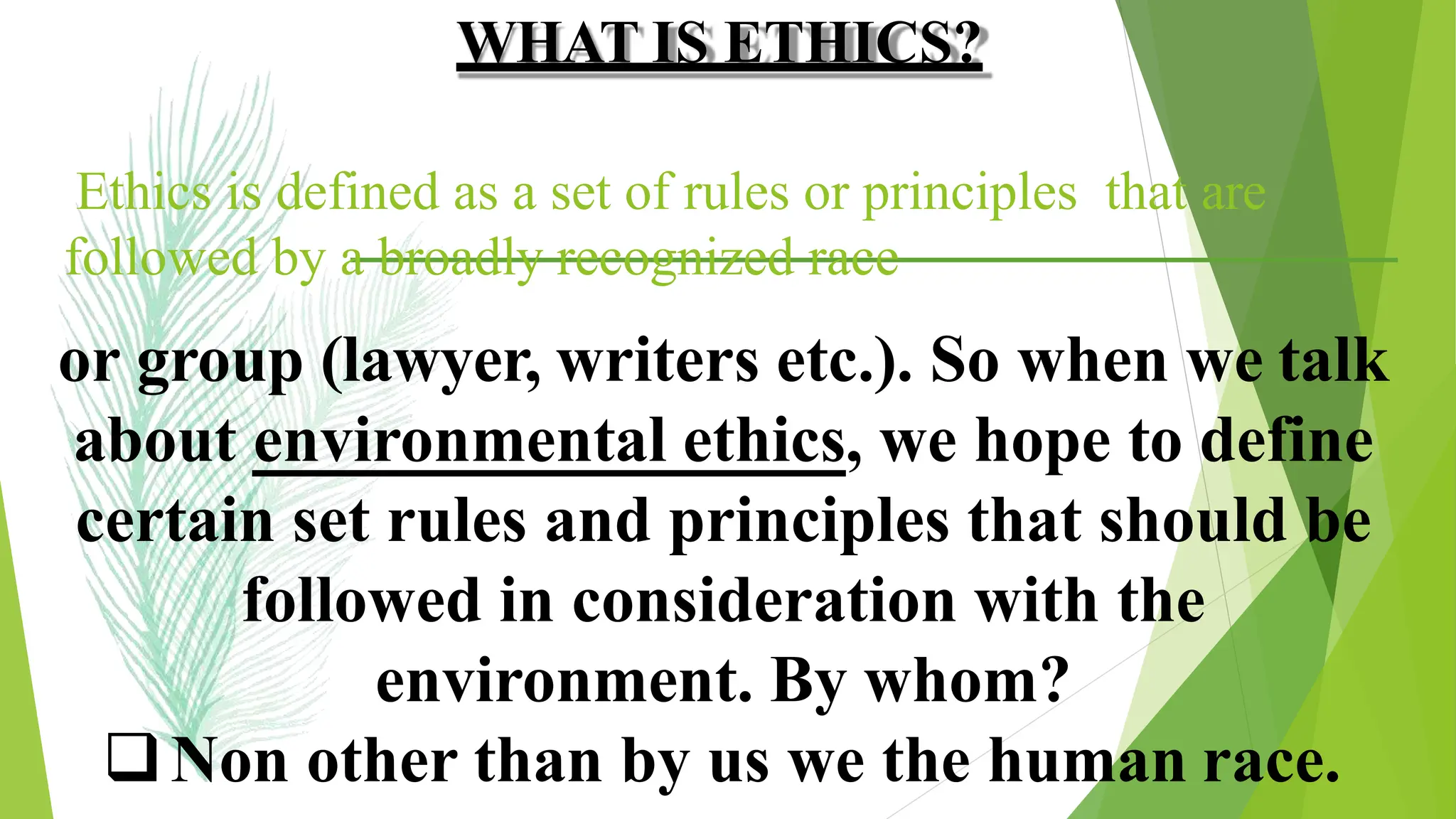
WHAT IS ETHICS?
Ethics is defined as a set of rules or principles that are
followed by a broadly recognized race
or group (lawyer, writers etc.). So when we talk
about environmental ethics, we hope to define
certain set rules and principles that should be
followed in consideration with the
environment. By whom?
Non other than by us we the human race.
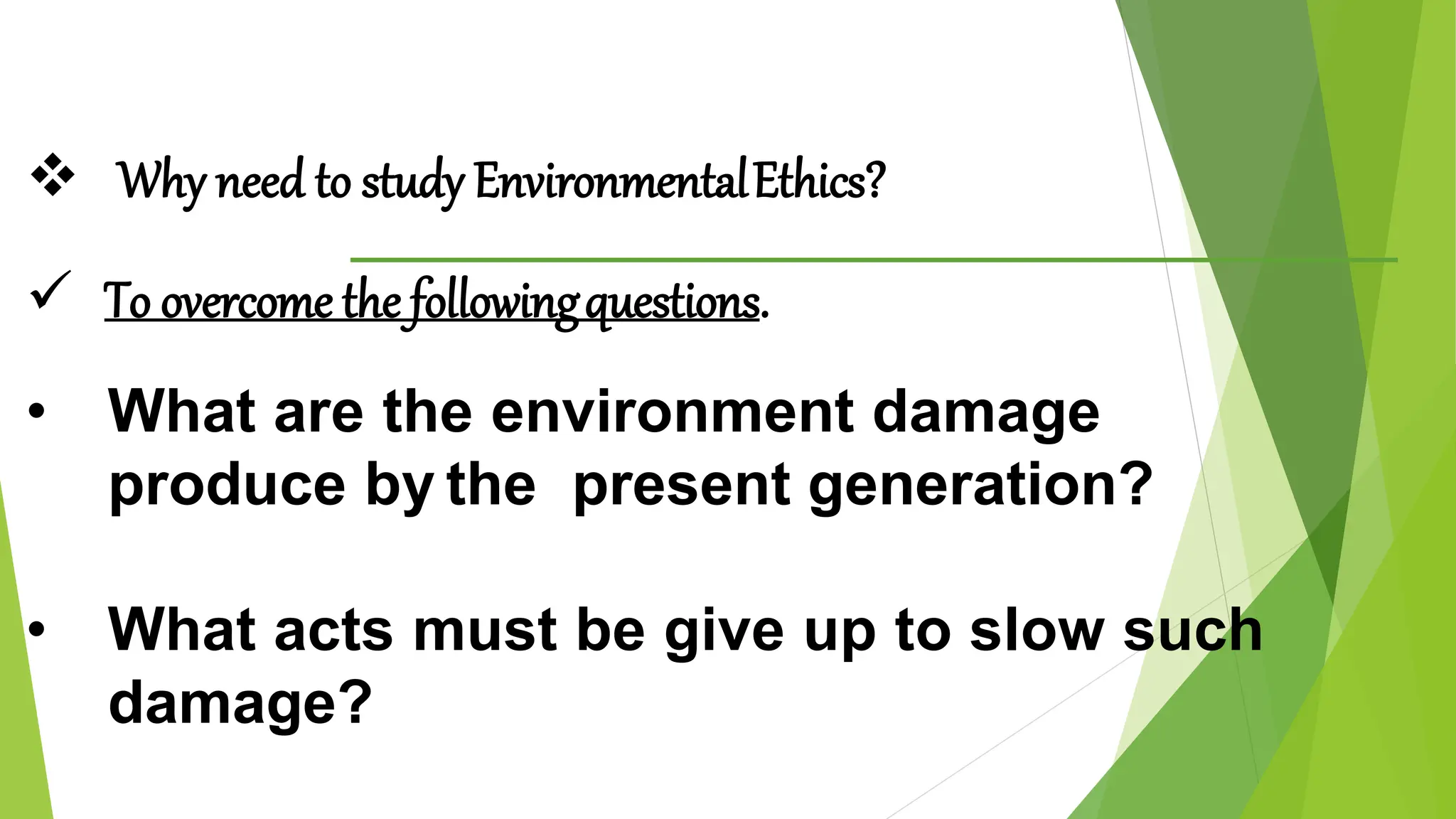
 Why need to study EnvironmentalEthics?
 To overcome the followingquestions.
• What are the environment damage
produce by the present generation?
• What acts must be give up to slow such
damage?
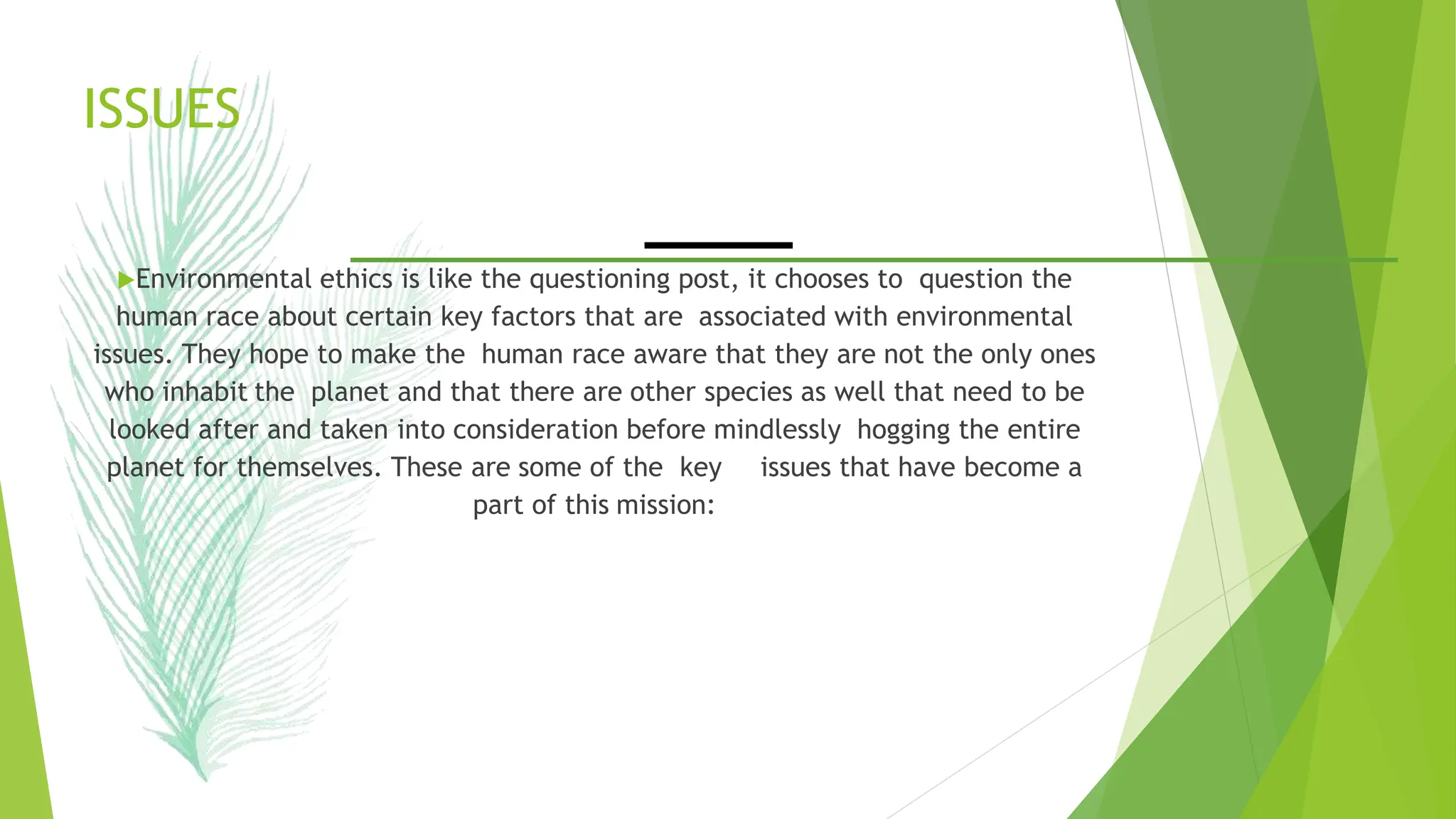
ISSUES
Environmental ethics is like the questioning post, it chooses to question the
human race about certain key factors that are associated with environmental
issues. They hope to make the human race aware that they are not the only ones
who inhabit the planet and that there are other species as well that need to be
looked after and taken into consideration before mindlessly hogging the entire
planet for themselves. These are some of the key issues that have become a
part of this mission:
Is it important for us to preserve nature for the future generation? If
so, are we even making an effort to do that?
Is the human race alone important on the face of this earth? If not,
then aren't our actions proving otherwise?
What would happen if animals, plants, and other species are destroyed
or there are more and more endangered species? Would we be affected
or would we care?
Are our future generations entitled to a clean and green environment?
Do they even have a right?
Should we be procreating and adding to the population growth?
Is it right for us to be responsible for the extinction of certain species only for
the sake of our consumption and greed?
Is it our moral right to be clearing rain forests for the sake of human
consumption?
In spite of knowing that gasoline run vehicles lead to the destruction of
natural resources, is it right for us to continue manufacturing and using
them?
Are the guidelines which are drawn to protect the environment and nature
any effective? What is causing their failure?
Is there a need to reform the way in which we deal with protection laws and
clauses?
What is environmental pollution and pollution of the air, soil and water
doing to the world?
Where are the solutions?
When we ask all these questions as the moral police of the environment, we ask them
with the hope that there will be answers. Or do we? Most don't, but those who do will
know that this is almost never possible. Like a debate or an argument that ensues in the
hope of finding the answers to any particular issue in society, and yet never reaches a
consensus. Similarly, in the 'Let's save the environment' forum there are pointers
introduced and theories formulated, and possible solutions provided, but when the time
comes to implement those suggested solutions and bring into action those rules and
clauses, there is always the easy path that is chosen―that of ignoring the environment to
give in to the basic needs of the human race.
Yet, maybe somewhere there is that small niggling feeling that makes us think sometimes,
that confirms that we all know the theory of course, we've learned it all in our texts and
have seen advertisements that talk of the same.
 We also know responsibilities hold:
waste management,
what our
non-pollution, growing
eradicating poaching/hunting/deforestation,
conservation, non-dumping of wastes into the
trees,
water
sea,
recycling, stopping the escape of harmful chemicals, and
gases into the air... the list is endless. And that is exactly
what environmental ethics will deal with. Here's the question
though, is environmental ethics just another fancy term that is
to be added into the growing dictionary of environmental
words or is it going to get us some action?

Environmental Ethics.pptx- Ethical thinking

  • 1.
  • 2.
     What is Environmental Ethics? -themoralrelationshipofhumanbeingstoandthevalueandmoralstatusofthe environmentand its non-humancontent. -Studyof theethicalbasisof environmentordiscussionoftheethicalbasisof environmentalprotection.
  • 3.
    WHAT IS ETHICS? Ethicsis defined as a set of rules or principles that are followed by a broadly recognized race or group (lawyer, writers etc.). So when we talk about environmental ethics, we hope to define certain set rules and principles that should be followed in consideration with the environment. By whom? Non other than by us we the human race.
  • 4.
     Why needto study EnvironmentalEthics?  To overcome the followingquestions. • What are the environment damage produce by the present generation? • What acts must be give up to slow such damage?
  • 5.
    ISSUES Environmental ethics islike the questioning post, it chooses to question the human race about certain key factors that are associated with environmental issues. They hope to make the human race aware that they are not the only ones who inhabit the planet and that there are other species as well that need to be looked after and taken into consideration before mindlessly hogging the entire planet for themselves. These are some of the key issues that have become a part of this mission:
  • 6.
    Is it importantfor us to preserve nature for the future generation? If so, are we even making an effort to do that? Is the human race alone important on the face of this earth? If not, then aren't our actions proving otherwise? What would happen if animals, plants, and other species are destroyed or there are more and more endangered species? Would we be affected or would we care? Are our future generations entitled to a clean and green environment? Do they even have a right? Should we be procreating and adding to the population growth?
  • 7.
    Is it rightfor us to be responsible for the extinction of certain species only for the sake of our consumption and greed? Is it our moral right to be clearing rain forests for the sake of human consumption? In spite of knowing that gasoline run vehicles lead to the destruction of natural resources, is it right for us to continue manufacturing and using them? Are the guidelines which are drawn to protect the environment and nature any effective? What is causing their failure? Is there a need to reform the way in which we deal with protection laws and clauses? What is environmental pollution and pollution of the air, soil and water doing to the world?
  • 8.
    Where are thesolutions? When we ask all these questions as the moral police of the environment, we ask them with the hope that there will be answers. Or do we? Most don't, but those who do will know that this is almost never possible. Like a debate or an argument that ensues in the hope of finding the answers to any particular issue in society, and yet never reaches a consensus. Similarly, in the 'Let's save the environment' forum there are pointers introduced and theories formulated, and possible solutions provided, but when the time comes to implement those suggested solutions and bring into action those rules and clauses, there is always the easy path that is chosen―that of ignoring the environment to give in to the basic needs of the human race. Yet, maybe somewhere there is that small niggling feeling that makes us think sometimes, that confirms that we all know the theory of course, we've learned it all in our texts and have seen advertisements that talk of the same.
  • 9.
     We alsoknow responsibilities hold: waste management, what our non-pollution, growing eradicating poaching/hunting/deforestation, conservation, non-dumping of wastes into the trees, water sea, recycling, stopping the escape of harmful chemicals, and gases into the air... the list is endless. And that is exactly what environmental ethics will deal with. Here's the question though, is environmental ethics just another fancy term that is to be added into the growing dictionary of environmental words or is it going to get us some action?