Workshop IV

“Introdução à Fonética: símbolos
          e pronúncia”


                    Bruna Moreno e Ualisson
                                     Lemes
“Dentro das instituições que dizem adotar a
    abordagem comunicativa,parece não haver
 consenso a respeito da importância do ensino
        dessa habilidade [pronúncia] para a
     aprendizagem. Enquanto um número de
 professores de Inglês como LE acreditam que o
       ensino da pronúncia seja uma prática
     ultrapassada e conservadora, dando mais
importância ao ato de comunicar em si,outros já
    concebem o ensino da pronuncia como um
   aspecto essencial para garantir o sucesso da
              capacitação do aluno.”
Hoje se compreende que o ensino de
  pronúncia deve seguir um caminho mais
balanceado. Tendo clara a importância tanto
de reconhecer sons com alta carga funcional,
 ou seja, distintivos (como a vogal em least
  and list), quanto de reconhecer aspectos
    suprasegmentais, como entonação e
                  tonicidade.
Phone: One of many possible sounds in the
  languages of the world. The smallest
  identifiable unit found in a stream of speech.
E.g.: [p]

Phoneme: A contrastive unit in the sound
  system of a particular language. A minimal
  segmental unit that serves to distinguish
  between meanings of words.
E.g.: /p/
Allophones: An allophone is a phonetic variant
  of a phoneme in a particular language. There
  are different phones representing the same
  phoneme.
E.g.:
            [ph] inicial position, as in pat
/p/
            [p] following a initial /s/,
                not aspirated, as in spin

          [p ] final position, lips remain
               closed and the the /p/
               unreleased, as in cup
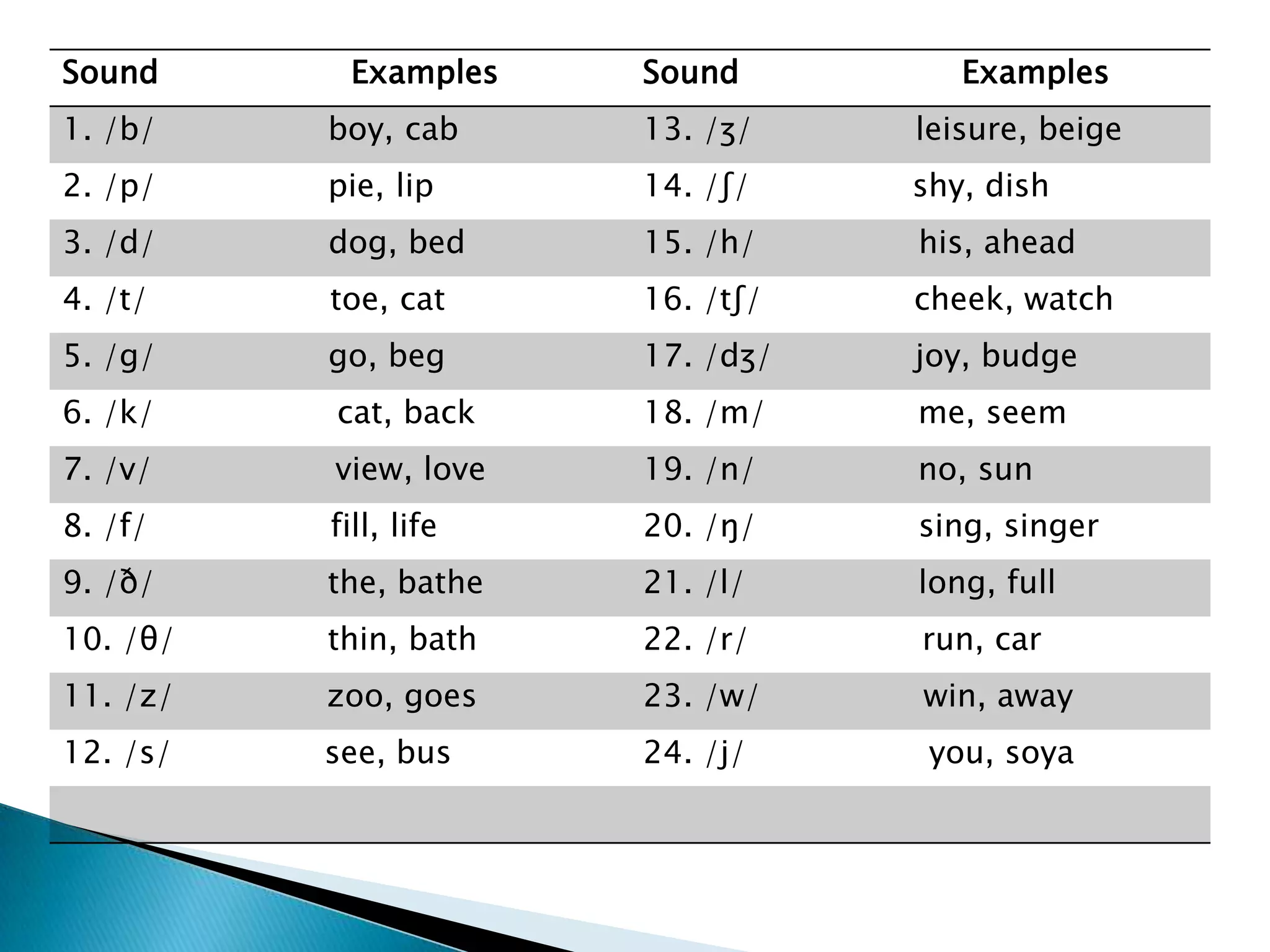
Sound      Examples    Sound         Examples
1. /b/    boy, cab     13. /ʒ/    leisure, beige
2. /p/    pie, lip     14. /ʃ/    shy, dish
3. /d/    dog, bed     15. /h/    his, ahead
4. /t/    toe, cat     16. /tʃ/   cheek, watch
5. /g/    go, beg      17. /dʒ/   joy, budge
6. /k/    cat, back    18. /m/    me, seem
7. /v/    view, love   19. /n/    no, sun
8. /f/    fill, life   20. /ŋ/    sing, singer
9. /ð/    the, bathe   21. /l/    long, full
10. /θ/   thin, bath   22. /r/    run, car
11. /z/   zoo, goes    23. /w/    win, away
12. /s/   see, bus     24. /j/     you, soya
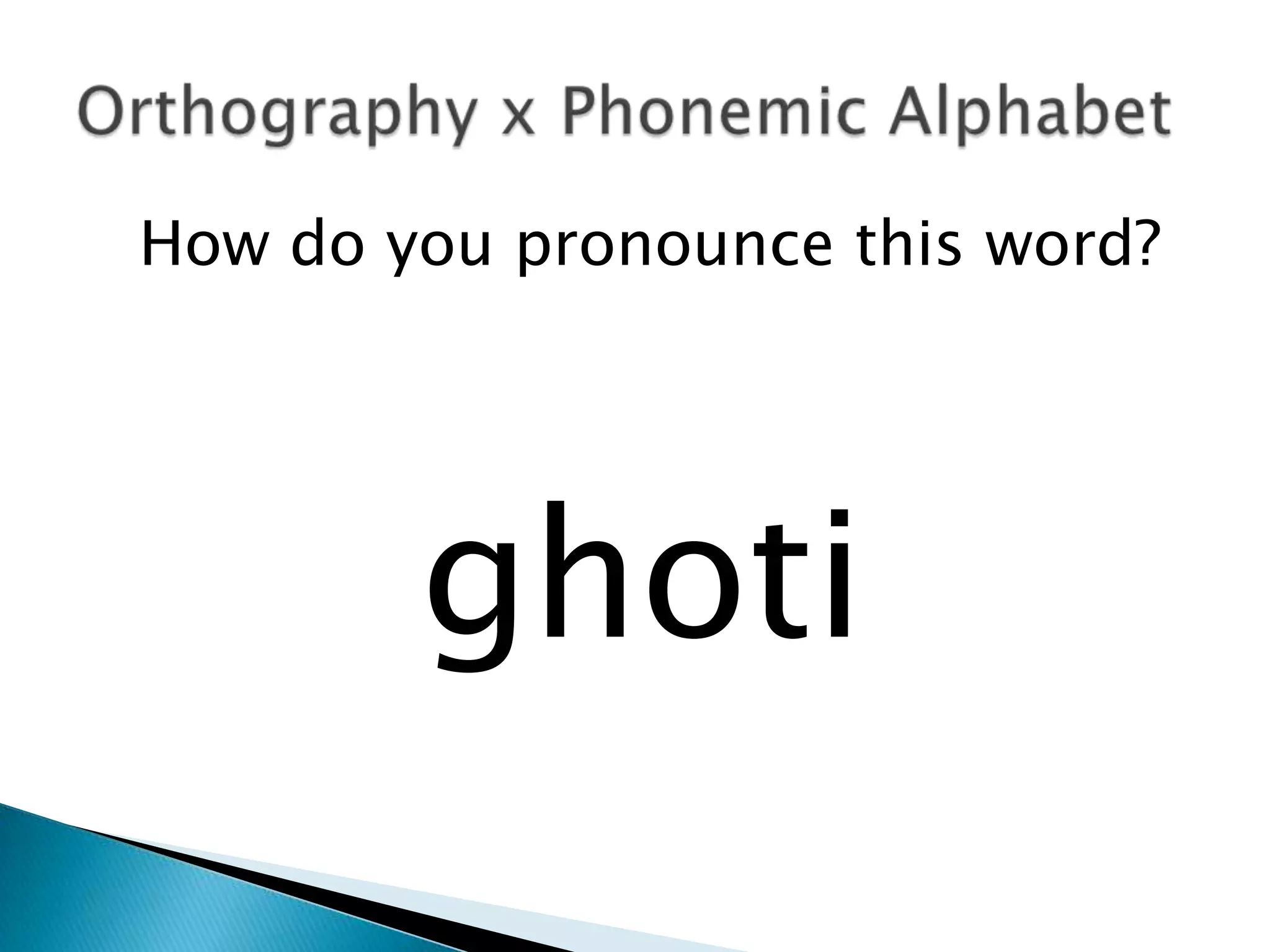
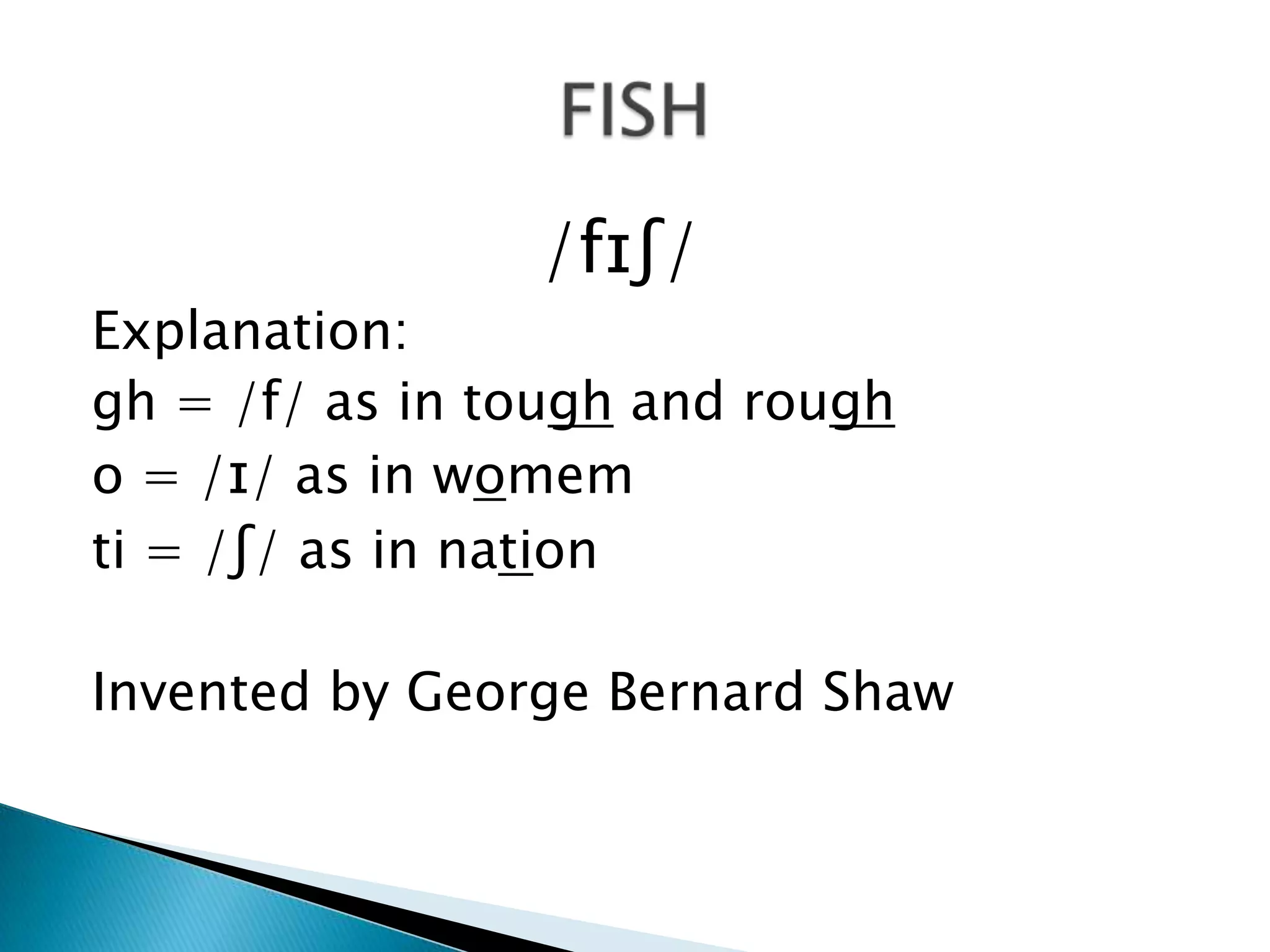
How do you pronounce this word?


        ghoti
/fɪʃ/
Explanation:
gh = /f/ as in tough and rough
o = /ɪ/ as in womem
ti = /ʃ/ as in nation

Invented by George Bernard Shaw
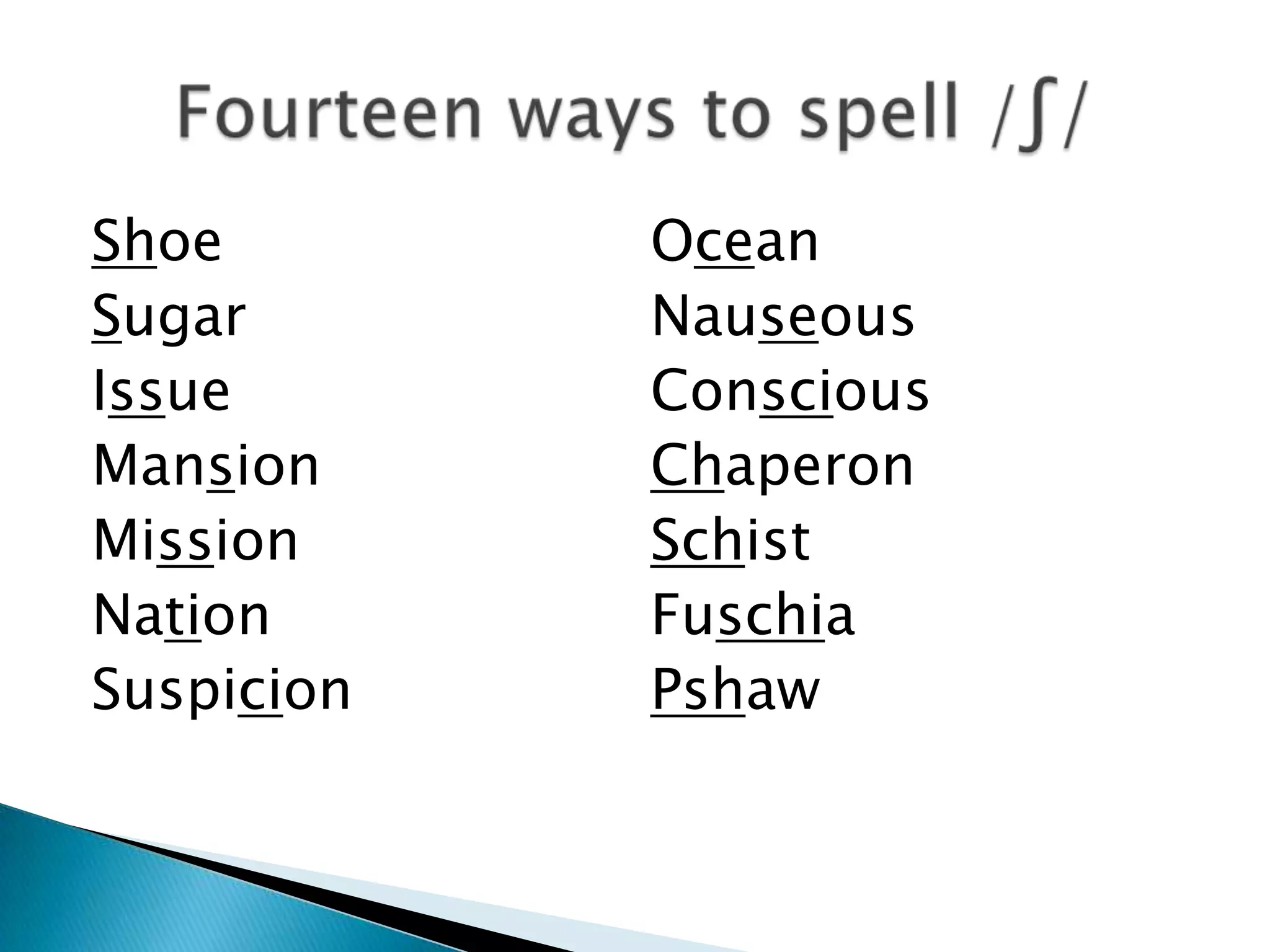
Shoe        Ocean
Sugar       Nauseous
Issue       Conscious
Mansion     Chaperon
Mission     Schist
Nation      Fuschia
Suspicion   Pshaw
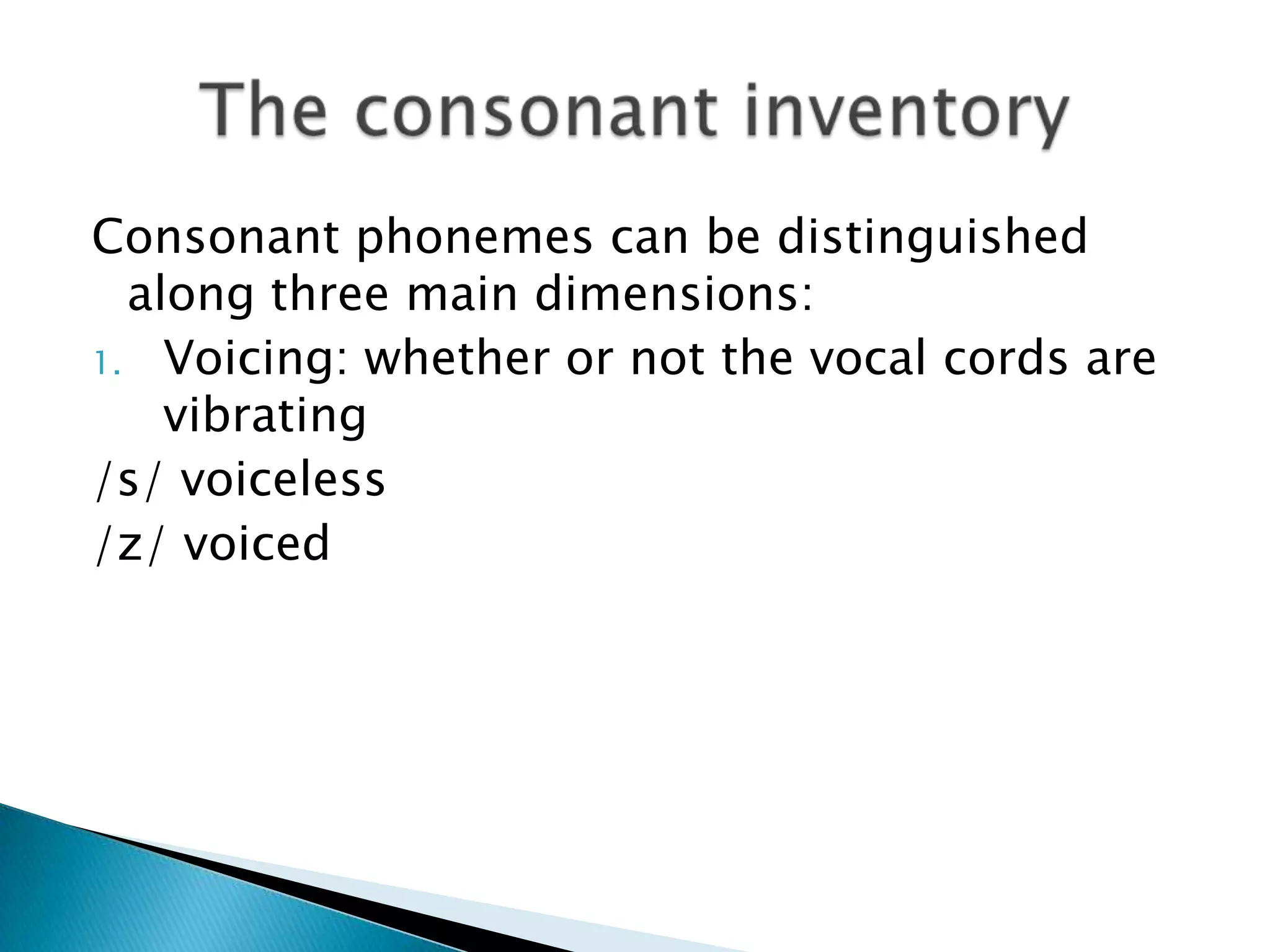
Consonant phonemes can be distinguished
  along three main dimensions:
1. Voicing: whether or not the vocal cords are
    vibrating
/s/ voiceless
/z/ voiced
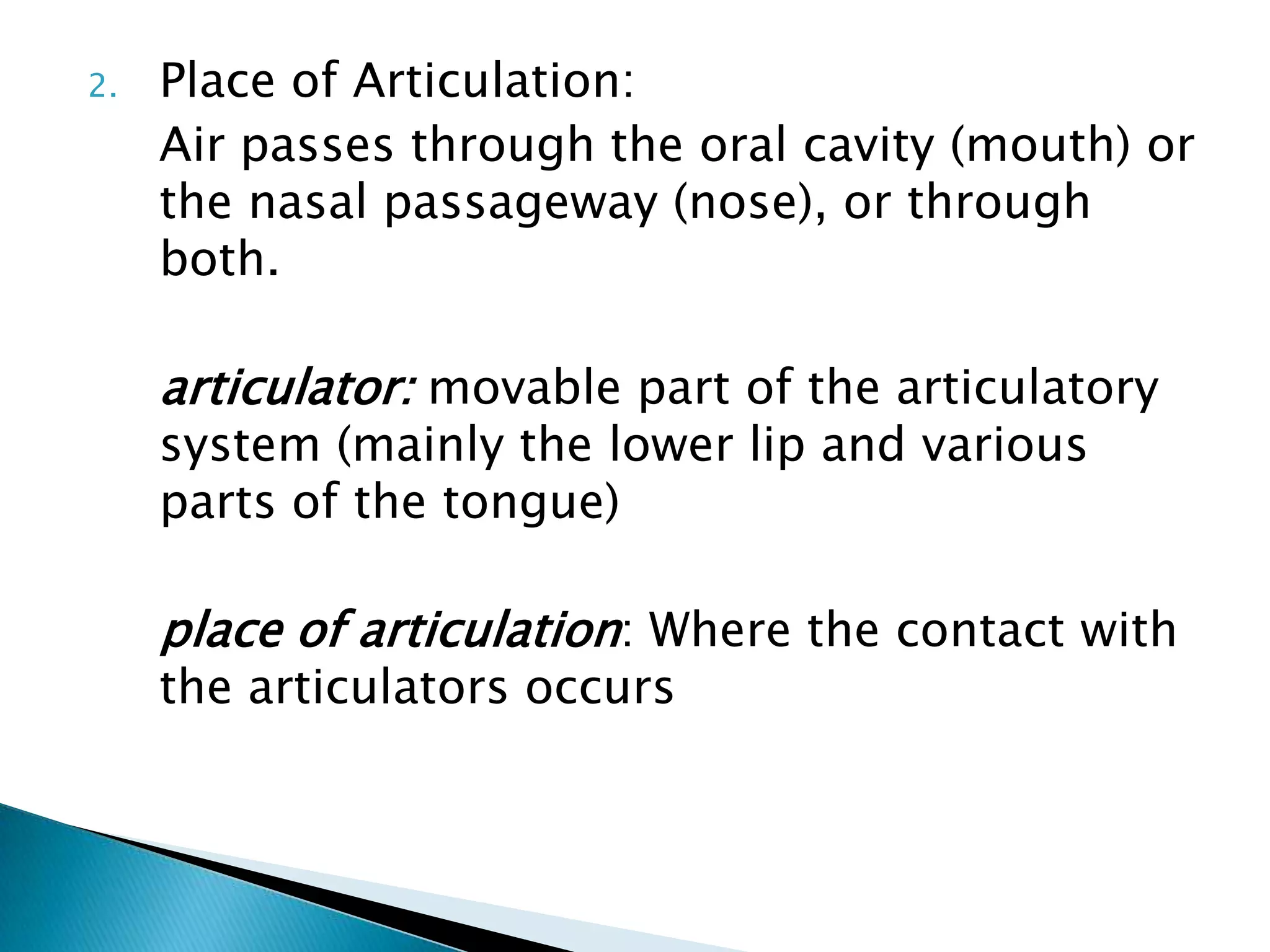
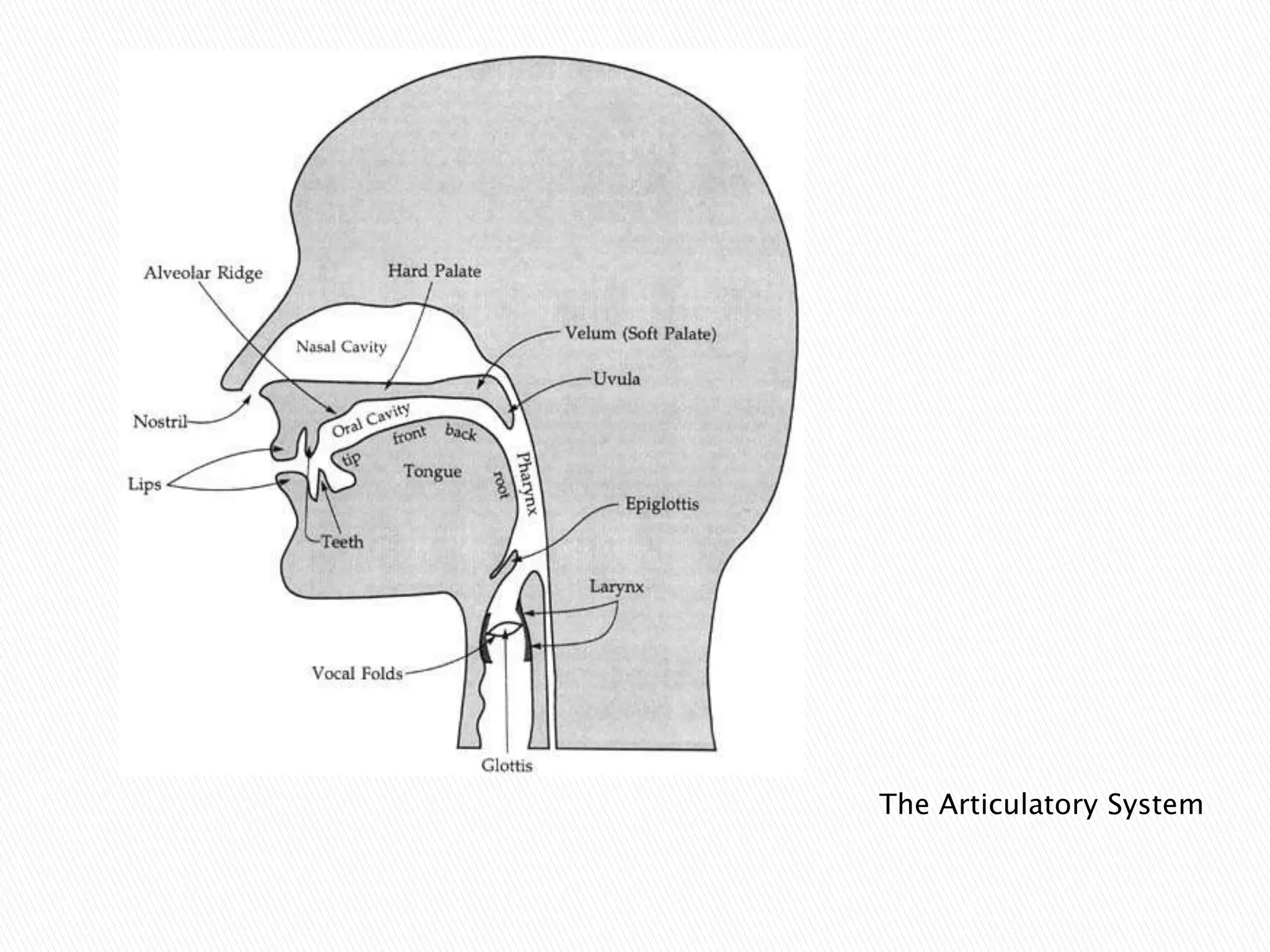
2.   Place of Articulation:
     Air passes through the oral cavity (mouth) or
     the nasal passageway (nose), or through
     both.

     articulator: movable part of the articulatory
     system (mainly the lower lip and various
     parts of the tongue)

     place of articulation: Where the contact with
     the articulators occurs
The Articulatory System
   The places of articulation summarized:

Bilabial:
produced with the two lips.
Labiodental:
produced with the upper teeth and inner lower
  lip
Dental:
produced with the tongue tip on or near the
  inner surface of the upper teeth
Alveolar:
produced with the tongue tip on or near the
 tooth ridge
Palatal:
produced with the tongue blade or body near
 the hard palate
Velar:
produced with the tongue body on or near the
 soft palate
Glottal:
Produced by air passing from the windpipe
 through the vocal cords
3.  Manner of articulation:
Level of obstruction in the air flow as it encounters
    the obstacles of the speech organs.
Stop: the airstream is stopped completely prior to
    release
Fricative: air is forced through a narrow
    passageway criating friction
Affricate: the sound begins as a stop and is then
    released as a fricative
Nasal: continuous air is released through the nasal
    cavity while the speech organs assume a stop
    like position
Approximant: the airstream moves around the
    tongue in a relatively unobstructed way. They
    are of two kinds: the liquids and the
    glides(semivowels).
Vowel:
 the peak of the syllable, which mightbe
 composed of a single vowel.
 all voiced.
 relatively unobstructed air flow
 changes in shape and size of the oral cavity
 three types:
 1. Simple vowels
 2. Glides
 3. Diphtongs
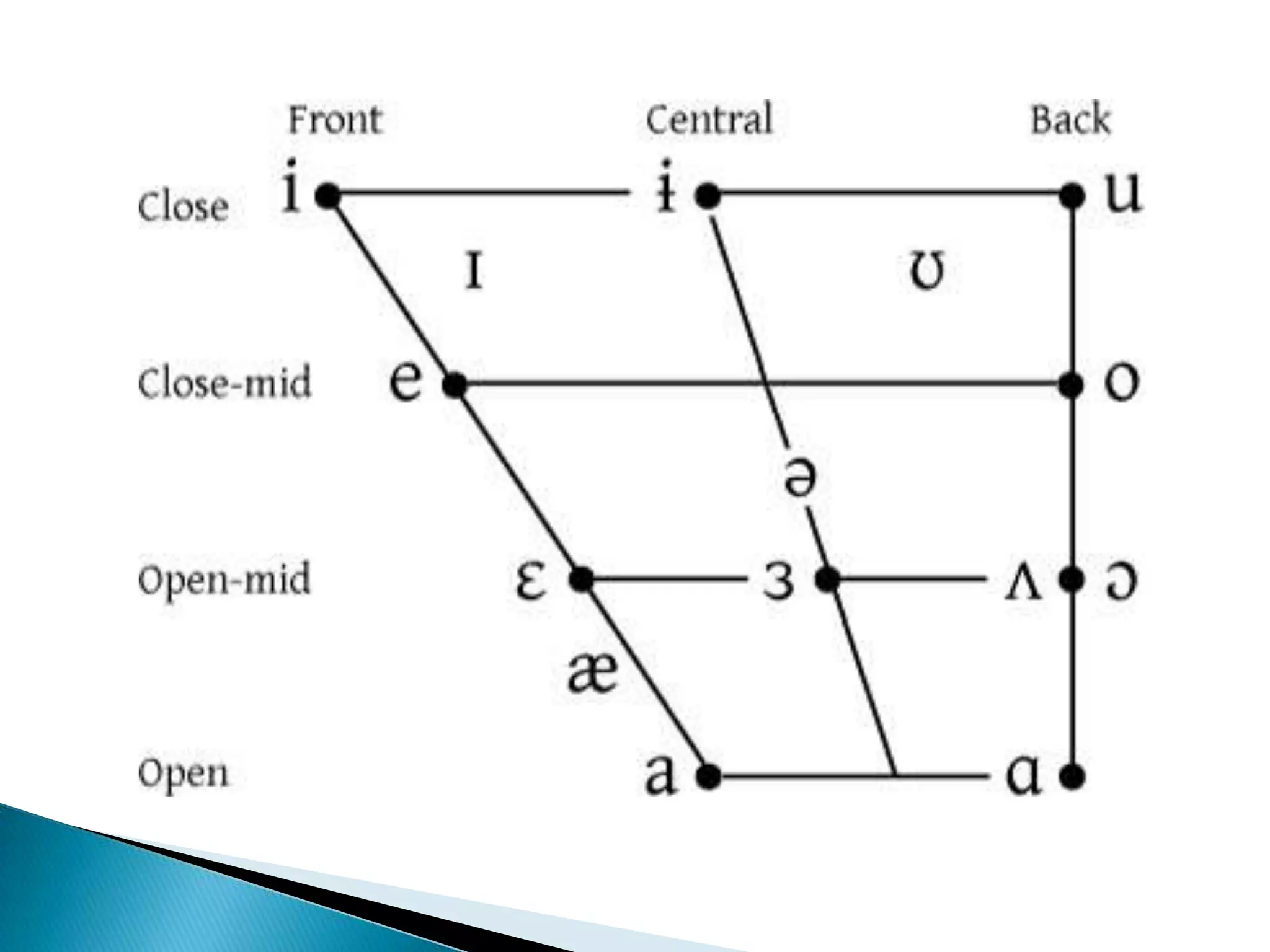
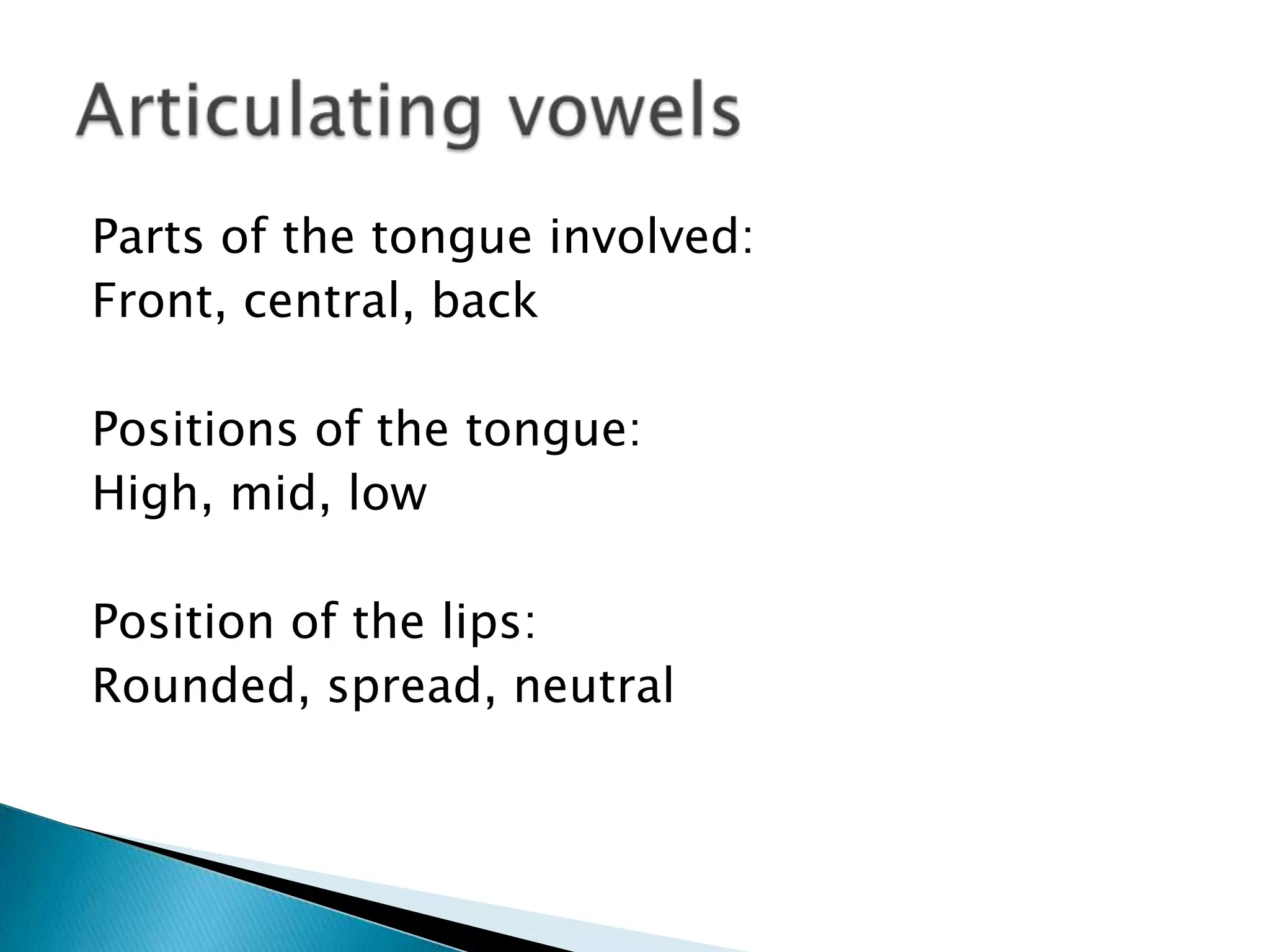
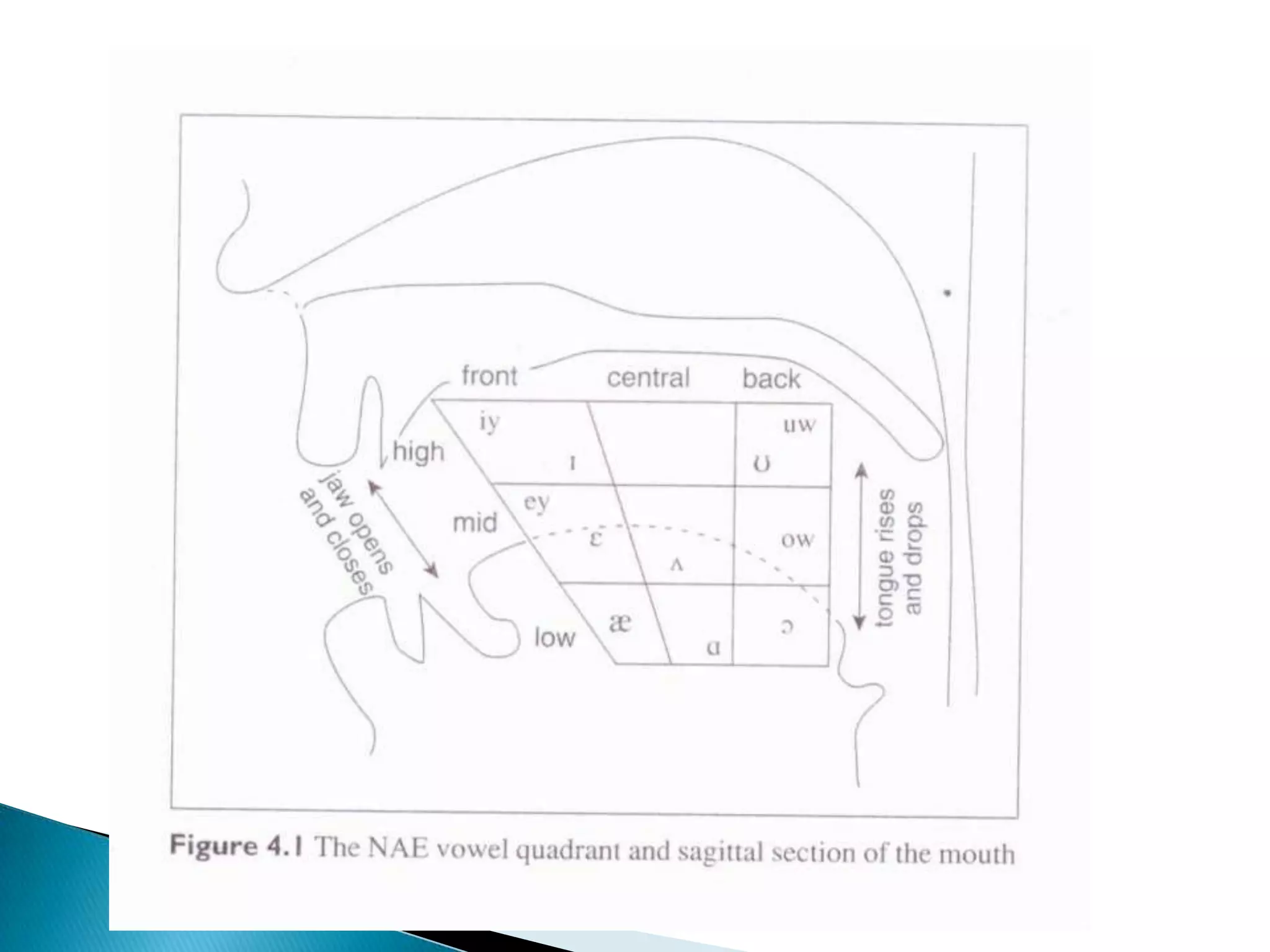
Parts of the tongue involved:
Front, central, back

Positions of the tongue:
High, mid, low

Position of the lips:
Rounded, spread, neutral
Workshop v

Workshop v

  • 1.
    Workshop IV “Introdução àFonética: símbolos e pronúncia” Bruna Moreno e Ualisson Lemes
  • 2.
    “Dentro das instituiçõesque dizem adotar a abordagem comunicativa,parece não haver consenso a respeito da importância do ensino dessa habilidade [pronúncia] para a aprendizagem. Enquanto um número de professores de Inglês como LE acreditam que o ensino da pronúncia seja uma prática ultrapassada e conservadora, dando mais importância ao ato de comunicar em si,outros já concebem o ensino da pronuncia como um aspecto essencial para garantir o sucesso da capacitação do aluno.”
  • 3.
    Hoje se compreendeque o ensino de pronúncia deve seguir um caminho mais balanceado. Tendo clara a importância tanto de reconhecer sons com alta carga funcional, ou seja, distintivos (como a vogal em least and list), quanto de reconhecer aspectos suprasegmentais, como entonação e tonicidade.
  • 4.
    Phone: One ofmany possible sounds in the languages of the world. The smallest identifiable unit found in a stream of speech. E.g.: [p] Phoneme: A contrastive unit in the sound system of a particular language. A minimal segmental unit that serves to distinguish between meanings of words. E.g.: /p/
  • 5.
    Allophones: An allophoneis a phonetic variant of a phoneme in a particular language. There are different phones representing the same phoneme. E.g.: [ph] inicial position, as in pat /p/ [p] following a initial /s/, not aspirated, as in spin [p ] final position, lips remain closed and the the /p/ unreleased, as in cup
  • 7.
    Sound Examples Sound Examples 1. /b/ boy, cab 13. /ʒ/ leisure, beige 2. /p/ pie, lip 14. /ʃ/ shy, dish 3. /d/ dog, bed 15. /h/ his, ahead 4. /t/ toe, cat 16. /tʃ/ cheek, watch 5. /g/ go, beg 17. /dʒ/ joy, budge 6. /k/ cat, back 18. /m/ me, seem 7. /v/ view, love 19. /n/ no, sun 8. /f/ fill, life 20. /ŋ/ sing, singer 9. /ð/ the, bathe 21. /l/ long, full 10. /θ/ thin, bath 22. /r/ run, car 11. /z/ zoo, goes 23. /w/ win, away 12. /s/ see, bus 24. /j/ you, soya
  • 8.
    How do youpronounce this word? ghoti
  • 9.
    /fɪʃ/ Explanation: gh = /f/as in tough and rough o = /ɪ/ as in womem ti = /ʃ/ as in nation Invented by George Bernard Shaw
  • 10.
    Shoe Ocean Sugar Nauseous Issue Conscious Mansion Chaperon Mission Schist Nation Fuschia Suspicion Pshaw
  • 11.
    Consonant phonemes canbe distinguished along three main dimensions: 1. Voicing: whether or not the vocal cords are vibrating /s/ voiceless /z/ voiced
  • 12.
    2. Place of Articulation: Air passes through the oral cavity (mouth) or the nasal passageway (nose), or through both. articulator: movable part of the articulatory system (mainly the lower lip and various parts of the tongue) place of articulation: Where the contact with the articulators occurs
  • 13.
  • 14.
    The places of articulation summarized: Bilabial: produced with the two lips. Labiodental: produced with the upper teeth and inner lower lip Dental: produced with the tongue tip on or near the inner surface of the upper teeth
  • 15.
    Alveolar: produced with thetongue tip on or near the tooth ridge Palatal: produced with the tongue blade or body near the hard palate Velar: produced with the tongue body on or near the soft palate Glottal: Produced by air passing from the windpipe through the vocal cords
  • 16.
    3. Mannerof articulation: Level of obstruction in the air flow as it encounters the obstacles of the speech organs. Stop: the airstream is stopped completely prior to release Fricative: air is forced through a narrow passageway criating friction Affricate: the sound begins as a stop and is then released as a fricative Nasal: continuous air is released through the nasal cavity while the speech organs assume a stop like position Approximant: the airstream moves around the tongue in a relatively unobstructed way. They are of two kinds: the liquids and the glides(semivowels).
  • 17.
    Vowel: the peakof the syllable, which mightbe composed of a single vowel. all voiced. relatively unobstructed air flow changes in shape and size of the oral cavity three types: 1. Simple vowels 2. Glides 3. Diphtongs
  • 19.
    Parts of thetongue involved: Front, central, back Positions of the tongue: High, mid, low Position of the lips: Rounded, spread, neutral