Dr.Rachanaa Datey
Founder Director –Quest Edustation Trainings and Learning Solutions
What is
working
capital?
What is working capital?
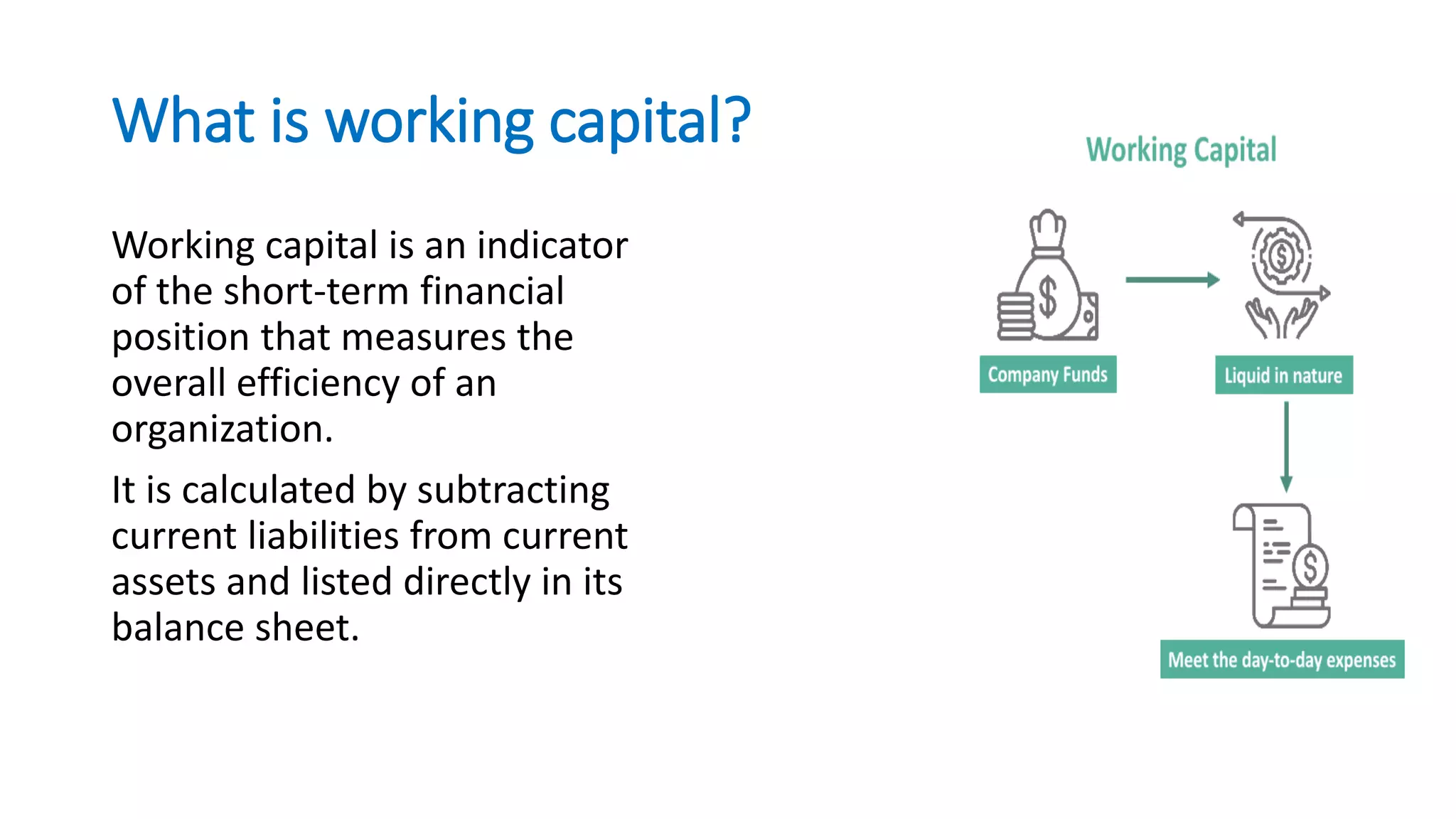
Working capital is an indicator
of the short-term financial
position that measures the
overall efficiency of an
organization.
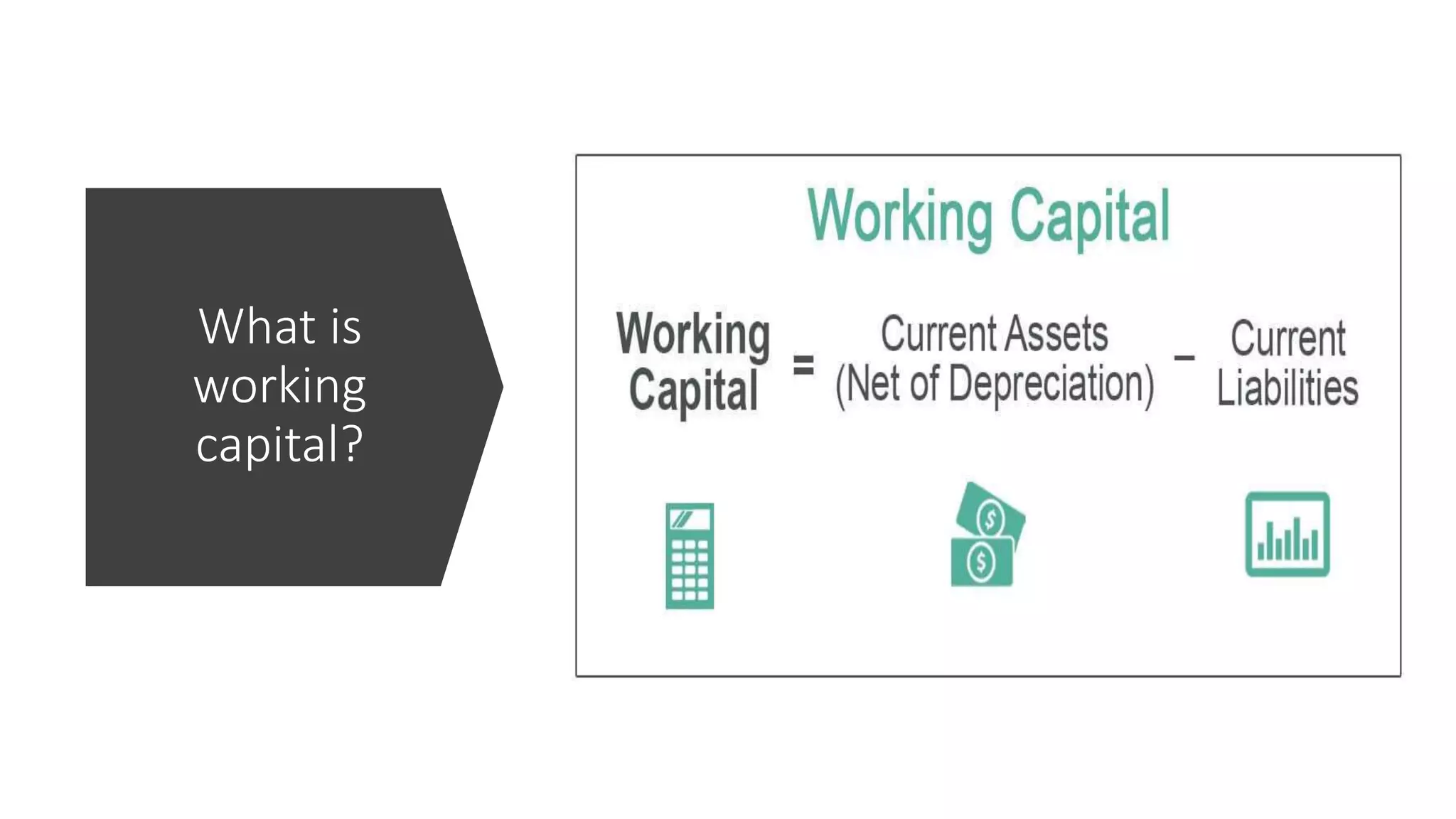
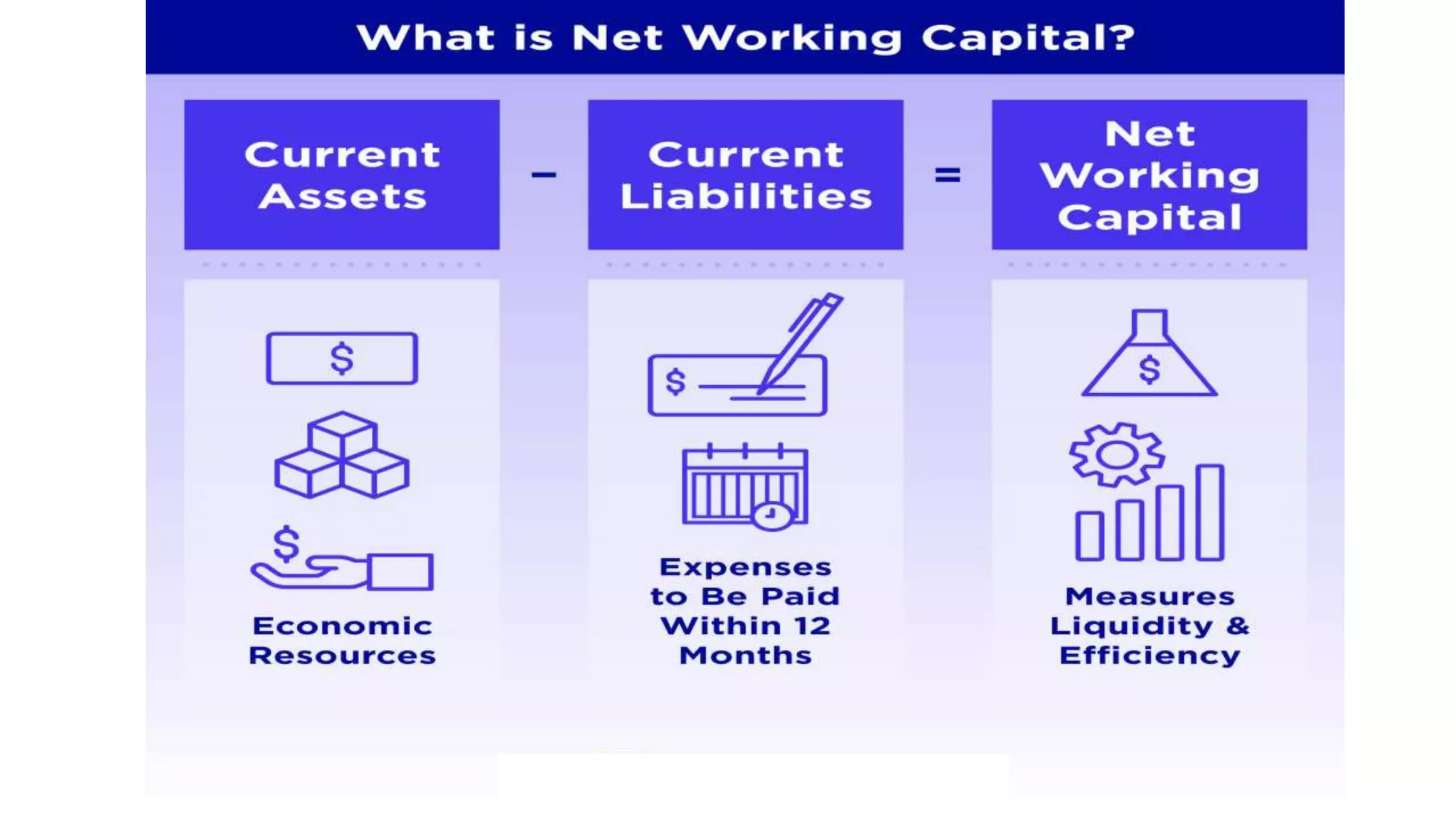
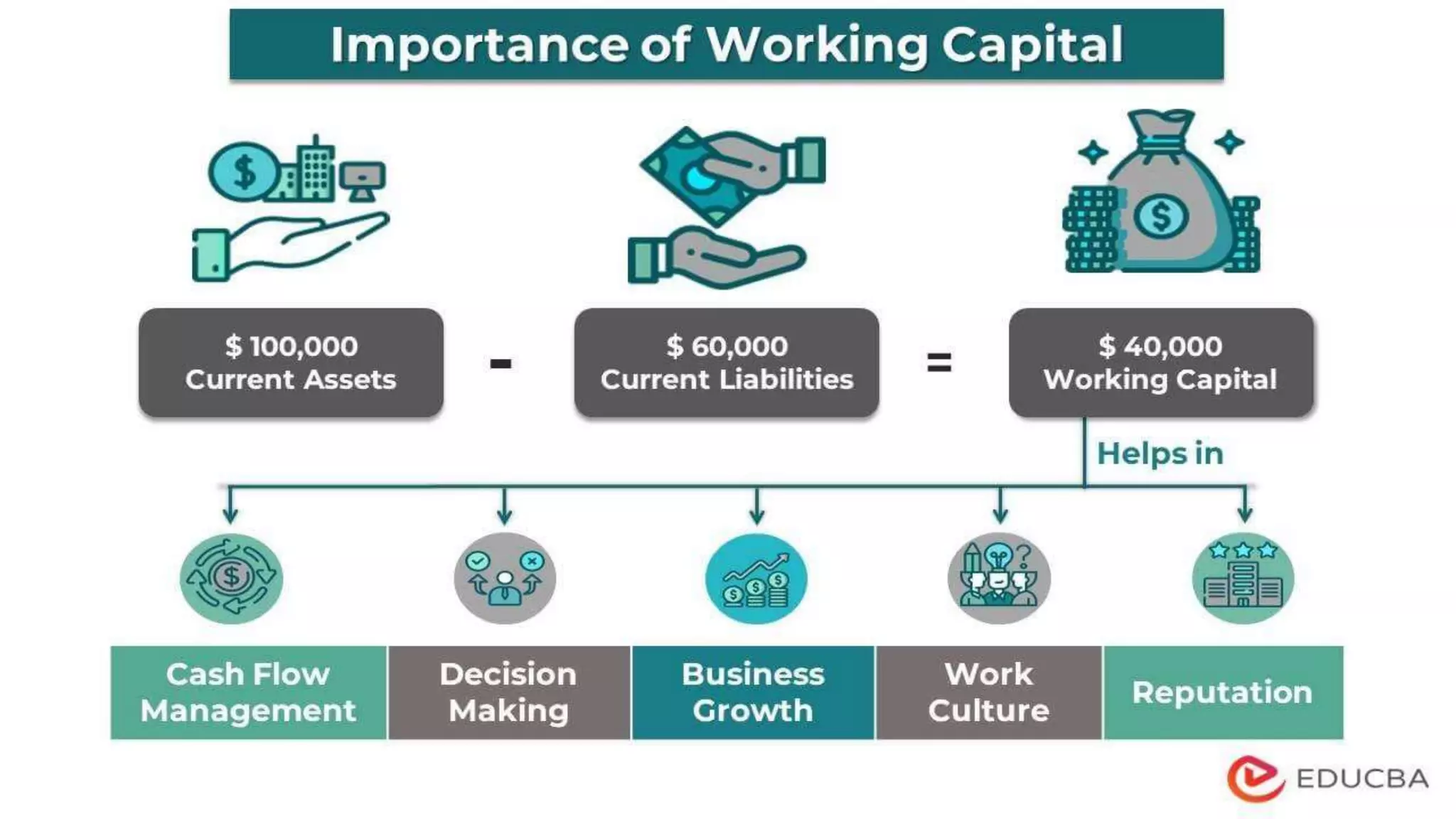
It is calculated by subtracting
current liabilities from current
assets and listed directly in its
balance sheet.
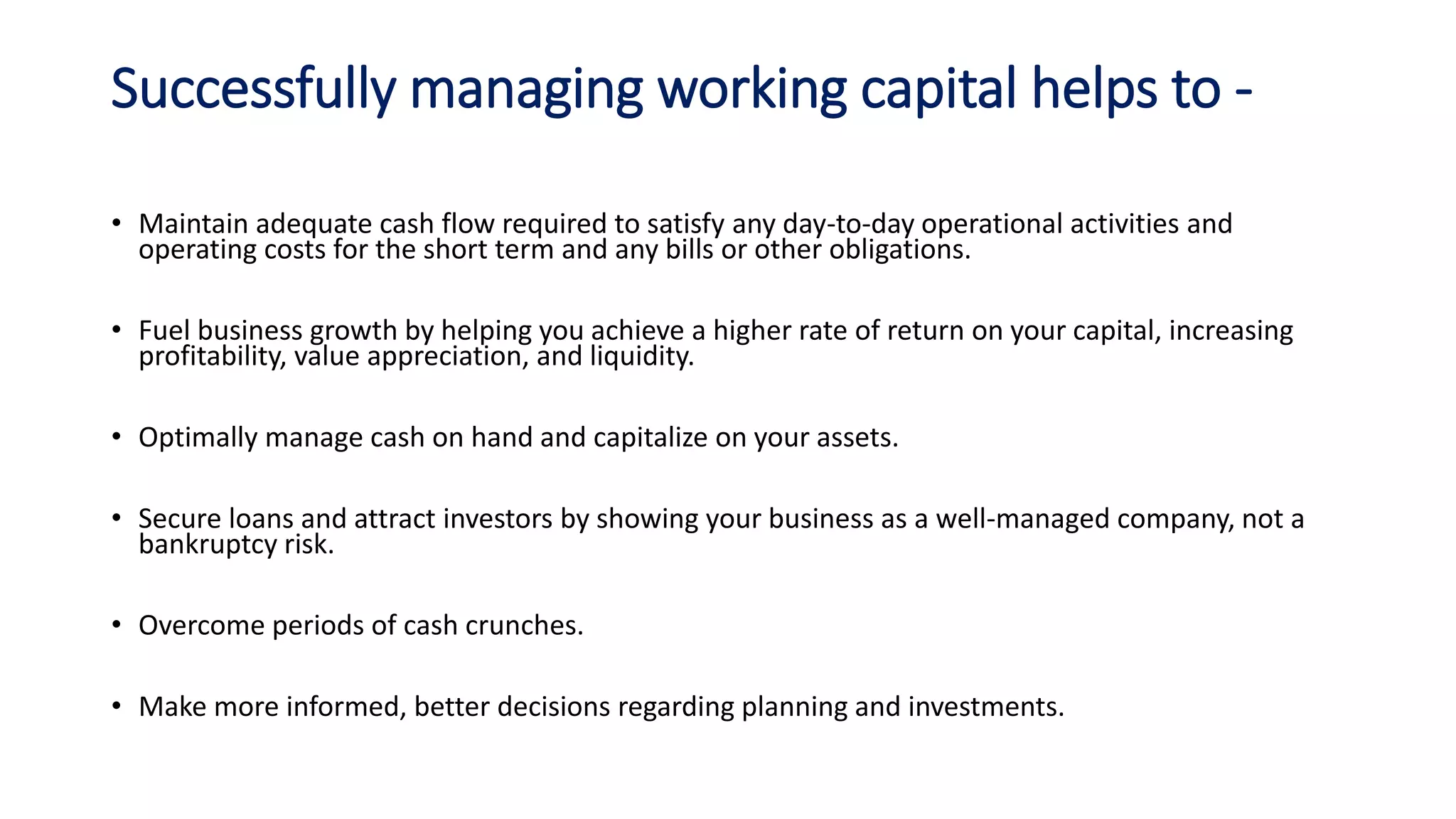
Successfully managing working capital helps to -
• Maintain adequate cash flow required to satisfy any day-to-day operational activities and
operating costs for the short term and any bills or other obligations.
• Fuel business growth by helping you achieve a higher rate of return on your capital, increasing
profitability, value appreciation, and liquidity.
• Optimally manage cash on hand and capitalize on your assets.
• Secure loans and attract investors by showing your business as a well-managed company, not a
bankruptcy risk.
• Overcome periods of cash crunches.
• Make more informed, better decisions regarding planning and investments.
Best practices for improving working capital
• Review gross margins
• Review overheads
• Inject more capital
• Manage your invoicing and receivables
• Manage your payables and debt
• Lease or rent equipment
• Reduce inventory levels
• Resolve disputes with customers
• Consider short-term financing
Best practices for improving working capital
• Perform thorough credit checks on new customers
• Increase sales revenue
• Optimize vendor relations
• Increase cash flow visibility
• Meet debt obligations
• Automate cash flow management
• Don’t finance fixed assets with working capital
• Sell off unessential, unproductive assets
• Negotiate longer payment terms with vendors
Working capital missteps to avoid
• Not factoring in the working capital impact with day-to-day decisions
• Failing to think through the effects of unplanned expansion
• Not informing your business forecasting and production planning with regular analysis of your sales
• Not taking an advance for large orders that results in a shortage of funds
• Neglecting to account for short-term liabilities and contingencies
• Poor inventory management
• Inaccurate production planning/delays in production
• Supply chain inefficiencies
Working capital missteps to avoid
• Not including off-balance sheet items
• Lack of budget control and planned spending
• Overly optimistic revenue forecasts
• Underestimating expenses
• Growing fixed assets slower than revenue
• Forecasting drastic changes in the cash conversion cycle not supported by data
• Underestimating working capital investment

Working Capital Management _Introduction.pptx

  • 1.
    Dr.Rachanaa Datey Founder Director–Quest Edustation Trainings and Learning Solutions
  • 2.
  • 3.
    What is workingcapital? Working capital is an indicator of the short-term financial position that measures the overall efficiency of an organization. It is calculated by subtracting current liabilities from current assets and listed directly in its balance sheet.
  • 16.
    Successfully managing workingcapital helps to - • Maintain adequate cash flow required to satisfy any day-to-day operational activities and operating costs for the short term and any bills or other obligations. • Fuel business growth by helping you achieve a higher rate of return on your capital, increasing profitability, value appreciation, and liquidity. • Optimally manage cash on hand and capitalize on your assets. • Secure loans and attract investors by showing your business as a well-managed company, not a bankruptcy risk. • Overcome periods of cash crunches. • Make more informed, better decisions regarding planning and investments.
  • 18.
    Best practices forimproving working capital • Review gross margins • Review overheads • Inject more capital • Manage your invoicing and receivables • Manage your payables and debt • Lease or rent equipment • Reduce inventory levels • Resolve disputes with customers • Consider short-term financing
  • 19.
    Best practices forimproving working capital • Perform thorough credit checks on new customers • Increase sales revenue • Optimize vendor relations • Increase cash flow visibility • Meet debt obligations • Automate cash flow management • Don’t finance fixed assets with working capital • Sell off unessential, unproductive assets • Negotiate longer payment terms with vendors
  • 20.
    Working capital misstepsto avoid • Not factoring in the working capital impact with day-to-day decisions • Failing to think through the effects of unplanned expansion • Not informing your business forecasting and production planning with regular analysis of your sales • Not taking an advance for large orders that results in a shortage of funds • Neglecting to account for short-term liabilities and contingencies • Poor inventory management • Inaccurate production planning/delays in production • Supply chain inefficiencies
  • 21.
    Working capital misstepsto avoid • Not including off-balance sheet items • Lack of budget control and planned spending • Overly optimistic revenue forecasts • Underestimating expenses • Growing fixed assets slower than revenue • Forecasting drastic changes in the cash conversion cycle not supported by data • Underestimating working capital investment