Working at heights
Ali Al Amri
QEN/111A
Contents
• Objective
• Introduction
• Common factors
• Safety of personnel on platform
• Safe use of scaffolds
• Scaffold inspection
• Ladders
• Protecting the Public
• How to prevent incidents
Objective
Awareness of risks involved in working at heights
and how these can be overcome.
Definition: 1.5 meters above working platform
considered ‘height’.
Introduction
In 2007/2008 67 people died and nearly
4000 suffered a serious injury as a result
of a fall from height in the workplace.
In 2007/2008 53 people died and nearly
3800 injured.
www.hse.gov.uk/falls/
Common factors
• Failure to provide safe systems of work
(inadequate instruction…etc).
• Failure to ensure that safe systems of work are
followed.
• Failure to use appropriate equipment.
• Failure to provide safe plant/equipment.
Safety of personnel on platform
Work at height should be carried out from
a platform with suitable edge protection.
Ladders can only be used as a mean of
getting to a workplace.
Safe use of scaffolds:
• Do not alter the scaffolding to gain access for
work.
• Erection and alteration should only be made by a
competent scaffolding team.
• Never work on platforms that are not fully
grated/boarded.
• Do not overload platforms (spread load evenly).
Scaffold inspection
▼Scaffolds must be inspected and certified by a
competent scaffolding supervisor.
• Before first use;
• After substantial alteration;
• At regular intervals.
▼Any faults found must be reported.
Ladders
▼Scaffolding ladders should be in a good condition and
regularly examined.
▼They should be secured so they cannot slip.
▼They should be protruding the platform.
▼The ladder should be angled to minimize the risk of
slipping outwards.
Protecting the public
▼Ensure the working platform is designed to
carry the load from stored materials and
equipment.
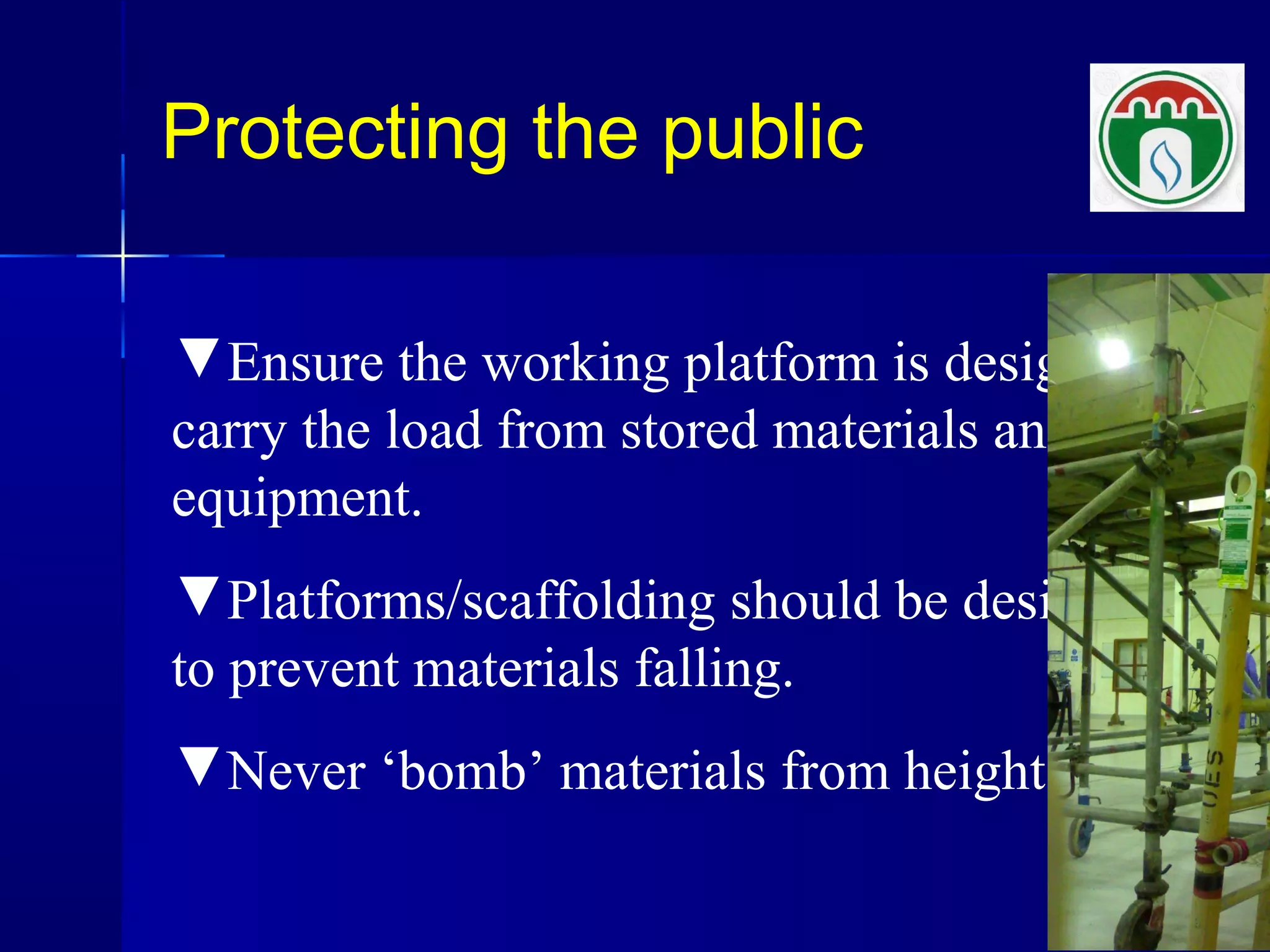
▼Platforms/scaffolding should be designed
to prevent materials falling.
▼Never ‘bomb’ materials from height.
To prevent these incidents
• Apply the 3 point rule.
• Use fall protection equipment.
• Develop and encourage a culture of intervention.
• Make sure the employees comply with safe working
procedures.
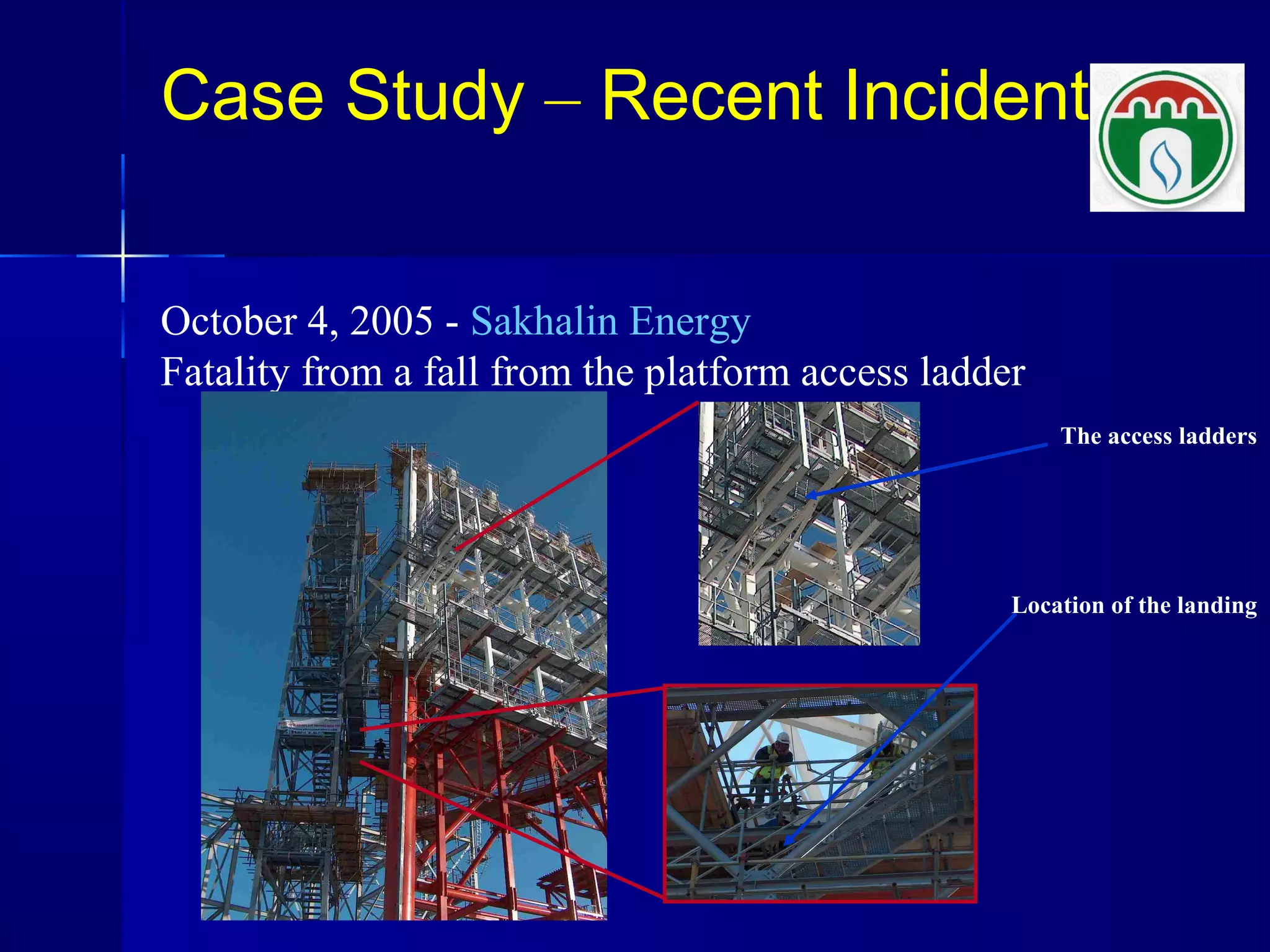
Case Study – Recent Incident
October 4, 2005 - Sakhalin Energy
Fatality from a fall from the platform access ladder
Location of the landing
The access ladders
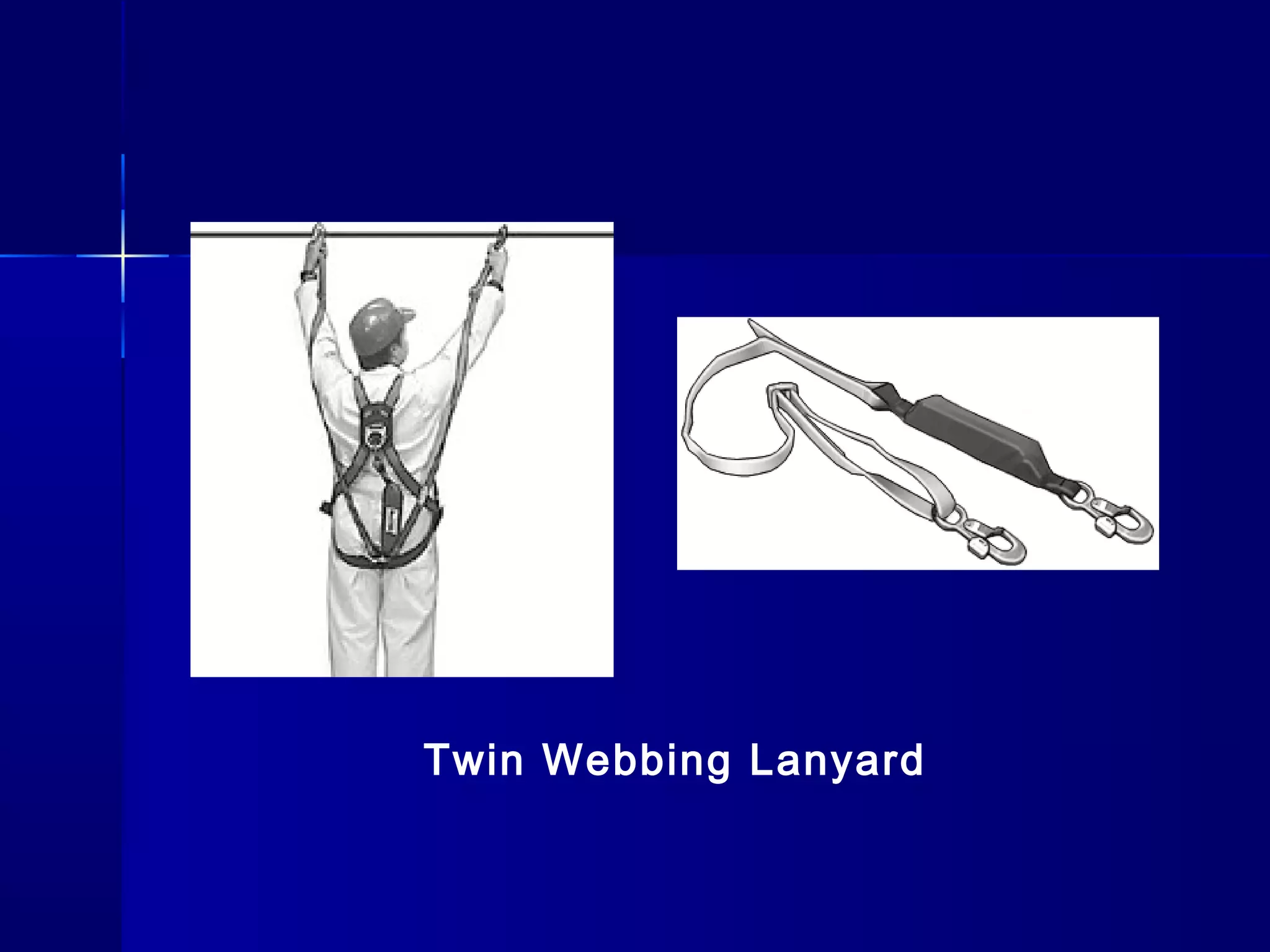
Twin Webbing Lanyard
QUESTIONS ?!

working at hight

  • 1.
    Working at heights AliAl Amri QEN/111A
  • 2.
    Contents • Objective • Introduction •Common factors • Safety of personnel on platform • Safe use of scaffolds • Scaffold inspection • Ladders • Protecting the Public • How to prevent incidents
  • 3.
    Objective Awareness of risksinvolved in working at heights and how these can be overcome. Definition: 1.5 meters above working platform considered ‘height’.
  • 4.
    Introduction In 2007/2008 67people died and nearly 4000 suffered a serious injury as a result of a fall from height in the workplace. In 2007/2008 53 people died and nearly 3800 injured. www.hse.gov.uk/falls/
  • 5.
    Common factors • Failureto provide safe systems of work (inadequate instruction…etc). • Failure to ensure that safe systems of work are followed. • Failure to use appropriate equipment. • Failure to provide safe plant/equipment.
  • 6.
    Safety of personnelon platform Work at height should be carried out from a platform with suitable edge protection. Ladders can only be used as a mean of getting to a workplace.
  • 7.
    Safe use ofscaffolds: • Do not alter the scaffolding to gain access for work. • Erection and alteration should only be made by a competent scaffolding team. • Never work on platforms that are not fully grated/boarded. • Do not overload platforms (spread load evenly).
  • 8.
    Scaffold inspection ▼Scaffolds mustbe inspected and certified by a competent scaffolding supervisor. • Before first use; • After substantial alteration; • At regular intervals. ▼Any faults found must be reported.
  • 9.
    Ladders ▼Scaffolding ladders shouldbe in a good condition and regularly examined. ▼They should be secured so they cannot slip. ▼They should be protruding the platform. ▼The ladder should be angled to minimize the risk of slipping outwards.
  • 10.
    Protecting the public ▼Ensurethe working platform is designed to carry the load from stored materials and equipment. ▼Platforms/scaffolding should be designed to prevent materials falling. ▼Never ‘bomb’ materials from height.
  • 11.
    To prevent theseincidents • Apply the 3 point rule. • Use fall protection equipment. • Develop and encourage a culture of intervention. • Make sure the employees comply with safe working procedures.
  • 12.
    Case Study –Recent Incident October 4, 2005 - Sakhalin Energy Fatality from a fall from the platform access ladder Location of the landing The access ladders
  • 13.
  • 14.