Work life through
a screen
CommsCon | May 2021
The 

History 

of Work
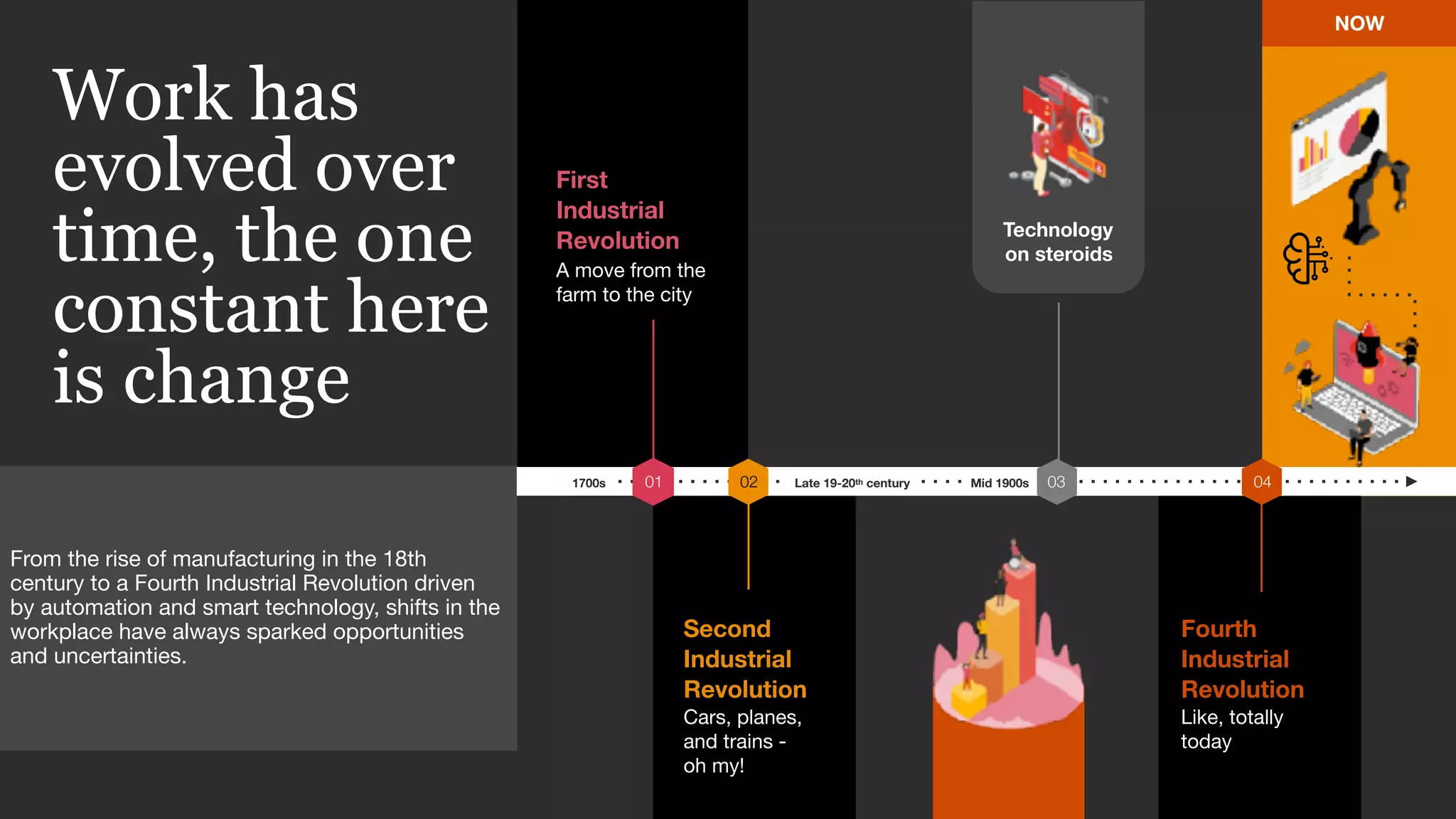
From the rise of manufacturing in the 18th
century to a Fourth Industrial Revolution driven
by automation and smart technology, shifts in the
workplace have always sparked opportunities
and uncertainties.
Fourth
Industrial
Revolution
Like, totally
today
Second
Industrial
Revolution
Cars, planes,
and trains - 

oh my!
First
Industrial
Revolution
A move from the
farm to the city
1700s Late 19-20th century Mid 1900s
Work has
evolved over
time, the one
constant here
is change
NOW
01 02 04
Technology
on steroids
03
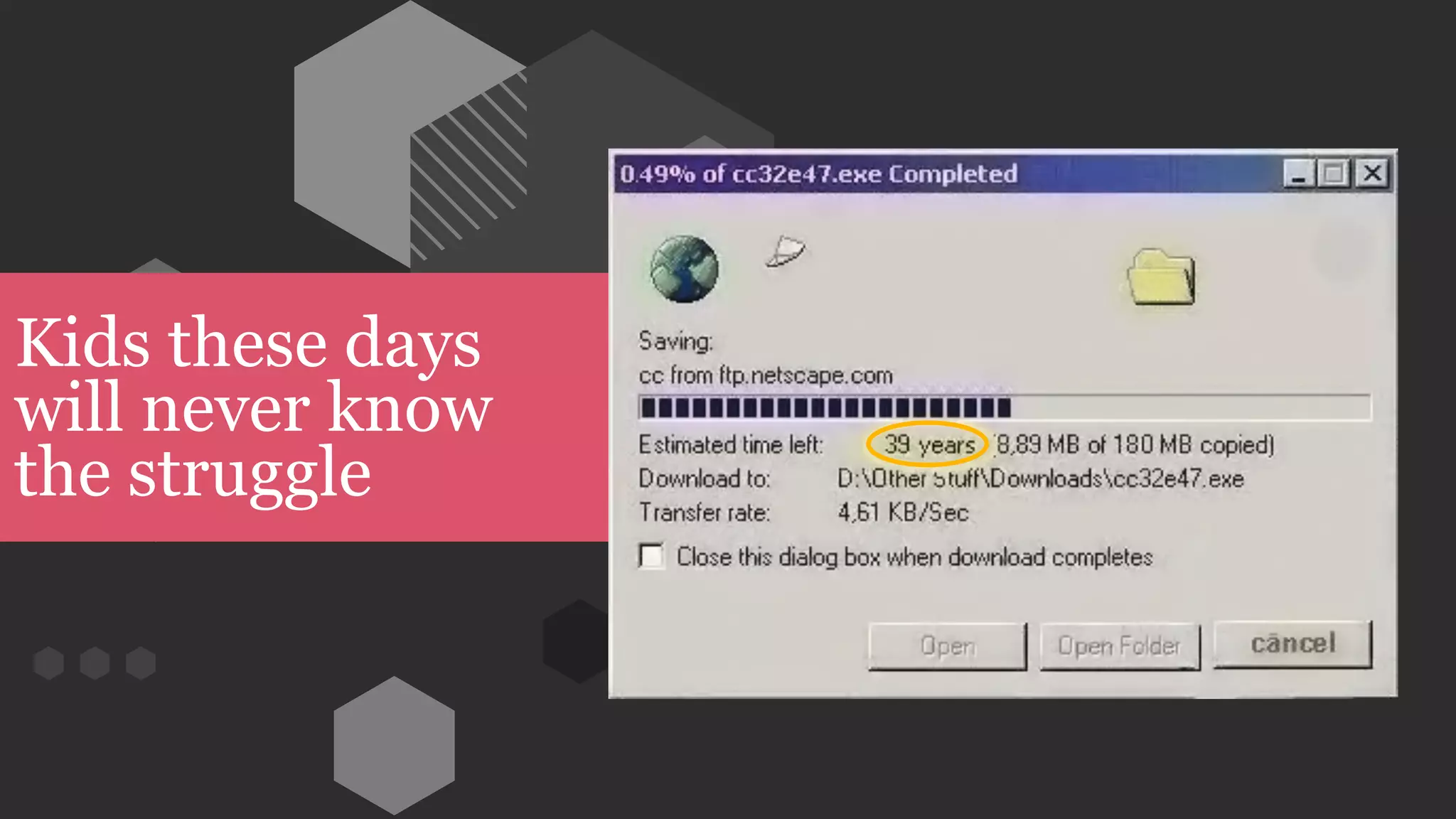
Kids these days
will never know
the struggle
When someone
asks you what
Limewire is.
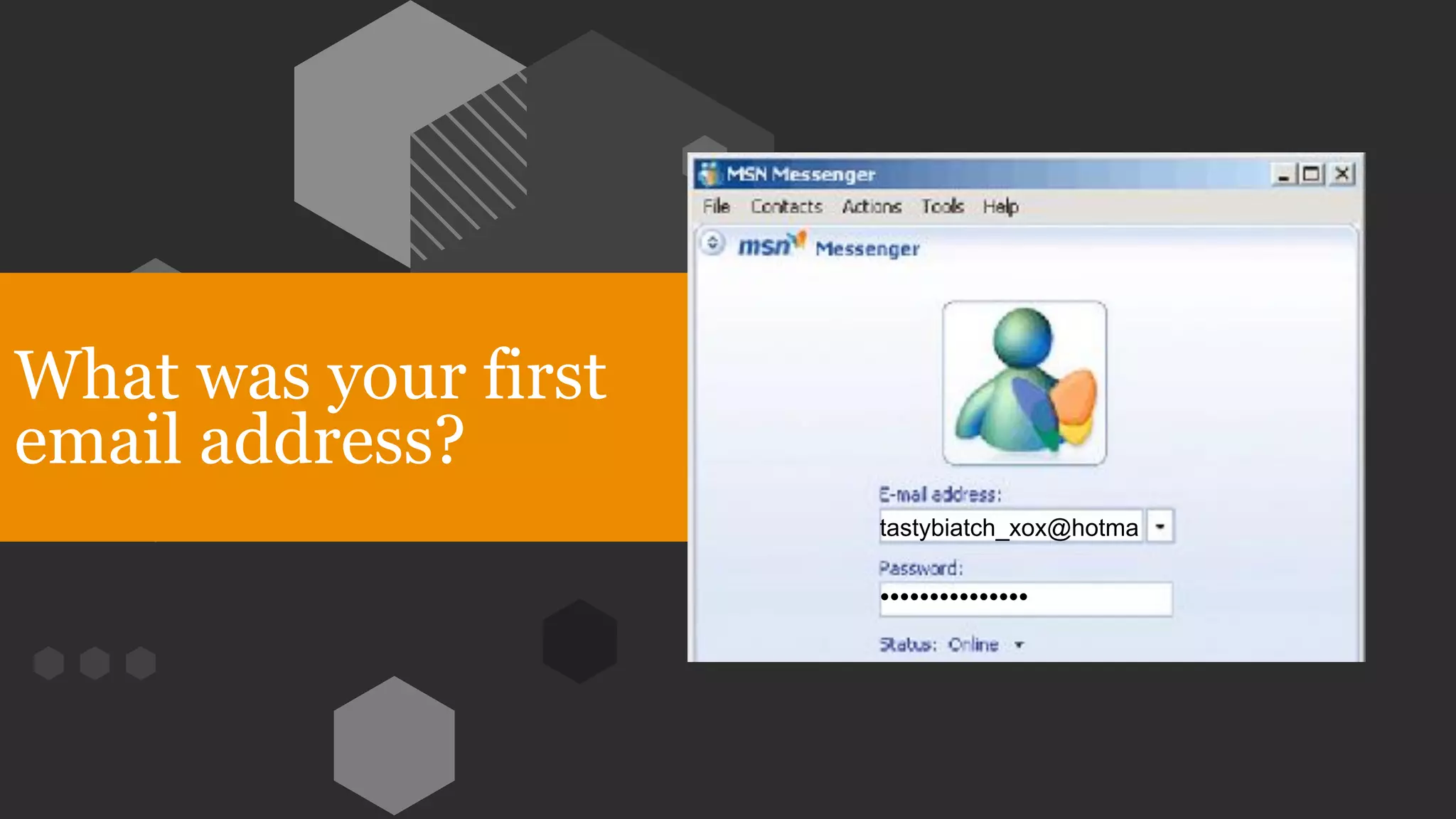
What was your first
email address?
tastybiatch_xox@hotma
•••••••••••••••
We are currently
experiencing change at
the fastest rate in
human history.
And it’s also the slowest
we’ll experience it for
the rest of our lives.
The 

Future of
Work
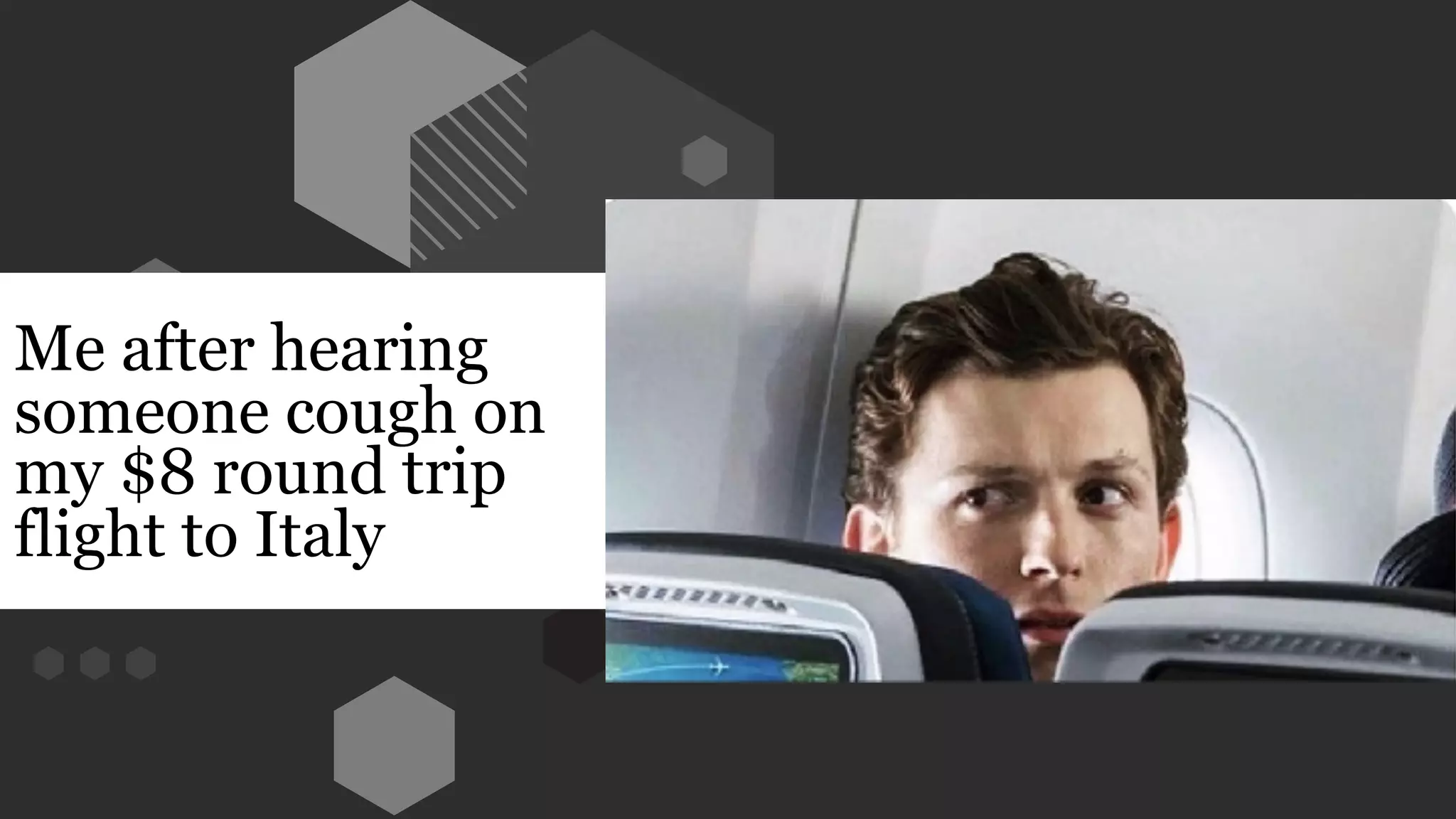
Me after hearing
someone cough on
my $8 round trip
flight to Italy
Defining a new
(ab)normal
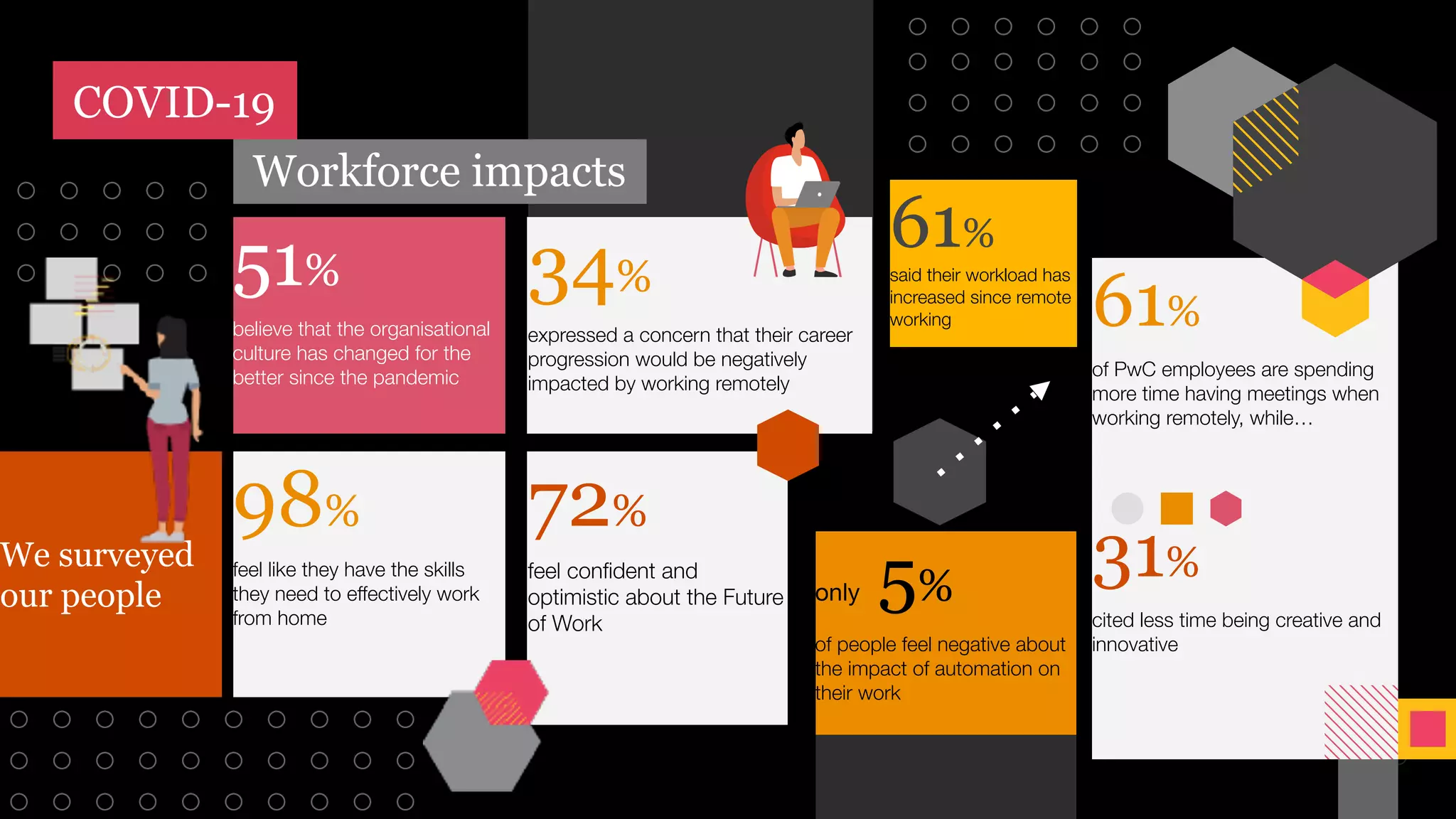
61%
of PwC employees are spending
more time having meetings when
working remotely, while…
31%
cited less time being creative and
innovative
98%
feel like they have the skills
they need to effectively work
from home
34%
expressed a concern that their career
progression would be negatively
impacted by working remotely
only 5%
of people feel negative about
the impact of automation on
their work
61%
said their workload has
increased since remote
working
72%
feel confident and
optimistic about the Future
of Work
We surveyed
our people
51%
believe that the organisational
culture has changed for the
better since the pandemic
COVID-19
Workforce impacts
Collaboration
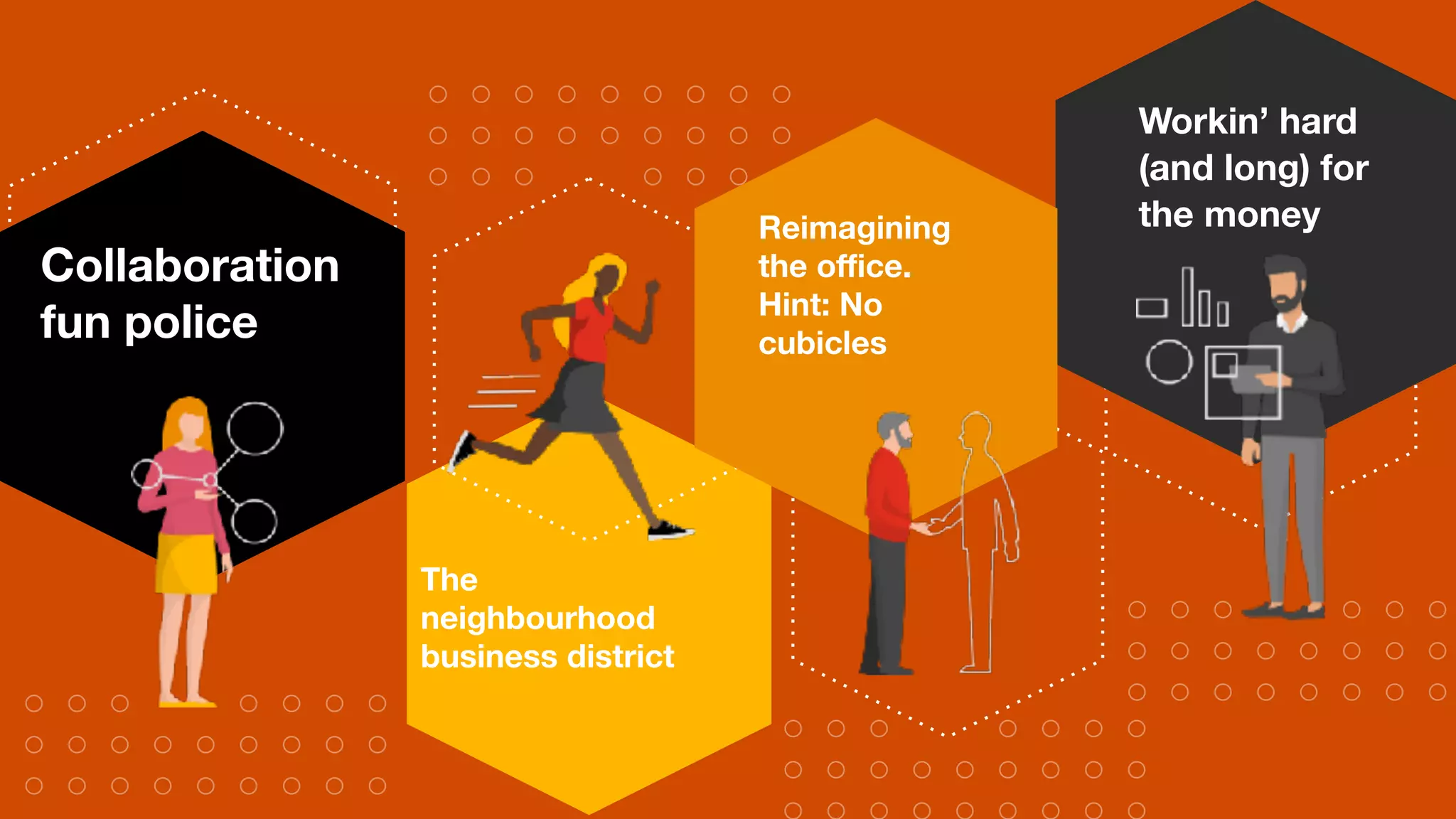
fun police
Workin’ hard
(and long) for
the money
The
neighbourhood
business district
Reimagining
the office.
Hint: No
cubicles
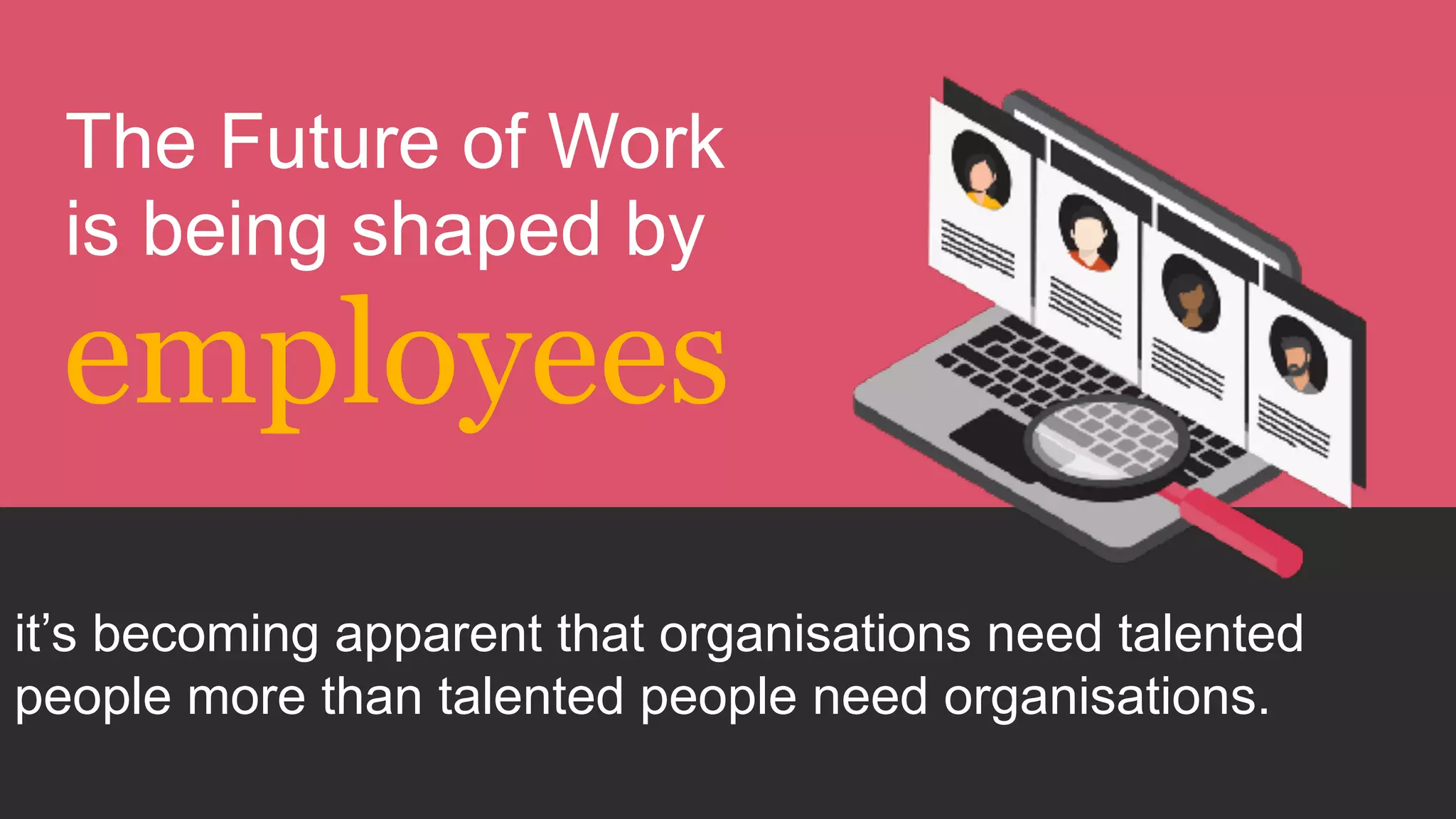
The Future of Work 

is being shaped by
it’s becoming apparent that organisations need talented
people more than talented people need organisations.
employees
So what does
this all mean
for us?
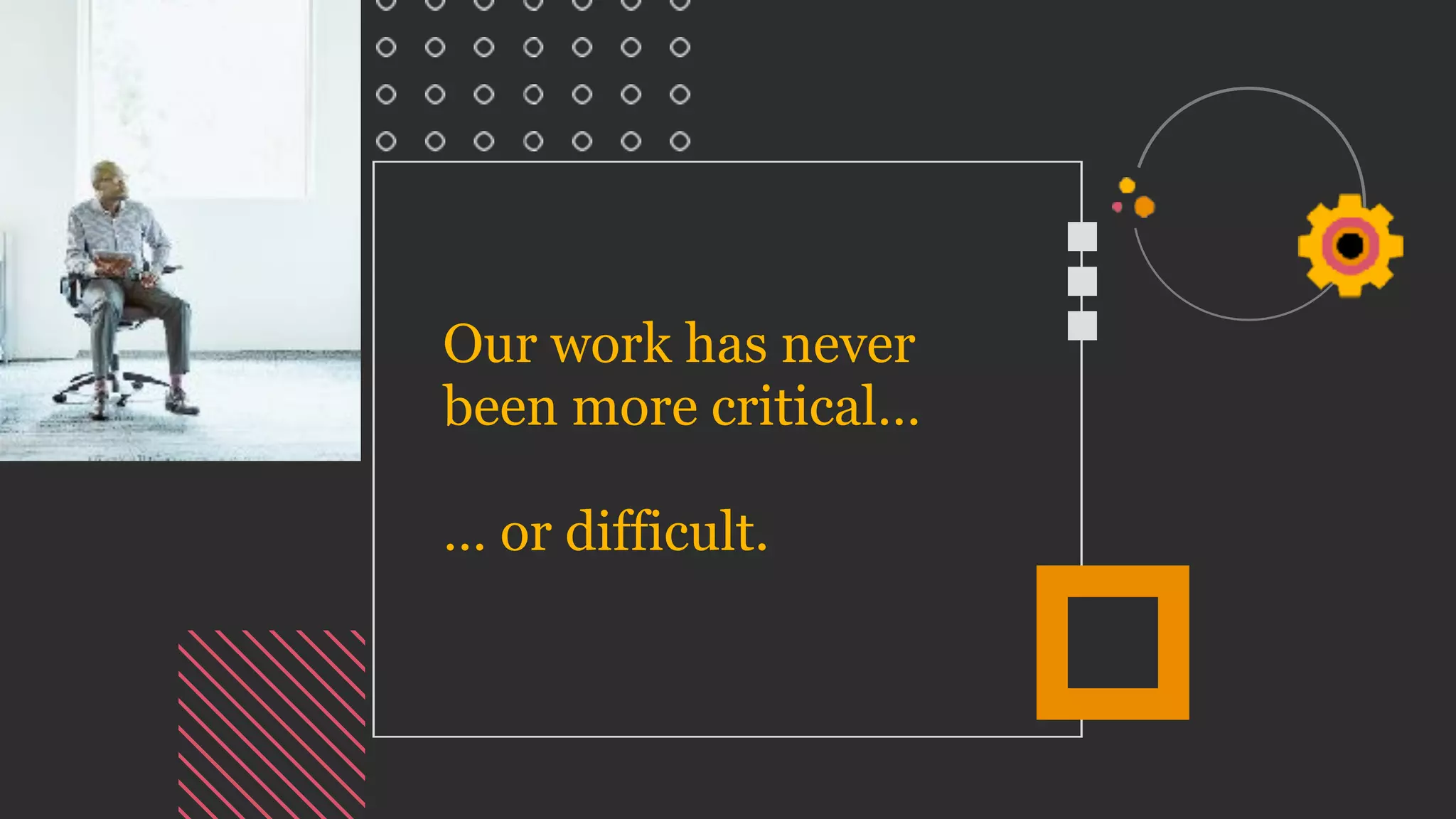
Our work has never
been more critical…
… or difficult.
It’s time to hit reset
We have a huge
opportunity to
reshape our role
and value.
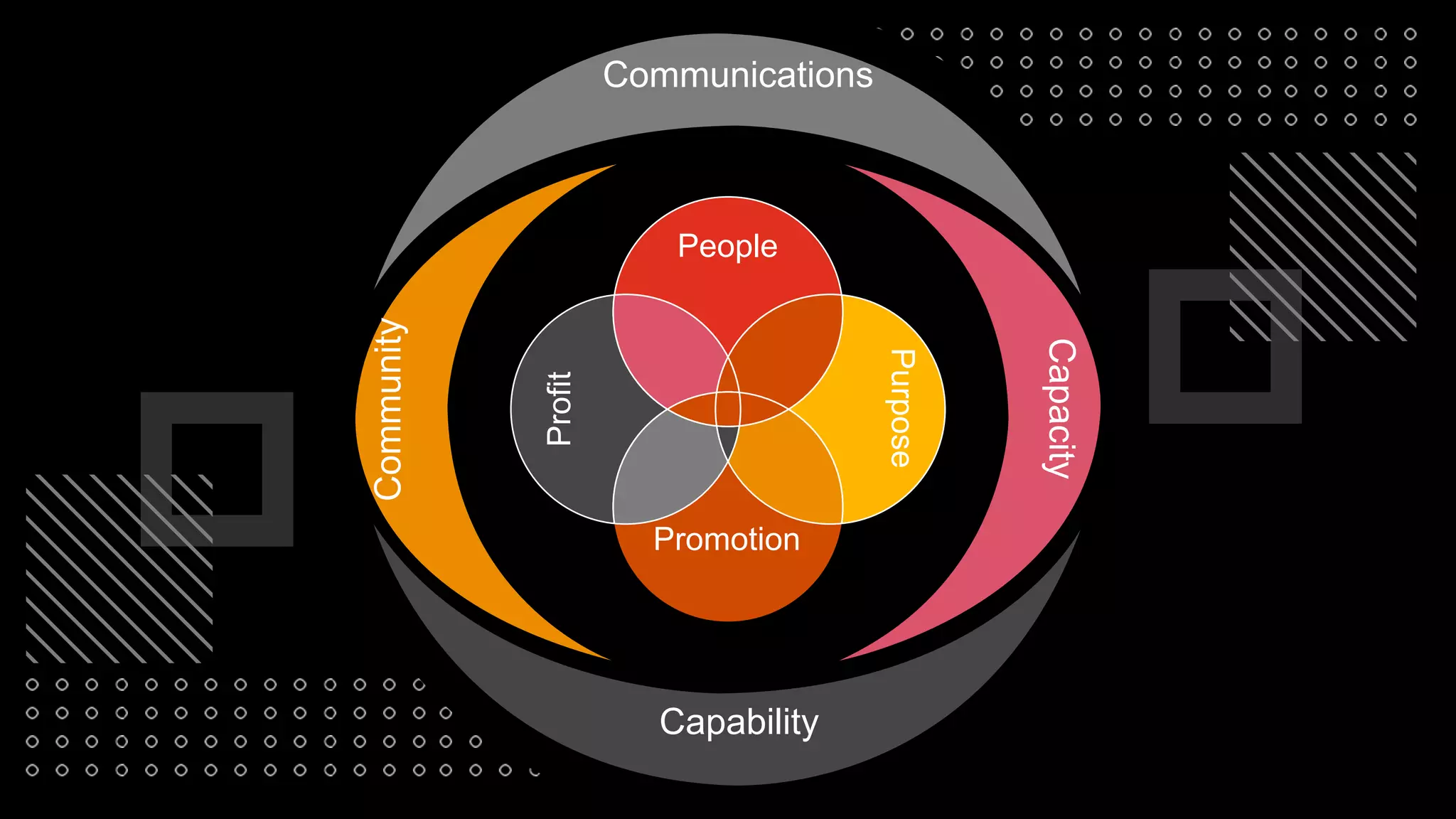
Communications
Capability
Capacity
Community
People
Purpose
Promotion
Profit
2021 

The year 

of the experiment
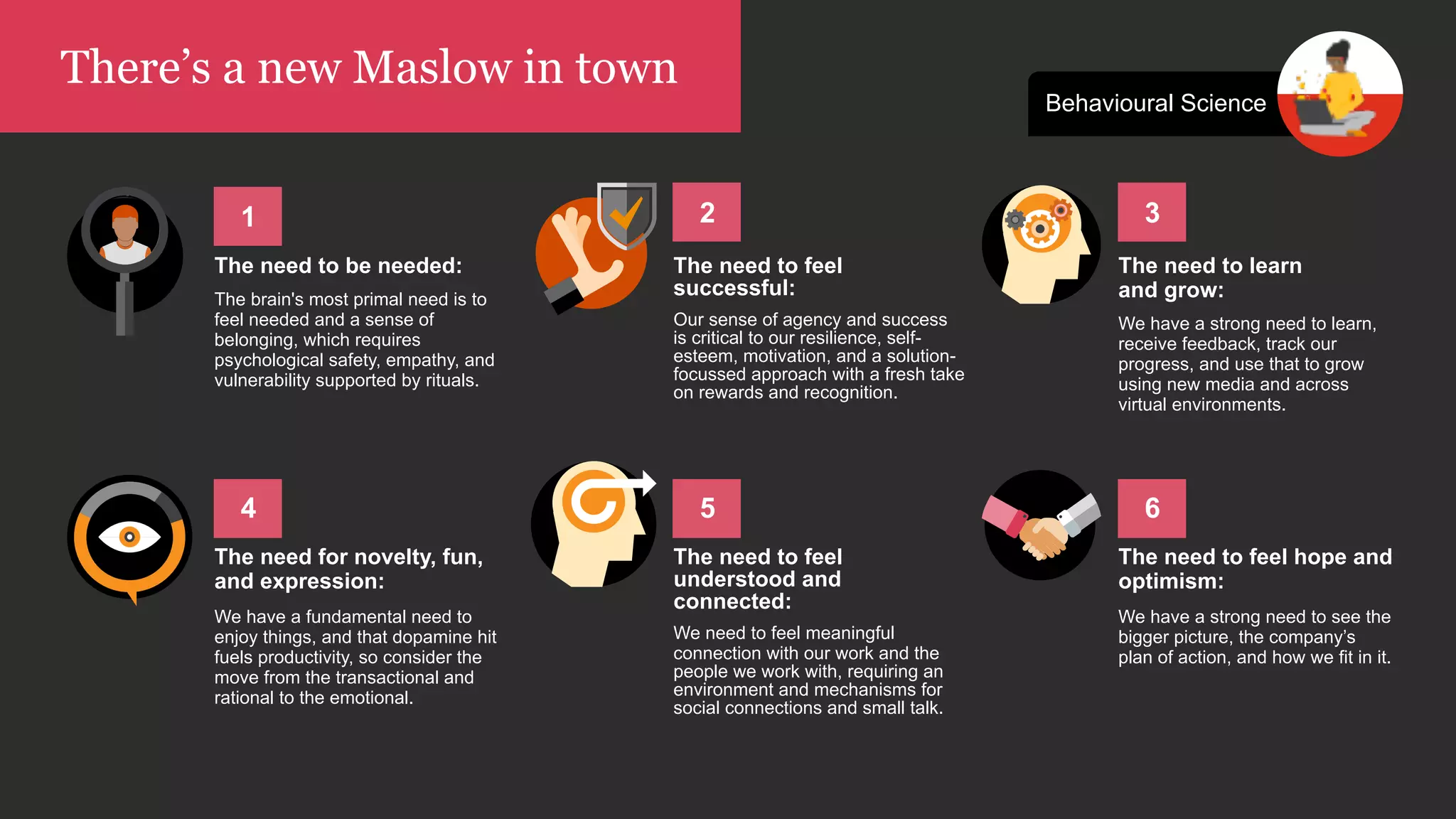
The need to be needed:
The brain's most primal need is to
feel needed and a sense of
belonging, which requires
psychological safety, empathy, and
vulnerability supported by rituals.
There’s a new Maslow in town
The need to feel
successful:
Our sense of agency and success
is critical to our resilience, self-
esteem, motivation, and a solution-
focussed approach with a fresh take
on rewards and recognition.
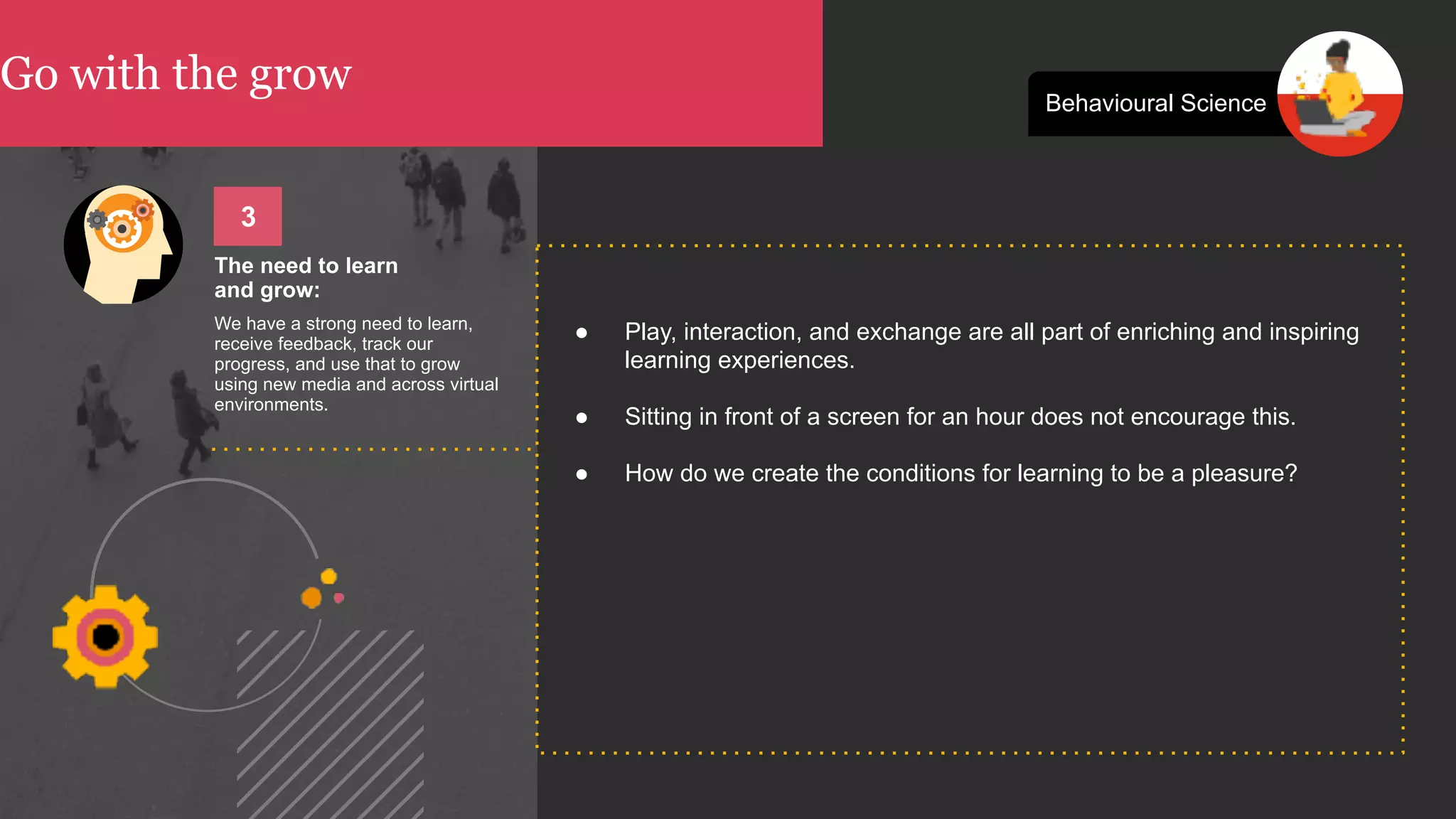
The need to learn 

and grow:
We have a strong need to learn,
receive feedback, track our
progress, and use that to grow
using new media and across
virtual environments.
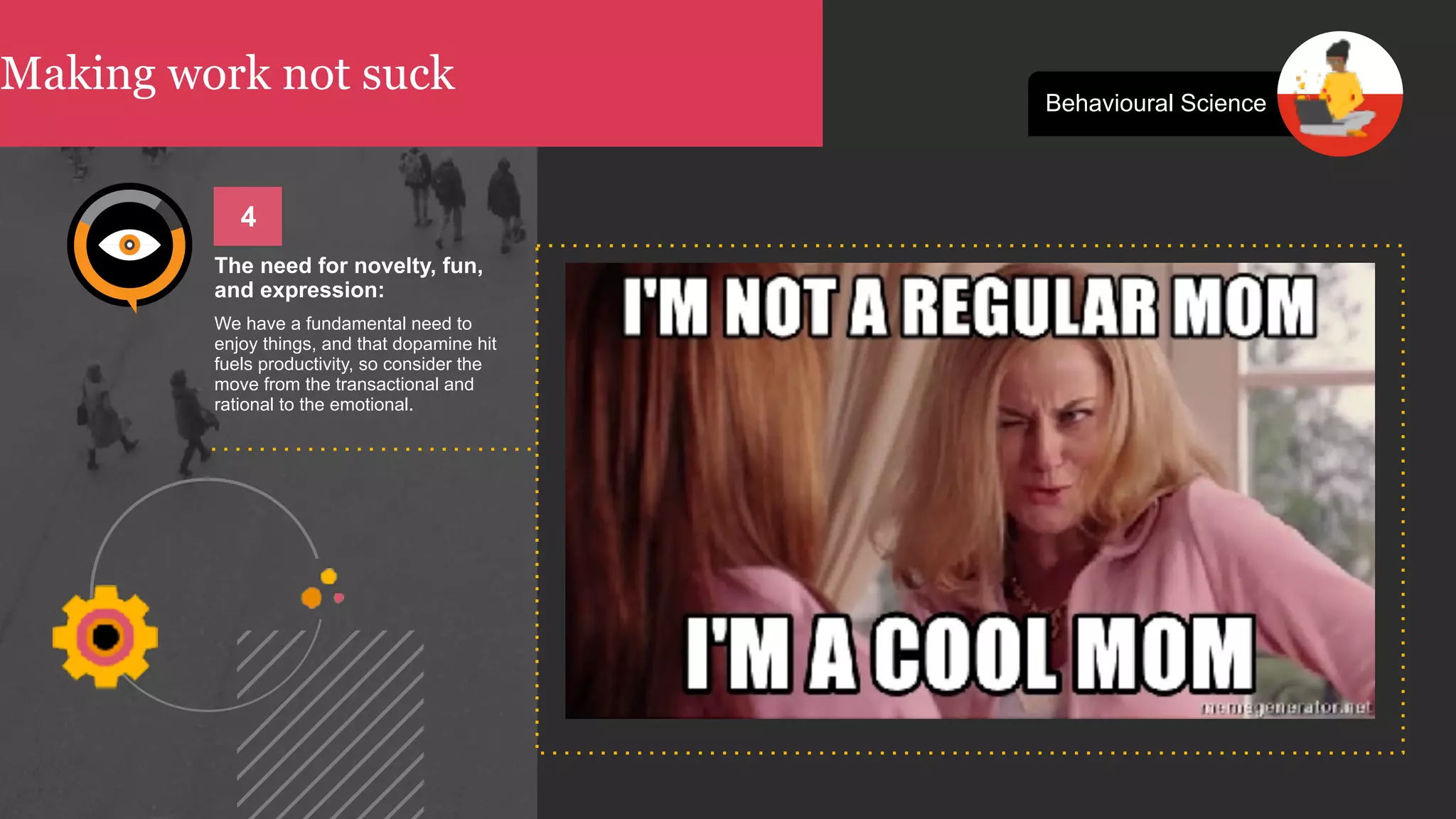
The need for novelty, fun,
and expression:
We have a fundamental need to
enjoy things, and that dopamine hit
fuels productivity, so consider the
move from the transactional and
rational to the emotional.
The need to feel
understood and
connected:
We need to feel meaningful
connection with our work and the
people we work with, requiring an
environment and mechanisms for
social connections and small talk.
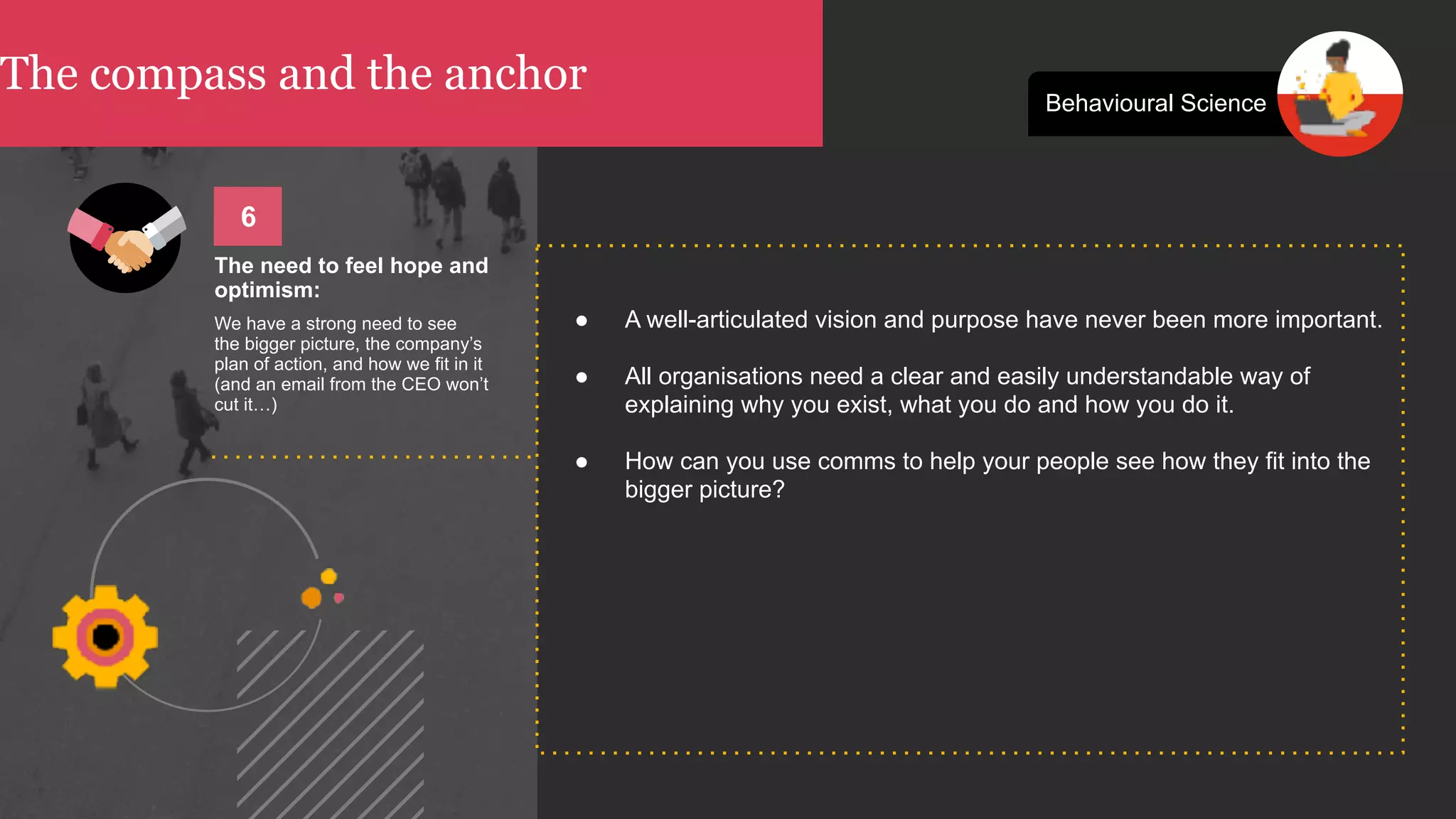
The need to feel hope and
optimism:
We have a strong need to see the
bigger picture, the company’s
plan of action, and how we fit in it.
Behavioural Science
1 2 3
4 5 6
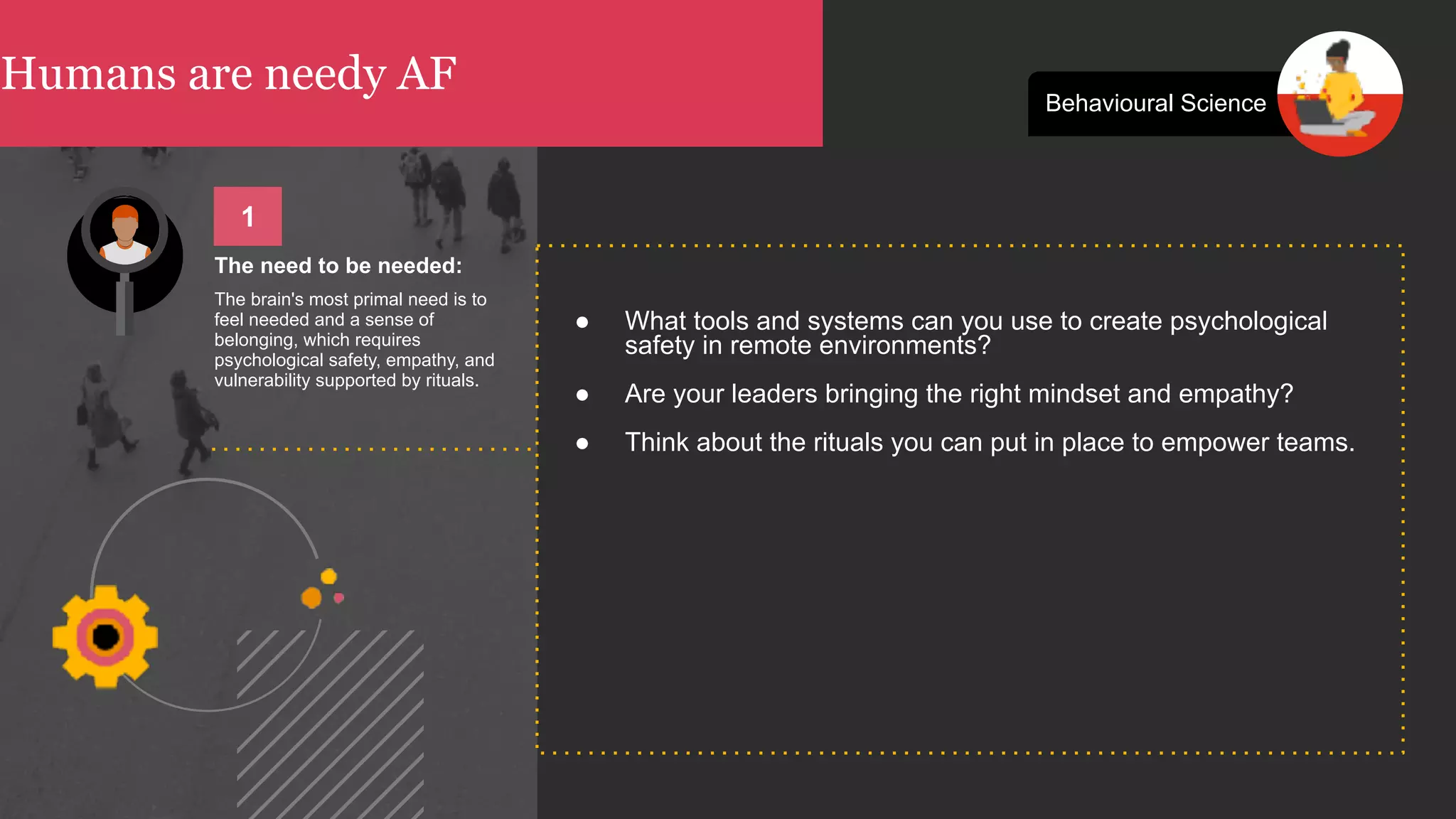
● What tools and systems can you use to create psychological
safety in remote environments?
● Are your leaders bringing the right mindset and empathy?
● Think about the rituals you can put in place to empower teams.
The need to be needed:
The brain's most primal need is to
feel needed and a sense of
belonging, which requires
psychological safety, empathy, and
vulnerability supported by rituals.
Humans are needy AF
1
Behavioural Science
Dust off your pom poms Behavioural Science
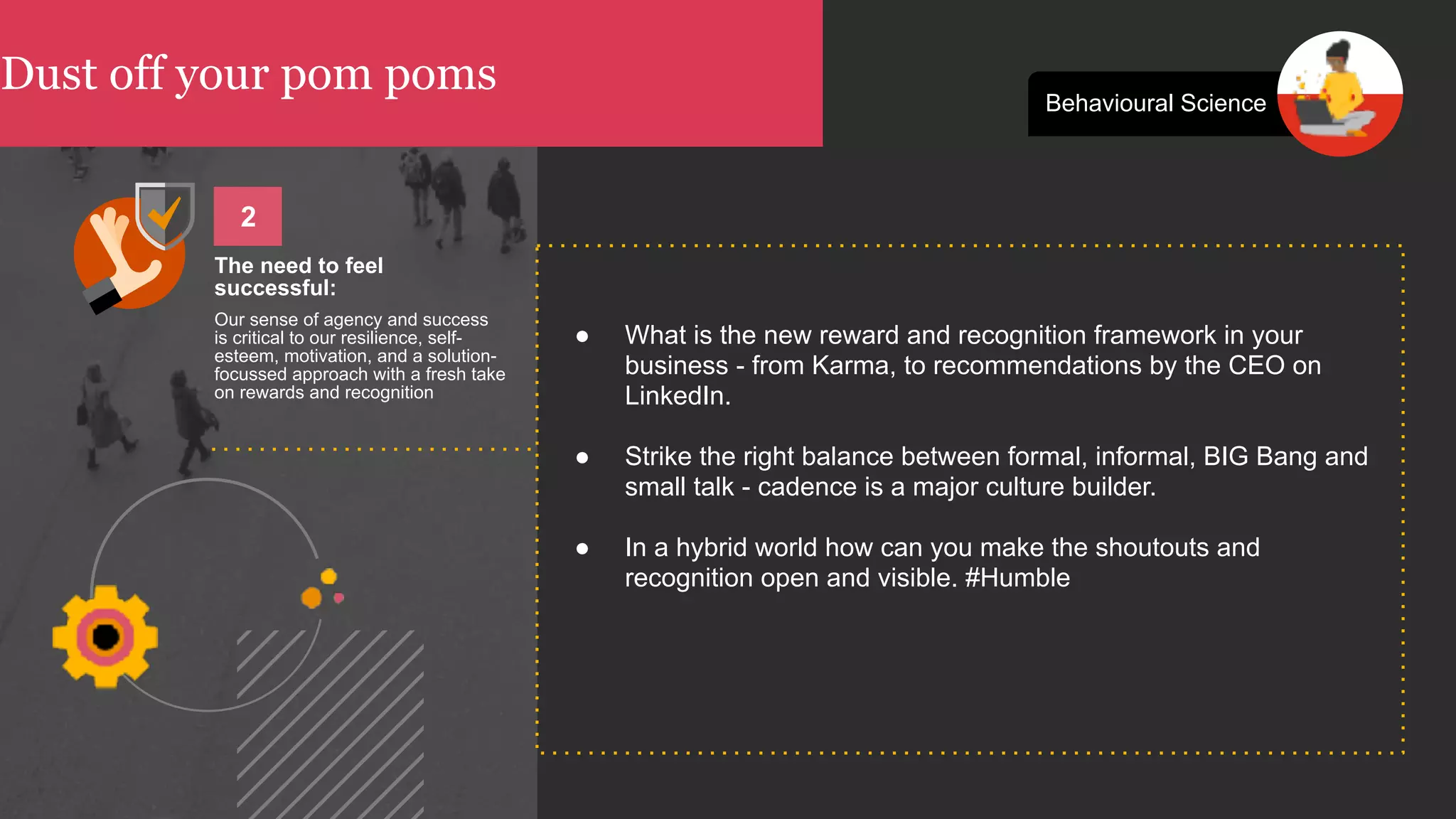
● What is the new reward and recognition framework in your
business - from Karma, to recommendations by the CEO on
LinkedIn.
● Strike the right balance between formal, informal, BIG Bang and
small talk - cadence is a major culture builder.
● In a hybrid world how can you make the shoutouts and
recognition open and visible. #Humble
The need to feel
successful:
Our sense of agency and success
is critical to our resilience, self-
esteem, motivation, and a solution-
focussed approach with a fresh take
on rewards and recognition
2
Go with the grow Behavioural Science
● Play, interaction, and exchange are all part of enriching and inspiring
learning experiences.
● Sitting in front of a screen for an hour does not encourage this.
● How do we create the conditions for learning to be a pleasure?
The need to learn 

and grow:
We have a strong need to learn,
receive feedback, track our
progress, and use that to grow
using new media and across virtual
environments.
3
Making work not suck Behavioural Science
The need for novelty, fun,
and expression:
We have a fundamental need to
enjoy things, and that dopamine hit
fuels productivity, so consider the
move from the transactional and
rational to the emotional.
4
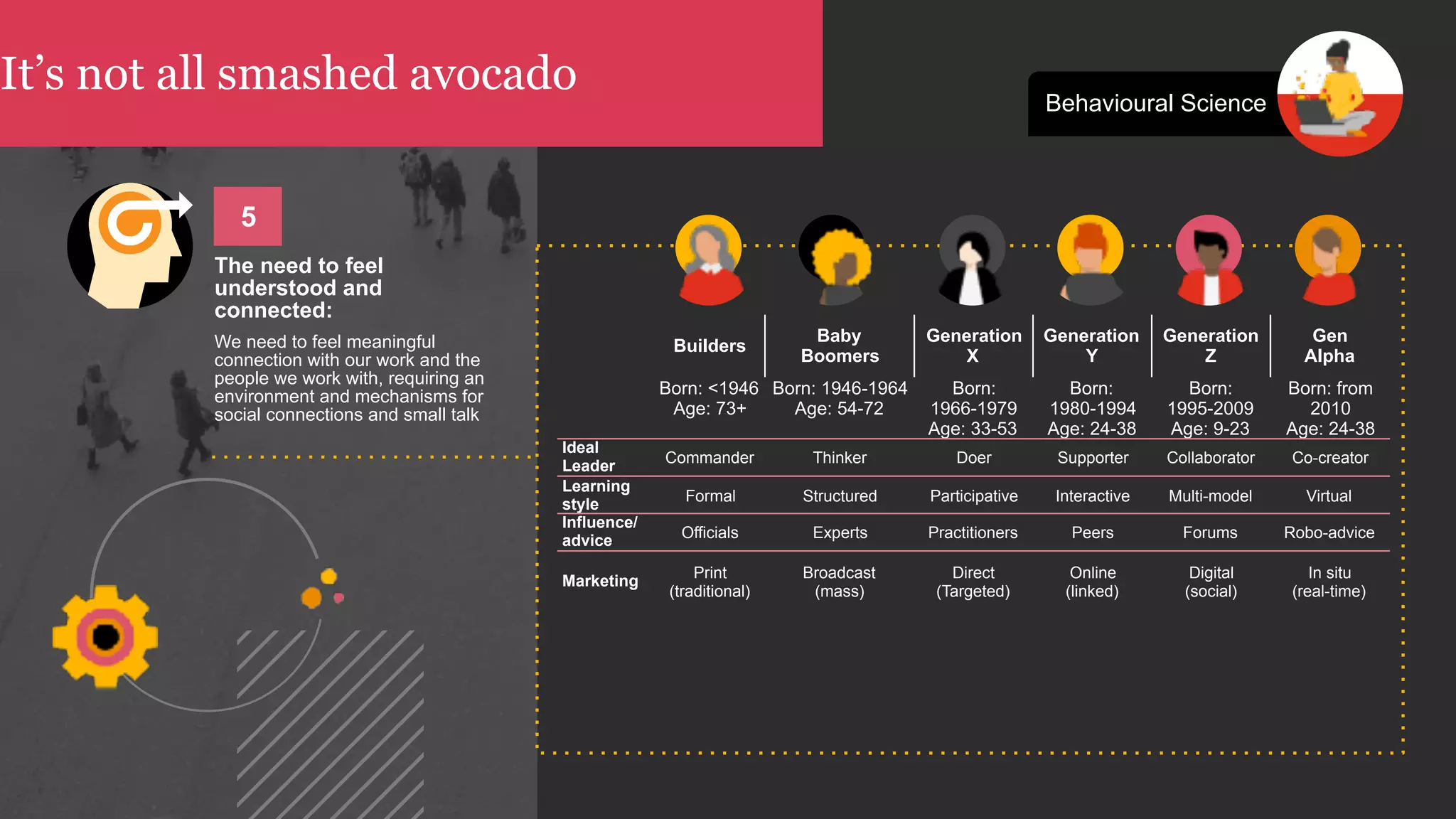
It’s not all smashed avocado Behavioural Science
The need to feel
understood and
connected:
We need to feel meaningful
connection with our work and the
people we work with, requiring an
environment and mechanisms for
social connections and small talk
5
Builders
Baby

Boomers
Generation

X
Generation

Y
Generation

Z
Gen

Alpha
Born: <1946
Age: 73+
Born: 1946-1964
Age: 54-72
Born:
1966-1979
Age: 33-53
Born:
1980-1994
Age: 24-38
Born:
1995-2009
Age: 9-23
Born: from
2010
Age: 24-38
Ideal

Leader
Commander Thinker Doer Supporter Collaborator Co-creator
Learning
style
Formal Structured Participative Interactive Multi-model Virtual
Influence/
advice
Officials Experts Practitioners Peers Forums Robo-advice
Marketing
Print
(traditional)
Broadcast

(mass)
Direct
(Targeted)
Online

(linked)
Digital

(social)
In situ

(real-time)
The compass and the anchor Behavioural Science
● A well-articulated vision and purpose have never been more important.
● All organisations need a clear and easily understandable way of
explaining why you exist, what you do and how you do it.
● How can you use comms to help your people see how they fit into the
bigger picture?
The need to feel hope and
optimism:
We have a strong need to see 

the bigger picture, the company’s
plan of action, and how we fit in it
(and an email from the CEO won’t
cut it…)
6
Co-create with
your people Technology
Where to
from here?
Sonia Clarke
Director, PwC

linkedin.com/in/sonia-
clarke-817a1312

Dr Ben Hamer
Future of Work
Lead, PwC

linkedin.com/in/dr-ben-
hamer-11453b21
Let us know
what you think
of the memes

Work Life Through a Screen - How Comms can Foster Collaboration and Innovation Virtually

  • 1.
    Work life through ascreen CommsCon | May 2021
  • 2.
  • 3.
    From the riseof manufacturing in the 18th century to a Fourth Industrial Revolution driven by automation and smart technology, shifts in the workplace have always sparked opportunities and uncertainties. Fourth Industrial Revolution Like, totally today Second Industrial Revolution Cars, planes, and trains - 
 oh my! First Industrial Revolution A move from the farm to the city 1700s Late 19-20th century Mid 1900s Work has evolved over time, the one constant here is change NOW 01 02 04 Technology on steroids 03
  • 4.
    Kids these days willnever know the struggle
  • 5.
    When someone asks youwhat Limewire is.
  • 6.
    What was yourfirst email address? tastybiatch_xox@hotma •••••••••••••••
  • 8.
    We are currently experiencingchange at the fastest rate in human history. And it’s also the slowest we’ll experience it for the rest of our lives.
  • 9.
  • 10.
    Me after hearing someonecough on my $8 round trip flight to Italy
  • 11.
  • 12.
    61% of PwC employeesare spending more time having meetings when working remotely, while… 31% cited less time being creative and innovative 98% feel like they have the skills they need to effectively work from home 34% expressed a concern that their career progression would be negatively impacted by working remotely only 5% of people feel negative about the impact of automation on their work 61% said their workload has increased since remote working 72% feel confident and optimistic about the Future of Work We surveyed our people 51% believe that the organisational culture has changed for the better since the pandemic COVID-19 Workforce impacts
  • 13.
    Collaboration fun police Workin’ hard (andlong) for the money The neighbourhood business district Reimagining the office. Hint: No cubicles
  • 14.
    The Future ofWork 
 is being shaped by it’s becoming apparent that organisations need talented people more than talented people need organisations. employees
  • 15.
    So what does thisall mean for us?
  • 16.
    Our work hasnever been more critical… … or difficult.
  • 17.
    It’s time tohit reset
  • 18.
    We have ahuge opportunity to reshape our role and value.
  • 19.
  • 21.
    2021 
 The year
 of the experiment
  • 22.
    The need tobe needed: The brain's most primal need is to feel needed and a sense of belonging, which requires psychological safety, empathy, and vulnerability supported by rituals. There’s a new Maslow in town The need to feel successful: Our sense of agency and success is critical to our resilience, self- esteem, motivation, and a solution- focussed approach with a fresh take on rewards and recognition. The need to learn 
 and grow: We have a strong need to learn, receive feedback, track our progress, and use that to grow using new media and across virtual environments. The need for novelty, fun, and expression: We have a fundamental need to enjoy things, and that dopamine hit fuels productivity, so consider the move from the transactional and rational to the emotional. The need to feel understood and connected: We need to feel meaningful connection with our work and the people we work with, requiring an environment and mechanisms for social connections and small talk. The need to feel hope and optimism: We have a strong need to see the bigger picture, the company’s plan of action, and how we fit in it. Behavioural Science 1 2 3 4 5 6
  • 23.
    ● What toolsand systems can you use to create psychological safety in remote environments? ● Are your leaders bringing the right mindset and empathy? ● Think about the rituals you can put in place to empower teams. The need to be needed: The brain's most primal need is to feel needed and a sense of belonging, which requires psychological safety, empathy, and vulnerability supported by rituals. Humans are needy AF 1 Behavioural Science
  • 24.
    Dust off yourpom poms Behavioural Science ● What is the new reward and recognition framework in your business - from Karma, to recommendations by the CEO on LinkedIn. ● Strike the right balance between formal, informal, BIG Bang and small talk - cadence is a major culture builder. ● In a hybrid world how can you make the shoutouts and recognition open and visible. #Humble The need to feel successful: Our sense of agency and success is critical to our resilience, self- esteem, motivation, and a solution- focussed approach with a fresh take on rewards and recognition 2
  • 25.
    Go with thegrow Behavioural Science ● Play, interaction, and exchange are all part of enriching and inspiring learning experiences. ● Sitting in front of a screen for an hour does not encourage this. ● How do we create the conditions for learning to be a pleasure? The need to learn 
 and grow: We have a strong need to learn, receive feedback, track our progress, and use that to grow using new media and across virtual environments. 3
  • 26.
    Making work notsuck Behavioural Science The need for novelty, fun, and expression: We have a fundamental need to enjoy things, and that dopamine hit fuels productivity, so consider the move from the transactional and rational to the emotional. 4
  • 27.
    It’s not allsmashed avocado Behavioural Science The need to feel understood and connected: We need to feel meaningful connection with our work and the people we work with, requiring an environment and mechanisms for social connections and small talk 5 Builders Baby
 Boomers Generation
 X Generation
 Y Generation
 Z Gen
 Alpha Born: <1946 Age: 73+ Born: 1946-1964 Age: 54-72 Born: 1966-1979 Age: 33-53 Born: 1980-1994 Age: 24-38 Born: 1995-2009 Age: 9-23 Born: from 2010 Age: 24-38 Ideal
 Leader Commander Thinker Doer Supporter Collaborator Co-creator Learning style Formal Structured Participative Interactive Multi-model Virtual Influence/ advice Officials Experts Practitioners Peers Forums Robo-advice Marketing Print (traditional) Broadcast
 (mass) Direct (Targeted) Online
 (linked) Digital
 (social) In situ
 (real-time)
  • 28.
    The compass andthe anchor Behavioural Science ● A well-articulated vision and purpose have never been more important. ● All organisations need a clear and easily understandable way of explaining why you exist, what you do and how you do it. ● How can you use comms to help your people see how they fit into the bigger picture? The need to feel hope and optimism: We have a strong need to see 
 the bigger picture, the company’s plan of action, and how we fit in it (and an email from the CEO won’t cut it…) 6
  • 29.
  • 30.
  • 31.
    Sonia Clarke Director, PwC linkedin.com/in/sonia- clarke-817a1312 DrBen Hamer Future of Work Lead, PwC linkedin.com/in/dr-ben- hamer-11453b21 Let us know what you think of the memes