
BRIDLE JOINTS
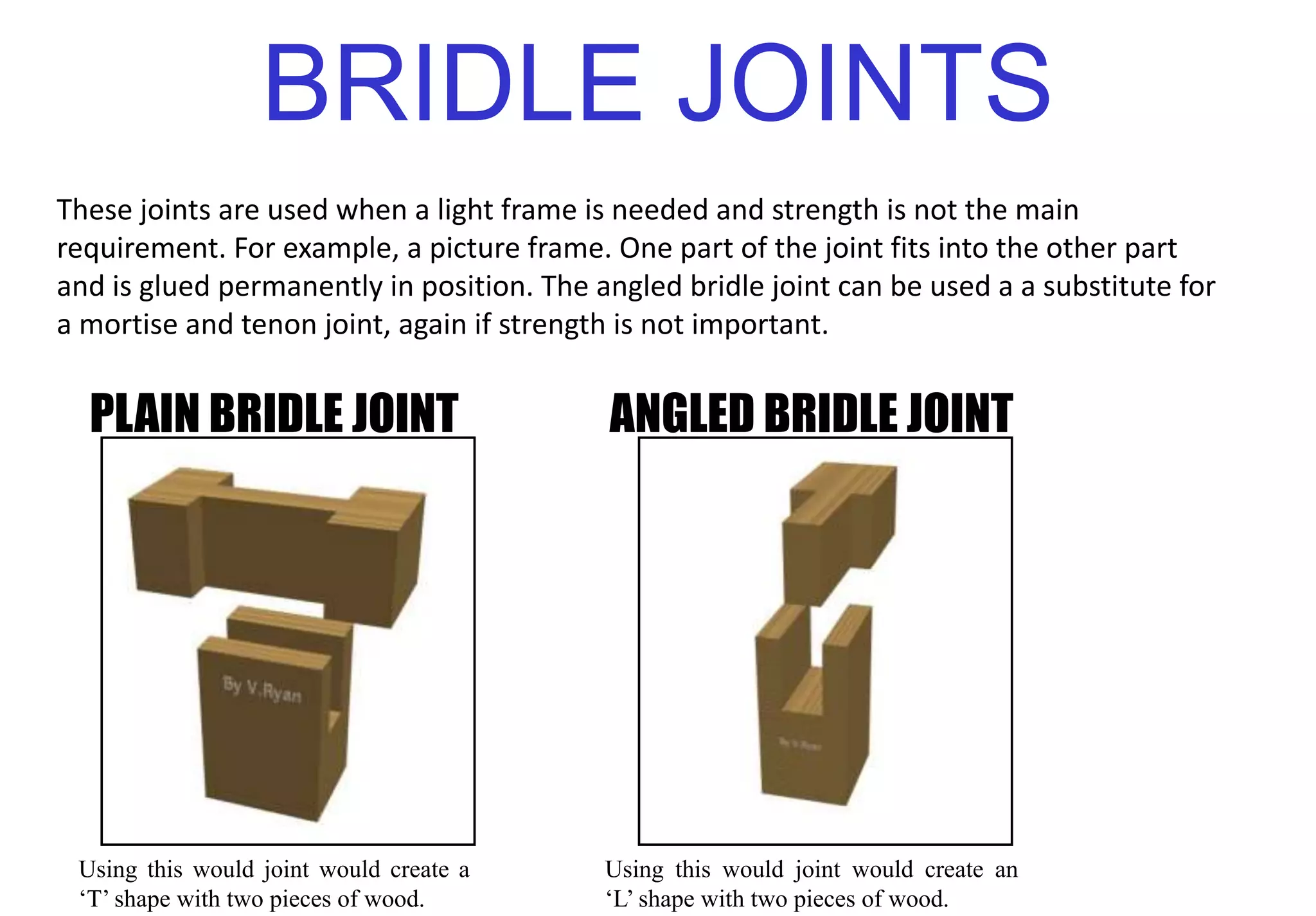
These joints are used when a light frame is needed and strength is not the main
requirement. For example, a picture frame. One part of the joint fits into the other part
and is glued permanently in position. The angled bridle joint can be used a a substitute for
a mortise and tenon joint, again if strength is not important.


  PLAIN BRIDLE JOINT                       ANGLED BRIDLE JOINT


 Using this would joint would create a     Using this would joint would create an
 ‘T’ shape with two pieces of wood.        ‘L’ shape with two pieces of wood.
BUTT JOINTS
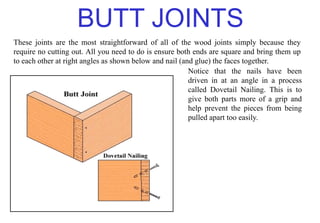
These joints are the most straightforward of all of the wood joints simply because they
require no cutting out. All you need to do is ensure both ends are square and bring them up
to each other at right angles as shown below and nail (and glue) the faces together.
                                                         Notice that the nails have been
                                                         driven in at an angle in a process
                                                         called Dovetail Nailing. This is to
                                                         give both parts more of a grip and
                                                         help prevent the pieces from being
                                                         pulled apart too easily.
CORNER
                   REBATE JOINTS is a simple
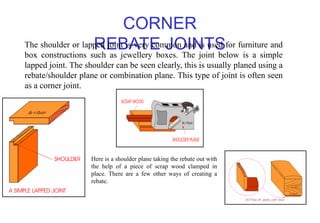
The shoulder or lapped joint is very common and is used for furniture and
box constructions such as jewellery boxes. The joint below
lapped joint. The shoulder can be seen clearly, this is usually planed using a
rebate/shoulder plane or combination plane. This type of joint is often seen
as a corner joint.


                    Here is a shoulder plane taking the rebate out with
                    the help of a piece of scrap wood clamped in
                    place. There are a few other ways of creating a
                    rebate.
Woodwork

Woodwork

  • 1.
    BRIDLE JOINTS These jointsare used when a light frame is needed and strength is not the main requirement. For example, a picture frame. One part of the joint fits into the other part and is glued permanently in position. The angled bridle joint can be used a a substitute for a mortise and tenon joint, again if strength is not important. PLAIN BRIDLE JOINT ANGLED BRIDLE JOINT Using this would joint would create a Using this would joint would create an ‘T’ shape with two pieces of wood. ‘L’ shape with two pieces of wood.
  • 2.
    BUTT JOINTS These jointsare the most straightforward of all of the wood joints simply because they require no cutting out. All you need to do is ensure both ends are square and bring them up to each other at right angles as shown below and nail (and glue) the faces together. Notice that the nails have been driven in at an angle in a process called Dovetail Nailing. This is to give both parts more of a grip and help prevent the pieces from being pulled apart too easily.
  • 3.
    CORNER REBATE JOINTS is a simple The shoulder or lapped joint is very common and is used for furniture and box constructions such as jewellery boxes. The joint below lapped joint. The shoulder can be seen clearly, this is usually planed using a rebate/shoulder plane or combination plane. This type of joint is often seen as a corner joint. Here is a shoulder plane taking the rebate out with the help of a piece of scrap wood clamped in place. There are a few other ways of creating a rebate.