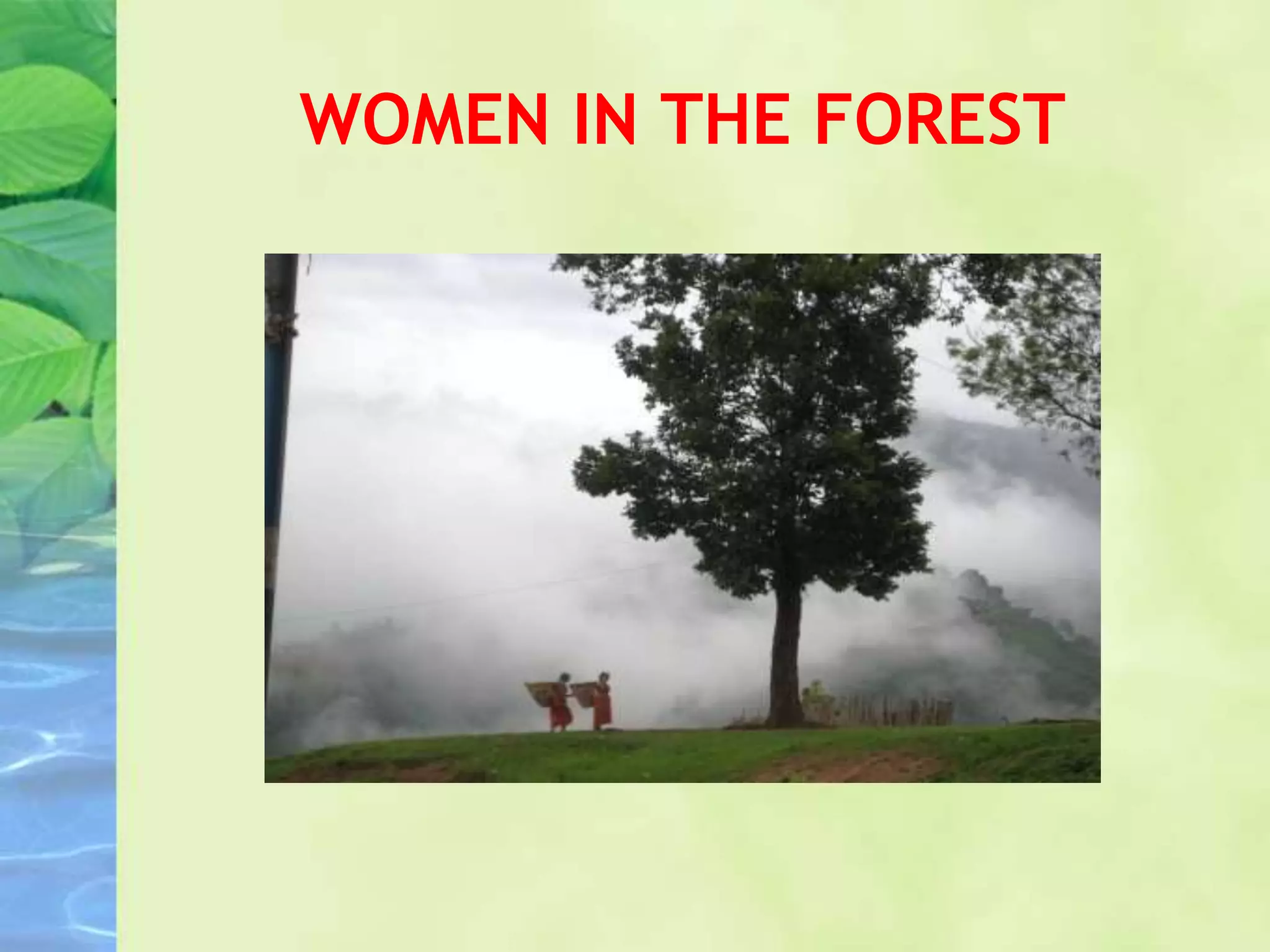
WOMEN IN THE FOREST
THE FUNDAMENTALS AND
   FUTURE OF ECOCRITICISM
• As a field of literary study that
  addresses how human study to
  nonhuman nature or the environment
  in literature.
• Prefixed “eco” are listed, among them
  “Ecofeminism” and “economics.”
• “Eco,”from the Greek root oikos,
  means “house.”
Ecocriticism
• “economy” - law of the house
• “ecology” - relationships between living
  organisms and their environment.
• Ecocriticism- the criticism of the
  “house,” i.e., the environment, as
  represented in literature.
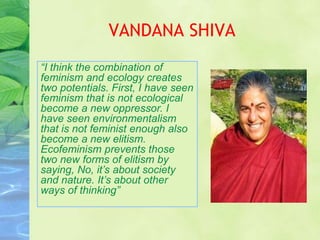
VANDANA SHIVA
“I think the combination of
feminism and ecology creates
two potentials. First, I have seen
feminism that is not ecological
become a new oppressor. I
have seen environmentalism
that is not feminist enough also
become a new elitism.
Ecofeminism prevents those
two new forms of elitism by
saying, No, it’s about society
and nature. It’s about other
ways of thinking”
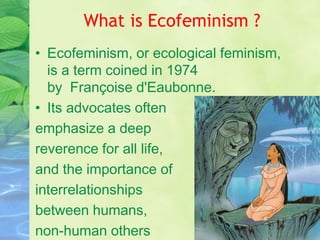
What is Ecofeminism ?
• Ecofeminism, or ecological feminism,
  is a term coined in 1974
  by Françoise d'Eaubonne.
• Its advocates often
emphasize a deep
reverence for all life,
and the importance of
interrelationships
between humans,
non-human others
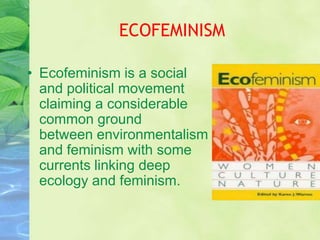
ECOFEMINISM

• Ecofeminism is a social
  and political movement
  claiming a considerable
  common ground
  between environmentalism
  and feminism with some
  currents linking deep
  ecology and feminism.
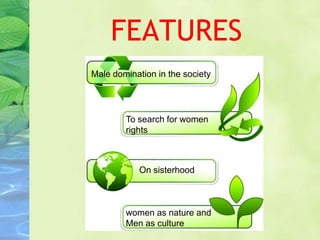
FEATURES
Male domination in the society


        To search for women
        rights


            On sisterhood


        women as nature and
        Men as culture
EXAMPLES
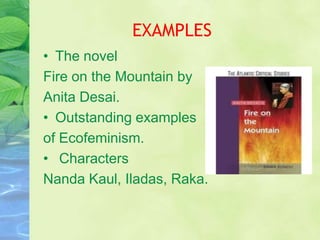
• The novel
Fire on the Mountain by
Anita Desai.
• Outstanding examples
of Ecofeminism.
• Characters
Nanda Kaul, Iladas, Raka.
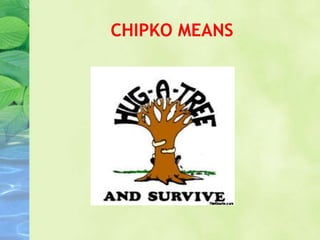
CHIPKO MEANS
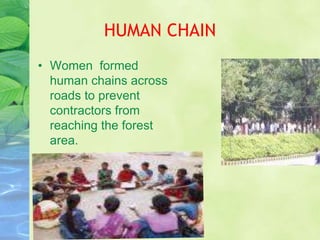
HUMAN CHAIN
• Women formed
  human chains across
  roads to prevent
  contractors from
  reaching the forest
  area.
Result
• Chipko inspired environmentalists
  both nationally and globally and
  contributed substantially to the
  emerging philosophies of eco-
  feminism and deep ecology and
  fields of community-based
  conservation and sustainable
  mountain development.
CONCLUSION
• Another form of transcendentalism
• Man is part of nature
• Ethical responsibility of human beings
THANK YOU
                By
     K.r.aishwarya

Women in the forest

  • 1.
  • 2.
    THE FUNDAMENTALS AND FUTURE OF ECOCRITICISM • As a field of literary study that addresses how human study to nonhuman nature or the environment in literature. • Prefixed “eco” are listed, among them “Ecofeminism” and “economics.” • “Eco,”from the Greek root oikos, means “house.”
  • 3.
    Ecocriticism • “economy” -law of the house • “ecology” - relationships between living organisms and their environment. • Ecocriticism- the criticism of the “house,” i.e., the environment, as represented in literature.
  • 4.
    VANDANA SHIVA “I thinkthe combination of feminism and ecology creates two potentials. First, I have seen feminism that is not ecological become a new oppressor. I have seen environmentalism that is not feminist enough also become a new elitism. Ecofeminism prevents those two new forms of elitism by saying, No, it’s about society and nature. It’s about other ways of thinking”
  • 5.
    What is Ecofeminism? • Ecofeminism, or ecological feminism, is a term coined in 1974 by Françoise d'Eaubonne. • Its advocates often emphasize a deep reverence for all life, and the importance of interrelationships between humans, non-human others
  • 6.
    ECOFEMINISM • Ecofeminism isa social and political movement claiming a considerable common ground between environmentalism and feminism with some currents linking deep ecology and feminism.
  • 7.
    FEATURES Male domination inthe society To search for women rights On sisterhood women as nature and Men as culture
  • 8.
    EXAMPLES • The novel Fireon the Mountain by Anita Desai. • Outstanding examples of Ecofeminism. • Characters Nanda Kaul, Iladas, Raka.
  • 9.
  • 10.
    HUMAN CHAIN • Womenformed human chains across roads to prevent contractors from reaching the forest area.
  • 11.
    Result • Chipko inspiredenvironmentalists both nationally and globally and contributed substantially to the emerging philosophies of eco- feminism and deep ecology and fields of community-based conservation and sustainable mountain development.
  • 12.
    CONCLUSION • Another formof transcendentalism • Man is part of nature • Ethical responsibility of human beings
  • 13.
    THANK YOU By K.r.aishwarya