WIND
POWER
BY
VIJAYASHANKARI.M
IV EEE
WIND ENERGY

The wind is a clean and plentiful source of energy.
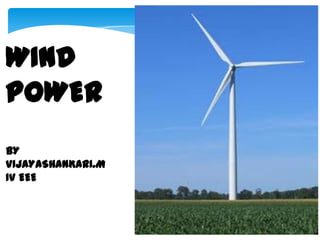
 A wind turbine is a machine that converts the
 kinetic energy in wind into mechanical energy.
The mechanical energy is used directly by
 machinery, such as a pump or grinding
 stones, the machine is usually called a windmill.
The mechanical energy is then converted to
 electricity, the machine is called a wind
 generator, wind turbine, or wind energy converter
 (WEC).
VARIETY OF WINDMILL SIZES
Large wind turbines- installed in clusters called
  wind farms-generate large amounts of
  electricity(MW).
Small wind turbines-generates 100 kW of
  electricity-installed at homes, farms and small
  businesses .
       Used as a source of backup electricity, or to
offset use of utility power and reduce electricity
bills.
 Very small wind turbines -20-500w- charge
  batteries for sailboats and other recreational uses.
Applications
       water pumping, telecommunications power
supply and irrigation.
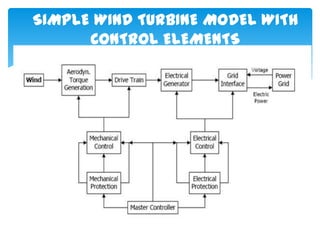
SIMPLE WIND TURBINE MODEL WITH
      CONTROL ELEMENTS
OPERATION


A wind turbine converts kinetic energy in a
 moving air stream to electric energy.
Mechanical torque created by aerodynamic lift
 from the turbine blades is applied to a rotating
 shaft.
 An electrical generator on the same rotating
 shaft produces an opposing electromagnetic
 torque.
In steady operation, the magnitude of the
mechanical torque is equal to that of the
electromagnetic torque, so the rotational speed
remains constant, real power (the product of
rotational speed and torque) is delivered to the
grid.
Since the wind speed is not constant, a variety of
control mechanisms are employed to manage the
conversion process and protect the mechanical
and electrical equipment from conditions that
would result in failure or destruction.
WIND POWER

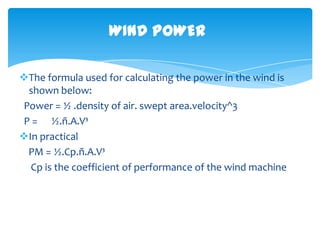
The formula used for calculating the power in the wind is
 shown below:
Power = ½ .density of air. swept area.velocity^3
P = ½.ñ.A.V³
In practical
 PM = ½.Cp.ñ.A.V³
  Cp is the coefficient of performance of the wind machine
PRINCIPLES OF WIND ENERGY
             CONVERSION
There are two primary physical principles of extraction:
     Either lift or drag force or through a combination of the
two.
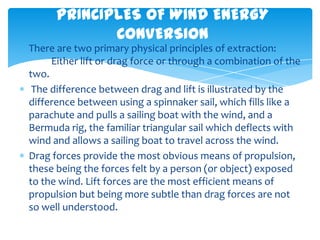
 The difference between drag and lift is illustrated by the
difference between using a spinnaker sail, which fills like a
parachute and pulls a sailing boat with the wind, and a
Bermuda rig, the familiar triangular sail which deflects with
wind and allows a sailing boat to travel across the wind.
Drag forces provide the most obvious means of propulsion,
these being the forces felt by a person (or object) exposed
to the wind. Lift forces are the most efficient means of
propulsion but being more subtle than drag forces are not
so well understood.
DRAG TYPE   LIFT
TYPE
BASIC FEATURES THAT CHARACTERIZE
           LIFT & DRAG

  Drag is in the direction of air flow .
  Lift is perpendicular to the direction of air flow .
  Generation of lift always causes a certain
   amount of drag to be developed .
  With a good aerofoil, the lift produced can be
   more than thirty times greater than the drag.
  Lift devices are generally more efficient than
   drag devices Types and characteristics of rotors .
IMPORTANT WIND SPEEDS TO
            CONSIDER
Start-up wind speed - the wind speed that will
 turn an unloaded rotor.
Cut-in wind speed - the wind speed at which
 the rotor can be loaded.
Rated wind speed - the windspeed at which the
 machine is designed to run (this is at optimum
 tip-speed ratio).
Furling wind speed - the windspeed at which
 the machine will be turned out of the wind to
 prevent damage.
Maximum design wind speed - the windspeed
 above which damage could occur to the machine.
SHEMATIC DIAGRAM
Two main families of windmachines:
    vertical axis machines
    Horizontal axis machines.
 These can in turn use either lift or drag forces to
  harness the wind.
The horizontal axis lift device is the type most
  commonly used.
 The tipspeed ratio :
      It is defined as the ratio of the speed of the
extremities of a windmill rotor to the speed of the
free wind.
 Drag devices-tipspeed ratios less than one -turn
 slowly
Lift devices -high tip-speed ratios(up to 13:1)-
 turn quickly relative to the wind.
The proportion of the power in the wind that the
 rotor can extract is termed the coefficient of
 performance (Cp) and its variation as a function
 of tipspeed ratio is commonly used to characterise
 different types of rotor.
 As mentioned earlier there is an upper limit of Cp
 = 59.3%
 Although in practice real wind rotors have
 maximum Cp values in the range of 25%-45%.
COMPONENTS OF WIND ENERGY
             SYSTEMS

These basic components include:
A rotor
A gearbox
The smallest turbines (under 10 kW) usually do
 not require a gearbox.
An enclosure which protects the gearbox,
 generator and other components of the turbine
 from the elements.
A tail vane or yaw system, which aligns the
 turbine with the wind.
COMPONENTS OF A WIND ENERGY
        SYSTEM
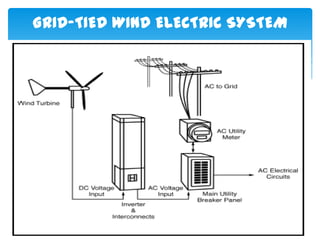
GRID-TIED WIND ELECTRIC SYSTEM
MAINTENANCE OF WIND TURBINE
    It requires periodic maintenance - oiling and greasing,
and regular safety inspections. Check bolts and electrical
connections annually; tighten if necessary.

      Once a year check wind turbines for corrosion and the
guy wires supporting the tower for proper tension.
If the turbine blades are wood, paint to protect from the
elements. Apply a durable leading edge tape to protect the
blades from abrasion due to dust and insects in the air.

      If the paint cracks or the leading edge tape tears away,
the exposed wood will quickly erode. Moisture penetrating
into the wood causes the rotor become unbalanced,
stressing the wind generator. Inspect wooden blades
annually, and do any repairs immediately.

    After 10 years, blades and bearings may need to be
completely replaced. With proper installation and
maintenance, wind turbine can last 20-30 years or longer.
Proper maintenance will also minimize the amount of
mechanical noise produced by your wind turbine
SAFETY CONCERNS
Internal brake and lock
    To prevent maximum wind speed- survival
speed [they will not operate above].

Insulation
       cold winter conditions, be prepared to de-ice
as required, and store batteries in an insulated
place.

Mounting turbines on rooftops is generally not
 recommended
THANK U

wind power

  • 1.
  • 2.
    WIND ENERGY The windis a clean and plentiful source of energy.  A wind turbine is a machine that converts the kinetic energy in wind into mechanical energy. The mechanical energy is used directly by machinery, such as a pump or grinding stones, the machine is usually called a windmill. The mechanical energy is then converted to electricity, the machine is called a wind generator, wind turbine, or wind energy converter (WEC).
  • 3.
    VARIETY OF WINDMILLSIZES Large wind turbines- installed in clusters called wind farms-generate large amounts of electricity(MW). Small wind turbines-generates 100 kW of electricity-installed at homes, farms and small businesses . Used as a source of backup electricity, or to offset use of utility power and reduce electricity bills.  Very small wind turbines -20-500w- charge batteries for sailboats and other recreational uses. Applications water pumping, telecommunications power supply and irrigation.
  • 4.
    SIMPLE WIND TURBINEMODEL WITH CONTROL ELEMENTS
  • 5.
    OPERATION A wind turbineconverts kinetic energy in a moving air stream to electric energy. Mechanical torque created by aerodynamic lift from the turbine blades is applied to a rotating shaft.  An electrical generator on the same rotating shaft produces an opposing electromagnetic torque.
  • 6.
    In steady operation,the magnitude of the mechanical torque is equal to that of the electromagnetic torque, so the rotational speed remains constant, real power (the product of rotational speed and torque) is delivered to the grid. Since the wind speed is not constant, a variety of control mechanisms are employed to manage the conversion process and protect the mechanical and electrical equipment from conditions that would result in failure or destruction.
  • 7.
    WIND POWER The formulaused for calculating the power in the wind is shown below: Power = ½ .density of air. swept area.velocity^3 P = ½.ñ.A.V³ In practical PM = ½.Cp.ñ.A.V³ Cp is the coefficient of performance of the wind machine
  • 8.
    PRINCIPLES OF WINDENERGY CONVERSION There are two primary physical principles of extraction: Either lift or drag force or through a combination of the two. The difference between drag and lift is illustrated by the difference between using a spinnaker sail, which fills like a parachute and pulls a sailing boat with the wind, and a Bermuda rig, the familiar triangular sail which deflects with wind and allows a sailing boat to travel across the wind. Drag forces provide the most obvious means of propulsion, these being the forces felt by a person (or object) exposed to the wind. Lift forces are the most efficient means of propulsion but being more subtle than drag forces are not so well understood.
  • 9.
    DRAG TYPE LIFT TYPE
  • 10.
    BASIC FEATURES THATCHARACTERIZE LIFT & DRAG Drag is in the direction of air flow . Lift is perpendicular to the direction of air flow . Generation of lift always causes a certain amount of drag to be developed . With a good aerofoil, the lift produced can be more than thirty times greater than the drag. Lift devices are generally more efficient than drag devices Types and characteristics of rotors .
  • 11.
    IMPORTANT WIND SPEEDSTO CONSIDER Start-up wind speed - the wind speed that will turn an unloaded rotor. Cut-in wind speed - the wind speed at which the rotor can be loaded. Rated wind speed - the windspeed at which the machine is designed to run (this is at optimum tip-speed ratio). Furling wind speed - the windspeed at which the machine will be turned out of the wind to prevent damage. Maximum design wind speed - the windspeed above which damage could occur to the machine.
  • 12.
  • 13.
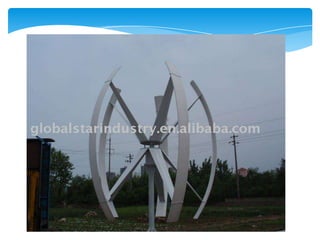
    Two main familiesof windmachines: vertical axis machines Horizontal axis machines.  These can in turn use either lift or drag forces to harness the wind. The horizontal axis lift device is the type most commonly used.  The tipspeed ratio : It is defined as the ratio of the speed of the extremities of a windmill rotor to the speed of the free wind.
  • 14.
     Drag devices-tipspeedratios less than one -turn slowly Lift devices -high tip-speed ratios(up to 13:1)- turn quickly relative to the wind. The proportion of the power in the wind that the rotor can extract is termed the coefficient of performance (Cp) and its variation as a function of tipspeed ratio is commonly used to characterise different types of rotor.  As mentioned earlier there is an upper limit of Cp = 59.3%  Although in practice real wind rotors have maximum Cp values in the range of 25%-45%.
  • 17.
    COMPONENTS OF WINDENERGY SYSTEMS These basic components include: A rotor A gearbox The smallest turbines (under 10 kW) usually do not require a gearbox. An enclosure which protects the gearbox, generator and other components of the turbine from the elements. A tail vane or yaw system, which aligns the turbine with the wind.
  • 18.
    COMPONENTS OF AWIND ENERGY SYSTEM
  • 19.
  • 20.
    MAINTENANCE OF WINDTURBINE It requires periodic maintenance - oiling and greasing, and regular safety inspections. Check bolts and electrical connections annually; tighten if necessary. Once a year check wind turbines for corrosion and the guy wires supporting the tower for proper tension. If the turbine blades are wood, paint to protect from the elements. Apply a durable leading edge tape to protect the blades from abrasion due to dust and insects in the air. If the paint cracks or the leading edge tape tears away, the exposed wood will quickly erode. Moisture penetrating into the wood causes the rotor become unbalanced, stressing the wind generator. Inspect wooden blades annually, and do any repairs immediately. After 10 years, blades and bearings may need to be completely replaced. With proper installation and maintenance, wind turbine can last 20-30 years or longer. Proper maintenance will also minimize the amount of mechanical noise produced by your wind turbine
  • 21.
    SAFETY CONCERNS Internal brakeand lock To prevent maximum wind speed- survival speed [they will not operate above]. Insulation cold winter conditions, be prepared to de-ice as required, and store batteries in an insulated place. Mounting turbines on rooftops is generally not recommended
  • 22.