
WiMAX  Worldwide Interoperability for Microwave Access WiMAX as a broadband access solution for developing countries Chun Chen Orawan Kawsakul Peter Karanja Jamil Khatib Veronica Vargas
Contents Introduction to WiMAX Objectives Analysis Description Conclusions
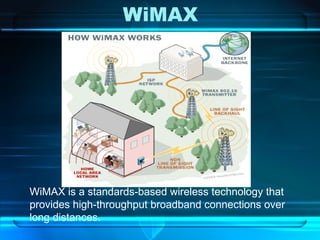
WiMAX WiMAX is a standards-based wireless technology that provides high-throughput broadband connections over long distances.
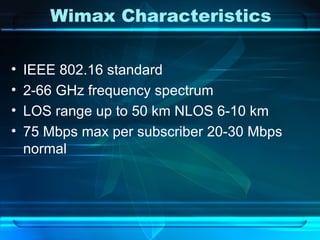
Wimax Characteristics IEEE 802.16 standard 2-66 GHz frequency spectrum LOS range up to 50 km NLOS 6-10 km 75 Mbps max per subscriber 20-30 Mbps normal
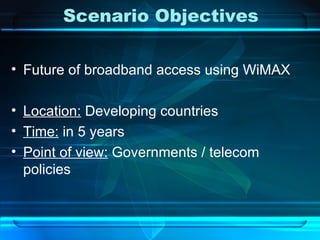
Scenario Objectives Future of broadband access using WiMAX Location:  Developing countries Time:  in 5 years Point of view:  Governments / telecom policies
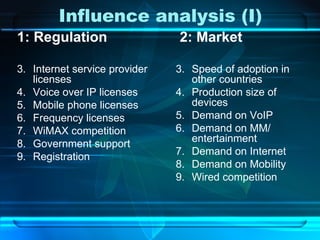
Influence analysis (I) 1: Regulation Internet service provider licenses Voice over IP licenses Mobile phone licenses Frequency licenses WiMAX competition  Government support Registration 2: Market Speed of adoption in other countries Production size of devices Demand on VoIP Demand on MM/ entertainment Demand on Internet Demand on Mobility Wired competition
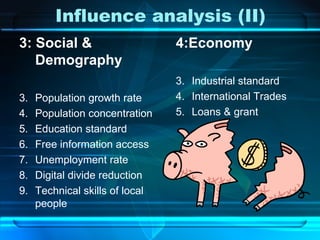
3: Social & Demography Population growth rate Population concentration Education standard Free information access Unemployment rate Digital divide reduction Technical skills of local people 4:Economy Industrial standard International Trades Loans & grant Influence analysis (II)
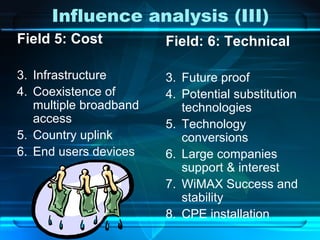
Field 5: Cost Infrastructure  Coexistence of multiple broadband access  Country uplink End users devices Field: 6: Technical Future proof  Potential substitution technologies Technology conversions Large companies support & interest WiMAX Success and stability  CPE installation Influence analysis (III)
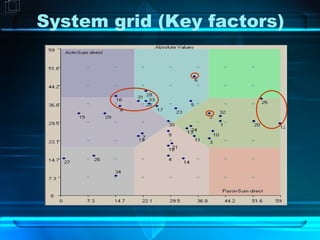
System grid (Key factors)
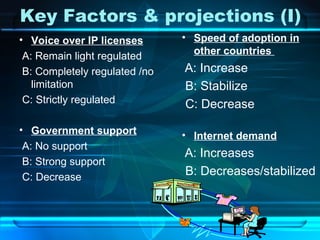
Key Factors & projections (I) Voice over IP licenses A: Remain light regulated B: Completely regulated /no limitation C: Strictly regulated Government support A: No support B: Strong support C: Decrease Speed of adoption in other countries   A: Increase B: Stabilize C: Decrease Internet demand A: Increases B: Decreases/stabilized
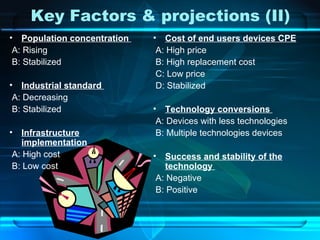
Population concentration   A: Rising B: Stabilized Industrial standard  A: Decreasing B: Stabilized Infrastructure implementation   A: High cost B: Low cost Cost of end users devices CPE  A: High price B: High replacement cost C: Low price D: Stabilized Technology conversions   A: Devices with less technologies B: Multiple technologies devices Success and stability of the technology   A: Negative B: Positive Key Factors & projections (II)
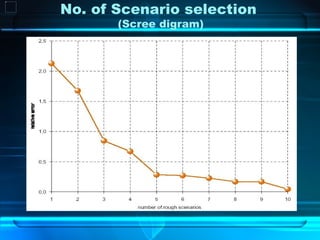
No. of Scenario selection  (Scree digram)
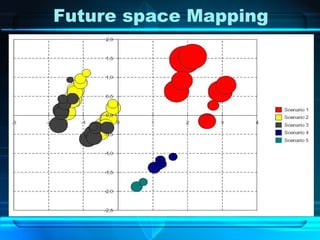
Future space Mapping
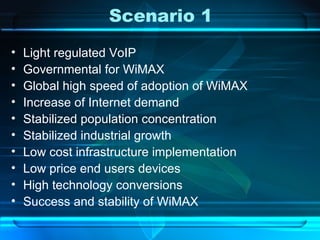
Scenario 1 Light regulated VoIP Governmental for WiMAX Global high speed of adoption of WiMAX Increase of Internet demand Stabilized population concentration Stabilized industrial growth Low cost infrastructure implementation Low price end users devices High technology conversions  Success and stability of WiMAX
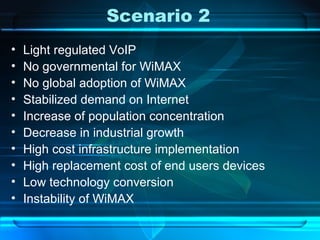
Scenario 2 Light regulated VoIP No governmental for WiMAX No global adoption of WiMAX Stabilized demand on Internet Increase of population concentration Decrease in industrial growth High cost infrastructure implementation High replacement cost of end users devices Low technology conversion Instability of WiMAX
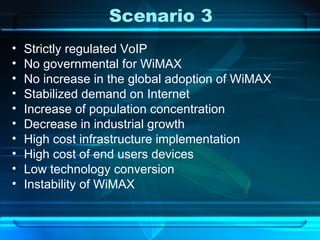
Scenario 3 Strictly  regulated VoIP No governmental for WiMAX No increase in the global adoption of WiMAX Stabilized demand on Internet Increase of population concentration Decrease in industrial growth High cost infrastructure implementation High cost of end users devices Low technology conversion Instability of WiMAX
Conclusions Observe the adoption of WiMAX Observe the WiMAX industry Global internet connection & investment Suitable for rural & urban areas Population movement & access flexibility Governmental incentives

WiMax Scenario

  • 1.
    WiMAX WorldwideInteroperability for Microwave Access WiMAX as a broadband access solution for developing countries Chun Chen Orawan Kawsakul Peter Karanja Jamil Khatib Veronica Vargas
  • 2.
    Contents Introduction toWiMAX Objectives Analysis Description Conclusions
  • 3.
    WiMAX WiMAX isa standards-based wireless technology that provides high-throughput broadband connections over long distances.
  • 4.
    Wimax Characteristics IEEE802.16 standard 2-66 GHz frequency spectrum LOS range up to 50 km NLOS 6-10 km 75 Mbps max per subscriber 20-30 Mbps normal
  • 5.
    Scenario Objectives Futureof broadband access using WiMAX Location: Developing countries Time: in 5 years Point of view: Governments / telecom policies
  • 6.
    Influence analysis (I)1: Regulation Internet service provider licenses Voice over IP licenses Mobile phone licenses Frequency licenses WiMAX competition Government support Registration 2: Market Speed of adoption in other countries Production size of devices Demand on VoIP Demand on MM/ entertainment Demand on Internet Demand on Mobility Wired competition
  • 7.
    3: Social &Demography Population growth rate Population concentration Education standard Free information access Unemployment rate Digital divide reduction Technical skills of local people 4:Economy Industrial standard International Trades Loans & grant Influence analysis (II)
  • 8.
    Field 5: CostInfrastructure Coexistence of multiple broadband access Country uplink End users devices Field: 6: Technical Future proof Potential substitution technologies Technology conversions Large companies support & interest WiMAX Success and stability CPE installation Influence analysis (III)
  • 9.
  • 10.
    Key Factors &projections (I) Voice over IP licenses A: Remain light regulated B: Completely regulated /no limitation C: Strictly regulated Government support A: No support B: Strong support C: Decrease Speed of adoption in other countries A: Increase B: Stabilize C: Decrease Internet demand A: Increases B: Decreases/stabilized
  • 11.
    Population concentration A: Rising B: Stabilized Industrial standard A: Decreasing B: Stabilized Infrastructure implementation A: High cost B: Low cost Cost of end users devices CPE A: High price B: High replacement cost C: Low price D: Stabilized Technology conversions A: Devices with less technologies B: Multiple technologies devices Success and stability of the technology A: Negative B: Positive Key Factors & projections (II)
  • 12.
    No. of Scenarioselection (Scree digram)
  • 13.
  • 14.
    Scenario 1 Lightregulated VoIP Governmental for WiMAX Global high speed of adoption of WiMAX Increase of Internet demand Stabilized population concentration Stabilized industrial growth Low cost infrastructure implementation Low price end users devices High technology conversions Success and stability of WiMAX
  • 15.
    Scenario 2 Lightregulated VoIP No governmental for WiMAX No global adoption of WiMAX Stabilized demand on Internet Increase of population concentration Decrease in industrial growth High cost infrastructure implementation High replacement cost of end users devices Low technology conversion Instability of WiMAX
  • 16.
    Scenario 3 Strictly regulated VoIP No governmental for WiMAX No increase in the global adoption of WiMAX Stabilized demand on Internet Increase of population concentration Decrease in industrial growth High cost infrastructure implementation High cost of end users devices Low technology conversion Instability of WiMAX
  • 17.
    Conclusions Observe theadoption of WiMAX Observe the WiMAX industry Global internet connection & investment Suitable for rural & urban areas Population movement & access flexibility Governmental incentives