Why Eating Organic is 
Better for You 
By: Saba Shojai
Organic: What Does it 
Mean? 
“Organic”= the way farmers grow and process 
agricultural products 
Designed to encourage soil and water conservation 
and reduce pollution 
Organic farming include using natural fertilizers
Organic vs Conventional 
Farming 
Organic 
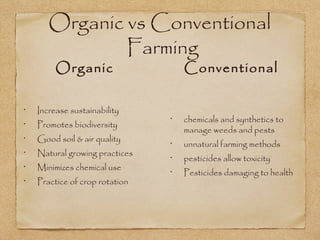
• Increase sustainability 
• Promotes biodiversity 
• Good soil & air quality 
• Natural growing practices 
• Minimizes chemical use 
• Practice of crop rotation 
Conventional 
• chemicals and synthetics to 
manage weeds and pests 
• unnatural farming methods 
• pesticides allow toxicity 
• Pesticides damaging to health
Organic Production 
Organic food must be produced without: 
Antibiotics 
Artificial growth hormones 
High fructose corn syrup 
Artificial dyes 
Artificial sweeteners derived from chemicals 
Synthetically created chemical pesticide and fertilizers 
Genetically engineered proteins and ingredients
Organic Claims 
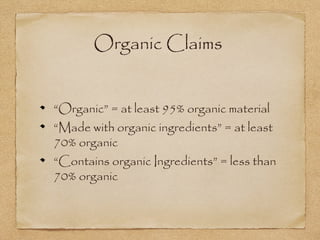
“Organic” = at least 95% organic material 
“Made with organic ingredients” = at least 
70% organic 
“Contains organic Ingredients” = less than 
70% organic
Organic vs. Natural What is the Difference? 
Organic 
• third party government 
accredited certifying agents 
• strict set of federal 
standards 
• ecological sustainability 
• Avoids hazardous material 
Natural 
• Not regulated by third 
party 
• No set standards 
• corporate marketing 
departments 
• marketing tool
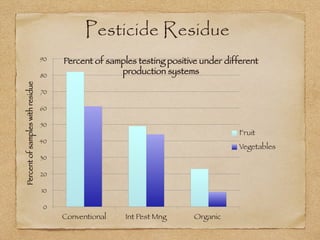
Pesticide Residue
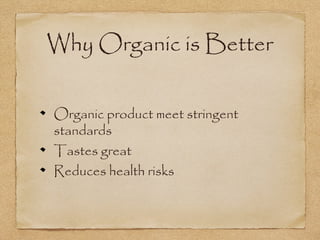
Why Organic is Better 
Organic product meet stringent 
standards 
Tastes great 
Reduces health risks
Why Organic is Better 
Farmers work in harmony with nature 
Producers are leaders in innovative 
research 
Producers strive to preserve diversity
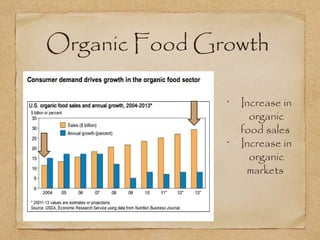
Organic Food Growth 
• Increase in 
organic 
food sales 
• Increase in 
organic 
markets
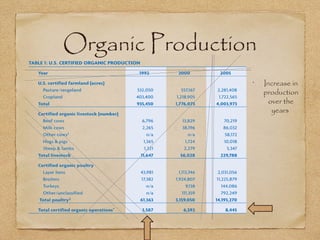
Organic Production 
• Increase in 
production 
over the 
years
Why Organic is Better for You

Why Organic is Better for You

  • 1.
    Why Eating Organicis Better for You By: Saba Shojai
  • 2.
    Organic: What Doesit Mean? “Organic”= the way farmers grow and process agricultural products Designed to encourage soil and water conservation and reduce pollution Organic farming include using natural fertilizers
  • 3.
    Organic vs Conventional Farming Organic • Increase sustainability • Promotes biodiversity • Good soil & air quality • Natural growing practices • Minimizes chemical use • Practice of crop rotation Conventional • chemicals and synthetics to manage weeds and pests • unnatural farming methods • pesticides allow toxicity • Pesticides damaging to health
  • 4.
    Organic Production Organicfood must be produced without: Antibiotics Artificial growth hormones High fructose corn syrup Artificial dyes Artificial sweeteners derived from chemicals Synthetically created chemical pesticide and fertilizers Genetically engineered proteins and ingredients
  • 5.
    Organic Claims “Organic”= at least 95% organic material “Made with organic ingredients” = at least 70% organic “Contains organic Ingredients” = less than 70% organic
  • 6.
    Organic vs. NaturalWhat is the Difference? Organic • third party government accredited certifying agents • strict set of federal standards • ecological sustainability • Avoids hazardous material Natural • Not regulated by third party • No set standards • corporate marketing departments • marketing tool
  • 7.
  • 9.
    Why Organic isBetter Organic product meet stringent standards Tastes great Reduces health risks
  • 10.
    Why Organic isBetter Farmers work in harmony with nature Producers are leaders in innovative research Producers strive to preserve diversity
  • 11.
    Organic Food Growth • Increase in organic food sales • Increase in organic markets
  • 12.
    Organic Production •Increase in production over the years

Editor's Notes

  • #3 Organic is defined as the way farmers grow and process agricultural products. The way produce and other products are farmed and processed before they reach the consumer defines if the product is organic or not. It is designed to encourage soil and water conservation, better product quality and reduce overall pollution. Organic farming also includes using natural fertilizers and avoiding pesticides and the use of unnatural products and the addition of processed ingredients or addends.
  • #4 There are lots of differences between organic and conventional farming. Organic faming supports different viewpoints and has different goals than conventional farming does. Organic farming increases sustainability by avoiding fertilizers and unnatural pesticides. It also promotes biodiversity by supporting a variety of life in the world. It encourages good soil and air quality by using natural soils without additives and toxins. The use of natural growing practices helps the products have a better nutritional value without being contaminated by toxins and unnatural additives. The use of chemicals is put to a minimum and at last organic farming also promotes crop rotation. Conventional farming on the other hand is an unnatural farming method that makes use of chemicals and synthetics to manage weeds and pest. The use of pesticides allows for toxicity in the products which might be damaging and harmful to people’s health
  • #5 In order for you to be able to call a product organic it must be produced without certain factors such as antibiotics, artificial growth hormones, high fructose corn syrup, artificial dyes, artificial sweeteners derived from chemical, synthetically created chemical pesticides and fertilizers, and genetically engineered proteins and ingredients. All of these are things that might be harmful to your health and that is why organic products go without them. If it is made in the lab it probably can’t be good for you specially when you consume them. You eat fruits, vegetables, and crops because they are good for you. There is no point in consuming them if they are toxic to your body.
  • #6 There are many claims that are made on products and produce you find in the grocery store. But what do they mean exactly? You might think that they all essentially mean the same thing but there is some differences between the claims made and it can be very helpful to know what these differences are in order to make better choices on the products you chose to buy. The claims “Organic”, “Made with organic ingredients”, and “Contains organic ingredients” mean different things and don’t necessarily mean that they are all a hundred percent organic. If a product says organic it means that it was made with at least 95% of organic material. If a product claims to be made with organic ingredients that means that it is made with at least 70% organic materials which is 25% less organic material than the organic claim and can be a substantial amount. If a product claims to contain organic ingredients it means that it is made with less than 70% organic materials which can be any percentage below that so you don’t really know how organic the product really is. Essentially it is important for you to pay attention to the claims on products as they don’t all mean the same thing and can contain substantial different amounts of organic ingredients.
  • #7 Not only are there differences between different organic claims but there is also a huge difference between a product being organic and natural. These two terms are completely different from each other and it is very important that you don’t confuse them with each other. Organic products are all regulated by a third party government accredited certifying agency. Farmers have to follow a very strict set of federal standards and avoid the usage of hazardous material.   Natural products on the other hand are not regulated by a third party and there are no set standard that need to be followed in order to be able to call a product natural. The natural claim is determined by corporate marketing departments as a marketing tool to make their products more eye catching and appealing to their customers. So just because a product claims to be natural doesn’t specifically mean that it is natural or naturally made or organic. That is why it is very important for you to pay attention to those claims and think about why it is being made and if it true or not.
  • #8 This is a bar graph showing the percent of samples taken that tested positive for residues under different production systems. The light blue bars represent fruits and the dark blue bars represent vegetables. You can see that in conventional farming the samples that tested positive for residues were substantially higher than in both of the other production systems. Fruits and specially vegetables produced in an organic setting have the least percent of residue which shows that their a lot less toxic than product grown conventionally
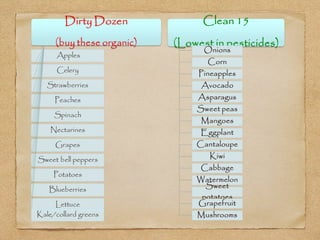
  • #9 Going into a grocery store and comparing prices for organic and conventionally grown product you can very easily recognize that organic product are a lot more expensive most of the time and that it can get pretty pricey to buy solely organic products. Therefore produce have been divided into two categories called the “Dirty Dozen” and the “Clean 15”. The dirty dozen consists of a dozen fruits and vegetables that are grown and contain a very high percentage of pesticides when they are grown conventionally. In this case it is said that it would be health beneficial for you to try and buy those dirty dozen fruits and vegetables organically if you are on a budget and can’t afford buying all of your produce organically.   The clean 15 are fifteen fruits and vegetables that are grown and contain a very low percentage of pesticides when they are grown conventionally so it is okay for you to purchase that specific produce inorganically.
  • #10 So why is organic better than conventional grown products?   Organic certification can assure you that products have been grown and handled according to strict procedures without pesticides and toxic chemicals that might be harmful to your health.   Organic product also taste a lot better. They have been grown on good quality soils that produce healthy strong plants that become healthy food for animals and people.   They are also grown without hazardous chemicals and toxins so they reduce health risks. Chemicals can be very harmful to your health and higher your risks for certain diseases.
  • #11 Farmers want to protect the nature from dying out and so they don’t use any harmful chemicals that might harm the natural world. Producers of organic products also conduct research at their own expense about how to reduce the use of pesticides and chemicals in order to save the environment Producers also strive to preserve diversity. A lot of species of animals and insects have been dying out over the past couple of years and so organic farms promote biodiversity by avoiding the use of harmful chemicals.
  • #12 This graph shows how organic food sales have increased over the past couple of years. The sales in 2013 are substantially higher than they are in 2004 because of the increased demand.
  • #13 In this table you can see that organic production has dramatically increased over the past couple of years. By looking at the numbers from 1992 to 2005 you can tell how much higher those numbers are because the demand for organic produce has gone up.