CMK
B.E(EEE)
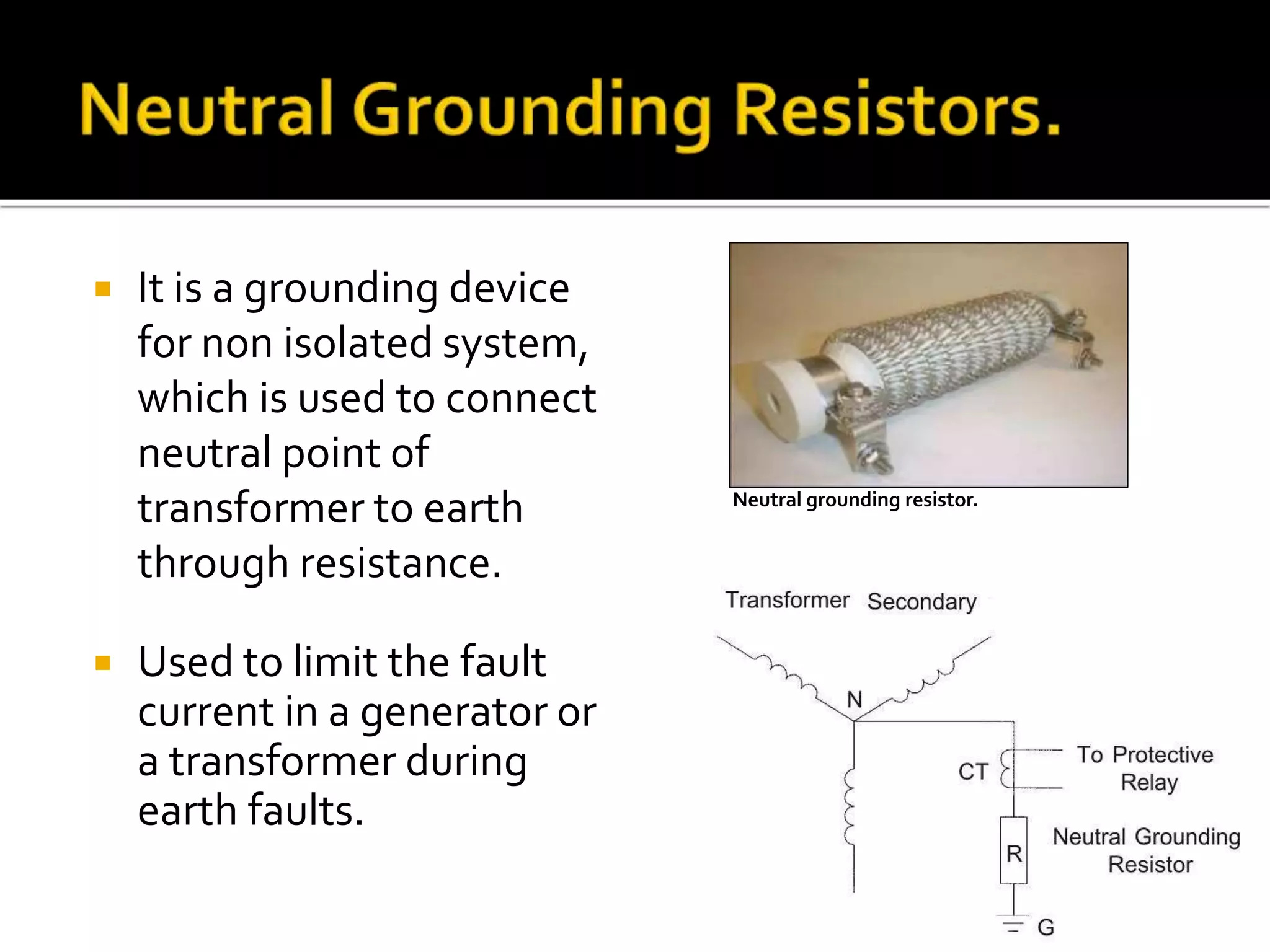
 It is a grounding device
for non isolated system,
which is used to connect
neutral point of
transformer to earth
through resistance.
 Used to limit the fault
current in a generator or
a transformer during
earth faults.
Neutral grounding resistor.
 Reduces over voltages.
 Reduced equipment damage.
 Isolation of faulted circuit.
 Reduced operation/maintenance expense.
 Increase safety.
 Increased lightning protection.
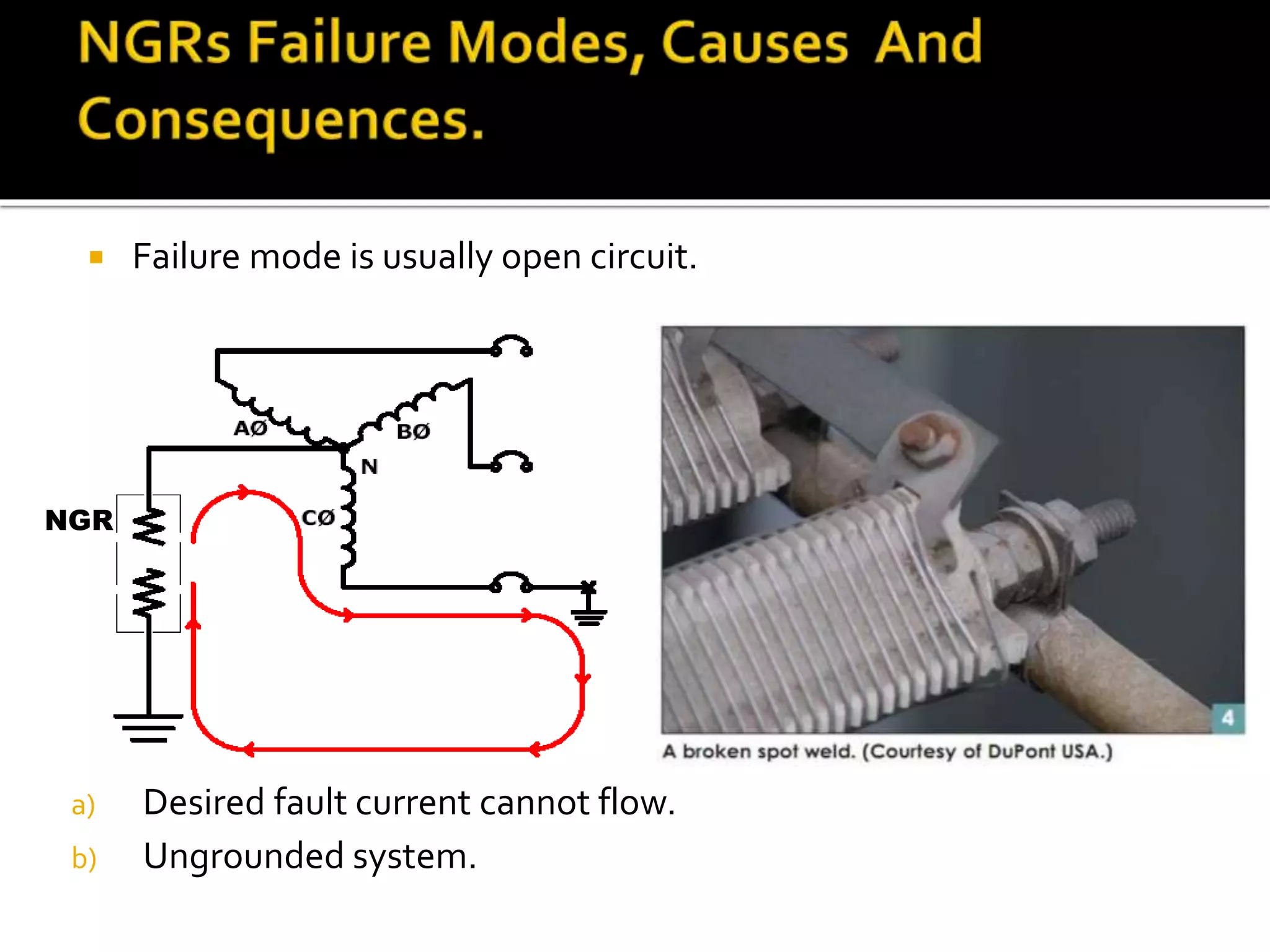
 Failure mode is usually open circuit.
a) Desired fault current cannot flow.
b) Ungrounded system.
NGR
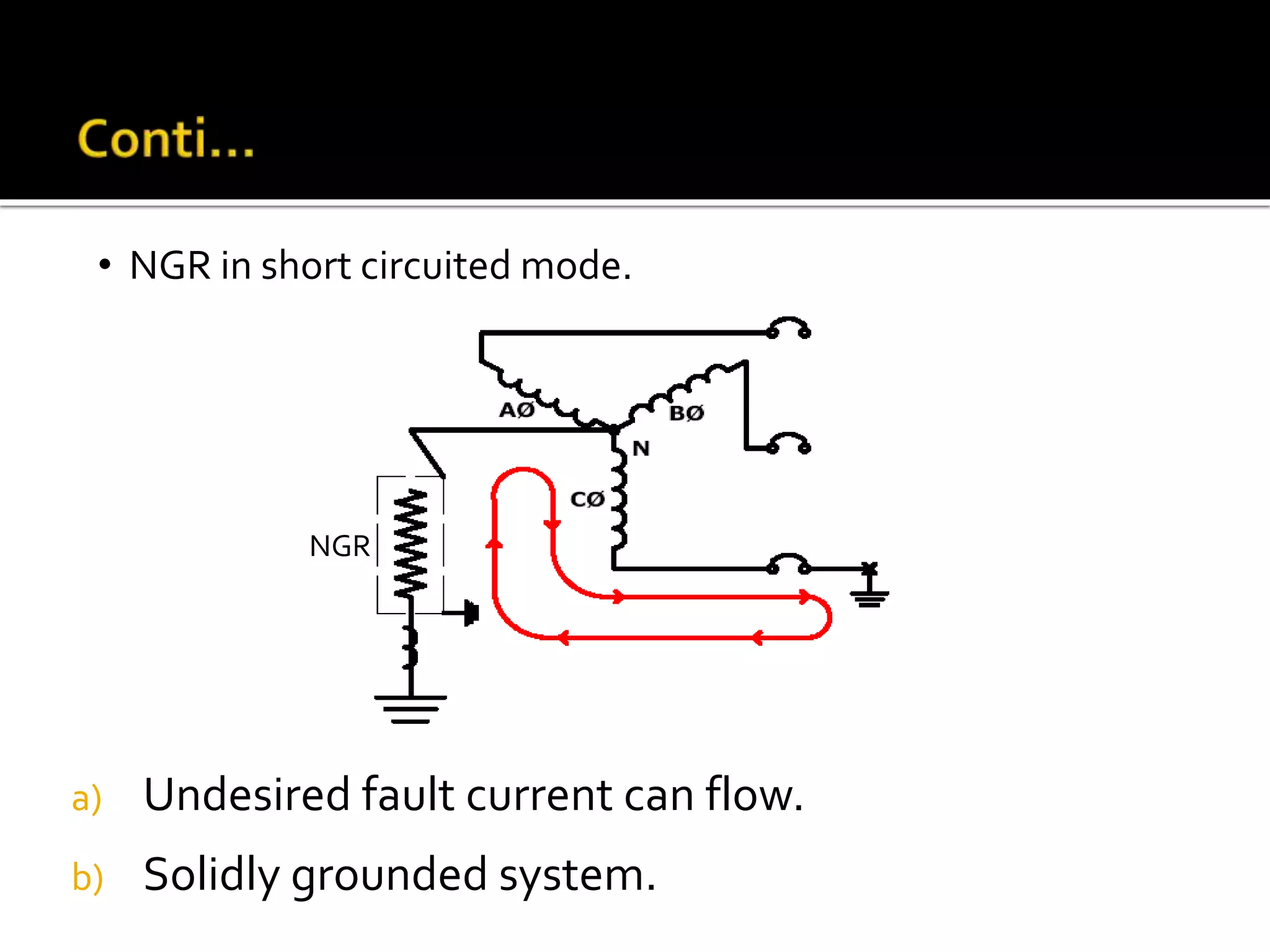
a) Undesired fault current can flow.
b) Solidly grounded system.
NGR
• NGR in short circuited mode.
 Properly designed resistance grounding can
avoid.
a) Eliminate transient over voltages.
b) Reduce the risk of an arc flash.
c) Provide continuity of service.
d) Provide accurate current for ground fault detection.
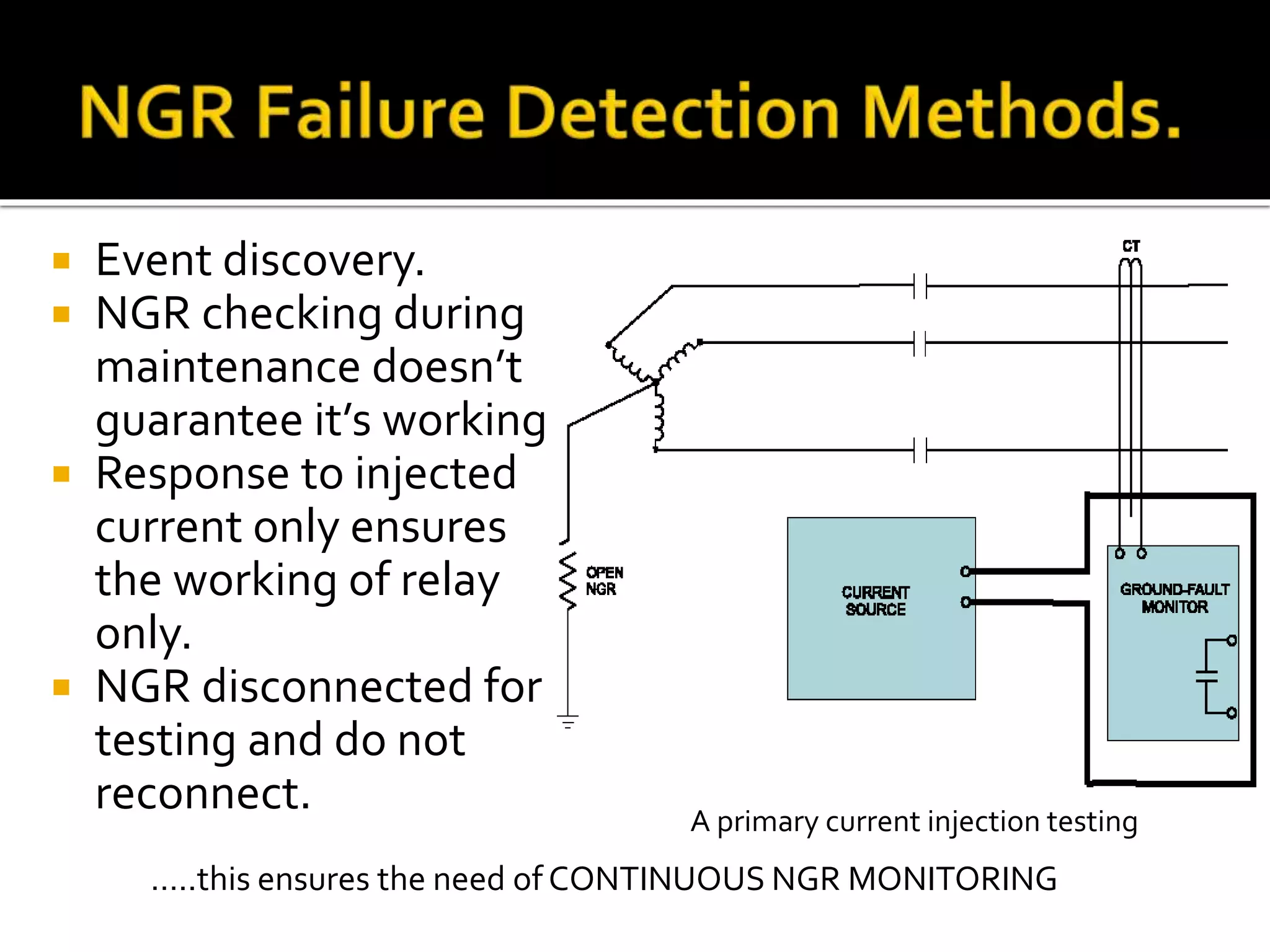
 Event discovery.
 NGR checking during
maintenance doesn’t
guarantee it’s working.
 Response to injected
current only ensures
the working of relay
only.
 NGR disconnected for
testing and do not
reconnect.
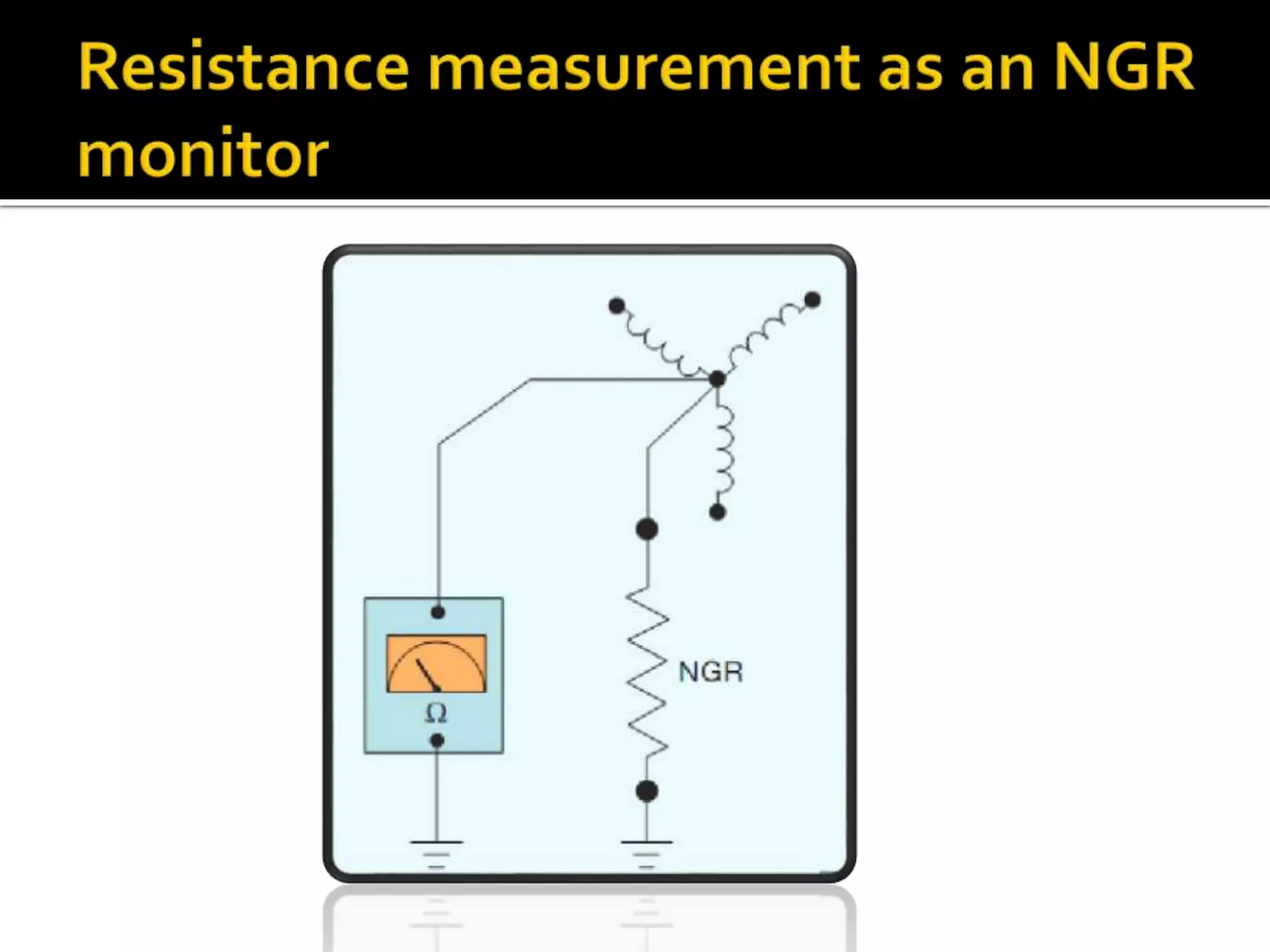
…..this ensures the need of CONTINUOUS NGR MONITORING
A primary current injection testing
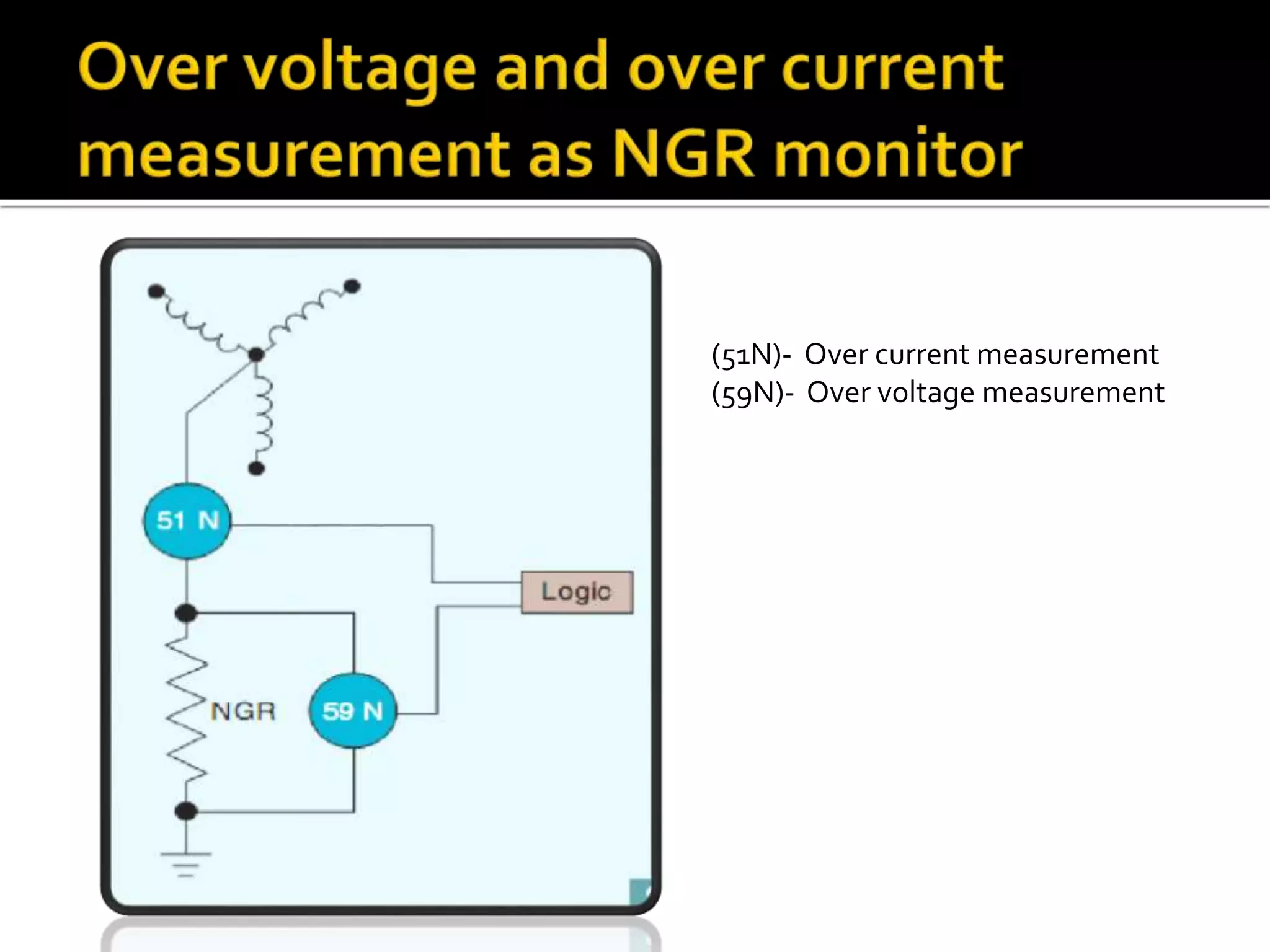
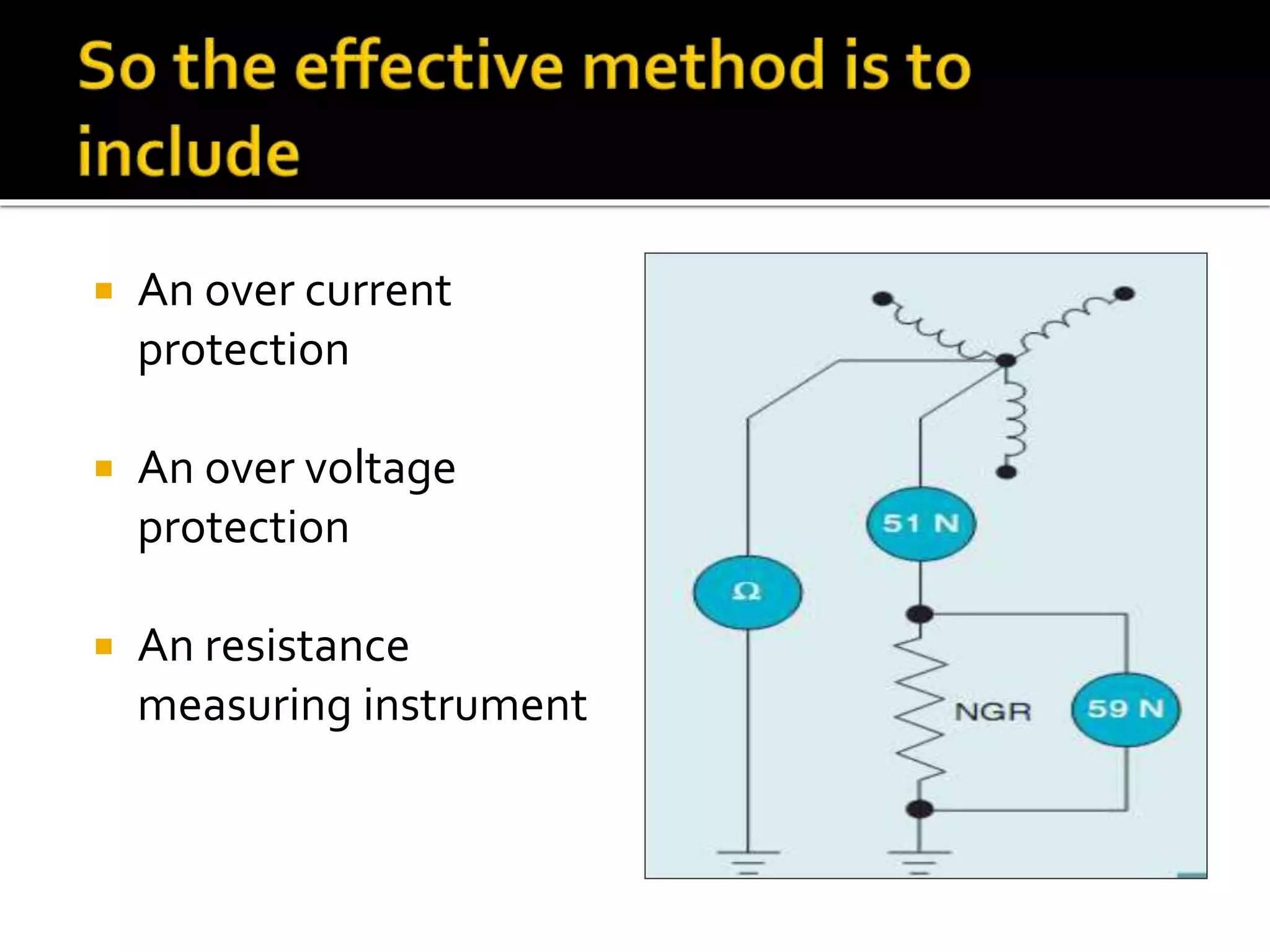
(51N)- Over current measurement
(59N)- Over voltage measurement
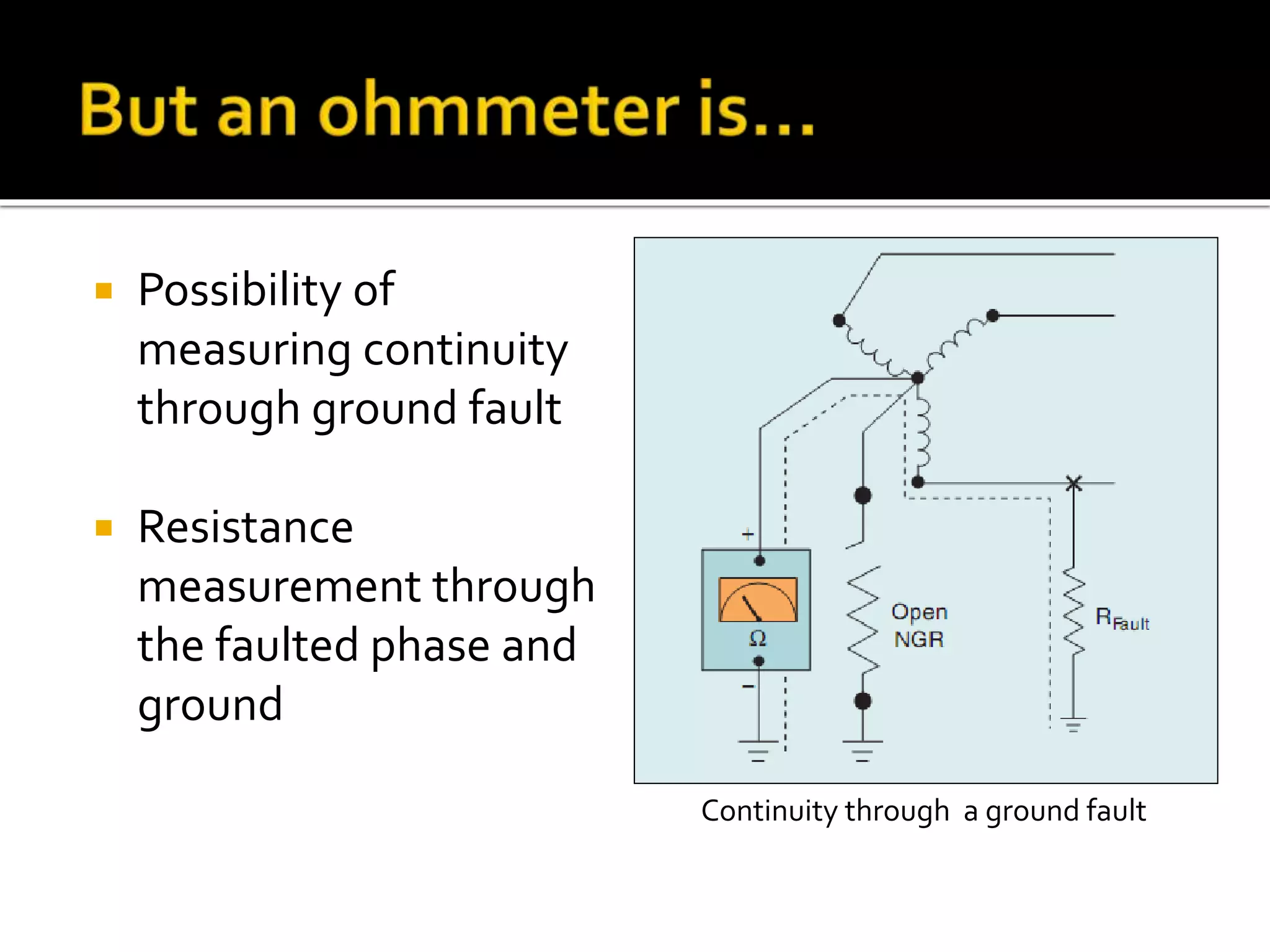
 Possibility of
measuring continuity
through ground fault
 Resistance
measurement through
the faulted phase and
ground
 Continuity through a
fault
Continuity through a ground fault
 An over current
protection
 An over voltage
protection
 An resistance
measuring instrument
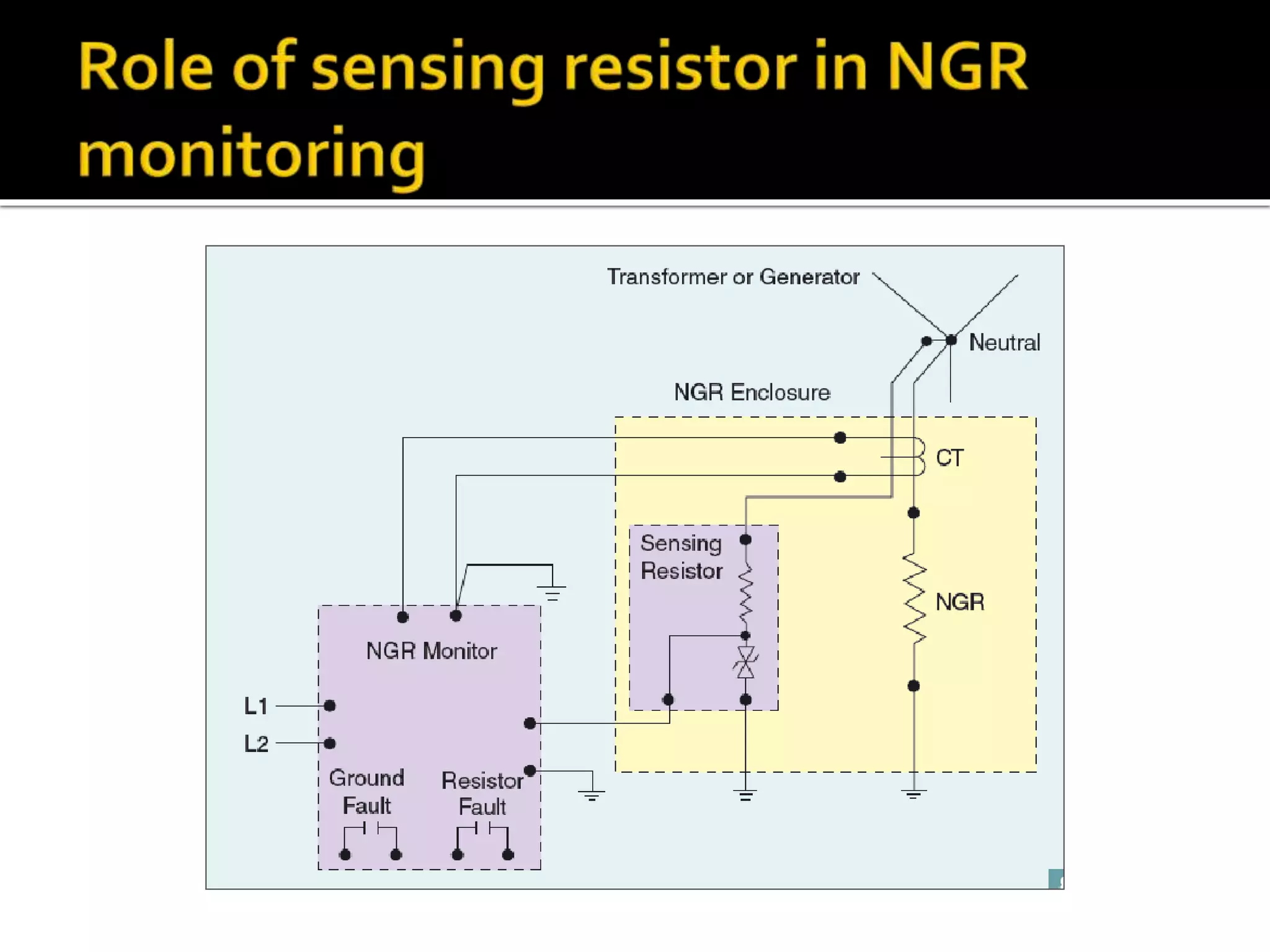
 Should detect NGR failure in spite of ground
fault
 Should work in tripping and alarm only
systems
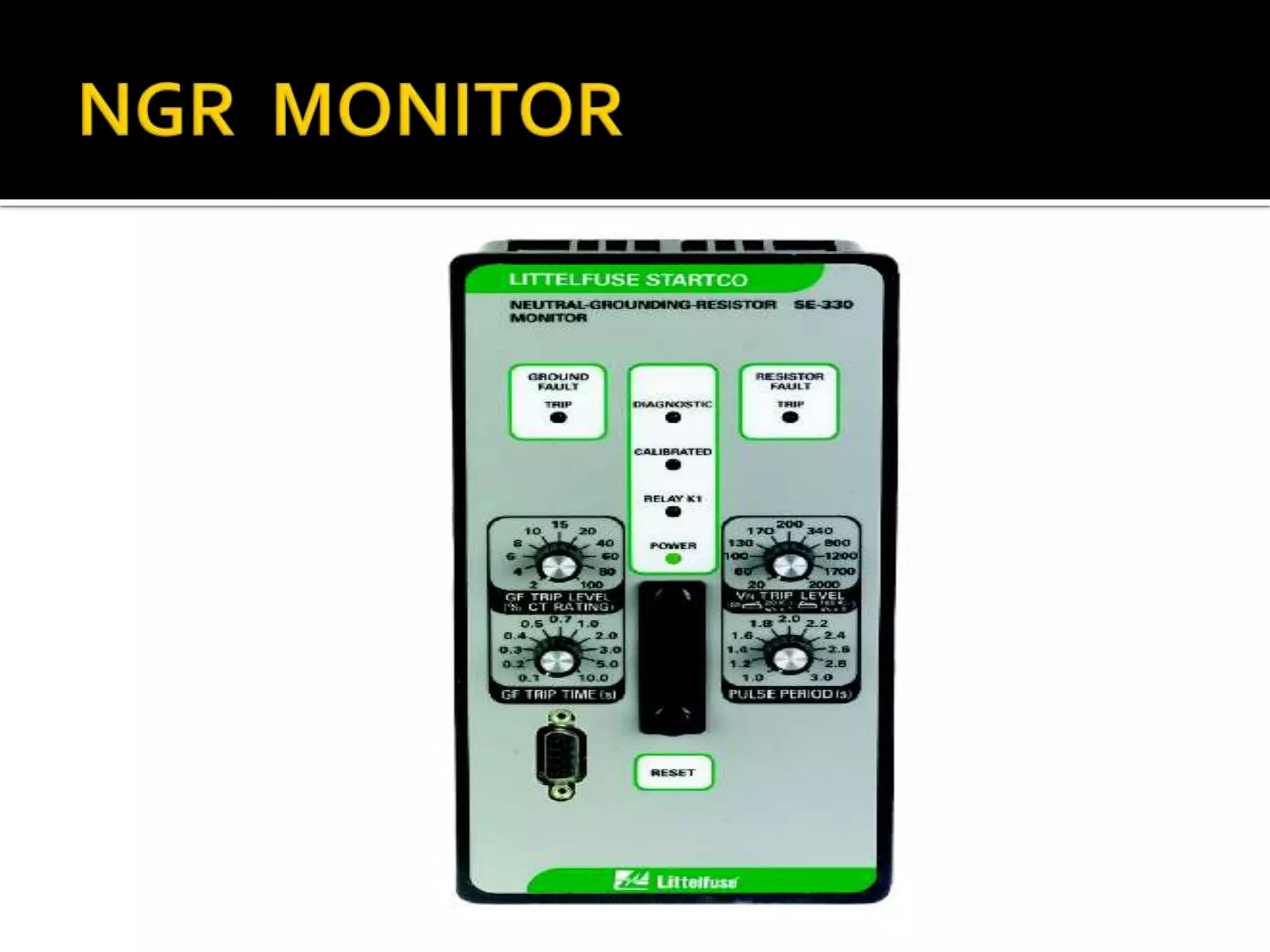
 Monitoring neutral and ground connections
 Monitoring shouldn’t be
capacitively/inductively coupled to NGR
 Monitor should not be exposed to neutral
voltage during ground fault
 Soft starter failure
a) Soft starter operated in unexpected manner.
b) When the neutral properly grounded, all three
voltage signals are balanced.
c) Failure of the NGR allows the neutral voltage to float
and the three voltage signals to become unbalanced.
d) studying the situation the manufacturer concluded
that the problem was due to unbalanced reference
voltages.
e) further study and customer interviews it was
determined that an open NGR was responsible for
the unbalanced reference voltages.
 Loose connection of an NGR
a) The following incident occurred at a mine in
Eastern Canada on a 200 A, 4160V NGR.
b) NGR monitoring relay tripped on a resistor
fault.
c) Upon inspection, electricians noticed a loose
connection on the NGR
d) Eight other loose connections were found
and repaired.
e) Then resistor fault trip did not reoccur.
 The information presented here has shown that an open
NGR is an undesirable situation and current- sensing
ground-fault protection will not indicate the presence of a
ground fault. A well-designed NGR monitor provides
continuous protection against failures that previously
rendered ground fault protection, NGR , as well as leaving
the system exposed to damaging transient over voltages.
An NGR monitor provides confidence that current-sensing
ground-fault protection will operate as designed on the
next ground fault. A continuous NGR monitor is active
when control power is applied and indicates NGR health
whether or not the system is energized, with or without a
ground fault.
Thank you

Why neutral grounding resisitor need continuous monitoring

  • 1.
  • 2.
     It isa grounding device for non isolated system, which is used to connect neutral point of transformer to earth through resistance.  Used to limit the fault current in a generator or a transformer during earth faults. Neutral grounding resistor.
  • 3.
     Reduces overvoltages.  Reduced equipment damage.  Isolation of faulted circuit.  Reduced operation/maintenance expense.  Increase safety.  Increased lightning protection.
  • 4.
     Failure modeis usually open circuit. a) Desired fault current cannot flow. b) Ungrounded system. NGR
  • 5.
    a) Undesired faultcurrent can flow. b) Solidly grounded system. NGR • NGR in short circuited mode.
  • 6.
     Properly designedresistance grounding can avoid. a) Eliminate transient over voltages. b) Reduce the risk of an arc flash. c) Provide continuity of service. d) Provide accurate current for ground fault detection.
  • 7.
     Event discovery. NGR checking during maintenance doesn’t guarantee it’s working.  Response to injected current only ensures the working of relay only.  NGR disconnected for testing and do not reconnect. …..this ensures the need of CONTINUOUS NGR MONITORING A primary current injection testing
  • 8.
    (51N)- Over currentmeasurement (59N)- Over voltage measurement
  • 10.
     Possibility of measuringcontinuity through ground fault  Resistance measurement through the faulted phase and ground  Continuity through a fault Continuity through a ground fault
  • 11.
     An overcurrent protection  An over voltage protection  An resistance measuring instrument
  • 12.
     Should detectNGR failure in spite of ground fault  Should work in tripping and alarm only systems  Monitoring neutral and ground connections  Monitoring shouldn’t be capacitively/inductively coupled to NGR  Monitor should not be exposed to neutral voltage during ground fault
  • 15.
     Soft starterfailure a) Soft starter operated in unexpected manner. b) When the neutral properly grounded, all three voltage signals are balanced. c) Failure of the NGR allows the neutral voltage to float and the three voltage signals to become unbalanced. d) studying the situation the manufacturer concluded that the problem was due to unbalanced reference voltages. e) further study and customer interviews it was determined that an open NGR was responsible for the unbalanced reference voltages.
  • 16.
     Loose connectionof an NGR a) The following incident occurred at a mine in Eastern Canada on a 200 A, 4160V NGR. b) NGR monitoring relay tripped on a resistor fault. c) Upon inspection, electricians noticed a loose connection on the NGR d) Eight other loose connections were found and repaired. e) Then resistor fault trip did not reoccur.
  • 17.
     The informationpresented here has shown that an open NGR is an undesirable situation and current- sensing ground-fault protection will not indicate the presence of a ground fault. A well-designed NGR monitor provides continuous protection against failures that previously rendered ground fault protection, NGR , as well as leaving the system exposed to damaging transient over voltages. An NGR monitor provides confidence that current-sensing ground-fault protection will operate as designed on the next ground fault. A continuous NGR monitor is active when control power is applied and indicates NGR health whether or not the system is energized, with or without a ground fault.
  • 18.