Why Improving the Patient
Experience With Advanced Care
Options Matters: Patient
Satisfaction Scores and More
James N. Kirkpatrick, MD
Assistant Professor
Cardiovascular Medicine Division
Department of Medical Ethics and Health Policy
Physician Co-Chair, Ethics Committee
Hospital of the University of Pennsylvania
Disclosures
 None relevant to this presentation
 Employed by University of Pennsylvania
 No “transfers of value” from any commercial entities
 Am. Soc. Echo (ASE) Bylaws and Ethics Committee
 Honoraria for ASE educational products
 Salary support from NIH and NASA
Outline
1. Context: Patient satisfaction
assessment (HCAHPS)
2. Meaning: Patient satisfaction as
marker of quality
3. Reframing: Patient satisfaction
and communication in Advanced
Cardiac Care
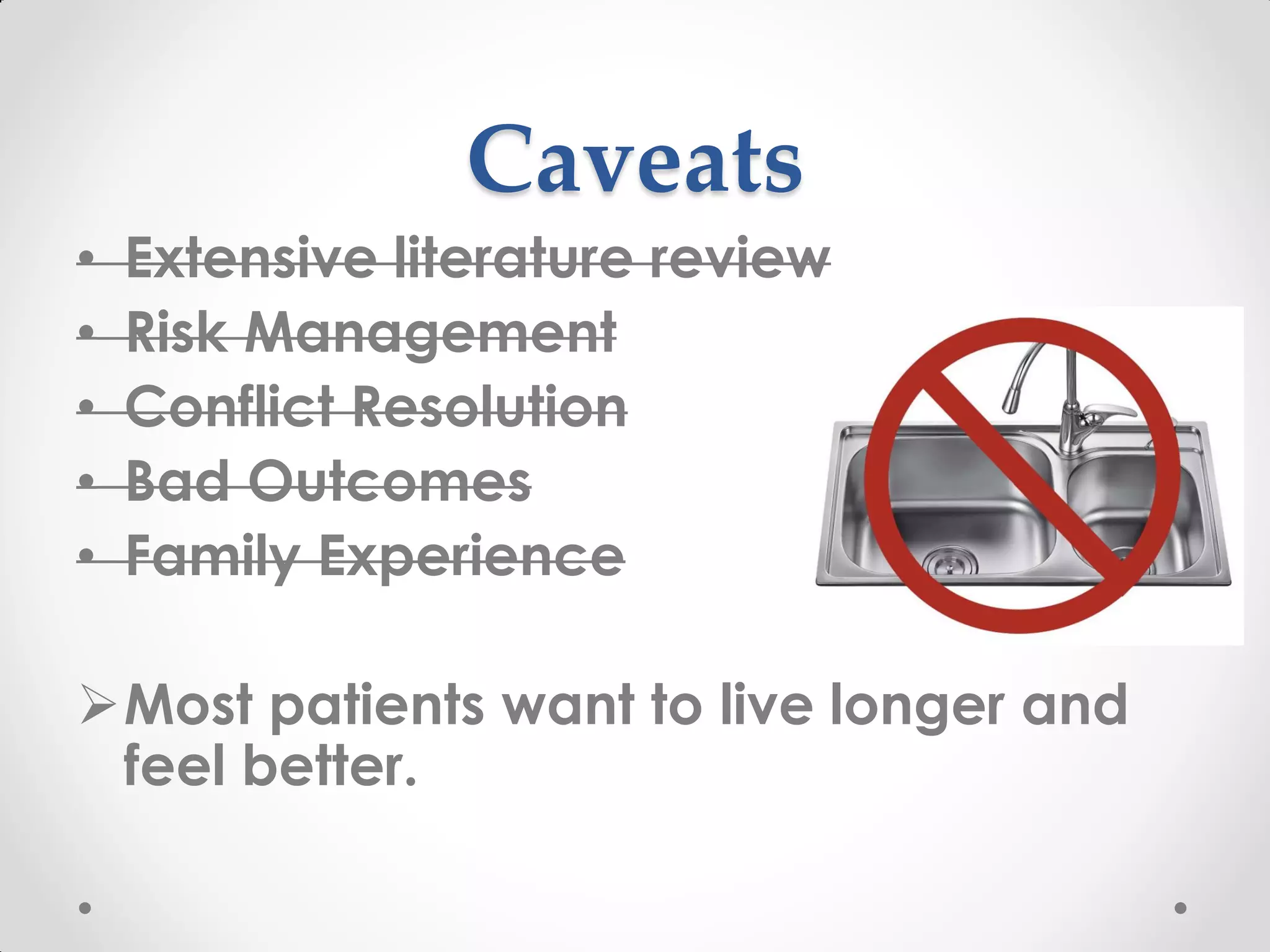
Caveats
• Extensive literature review
• Risk Management
• Conflict Resolution
• Bad Outcomes
• Family Experience
Most patients want to live longer and
feel better.
Patient
Satisfaction/Experience
• “…measure of how services or products of a
company meet or exceed the anticipated
expectations of the customer.”
• Customer retention, loyalty, and repeat
business.

• Value of the process by which services are
delivered.

Kupfer, JAMA, 2012;308 (2): 139-140
Patient Satisfaction
Procedural Outcomes Cardiology Process
• Plastic Surgery
• Orthopedics
• Urology
• Gramegna L, et al. In-hospital follow-up
of implantable cardioverter defibrillator
and pacemaker carriers: patients'
inconvenience and points of view. A
four-hospital Italian survey. Europace.
2012 Mar;14(3):345-50
• Kraai IH, et al. Heart failure patients
monitored with telemedicine: patient
satisfaction, a review of the literature. J
Card Fail. 2011 Aug;17(8):684-90.
• Glaser R, et al. Patient satisfaction is
comparable to early discharge versus
overnight observation after elective
percutaneous coronary intervention.
Invasive Cardiol. 2009 Sep;21(9):464-7.
• Kamphuis HC, et al. ICD: a qualitative
study of patient experience the first year
after implantation. J Clin Nurs. 2004
Nov;13(8):1008-16.
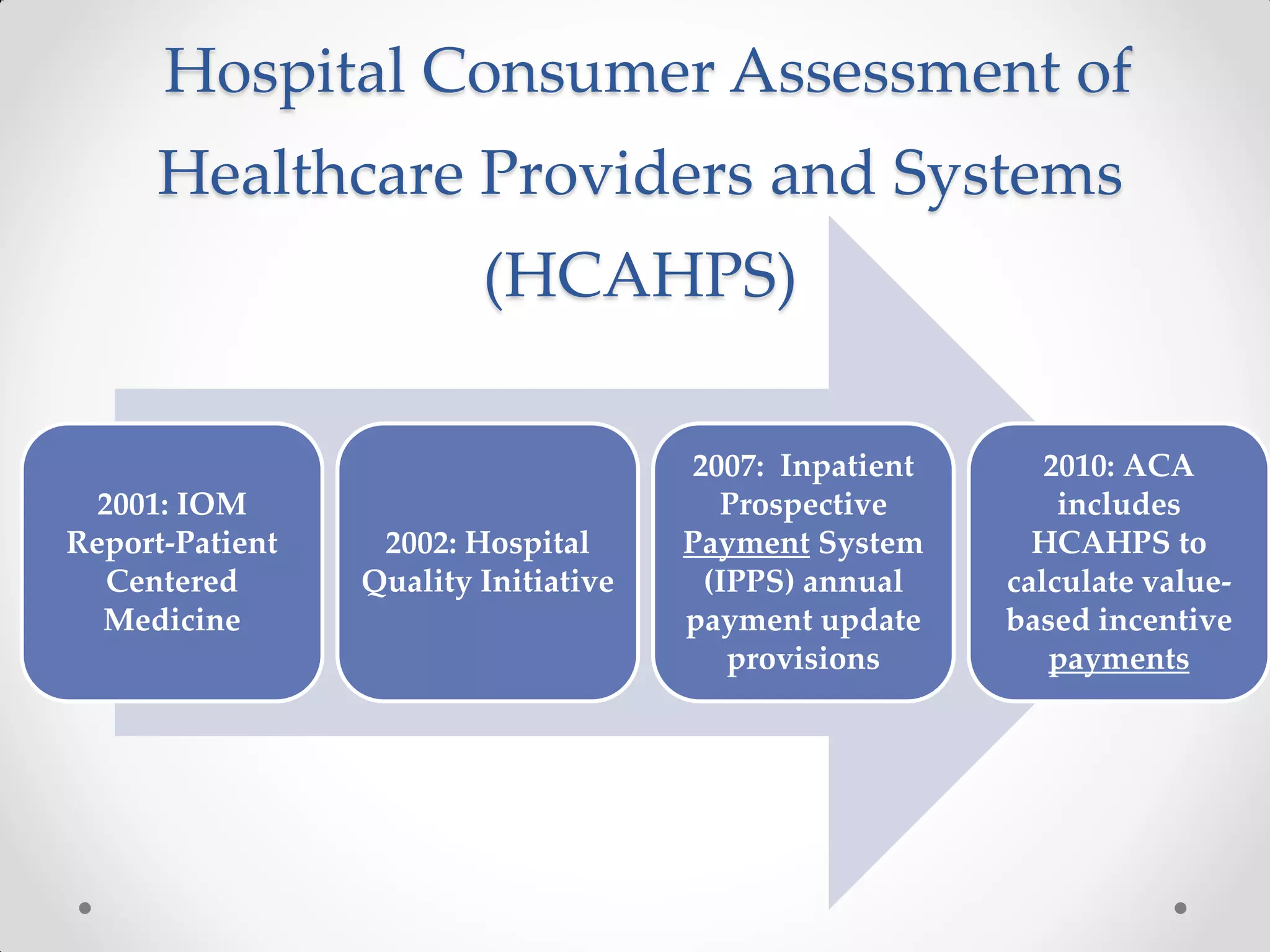
Hospital Consumer Assessment of
Healthcare Providers and Systems
(HCAHPS)
2001: IOM
Report-Patient
Centered
Medicine
2002: Hospital
Quality Initiative
2007: Inpatient
Prospective
Payment System
(IPPS) annual
payment update
provisions
2010: ACA
includes
HCAHPS to
calculate value-
based incentive
payments
HCAHPS=Quality
Improvement
• “create incentives for hospitals to
improve quality of care.”
• “enhance public accountability in
health care by increasing
transparency.”
www.hcahpsonline.org.
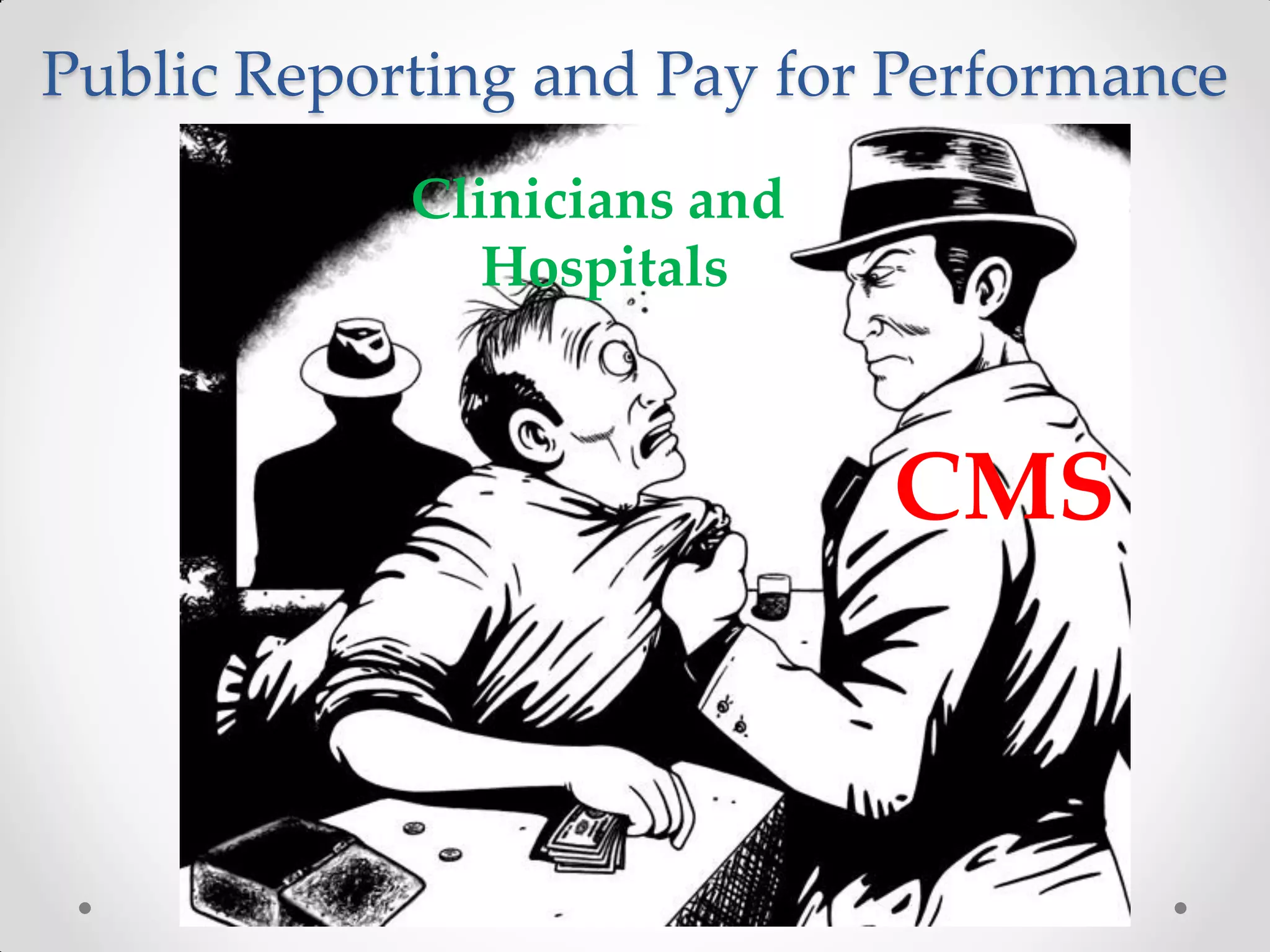
Public Reporting and Pay for Performance
Clinicians and
Hospitals
CMS
HCAHPS=Informed
Consent
“…comparable data on patients'
perspectives of care that allows
objective and meaningful comparisons
among hospitals on topics that are
important to consumers.”
www.hcahpsonline.org.
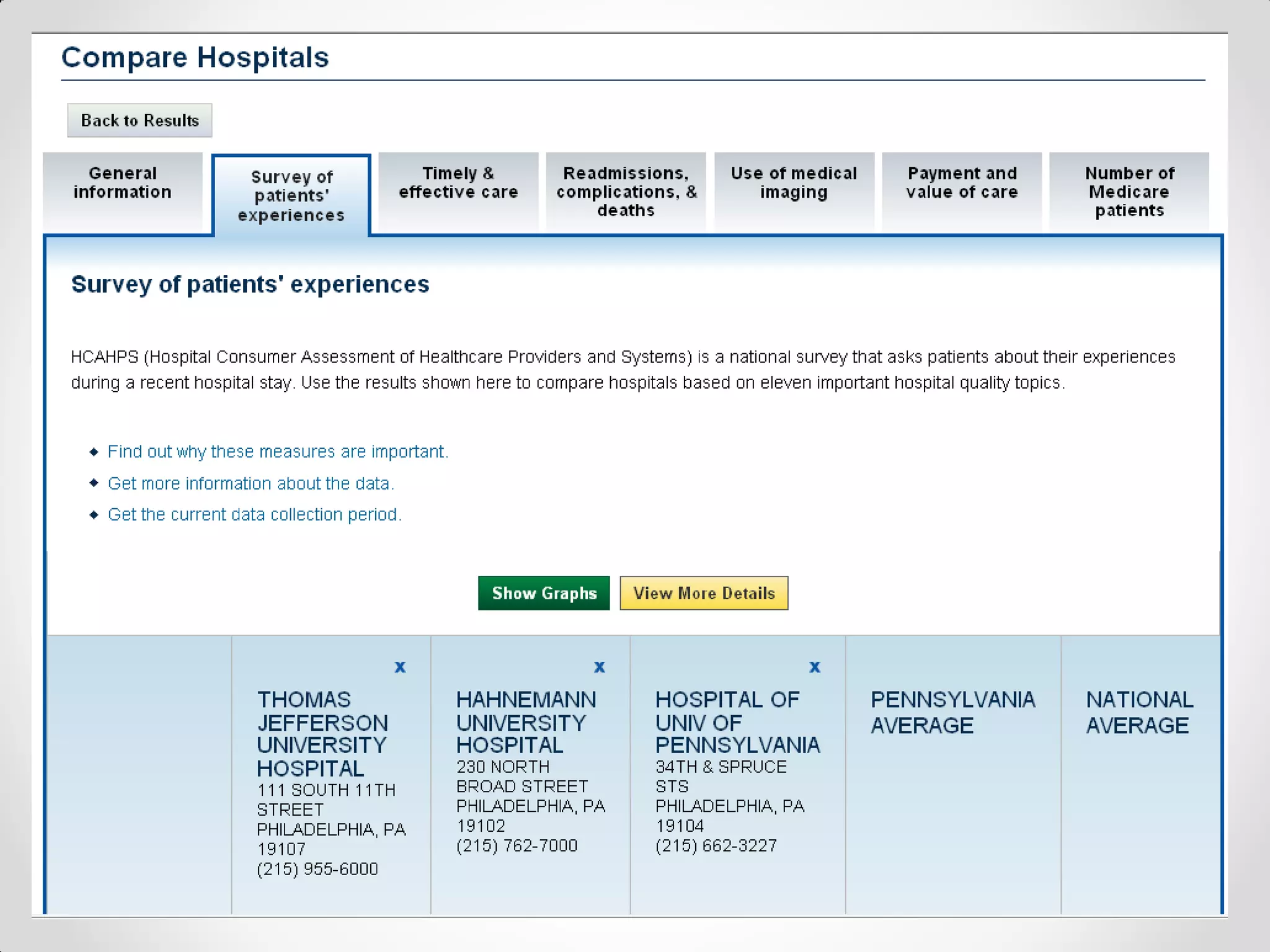
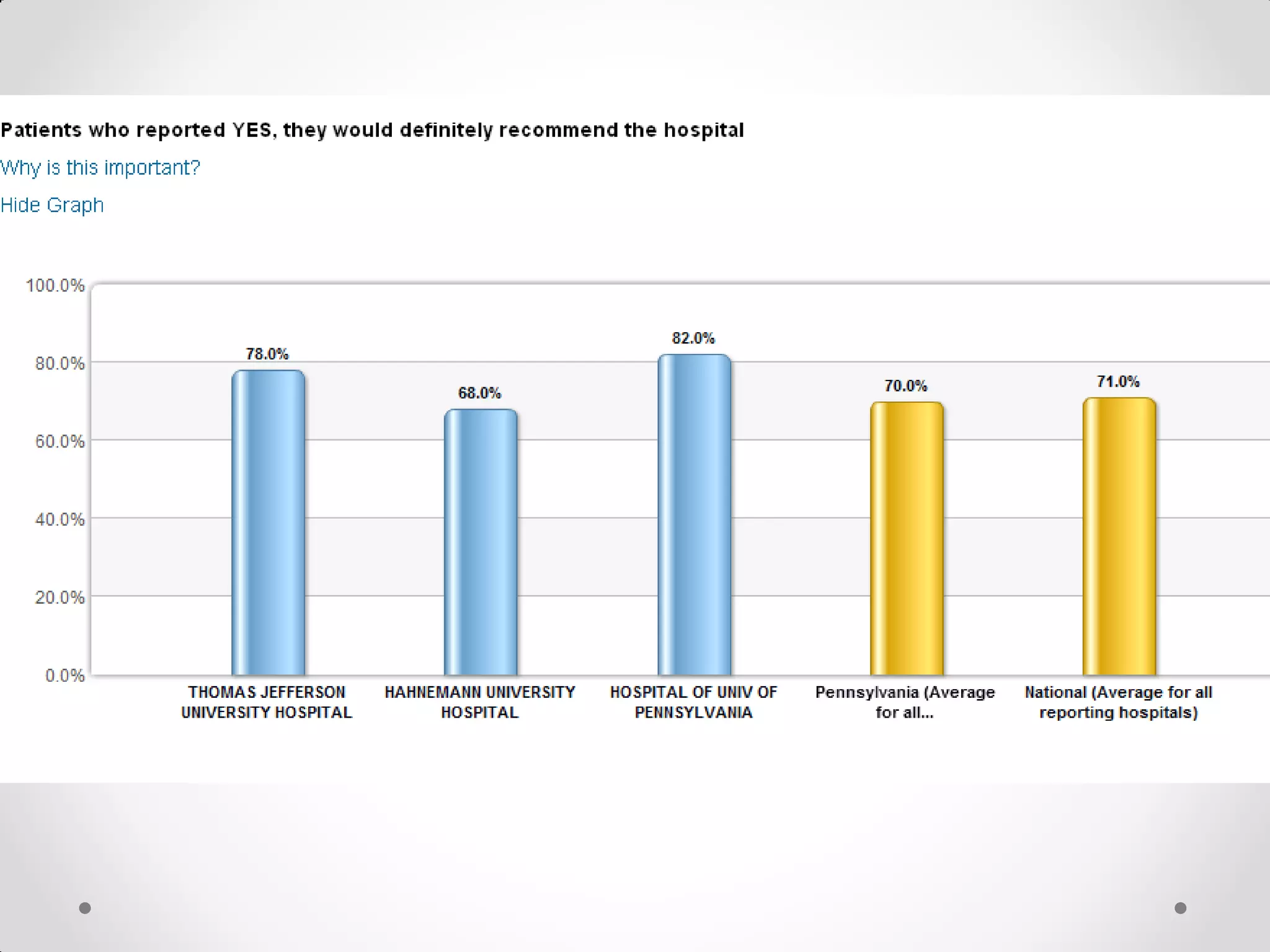
T
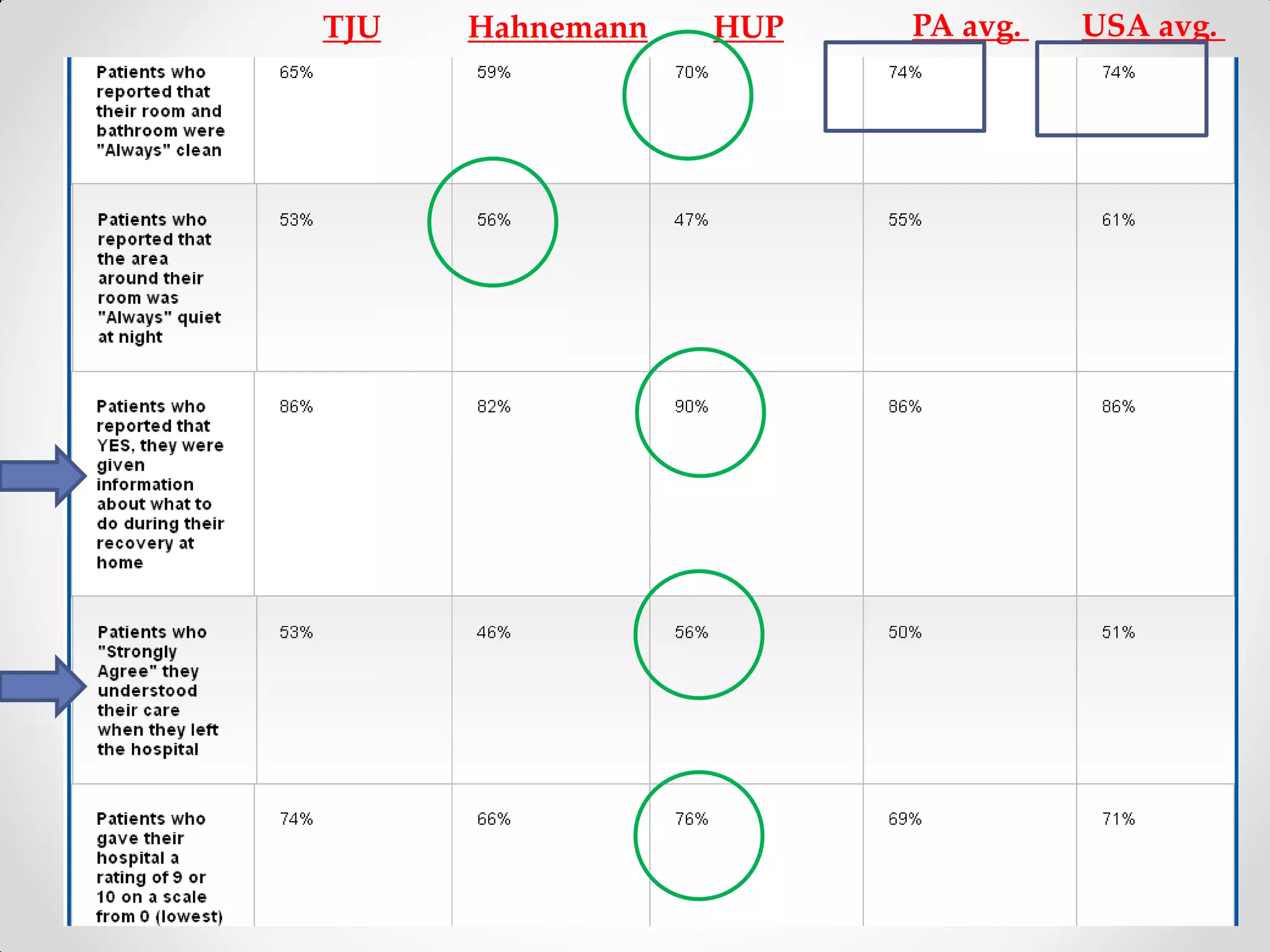
TJU Hahnemann HUP PA avg. USA avg.
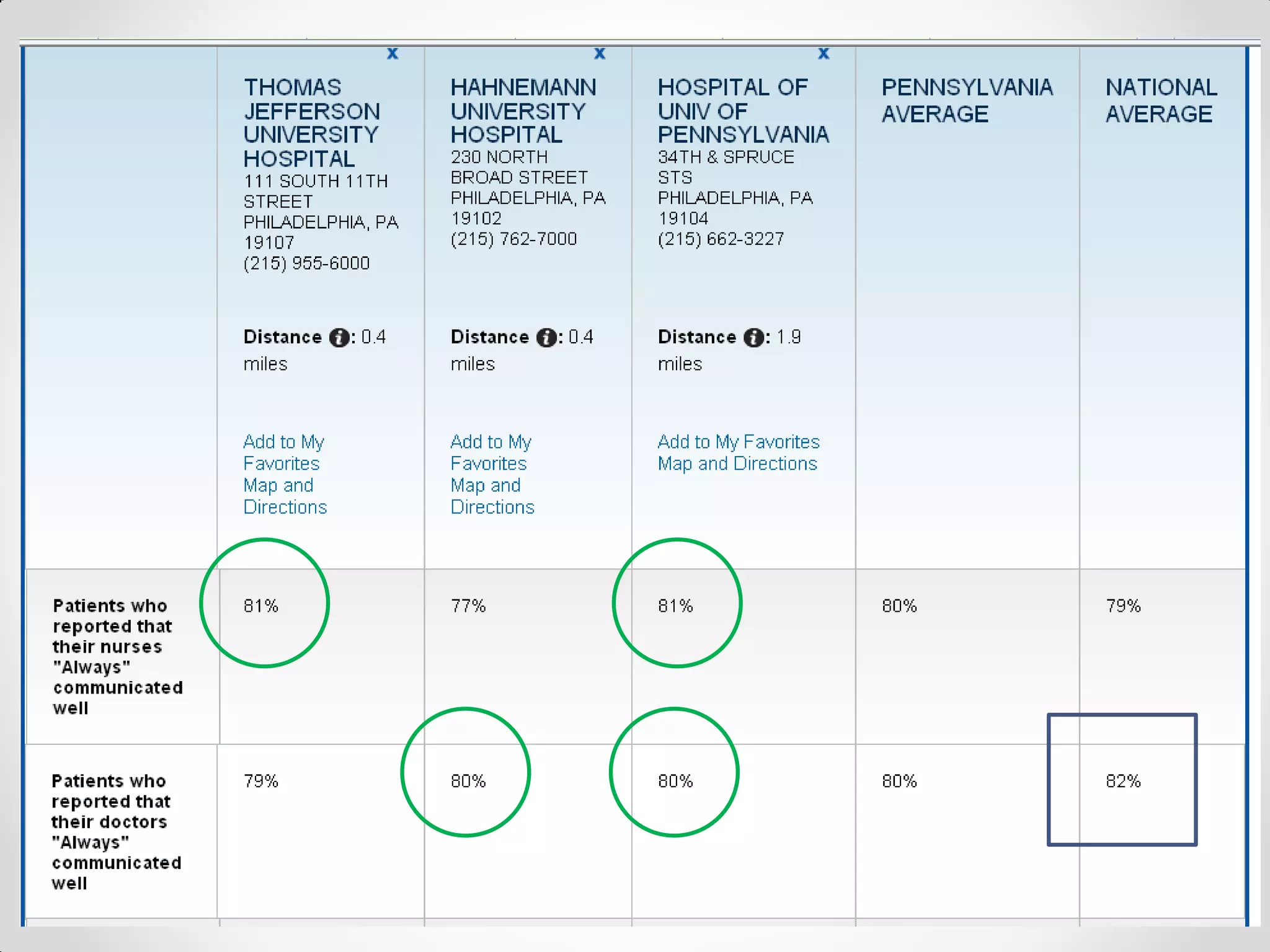
How do I decide?
• Nurses Communication:
o TJU and HUP
• Doc Communication:
o Hahnemann and HUP
• Quietness:
o Hahnemann
• Given
information/understand:
o HUP
• Cleanliness:
o Find another hospital!
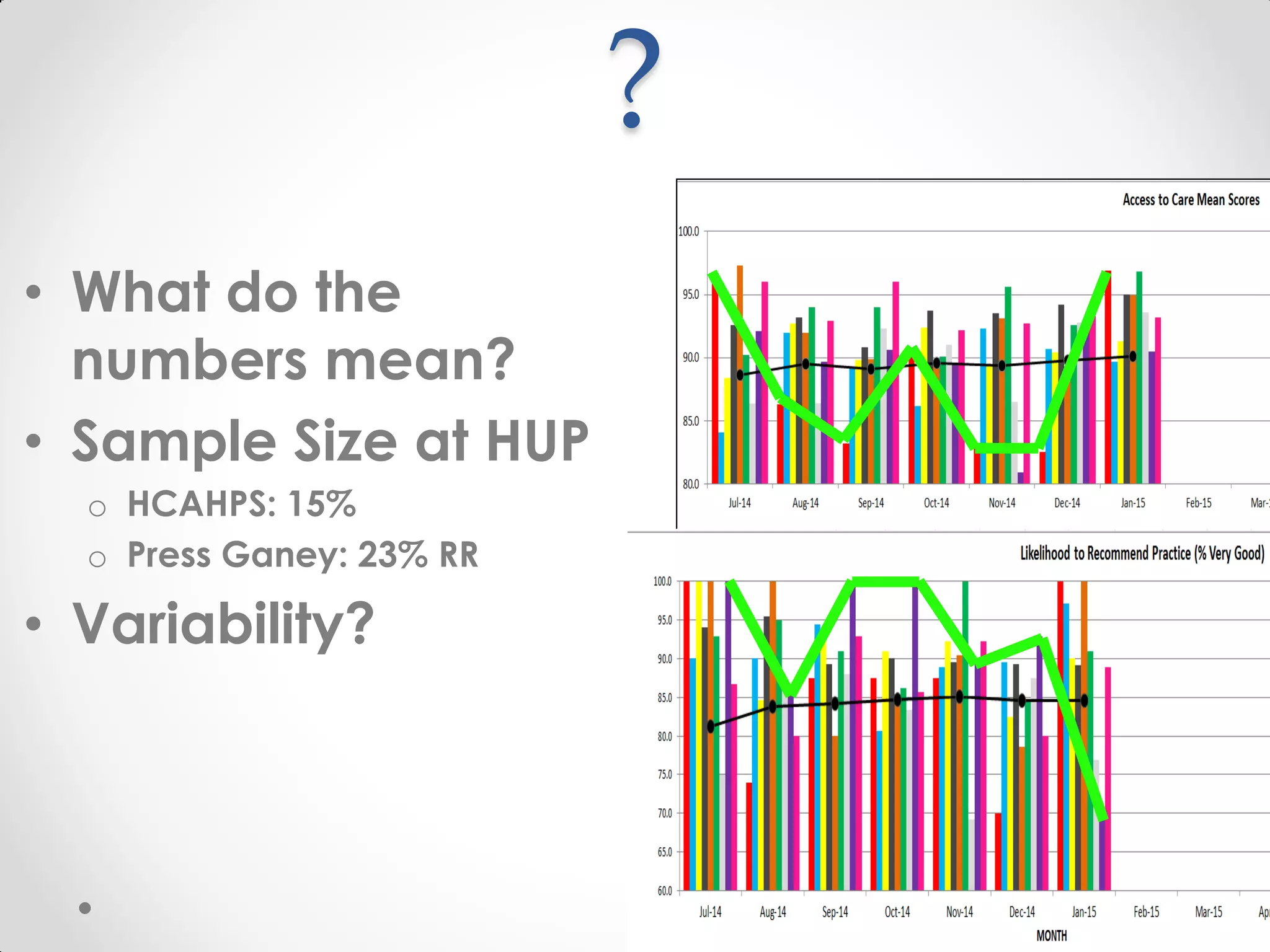
• What do the
numbers mean?
• Sample Size at HUP
o HCAHPS: 15%
o Press Ganey: 23% RR
• Variability?
?
Patient
Satisfaction
What does it/should it mean?
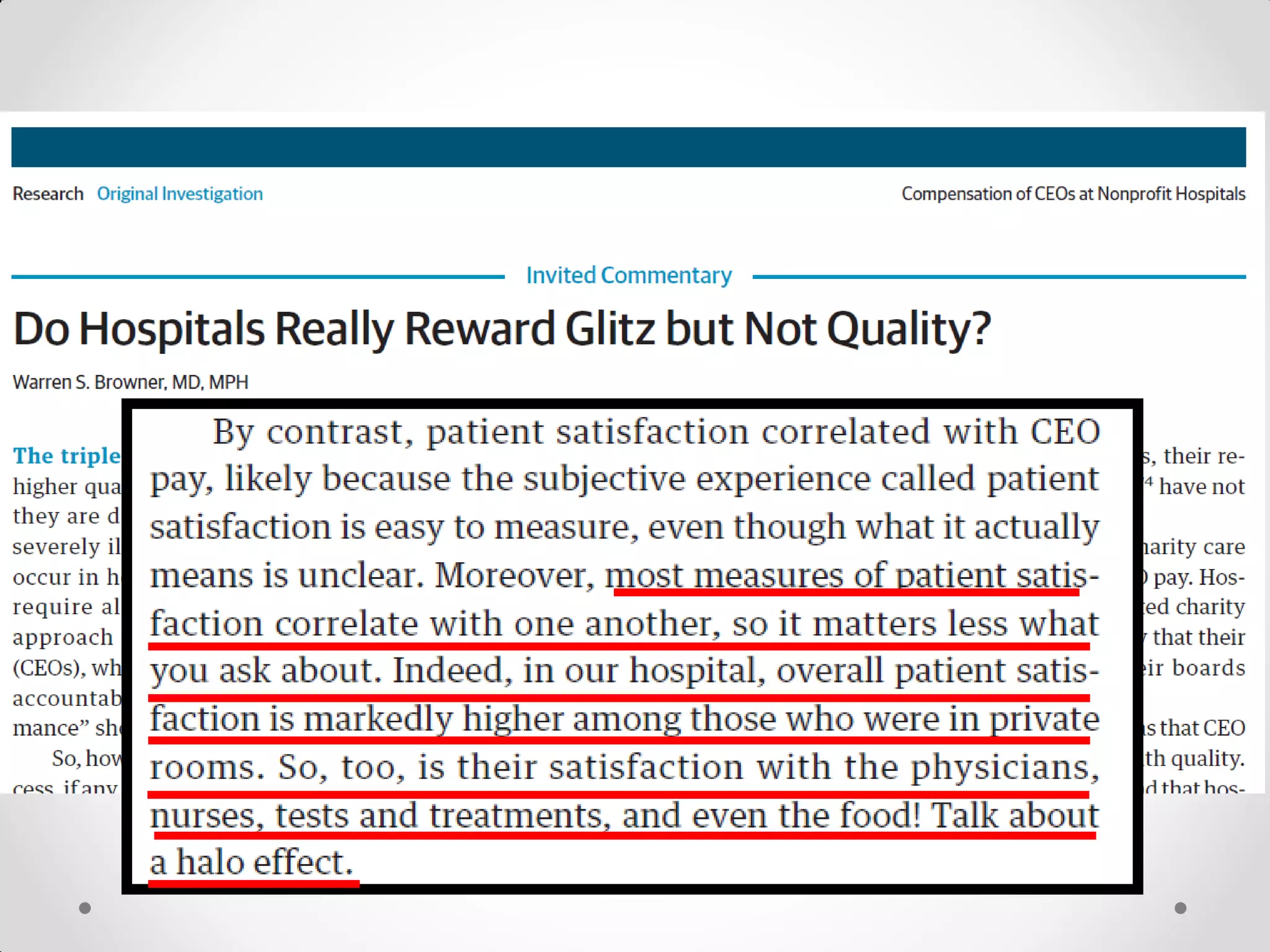
Correlate or outcome?
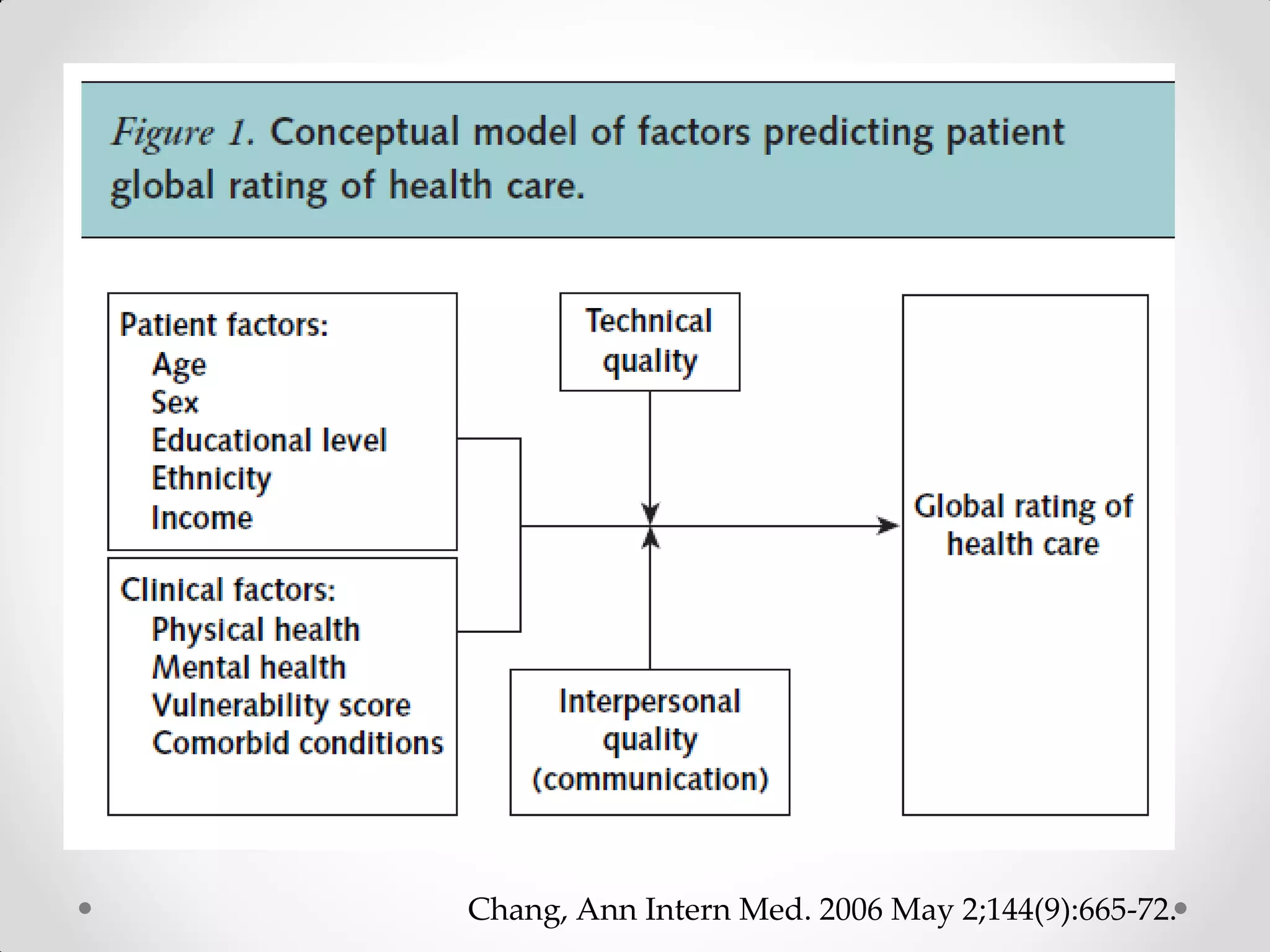
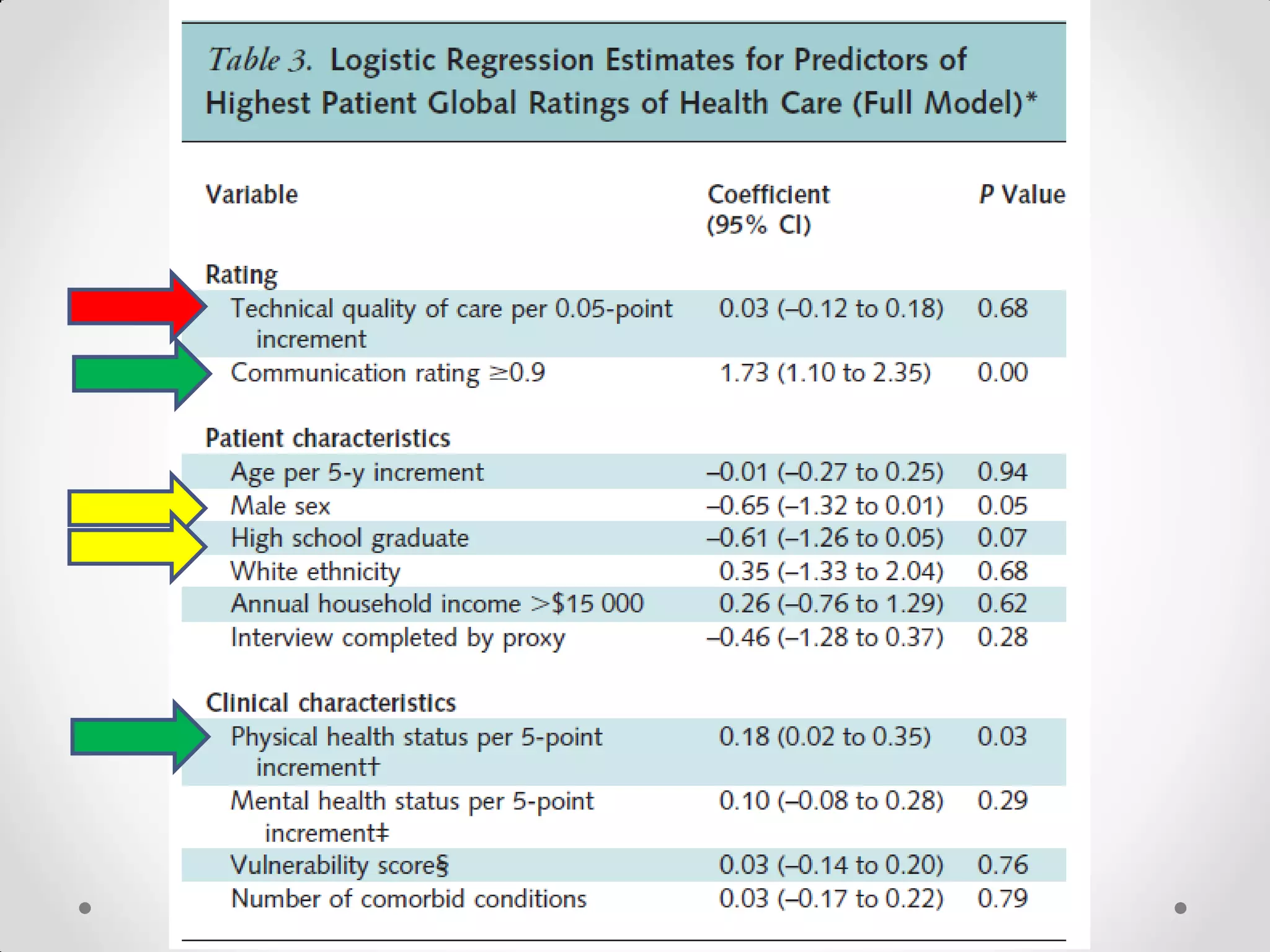
Chang, Ann Intern Med. 2006 May 2;144(9):665-72.
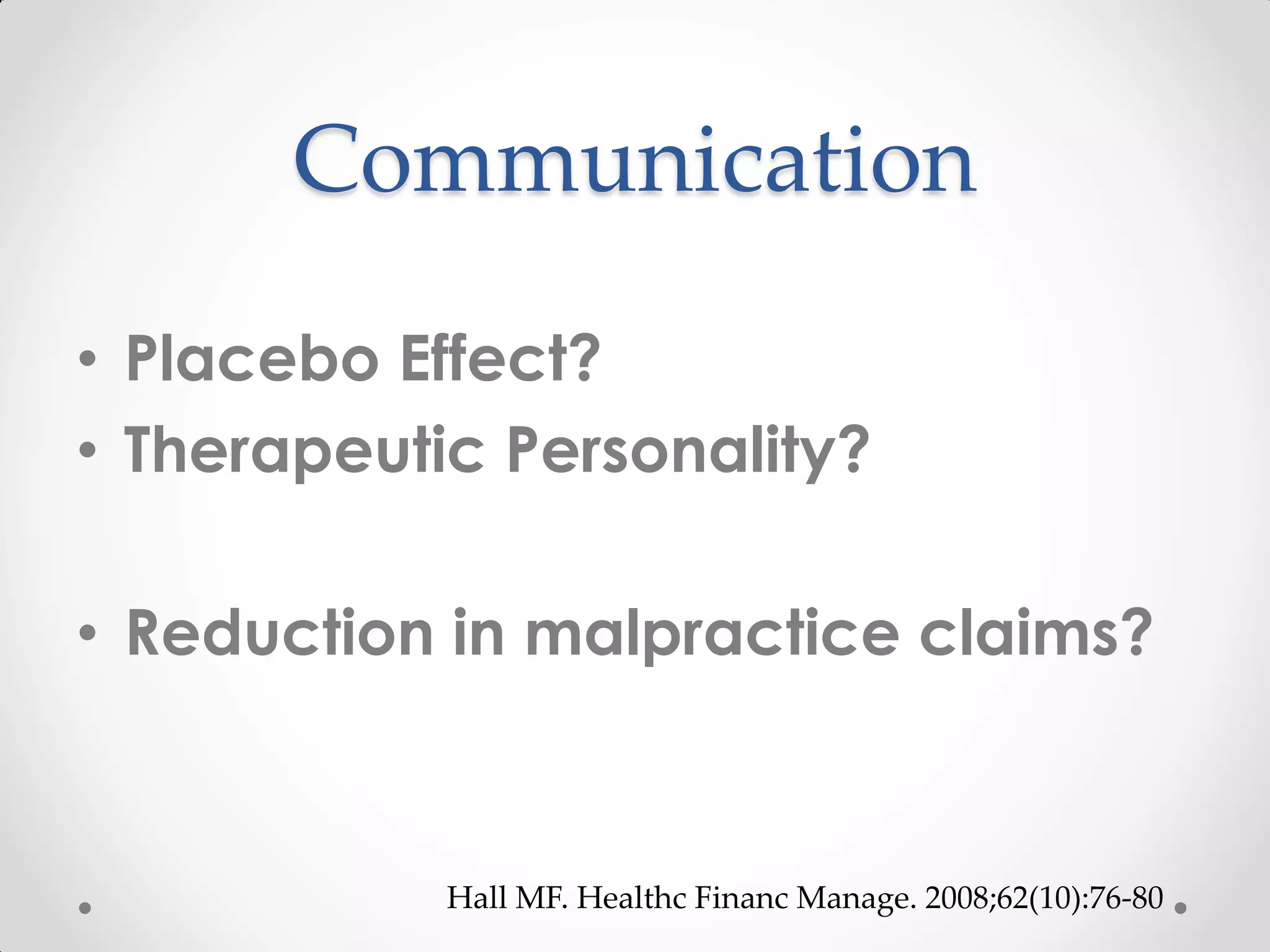
Communication
• Placebo Effect?
• Therapeutic Personality?
• Reduction in malpractice claims?
Hall MF. Healthc Financ Manage. 2008;62(10):76-80
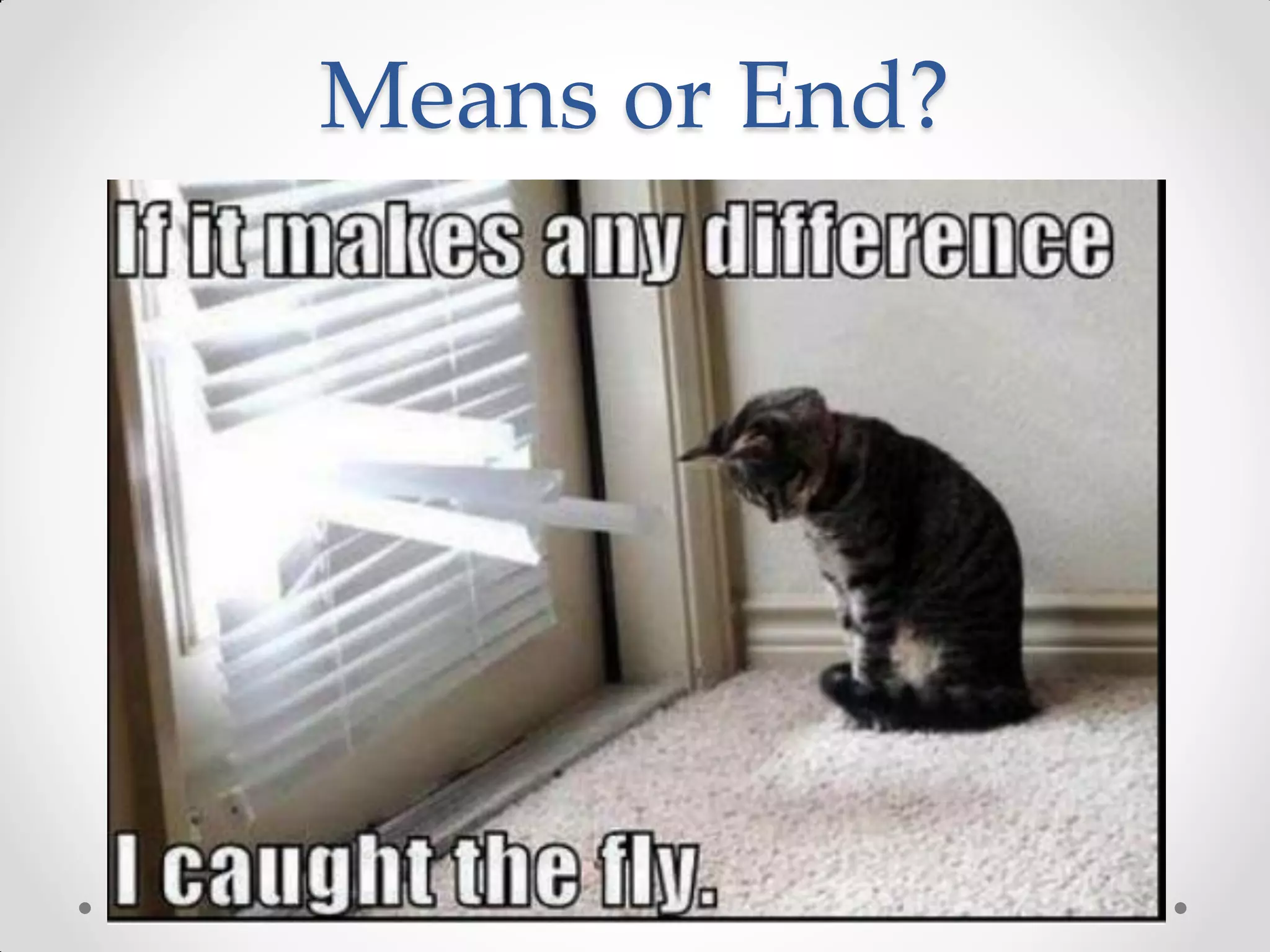
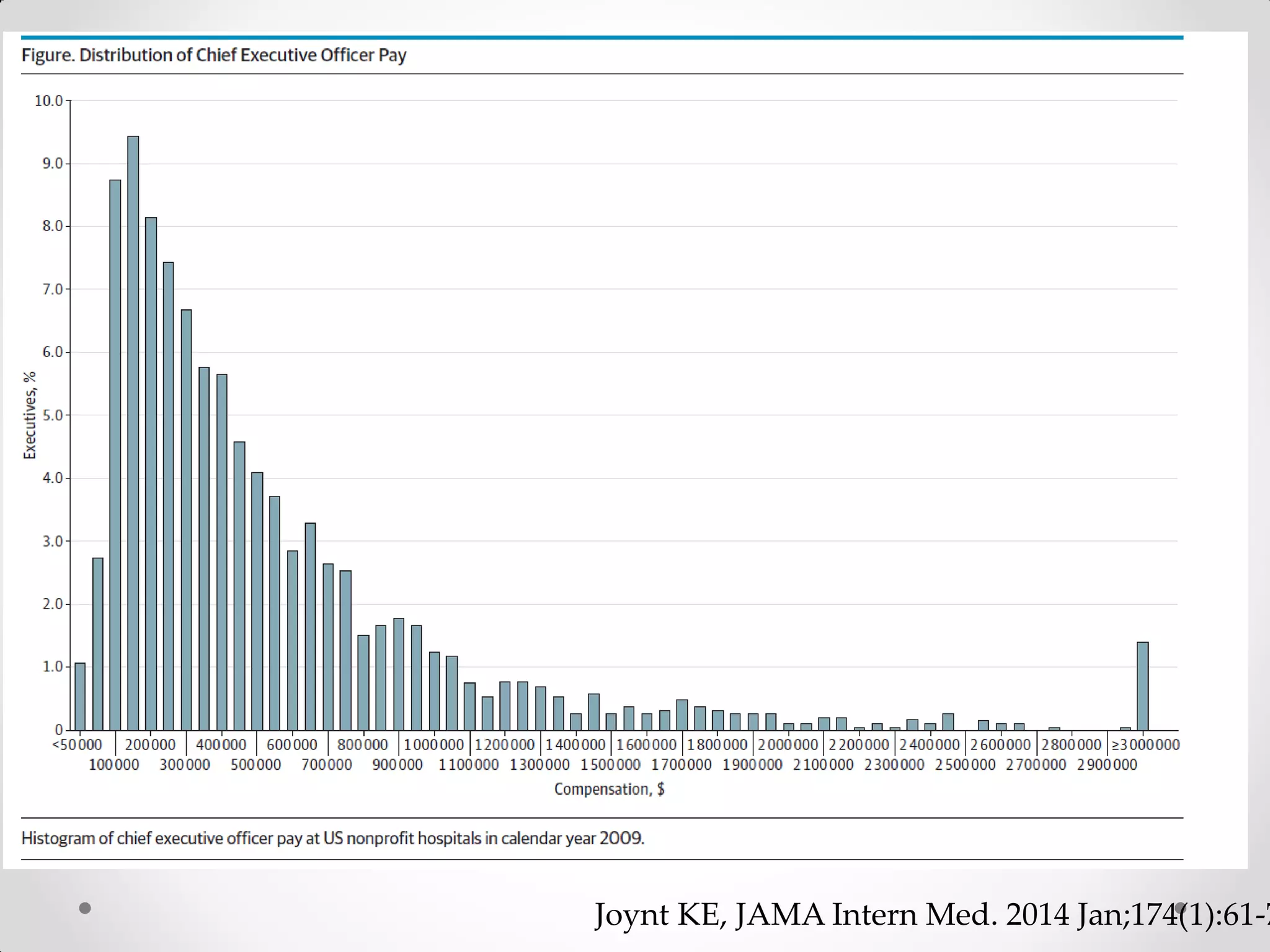
Means or End?
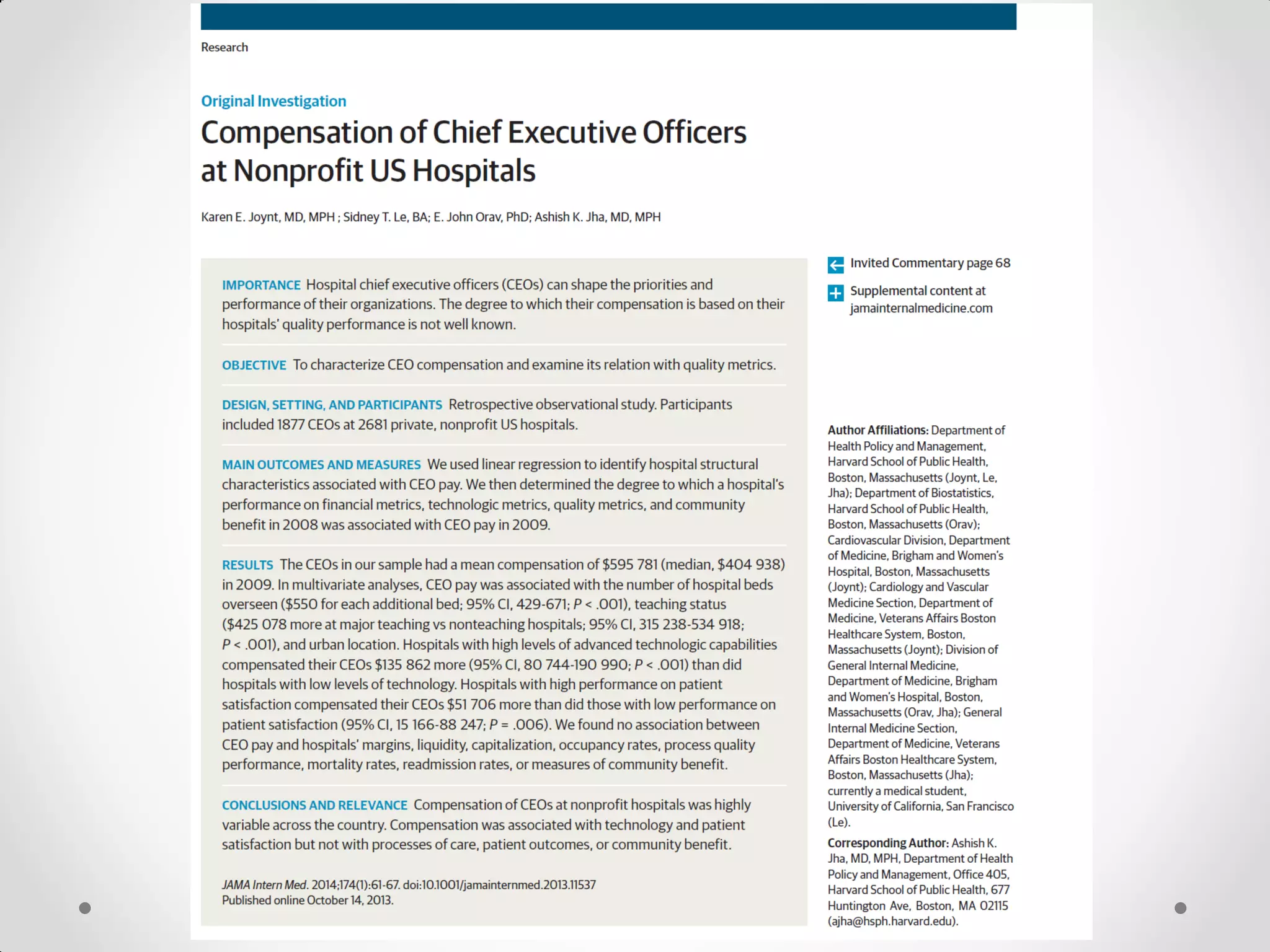
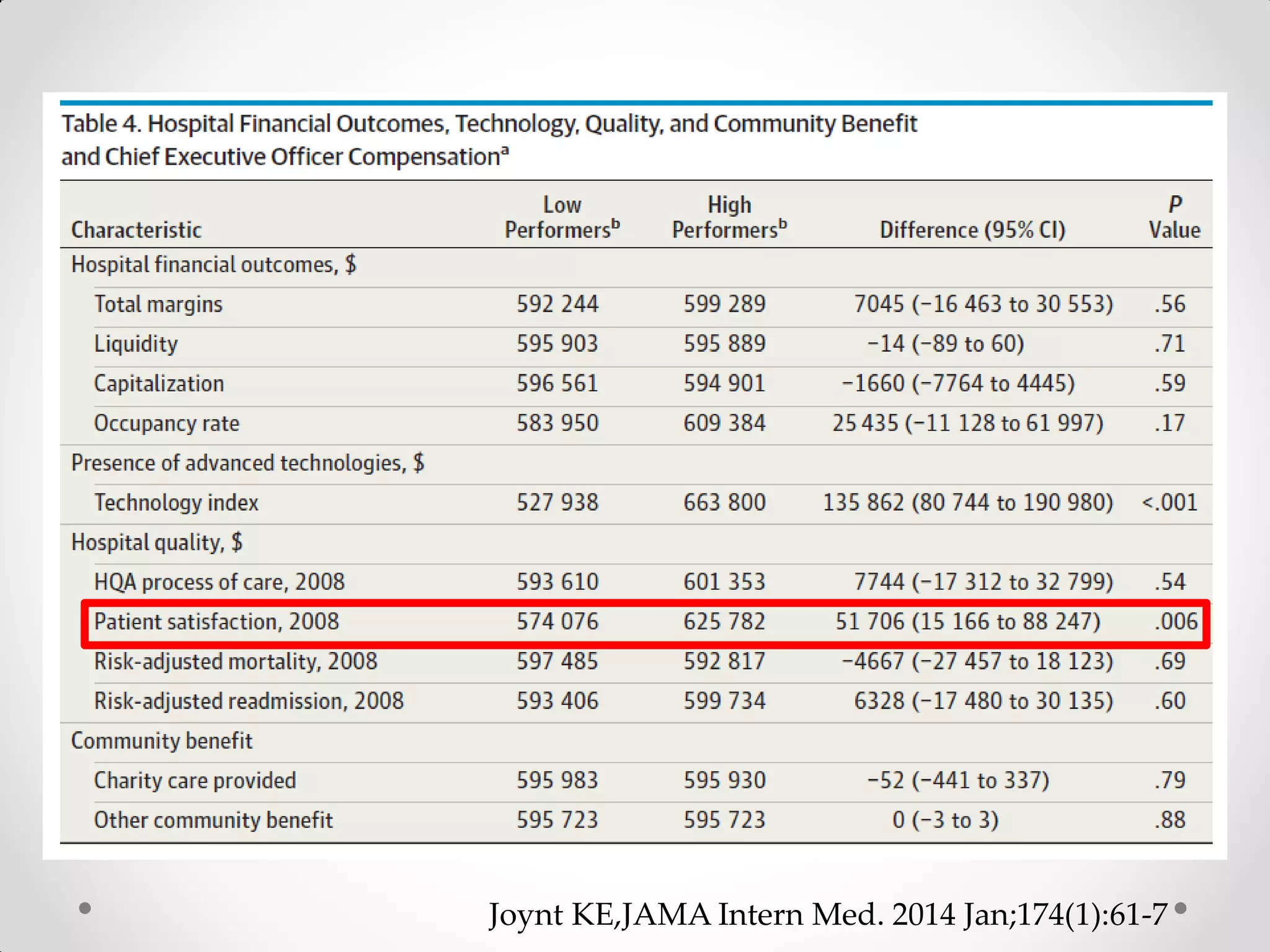
Joynt KE,JAMA Intern Med. 2014 Jan;174(1):61-7
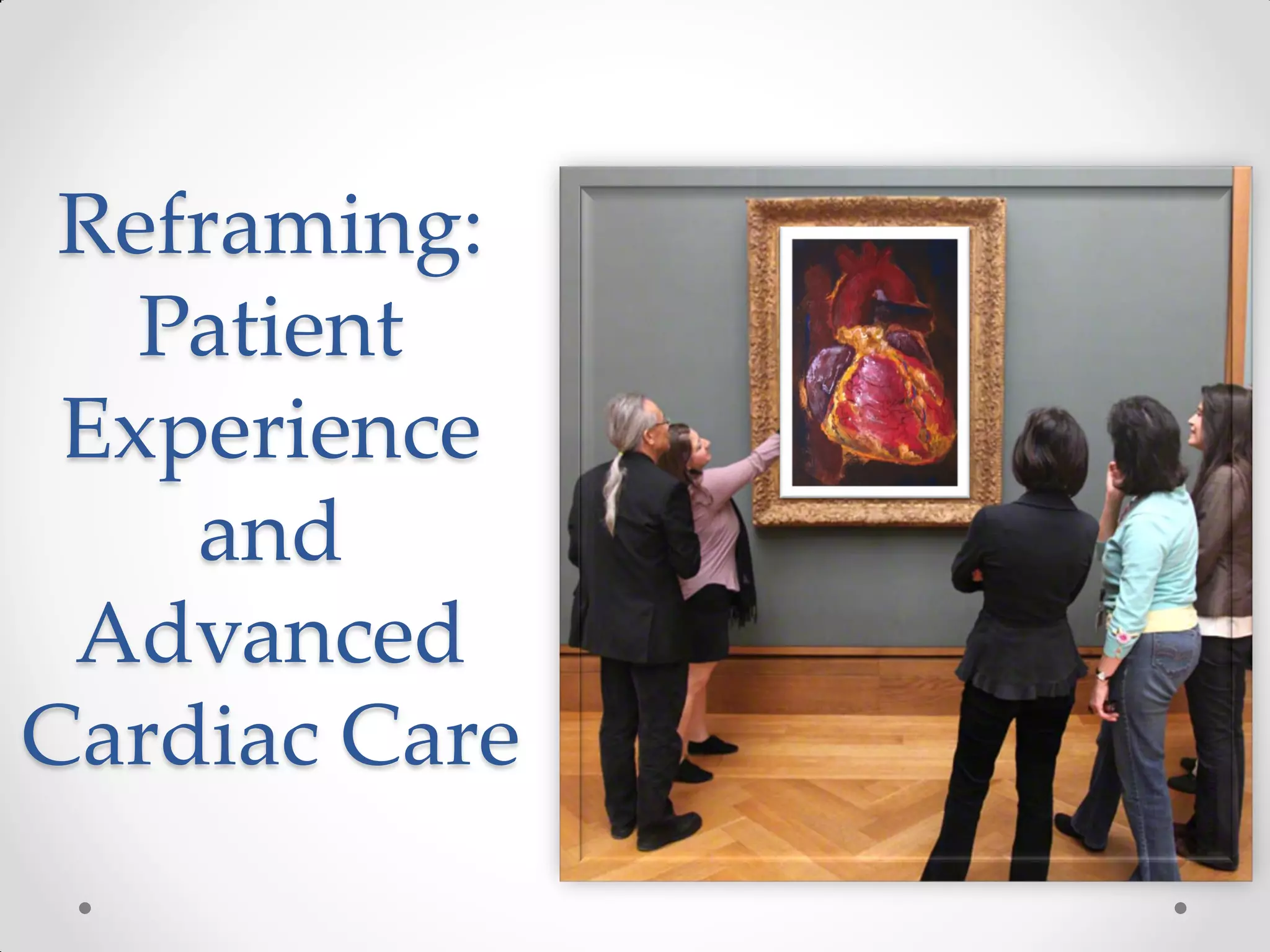
Reframing:
Patient
Experience
and
Advanced
Cardiac Care
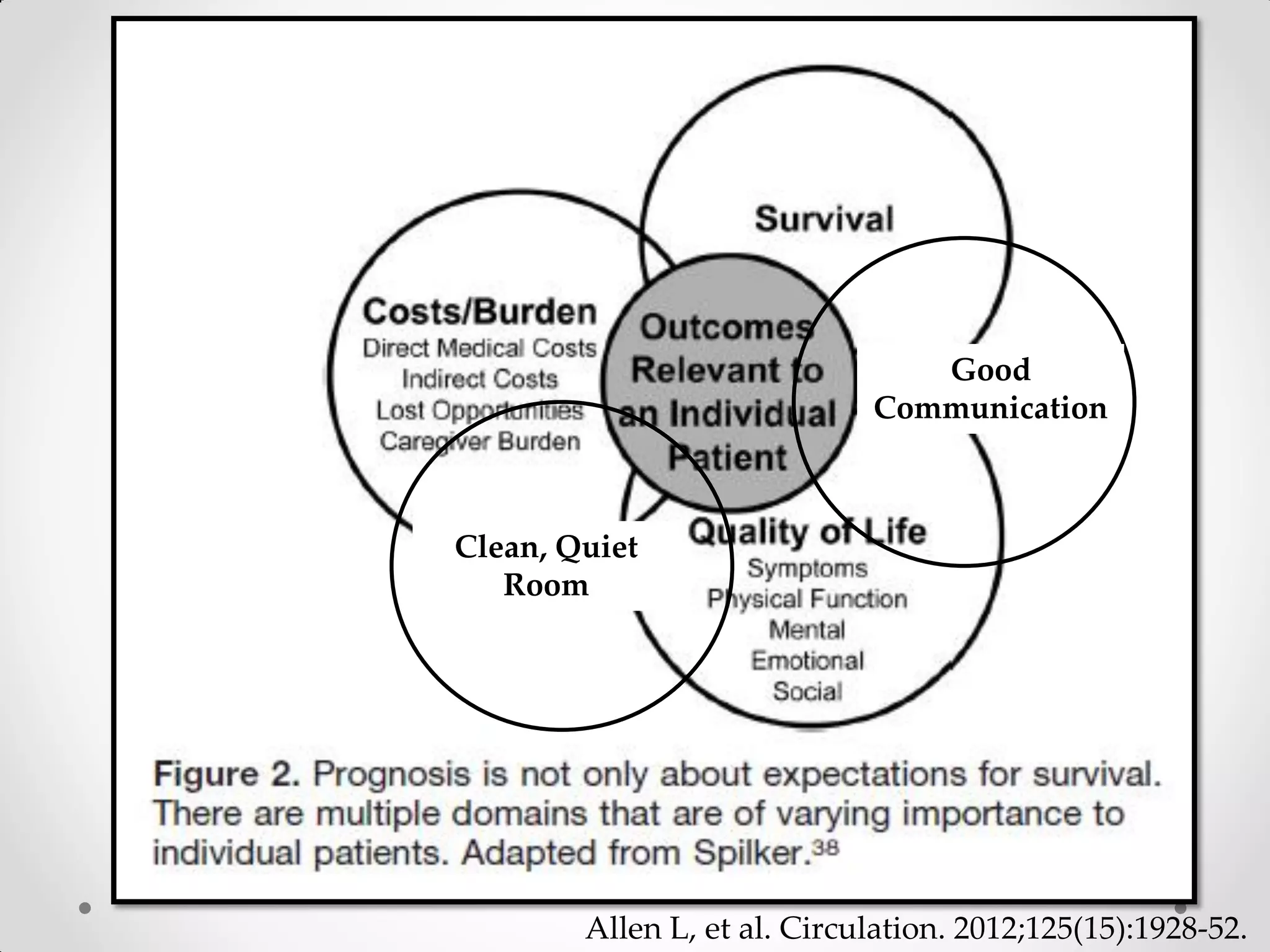
Allen L, et al. Circulation. 2012;125(15):1928-52.
Good
Communication
Clean, Quiet
Room
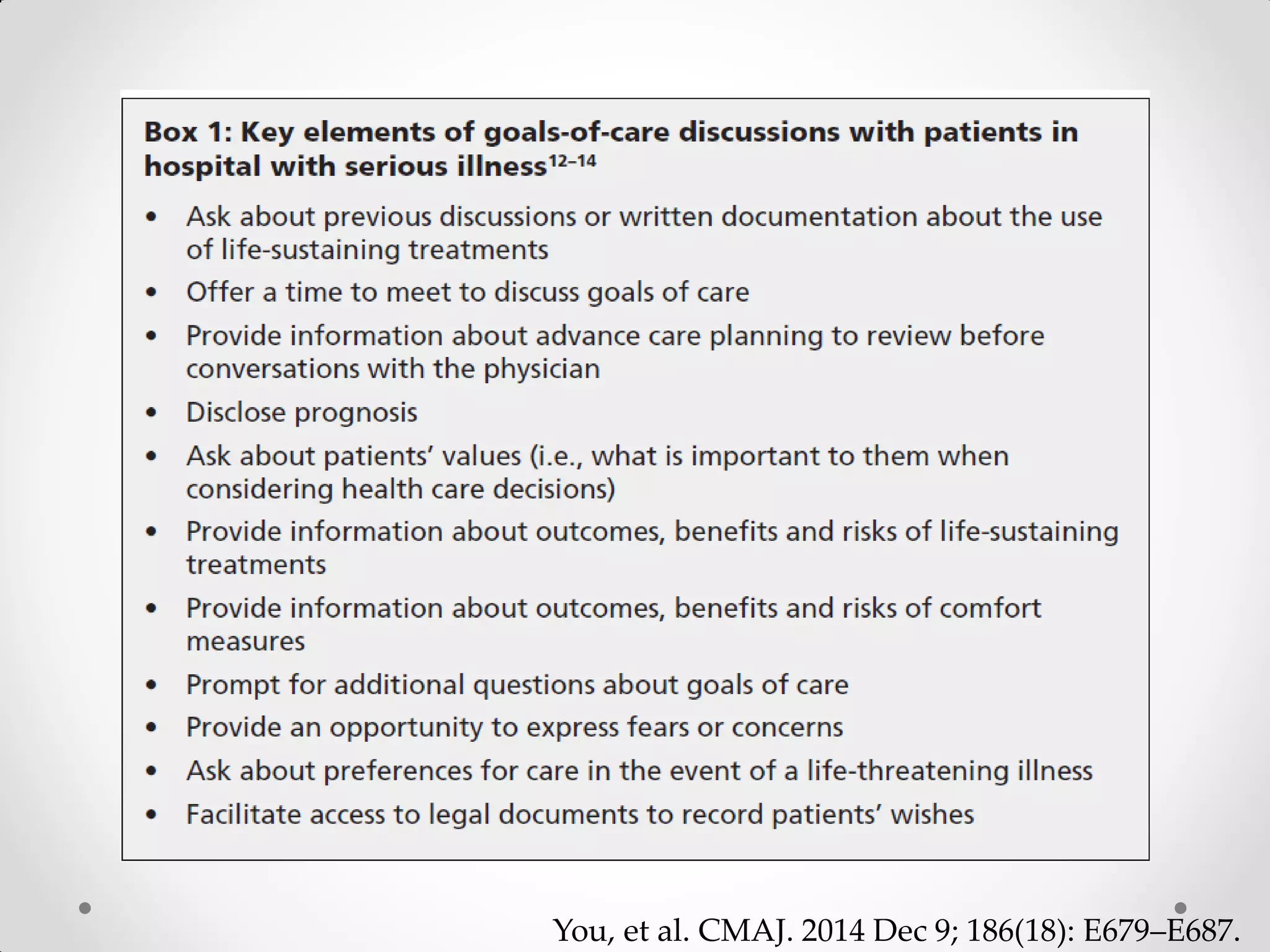
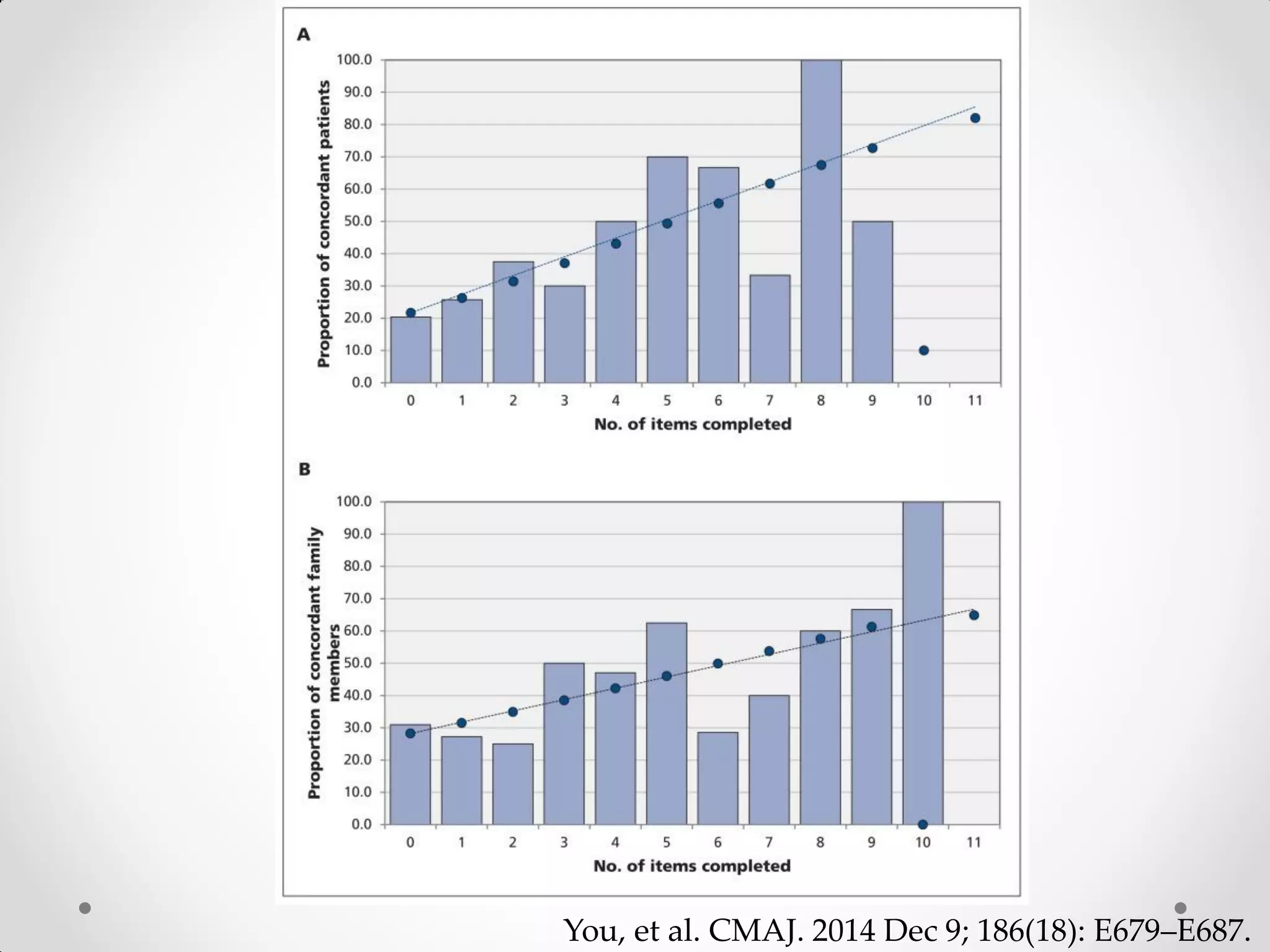
You, et al. CMAJ. 2014 Dec 9; 186(18): E679–E687.
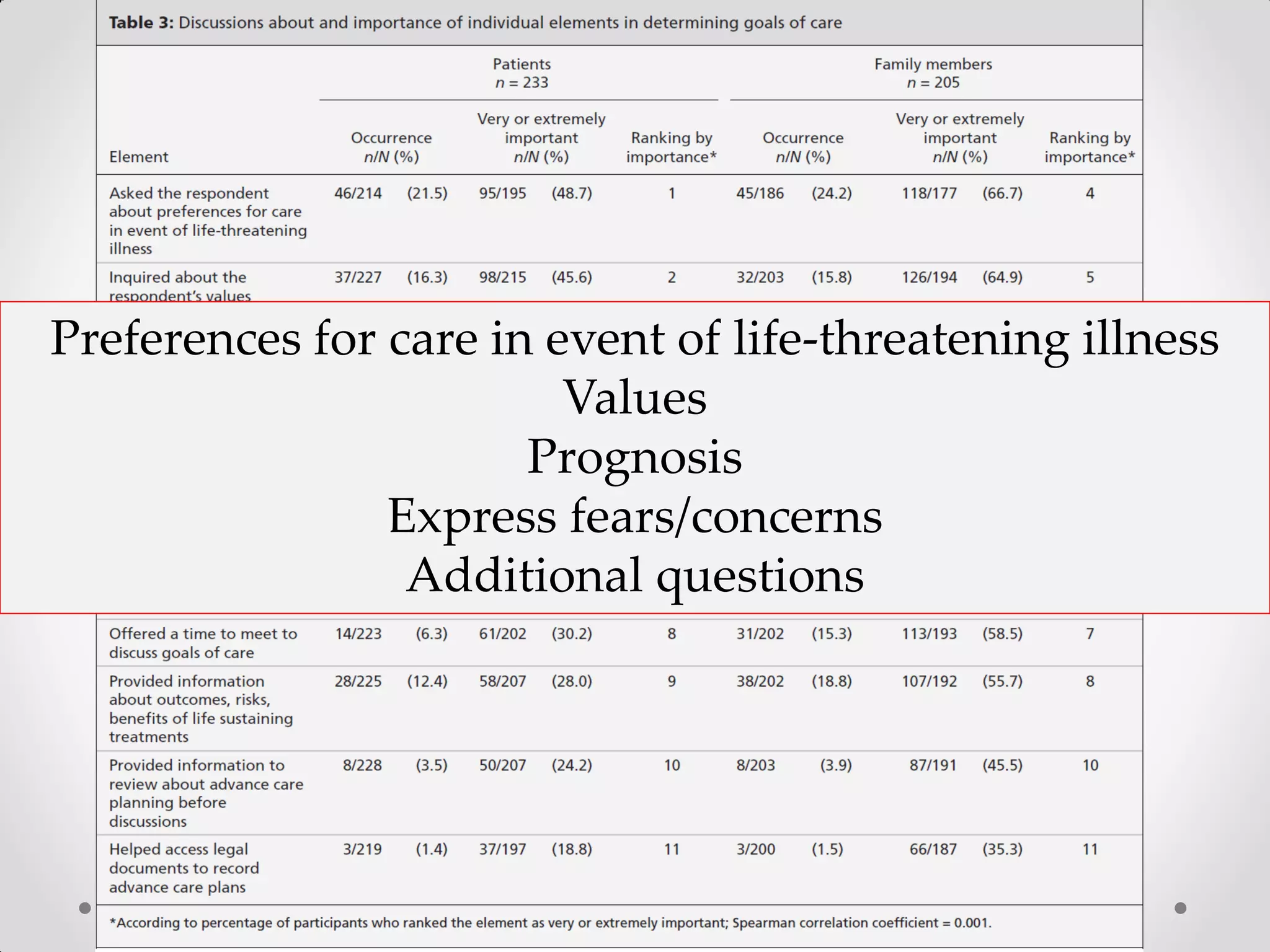
Preferences for care in event of life-threatening illness
Values
Prognosis
Express fears/concerns
Additional questions
You, et al. CMAJ. 2014 Dec 9; 186(18): E679–E687.
2
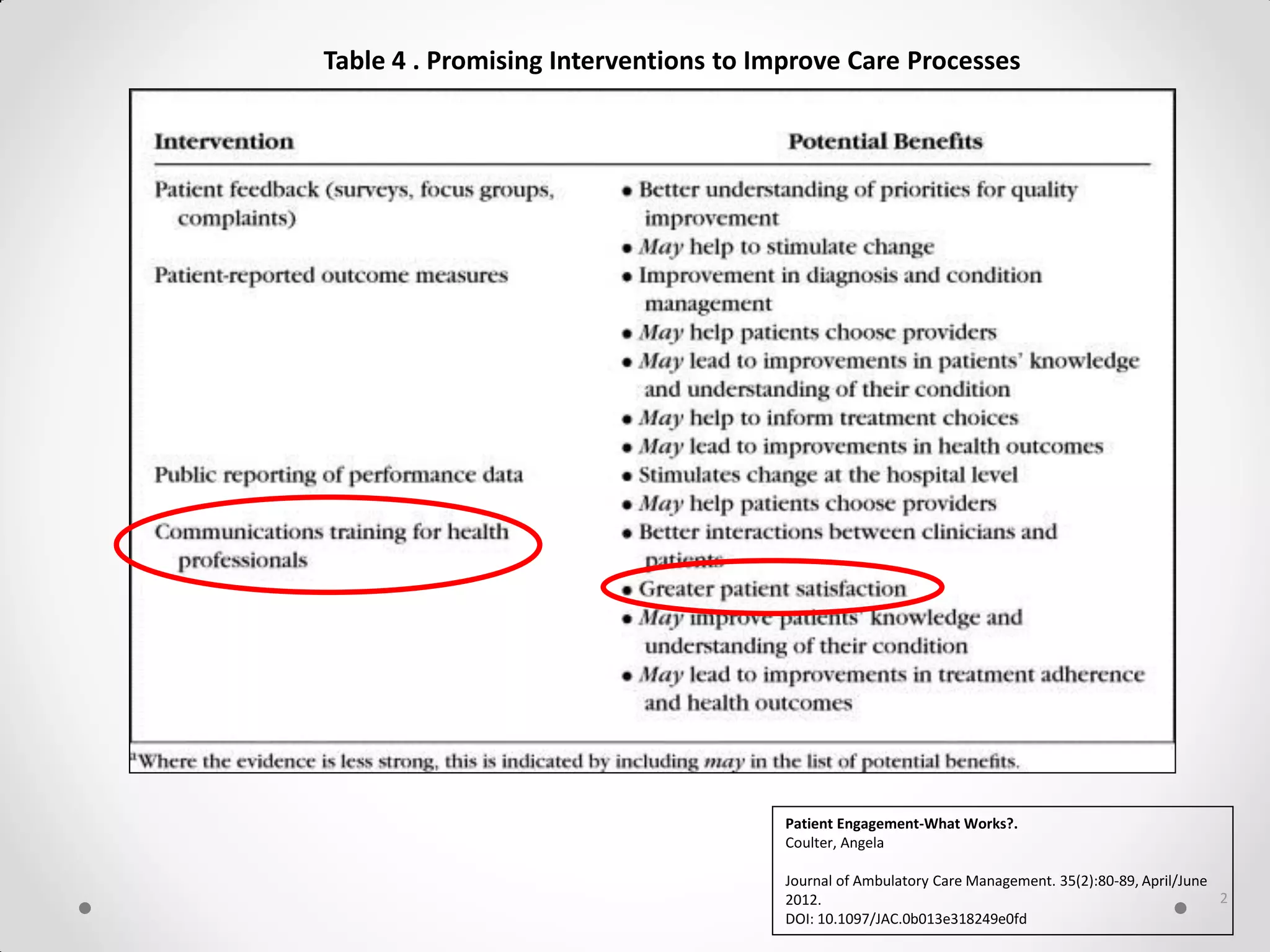
Patient Engagement-What Works?.
Coulter, Angela
Journal of Ambulatory Care Management. 35(2):80-89, April/June
2012.
DOI: 10.1097/JAC.0b013e318249e0fd
Table 4 . Promising Interventions to Improve Care Processes
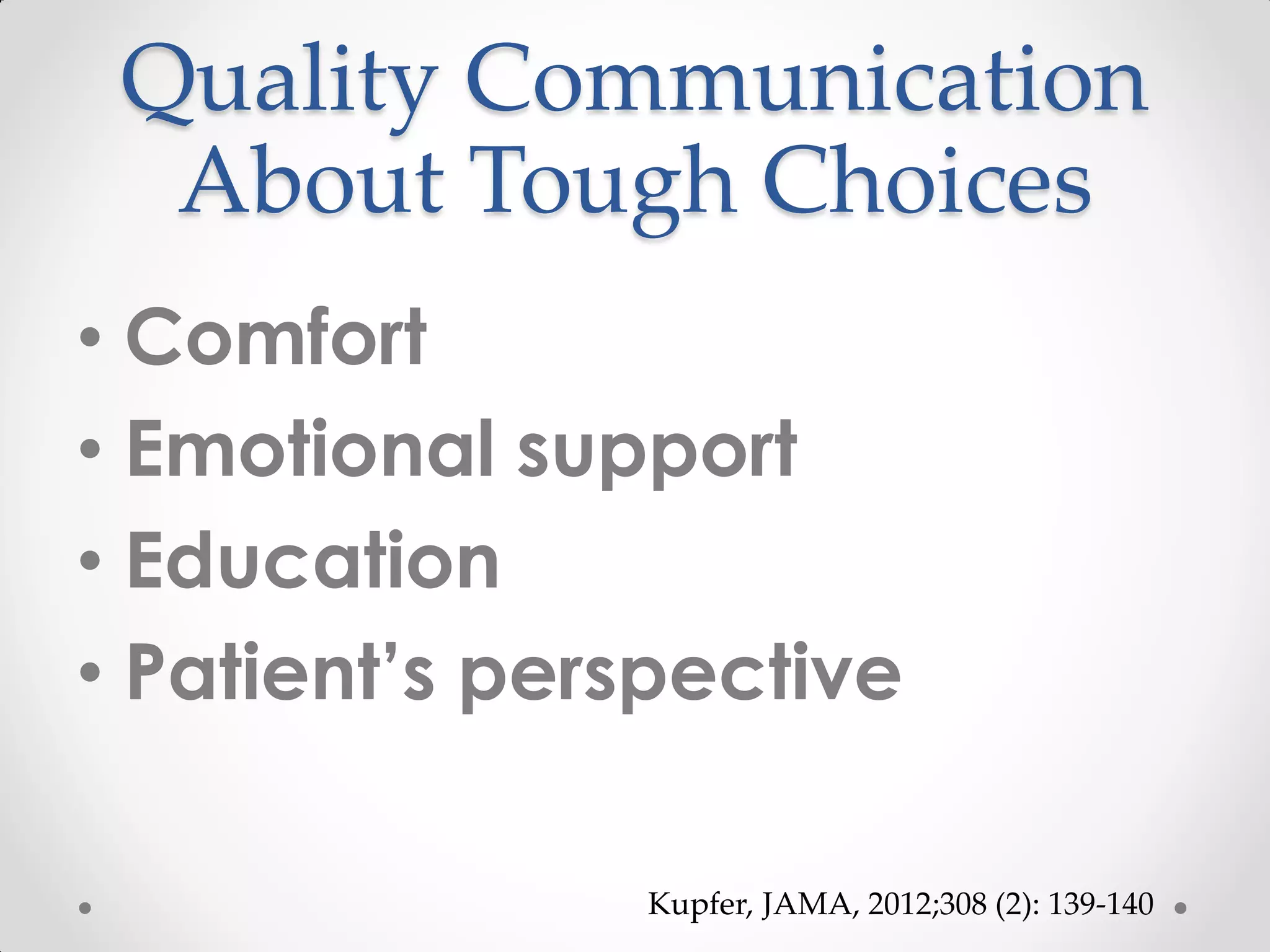
Quality Communication
About Tough Choices
• Comfort
• Emotional support
• Education
• Patient’s perspective
Kupfer, JAMA, 2012;308 (2): 139-140
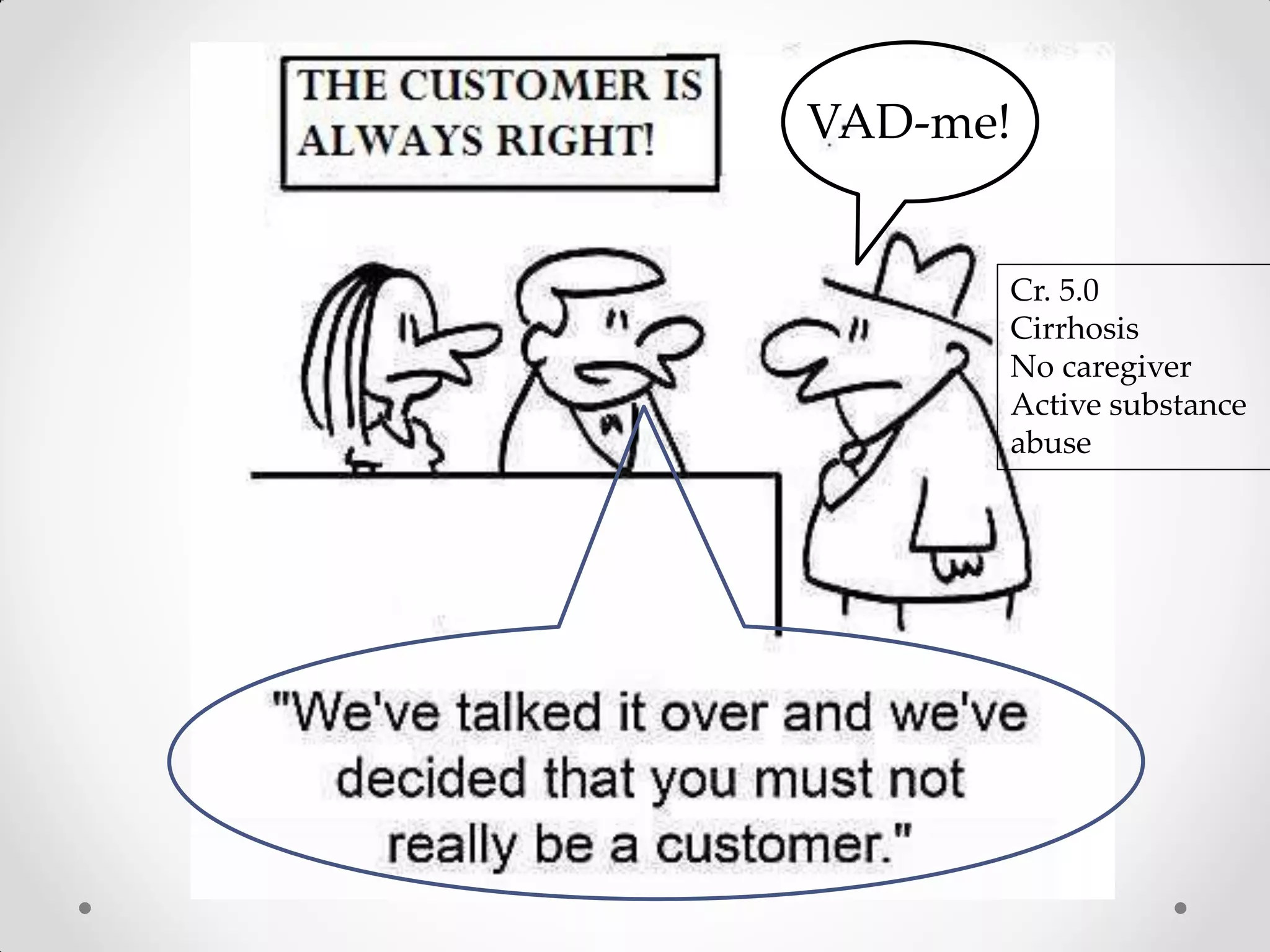
VAD-me!
Cr. 5.0
Cirrhosis
No caregiver
Active substance
abuse
Conclusions
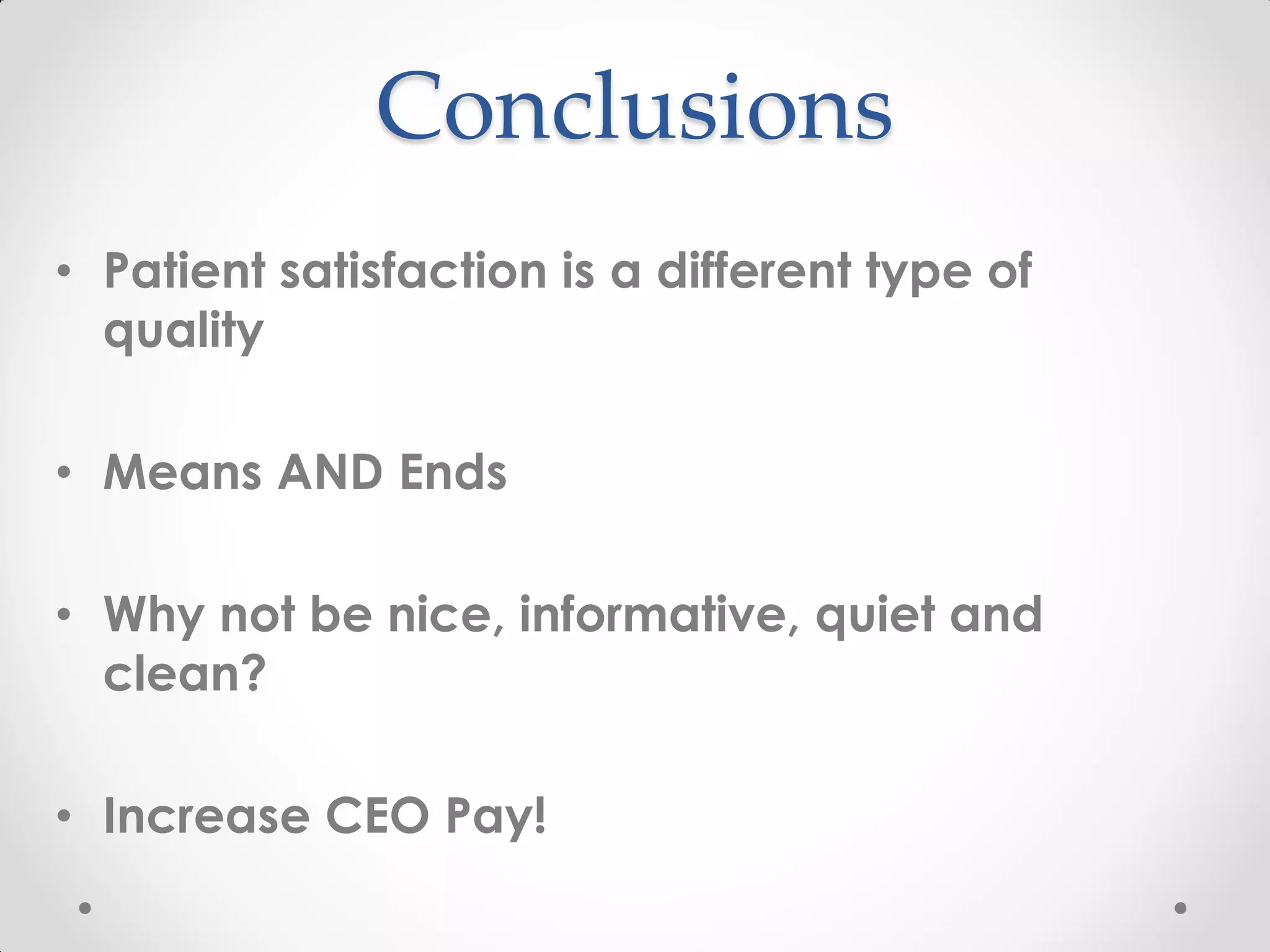
• Patient satisfaction is a different type of
quality
• Means AND Ends
• Why not be nice, informative, quiet and
clean?
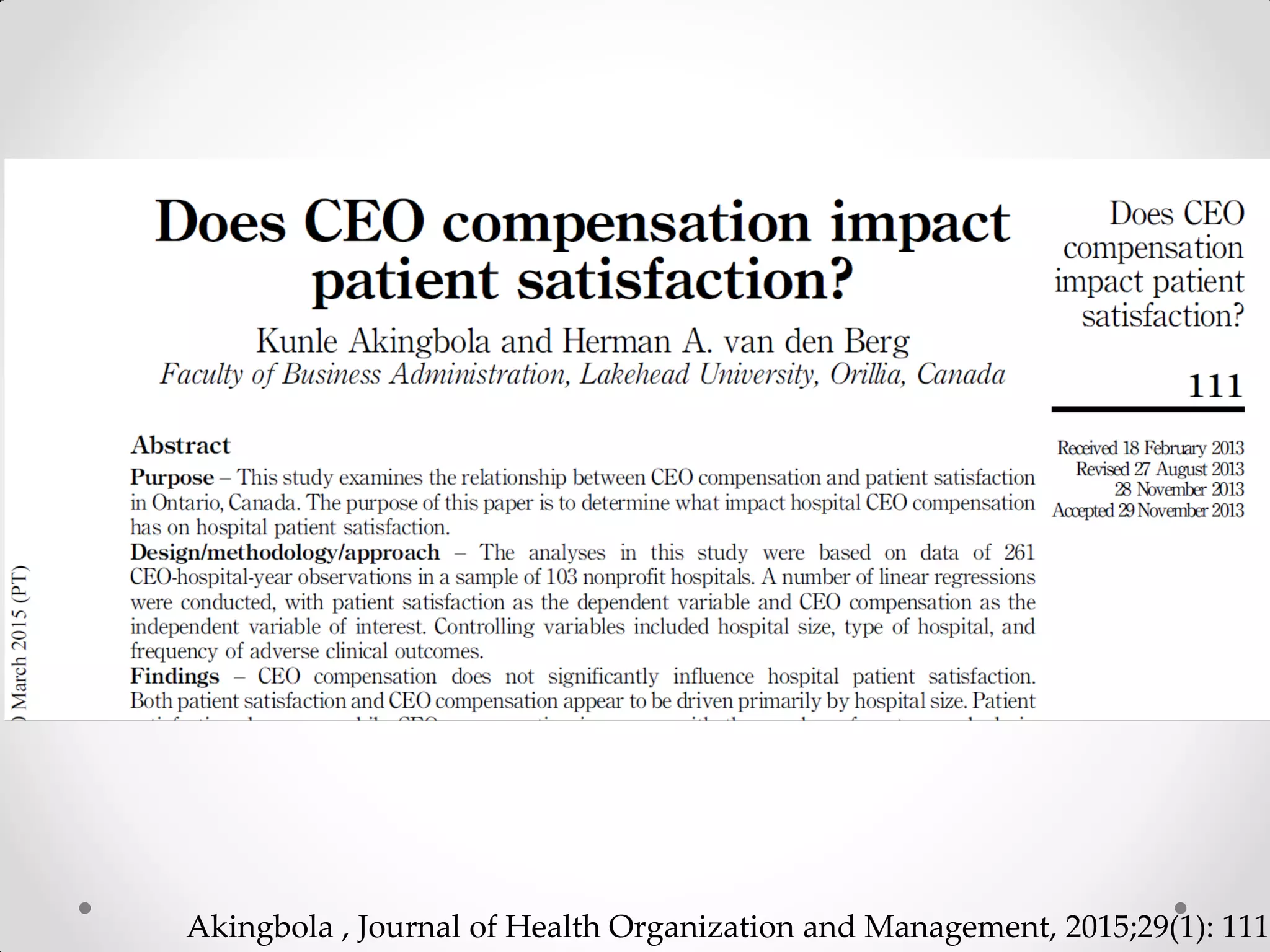
• Increase CEO Pay!
“For the secret of
the care of the
patient is in caring
for the patient.”
F.W. Peabody
Extra slides
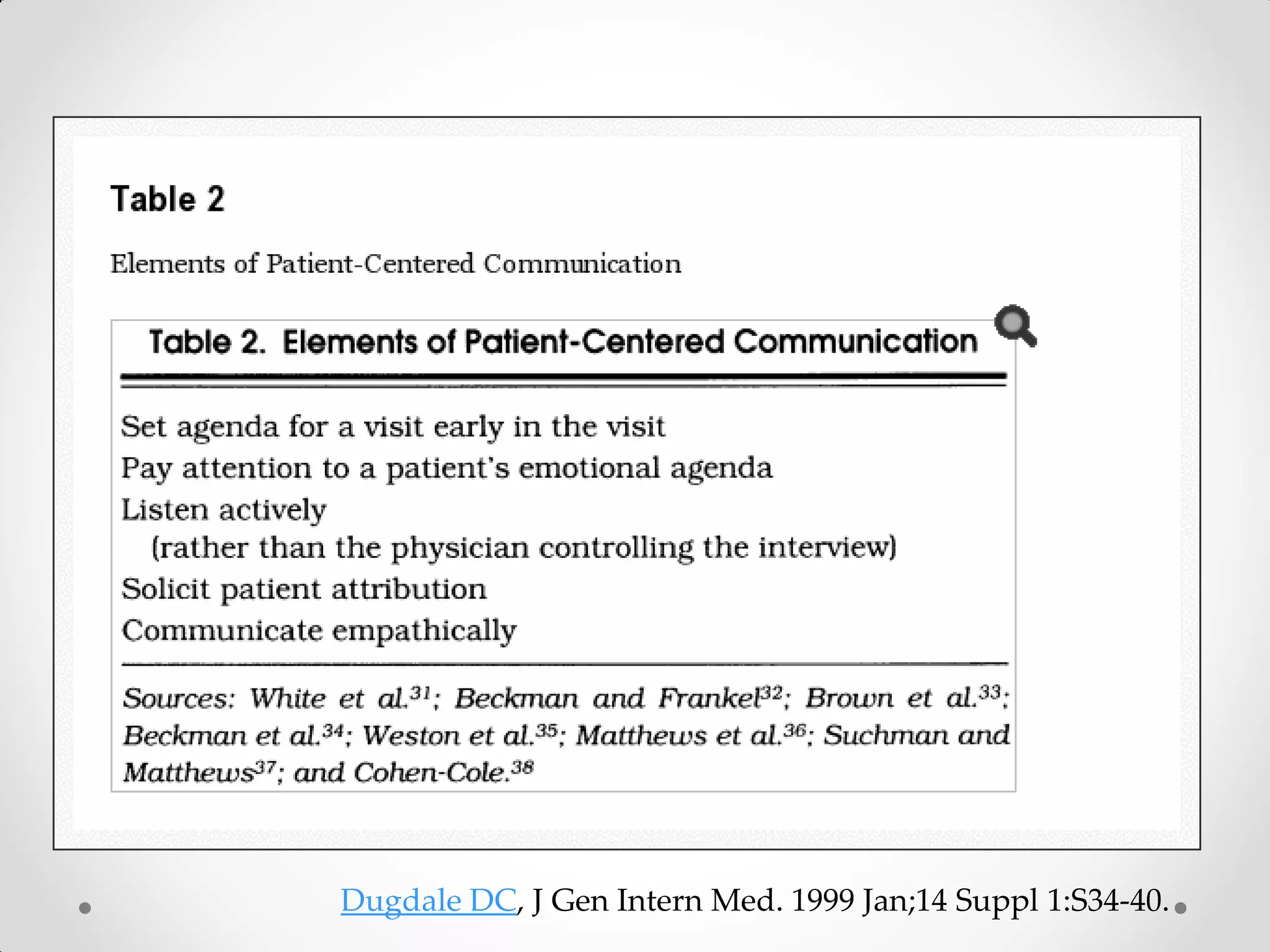
Dugdale DC, J Gen Intern Med. 1999 Jan;14 Suppl 1:S34-40.
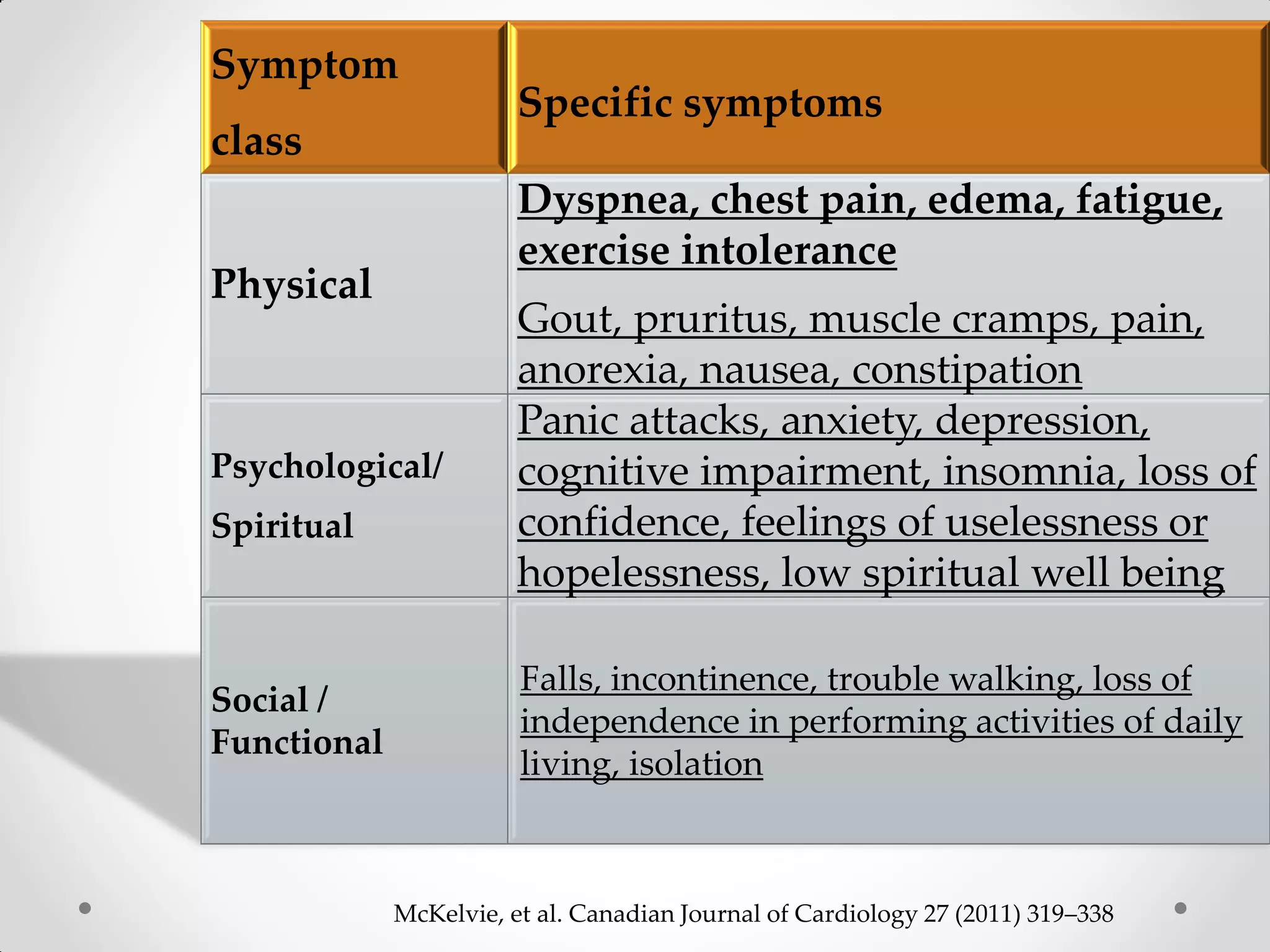
Symptom
class
Specific symptoms
Physical
Dyspnea, chest pain, edema, fatigue,
exercise intolerance
Gout, pruritus, muscle cramps, pain,
anorexia, nausea, constipation
Psychological/
Spiritual
Panic attacks, anxiety, depression,
cognitive impairment, insomnia, loss of
confidence, feelings of uselessness or
hopelessness, low spiritual well being
Social /
Functional
Falls, incontinence, trouble walking, loss of
independence in performing activities of daily
living, isolation
McKelvie, et al. Canadian Journal of Cardiology 27 (2011) 319–338
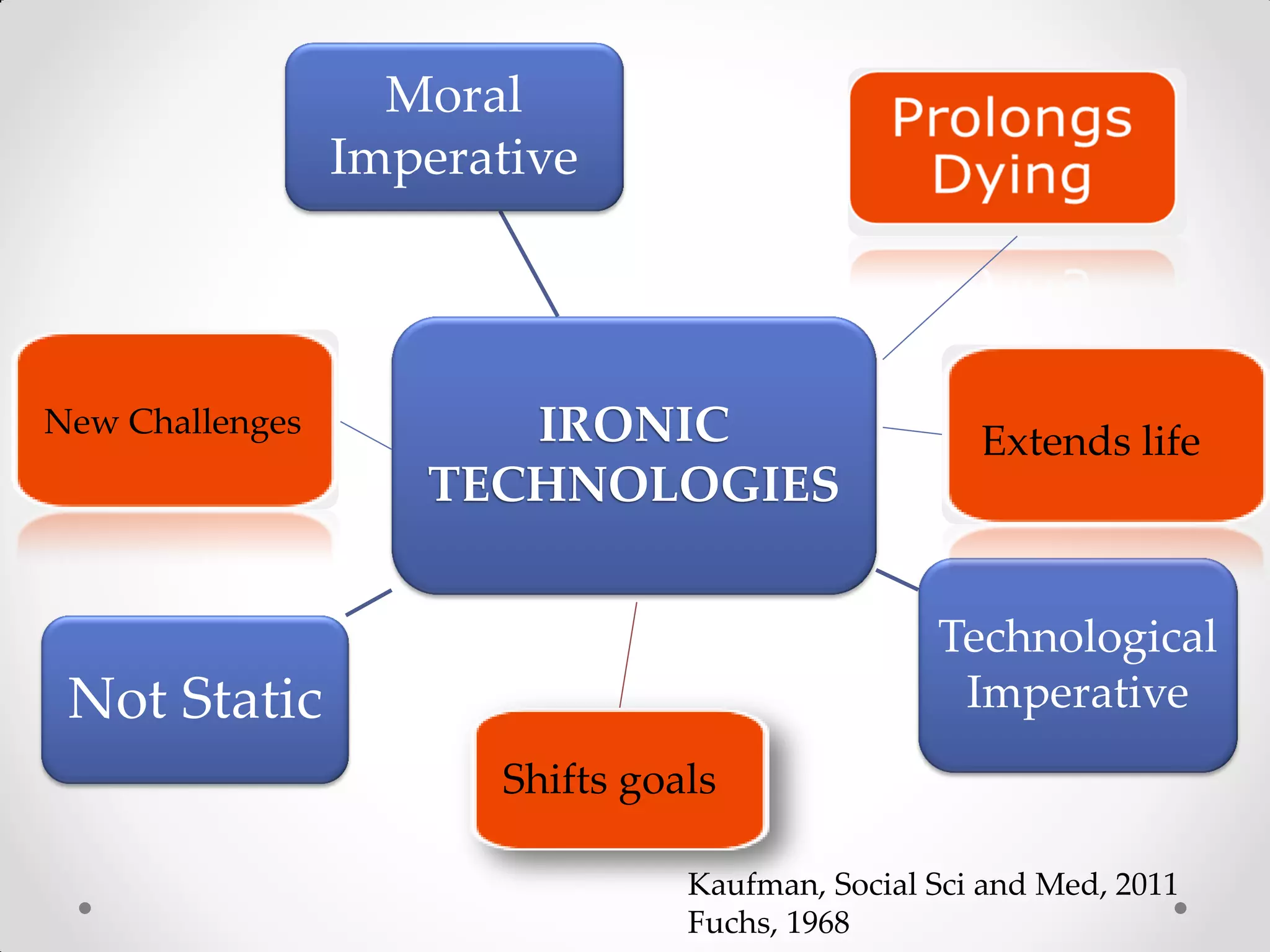
Kaufman, Social Sci and Med, 2011
Fuchs, 1968
IRONIC
TECHNOLOGIES
Moral
Imperative
Technological
ImperativeNot Static
New Challenges
Extends life
Shifts goals
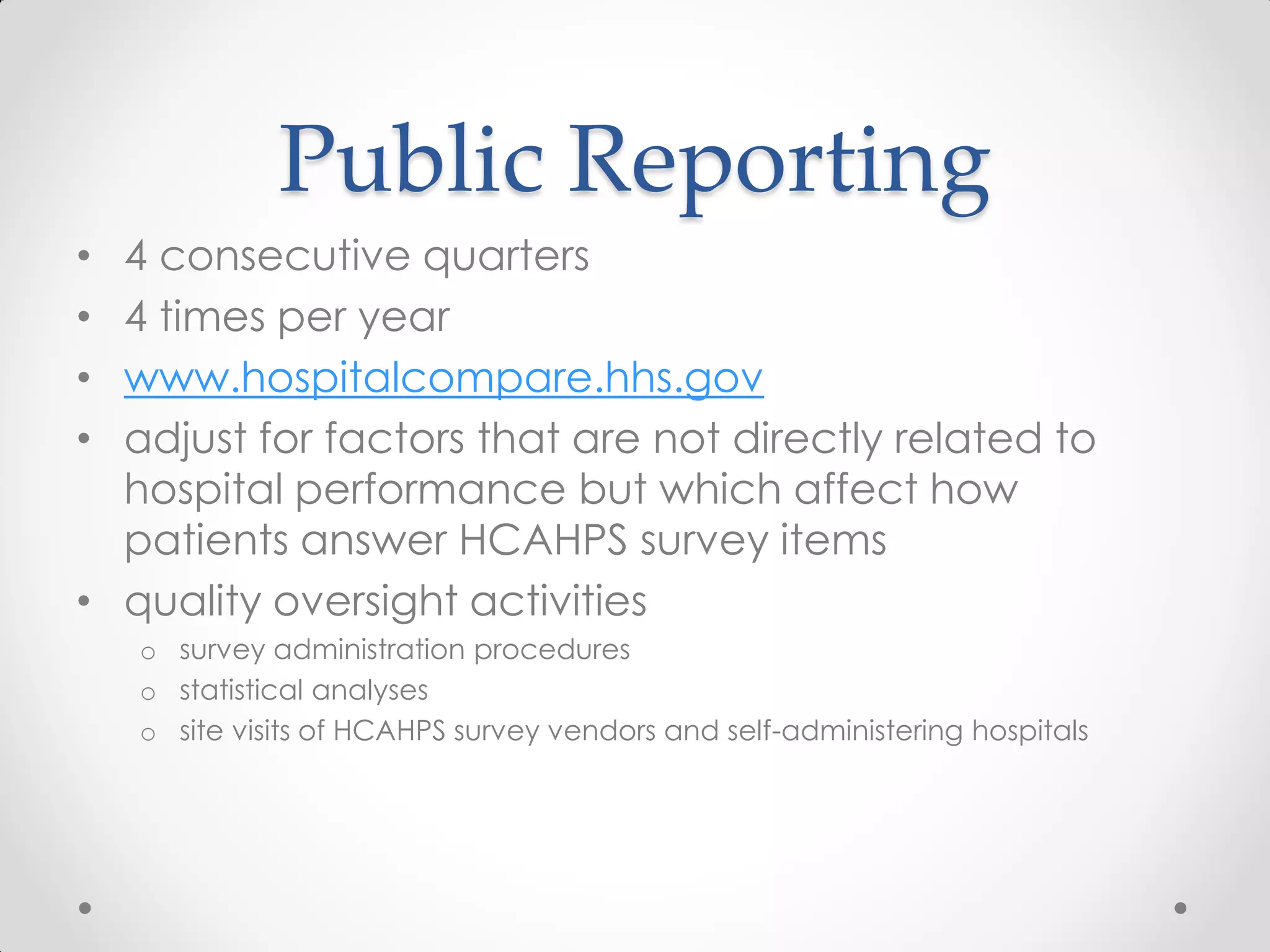
Public Reporting
• 4 consecutive quarters
• 4 times per year
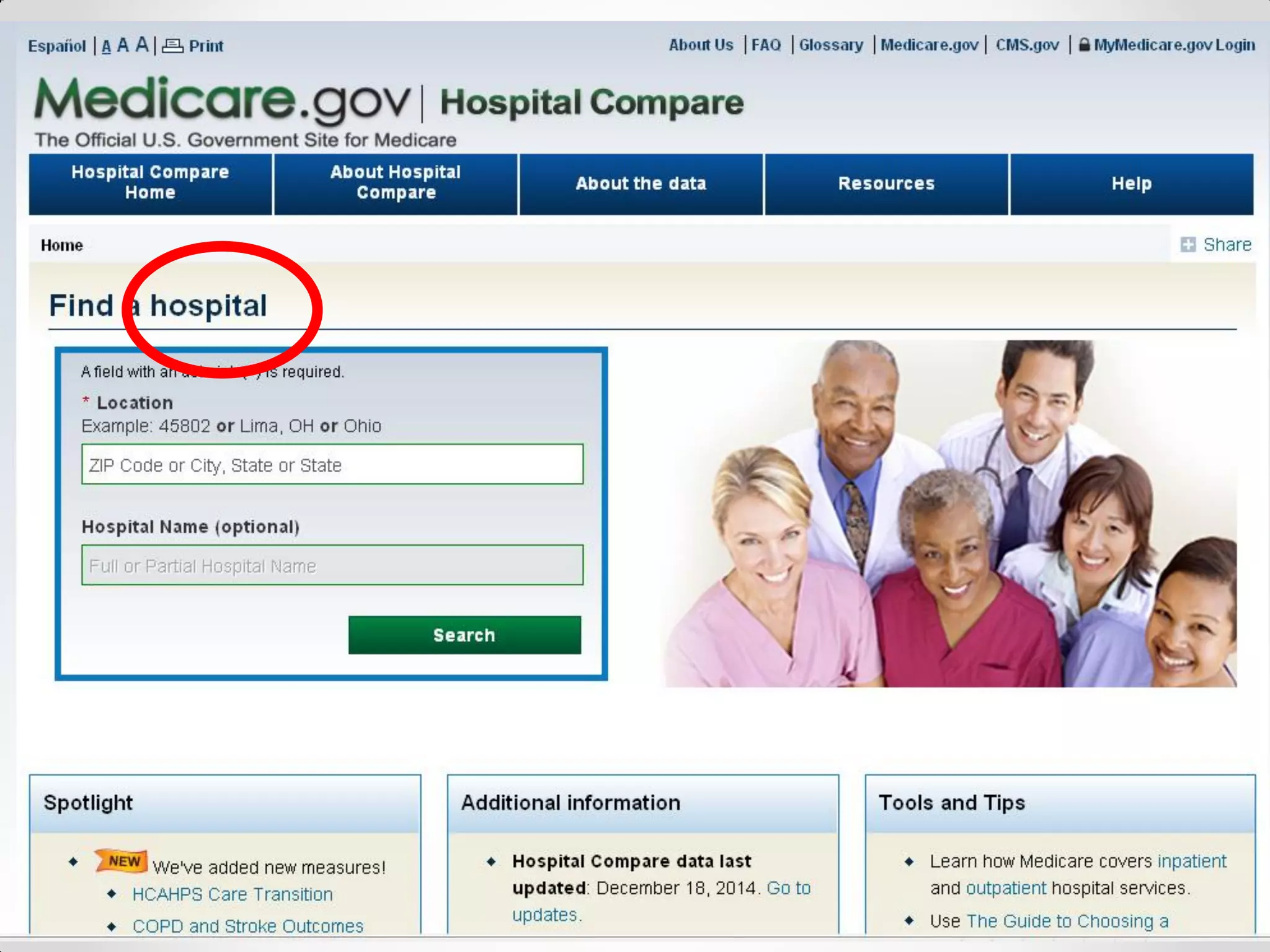
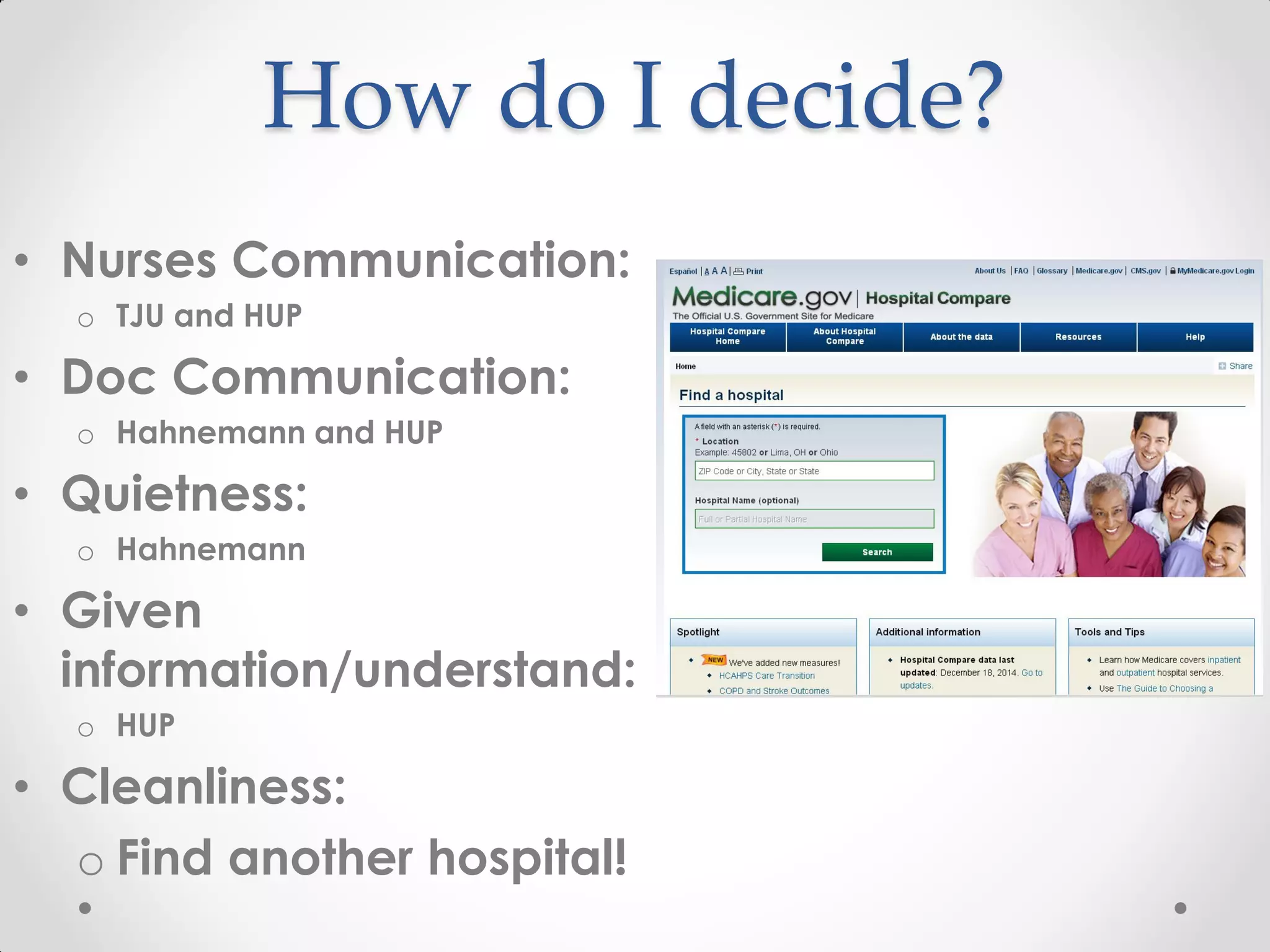
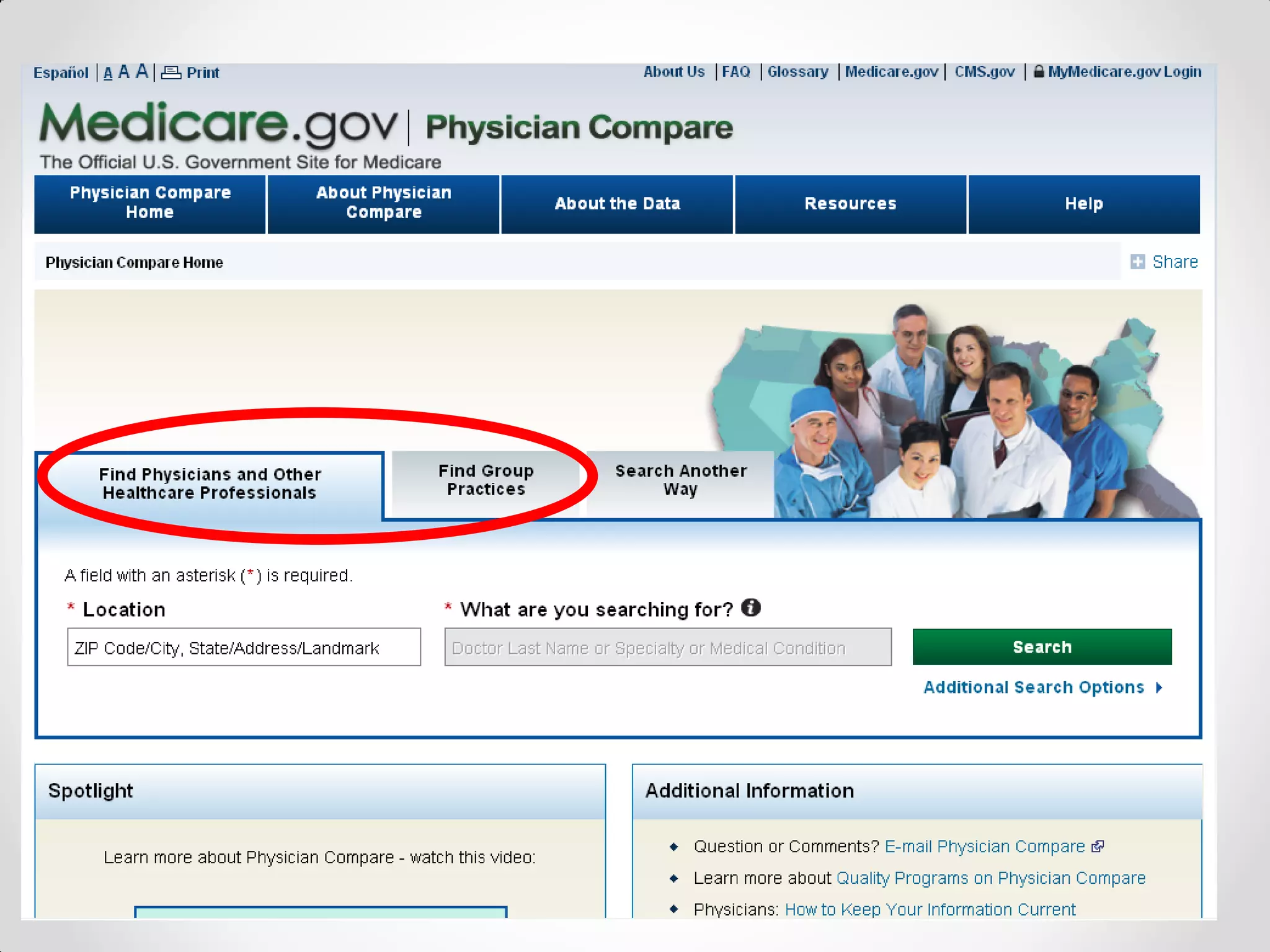
• www.hospitalcompare.hhs.gov
• adjust for factors that are not directly related to
hospital performance but which affect how
patients answer HCAHPS survey items
• quality oversight activities
o survey administration procedures
o statistical analyses
o site visits of HCAHPS survey vendors and self-administering hospitals
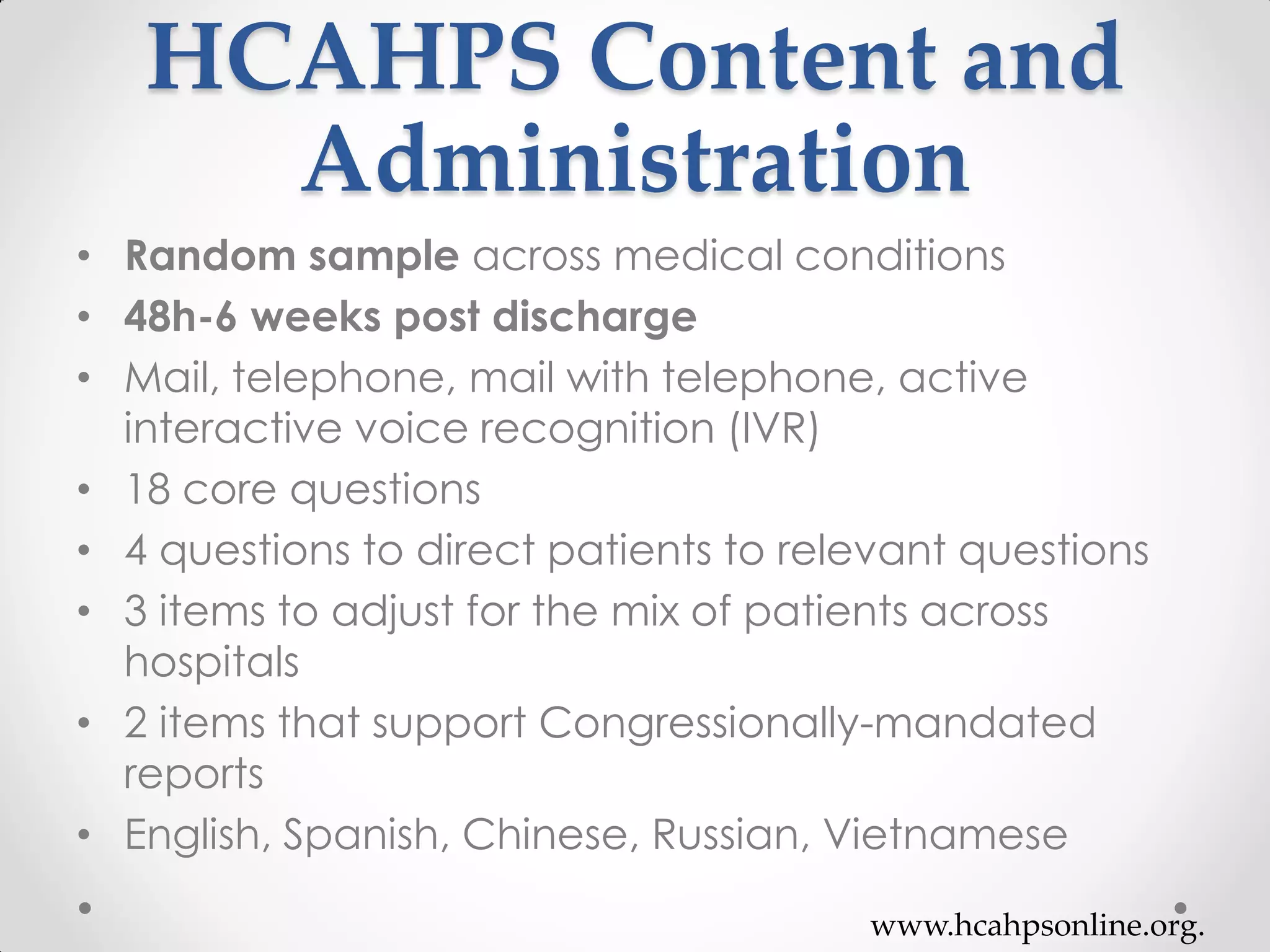
HCAHPS Content and
Administration
• Random sample across medical conditions
• 48h-6 weeks post discharge
• Mail, telephone, mail with telephone, active
interactive voice recognition (IVR)
• 18 core questions
• 4 questions to direct patients to relevant questions
• 3 items to adjust for the mix of patients across
hospitals
• 2 items that support Congressionally-mandated
reports
• English, Spanish, Chinese, Russian, Vietnamese
www.hcahpsonline.org.
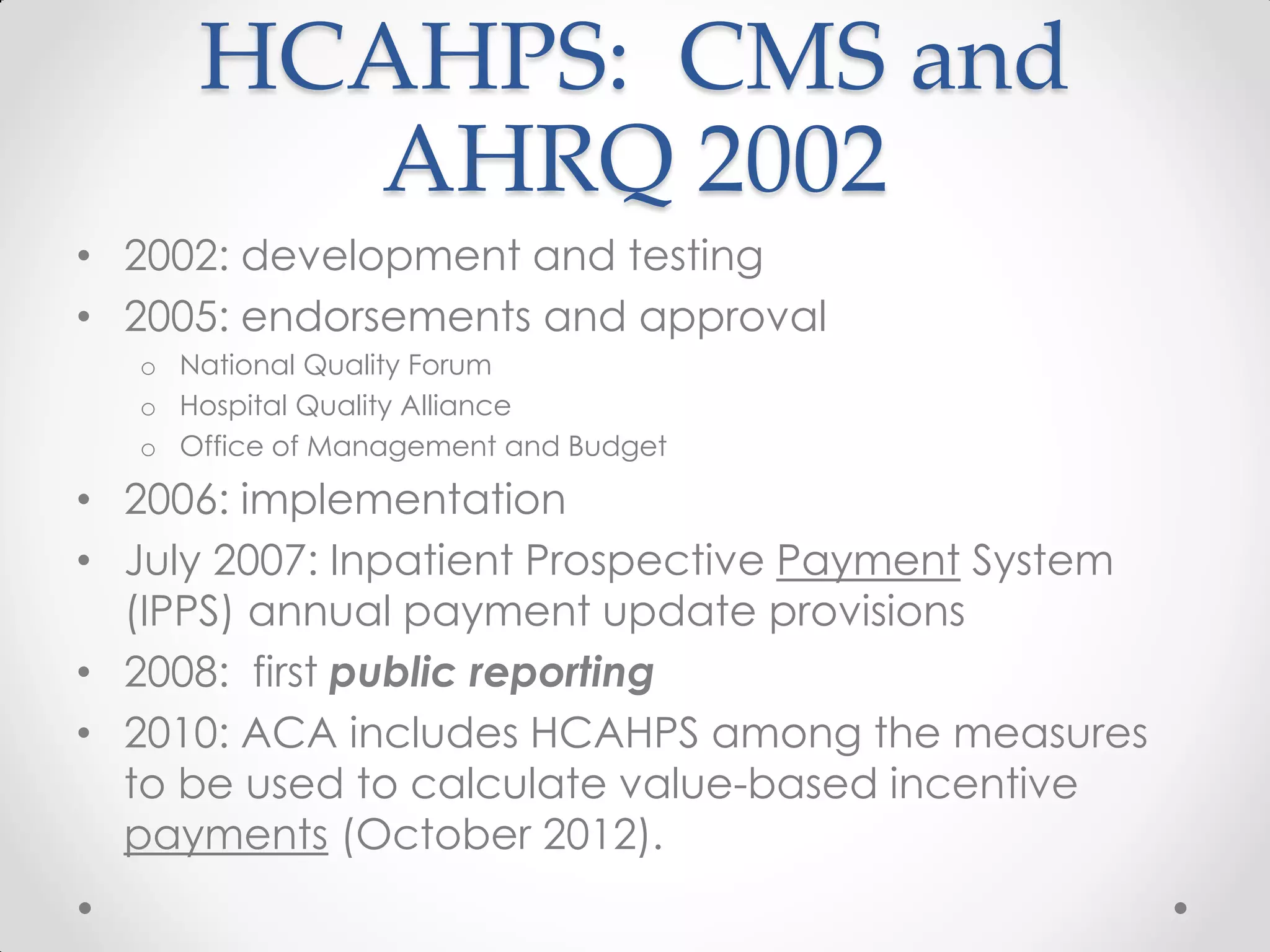
HCAHPS: CMS and
AHRQ 2002
• 2002: development and testing
• 2005: endorsements and approval
o National Quality Forum
o Hospital Quality Alliance
o Office of Management and Budget
• 2006: implementation
• July 2007: Inpatient Prospective Payment System
(IPPS) annual payment update provisions
• 2008: first public reporting
• 2010: ACA includes HCAHPS among the measures
to be used to calculate value-based incentive
payments (October 2012).
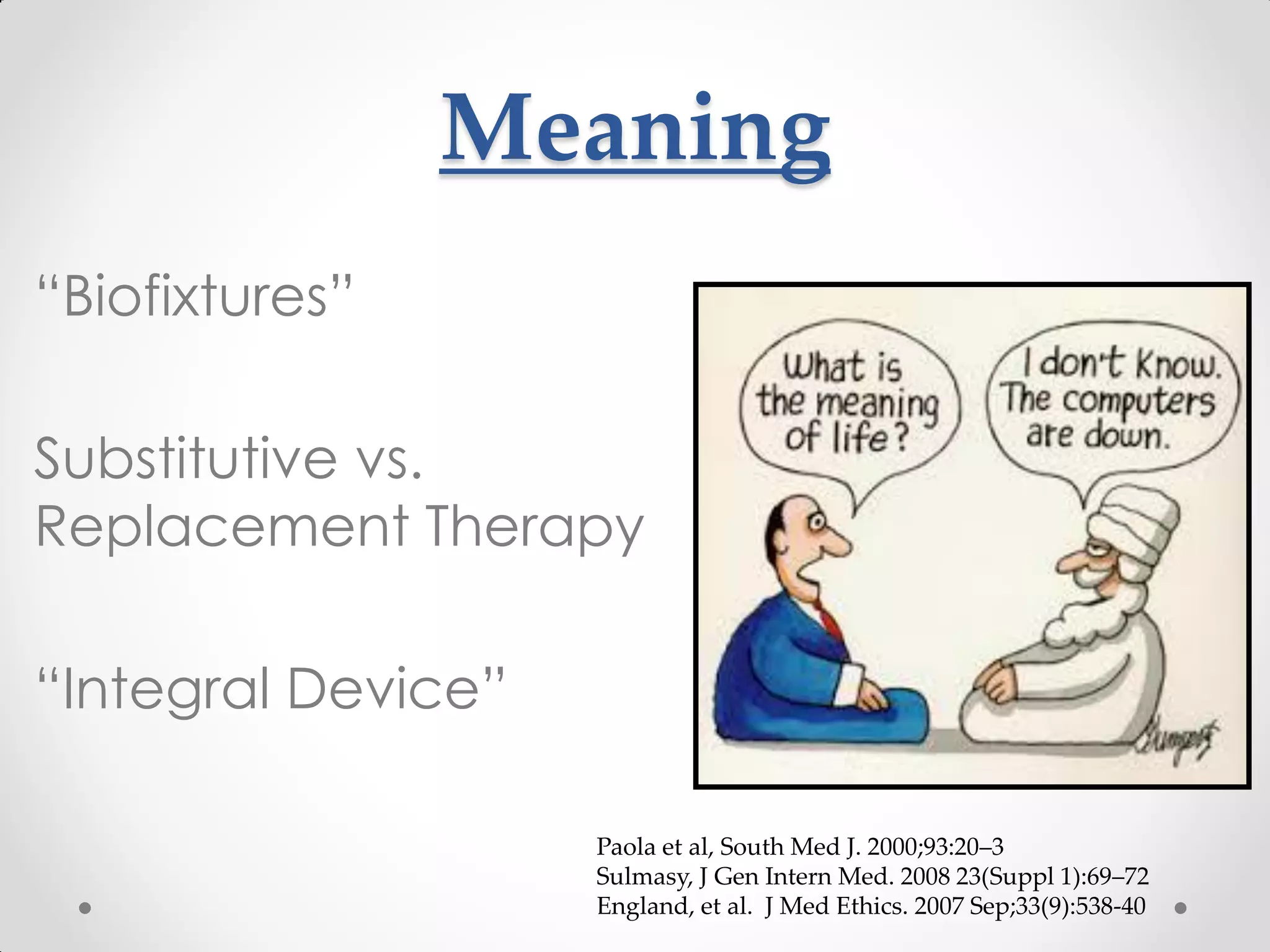
Meaning
“Biofixtures”
Substitutive vs.
Replacement Therapy
“Integral Device”
Paola et al, South Med J. 2000;93:20–3
Sulmasy, J Gen Intern Med. 2008 23(Suppl 1):69–72
England, et al. J Med Ethics. 2007 Sep;33(9):538-40
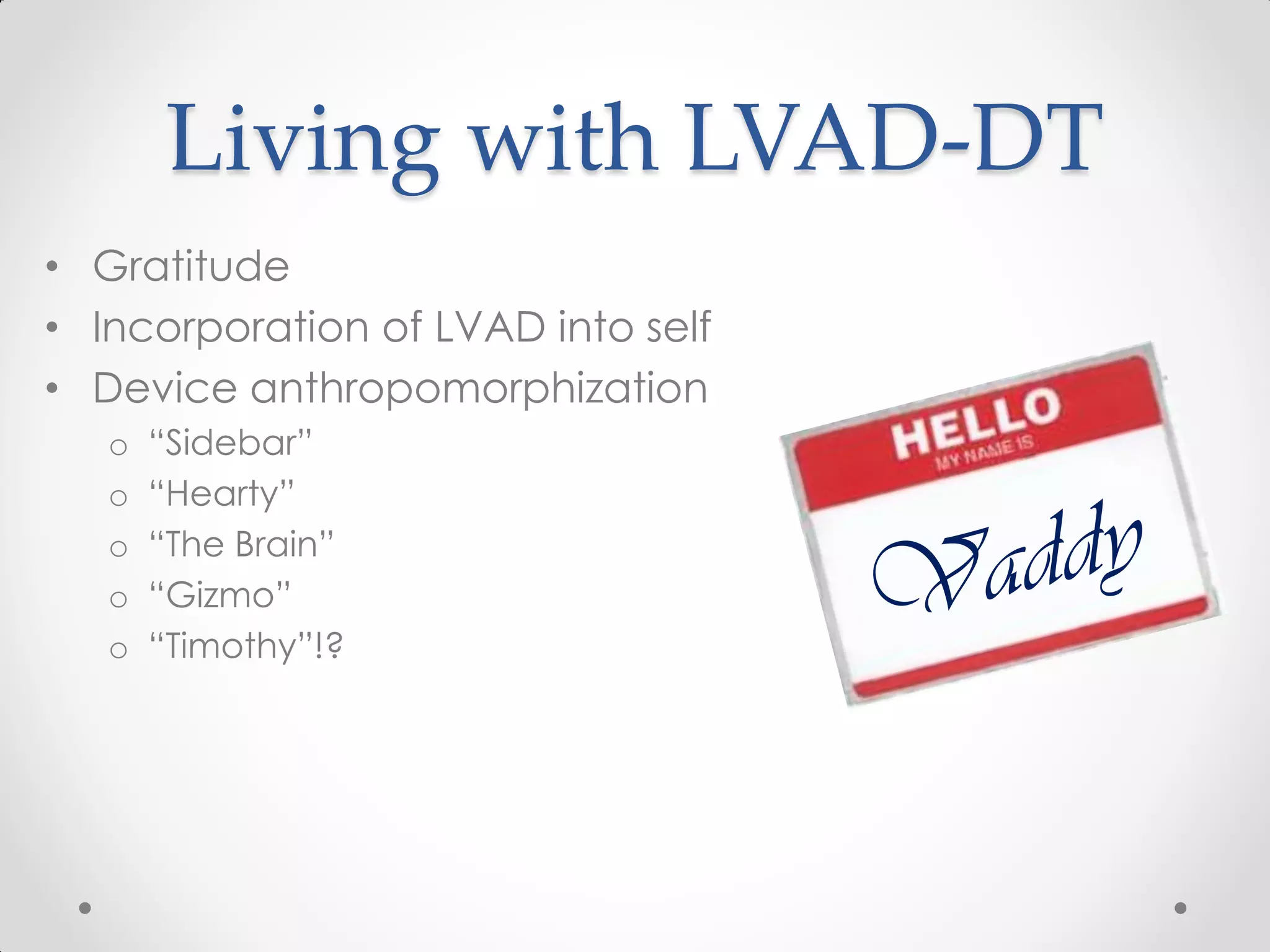
Living with LVAD-DT
• Gratitude
• Incorporation of LVAD into self
• Device anthropomorphization
o “Sidebar”
o “Hearty”
o “The Brain”
o “Gizmo”
o “Timothy”!?
Dependent on a machine
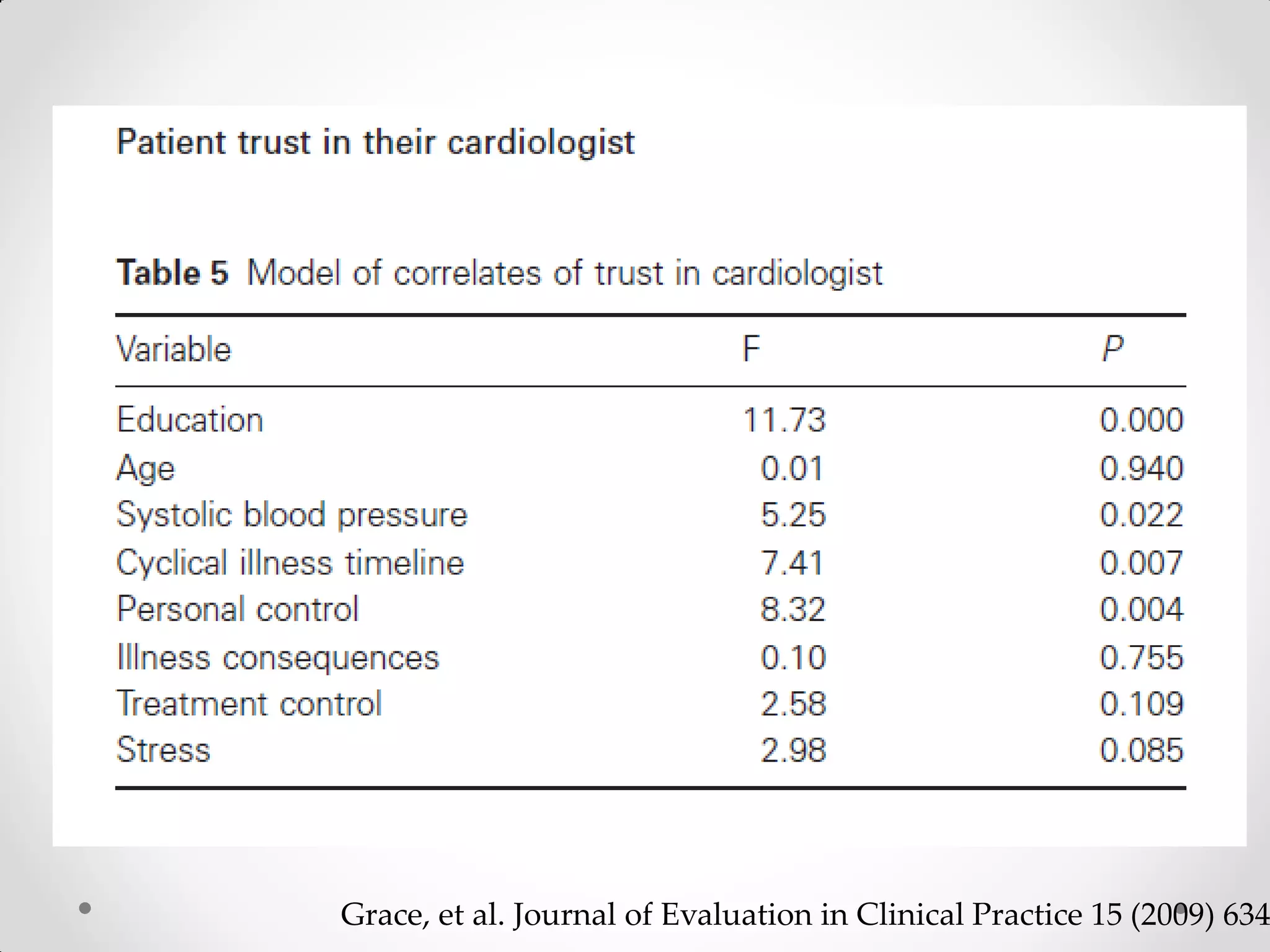
Grace, et al. Journal of Evaluation in Clinical Practice 15 (2009) 634
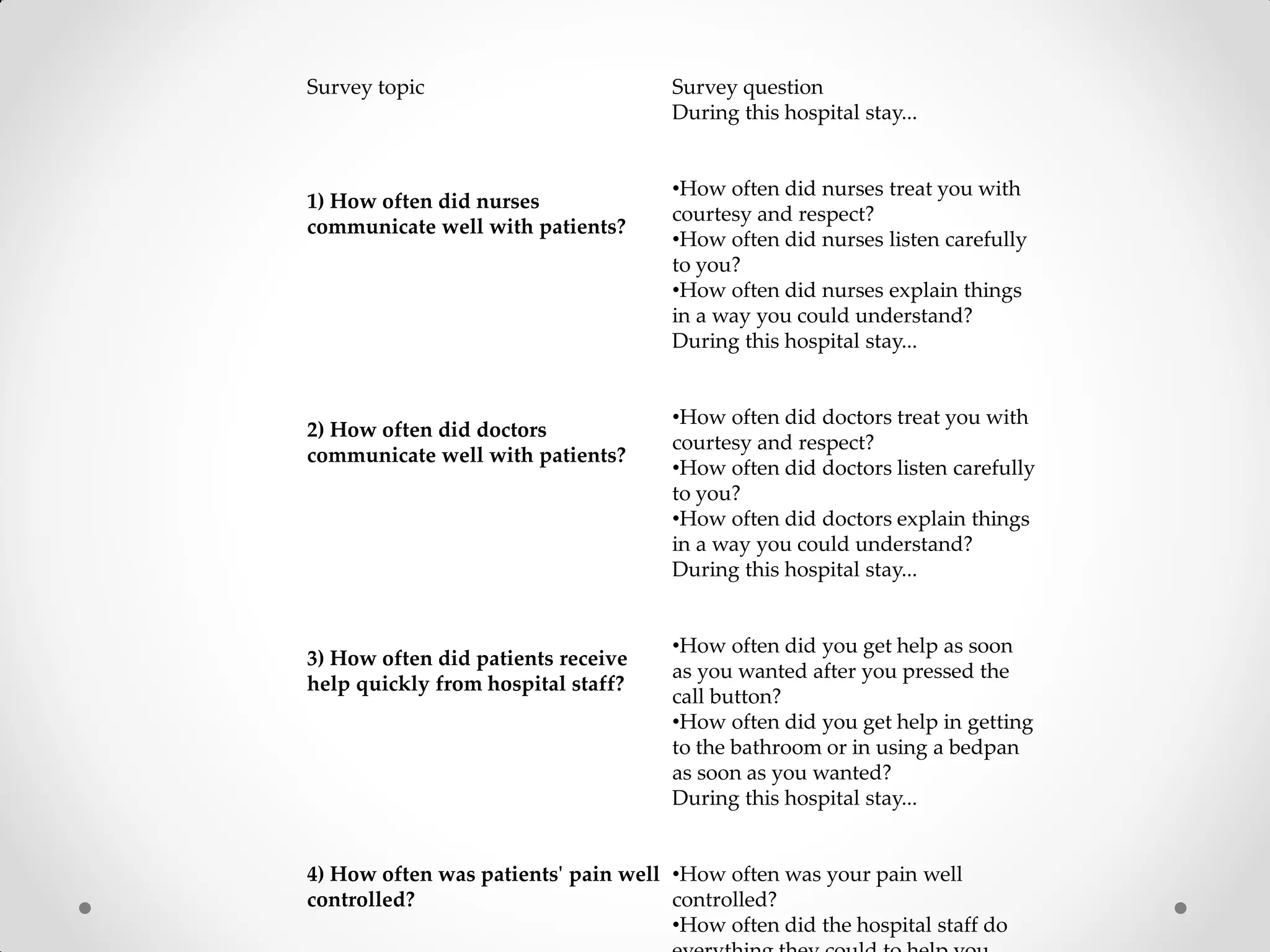
Survey topic Survey question
1) How often did nurses
communicate well with patients?
During this hospital stay...
•How often did nurses treat you with
courtesy and respect?
•How often did nurses listen carefully
to you?
•How often did nurses explain things
in a way you could understand?
2) How often did doctors
communicate well with patients?
During this hospital stay...
•How often did doctors treat you with
courtesy and respect?
•How often did doctors listen carefully
to you?
•How often did doctors explain things
in a way you could understand?
3) How often did patients receive
help quickly from hospital staff?
During this hospital stay...
•How often did you get help as soon
as you wanted after you pressed the
call button?
•How often did you get help in getting
to the bathroom or in using a bedpan
as soon as you wanted?
4) How often was patients' pain well
controlled?
During this hospital stay...
•How often was your pain well
controlled?
•How often did the hospital staff do
Akingbola , Journal of Health Organization and Management, 2015;29(1): 111
Joynt KE, JAMA Intern Med. 2014 Jan;174(1):61-7

Why improving the patient experience with advanced care options matters

  • 1.
    Why Improving thePatient Experience With Advanced Care Options Matters: Patient Satisfaction Scores and More James N. Kirkpatrick, MD Assistant Professor Cardiovascular Medicine Division Department of Medical Ethics and Health Policy Physician Co-Chair, Ethics Committee Hospital of the University of Pennsylvania
  • 2.
    Disclosures  None relevantto this presentation  Employed by University of Pennsylvania  No “transfers of value” from any commercial entities  Am. Soc. Echo (ASE) Bylaws and Ethics Committee  Honoraria for ASE educational products  Salary support from NIH and NASA
  • 3.
    Outline 1. Context: Patientsatisfaction assessment (HCAHPS) 2. Meaning: Patient satisfaction as marker of quality 3. Reframing: Patient satisfaction and communication in Advanced Cardiac Care
  • 4.
    Caveats • Extensive literaturereview • Risk Management • Conflict Resolution • Bad Outcomes • Family Experience Most patients want to live longer and feel better.
  • 5.
    Patient Satisfaction/Experience • “…measure ofhow services or products of a company meet or exceed the anticipated expectations of the customer.” • Customer retention, loyalty, and repeat business. • Value of the process by which services are delivered. Kupfer, JAMA, 2012;308 (2): 139-140
  • 6.
    Patient Satisfaction Procedural OutcomesCardiology Process • Plastic Surgery • Orthopedics • Urology • Gramegna L, et al. In-hospital follow-up of implantable cardioverter defibrillator and pacemaker carriers: patients' inconvenience and points of view. A four-hospital Italian survey. Europace. 2012 Mar;14(3):345-50 • Kraai IH, et al. Heart failure patients monitored with telemedicine: patient satisfaction, a review of the literature. J Card Fail. 2011 Aug;17(8):684-90. • Glaser R, et al. Patient satisfaction is comparable to early discharge versus overnight observation after elective percutaneous coronary intervention. Invasive Cardiol. 2009 Sep;21(9):464-7. • Kamphuis HC, et al. ICD: a qualitative study of patient experience the first year after implantation. J Clin Nurs. 2004 Nov;13(8):1008-16.
  • 7.
    Hospital Consumer Assessmentof Healthcare Providers and Systems (HCAHPS) 2001: IOM Report-Patient Centered Medicine 2002: Hospital Quality Initiative 2007: Inpatient Prospective Payment System (IPPS) annual payment update provisions 2010: ACA includes HCAHPS to calculate value- based incentive payments
  • 8.
    HCAHPS=Quality Improvement • “create incentivesfor hospitals to improve quality of care.” • “enhance public accountability in health care by increasing transparency.” www.hcahpsonline.org.
  • 9.
    Public Reporting andPay for Performance Clinicians and Hospitals CMS
  • 10.
    HCAHPS=Informed Consent “…comparable data onpatients' perspectives of care that allows objective and meaningful comparisons among hospitals on topics that are important to consumers.” www.hcahpsonline.org.
  • 14.
    T TJU Hahnemann HUPPA avg. USA avg.
  • 15.
    How do Idecide? • Nurses Communication: o TJU and HUP • Doc Communication: o Hahnemann and HUP • Quietness: o Hahnemann • Given information/understand: o HUP • Cleanliness: o Find another hospital!
  • 16.
    • What dothe numbers mean? • Sample Size at HUP o HCAHPS: 15% o Press Ganey: 23% RR • Variability? ?
  • 19.
    Patient Satisfaction What does it/shouldit mean? Correlate or outcome?
  • 20.
    Chang, Ann InternMed. 2006 May 2;144(9):665-72.
  • 22.
    Communication • Placebo Effect? •Therapeutic Personality? • Reduction in malpractice claims? Hall MF. Healthc Financ Manage. 2008;62(10):76-80
  • 23.
  • 26.
    Joynt KE,JAMA InternMed. 2014 Jan;174(1):61-7
  • 27.
  • 28.
    Allen L, etal. Circulation. 2012;125(15):1928-52. Good Communication Clean, Quiet Room
  • 29.
    You, et al.CMAJ. 2014 Dec 9; 186(18): E679–E687.
  • 30.
    Preferences for carein event of life-threatening illness Values Prognosis Express fears/concerns Additional questions
  • 31.
    You, et al.CMAJ. 2014 Dec 9; 186(18): E679–E687.
  • 32.
    2 Patient Engagement-What Works?. Coulter,Angela Journal of Ambulatory Care Management. 35(2):80-89, April/June 2012. DOI: 10.1097/JAC.0b013e318249e0fd Table 4 . Promising Interventions to Improve Care Processes
  • 33.
    Quality Communication About ToughChoices • Comfort • Emotional support • Education • Patient’s perspective Kupfer, JAMA, 2012;308 (2): 139-140
  • 34.
  • 36.
    Conclusions • Patient satisfactionis a different type of quality • Means AND Ends • Why not be nice, informative, quiet and clean? • Increase CEO Pay!
  • 37.
    “For the secretof the care of the patient is in caring for the patient.” F.W. Peabody
  • 39.
  • 41.
    Dugdale DC, JGen Intern Med. 1999 Jan;14 Suppl 1:S34-40.
  • 42.
    Symptom class Specific symptoms Physical Dyspnea, chestpain, edema, fatigue, exercise intolerance Gout, pruritus, muscle cramps, pain, anorexia, nausea, constipation Psychological/ Spiritual Panic attacks, anxiety, depression, cognitive impairment, insomnia, loss of confidence, feelings of uselessness or hopelessness, low spiritual well being Social / Functional Falls, incontinence, trouble walking, loss of independence in performing activities of daily living, isolation McKelvie, et al. Canadian Journal of Cardiology 27 (2011) 319–338
  • 43.
    Kaufman, Social Sciand Med, 2011 Fuchs, 1968 IRONIC TECHNOLOGIES Moral Imperative Technological ImperativeNot Static New Challenges Extends life Shifts goals
  • 44.
    Public Reporting • 4consecutive quarters • 4 times per year • www.hospitalcompare.hhs.gov • adjust for factors that are not directly related to hospital performance but which affect how patients answer HCAHPS survey items • quality oversight activities o survey administration procedures o statistical analyses o site visits of HCAHPS survey vendors and self-administering hospitals
  • 45.
    HCAHPS Content and Administration •Random sample across medical conditions • 48h-6 weeks post discharge • Mail, telephone, mail with telephone, active interactive voice recognition (IVR) • 18 core questions • 4 questions to direct patients to relevant questions • 3 items to adjust for the mix of patients across hospitals • 2 items that support Congressionally-mandated reports • English, Spanish, Chinese, Russian, Vietnamese www.hcahpsonline.org.
  • 46.
    HCAHPS: CMS and AHRQ2002 • 2002: development and testing • 2005: endorsements and approval o National Quality Forum o Hospital Quality Alliance o Office of Management and Budget • 2006: implementation • July 2007: Inpatient Prospective Payment System (IPPS) annual payment update provisions • 2008: first public reporting • 2010: ACA includes HCAHPS among the measures to be used to calculate value-based incentive payments (October 2012).
  • 48.
    Meaning “Biofixtures” Substitutive vs. Replacement Therapy “IntegralDevice” Paola et al, South Med J. 2000;93:20–3 Sulmasy, J Gen Intern Med. 2008 23(Suppl 1):69–72 England, et al. J Med Ethics. 2007 Sep;33(9):538-40
  • 49.
    Living with LVAD-DT •Gratitude • Incorporation of LVAD into self • Device anthropomorphization o “Sidebar” o “Hearty” o “The Brain” o “Gizmo” o “Timothy”!?
  • 50.
  • 51.
    Grace, et al.Journal of Evaluation in Clinical Practice 15 (2009) 634
  • 52.
    Survey topic Surveyquestion 1) How often did nurses communicate well with patients? During this hospital stay... •How often did nurses treat you with courtesy and respect? •How often did nurses listen carefully to you? •How often did nurses explain things in a way you could understand? 2) How often did doctors communicate well with patients? During this hospital stay... •How often did doctors treat you with courtesy and respect? •How often did doctors listen carefully to you? •How often did doctors explain things in a way you could understand? 3) How often did patients receive help quickly from hospital staff? During this hospital stay... •How often did you get help as soon as you wanted after you pressed the call button? •How often did you get help in getting to the bathroom or in using a bedpan as soon as you wanted? 4) How often was patients' pain well controlled? During this hospital stay... •How often was your pain well controlled? •How often did the hospital staff do
  • 53.
    Akingbola , Journalof Health Organization and Management, 2015;29(1): 111
  • 55.
    Joynt KE, JAMAIntern Med. 2014 Jan;174(1):61-7