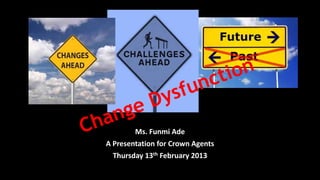
Ms. Funmi Ade
A Presentation for Crown Agents
Thursday 13th February 2013
Introduction: Change, the Obvious
• Change- better state of an organization
• Different approaches and methods- iceberg, force field, 7S.
GROW.

•
•
•
•

Importance of stakeholders, people element
Implement
Desired result achieved
Happily ever after
The Reality
65% of change projects not meeting objectives; IBM, Making change work, 2008
66% of IT projects abandoned or failed, Standish Group Study, 2003

70% of change programme fail; Journal of Change Management, 2002, D Miller,
Successful Change Leaders
66% TQM programmes fail and 70% reengineering efforts fail, Senge, 1999
Change: Not so Obvious
Transform

Change

Implies a new and complete
shift in core values, change in
its entirety from top to bottom,
a change of position from A – B

Core values remain, change is
scoped or limited, the position
doesn’t change A = A
Tinkering (not necessarily at the
edges)

OR

Overhaul

Manage Expectations from the Start
The Challenge
Easier to Change
 The Matrix Organization
 System theory,
contingency theory
 Commercial,
competitive
organizations
Eg. IBM

Difficult to Change
 Bureaucratic
 Mature Organizations
 Large organizations
Eg. NHS, local authorities

Easiest to change or
transform
 New organizations
 Small organizations
 Weak organizations
 Human relations

SMEs, technology
companies, eg. Google
Implications & Misconceptions
Organizations are dynamic
Organizations are static
(traditional undercurrents) (actual undercurrents)
 Change is a static point

 Change is therefore dynamic

 Change is conclusive

 Change is a continuum

 Change is an equilibrium

 Change is an impact

 Change is an established
process

 Change is continually
managed

 A format can be applied

 There is no singular format
for change

Cognitive Implication for
the Change Agent
 Approach & method will
make or break a change
programme
 Expectations need to be
managed
 Change process will surprise
 Change brings change
Change Thinking

Change is a scoped
programme, with a life cycle,
concentrate on result
WRONG
objective and throughput is what
counts and change continues after
programme
Approach

Methods/
Technical

Throughput

Change

Tools, cognitive/
intuitive

The change agent inputs numerous resources to which the organization responds. The outcome is the
progressive impact of that process and is effectively the change produced.
Emphasis on through- put, outcome is the effect of throughput, throughput is your change. The
outcome or result, is not a stand alone product and is not the conclusion of a change intention.
Getting it Right
• The measurement of success, is embedding, an ability to manage
change, as an on- going process
• Absorbtive capacity of the organization, (yes the client!) makes a huge
difference
• Type of organization, will limit impact, remember organization type
• Your outcome is your throughput, not a result in itself.
• The buck stops with the change agent, understand your terrain, know
the dangers
Why Change Goes Wrong- Change Dysfunction

Why Change Goes Wrong- Change Dysfunction

  • 1.
    Ms. Funmi Ade APresentation for Crown Agents Thursday 13th February 2013
  • 2.
    Introduction: Change, theObvious • Change- better state of an organization • Different approaches and methods- iceberg, force field, 7S. GROW. • • • • Importance of stakeholders, people element Implement Desired result achieved Happily ever after
  • 3.
    The Reality 65% ofchange projects not meeting objectives; IBM, Making change work, 2008 66% of IT projects abandoned or failed, Standish Group Study, 2003 70% of change programme fail; Journal of Change Management, 2002, D Miller, Successful Change Leaders 66% TQM programmes fail and 70% reengineering efforts fail, Senge, 1999
  • 5.
    Change: Not soObvious Transform Change Implies a new and complete shift in core values, change in its entirety from top to bottom, a change of position from A – B Core values remain, change is scoped or limited, the position doesn’t change A = A Tinkering (not necessarily at the edges) OR Overhaul Manage Expectations from the Start
  • 6.
    The Challenge Easier toChange  The Matrix Organization  System theory, contingency theory  Commercial, competitive organizations Eg. IBM Difficult to Change  Bureaucratic  Mature Organizations  Large organizations Eg. NHS, local authorities Easiest to change or transform  New organizations  Small organizations  Weak organizations  Human relations SMEs, technology companies, eg. Google
  • 7.
    Implications & Misconceptions Organizationsare dynamic Organizations are static (traditional undercurrents) (actual undercurrents)  Change is a static point  Change is therefore dynamic  Change is conclusive  Change is a continuum  Change is an equilibrium  Change is an impact  Change is an established process  Change is continually managed  A format can be applied  There is no singular format for change Cognitive Implication for the Change Agent  Approach & method will make or break a change programme  Expectations need to be managed  Change process will surprise  Change brings change
  • 8.
    Change Thinking Change isa scoped programme, with a life cycle, concentrate on result WRONG objective and throughput is what counts and change continues after programme
  • 9.
    Approach Methods/ Technical Throughput Change Tools, cognitive/ intuitive The changeagent inputs numerous resources to which the organization responds. The outcome is the progressive impact of that process and is effectively the change produced. Emphasis on through- put, outcome is the effect of throughput, throughput is your change. The outcome or result, is not a stand alone product and is not the conclusion of a change intention.
  • 10.
    Getting it Right •The measurement of success, is embedding, an ability to manage change, as an on- going process • Absorbtive capacity of the organization, (yes the client!) makes a huge difference • Type of organization, will limit impact, remember organization type • Your outcome is your throughput, not a result in itself. • The buck stops with the change agent, understand your terrain, know the dangers