Evaluating ChangeKaren HorschEvaluation Consultant
We are experiencing epidemic rates of childhood obesity that have long-term consequences for health and well-being of individuals and societyIt’s getting worse, not betterWhat we know:
Reversing this trend in a sustained way is going to take fundamental changes to the way we think and act: we cannot program our way out of thisReversing this trend in a sustained way is going to require that we build a movementWhat we know:
We need to shift perceptions such that physical activity and healthy eating are the social normWe need to establish environments that make individuals’ default decisions healthyWhat needs to happen:
They raise issues of urgency (identify problems)They build a base of interested and motivated individuals and coalitionsThey educate and raise awarenessThey advocate for positive changes in policies and institutionsThey identify and promote promising interventions and programs (show what’s possible)What movements do….
How does evaluation fit in?
Data about the movement (is the movement moving?)Data to build the movementTwo levels of evaluation when building a movement:
So how do we evaluate whether we are building a movement?
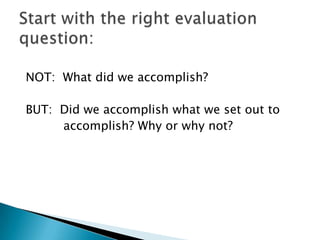
NOT:  What did we accomplish?BUT:  Did we accomplish what we set out to           accomplish? Why or why not?Start with the right evaluation question:
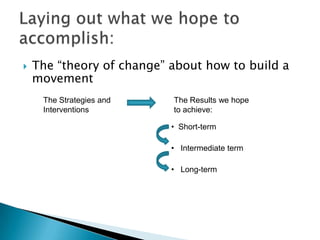
The “theory of change” about how to build a movementLaying out what we hope to accomplish:The Strategies and Interventions The Results we hope to achieve:  Short-term
   Intermediate term
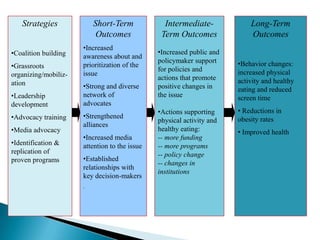
   Long-termStrategiesCoalition building
Grassroots organizing/mobiliz-ation
Leadership development
Advocacy training
Media advocacy
Identification & replication of proven programsShort-Term OutcomesIncreased awareness about and prioritization of the issue
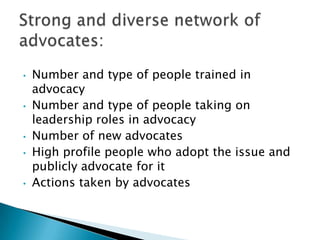
Strong and diverse network of advocates
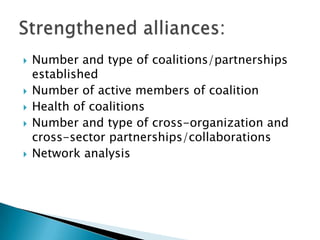
Strengthened alliances
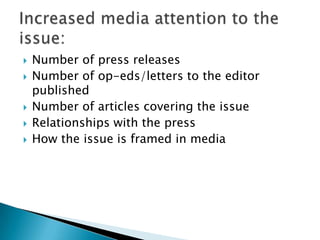
Increased media attention to the issue
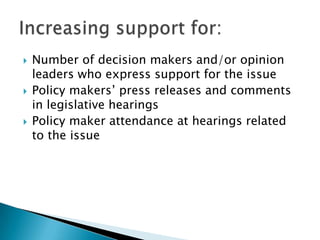
Established relationships with key decision-makers.Intermediate-Term OutcomesIncreased public and policymaker support for policies and actions that promote positive changes in the issue
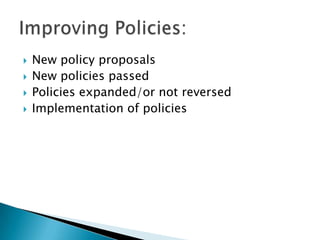
Actions supporting physical activity and healthy eating:-- more funding-- more programs-- policy change-- changes in institutionsLong-Term OutcomesBehavior changes: increased physical activity and healthy eating and reduced screen time
 Reductions in  obesity rates
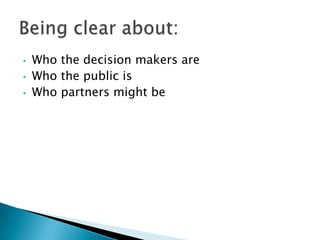
 Improved healthWho the decision makers are
Who the public is
Who partners might beBeing clear about:
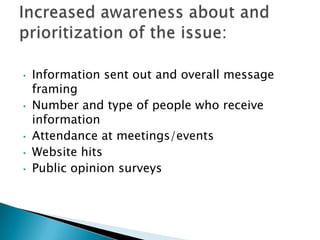
Increased awareness about and prioritization of the issue:Information sent out and overall message framing

Karen Horsch Evaluating Change V.2

  • 1.
  • 2.
    We are experiencingepidemic rates of childhood obesity that have long-term consequences for health and well-being of individuals and societyIt’s getting worse, not betterWhat we know:
  • 3.
    Reversing this trendin a sustained way is going to take fundamental changes to the way we think and act: we cannot program our way out of thisReversing this trend in a sustained way is going to require that we build a movementWhat we know:
  • 4.
    We need toshift perceptions such that physical activity and healthy eating are the social normWe need to establish environments that make individuals’ default decisions healthyWhat needs to happen:
  • 5.
    They raise issuesof urgency (identify problems)They build a base of interested and motivated individuals and coalitionsThey educate and raise awarenessThey advocate for positive changes in policies and institutionsThey identify and promote promising interventions and programs (show what’s possible)What movements do….
  • 6.
  • 7.
    Data about themovement (is the movement moving?)Data to build the movementTwo levels of evaluation when building a movement:
  • 8.
    So how dowe evaluate whether we are building a movement?
  • 9.
    NOT: Whatdid we accomplish?BUT: Did we accomplish what we set out to accomplish? Why or why not?Start with the right evaluation question:
  • 10.
    The “theory ofchange” about how to build a movementLaying out what we hope to accomplish:The Strategies and Interventions The Results we hope to achieve: Short-term
  • 11.
    Intermediate term
  • 12.
    Long-termStrategiesCoalition building
  • 13.
  • 14.
  • 15.
  • 16.
  • 17.
    Identification & replicationof proven programsShort-Term OutcomesIncreased awareness about and prioritization of the issue
  • 18.
    Strong and diversenetwork of advocates
  • 19.
  • 20.
  • 21.
    Established relationships withkey decision-makers.Intermediate-Term OutcomesIncreased public and policymaker support for policies and actions that promote positive changes in the issue
  • 22.
    Actions supporting physicalactivity and healthy eating:-- more funding-- more programs-- policy change-- changes in institutionsLong-Term OutcomesBehavior changes: increased physical activity and healthy eating and reduced screen time
  • 23.
    Reductions in obesity rates
  • 24.
    Improved healthWhothe decision makers are
  • 25.
  • 26.
    Who partners mightbeBeing clear about:
  • 27.
    Increased awareness aboutand prioritization of the issue:Information sent out and overall message framing