When you VEL is not enough: strategies for engaging the wider community Liz Burd Durham University
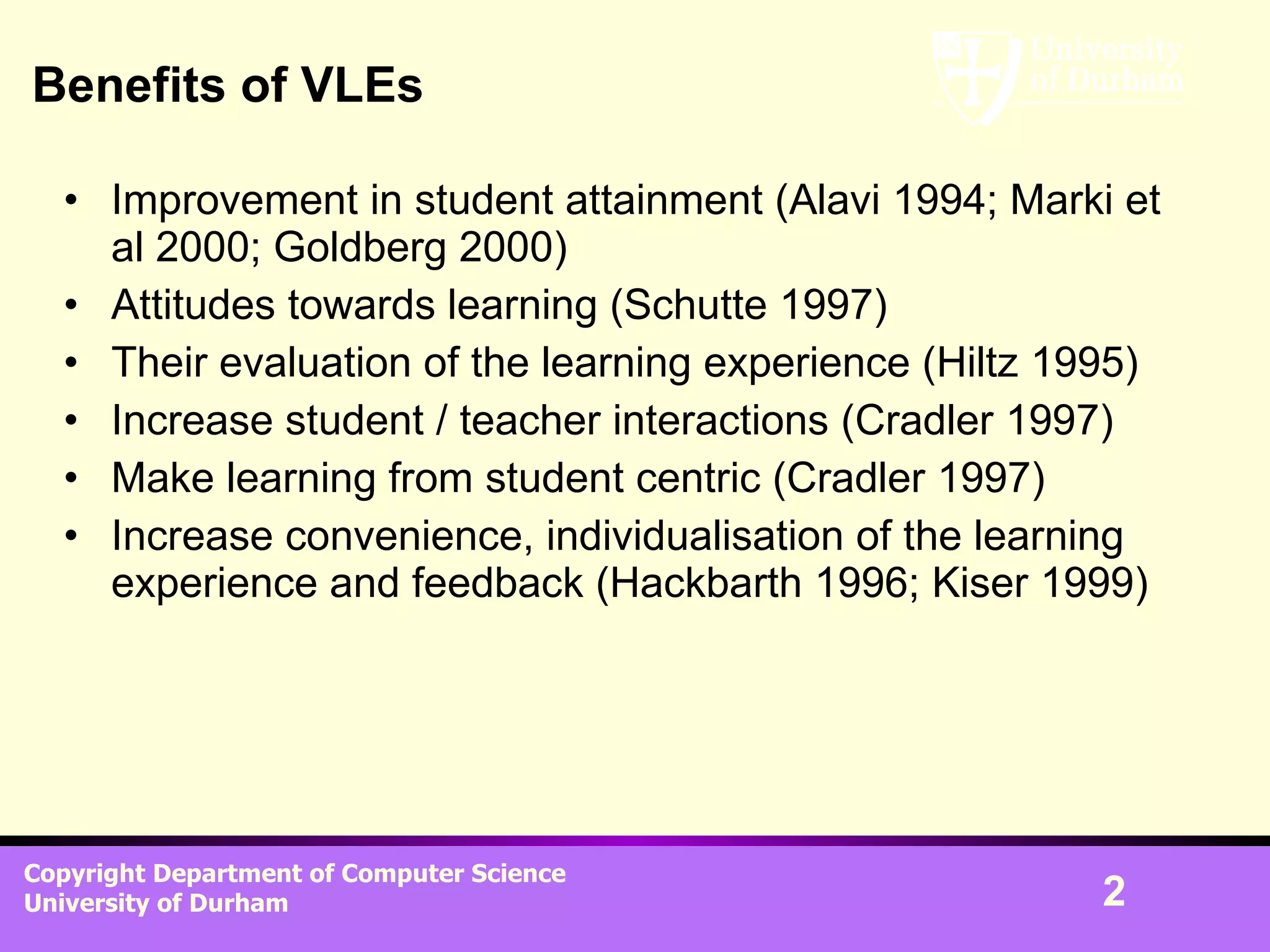
Benefits of VLEs Improvement in student attainment (Alavi 1994; Marki et al 2000; Goldberg 2000) Attitudes towards learning (Schutte 1997) Their evaluation of the learning experience (Hiltz 1995) Increase student / teacher interactions (Cradler 1997) Make learning from student centric (Cradler 1997) Increase convenience, individualisation of the learning experience and feedback (Hackbarth 1996; Kiser 1999)
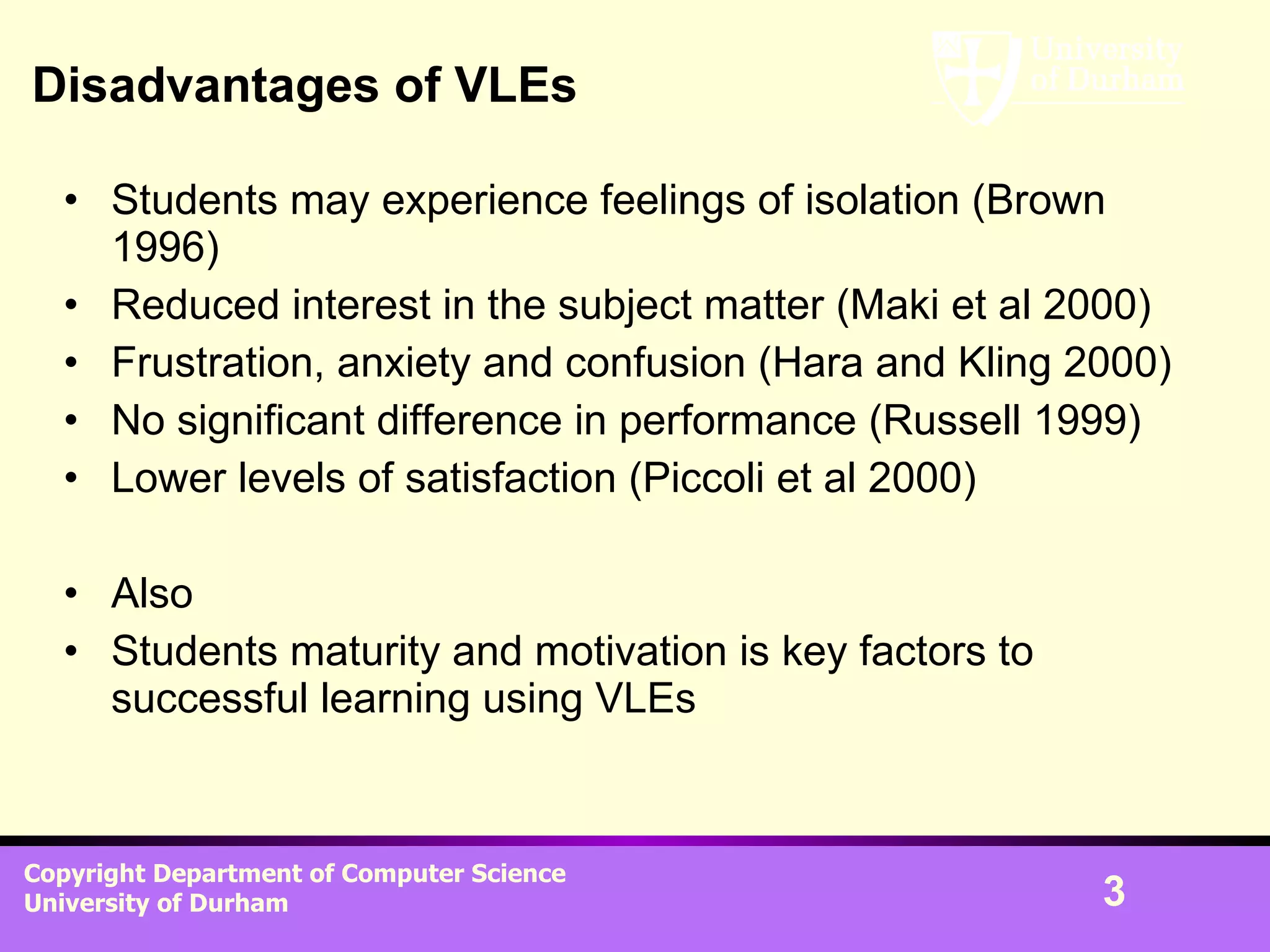
Disadvantages of VLEs Students may experience feelings of isolation (Brown 1996) Reduced interest in the subject matter (Maki et al 2000) Frustration, anxiety and confusion (Hara and Kling 2000) No significant difference in performance (Russell 1999) Lower levels of satisfaction (Piccoli et al 2000) Also Students maturity and motivation is key factors to successful learning using VLEs
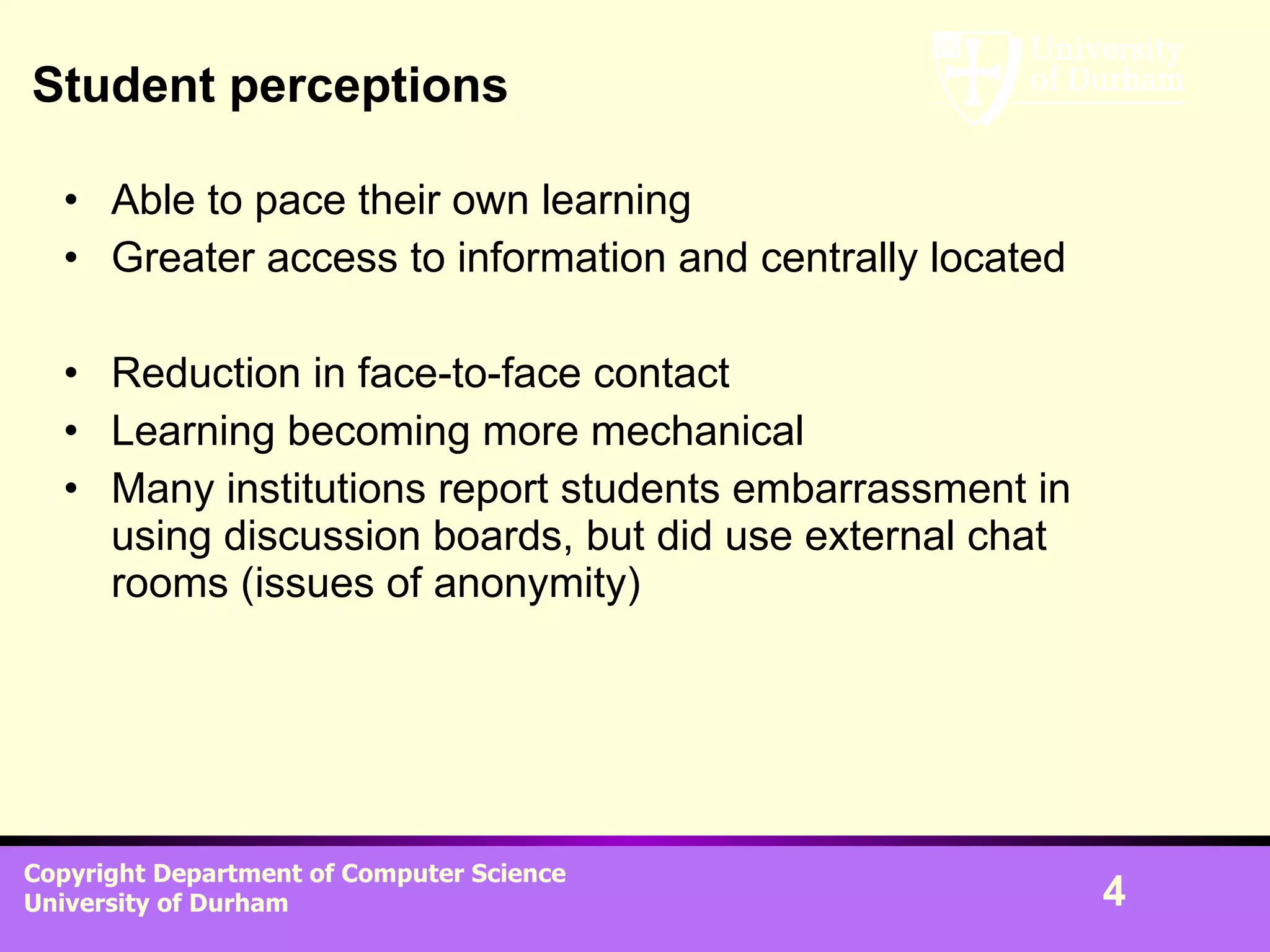
Student perceptions Able to pace their own learning Greater access to information and centrally located Reduction in face-to-face contact Learning becoming more mechanical Many institutions report students embarrassment in using discussion boards, but did use external chat rooms (issues of anonymity)
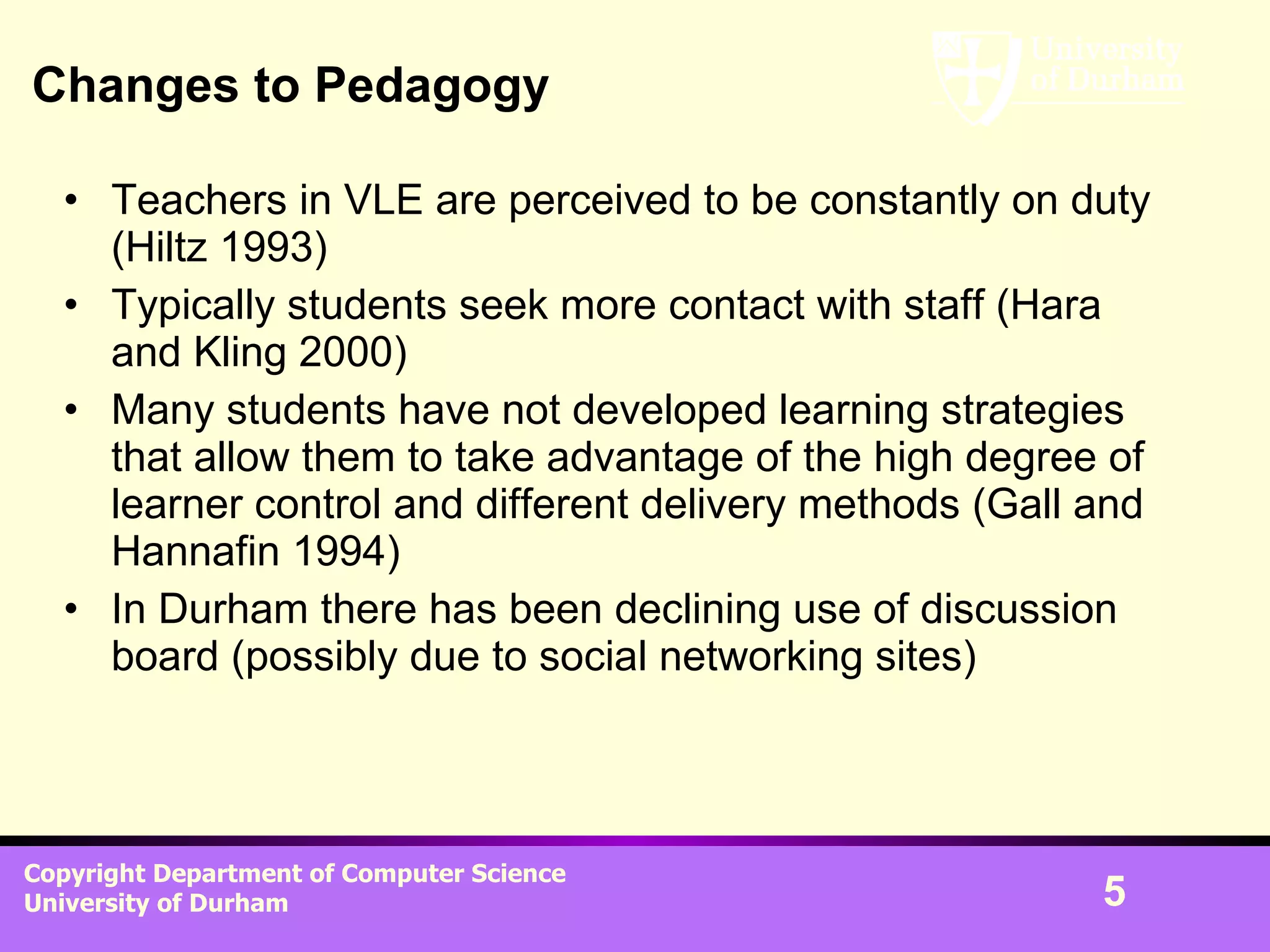
Changes to Pedagogy Teachers in VLE are perceived to be constantly on duty (Hiltz 1993) Typically students seek more contact with staff (Hara and Kling 2000) Many students have not developed learning strategies that allow them to take advantage of the high degree of learner control and different delivery methods (Gall and Hannafin 1994) In Durham there has been declining use of discussion board (possibly due to social networking sites)
Active Learning Technology can promote communication and interaction that if effective can be used to develop higher-order thinking skills and build conceptual knowledge
Collaboration Ways in which we may like to encourage collaboration Working with employers (careers and course work) Collaboration across universities (course work and social – i.e. sports)
Case Study 1:  collaboration between universities Cross-site group working Group composed of students from Newcastle and Durham forming a single team Students produce one product and get a single mark double marked by both institutions Students collaborate via video conference and VLE Use NCL system NESS Staff and students need login
Open source VLE Bodington – http://bodington.org Moodle -  http://moodle.org Benefits (from JISC) (a) the ability to tailor the system completely to local needs   (b) flexibility of use   (c) lack of surprises   (d) cooperative development   Oxford (who use Bodington claim a University saving of £150K PA)
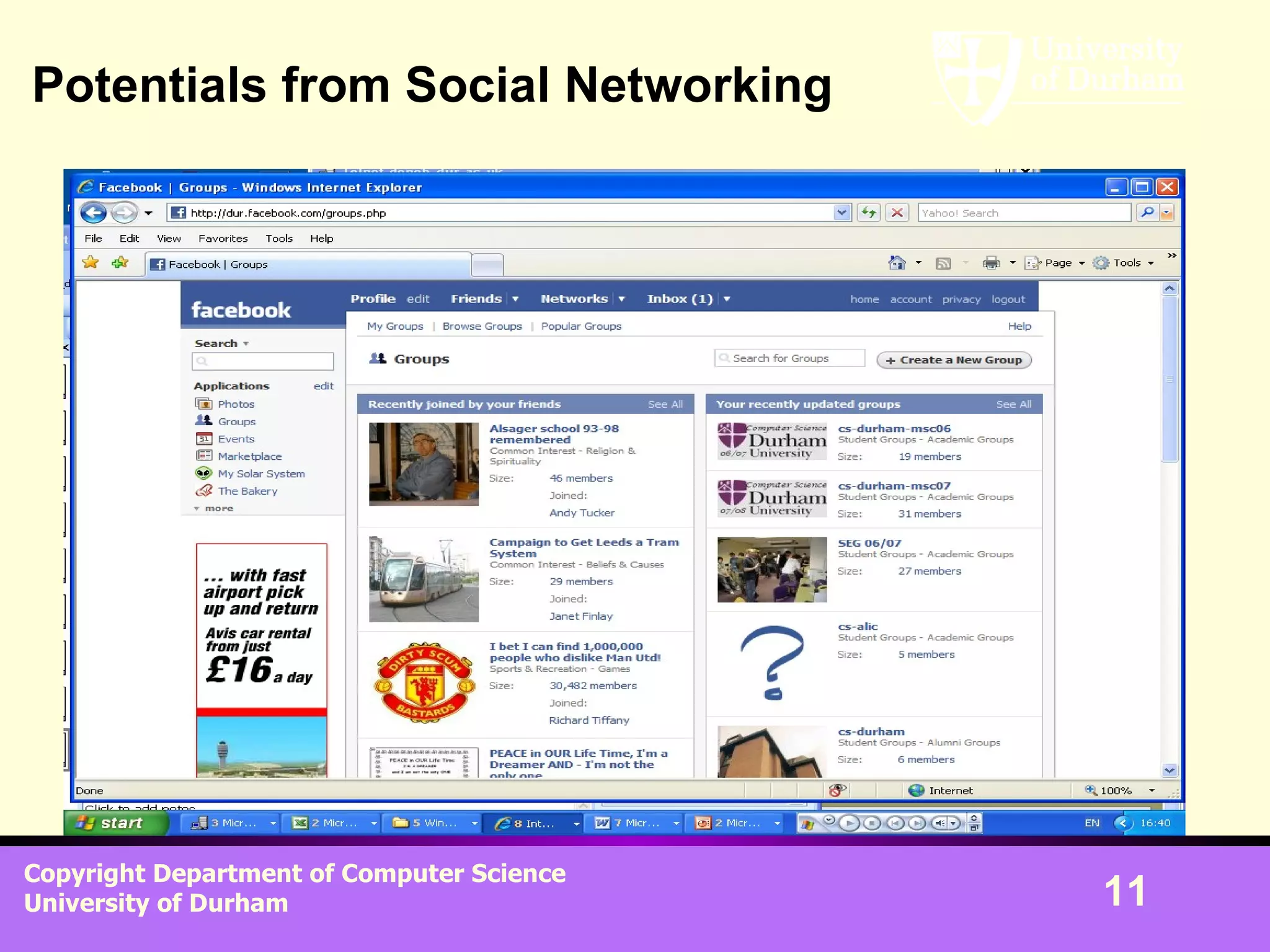
Potentials from Social Networking Cont. Uses in Durham (Academic or University Support) Discussion groups Revision for resits Alumni and pre-admission groups International groups
Potentials from Social Networking
Case Study 1:  Buddying Durham investigating using a peer mentoring scheme to support postgraduate international students Postgraduate international students will be paired with UK undergraduate (or Postgraduates if available) Building greater opportunities to make friends Proof reading… Currently our VLE is unable to support the high number of individual grouping therefore we are proposing using Facebook We have run a very success trial of this for 3 years in CS
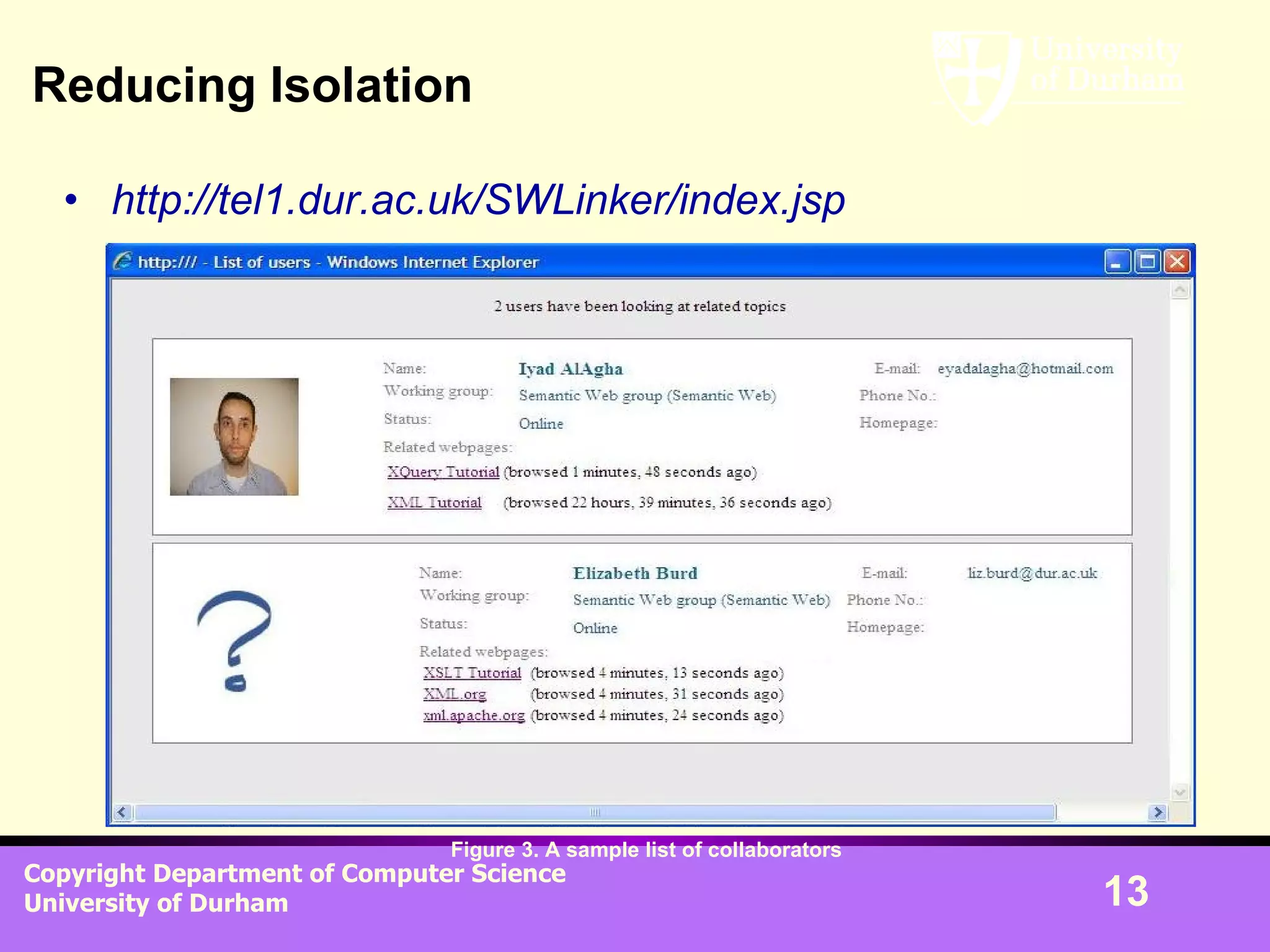
Reducing Isolation http://tel1.dur.ac.uk/SWLinker/index.jsp Figure 3. A sample list of collaborators

When you VEL is not enough: Liz burd

  • 1.
    When you VELis not enough: strategies for engaging the wider community Liz Burd Durham University
  • 2.
    Benefits of VLEsImprovement in student attainment (Alavi 1994; Marki et al 2000; Goldberg 2000) Attitudes towards learning (Schutte 1997) Their evaluation of the learning experience (Hiltz 1995) Increase student / teacher interactions (Cradler 1997) Make learning from student centric (Cradler 1997) Increase convenience, individualisation of the learning experience and feedback (Hackbarth 1996; Kiser 1999)
  • 3.
    Disadvantages of VLEsStudents may experience feelings of isolation (Brown 1996) Reduced interest in the subject matter (Maki et al 2000) Frustration, anxiety and confusion (Hara and Kling 2000) No significant difference in performance (Russell 1999) Lower levels of satisfaction (Piccoli et al 2000) Also Students maturity and motivation is key factors to successful learning using VLEs
  • 4.
    Student perceptions Ableto pace their own learning Greater access to information and centrally located Reduction in face-to-face contact Learning becoming more mechanical Many institutions report students embarrassment in using discussion boards, but did use external chat rooms (issues of anonymity)
  • 5.
    Changes to PedagogyTeachers in VLE are perceived to be constantly on duty (Hiltz 1993) Typically students seek more contact with staff (Hara and Kling 2000) Many students have not developed learning strategies that allow them to take advantage of the high degree of learner control and different delivery methods (Gall and Hannafin 1994) In Durham there has been declining use of discussion board (possibly due to social networking sites)
  • 6.
    Active Learning Technologycan promote communication and interaction that if effective can be used to develop higher-order thinking skills and build conceptual knowledge
  • 7.
    Collaboration Ways inwhich we may like to encourage collaboration Working with employers (careers and course work) Collaboration across universities (course work and social – i.e. sports)
  • 8.
    Case Study 1: collaboration between universities Cross-site group working Group composed of students from Newcastle and Durham forming a single team Students produce one product and get a single mark double marked by both institutions Students collaborate via video conference and VLE Use NCL system NESS Staff and students need login
  • 9.
    Open source VLEBodington – http://bodington.org Moodle - http://moodle.org Benefits (from JISC) (a) the ability to tailor the system completely to local needs (b) flexibility of use (c) lack of surprises (d) cooperative development Oxford (who use Bodington claim a University saving of £150K PA)
  • 10.
    Potentials from SocialNetworking Cont. Uses in Durham (Academic or University Support) Discussion groups Revision for resits Alumni and pre-admission groups International groups
  • 11.
  • 12.
    Case Study 1: Buddying Durham investigating using a peer mentoring scheme to support postgraduate international students Postgraduate international students will be paired with UK undergraduate (or Postgraduates if available) Building greater opportunities to make friends Proof reading… Currently our VLE is unable to support the high number of individual grouping therefore we are proposing using Facebook We have run a very success trial of this for 3 years in CS
  • 13.
    Reducing Isolation http://tel1.dur.ac.uk/SWLinker/index.jspFigure 3. A sample list of collaborators