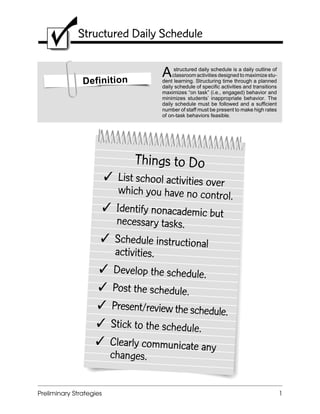
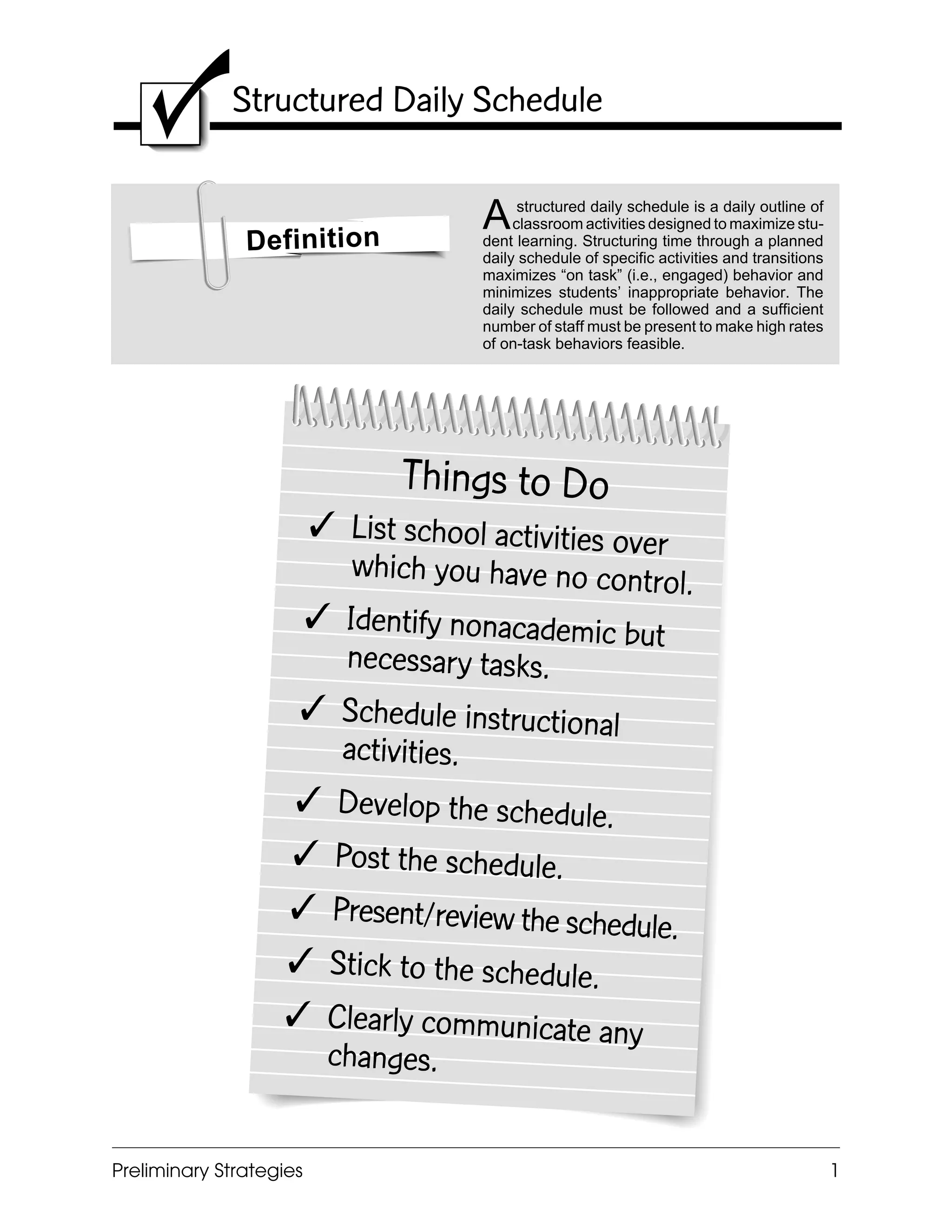
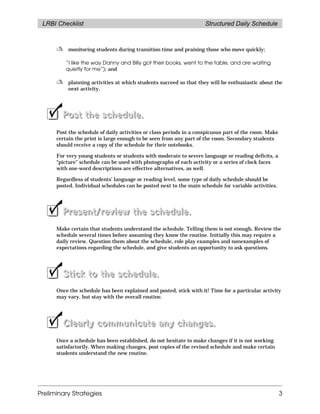
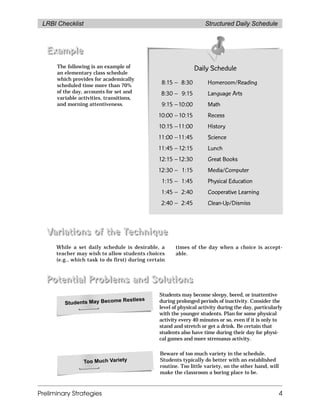
A structured daily schedule outlines classroom activities to maximize student learning and minimize inappropriate behavior. It involves listing activities outside the teacher's control, identifying necessary non-academic tasks, scheduling instructional activities, developing and posting the schedule, reviewing it with students, sticking to the routine, and communicating any changes clearly. Examples are provided of scheduling at least 70% of time for instruction and accounting for transitions, physical activity, and morning attentiveness to avoid restlessness.