Presented by:
PRATIBHA
_MBA3rd Sem
Performance Management.
And
Competency Mapping
Presentation
INTRODUCTION
What is a Competency Framework?
• A structured system for identifying, assessing, and
developing employees’ skills and abilities.
Importance in HR:
• Helps HR manage talent effectively by defining what skills
are needed for each role.
• Supports career development and succession planning.
TYPES OF COMPETENCIES
1.Core Competencies:
Skills that apply to all roles in the organization (e.g., communication, teamwork).
2. Technical Competencies:
Job-specific skills required for a particular role (e.g., software knowledge, industry-specific
knowledge).
3. Behavioral Competencies:
Attributes and behaviours that impact performance (e.g., adaptability, leadership).
Differentiating VS Technical Competencies
 Differentiating Competency
 These are more general and
can apply across a range of
jobs.
 They include soft skills like
creativity, problem solving,
teamwork and Leadership.
 Technical Competency
 These are specific to a job or
industry and are learned
through study and practice.
 They involve the knowledge
and skills required to perform a
job successfully.
 For example, strategic sales
planning is a technical
competency for an
organization’s sales department.
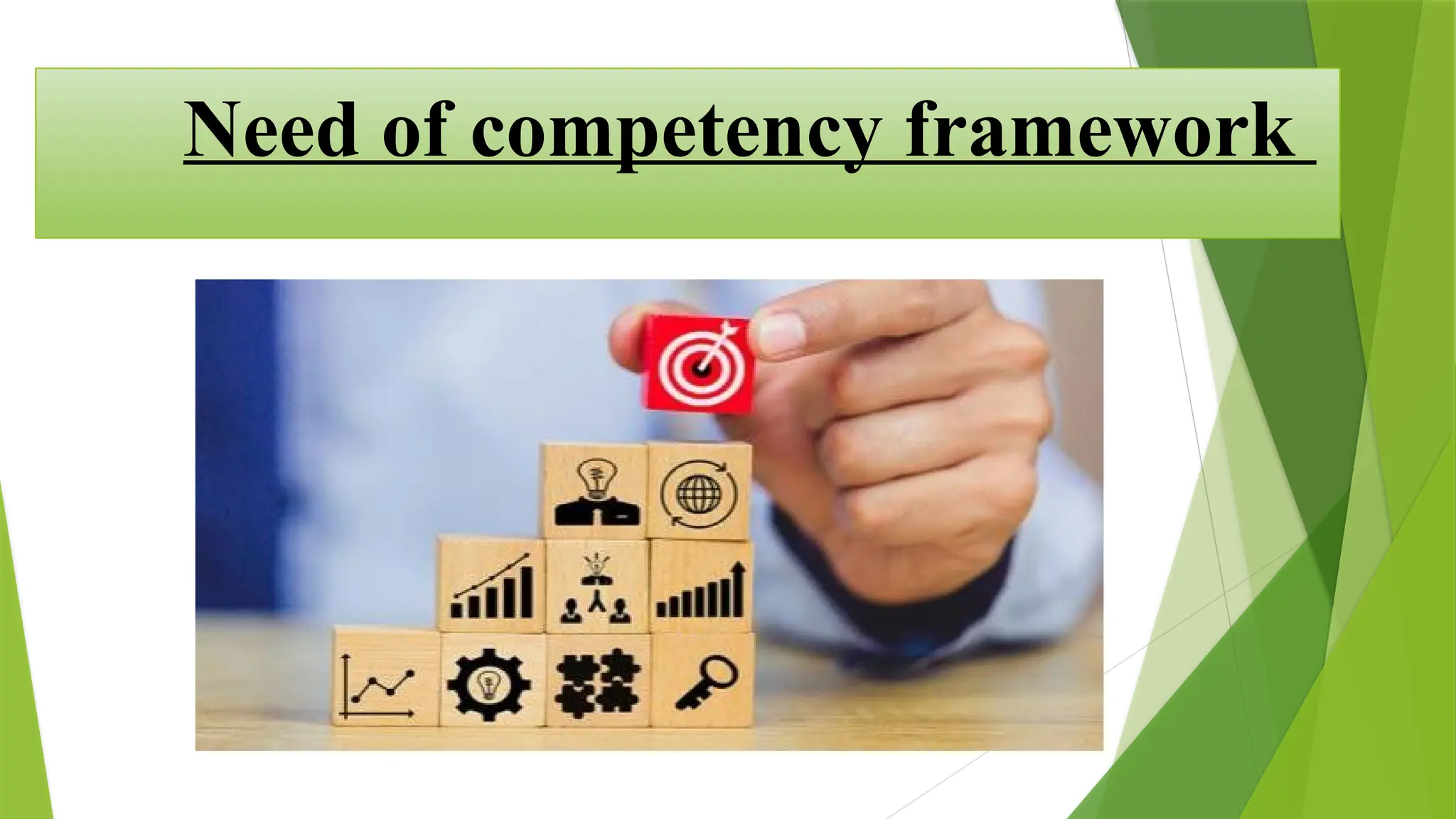
Need of competency framework
• Define and evaluate success in each job role in your business.
 • Support the recruitment and selection of personnel who are a good
match for the job and for the company.
 Create a high-performing company culture with the ability to
anticipate and respond to business demands.
 • Build a system that connects people’s needs with the goal of the
business.
 Set clear performance goals and objectively assess the contribution
of employees.
 • Empower everyone to take charge of their own growth.
 • ‘competency gaps’ in people and teams, and give useful insights
for developing modules for more growth and training opportunities.
There are six main steps in the competency framework
development process.
Each step has key actions that will encourage people to accept
and use the final product.
Implement your framework
Validate and Revise your Framework
Build the framework
Analyze the Work
Collect Information
Prepare
Step1.
Step 2.
Step 3.
Step 4.
Step 5.
Step 6.
Competency development process
Step 1: Prepare
 Define the purpose: Before you start analyzing jobs, look at the purpose for creating the framework.
How you plan to use it will impact whom you involve in preparing it, and how you determine its scope.
For example, a framework for filling a job vacancy will be very specific, whereas a framework for
evaluating compensation will need to cover a wide range of roles.
 Create a competency framework team: Assemble a diverse team representing various business areas.
For example, creating a framework for a software development team would involve:- Software
Development Manager (department head)- Senior Software Engineer (job incumbent)- HR
Representative (talent management)- Technical Architect (subject matter expert)- IT Director (end-
user).
 Communicate: People tend to get nervous about performance issues. Let them know why you’re
developing the framework, how it will be created, and how you’ll use it. The more you communicate in
advance, the easier implementation will be.
Step 2: Collect Information
This is the main part of the framework. Generally, the better the data you collect, the
more accurate your framework will be.
To ensure accuracy, use a combination of:
1. Observation: Watch employees perform their roles, ideal for hands-on jobs.
2. Interviews: Talk to team members, leaders, or conduct group interviews to gather
diverse perspectives.
3. Questionnaires : Surveys to gather data, ensuring reliable and valid questions.
Step 3: Analyze the work
Analyze the work needed for a competency framework by
reviewing:
■ Business plans
■ job descriptions
■ Industry trends
■ Customer needs
Example: For a marketing team, analyze:
- Company marketing strategy
- Marketing role descriptions
- Digital marketing trends
- Client feedback
Step 4: Build the Framework
This stage involves grouping all of the behaviors and skill sets
into competencies.
For example,
Category: Interpersonal Skills
Subcategories:
* Communication
* Teamwork
* Leadership
Competency: Effective Collaboration
Levels:
* Basic (team member)
* Intermediate (team lead)
* Advanced (department manager)
This process creates a structured competency framework for your organization. This is
particularly useful when using the framework for compensation or performance
Step 5: Validate and Revise the framework
 Ensure the competency framework accurately reflects organizational need
 Activities:
 1. Review and refine competency framework: Check for clarity, relevance, and
completeness.
 2. Validate with stakeholders and experts: Seek feedback from subject matter
experts, employees, and management.
 3. Ensure alignment with organizational goals: Verify the framework supports
company objectives.
4. Revise and finalize framework: Incorporate feedback and make necessary
adjustments
Step 6: Implement your framework
 Integrate the competency framework into
organizational systems.

Activities:
1. Integrate framework into HR systems: Incorporate competencies into
performance management, training, and talent management.
2. Develop training and development programs: Create programs
addressing competency gaps.
3. Evaluate employee competencies: Assess employee skills against the
framework.
4. Monitor and update framework regularly: Review and revise the
framework to reflect changing organizational needs.
Conclusion
 Every Organization can benefit from developing and
implementing a competence framework model.
 They provide workers a clear picture of what it takes to succeed
in certain tasks and indicate the skills they need to grow
professionally..
performance Management and competency maappingppt.pptx

performance Management and competency maappingppt.pptx

  • 1.
    Presented by: PRATIBHA _MBA3rd Sem PerformanceManagement. And Competency Mapping Presentation
  • 2.
    INTRODUCTION What is aCompetency Framework? • A structured system for identifying, assessing, and developing employees’ skills and abilities. Importance in HR: • Helps HR manage talent effectively by defining what skills are needed for each role. • Supports career development and succession planning.
  • 3.
    TYPES OF COMPETENCIES 1.CoreCompetencies: Skills that apply to all roles in the organization (e.g., communication, teamwork). 2. Technical Competencies: Job-specific skills required for a particular role (e.g., software knowledge, industry-specific knowledge). 3. Behavioral Competencies: Attributes and behaviours that impact performance (e.g., adaptability, leadership).
  • 4.
    Differentiating VS TechnicalCompetencies  Differentiating Competency  These are more general and can apply across a range of jobs.  They include soft skills like creativity, problem solving, teamwork and Leadership.  Technical Competency  These are specific to a job or industry and are learned through study and practice.  They involve the knowledge and skills required to perform a job successfully.  For example, strategic sales planning is a technical competency for an organization’s sales department.
  • 5.
  • 6.
    • Define andevaluate success in each job role in your business.  • Support the recruitment and selection of personnel who are a good match for the job and for the company.  Create a high-performing company culture with the ability to anticipate and respond to business demands.  • Build a system that connects people’s needs with the goal of the business.  Set clear performance goals and objectively assess the contribution of employees.  • Empower everyone to take charge of their own growth.  • ‘competency gaps’ in people and teams, and give useful insights for developing modules for more growth and training opportunities.
  • 7.
    There are sixmain steps in the competency framework development process. Each step has key actions that will encourage people to accept and use the final product. Implement your framework Validate and Revise your Framework Build the framework Analyze the Work Collect Information Prepare Step1. Step 2. Step 3. Step 4. Step 5. Step 6. Competency development process
  • 8.
    Step 1: Prepare Define the purpose: Before you start analyzing jobs, look at the purpose for creating the framework. How you plan to use it will impact whom you involve in preparing it, and how you determine its scope. For example, a framework for filling a job vacancy will be very specific, whereas a framework for evaluating compensation will need to cover a wide range of roles.  Create a competency framework team: Assemble a diverse team representing various business areas. For example, creating a framework for a software development team would involve:- Software Development Manager (department head)- Senior Software Engineer (job incumbent)- HR Representative (talent management)- Technical Architect (subject matter expert)- IT Director (end- user).  Communicate: People tend to get nervous about performance issues. Let them know why you’re developing the framework, how it will be created, and how you’ll use it. The more you communicate in advance, the easier implementation will be.
  • 9.
    Step 2: CollectInformation This is the main part of the framework. Generally, the better the data you collect, the more accurate your framework will be. To ensure accuracy, use a combination of: 1. Observation: Watch employees perform their roles, ideal for hands-on jobs. 2. Interviews: Talk to team members, leaders, or conduct group interviews to gather diverse perspectives. 3. Questionnaires : Surveys to gather data, ensuring reliable and valid questions.
  • 10.
    Step 3: Analyzethe work Analyze the work needed for a competency framework by reviewing: ■ Business plans ■ job descriptions ■ Industry trends ■ Customer needs Example: For a marketing team, analyze: - Company marketing strategy - Marketing role descriptions - Digital marketing trends - Client feedback
  • 11.
    Step 4: Buildthe Framework This stage involves grouping all of the behaviors and skill sets into competencies. For example, Category: Interpersonal Skills Subcategories: * Communication * Teamwork * Leadership Competency: Effective Collaboration Levels: * Basic (team member) * Intermediate (team lead) * Advanced (department manager) This process creates a structured competency framework for your organization. This is particularly useful when using the framework for compensation or performance
  • 12.
    Step 5: Validateand Revise the framework  Ensure the competency framework accurately reflects organizational need  Activities:  1. Review and refine competency framework: Check for clarity, relevance, and completeness.  2. Validate with stakeholders and experts: Seek feedback from subject matter experts, employees, and management.  3. Ensure alignment with organizational goals: Verify the framework supports company objectives. 4. Revise and finalize framework: Incorporate feedback and make necessary adjustments
  • 13.
    Step 6: Implementyour framework  Integrate the competency framework into organizational systems.  Activities: 1. Integrate framework into HR systems: Incorporate competencies into performance management, training, and talent management. 2. Develop training and development programs: Create programs addressing competency gaps. 3. Evaluate employee competencies: Assess employee skills against the framework. 4. Monitor and update framework regularly: Review and revise the framework to reflect changing organizational needs.
  • 14.
    Conclusion  Every Organizationcan benefit from developing and implementing a competence framework model.  They provide workers a clear picture of what it takes to succeed in certain tasks and indicate the skills they need to grow professionally..