Download to read offline
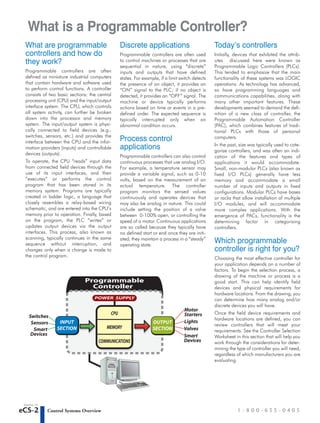
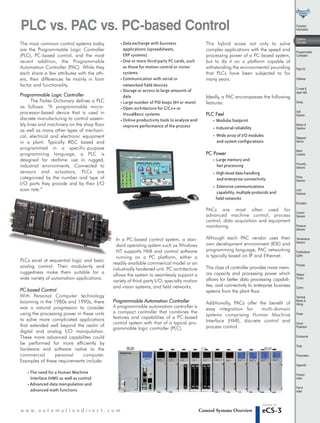


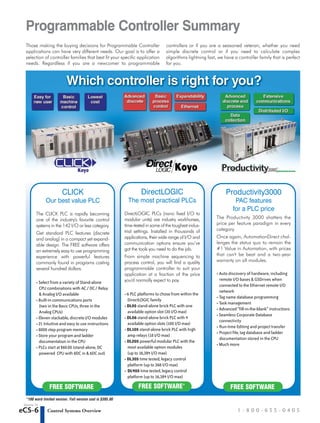
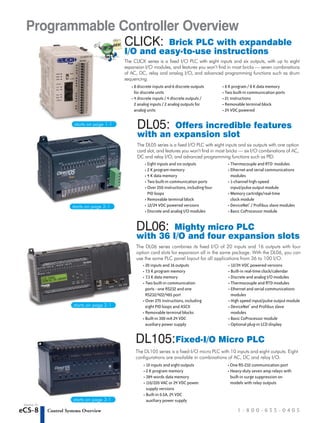
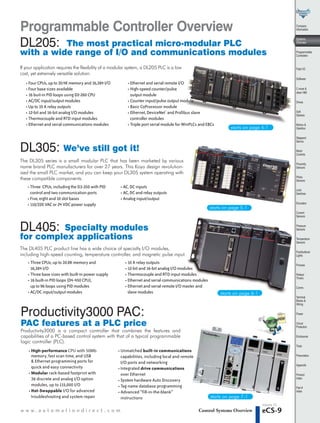
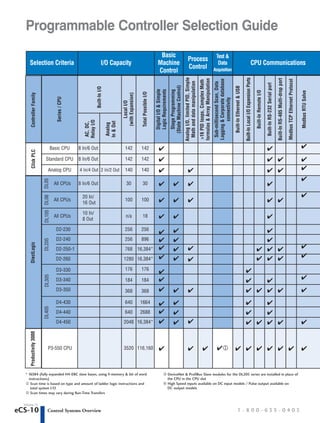
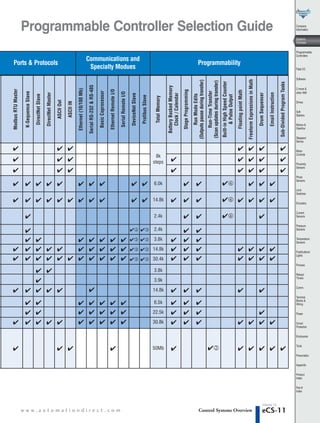

This document provides an overview of programmable controllers, including what they are, how they work, and the different types. It defines programmable controllers as miniature industrial computers that contain hardware and software to perform control functions. The two main sections are the central processing unit (CPU) and input/output interface. The CPU controls all activity by reading inputs, executing programs stored in memory, and writing outputs. Common types are programmable logic controllers (PLCs), PC-based controls, and programmable automation controllers (PACs). Choosing the right controller depends on factors like the application, number of inputs/outputs, environmental conditions, and compatibility with existing systems.


