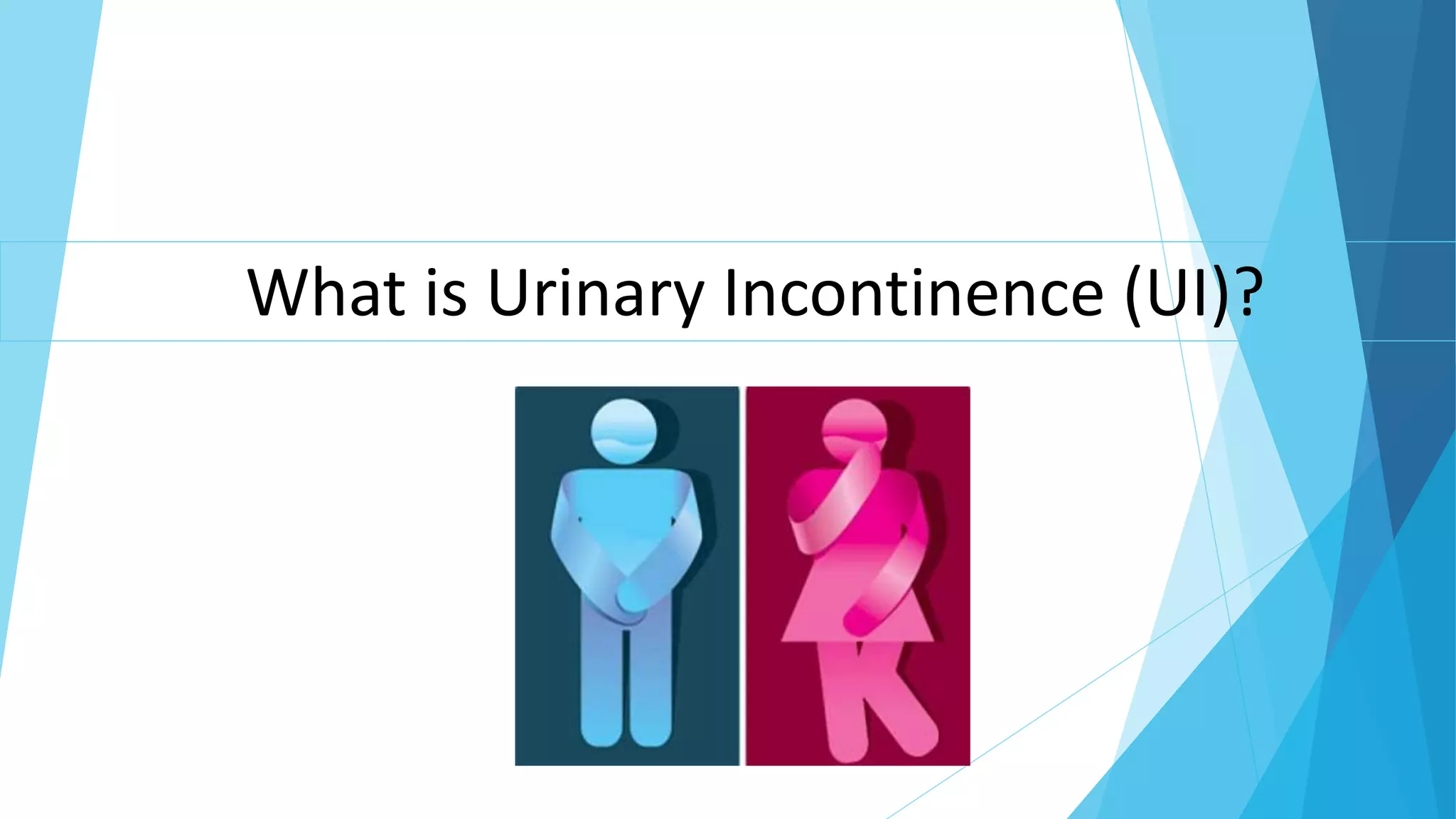
What is Urinary Incontinence (UI)?
What is Urinary Incontinence and how common is it?
• UI Involuntary loss of urine;
• According to the American Medical Association,
“lack of bladder control affects 10 to 20 percent of
people older than 65”.
Main types of urinary incontinence:
• Stress incontinence
• Urge incontinence
• Overflow incontinence
• Functional Incontinence
• Mixed Incontinence
Stress incontinence
• The leakage of urine during strenuous
activities, including laughing, sneezing,
exercising and even sexual activity.
• Results from age and the relaxation of pelvic
muscles from multiple childbirths and
medical procedures.
• More common in women. However, men can
also suffer from stress incontinence due to
prostrate surgery.
Urge incontinence
Also known as:
• detrusor overactivity
• overactive bladder (OAB)
Urge incontinence is an urgent need to urinate,
often with too little warning.
It is common in the elderly and can be caused by a
variety of issues:
• Parkinson’s
• Alzheimer’s
• Diabetes.
Overflow incontinence
When the bladder is filled but there is no
urge to urinate, there can be urine leakage. This
is called overflow incontinence.
Overflow incontinence can be caused by
• Scar tissue
• Diabetes
• Neurological disorders
Other types of urinary incontinence include:
• Functional incontinence
• Mixed incontinence
• Functional incontinence is when leakage occurs as a
result of a mobility issue, such as a physical disability.
• Mixed incontinence is when there are two or more
types of UI present: typically stress incontinence and
urge incontinence.
Databases and Consumer Health Complete
(Ebscohost available at the library)
• This database offers health information aimed at the consumer.
• Over four thousand topics are available in a variety of sources, including
articles, books, pamphlets and multimedia.
Medline Plus – U.S. National Library of Medicine -
https://www.nlm.nih.gov/medlineplus/
• Offers information on urinary incontinence in a variety of languages and
a variety of mediums.
• Language offerings include Arab, Chinese and Spanish.
• Formats include video tutorials, images, and slideshows, some of the
videos are offered in Spanish.
• Includes a list of clinical trials.
Instructions for searching these databases begins on next screen...
Articles
Health Source-Consumer Edition – (Ebscohost available at the library)
Some relevant articles (ask your librarian to help you locate these articles
from the Health Source Consumer Edition database):
• SCHARDT, D. (2015). URINE TROUBLE. Nutrition Action Health Letter,
42(10), 9-11.
• LALIBERTE, R. (2015). Leaky Bladder. Prevention, 67(7), 52-54.
• Living with bladder problems. (2015). Mayo Clinic Health Letter, 33(1), 3.
• What you can do about incontinence. (2013). Harvard Women's Health
Watch, 20(9), 4-5.
• The Minor Leaks. (2014). Nutrition Action Health Letter, 41(2), 5.
This database is offered at your library
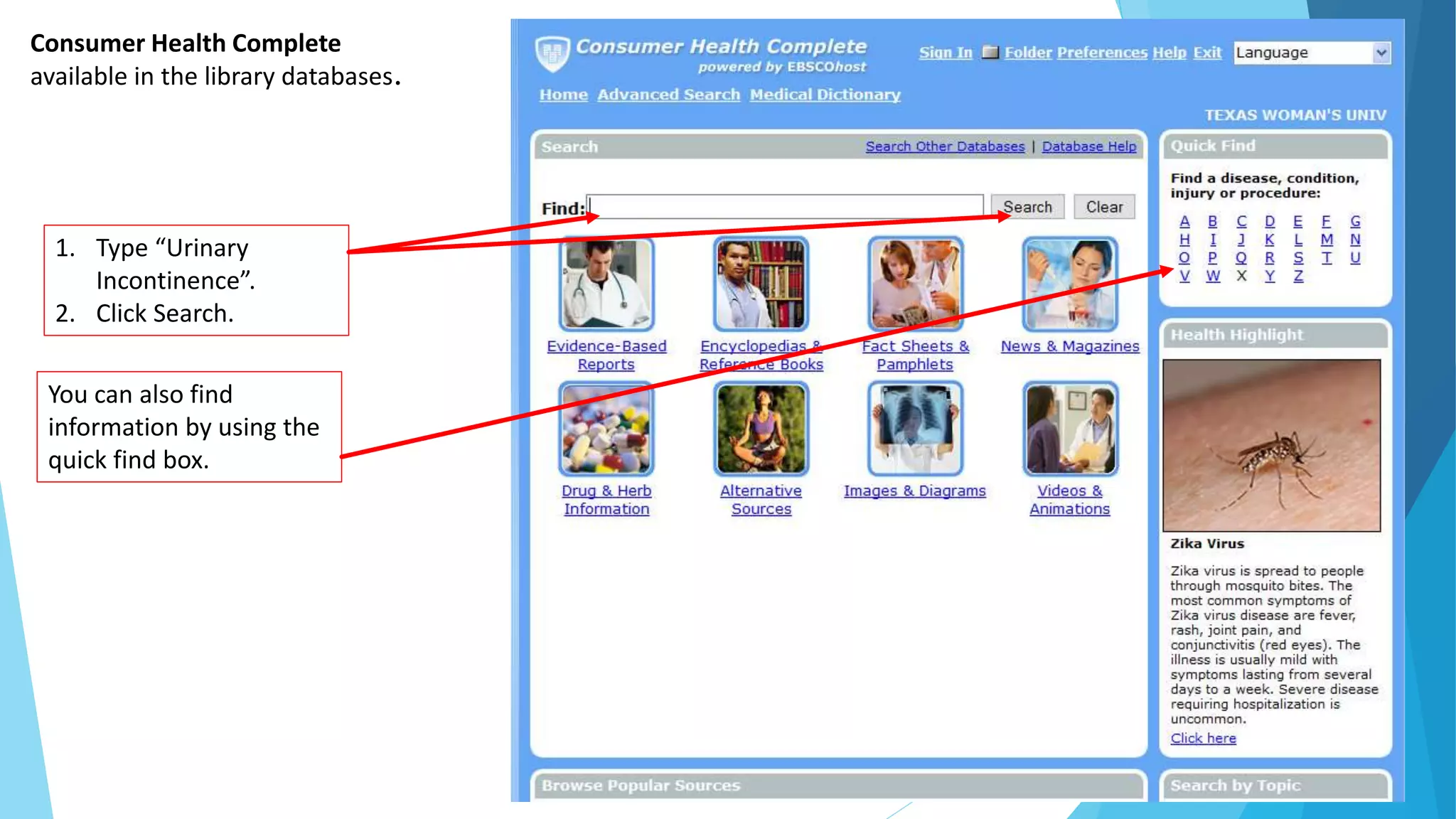
Consumer Health Complete
available in the library databases.
1. Type “Urinary
Incontinence”.
2. Click Search.
You can also find
information by using the
quick find box.
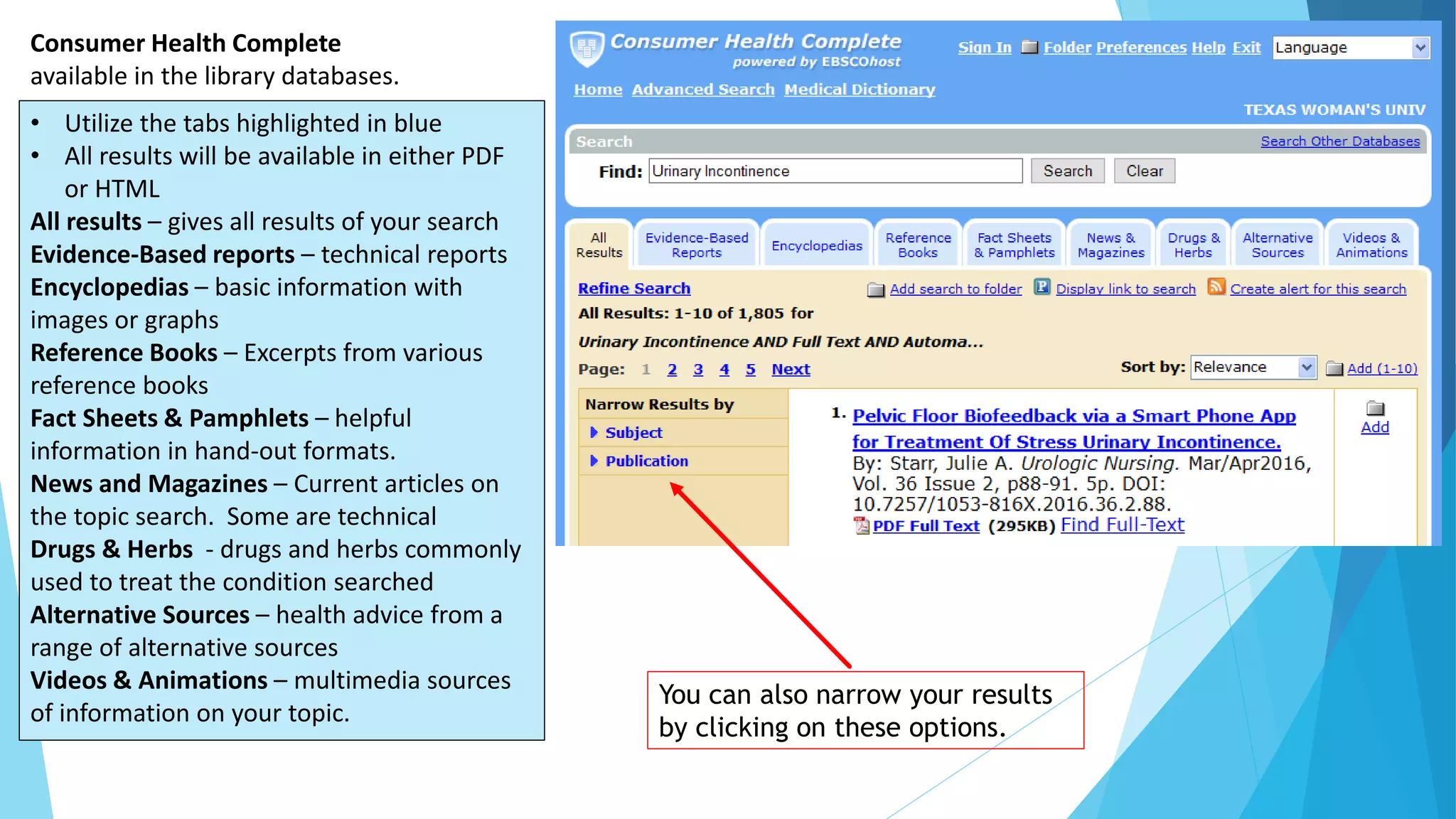
Consumer Health Complete
available in the library databases.
• Utilize the tabs highlighted in blue
• All results will be available in either PDF
or HTML
All results – gives all results of your search
Evidence-Based reports – technical reports
Encyclopedias – basic information with
images or graphs
Reference Books – Excerpts from various
reference books
Fact Sheets & Pamphlets – helpful
information in hand-out formats.
News and Magazines – Current articles on
the topic search. Some are technical
Drugs & Herbs - drugs and herbs commonly
used to treat the condition searched
Alternative Sources – health advice from a
range of alternative sources
Videos & Animations – multimedia sources
of information on your topic.
You can also narrow your results
by clicking on these options.
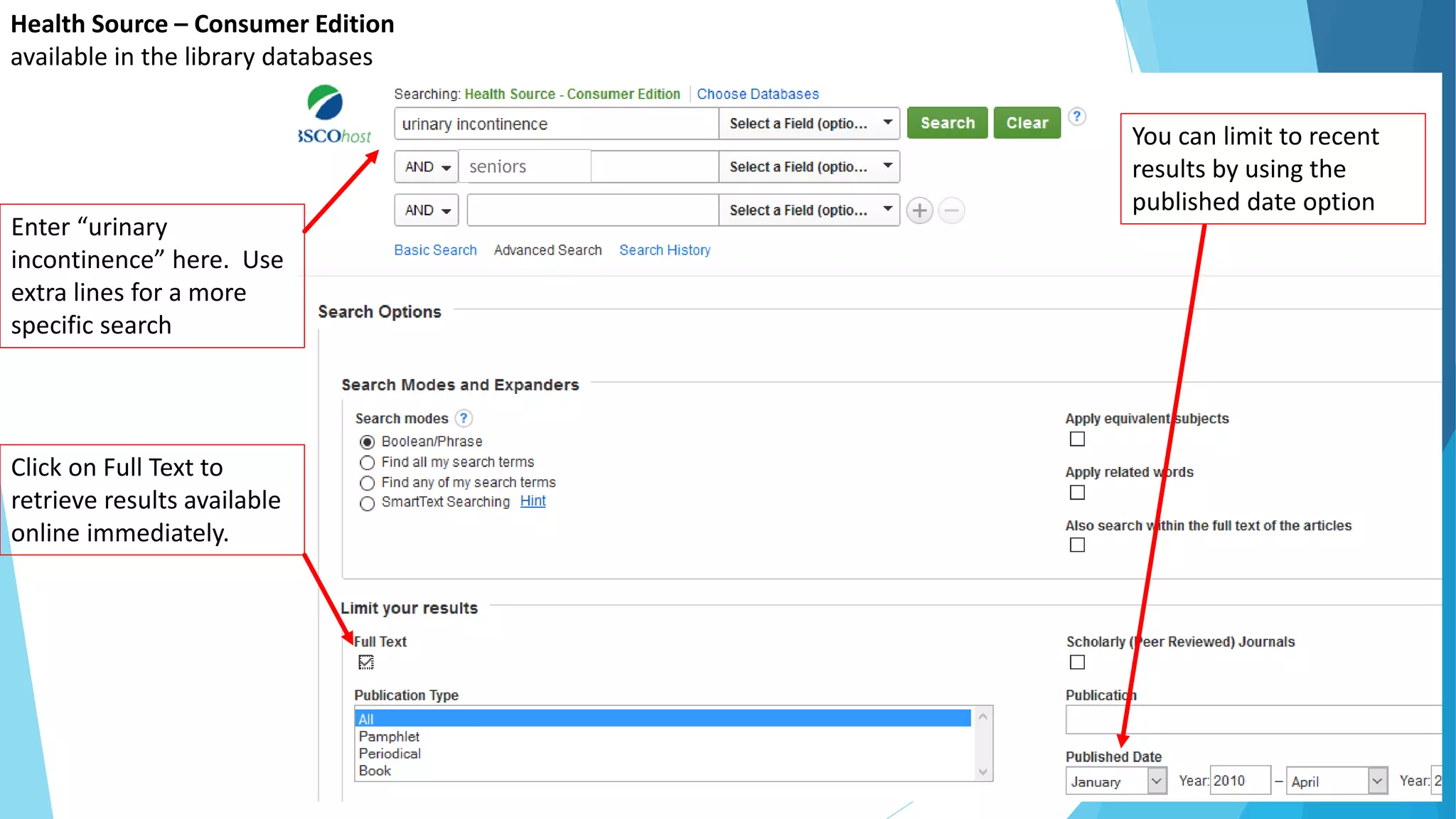
Health Source – Consumer Edition
available in the library databases
Enter “urinary
incontinence” here. Use
extra lines for a more
specific search
Click on Full Text to
retrieve results available
online immediately.
You can limit to recent
results by using the
published date option
seniors
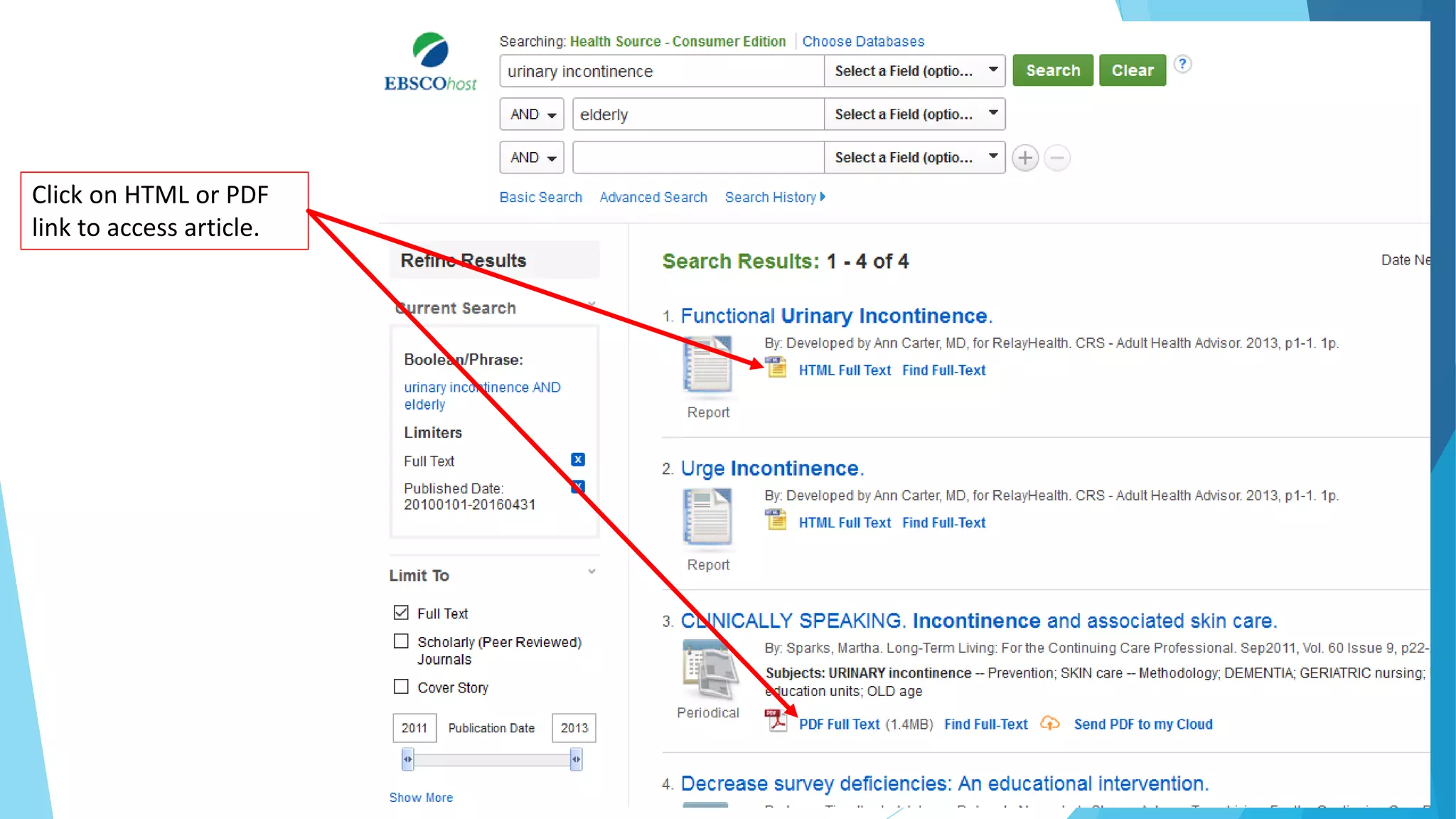
Click on HTML or PDF
link to access article.
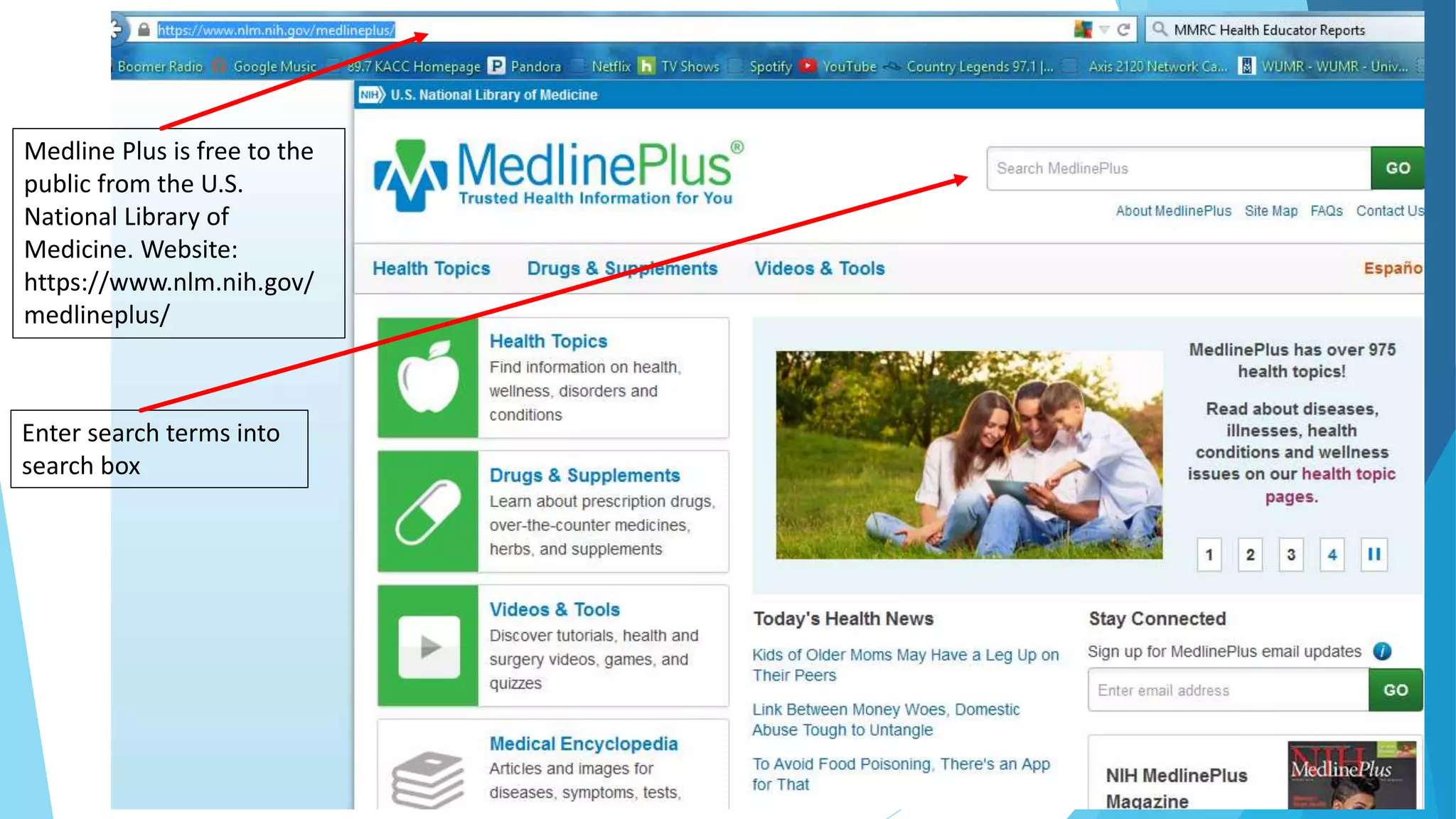
Medline Plus is free to the
public from the U.S.
National Library of
Medicine. Website:
https://www.nlm.nih.gov/
medlineplus/
Enter search terms into
search box
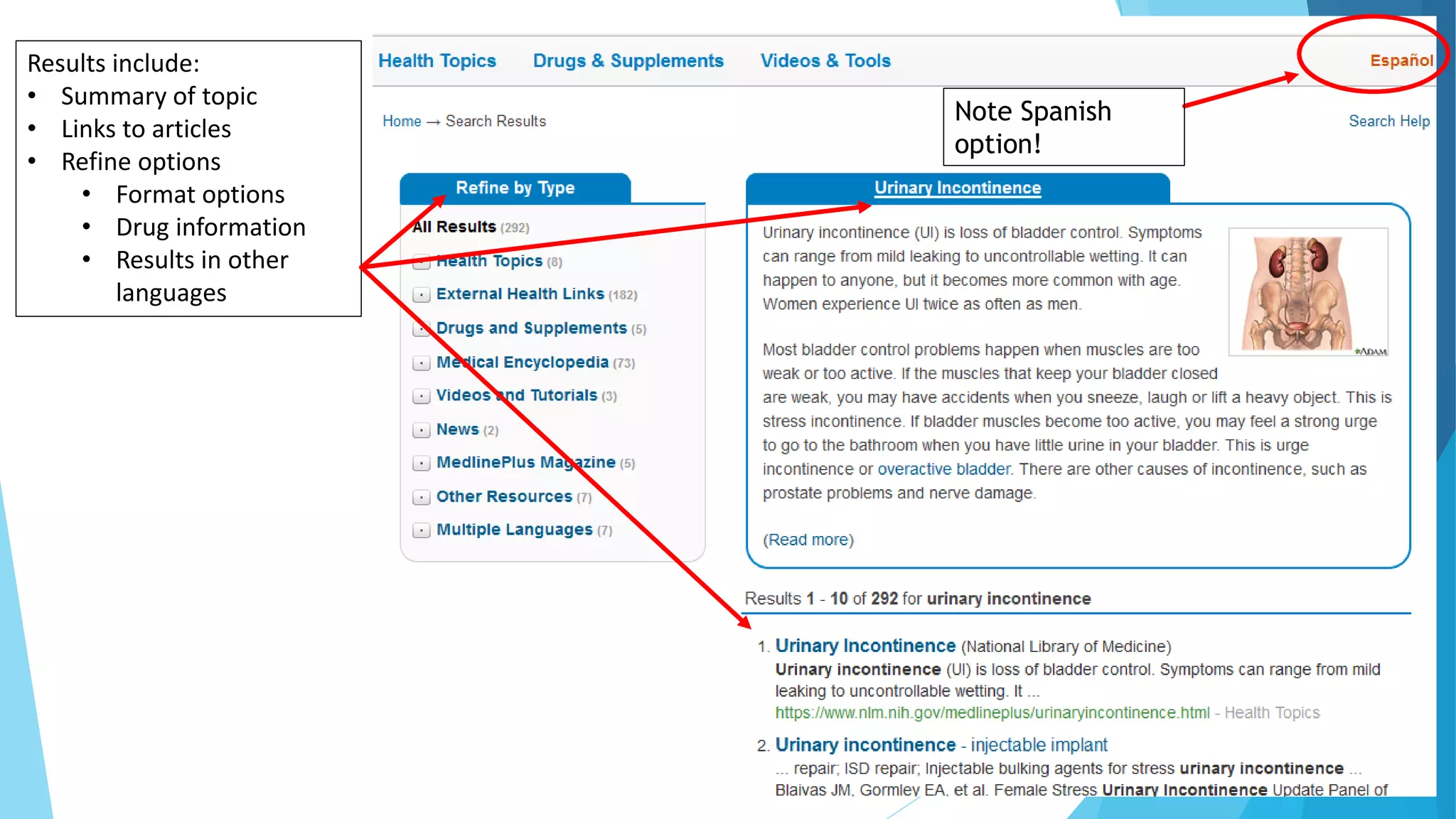
Results include:
• Summary of topic
• Links to articles
• Refine options
• Format options
• Drug information
• Results in other
languages
Note Spanish
option!
Organizations
• The Urology Care Foundation - http://www.urologyhealth.org/ - This is the
official foundation for the American Urological Association.
• The Simon Foundation for Continence - www.simonfoundation.org - From
the website: The mission of the Simon Foundation is to: "Bring the topic of
incontinence out into the open, remove the stigma surrounding incontinence,
and provide help and hope to people with incontinence, their families and
the health professionals who provide their care."
• National Association for Continence (NAFC) - http://www.nafc.org/urinary-
incontinence/ - From the website: NAFC's purpose is to be the leading source
for public education and advocacy about the causes, prevention, diagnosis,
treatments, and management alternatives for incontinence.

What is Urinary Incontinence (UI)?

  • 1.
    What is UrinaryIncontinence (UI)?
  • 2.
    What is UrinaryIncontinence and how common is it? • UI Involuntary loss of urine; • According to the American Medical Association, “lack of bladder control affects 10 to 20 percent of people older than 65”.
  • 3.
    Main types ofurinary incontinence: • Stress incontinence • Urge incontinence • Overflow incontinence • Functional Incontinence • Mixed Incontinence
  • 4.
    Stress incontinence • Theleakage of urine during strenuous activities, including laughing, sneezing, exercising and even sexual activity. • Results from age and the relaxation of pelvic muscles from multiple childbirths and medical procedures. • More common in women. However, men can also suffer from stress incontinence due to prostrate surgery.
  • 5.
    Urge incontinence Also knownas: • detrusor overactivity • overactive bladder (OAB) Urge incontinence is an urgent need to urinate, often with too little warning. It is common in the elderly and can be caused by a variety of issues: • Parkinson’s • Alzheimer’s • Diabetes.
  • 6.
    Overflow incontinence When thebladder is filled but there is no urge to urinate, there can be urine leakage. This is called overflow incontinence. Overflow incontinence can be caused by • Scar tissue • Diabetes • Neurological disorders
  • 7.
    Other types ofurinary incontinence include: • Functional incontinence • Mixed incontinence • Functional incontinence is when leakage occurs as a result of a mobility issue, such as a physical disability. • Mixed incontinence is when there are two or more types of UI present: typically stress incontinence and urge incontinence.
  • 8.
    Databases and ConsumerHealth Complete (Ebscohost available at the library) • This database offers health information aimed at the consumer. • Over four thousand topics are available in a variety of sources, including articles, books, pamphlets and multimedia. Medline Plus – U.S. National Library of Medicine - https://www.nlm.nih.gov/medlineplus/ • Offers information on urinary incontinence in a variety of languages and a variety of mediums. • Language offerings include Arab, Chinese and Spanish. • Formats include video tutorials, images, and slideshows, some of the videos are offered in Spanish. • Includes a list of clinical trials. Instructions for searching these databases begins on next screen...
  • 9.
    Articles Health Source-Consumer Edition– (Ebscohost available at the library) Some relevant articles (ask your librarian to help you locate these articles from the Health Source Consumer Edition database): • SCHARDT, D. (2015). URINE TROUBLE. Nutrition Action Health Letter, 42(10), 9-11. • LALIBERTE, R. (2015). Leaky Bladder. Prevention, 67(7), 52-54. • Living with bladder problems. (2015). Mayo Clinic Health Letter, 33(1), 3. • What you can do about incontinence. (2013). Harvard Women's Health Watch, 20(9), 4-5. • The Minor Leaks. (2014). Nutrition Action Health Letter, 41(2), 5. This database is offered at your library
  • 10.
    Consumer Health Complete availablein the library databases. 1. Type “Urinary Incontinence”. 2. Click Search. You can also find information by using the quick find box.
  • 11.
    Consumer Health Complete availablein the library databases. • Utilize the tabs highlighted in blue • All results will be available in either PDF or HTML All results – gives all results of your search Evidence-Based reports – technical reports Encyclopedias – basic information with images or graphs Reference Books – Excerpts from various reference books Fact Sheets & Pamphlets – helpful information in hand-out formats. News and Magazines – Current articles on the topic search. Some are technical Drugs & Herbs - drugs and herbs commonly used to treat the condition searched Alternative Sources – health advice from a range of alternative sources Videos & Animations – multimedia sources of information on your topic. You can also narrow your results by clicking on these options.
  • 12.
    Health Source –Consumer Edition available in the library databases Enter “urinary incontinence” here. Use extra lines for a more specific search Click on Full Text to retrieve results available online immediately. You can limit to recent results by using the published date option seniors
  • 13.
    Click on HTMLor PDF link to access article.
  • 14.
    Medline Plus isfree to the public from the U.S. National Library of Medicine. Website: https://www.nlm.nih.gov/ medlineplus/ Enter search terms into search box
  • 15.
    Results include: • Summaryof topic • Links to articles • Refine options • Format options • Drug information • Results in other languages Note Spanish option!
  • 16.
    Organizations • The UrologyCare Foundation - http://www.urologyhealth.org/ - This is the official foundation for the American Urological Association. • The Simon Foundation for Continence - www.simonfoundation.org - From the website: The mission of the Simon Foundation is to: "Bring the topic of incontinence out into the open, remove the stigma surrounding incontinence, and provide help and hope to people with incontinence, their families and the health professionals who provide their care." • National Association for Continence (NAFC) - http://www.nafc.org/urinary- incontinence/ - From the website: NAFC's purpose is to be the leading source for public education and advocacy about the causes, prevention, diagnosis, treatments, and management alternatives for incontinence.