WHAT IS SYNCOPE
W W W . O K H E A R T . C O M
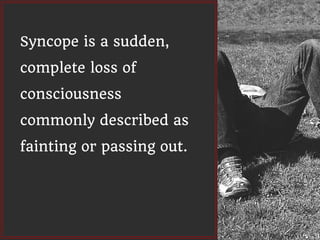
Syncope is a sudden,
complete loss of
consciousness
commonly described as
fainting or passing out.
In a typical syncope
episode, a person will be
standing and simply
pass out with little to
no warning.
And when they wake up,
they will be unconscious
for just a few minutes
and may appear flushed
or feel warm.
There are some situations where syncope
requires immediate medical attention,
including:
* Syncope during exercising or while laying
down
* Palpitations or racing heart beat just
before or during syncope
* Syncope combined with family history of
sudden cardiac death or a prior diagnosis of
abnormal heart rhythm or EKG
* Syncope combined with resting heart rate
below 50
Questions that could help the physician
diagnose if a person has experienced
syncope or another health concern:
* Did they completely pass out?
* Was the episode fast and short?
* Have they lost postural tone (collapsed)?
* How many times it has happened?
* Was there any other symptoms occur
along with passing out?
Tests may include:
* EKG to check the heart rhythm
* Echocardiogram (ultrasound of the heart)
to rule out any structural issues with the
heart
There are four primary categories of
syncope:
* Reflex mediated syncope, which accounts
for about 58% of cases.
* Syncope from underlying cardiac disease
(23%).
* Neurologic or psychiatric syncope (1%).
* Unexplained syncope (18%).
Treatment options
(may vary on each patient's situation):
* Simply increasing water and sodium
intake will reduce the frequency of syncope.
* Daily aerobic exercise may help lessen the
frequency of syncope.
* Other patients may require medication or
even an implantable cardiac device, such as
a pacemaker, for cardiac-related syncope.
To learn more about procedures
to syncopal episodes,
contact the
Oklahoma Heart Hospital today.
O K L A H O M A
H E A R T H O S P I T A L

What Is Syncope

  • 1.
    WHAT IS SYNCOPE WW W . O K H E A R T . C O M
  • 2.
    Syncope is asudden, complete loss of consciousness commonly described as fainting or passing out.
  • 3.
    In a typicalsyncope episode, a person will be standing and simply pass out with little to no warning.
  • 4.
    And when theywake up, they will be unconscious for just a few minutes and may appear flushed or feel warm.
  • 5.
    There are somesituations where syncope requires immediate medical attention, including: * Syncope during exercising or while laying down * Palpitations or racing heart beat just before or during syncope * Syncope combined with family history of sudden cardiac death or a prior diagnosis of abnormal heart rhythm or EKG * Syncope combined with resting heart rate below 50
  • 6.
    Questions that couldhelp the physician diagnose if a person has experienced syncope or another health concern: * Did they completely pass out? * Was the episode fast and short? * Have they lost postural tone (collapsed)? * How many times it has happened? * Was there any other symptoms occur along with passing out?
  • 7.
    Tests may include: *EKG to check the heart rhythm * Echocardiogram (ultrasound of the heart) to rule out any structural issues with the heart
  • 8.
    There are fourprimary categories of syncope: * Reflex mediated syncope, which accounts for about 58% of cases. * Syncope from underlying cardiac disease (23%). * Neurologic or psychiatric syncope (1%). * Unexplained syncope (18%).
  • 9.
    Treatment options (may varyon each patient's situation): * Simply increasing water and sodium intake will reduce the frequency of syncope. * Daily aerobic exercise may help lessen the frequency of syncope. * Other patients may require medication or even an implantable cardiac device, such as a pacemaker, for cardiac-related syncope.
  • 10.
    To learn moreabout procedures to syncopal episodes, contact the Oklahoma Heart Hospital today. O K L A H O M A H E A R T H O S P I T A L