Dr Anil Bhatt
Dept of Sociology
 The word Sociology is derived from the Latin word Socius
meaning companion or societus which means society and
Greek word logos means study of. Thus it can be said that
Sociology is the science or study of society.
 Sociology is the study of social life, social change,
and the social causes-consequences of human
behavior.
 Sociologists investigate the structure of groups, organizations,
and societies, and how people interact within these contexts.
 Sociology joined the family of Social Sciences relatively in
the 19th Century. It is youngest of all social sciences as its
identity as a distinct branch of knowledge was established
quite late.
 August Comte coined the term Sociology in 1838 which was
named Social Physics earlier.
 Issidore Marie August Francois Xavier Comte
 1798-1857
 Born in- Montpellier, France
 Died- Paris, France
 Believed in development of a discipline of society based on
empirical investigation.
 Theories- Law of Three Stages, Positivism, Hierarchy of
Sciences, Social Statics, and Social Dynamics.
 Books – General View of Positivism (1848),System of
Positive Polity(1851),Social Physics(1856) Course de
Positive Philosophie (1830-42)
 Kingsley Davis- “Sociology is the general science of
society”
 Robert Park- “Sociology is the science of collective
behaviour”
 Emile Durkheim- “Sociology is the study of social
institutions”
 H.M.Johnson- “Sociology is the study of Social
Groups”
 August Comte- “Sociology is the science of social
phenomena subject to natural and invariable laws,
the discovery of which is the subject of
investigation”
 In 1876, Yale University’s William Graham Sumner
taught the first course identified as “sociology” in
the United States.
University of Chicago (USA) established the first
graduate department of sociology in the United
States in 1892.
 1889– France
 1893- Tokyo
 1907- England
 1919- Bombay University under Patrick Geddes
followed by G.S.Ghurye
 Sociology’s subject matter is diverse, ranging from crime to
religion, from the family to the state, from the divisions of
race and social class to the shared beliefs of a common
culture, and from social stability to radical change in whole
societies.
 Sociology offers a distinctive and enlightening way of seeing
and understanding the social world in which we live and
which shapes our lives.
 Sociology looks beyond normal, taken-for-granted views of
reality, to provide deeper, more illuminating and challenging
understandings of social life.
 “Human behaviour cannot be understood in
individualistic terms, we must always examine the
social forces that affect people’s lives” Emile Durkheim
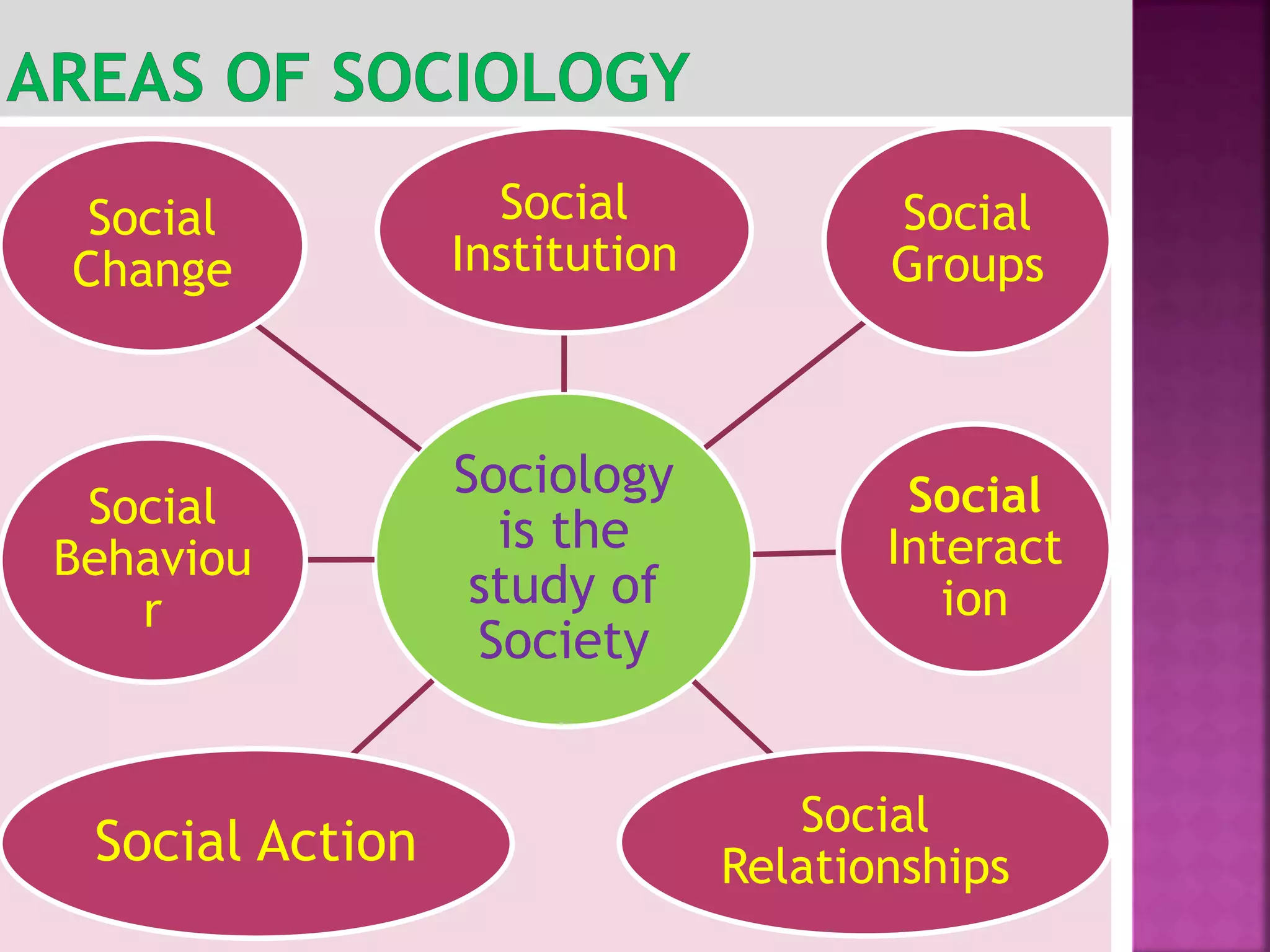
Sociology
is the
study of
Society
Social
Institution
Social
Groups
Social
Interact
ion
Social
Relationships
Social Action
Social
Behaviou
r
Social
Change
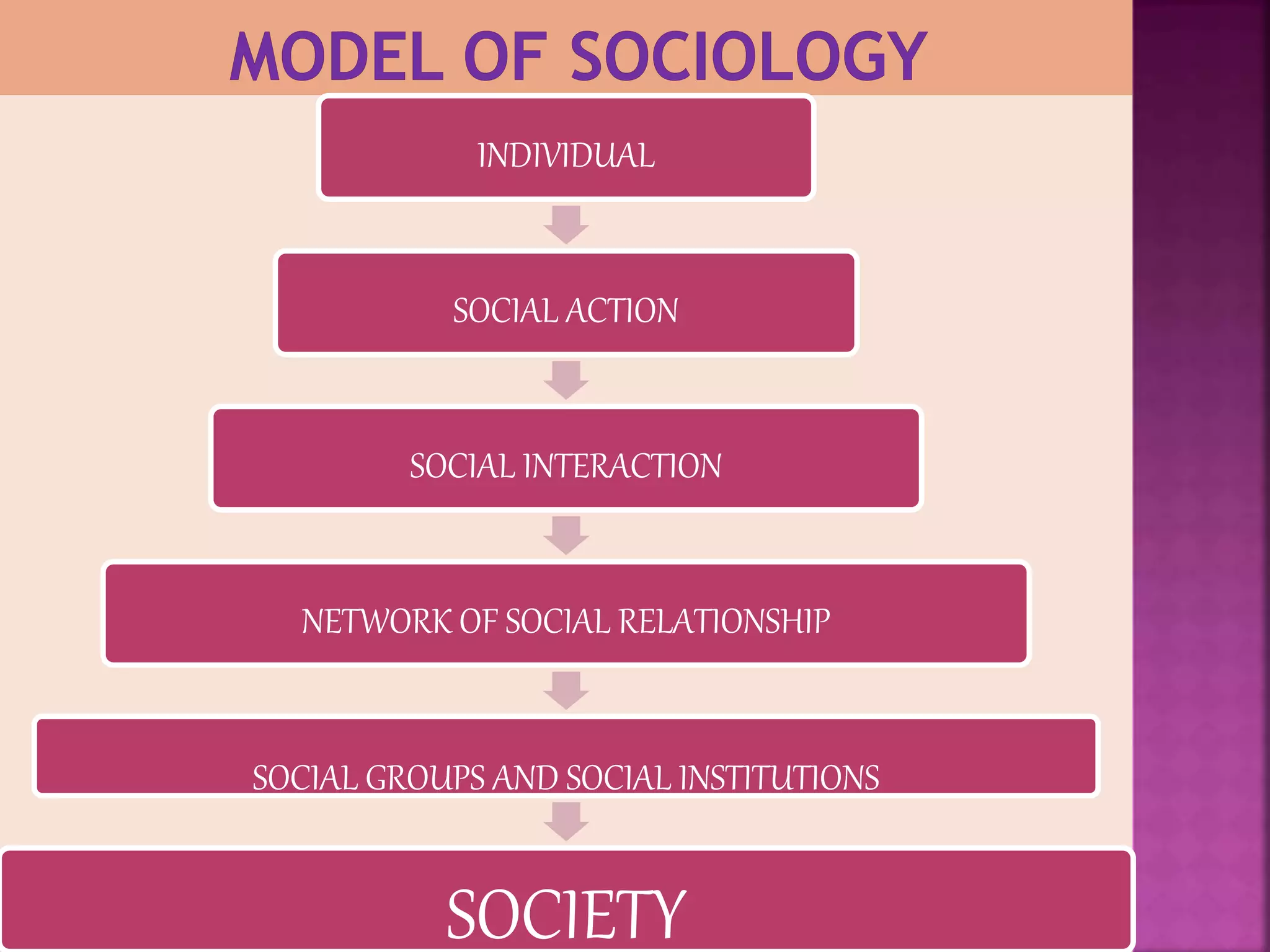
INDIVIDUAL
SOCIAL ACTION
SOCIAL INTERACTION
NETWORK OF SOCIAL RELATIONSHIP
SOCIAL GROUPS AND SOCIAL INSTITUTIONS
SOCIETY
SCOPE
FORMALISTIC/SPECIALI
STIC SCHOOL OF
THOUGHT
George
Simmel
Vierkandt
Max Weber
Vonwiese
F. Tonnies
Studies Form of
Social
Relationship
Pure Science
Narrow and
Limited
All events need
not be studied
SYNYHETIC
SCHOOL OF
THOUGHT
Comte
Durkheim
L.T.
Hobhouse
F Ward
General
Science
Vast
Related to
other Social
Sciences
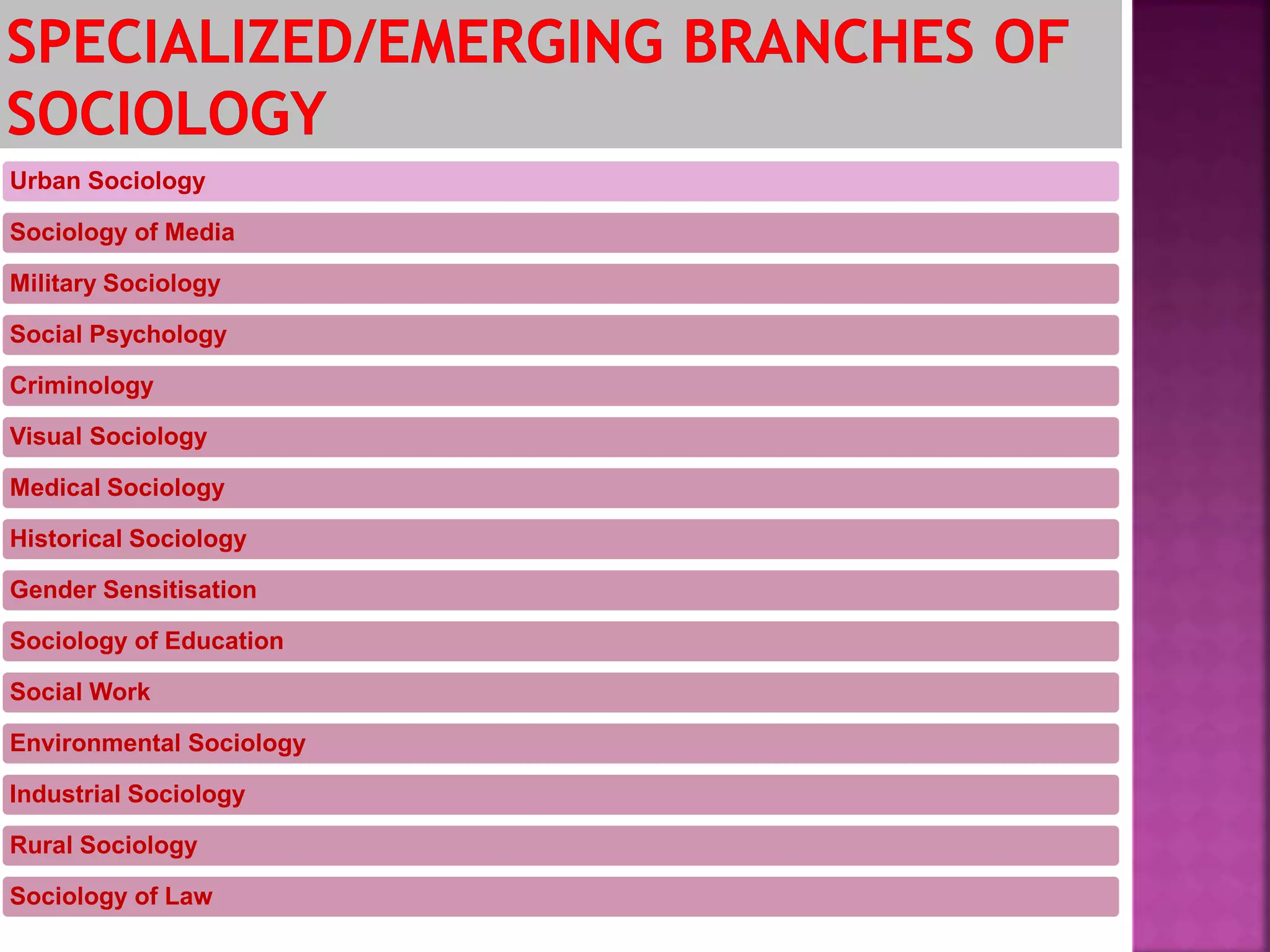
Urban Sociology
Sociology of Media
Military Sociology
Social Psychology
Criminology
Visual Sociology
Medical Sociology
Historical Sociology
Gender Sensitisation
Sociology of Education
Social Work
Environmental Sociology
Industrial Sociology
Rural Sociology
Sociology of Law
 Dr Anil Bhatt,
 Dept of Sociology,
 Higher Education, Uttarakhand

what is Sociology.pptx

  • 1.
    Dr Anil Bhatt Deptof Sociology
  • 2.
     The wordSociology is derived from the Latin word Socius meaning companion or societus which means society and Greek word logos means study of. Thus it can be said that Sociology is the science or study of society.  Sociology is the study of social life, social change, and the social causes-consequences of human behavior.  Sociologists investigate the structure of groups, organizations, and societies, and how people interact within these contexts.  Sociology joined the family of Social Sciences relatively in the 19th Century. It is youngest of all social sciences as its identity as a distinct branch of knowledge was established quite late.  August Comte coined the term Sociology in 1838 which was named Social Physics earlier.
  • 3.
     Issidore MarieAugust Francois Xavier Comte  1798-1857  Born in- Montpellier, France  Died- Paris, France  Believed in development of a discipline of society based on empirical investigation.  Theories- Law of Three Stages, Positivism, Hierarchy of Sciences, Social Statics, and Social Dynamics.  Books – General View of Positivism (1848),System of Positive Polity(1851),Social Physics(1856) Course de Positive Philosophie (1830-42)
  • 4.
     Kingsley Davis-“Sociology is the general science of society”  Robert Park- “Sociology is the science of collective behaviour”  Emile Durkheim- “Sociology is the study of social institutions”  H.M.Johnson- “Sociology is the study of Social Groups”  August Comte- “Sociology is the science of social phenomena subject to natural and invariable laws, the discovery of which is the subject of investigation”
  • 5.
     In 1876,Yale University’s William Graham Sumner taught the first course identified as “sociology” in the United States. University of Chicago (USA) established the first graduate department of sociology in the United States in 1892.  1889– France  1893- Tokyo  1907- England  1919- Bombay University under Patrick Geddes followed by G.S.Ghurye
  • 6.
     Sociology’s subjectmatter is diverse, ranging from crime to religion, from the family to the state, from the divisions of race and social class to the shared beliefs of a common culture, and from social stability to radical change in whole societies.  Sociology offers a distinctive and enlightening way of seeing and understanding the social world in which we live and which shapes our lives.  Sociology looks beyond normal, taken-for-granted views of reality, to provide deeper, more illuminating and challenging understandings of social life.  “Human behaviour cannot be understood in individualistic terms, we must always examine the social forces that affect people’s lives” Emile Durkheim
  • 7.
  • 8.
    INDIVIDUAL SOCIAL ACTION SOCIAL INTERACTION NETWORKOF SOCIAL RELATIONSHIP SOCIAL GROUPS AND SOCIAL INSTITUTIONS SOCIETY
  • 9.
    SCOPE FORMALISTIC/SPECIALI STIC SCHOOL OF THOUGHT George Simmel Vierkandt MaxWeber Vonwiese F. Tonnies Studies Form of Social Relationship Pure Science Narrow and Limited All events need not be studied SYNYHETIC SCHOOL OF THOUGHT Comte Durkheim L.T. Hobhouse F Ward General Science Vast Related to other Social Sciences
  • 10.
    Urban Sociology Sociology ofMedia Military Sociology Social Psychology Criminology Visual Sociology Medical Sociology Historical Sociology Gender Sensitisation Sociology of Education Social Work Environmental Sociology Industrial Sociology Rural Sociology Sociology of Law
  • 11.
     Dr AnilBhatt,  Dept of Sociology,  Higher Education, Uttarakhand