WHAT IS ETL?
“EXTRACT … TRANSFORM … LOAD”


Eng. Ismail El Gayar
Software Engineer
WHY ETL?

 Companies need a way to analyze their data
  for critical business decisions.
 Transactional Database can’t answer
  complex business questions.
 A data warehouse provide a common data
  repository.
 ETL provide a method of moving the data
  from various source into a data warehouse.
ETL CONCEPT
 A Company data may be scattered in
  different locations and in different formats.
 ETL Allows you to:
     Migrate the data into a data warehouse.
     Convert the various formats and types to adhere
      to one consistent system.
   ETL is a predefined process for access and
    manipulate source data and loading it into a
    target database.
ETL REQUIREMENTS
   Any ETL Architecture must meet the following
    requirements:
       Business Requirement
       Compliance Requirement
       Data Profiling
       Data Security
       Data Integration
       Right Data at Right Time
       Archiving & Uneage
       Final End User Delivery Interface
       Available Skills
       Legacy License
       Alignment with overall Enterprise Architecture
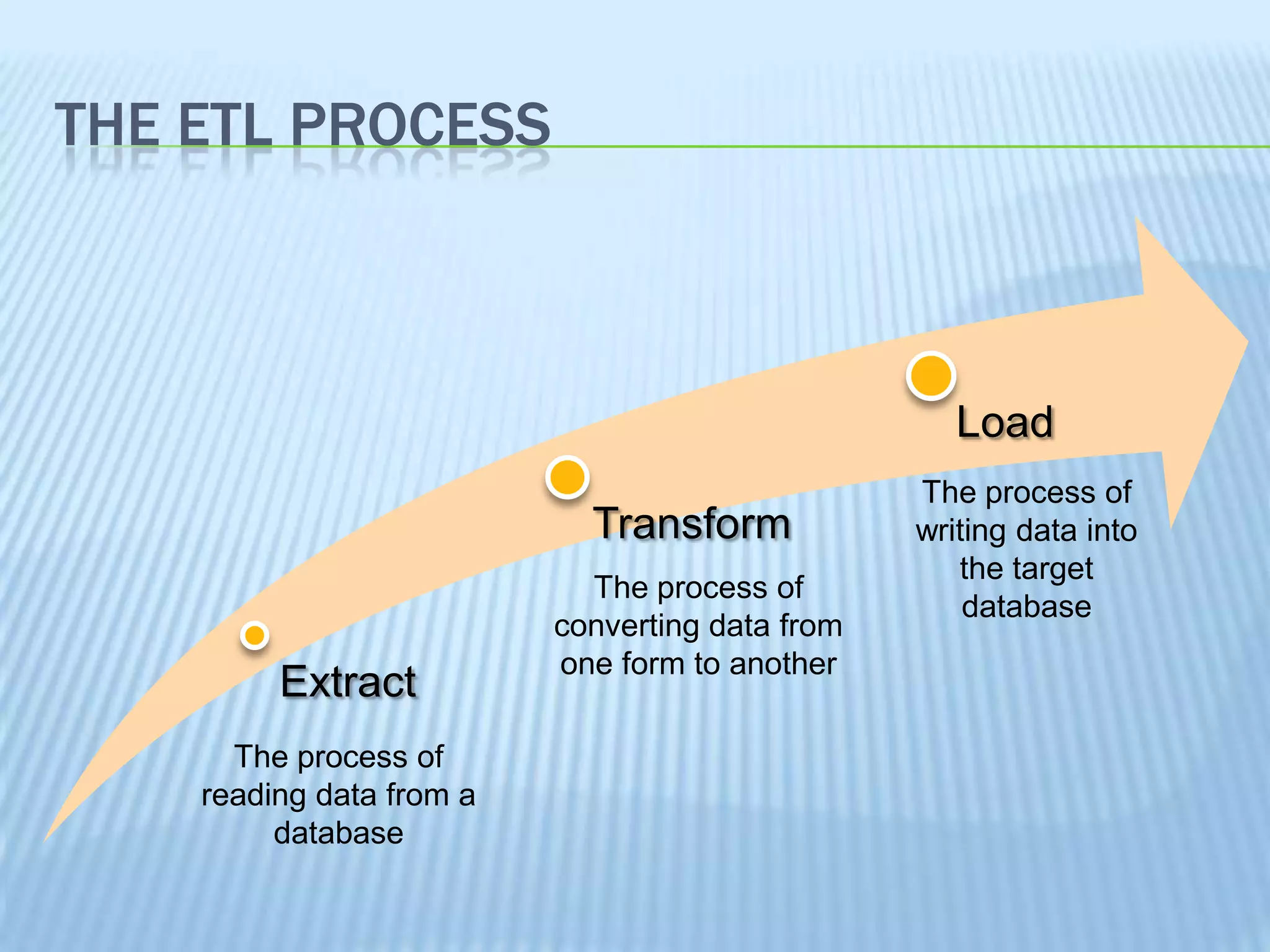
THE ETL PROCESS


                                                    Load
                                                 The process of
                            Transform            writing data into
                                                    the target
                            The process of
                                                     database
                          converting data from
                          one form to another
         Extract
      The process of
    reading data from a
         database
EXTRACT

   Gathering the data
     Raw  data that was written directly into the disk
     Data written to flat files or relational tables from
      structured source systems
     Data can be read multiple times, if needed.

   Cleansing the data
     Eliminateduplicates or fragmented data
     Exclude unwanted / unneeded information
TRANSFORM

 Preparing the data to be housed in the data
  warehouse.
 Converting the extracted data
     Using  rules and lookup tables
     Combining data

     Verification/Validity checks

     Standardization
LOAD

   Storing the transformed data in the data
    warehouse.

   Batch/Real-time processing

   Can follow star schema and snowflake
    schema
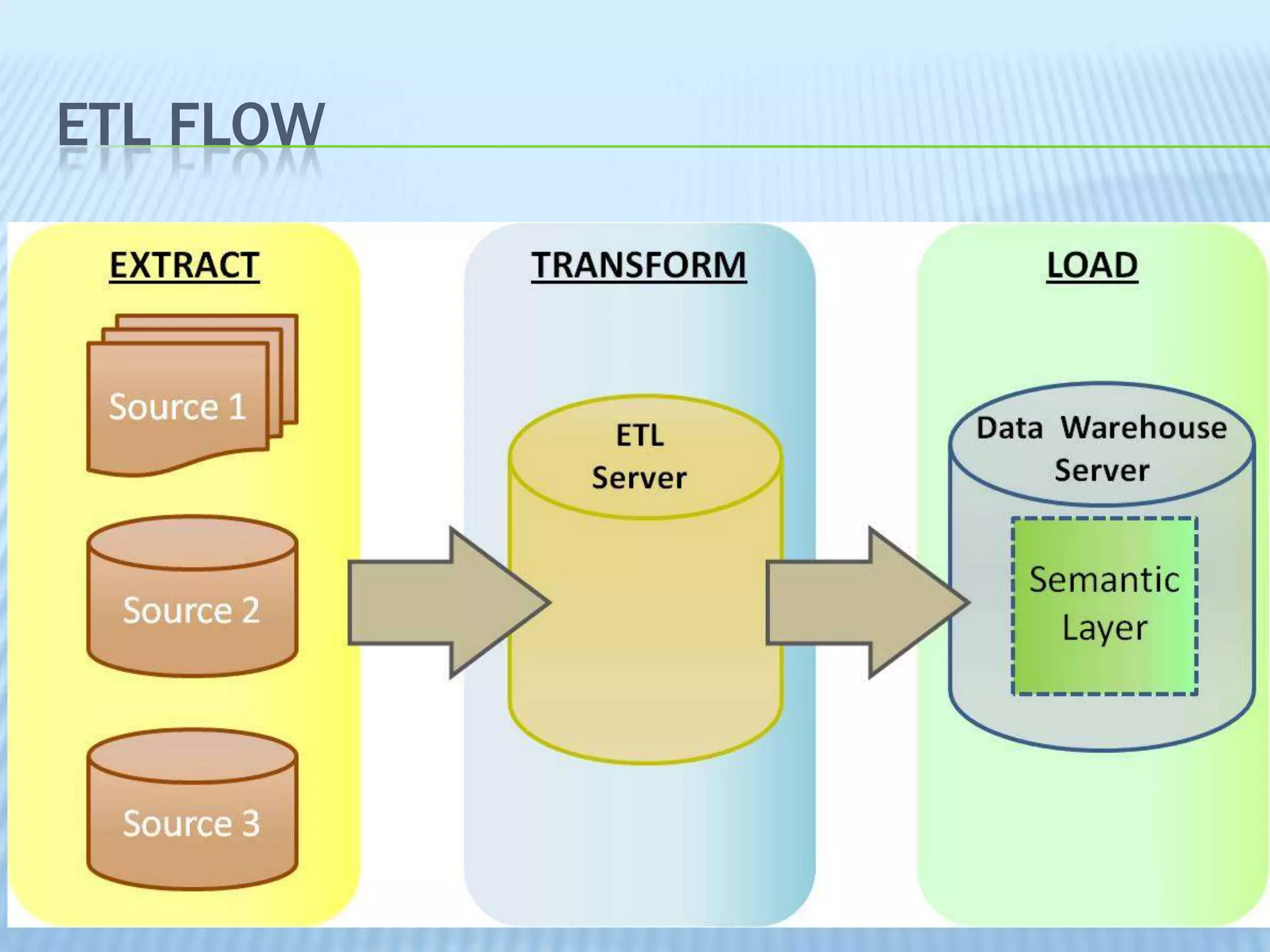
ETL FLOW
ADVANTAGE OF ETL TOOL
 Simple, faster and cheaper development
 Most ETL tools provide a metadata
  repository, synchronizing metadata from
  various sources.
 Most ETL tools deliver good performance,
  even for very large dataset.
 Most ETL tools provide impact analysis tools
  for any proposed schema changes.
 Most ETL tools have built-in connectors for
  all the major RDBMS systems
ADVANTAGE OF ETL TOOL
 Most ETL tools allow reuse of the existing
  complex programs.
 Several ETL tools offers visual Development
  Environment.
 Most ETL tools offers built-in scheduler
  sequencers and documentation.
 Several ETL tools offer various performance
  optimization options such as (parallel
  processing, complex load balancing etc)
POPULAR ETL TOOLS

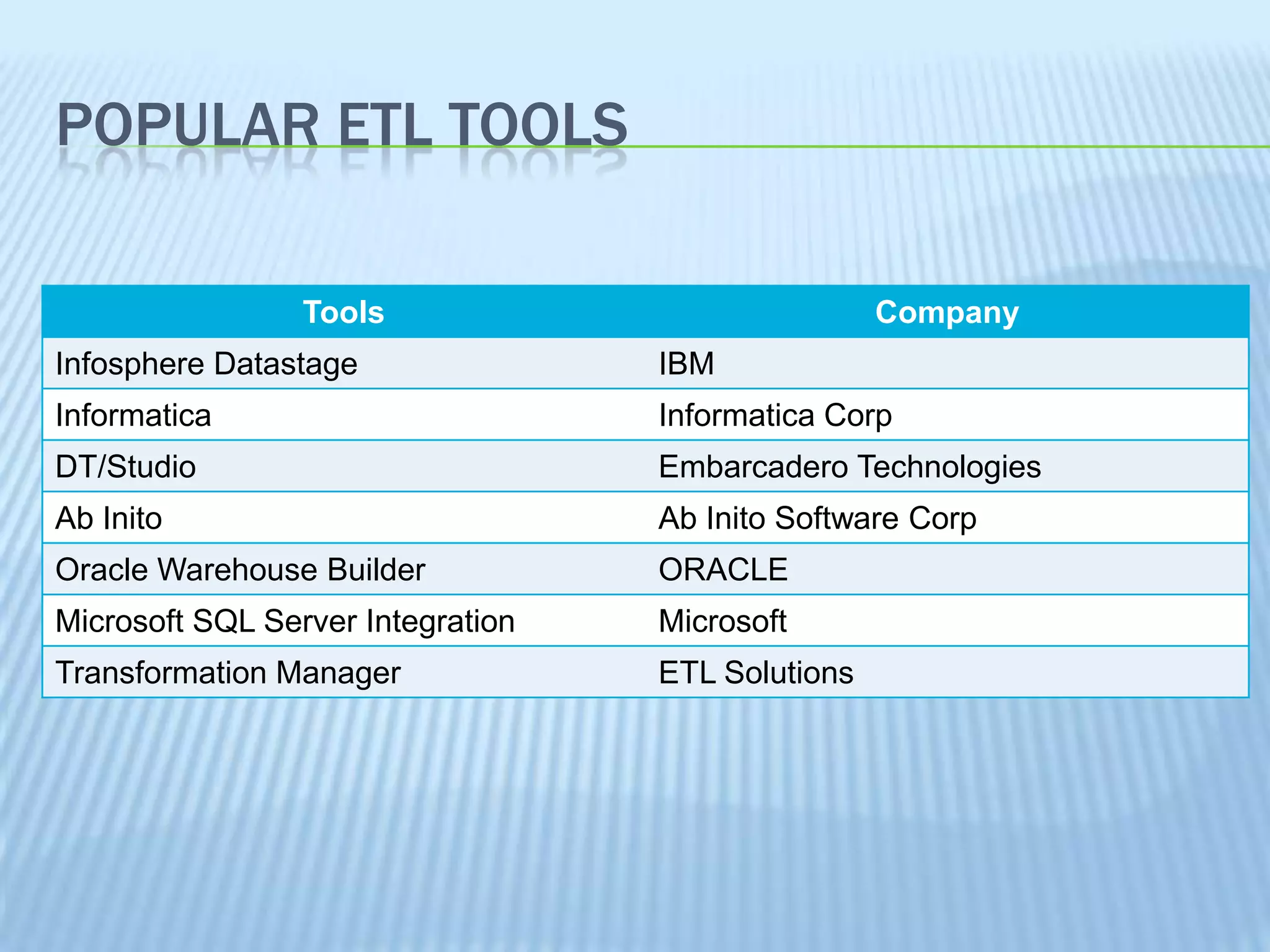
                 Tools                             Company
Infosphere Datastage               IBM
Informatica                        Informatica Corp
DT/Studio                          Embarcadero Technologies
Ab Inito                           Ab Inito Software Corp
Oracle Warehouse Builder           ORACLE
Microsoft SQL Server Integration   Microsoft
Transformation Manager             ETL Solutions
THANK YOU

What is ETL?

  • 1.
    WHAT IS ETL? “EXTRACT… TRANSFORM … LOAD” Eng. Ismail El Gayar Software Engineer
  • 2.
    WHY ETL?  Companiesneed a way to analyze their data for critical business decisions.  Transactional Database can’t answer complex business questions.  A data warehouse provide a common data repository.  ETL provide a method of moving the data from various source into a data warehouse.
  • 3.
    ETL CONCEPT  ACompany data may be scattered in different locations and in different formats.  ETL Allows you to:  Migrate the data into a data warehouse.  Convert the various formats and types to adhere to one consistent system.  ETL is a predefined process for access and manipulate source data and loading it into a target database.
  • 4.
    ETL REQUIREMENTS  Any ETL Architecture must meet the following requirements:  Business Requirement  Compliance Requirement  Data Profiling  Data Security  Data Integration  Right Data at Right Time  Archiving & Uneage  Final End User Delivery Interface  Available Skills  Legacy License  Alignment with overall Enterprise Architecture
  • 5.
    THE ETL PROCESS Load The process of Transform writing data into the target The process of database converting data from one form to another Extract The process of reading data from a database
  • 6.
    EXTRACT  Gathering the data  Raw data that was written directly into the disk  Data written to flat files or relational tables from structured source systems  Data can be read multiple times, if needed.  Cleansing the data  Eliminateduplicates or fragmented data  Exclude unwanted / unneeded information
  • 7.
    TRANSFORM  Preparing thedata to be housed in the data warehouse.  Converting the extracted data  Using rules and lookup tables  Combining data  Verification/Validity checks  Standardization
  • 8.
    LOAD  Storing the transformed data in the data warehouse.  Batch/Real-time processing  Can follow star schema and snowflake schema
  • 9.
  • 10.
    ADVANTAGE OF ETLTOOL  Simple, faster and cheaper development  Most ETL tools provide a metadata repository, synchronizing metadata from various sources.  Most ETL tools deliver good performance, even for very large dataset.  Most ETL tools provide impact analysis tools for any proposed schema changes.  Most ETL tools have built-in connectors for all the major RDBMS systems
  • 11.
    ADVANTAGE OF ETLTOOL  Most ETL tools allow reuse of the existing complex programs.  Several ETL tools offers visual Development Environment.  Most ETL tools offers built-in scheduler sequencers and documentation.  Several ETL tools offer various performance optimization options such as (parallel processing, complex load balancing etc)
  • 12.
    POPULAR ETL TOOLS Tools Company Infosphere Datastage IBM Informatica Informatica Corp DT/Studio Embarcadero Technologies Ab Inito Ab Inito Software Corp Oracle Warehouse Builder ORACLE Microsoft SQL Server Integration Microsoft Transformation Manager ETL Solutions
  • 13.