Presented to:
Sir.Umair
Presented by:
Achievers….
Anam Naveed
Ahmad Hassan
Mavra Siddiq
Arslan Aslam
Topic….
Electronic Commerce
(E-Commerce)
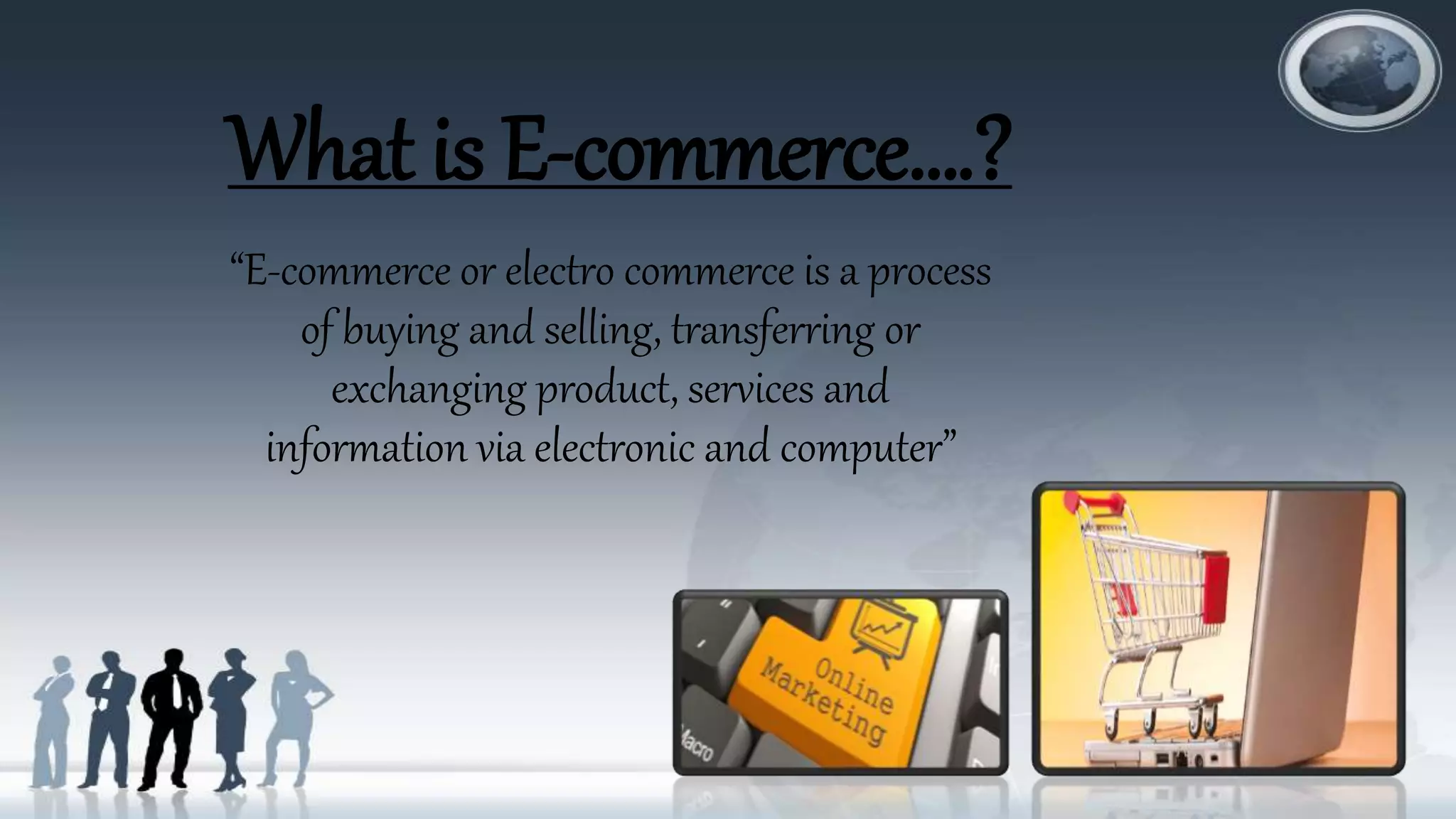
What is E-commerce….?
“E-commerce or electro commerce is a process
of buying and selling, transferring or
exchanging product, services and
information via electronic and computer”
History….
 Ecommerce became possible in 1991.
 Ecommerce is began to advance in 1994.
 In 2000 business companies represent their services in World wide web.
 By the end of 2007 the Ecommerce sales increase.
Ecommerce Today….
 In today’s electronic era, everyone is wired with technology.
 In an online market that’s getting more competitive every the day for just
about any niche.
 You might have a great product inventory and offering products at
competitive prices.
entire world is within their reach thanks to the internet.)
EXAMPLE….
• www.Amazon.com
• www.OLX.com
• www.Quicker.com
• www.Big bazar.com
• www.Expedia.com
• www.Hotels.com
Why E-commerce is Different….?
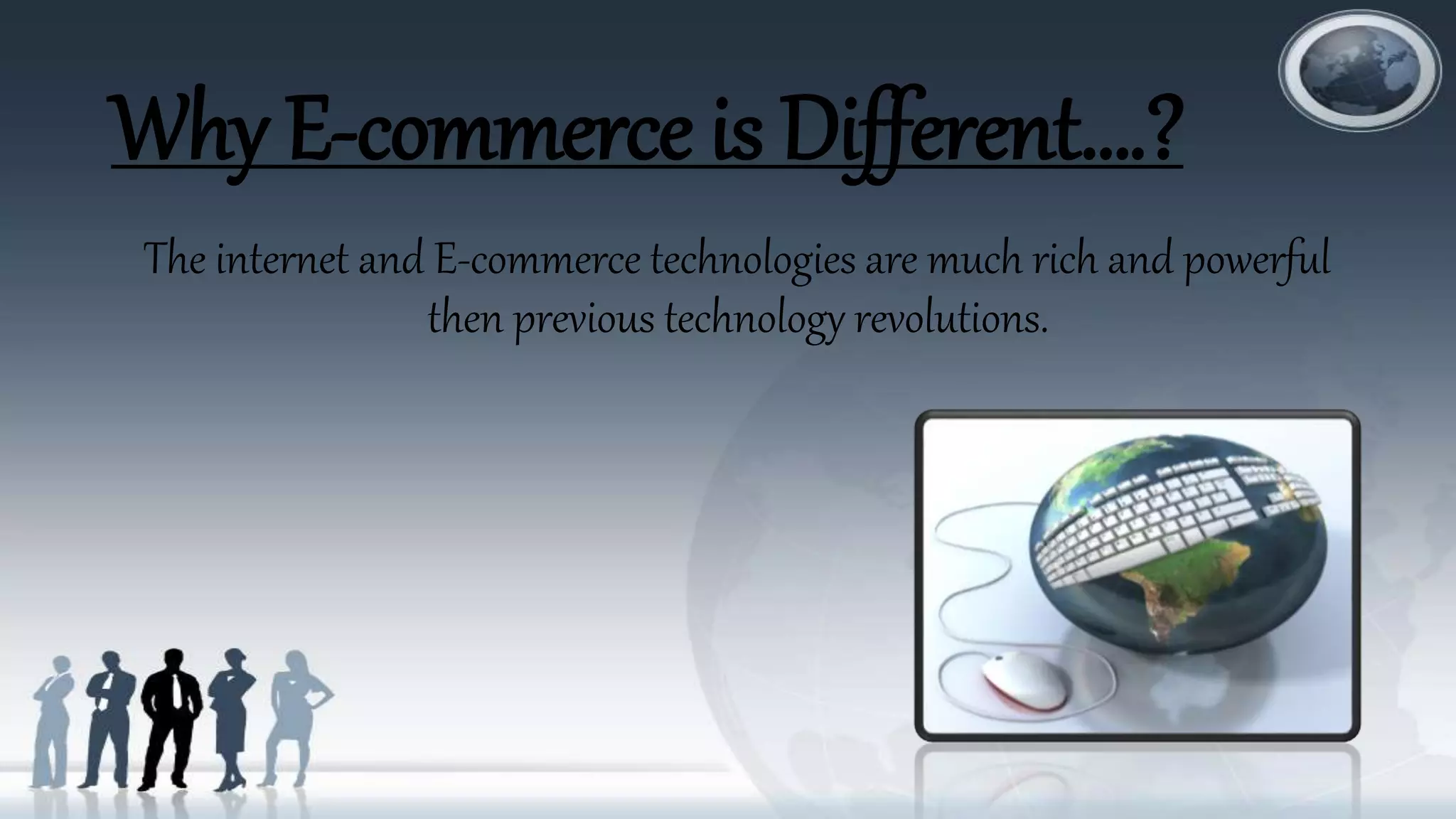
The internet and E-commerce technologies are much rich and powerful
then previous technology revolutions.
Differentiating points of E-commerce….
•Ubiquity
It is available just about everywhere and all
time.
•Global Research
The potential market size is roughly equal
to the online population of the world.
Differentiating points of E-commerce….
•Universal Standards
The technical standards of the internet and
conducting E-commerce.
•Richness
Information that is complex and content
rich can be delivered without sacrificing reach.
Differentiating points of E-commerce….
•Interactivity
E-commerce technologies allow two-way
communication between the merchant and the
consumer.
•Information Density
The total amount and quality of information
available to all market participants.
Differentiating points of E-commerce….
•Personalization/ Customization
E-commerce technologies enable
merchants to target their marketing messages to a
person’s name, interest, and the past purchase.
•Social Technology
User content generation and social networking
technologies.
Key concept in E-commerce….
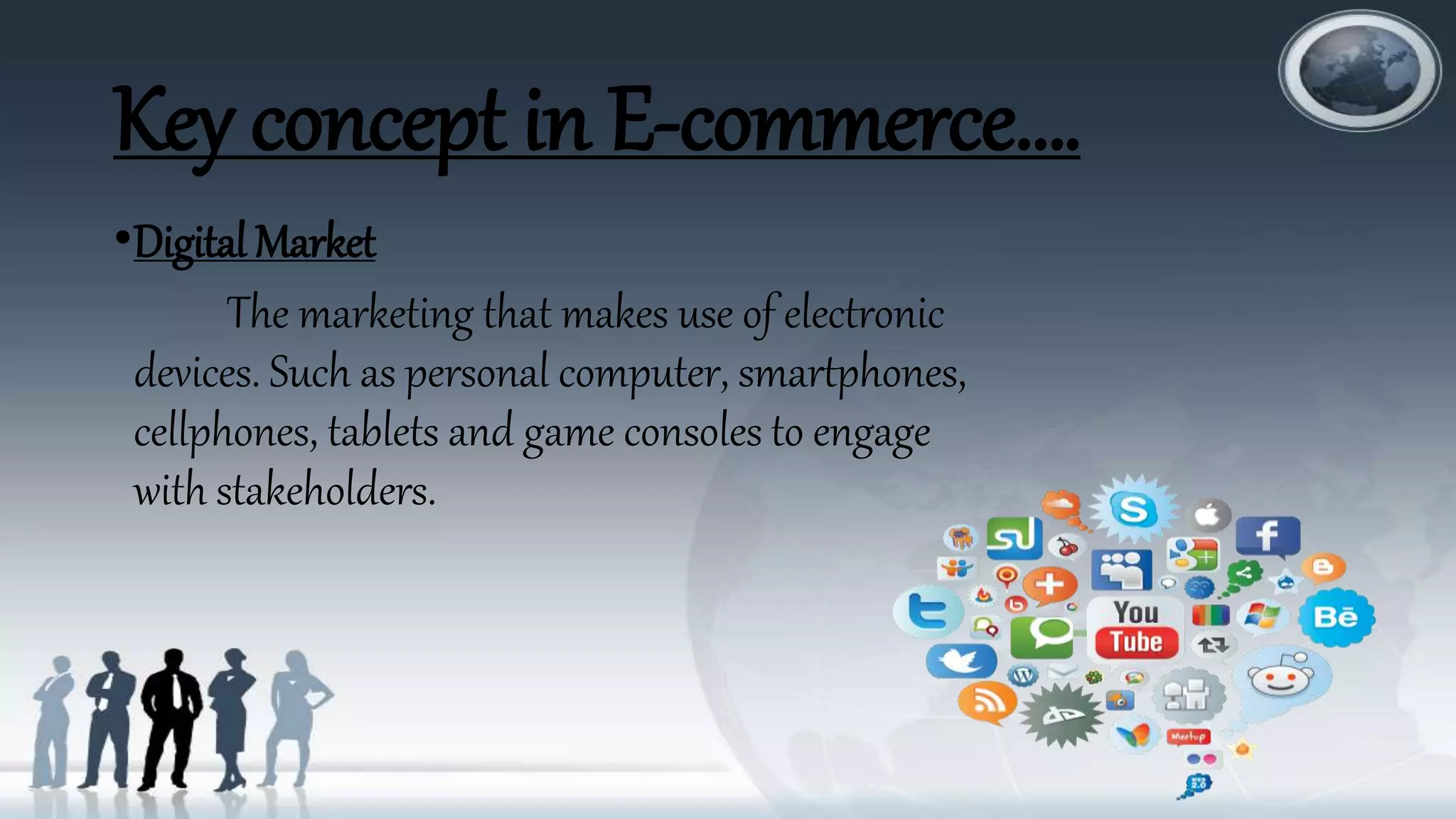
•Digital Market
The marketing that makes use of electronic
devices. Such as personal computer, smartphones,
cellphones, tablets and game consoles to engage
with stakeholders.
EXAMPLE….
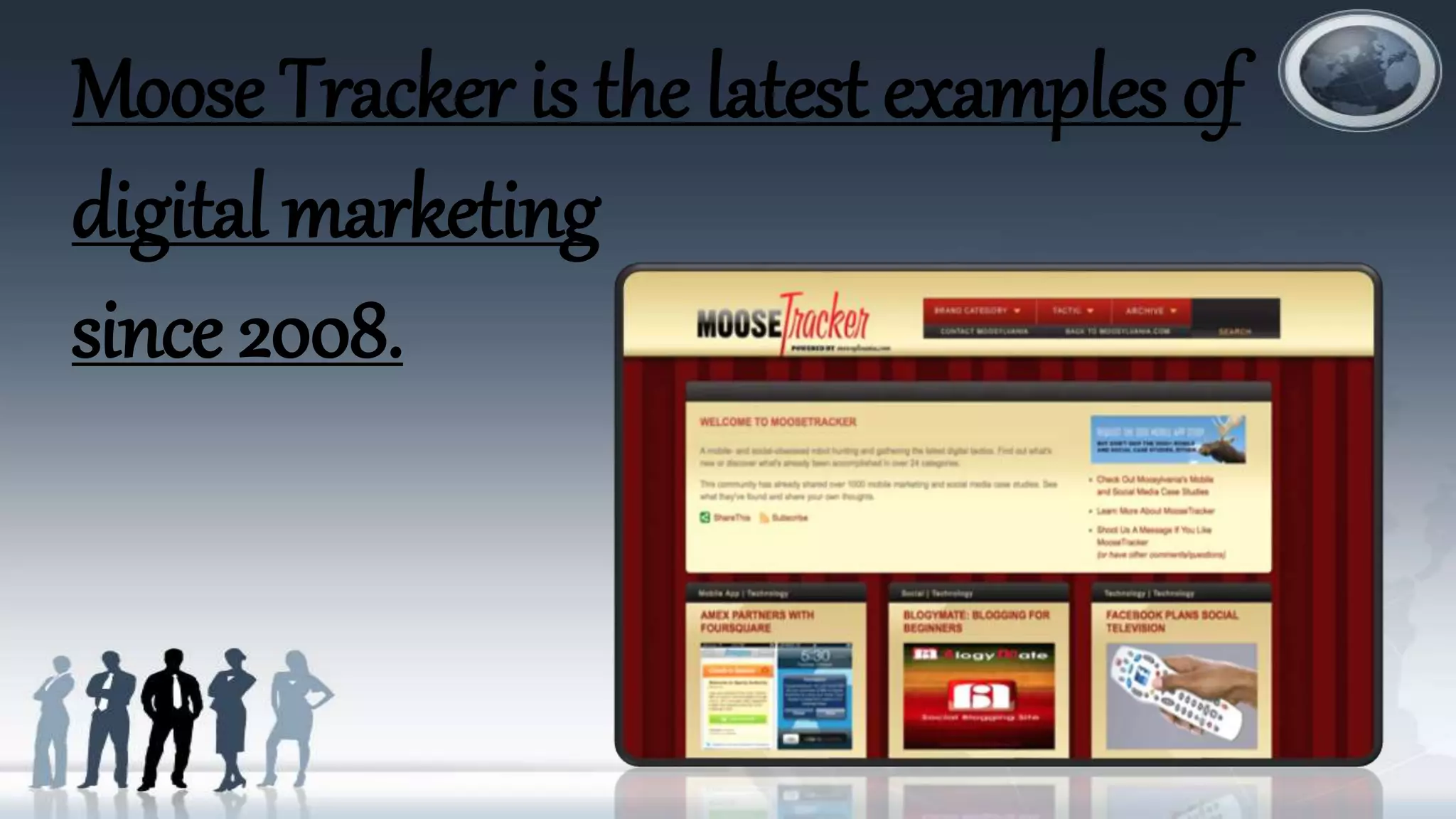
Moose Tracker the Moosylvania initiative
keeping pace with the latest brand activity in
the digital arena.
Moose Tracker is the latest examples of
digital marketing
since 2008.
Key concept in E-commerce….
 Digital goods
Digital goods such as music, video,
software and books can be delivers over a
digital network.
EXAMPLE….
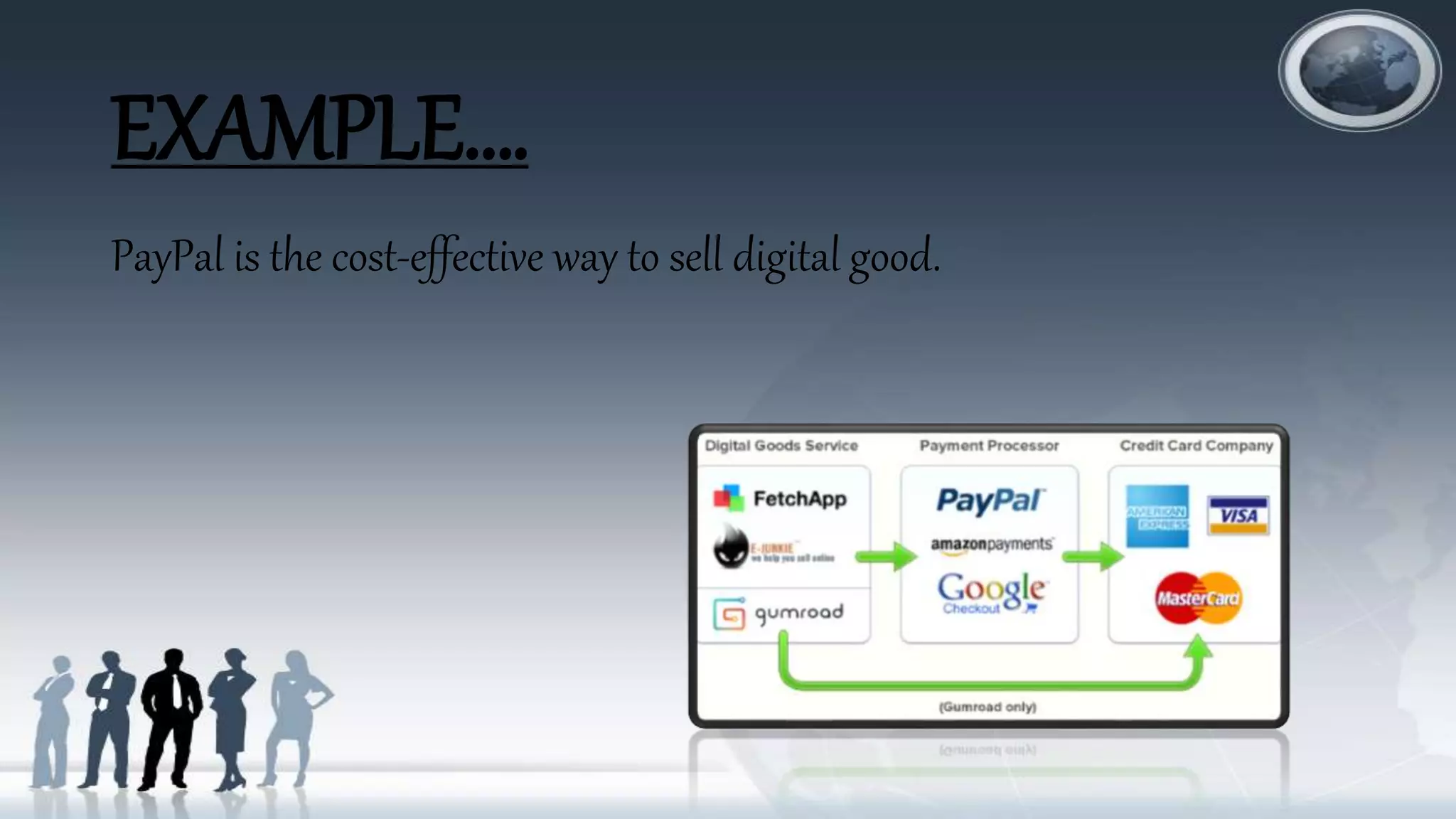
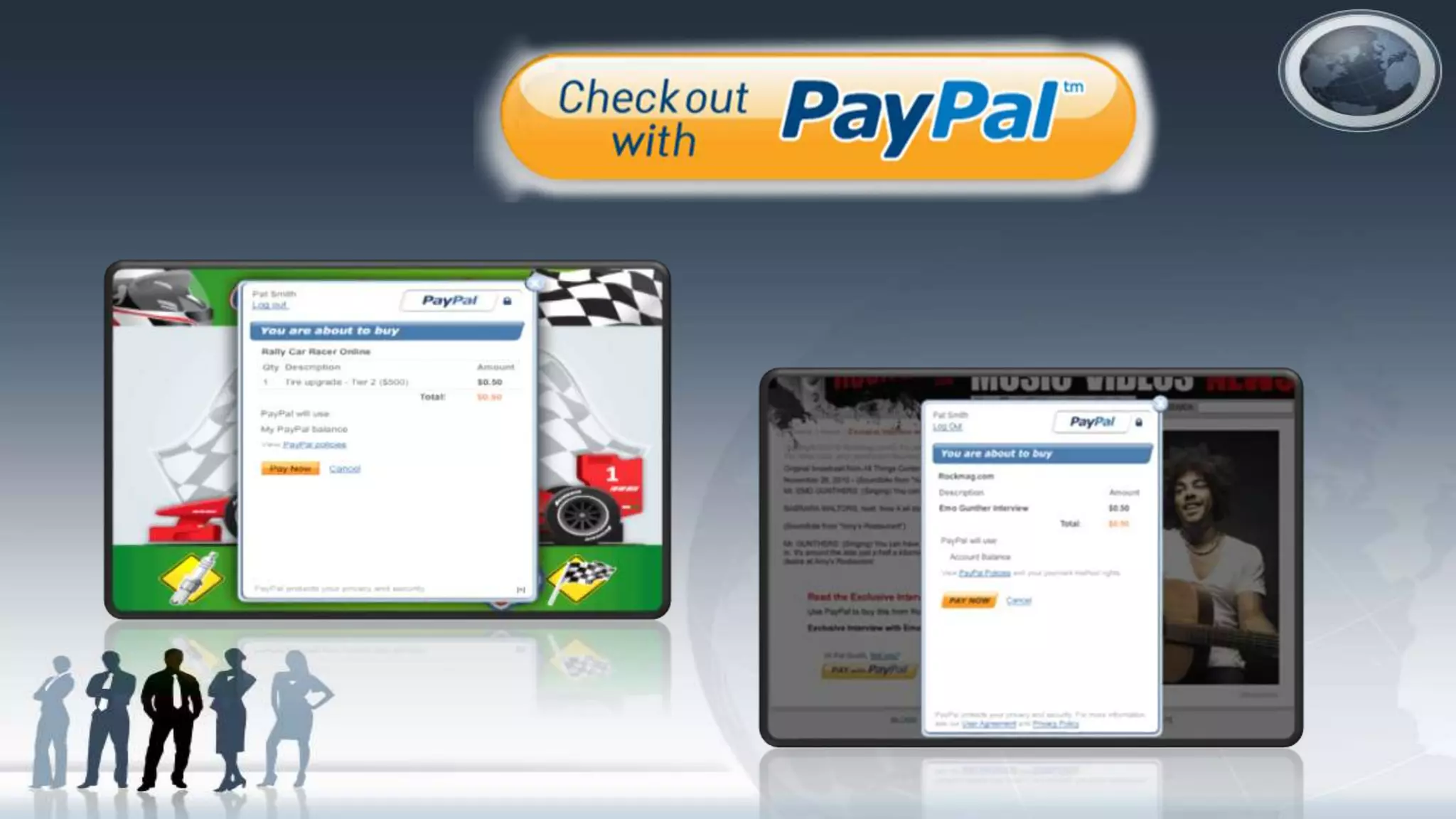
PayPal is the cost-effective way to sell digital good.
Afia….
•E-commerce Business Model
•E-Commerce Revenue Model
E-Commerce
Business Models!
Concept….
Business Model:
Set of planned activities designed to result in profit in
marketplace.
Business plan:
A document that describes a firm’s business model.
E-commerce business model:
Leverages unique qualities of internet and web.
Earlier Model….
The bait and hook business model was introduced in the early 20thcentury.
Earlier Model….
This involves offering a basic product at a very low cost, often at a
loss (the "bait"), then charging compensatory recurring amounts
for refills or associated products or services (the "hook").
• Razor (bait) and blades (hook);
• Cell phones (bait) and air time (hook); computer printers (bait) and ink cartridge
refills (hook);
• Cameras (bait) and prints (hook)
Examples….
E-commerce business model….
• Today, the type of business models might depend on how technology is used.
• These are E-commerce business Models:
• Portal
• E- Tailer
• Content Provider
• Market Creator
• Service Provider
• Community Provider
Portal Model….
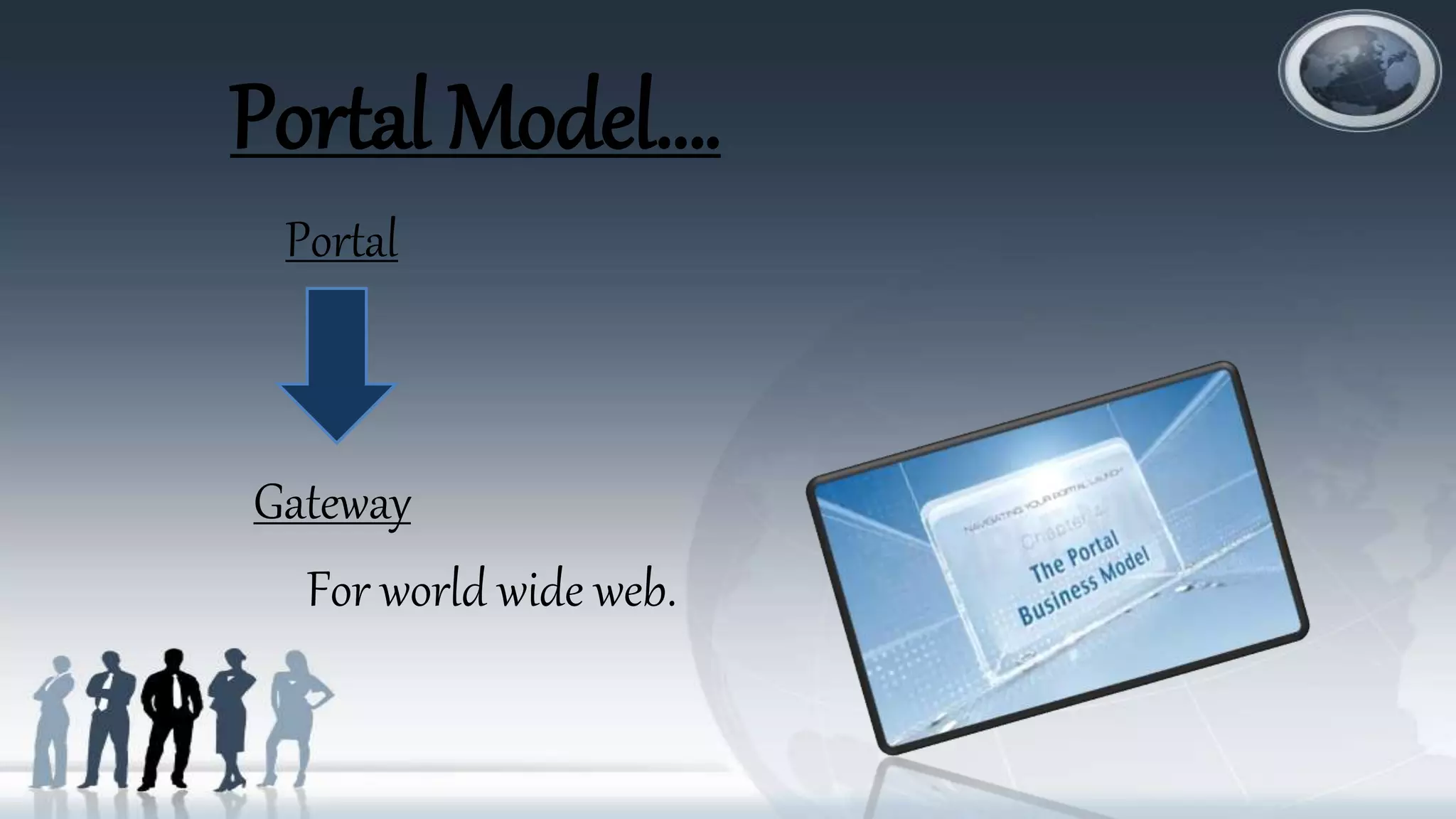
Portal
Gateway
For world wide web.
Portal Model….
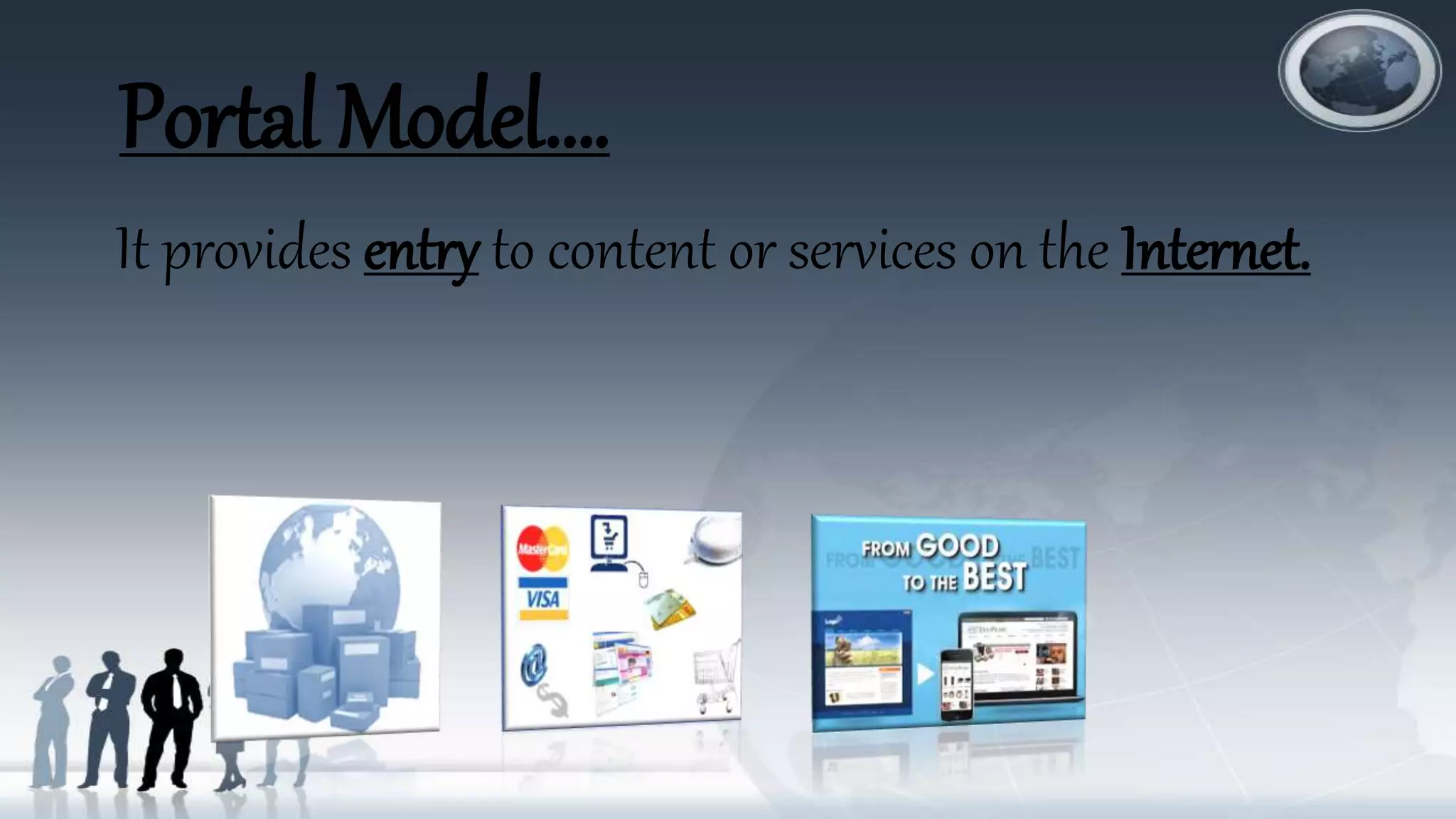
It provides entry to content or services on the Internet.
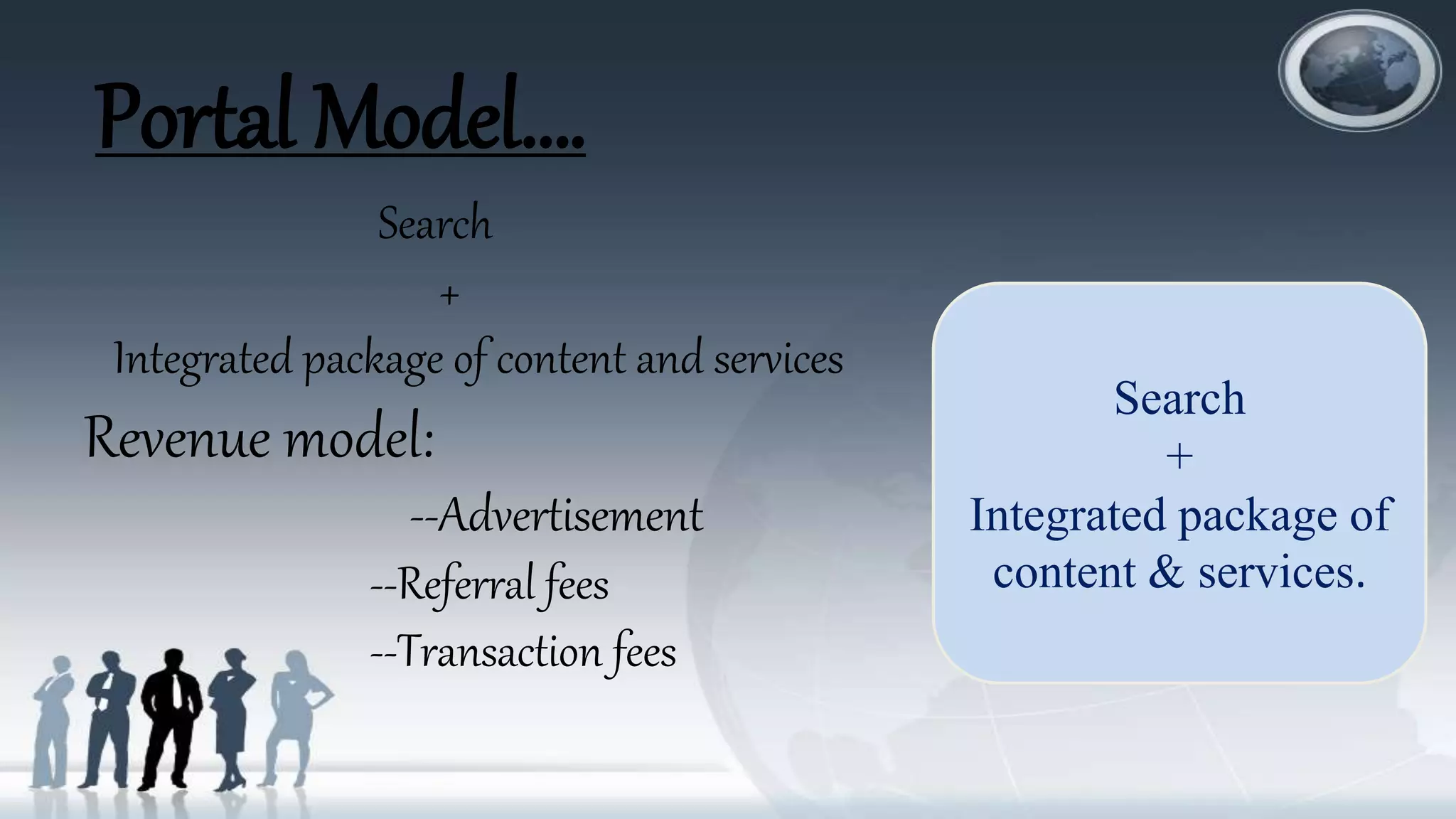
Portal Model….
Search
+
Integrated package of content and services
Revenue model:
--Advertisement
--Referral fees
--Transaction fees
Search
+
Integrated package of
content & services.
Portal Model….
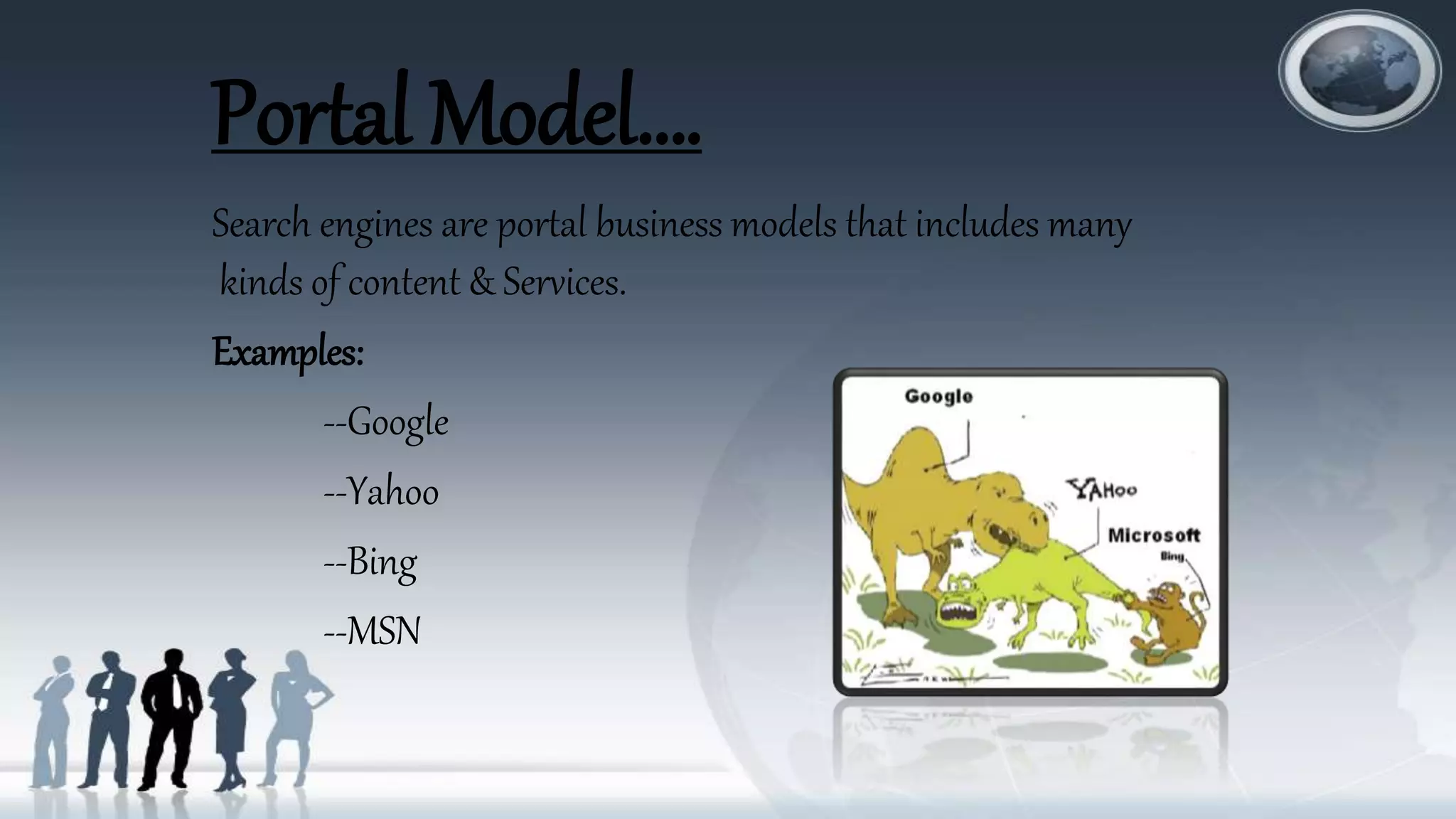
Search engines are portal business models that includes many
kinds of content & Services.
Examples:
--Google
--Yahoo
--Bing
--MSN
E- tailer….
Online versions of traditional retailer.
“ Sells physical products directly
to consumers or individual
business”
E- tailer….
Revenue model:
Sales
Value Proposition:
Low-cost shopping 24/7
E- tailer
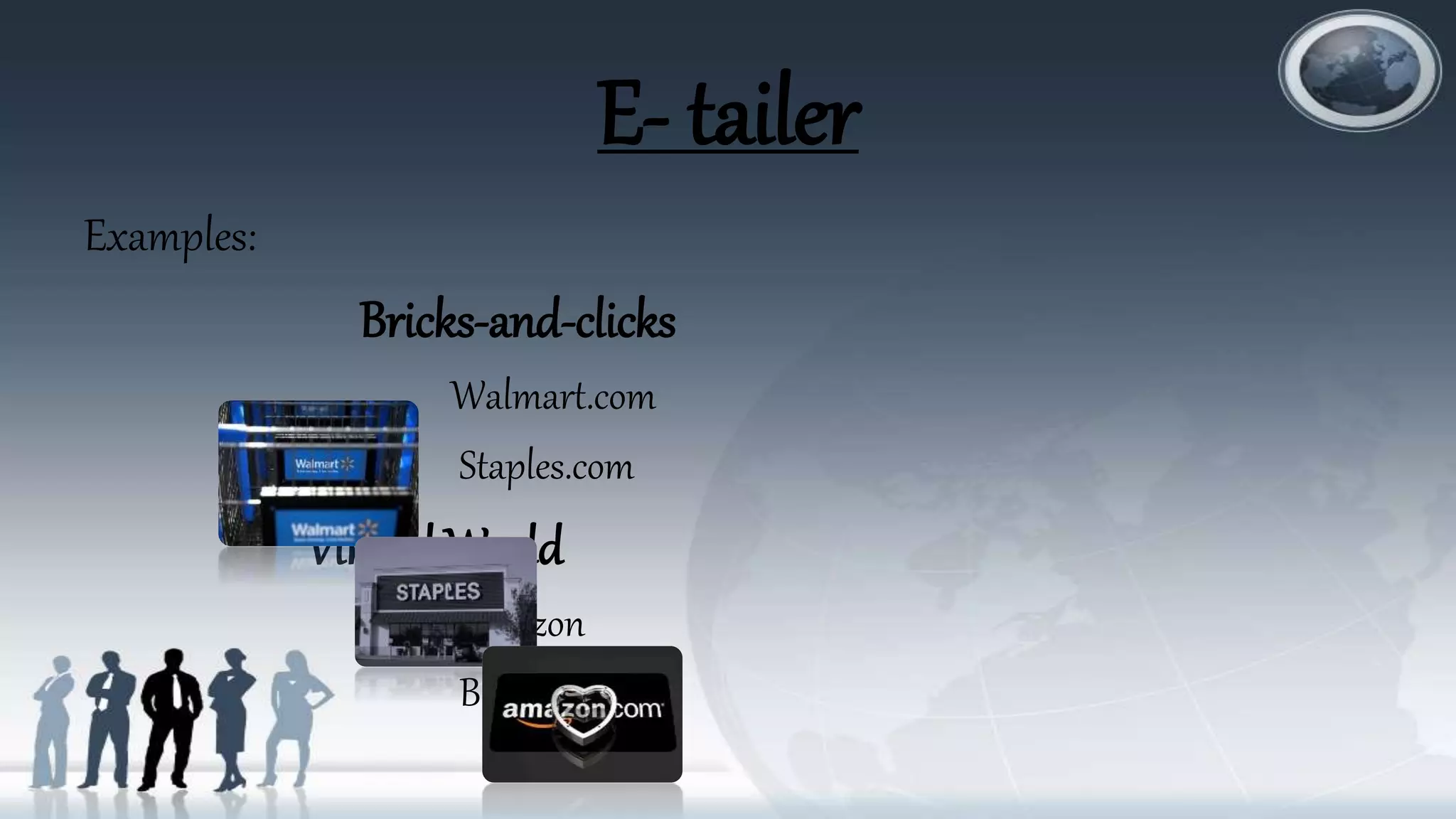
Examples:
Bricks-and-clicks
Walmart.com
Staples.com
Virtual World
Amazon
BlueNile.com
Content Provider….
Content
“ Intellectual Property”
All forms of human expression that can be put into tangible form e.g.CDs,
DVDs etc.
Content Provider….
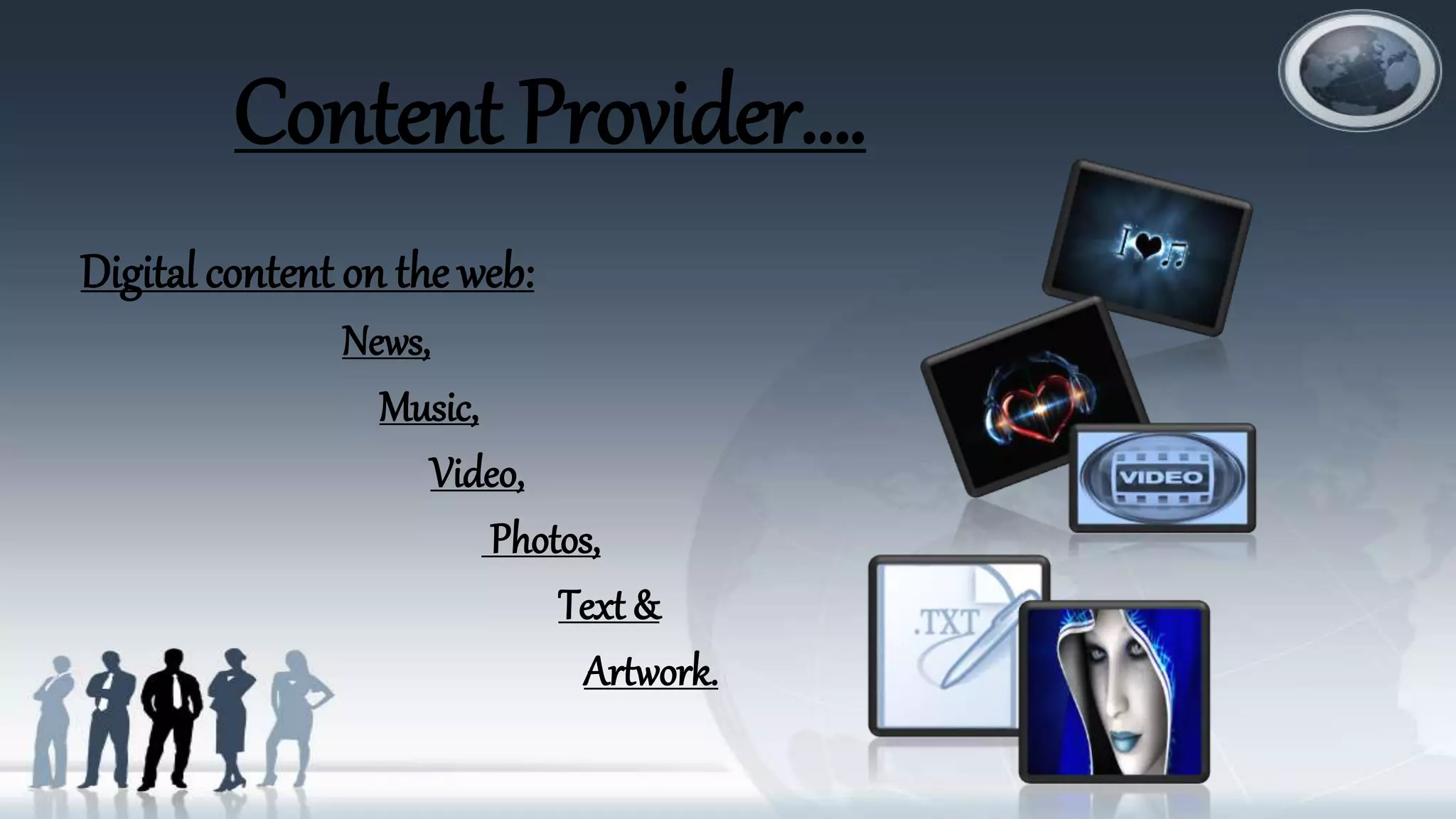
Digital content on the web:
News,
Music,
Video,
Photos,
Text &
Artwork.
Content Provider….
Value Proposition:
Consumer can find wide range of content on-line such as Video.
Music, photos etc.
Revenue model:
• Pay per download
• Affiliate referral fees
Example….
• Games.com
• iTunes.com
• GettyImages.com
Market creator….
• Create digital environment where buyer end seller can meet, & establish prices
form those products.
• Can serve consumers or B-to-BBusinesses.
Revenue model
Transaction fees
Market creator….
Examples:
• eBay
• Priceline.com
• ChemConnect.com
Service Provider
Web 2.0 applications(photo-sharing, video-sharing)
Examples:
Google Apps
Photobuket.com
Xdrive.com
E- Tailor sells On-line
&
Services Provider provides service
on-line.
Community Provider….
Provide “Online environment” where people with similar interests
can transacts, share content and communicate.
Community Provider….
Revenue Model:
Typically hybrid
(Combining advertising subscription, sales, transaction fees,
affiliate fees)
Examples:
-Face book
-MySpace
-Twitter
E Commerce
Revenue models…
E Commerce Revenue models
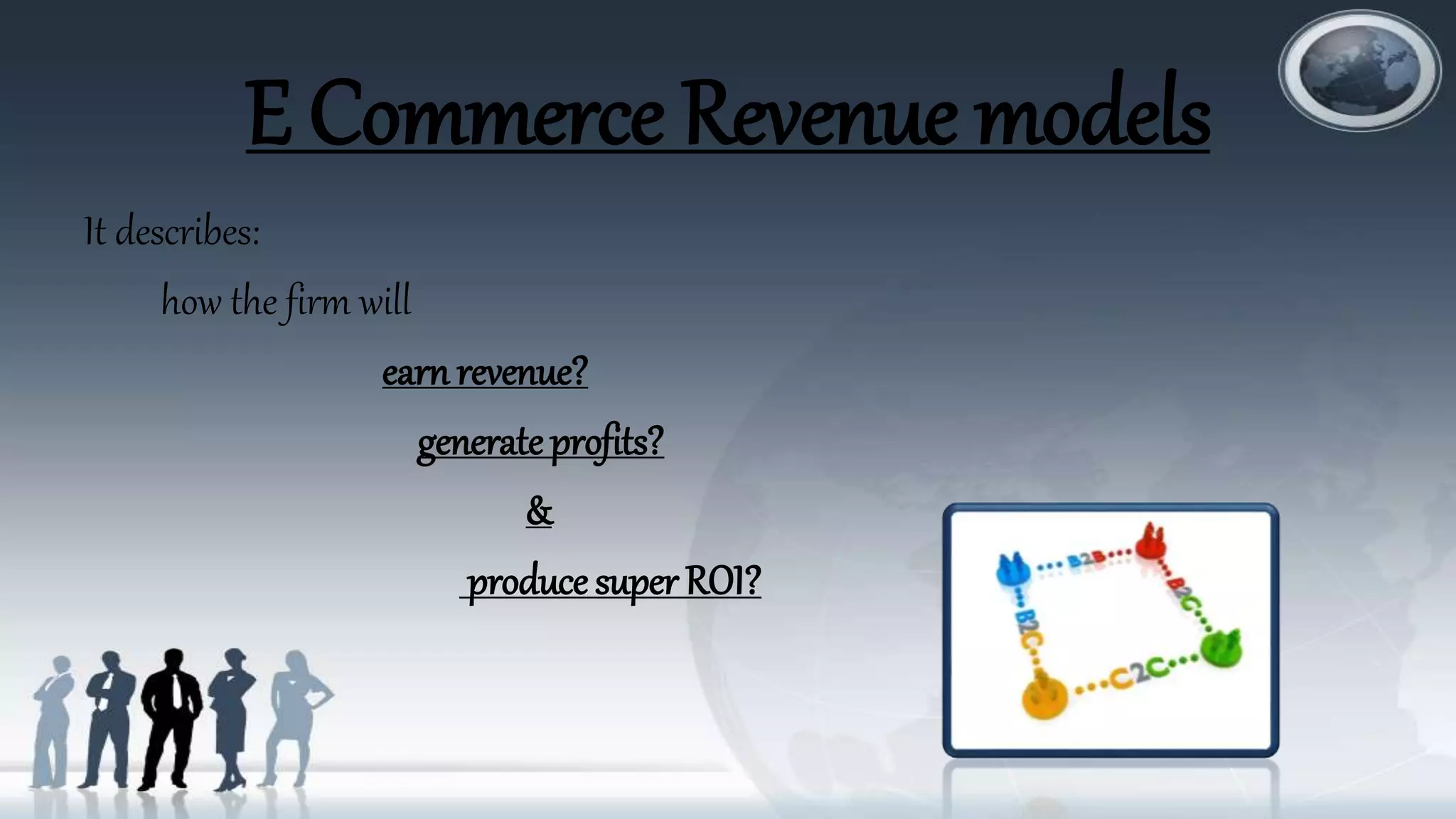
It describes:
how the firm will
earn revenue?
generate profits?
&
produce super ROI?
E Commerce Revenue models….
• Sales Revenue Model
• Advertising Revenue Model
• Subscription Revenue Model
• Transaction Fee Revenue Model
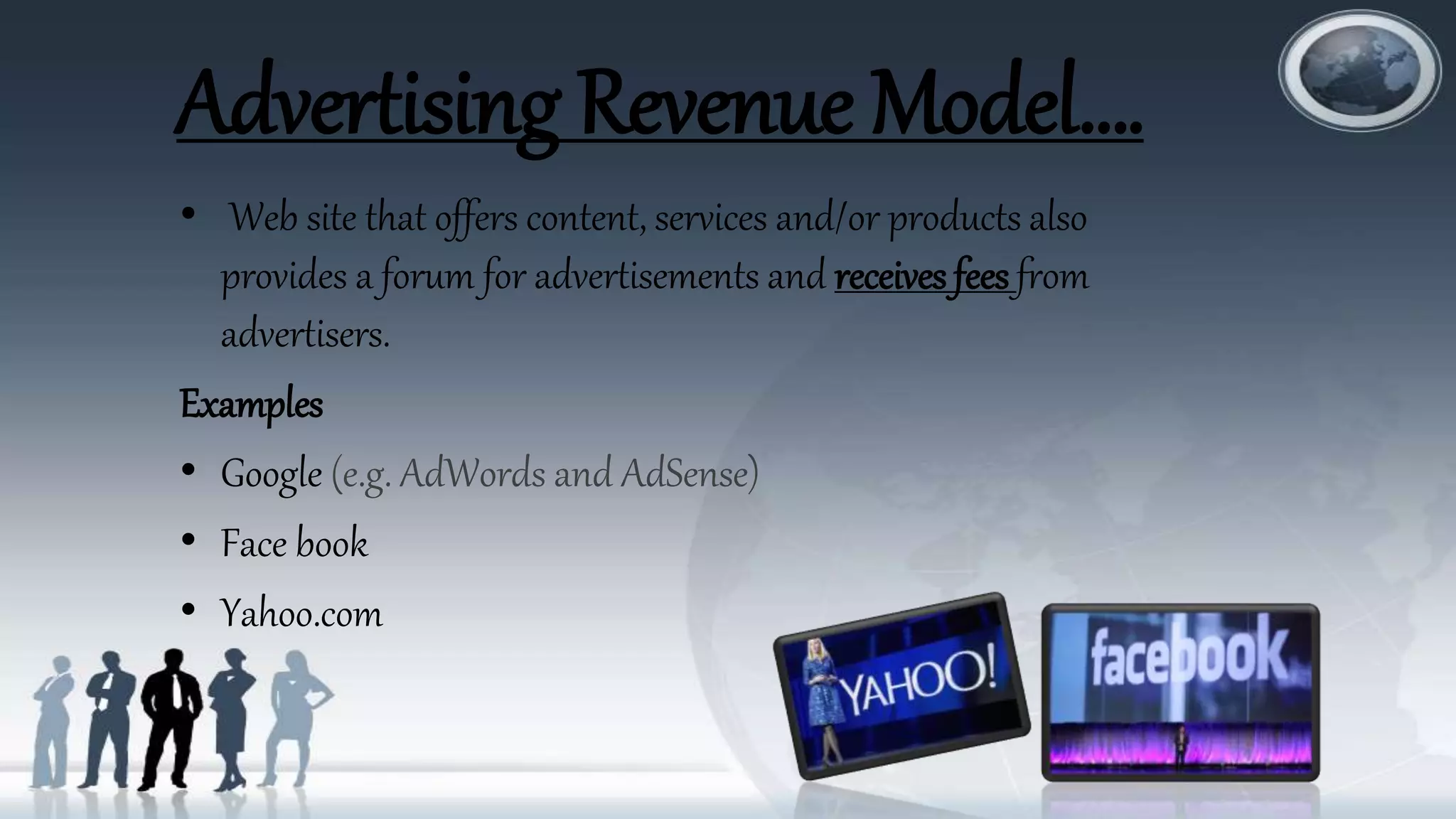
Advertising Revenue Model….
• Web site that offers content, services and/or products also
provides a forum for advertisements and receives fees from
advertisers.
Examples
• Google (e.g. AdWords and AdSense)
• Face book
• Yahoo.com
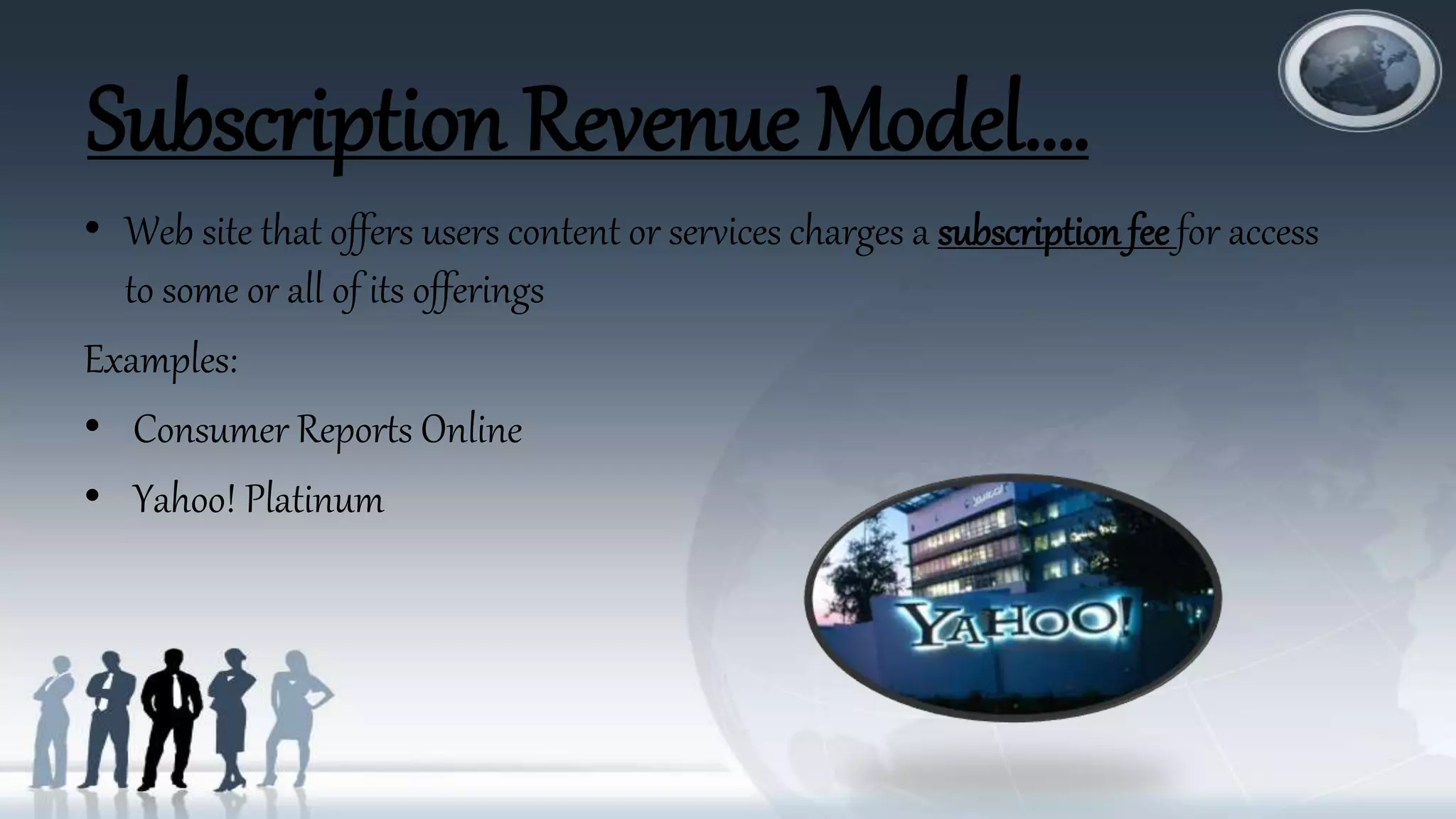
Subscription Revenue Model….
• Web site that offers users content or services charges a subscription fee for access
to some or all of its offerings
Examples:
• Consumer Reports Online
• Yahoo! Platinum
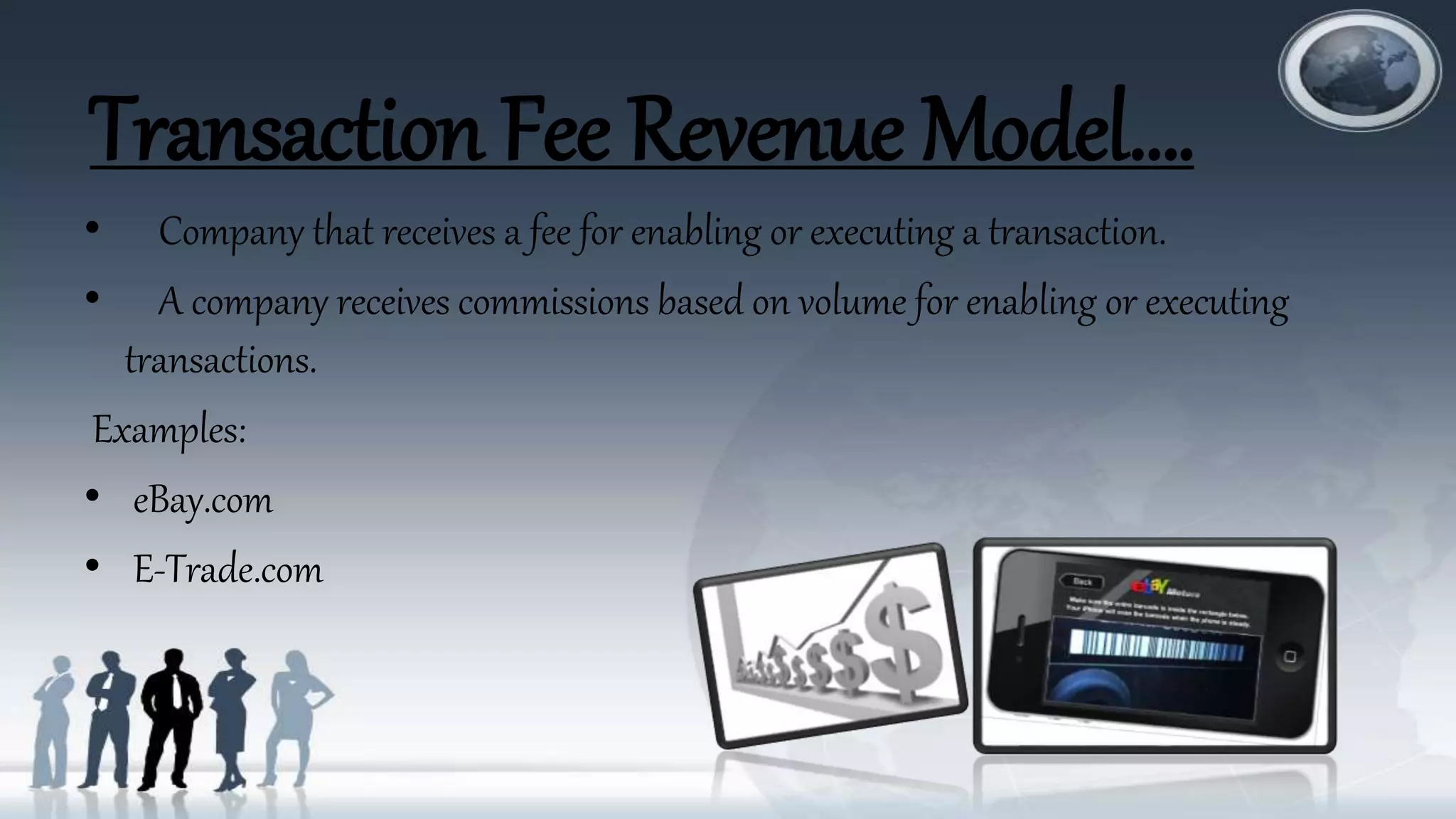
Transaction Fee Revenue Model….
• Company that receives a fee for enabling or executing a transaction.
• A company receives commissions based on volume for enabling or executing
transactions.
Examples:
• eBay.com
• E-Trade.com
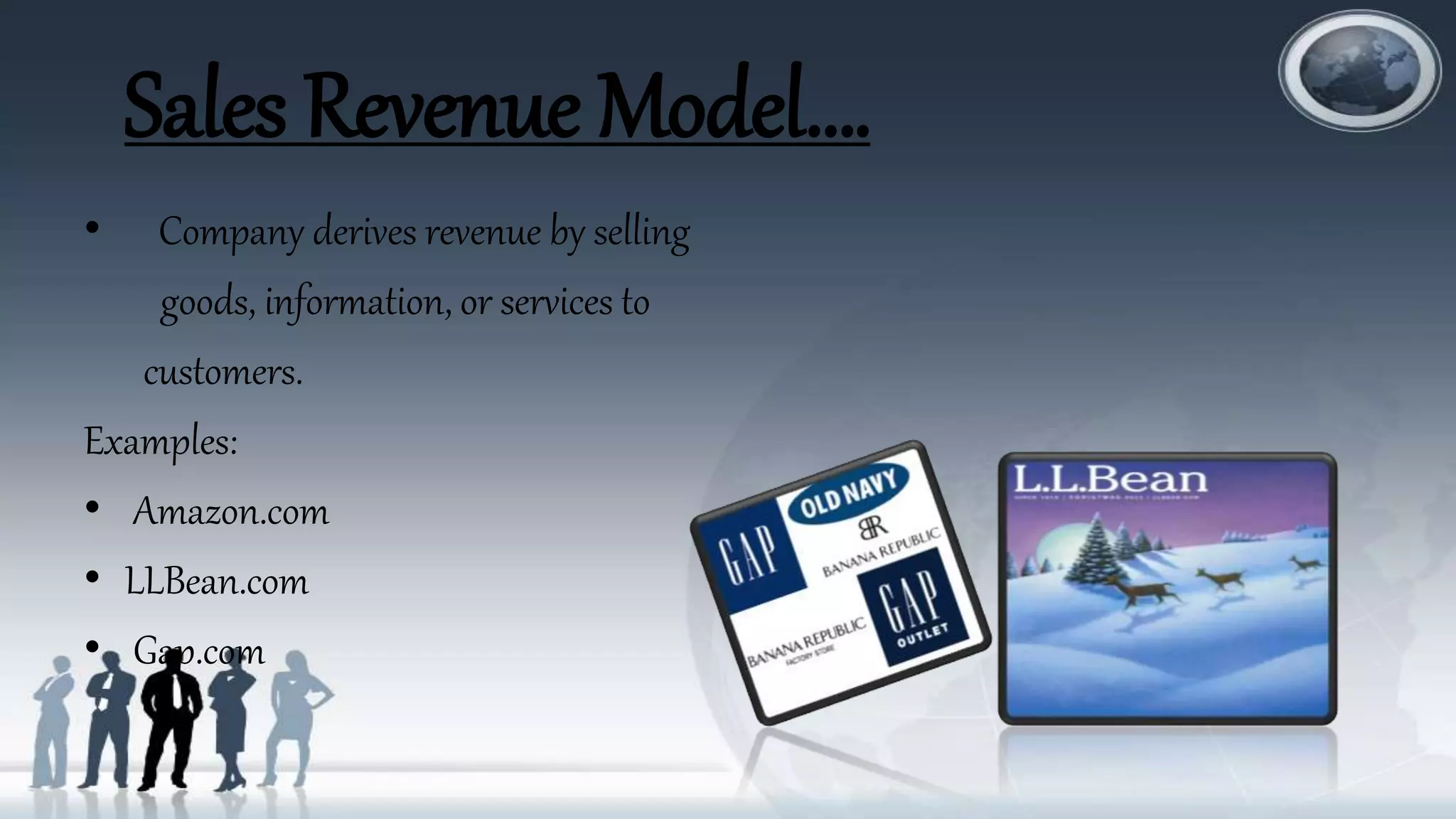
Sales Revenue Model….
• Company derives revenue by selling
goods, information, or services to
customers.
Examples:
• Amazon.com
• LLBean.com
• Gap.com
Alveena….
Mobile Commerce
(M-Commerce)
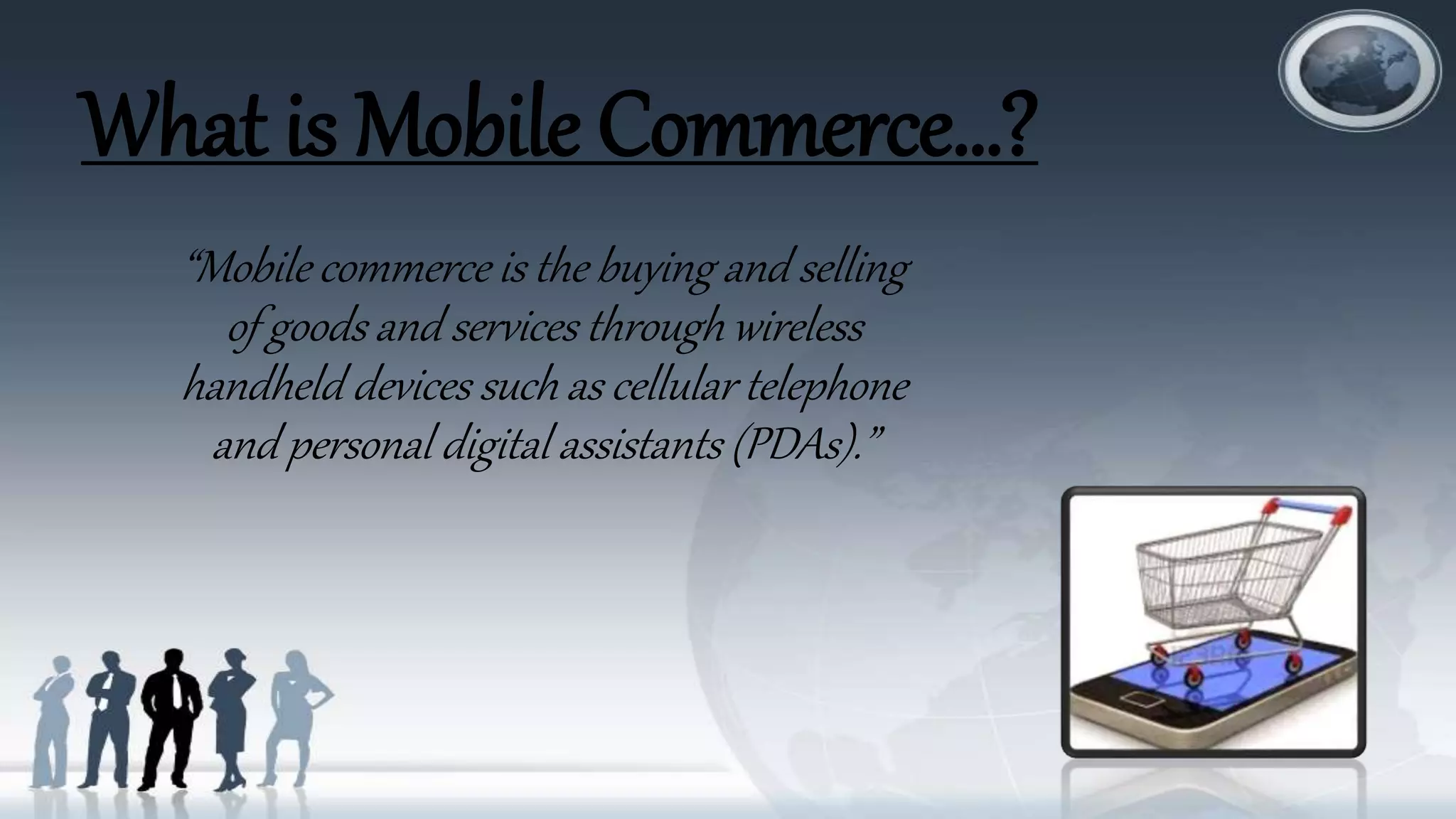
What is Mobile Commerce…?
“Mobile commerce is the buying and selling
of goods and services through wireless
handheld devices such as cellular telephone
and personal digital assistants (PDAs).”
History….
 Mobile services were first delivered in 1997.
 The first mobile phone-based banking service was launched in 1997 by Merida bank of
Finland also using sums'.
 In 1998 the first sales of digital content as downloads to mobile phones.
 The major national commercial platforms for mobile commerce were launched in 1999.
 The first book cover mobile commerce was Tome Honan's m-profits in 2002.
 The goggle in September 2011 and the m-commerce joint venture formed in June 2011.
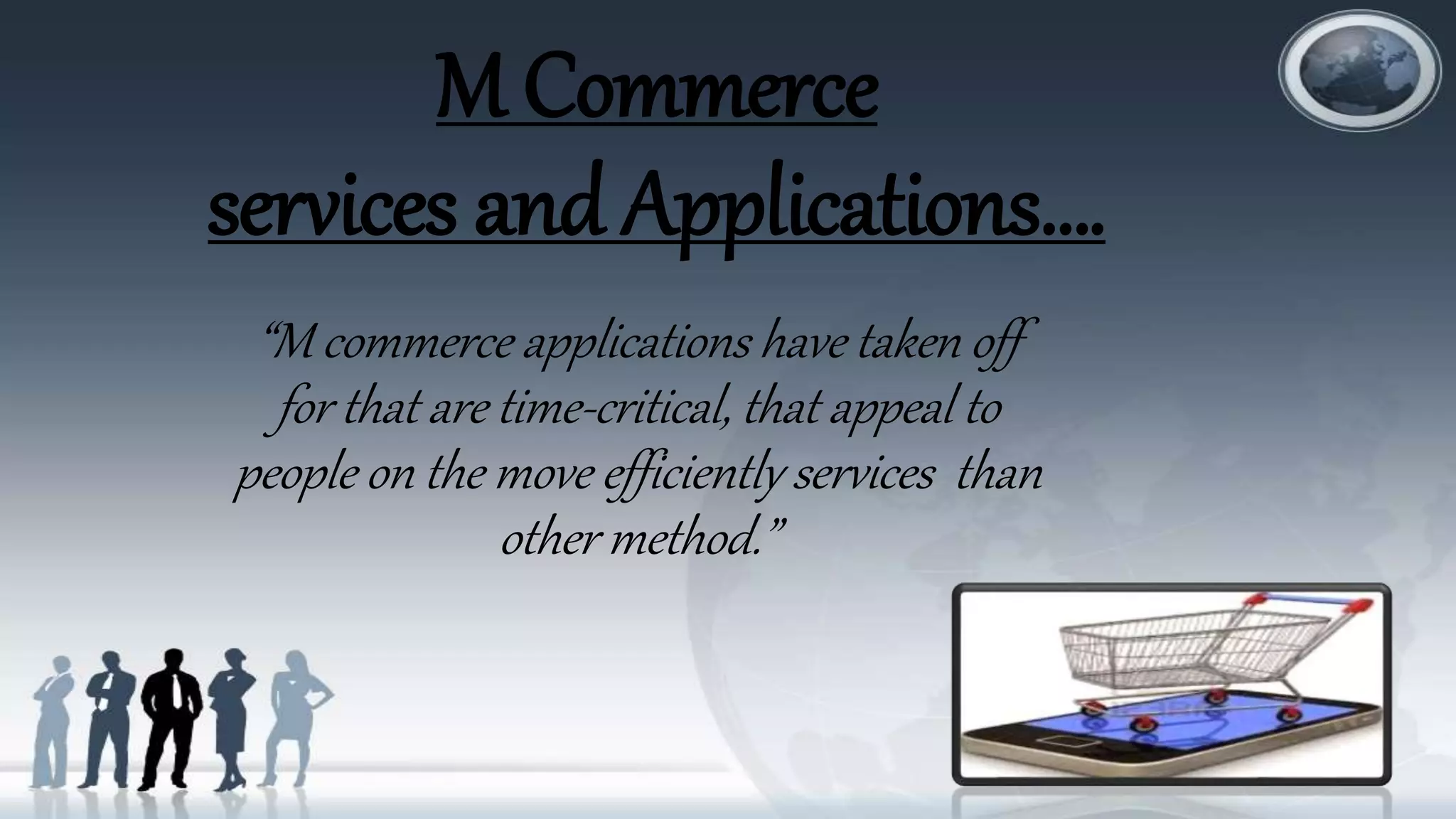
M Commerce
services and Applications….
“M commerce applications have taken off
for that are time-critical, that appeal to
people on the move efficiently services than
other method.”
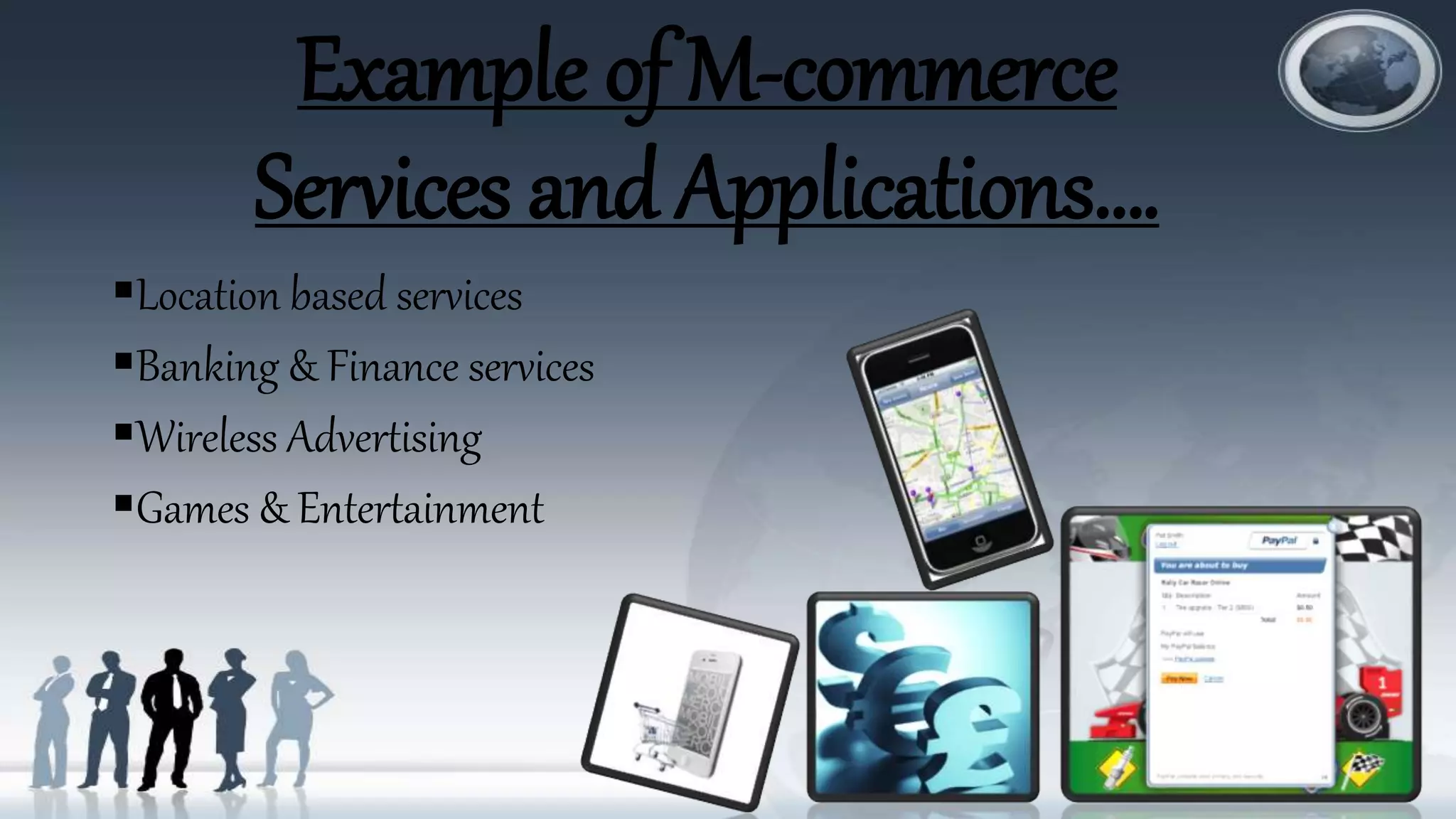
Example of M-commerce
Services and Applications….
Location based services
Banking & Finance services
Wireless Advertising
Games & Entertainment
Location Based Services….
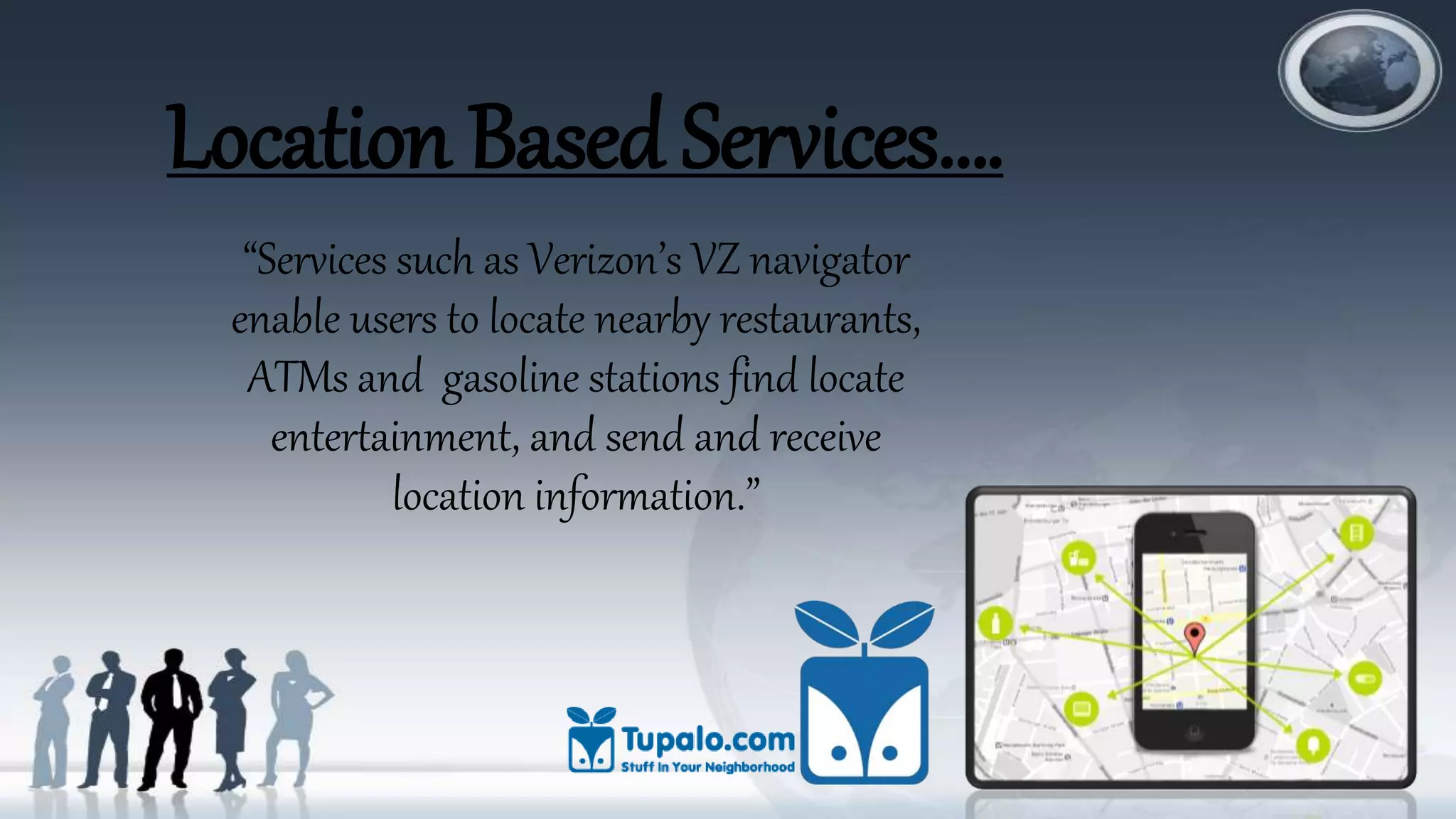
“Services such as Verizon’s VZ navigator
enable users to locate nearby restaurants,
ATMs and gasoline stations find locate
entertainment, and send and receive
location information.”
EXAMPLE….
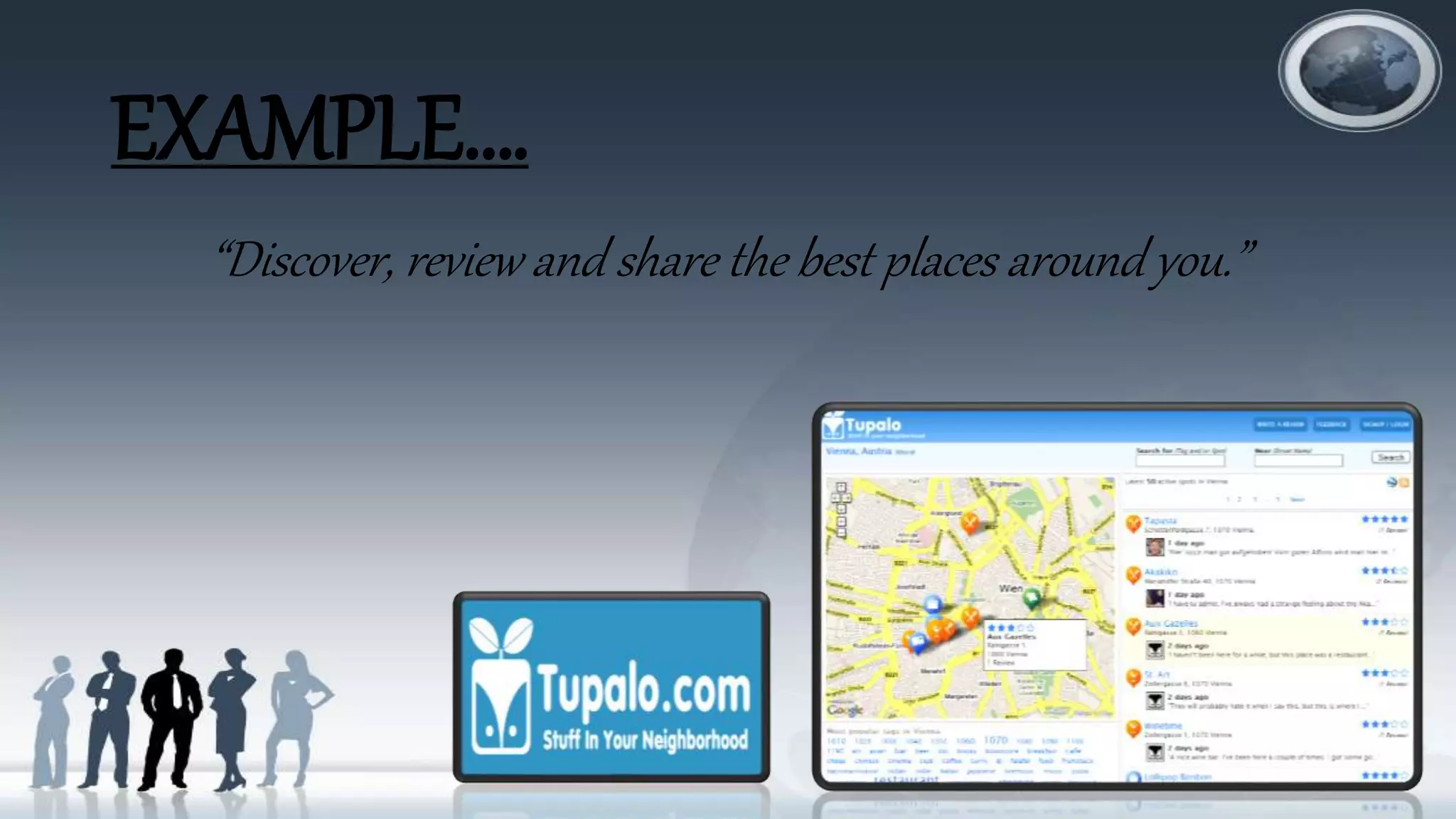
“Discover, review and share the best places around you.”
Banking and Financial services….
“Banks are rolling out services that let customer
manage their bank accounts from their cell
phones or other mobile devices.”
Example….
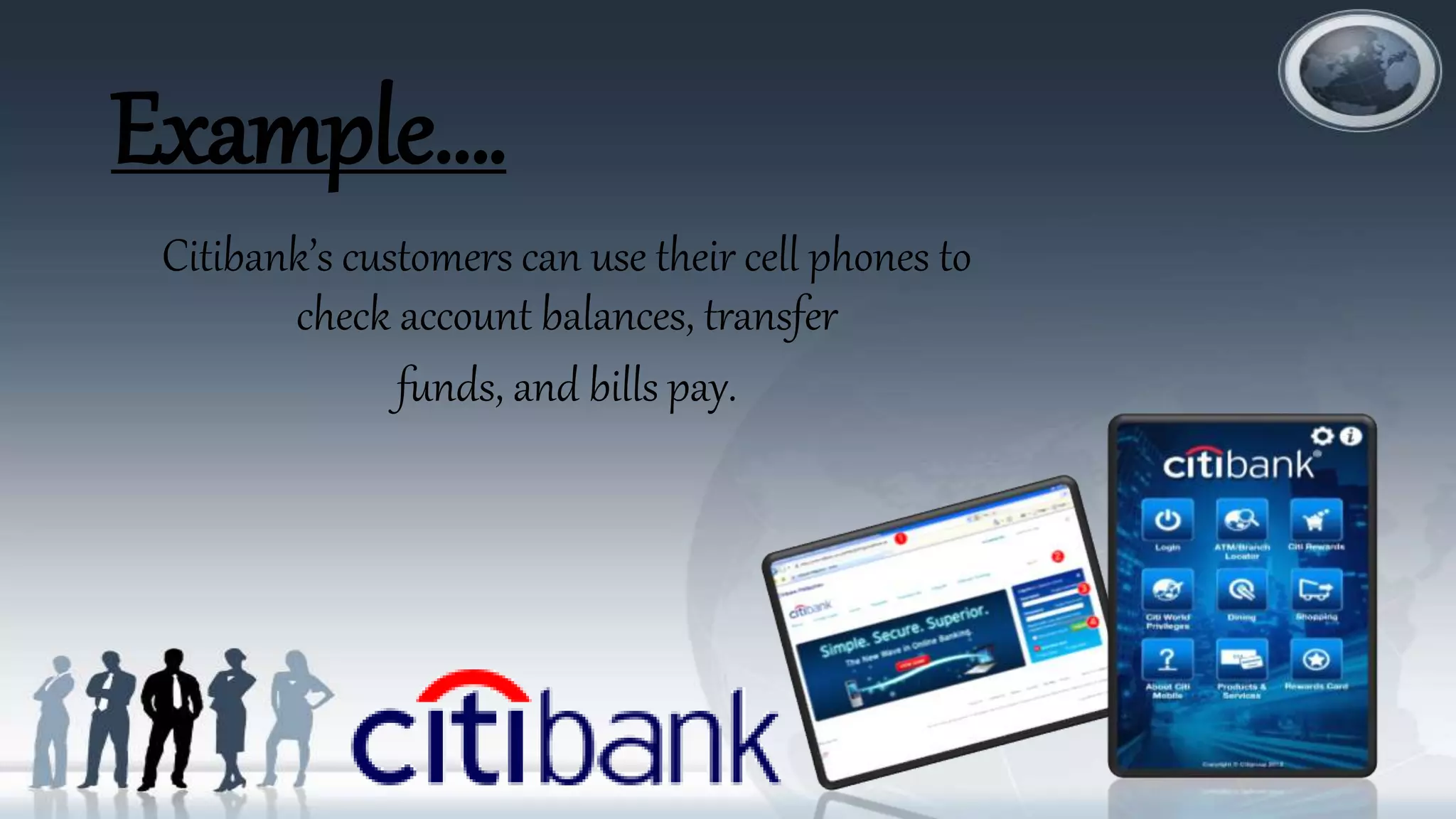
Citibank’s customers can use their cell phones to
check account balances, transfer
funds, and bills pay.
Wireless Advertising….
Cell phone services providers have information
valuable to advertisers about where subscribers
live, their location the moment they view ads,
their age, and the games, music and other
services they use on their phones.
Example….
Yahoo displays ads on its mobile home page for companies such as Pepsi,
Procter & gamble, Hilton, Nissan and Intel.
Games and Entertainment….
Cell phones are quickly turning into
portable entertainment platforms
mobile phones services offer
downloadable digital games, music,
and ringtones.
Accessing Information from
the Wireless Web….
Although cell phones, PDAs and other
handheld mobile devices are able to access the
web at anytime and from any place, the
amount of information that they can actually
handle at one time is very limited.
Example….
Major search providers goggle, yahoo and Microsoft have introduced
search services for mobile phones that provide useful information with
minimal typing.
Hurriya….
Types of E-commerce….
• Business-to-Business (B2B)
• Business-to-Consumer (B2C)
• Consumer-to-Business (C2B)
• Consumer-to-Consumer (C2C)
Example….
•(B2B): Free Marketing, Dell and General
•(B2C): Amazon, Yahoo and Charles Schwab &co.
•(C2B): www. Planet feedback..com
•(C2C): Owners..com, Craigslist, Monster
Electronic payment system….
•Digital wallet
•Stored value payment system
•Micropayment
•Peer to Peer payment
Digital Wallet….
“A digitalwallet refers to an electronic device that
allows an individual to make electronic commerce
transactions.”
Stored value payment system….
“A stored-valuecardrefers to monetary value
on a card not in an externally recorded
account and differs from prepaid cards
where money is on deposit with the issuer
similar to a debit card.”
Micropayment….
“A micropayment is a financial transaction involving
a very small sum of money and usually one that
occurs online.”
Peer to Peer payment….
“Peer-to-peerbanking is an online system that
allows individual members to complete financial
transactions with one another by using an
auction style process”
Other E- Payment Types….
• Cards
• Internet
• Mobile Payments
• Financial Service Kiosks
• Television Set-Top Boxes and Satellite Receiver
• Biometric Payments

What is e commerce

  • 1.
    Presented to: Sir.Umair Presented by: Achievers…. AnamNaveed Ahmad Hassan Mavra Siddiq Arslan Aslam
  • 2.
  • 3.
    What is E-commerce….? “E-commerceor electro commerce is a process of buying and selling, transferring or exchanging product, services and information via electronic and computer”
  • 4.
    History….  Ecommerce becamepossible in 1991.  Ecommerce is began to advance in 1994.  In 2000 business companies represent their services in World wide web.  By the end of 2007 the Ecommerce sales increase.
  • 5.
    Ecommerce Today….  Intoday’s electronic era, everyone is wired with technology.  In an online market that’s getting more competitive every the day for just about any niche.  You might have a great product inventory and offering products at competitive prices. entire world is within their reach thanks to the internet.)
  • 6.
    EXAMPLE…. • www.Amazon.com • www.OLX.com •www.Quicker.com • www.Big bazar.com • www.Expedia.com • www.Hotels.com
  • 7.
    Why E-commerce isDifferent….? The internet and E-commerce technologies are much rich and powerful then previous technology revolutions.
  • 8.
    Differentiating points ofE-commerce…. •Ubiquity It is available just about everywhere and all time. •Global Research The potential market size is roughly equal to the online population of the world.
  • 9.
    Differentiating points ofE-commerce…. •Universal Standards The technical standards of the internet and conducting E-commerce. •Richness Information that is complex and content rich can be delivered without sacrificing reach.
  • 10.
    Differentiating points ofE-commerce…. •Interactivity E-commerce technologies allow two-way communication between the merchant and the consumer. •Information Density The total amount and quality of information available to all market participants.
  • 11.
    Differentiating points ofE-commerce…. •Personalization/ Customization E-commerce technologies enable merchants to target their marketing messages to a person’s name, interest, and the past purchase. •Social Technology User content generation and social networking technologies.
  • 12.
    Key concept inE-commerce…. •Digital Market The marketing that makes use of electronic devices. Such as personal computer, smartphones, cellphones, tablets and game consoles to engage with stakeholders.
  • 13.
    EXAMPLE…. Moose Tracker theMoosylvania initiative keeping pace with the latest brand activity in the digital arena.
  • 14.
    Moose Tracker isthe latest examples of digital marketing since 2008.
  • 15.
    Key concept inE-commerce….  Digital goods Digital goods such as music, video, software and books can be delivers over a digital network.
  • 16.
    EXAMPLE…. PayPal is thecost-effective way to sell digital good.
  • 18.
  • 19.
  • 20.
    Concept…. Business Model: Set ofplanned activities designed to result in profit in marketplace. Business plan: A document that describes a firm’s business model. E-commerce business model: Leverages unique qualities of internet and web.
  • 21.
    Earlier Model…. The baitand hook business model was introduced in the early 20thcentury.
  • 22.
    Earlier Model…. This involvesoffering a basic product at a very low cost, often at a loss (the "bait"), then charging compensatory recurring amounts for refills or associated products or services (the "hook").
  • 23.
    • Razor (bait)and blades (hook); • Cell phones (bait) and air time (hook); computer printers (bait) and ink cartridge refills (hook); • Cameras (bait) and prints (hook) Examples….
  • 24.
    E-commerce business model…. •Today, the type of business models might depend on how technology is used. • These are E-commerce business Models: • Portal • E- Tailer • Content Provider • Market Creator • Service Provider • Community Provider
  • 25.
  • 26.
    Portal Model…. It providesentry to content or services on the Internet.
  • 27.
    Portal Model…. Search + Integrated packageof content and services Revenue model: --Advertisement --Referral fees --Transaction fees Search + Integrated package of content & services.
  • 28.
    Portal Model…. Search enginesare portal business models that includes many kinds of content & Services. Examples: --Google --Yahoo --Bing --MSN
  • 29.
    E- tailer…. Online versionsof traditional retailer. “ Sells physical products directly to consumers or individual business”
  • 30.
    E- tailer…. Revenue model: Sales ValueProposition: Low-cost shopping 24/7
  • 31.
  • 32.
    Content Provider…. Content “ IntellectualProperty” All forms of human expression that can be put into tangible form e.g.CDs, DVDs etc.
  • 33.
    Content Provider…. Digital contenton the web: News, Music, Video, Photos, Text & Artwork.
  • 34.
    Content Provider…. Value Proposition: Consumercan find wide range of content on-line such as Video. Music, photos etc. Revenue model: • Pay per download • Affiliate referral fees
  • 35.
  • 36.
    Market creator…. • Createdigital environment where buyer end seller can meet, & establish prices form those products. • Can serve consumers or B-to-BBusinesses. Revenue model Transaction fees
  • 37.
    Market creator…. Examples: • eBay •Priceline.com • ChemConnect.com
  • 38.
    Service Provider Web 2.0applications(photo-sharing, video-sharing) Examples: Google Apps Photobuket.com Xdrive.com E- Tailor sells On-line & Services Provider provides service on-line.
  • 39.
    Community Provider…. Provide “Onlineenvironment” where people with similar interests can transacts, share content and communicate.
  • 40.
    Community Provider…. Revenue Model: Typicallyhybrid (Combining advertising subscription, sales, transaction fees, affiliate fees) Examples: -Face book -MySpace -Twitter
  • 41.
  • 42.
    E Commerce Revenuemodels It describes: how the firm will earn revenue? generate profits? & produce super ROI?
  • 43.
    E Commerce Revenuemodels…. • Sales Revenue Model • Advertising Revenue Model • Subscription Revenue Model • Transaction Fee Revenue Model
  • 44.
    Advertising Revenue Model…. •Web site that offers content, services and/or products also provides a forum for advertisements and receives fees from advertisers. Examples • Google (e.g. AdWords and AdSense) • Face book • Yahoo.com
  • 45.
    Subscription Revenue Model…. •Web site that offers users content or services charges a subscription fee for access to some or all of its offerings Examples: • Consumer Reports Online • Yahoo! Platinum
  • 46.
    Transaction Fee RevenueModel…. • Company that receives a fee for enabling or executing a transaction. • A company receives commissions based on volume for enabling or executing transactions. Examples: • eBay.com • E-Trade.com
  • 47.
    Sales Revenue Model…. •Company derives revenue by selling goods, information, or services to customers. Examples: • Amazon.com • LLBean.com • Gap.com
  • 48.
  • 49.
    What is MobileCommerce…? “Mobile commerce is the buying and selling of goods and services through wireless handheld devices such as cellular telephone and personal digital assistants (PDAs).”
  • 50.
    History….  Mobile serviceswere first delivered in 1997.  The first mobile phone-based banking service was launched in 1997 by Merida bank of Finland also using sums'.  In 1998 the first sales of digital content as downloads to mobile phones.  The major national commercial platforms for mobile commerce were launched in 1999.  The first book cover mobile commerce was Tome Honan's m-profits in 2002.  The goggle in September 2011 and the m-commerce joint venture formed in June 2011.
  • 51.
    M Commerce services andApplications…. “M commerce applications have taken off for that are time-critical, that appeal to people on the move efficiently services than other method.”
  • 52.
    Example of M-commerce Servicesand Applications…. Location based services Banking & Finance services Wireless Advertising Games & Entertainment
  • 53.
    Location Based Services…. “Servicessuch as Verizon’s VZ navigator enable users to locate nearby restaurants, ATMs and gasoline stations find locate entertainment, and send and receive location information.”
  • 54.
    EXAMPLE…. “Discover, review andshare the best places around you.”
  • 55.
    Banking and Financialservices…. “Banks are rolling out services that let customer manage their bank accounts from their cell phones or other mobile devices.”
  • 56.
    Example…. Citibank’s customers canuse their cell phones to check account balances, transfer funds, and bills pay.
  • 57.
    Wireless Advertising…. Cell phoneservices providers have information valuable to advertisers about where subscribers live, their location the moment they view ads, their age, and the games, music and other services they use on their phones.
  • 58.
    Example…. Yahoo displays adson its mobile home page for companies such as Pepsi, Procter & gamble, Hilton, Nissan and Intel.
  • 59.
    Games and Entertainment…. Cellphones are quickly turning into portable entertainment platforms mobile phones services offer downloadable digital games, music, and ringtones.
  • 60.
    Accessing Information from theWireless Web…. Although cell phones, PDAs and other handheld mobile devices are able to access the web at anytime and from any place, the amount of information that they can actually handle at one time is very limited.
  • 61.
    Example…. Major search providersgoggle, yahoo and Microsoft have introduced search services for mobile phones that provide useful information with minimal typing.
  • 62.
  • 63.
    Types of E-commerce…. •Business-to-Business (B2B) • Business-to-Consumer (B2C) • Consumer-to-Business (C2B) • Consumer-to-Consumer (C2C)
  • 64.
    Example…. •(B2B): Free Marketing,Dell and General •(B2C): Amazon, Yahoo and Charles Schwab &co. •(C2B): www. Planet feedback..com •(C2C): Owners..com, Craigslist, Monster
  • 65.
    Electronic payment system…. •Digitalwallet •Stored value payment system •Micropayment •Peer to Peer payment
  • 66.
    Digital Wallet…. “A digitalwalletrefers to an electronic device that allows an individual to make electronic commerce transactions.”
  • 67.
    Stored value paymentsystem…. “A stored-valuecardrefers to monetary value on a card not in an externally recorded account and differs from prepaid cards where money is on deposit with the issuer similar to a debit card.”
  • 68.
    Micropayment…. “A micropayment isa financial transaction involving a very small sum of money and usually one that occurs online.”
  • 69.
    Peer to Peerpayment…. “Peer-to-peerbanking is an online system that allows individual members to complete financial transactions with one another by using an auction style process”
  • 70.
    Other E- PaymentTypes…. • Cards • Internet • Mobile Payments • Financial Service Kiosks • Television Set-Top Boxes and Satellite Receiver • Biometric Payments