What is DVT ?
Narges Shakerian
Last rotation,Golestan hospital
Overview
Deep vein thrombosis (DVT) is a blood clot that develops
within a deep vein in the body, usually in the leg.
Blood clots that develop in a vein are also known as
venous thrombosis.
DVT usually occurs in a deep leg vein, a larger vein that
runs through the muscles of the calf and the thigh.
It can cause pain and swelling in the leg and may lead to
complications such as pulmonary embolism.
DVT and pulmonary embolism together are known as
venous thromboembolism (VTE).
Symptoms
Sometimes there is no symptoms
pain, swelling and tenderness in one of your legs
(usually your calf)
a heavy ache in the affected area
warm skin in the area of the clot
red skin, particularly at the back of your leg below
the knee
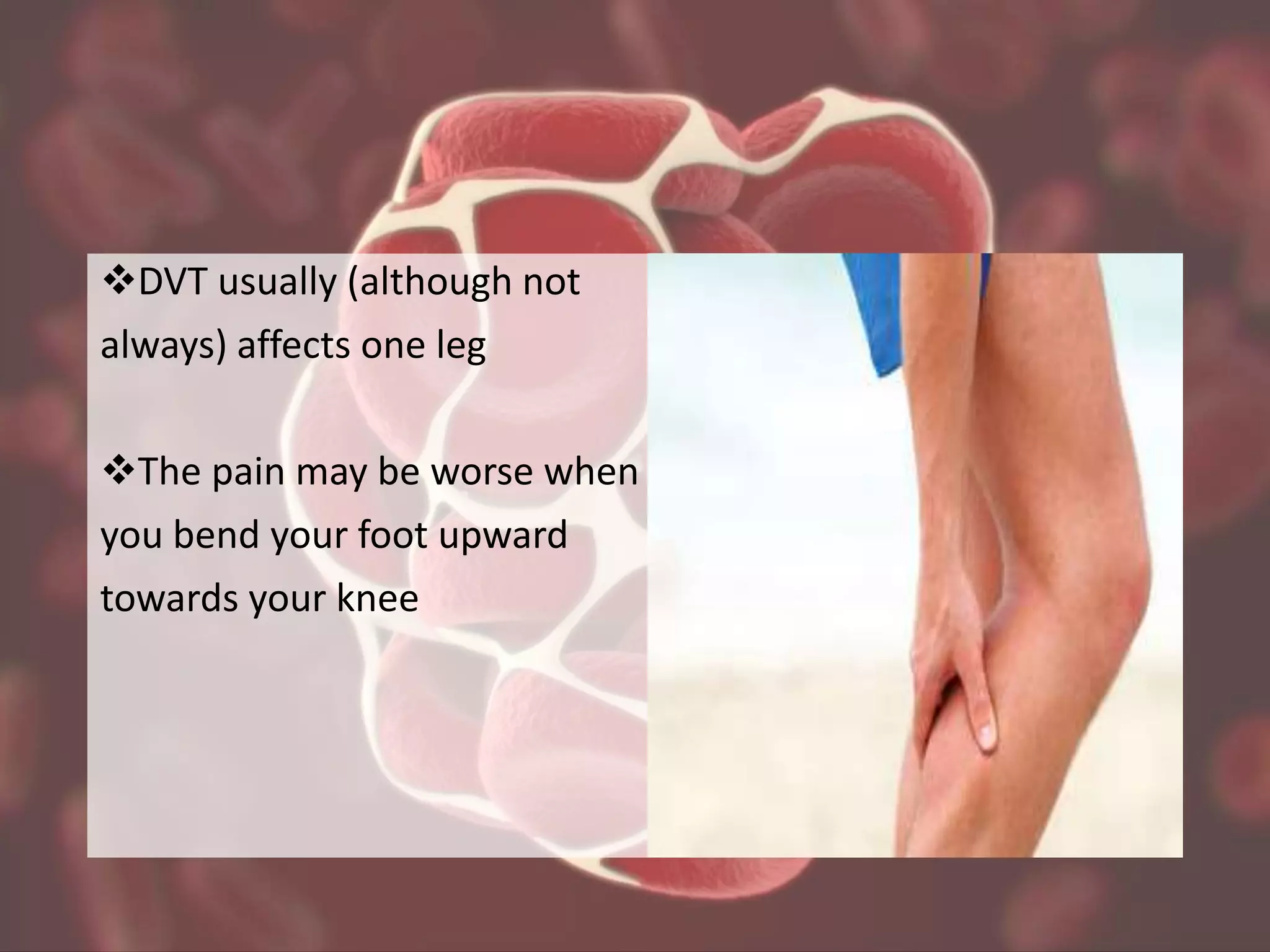
DVT usually (although not
always) affects one leg
The pain may be worse when
you bend your foot upward
towards your knee
Causes
It is more common over the age of 40
having a history of DVT or pulmonary embolism
having a family history of blood clots
being inactive for long periods – such as after an operation
or during a long journey
blood vessel damage – a damaged blood vessel wall can
result in the formation of a blood clot
having certain conditions or treatments that cause your
blood to clot more easily than normal,such as cancer &
pregnancy
being overweight
Diagnosis
D-dimer test
Ultrasound scan
Venogram
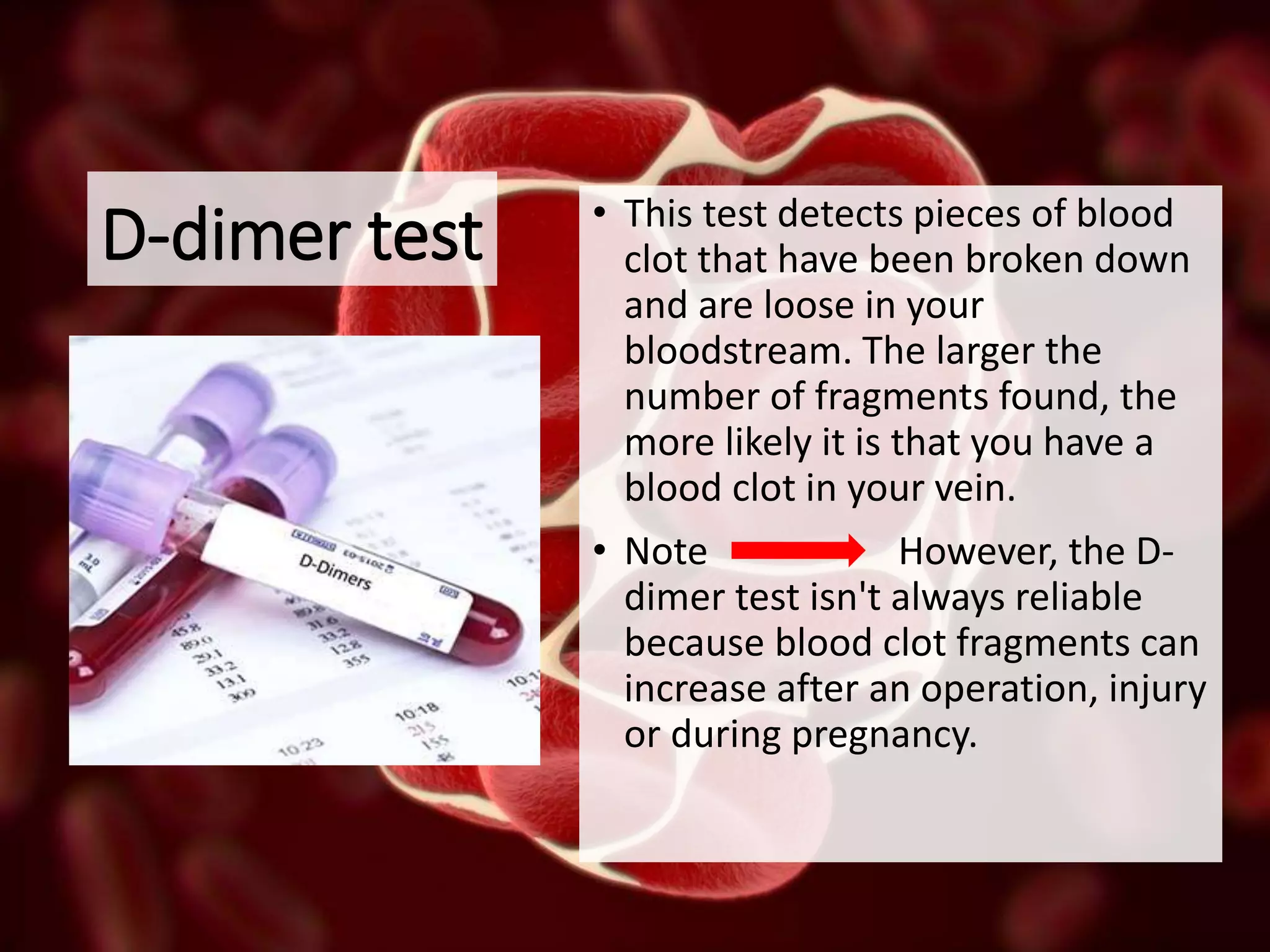
D-dimer test • This test detects pieces of blood
clot that have been broken down
and are loose in your
bloodstream. The larger the
number of fragments found, the
more likely it is that you have a
blood clot in your vein.
• Note However, the D-
dimer test isn't always reliable
because blood clot fragments can
increase after an operation, injury
or during pregnancy.
Ultrasound scan
An ultrasound scan can be used
to detect clots in your veins. A
special type of ultrasound called
a Doppler ultrasound can also be
used to find out how fast the
blood is flowing through a blood
vessel
Venogram• During a venogram, a liquid
called a contrast dye is
injected into a vein in your
foot. The dye travels up the
leg and can be detected by
X-ray, which will highlight a
gap in the blood vessel
where a clot is stopping the
flow of blood.
Treatment
• anticoagulant medicine
I. Heparin
II. Warfarin
• They reduce the blood's ability to clot and stop
existing clots getting bigger.
Prevention
• Not smoking
• Eating a healthy,
balanced diet
• Taking regular exercise
• Maintaining a healthy
weight or losing weight
Prevention
When taking a long-distance journey (6 hours or
more) by plane, train or car, you should take steps
to avoid getting DVT, such as drinking plenty
of water, performing simple leg exercises and taking
regular, short walking breaks.
Pulmonary embolism
• If left untreated, about 1 in 10 people with a DVT will
develop a pulmonary embolism:
I. breathlessness – which may come
on gradually or suddenly
II. chest pain – which may become
worse when you breathe in
III. sudden collapse
Thanks for your consideration
Refrence :google.com

What is DVT?

  • 1.
    What is DVT? Narges Shakerian Last rotation,Golestan hospital
  • 2.
    Overview Deep vein thrombosis(DVT) is a blood clot that develops within a deep vein in the body, usually in the leg. Blood clots that develop in a vein are also known as venous thrombosis. DVT usually occurs in a deep leg vein, a larger vein that runs through the muscles of the calf and the thigh. It can cause pain and swelling in the leg and may lead to complications such as pulmonary embolism. DVT and pulmonary embolism together are known as venous thromboembolism (VTE).
  • 3.
    Symptoms Sometimes there isno symptoms pain, swelling and tenderness in one of your legs (usually your calf) a heavy ache in the affected area warm skin in the area of the clot red skin, particularly at the back of your leg below the knee
  • 4.
    DVT usually (althoughnot always) affects one leg The pain may be worse when you bend your foot upward towards your knee
  • 5.
    Causes It is morecommon over the age of 40 having a history of DVT or pulmonary embolism having a family history of blood clots being inactive for long periods – such as after an operation or during a long journey blood vessel damage – a damaged blood vessel wall can result in the formation of a blood clot having certain conditions or treatments that cause your blood to clot more easily than normal,such as cancer & pregnancy being overweight
  • 6.
  • 7.
    D-dimer test •This test detects pieces of blood clot that have been broken down and are loose in your bloodstream. The larger the number of fragments found, the more likely it is that you have a blood clot in your vein. • Note However, the D- dimer test isn't always reliable because blood clot fragments can increase after an operation, injury or during pregnancy.
  • 8.
    Ultrasound scan An ultrasoundscan can be used to detect clots in your veins. A special type of ultrasound called a Doppler ultrasound can also be used to find out how fast the blood is flowing through a blood vessel
  • 9.
    Venogram• During avenogram, a liquid called a contrast dye is injected into a vein in your foot. The dye travels up the leg and can be detected by X-ray, which will highlight a gap in the blood vessel where a clot is stopping the flow of blood.
  • 10.
    Treatment • anticoagulant medicine I.Heparin II. Warfarin • They reduce the blood's ability to clot and stop existing clots getting bigger.
  • 11.
    Prevention • Not smoking •Eating a healthy, balanced diet • Taking regular exercise • Maintaining a healthy weight or losing weight
  • 12.
    Prevention When taking along-distance journey (6 hours or more) by plane, train or car, you should take steps to avoid getting DVT, such as drinking plenty of water, performing simple leg exercises and taking regular, short walking breaks.
  • 13.
    Pulmonary embolism • Ifleft untreated, about 1 in 10 people with a DVT will develop a pulmonary embolism: I. breathlessness – which may come on gradually or suddenly II. chest pain – which may become worse when you breathe in III. sudden collapse
  • 14.
    Thanks for yourconsideration Refrence :google.com