Two Dozen Wetland Words!
What do these wetland words mean? Use resources like a dictionary or the internet to write down a
short definition of what they mean.
Wetland Definition
A wetland is land which is saturated with water and drains poorly. For an area to be defined as
wetlands, that area has to provide conditions which allow significant interaction of living and non-
living things. In wetlands, the adaptation of plant and animal life contribute greatly to the
conditions of water, land and soil. The water depth in wetlands do not generally exceed six meters.
Wetlands have no well defined beds and banks whereas lakes do. We can group wetlands into:
bog, fen, marsh, swamp, and shallow water.
Amphibian –
Aquatic Zone –
Consumer –
Decomposer –
Drought –
Fen –
Flood –
Food Web –
Ground Water –
Habitat –
Invertebrate –
Marsh –
Peat –
Pollution –
Predator –
Prey –
Producer –
Recharge –
Riparian Zone –
Surface Water –
Upland –
Water Table –
Waterfowl –
Watershed –
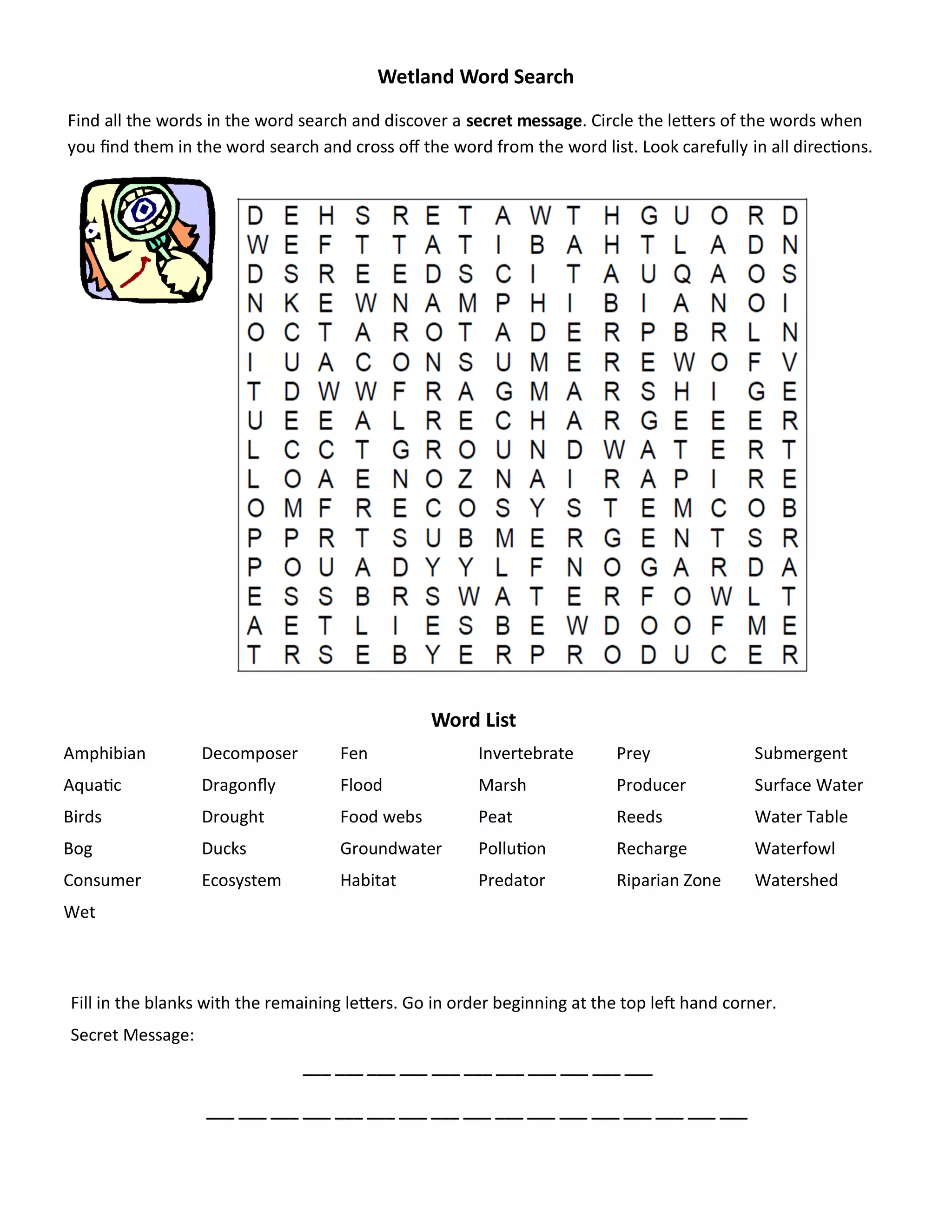
Wetland Word Search
Find all the words in the word search and discover a secret message. Circle the letters of the words when
you find them in the word search and cross off the word from the word list. Look carefully in all directions.
Word List
Amphibian Decomposer Fen Invertebrate Prey Submergent
Aquatic Dragonfly Flood Marsh Producer Surface Water
Birds Drought Food webs Peat Reeds Water Table
Bog Ducks Groundwater Pollution Recharge Waterfowl
Consumer Ecosystem Habitat Predator Riparian Zone Watershed
Wet
Fill in the blanks with the remaining letters. Go in order beginning at the top left hand corner.
Secret Message:
___ ___ ___ ___ ___ ___ ___ ___ ___ ___ ___
___ ___ ___ ___ ___ ___ ___ ___ ___ ___ ___ ___ ___ ___ ___ ___ ___
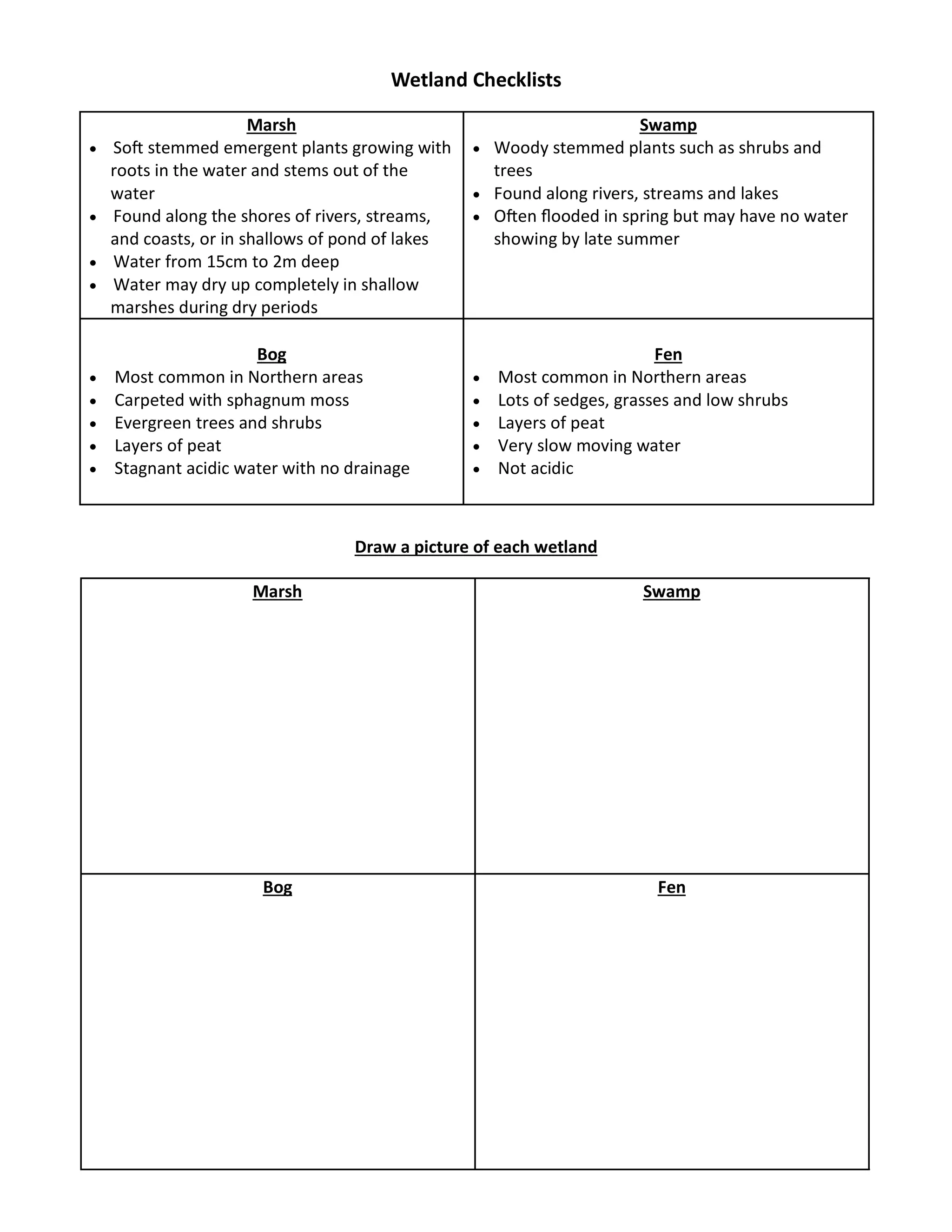
Wetland Checklists
Marsh
 Soft stemmed emergent plants growing with
roots in the water and stems out of the
water
 Found along the shores of rivers, streams,
and coasts, or in shallows of pond of lakes
 Water from 15cm to 2m deep
 Water may dry up completely in shallow
marshes during dry periods
Swamp
 Woody stemmed plants such as shrubs and
trees
 Found along rivers, streams and lakes
 Often flooded in spring but may have no water
showing by late summer
Bog
 Most common in Northern areas
 Carpeted with sphagnum moss
 Evergreen trees and shrubs
 Layers of peat
 Stagnant acidic water with no drainage
Fen
 Most common in Northern areas
 Lots of sedges, grasses and low shrubs
 Layers of peat
 Very slow moving water
 Not acidic
Marsh Swamp
Bog Fen
Draw a picture of each wetland
What is an Ecosystem?
Plants and animals depend on each other to survive. This connection of living things to each other is called
biodiversity. The word ecosystem comes from the Greek words eco meaning home, and system meaning a
set of connected or interacting things. An ecosystem, short for 'ecological system', is the interaction of living
organisms with the non-living environment existing together in a particular area. Living things are plants and
animals. Nonliving things are soil, air, water, sunlight and dead matter. Examples of these interactions are
that green plants make food from carbon dioxide and sunlight; animals drink water and breath oxygen.
What is our Classroom Ecosystem?
Living Organisms Non-Living Environment
An ecosystem can be very small, such as a puddle or an area under a large rock, or it can be vast, such as an
ocean. The balance of an ecosystem is delicate, and a disruption such as the introduction of a new element
can damage it. For example, rabbits were introduced into Australia and upset the ecological balance. Like
many small native animals, rabbits live in burrows and eat plants. They thrived in Australia and competed for
food and living space, which has resulted in some native animals becoming endangered.
Park or Wetland Ecosystem
Living Organisms Non-Living Environment
trees , birds, people, grass , insects soil, sunlight, air  
Without the non-living things, the plants and animals could not live. Together the plants and animals and the
non living environment make up an ecosystem. A park, aquarium and rotting logs are ecosystems. All parts
of a ecosystem interact. Chemicals in the soil become parts of the plants. When the plants die, these chemi-
cals are returned to the soil. Using the sun's energy, plants make food from chemicals in soil, air and water.
Animals feed on these plants. The interactions in an ecosystem are very complex. Many changes occur in an
ecosystem each day.
My living organisms Why I put them there
Non living organisms Why I put them there
My Ecosystem Design!
 Design a closed ecosystem (nothing gets in, nothing gets out).
 You may choose any living organism or non-living items that you want.
 Tank has at least 3 living organisms
 Tank has at least 3 non-living organisms
 Illustrations must be neatly drawn and colored
 For every item you put into the fish tank, you must briefly explain why you choose to put it in.
Wetland Heroes
What’s a Wetland Hero?
http://www.ducks.ca/education/wetland-heroes/
Whether you’re one person, a group of friends, a class, club or school, a wetland hero takes action to
protect wetlands for wildlife and people in their local community. What are examples of Wetland heroes?
Here are a few examples of Canada’s Wetland Heroes making a BIG impact in their backyards!
 Write letters… Grade 3 students in BC wrote letters to politicians encouraging them to create a new
bird nesting area and increase protection for a wetland near a new subdivision.
 Talk to politicians… The grade 4 winner of a school poster contest met with the Saskatchewan
premier to encourage his government to better protect wetlands.
 Raise money… Teenagers in Newfoundland and Quebec raised funds to help with conservation work
in their provinces.
 Enhance habitat… Students in BC built wood duck nesting boxes at a local wetland.
 Increase awareness… University students worked a public display about wetland values and sent a
petition to the Minister of Conservation asking the government to enact a wetland policy.
Think of other ways in which you could be a wetland hero and write your ideas here.

Wetlands activities

  • 1.
    Two Dozen WetlandWords! What do these wetland words mean? Use resources like a dictionary or the internet to write down a short definition of what they mean. Wetland Definition A wetland is land which is saturated with water and drains poorly. For an area to be defined as wetlands, that area has to provide conditions which allow significant interaction of living and non- living things. In wetlands, the adaptation of plant and animal life contribute greatly to the conditions of water, land and soil. The water depth in wetlands do not generally exceed six meters. Wetlands have no well defined beds and banks whereas lakes do. We can group wetlands into: bog, fen, marsh, swamp, and shallow water. Amphibian – Aquatic Zone – Consumer – Decomposer – Drought – Fen – Flood – Food Web – Ground Water – Habitat – Invertebrate – Marsh – Peat – Pollution – Predator – Prey – Producer – Recharge – Riparian Zone – Surface Water – Upland – Water Table – Waterfowl – Watershed –
  • 2.
    Wetland Word Search Findall the words in the word search and discover a secret message. Circle the letters of the words when you find them in the word search and cross off the word from the word list. Look carefully in all directions. Word List Amphibian Decomposer Fen Invertebrate Prey Submergent Aquatic Dragonfly Flood Marsh Producer Surface Water Birds Drought Food webs Peat Reeds Water Table Bog Ducks Groundwater Pollution Recharge Waterfowl Consumer Ecosystem Habitat Predator Riparian Zone Watershed Wet Fill in the blanks with the remaining letters. Go in order beginning at the top left hand corner. Secret Message: ___ ___ ___ ___ ___ ___ ___ ___ ___ ___ ___ ___ ___ ___ ___ ___ ___ ___ ___ ___ ___ ___ ___ ___ ___ ___ ___ ___
  • 3.
    Wetland Checklists Marsh  Softstemmed emergent plants growing with roots in the water and stems out of the water  Found along the shores of rivers, streams, and coasts, or in shallows of pond of lakes  Water from 15cm to 2m deep  Water may dry up completely in shallow marshes during dry periods Swamp  Woody stemmed plants such as shrubs and trees  Found along rivers, streams and lakes  Often flooded in spring but may have no water showing by late summer Bog  Most common in Northern areas  Carpeted with sphagnum moss  Evergreen trees and shrubs  Layers of peat  Stagnant acidic water with no drainage Fen  Most common in Northern areas  Lots of sedges, grasses and low shrubs  Layers of peat  Very slow moving water  Not acidic Marsh Swamp Bog Fen Draw a picture of each wetland
  • 4.
    What is anEcosystem? Plants and animals depend on each other to survive. This connection of living things to each other is called biodiversity. The word ecosystem comes from the Greek words eco meaning home, and system meaning a set of connected or interacting things. An ecosystem, short for 'ecological system', is the interaction of living organisms with the non-living environment existing together in a particular area. Living things are plants and animals. Nonliving things are soil, air, water, sunlight and dead matter. Examples of these interactions are that green plants make food from carbon dioxide and sunlight; animals drink water and breath oxygen. What is our Classroom Ecosystem? Living Organisms Non-Living Environment An ecosystem can be very small, such as a puddle or an area under a large rock, or it can be vast, such as an ocean. The balance of an ecosystem is delicate, and a disruption such as the introduction of a new element can damage it. For example, rabbits were introduced into Australia and upset the ecological balance. Like many small native animals, rabbits live in burrows and eat plants. They thrived in Australia and competed for food and living space, which has resulted in some native animals becoming endangered. Park or Wetland Ecosystem Living Organisms Non-Living Environment trees , birds, people, grass , insects soil, sunlight, air   Without the non-living things, the plants and animals could not live. Together the plants and animals and the non living environment make up an ecosystem. A park, aquarium and rotting logs are ecosystems. All parts of a ecosystem interact. Chemicals in the soil become parts of the plants. When the plants die, these chemi- cals are returned to the soil. Using the sun's energy, plants make food from chemicals in soil, air and water. Animals feed on these plants. The interactions in an ecosystem are very complex. Many changes occur in an ecosystem each day.
  • 5.
    My living organismsWhy I put them there Non living organisms Why I put them there My Ecosystem Design!  Design a closed ecosystem (nothing gets in, nothing gets out).  You may choose any living organism or non-living items that you want.  Tank has at least 3 living organisms  Tank has at least 3 non-living organisms  Illustrations must be neatly drawn and colored  For every item you put into the fish tank, you must briefly explain why you choose to put it in.
  • 6.
    Wetland Heroes What’s aWetland Hero? http://www.ducks.ca/education/wetland-heroes/ Whether you’re one person, a group of friends, a class, club or school, a wetland hero takes action to protect wetlands for wildlife and people in their local community. What are examples of Wetland heroes? Here are a few examples of Canada’s Wetland Heroes making a BIG impact in their backyards!  Write letters… Grade 3 students in BC wrote letters to politicians encouraging them to create a new bird nesting area and increase protection for a wetland near a new subdivision.  Talk to politicians… The grade 4 winner of a school poster contest met with the Saskatchewan premier to encourage his government to better protect wetlands.  Raise money… Teenagers in Newfoundland and Quebec raised funds to help with conservation work in their provinces.  Enhance habitat… Students in BC built wood duck nesting boxes at a local wetland.  Increase awareness… University students worked a public display about wetland values and sent a petition to the Minister of Conservation asking the government to enact a wetland policy. Think of other ways in which you could be a wetland hero and write your ideas here.