WETLANDS
SUBMITTED BY:
DEEPTI CHAUHAN
II SEM – I YEAR
M.LANDSCAPE
A wetland is an area of land where the water level is near or above the surface of the ground for
most of the year. They support a variety of plant and animal life and play an important role in
flood control and replenishing underground water supplies.
FUNCTION OF WATERLAND
•Store excess water from floods
•Slow down runoff and help prevent erosion
•Remove excess nutrients from runoff
•Provide a unique habitat for water plants
•Provide a safe, lush habitat for animals
•Wetlands protect terrestrial areas adjoining them from storms, floods and tidal damage.
•Plants in wetlands help to filter pollutants in the water.
•Wetlands provide an excellent example of invasion, modification and succession.
WETLANDS
TYPES OF WETLANDS
There are four main kinds of wetlands – marsh, swamp, bog and fen (bogs and fens being types of
mires). Some experts also recognize wet meadows and aquatic ecosystems as additional wetlandtypes.
The largest wetlands in the world include the swamp forests of the Amazon and the peatlands of
Siberia.
MARSHES
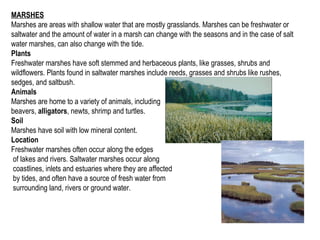
Marshes are areas with shallow water that are mostly grasslands. Marshes can be freshwater or
saltwater and the amount of water in a marsh can change with the seasons and in the case of salt
water marshes, can also change with the tide.
Plants
Freshwater marshes have soft stemmed and herbaceous plants, like grasses, shrubs and
wildflowers. Plants found in saltwater marshes include reeds, grasses and shrubs like rushes,
sedges, and saltbush.
Animals
Marshes are home to a variety of animals, including
beavers, alligators, newts, shrimp and turtles.
Soil
Marshes have soil with low mineral content.
Location
Freshwater marshes often occur along the edges
of lakes and rivers. Saltwater marshes occur along
coastlines, inlets and estuaries where they are affected
by tides, and often have a source of fresh water from
surrounding land, rivers or ground water.
SWAMPS
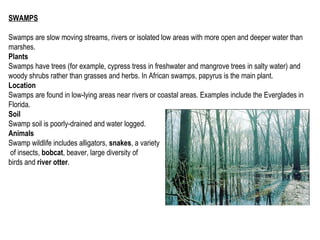
Swamps are slow moving streams, rivers or isolated low areas with more open and deeper water than
marshes.
Plants
Swamps have trees (for example, cypress tress in freshwater and mangrove trees in salty water) and
woody shrubs rather than grasses and herbs. In African swamps, papyrus is the main plant.
Location
Swamps are found in low-lying areas near rivers or coastal areas. Examples include the Everglades in
Florida.
Soil
Swamp soil is poorly-drained and water logged.
Animals
Swamp wildlife includes alligators, snakes, a variety
of insects, bobcat, beaver, large diversity of
birds and river otter.
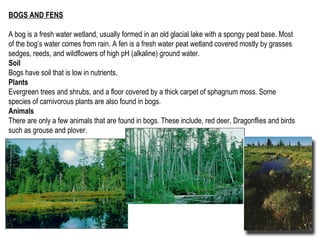
BOGS AND FENS
A bog is a fresh water wetland, usually formed in an old glacial lake with a spongy peat base. Most
of the bog’s water comes from rain. A fen is a fresh water peat wetland covered mostly by grasses
sedges, reeds, and wildflowers of high pH (alkaline) ground water.
Soil
Bogs have soil that is low in nutrients.
Plants
Evergreen trees and shrubs, and a floor covered by a thick carpet of sphagnum moss. Some
species of carnivorous plants are also found in bogs.
Animals
There are only a few animals that are found in bogs. These include, red deer, Dragonflies and birds
such as grouse and plover.
Physical/Hydrological Functions of Wetlands
• Flood Control
– Correlation between wetland loss and downstream flooding
– can capture, store, and slowly release water over a period of time
• Coastal Protection
– Serve as storm buffers
• Ground Water Recharge
– Water has more time to percolate through the soil
• Sediment Traps
– Wetland plants help to remove sediment from flowing water
Chemical Functions of Wetlands
• Pollution Interception
– Nutrient uptake by plants
– Settle in anaerobic soil and become reduced
– Processed by bacterial action
• Toxic Residue Processing
– Buried and neutralized in soils, taken up by plants, reduced through ion
exchange
– Large-scale / long-term additions can exceed a wetland’s capacity
– Some chemicals can become more dangerous in wetlands (Mercury)
Physical/Hydrological Functions of Wetlands
• Flood Control
– Correlation between wetland loss and downstream flooding
– can capture, store, and slowly release water over a period of time
• Coastal Protection
– Serve as storm buffers
• Ground Water Recharge
– Water has more time to percolate through the soil
• Sediment Traps
– Wetland plants help to remove sediment from flowing water
Chemical Functions of Wetlands
• Pollution Interception
– Nutrient uptake by plants
– Settle in anaerobic soil and become reduced
– Processed by bacterial action
• Toxic Residue Processing
– Buried and neutralized in soils, taken up by plants, reduced through ion
exchange
– Large-scale / long-term additions can exceed a wetland’s capacity
– Some chemicals can become more dangerous in wetlands (Mercury)

wetland

  • 1.
    WETLANDS SUBMITTED BY: DEEPTI CHAUHAN IISEM – I YEAR M.LANDSCAPE
  • 2.
    A wetland isan area of land where the water level is near or above the surface of the ground for most of the year. They support a variety of plant and animal life and play an important role in flood control and replenishing underground water supplies. FUNCTION OF WATERLAND •Store excess water from floods •Slow down runoff and help prevent erosion •Remove excess nutrients from runoff •Provide a unique habitat for water plants •Provide a safe, lush habitat for animals •Wetlands protect terrestrial areas adjoining them from storms, floods and tidal damage. •Plants in wetlands help to filter pollutants in the water. •Wetlands provide an excellent example of invasion, modification and succession. WETLANDS TYPES OF WETLANDS There are four main kinds of wetlands – marsh, swamp, bog and fen (bogs and fens being types of mires). Some experts also recognize wet meadows and aquatic ecosystems as additional wetlandtypes. The largest wetlands in the world include the swamp forests of the Amazon and the peatlands of Siberia.
  • 3.
    MARSHES Marshes are areaswith shallow water that are mostly grasslands. Marshes can be freshwater or saltwater and the amount of water in a marsh can change with the seasons and in the case of salt water marshes, can also change with the tide. Plants Freshwater marshes have soft stemmed and herbaceous plants, like grasses, shrubs and wildflowers. Plants found in saltwater marshes include reeds, grasses and shrubs like rushes, sedges, and saltbush. Animals Marshes are home to a variety of animals, including beavers, alligators, newts, shrimp and turtles. Soil Marshes have soil with low mineral content. Location Freshwater marshes often occur along the edges of lakes and rivers. Saltwater marshes occur along coastlines, inlets and estuaries where they are affected by tides, and often have a source of fresh water from surrounding land, rivers or ground water.
  • 4.
    SWAMPS Swamps are slowmoving streams, rivers or isolated low areas with more open and deeper water than marshes. Plants Swamps have trees (for example, cypress tress in freshwater and mangrove trees in salty water) and woody shrubs rather than grasses and herbs. In African swamps, papyrus is the main plant. Location Swamps are found in low-lying areas near rivers or coastal areas. Examples include the Everglades in Florida. Soil Swamp soil is poorly-drained and water logged. Animals Swamp wildlife includes alligators, snakes, a variety of insects, bobcat, beaver, large diversity of birds and river otter.
  • 5.
    BOGS AND FENS Abog is a fresh water wetland, usually formed in an old glacial lake with a spongy peat base. Most of the bog’s water comes from rain. A fen is a fresh water peat wetland covered mostly by grasses sedges, reeds, and wildflowers of high pH (alkaline) ground water. Soil Bogs have soil that is low in nutrients. Plants Evergreen trees and shrubs, and a floor covered by a thick carpet of sphagnum moss. Some species of carnivorous plants are also found in bogs. Animals There are only a few animals that are found in bogs. These include, red deer, Dragonflies and birds such as grouse and plover.
  • 6.
    Physical/Hydrological Functions ofWetlands • Flood Control – Correlation between wetland loss and downstream flooding – can capture, store, and slowly release water over a period of time • Coastal Protection – Serve as storm buffers • Ground Water Recharge – Water has more time to percolate through the soil • Sediment Traps – Wetland plants help to remove sediment from flowing water Chemical Functions of Wetlands • Pollution Interception – Nutrient uptake by plants – Settle in anaerobic soil and become reduced – Processed by bacterial action • Toxic Residue Processing – Buried and neutralized in soils, taken up by plants, reduced through ion exchange – Large-scale / long-term additions can exceed a wetland’s capacity – Some chemicals can become more dangerous in wetlands (Mercury)
  • 7.
    Physical/Hydrological Functions ofWetlands • Flood Control – Correlation between wetland loss and downstream flooding – can capture, store, and slowly release water over a period of time • Coastal Protection – Serve as storm buffers • Ground Water Recharge – Water has more time to percolate through the soil • Sediment Traps – Wetland plants help to remove sediment from flowing water Chemical Functions of Wetlands • Pollution Interception – Nutrient uptake by plants – Settle in anaerobic soil and become reduced – Processed by bacterial action • Toxic Residue Processing – Buried and neutralized in soils, taken up by plants, reduced through ion exchange – Large-scale / long-term additions can exceed a wetland’s capacity – Some chemicals can become more dangerous in wetlands (Mercury)