Compartmentalization of
ecosystem
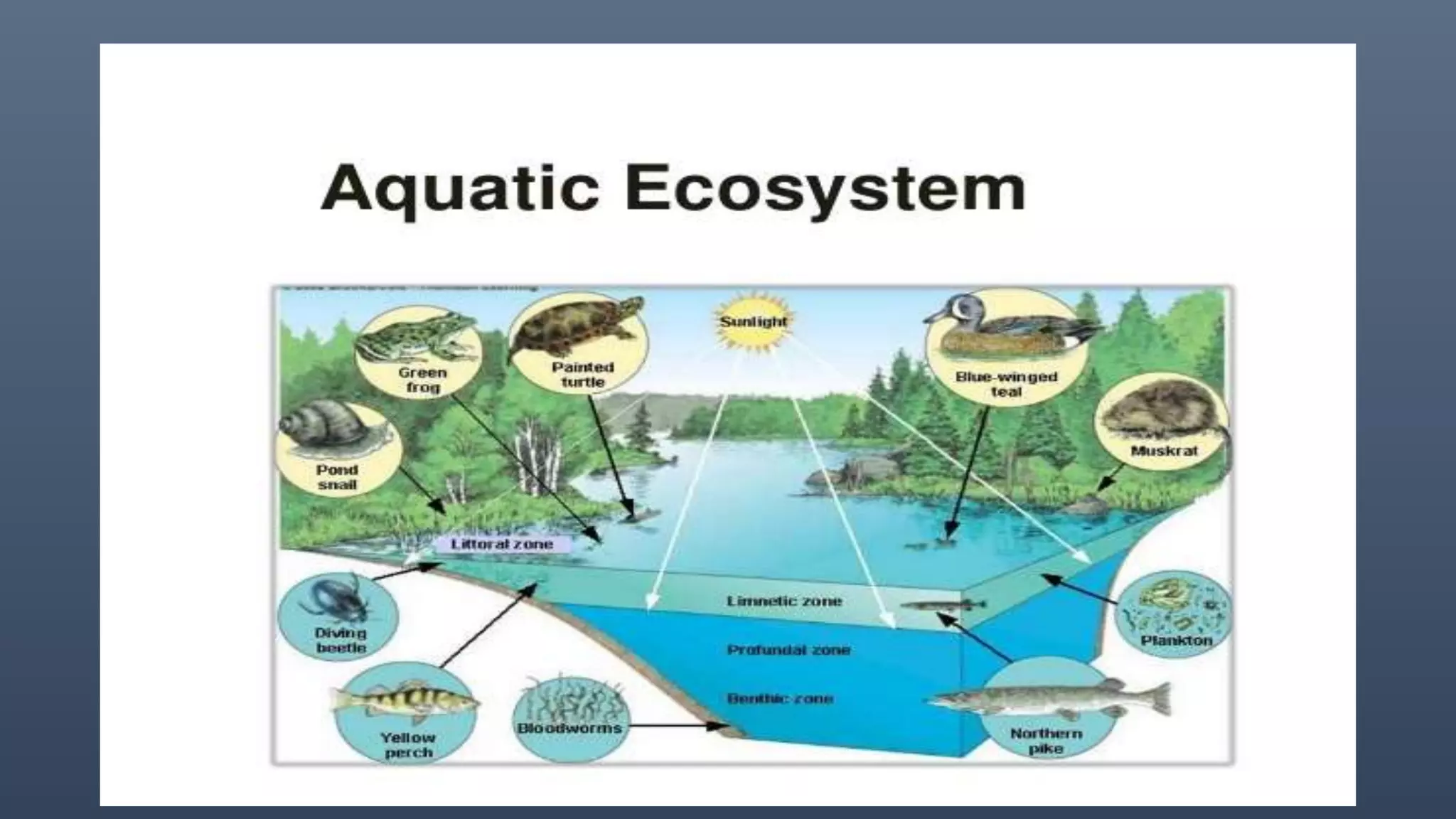
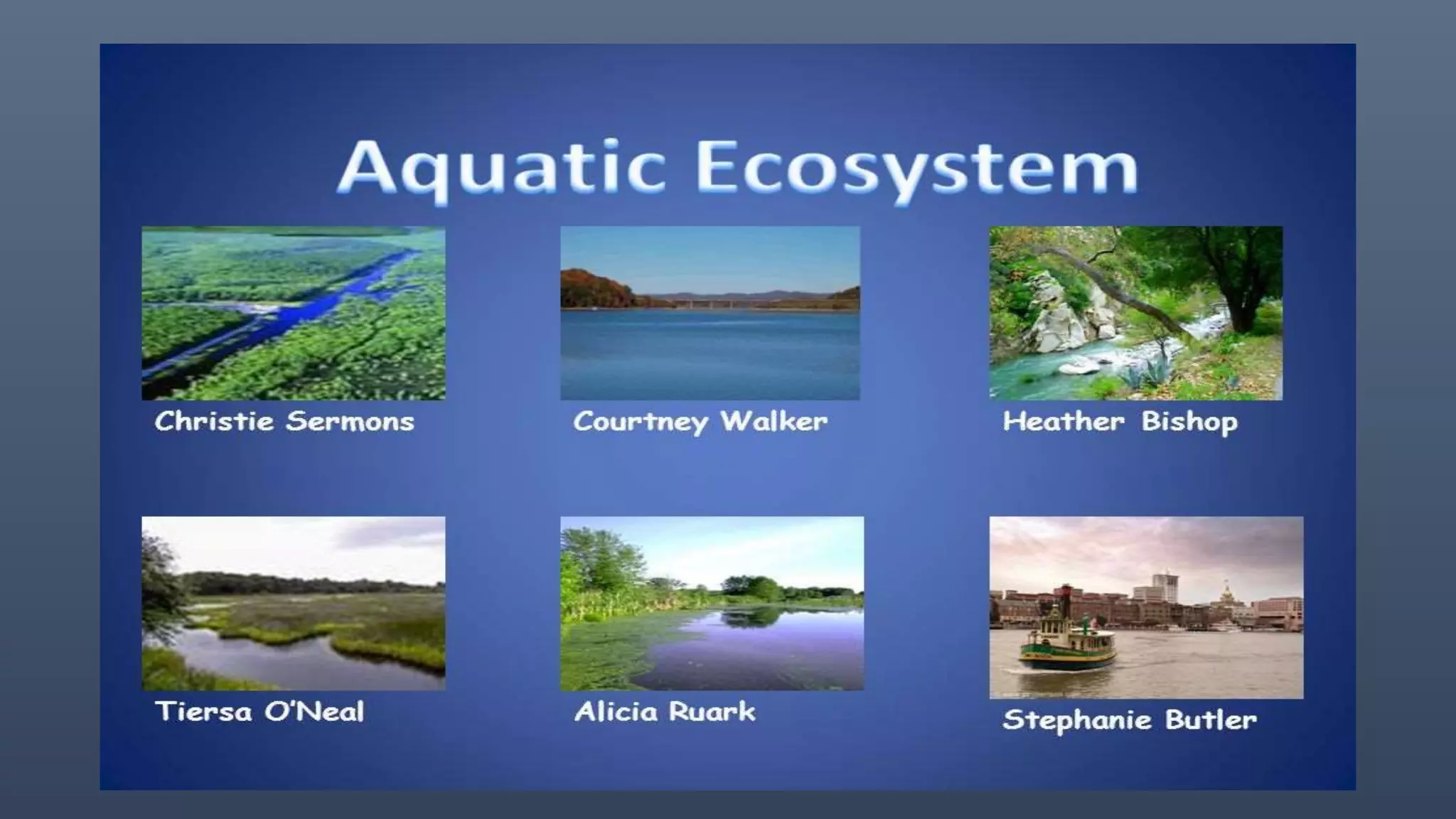
Aquatic ecosystem
• An aquatic ecosystem is an ecosystem in a body of water.
• Communities of organisms that are dependent on each other and on
their environment live in aquatic ecosystems.
• The two main types of aquatic ecosystems are marine ecosystems
and freshwater ecosystems.
• Types
• 1 Marine
• 2 Freshwater
• 3 Lentic
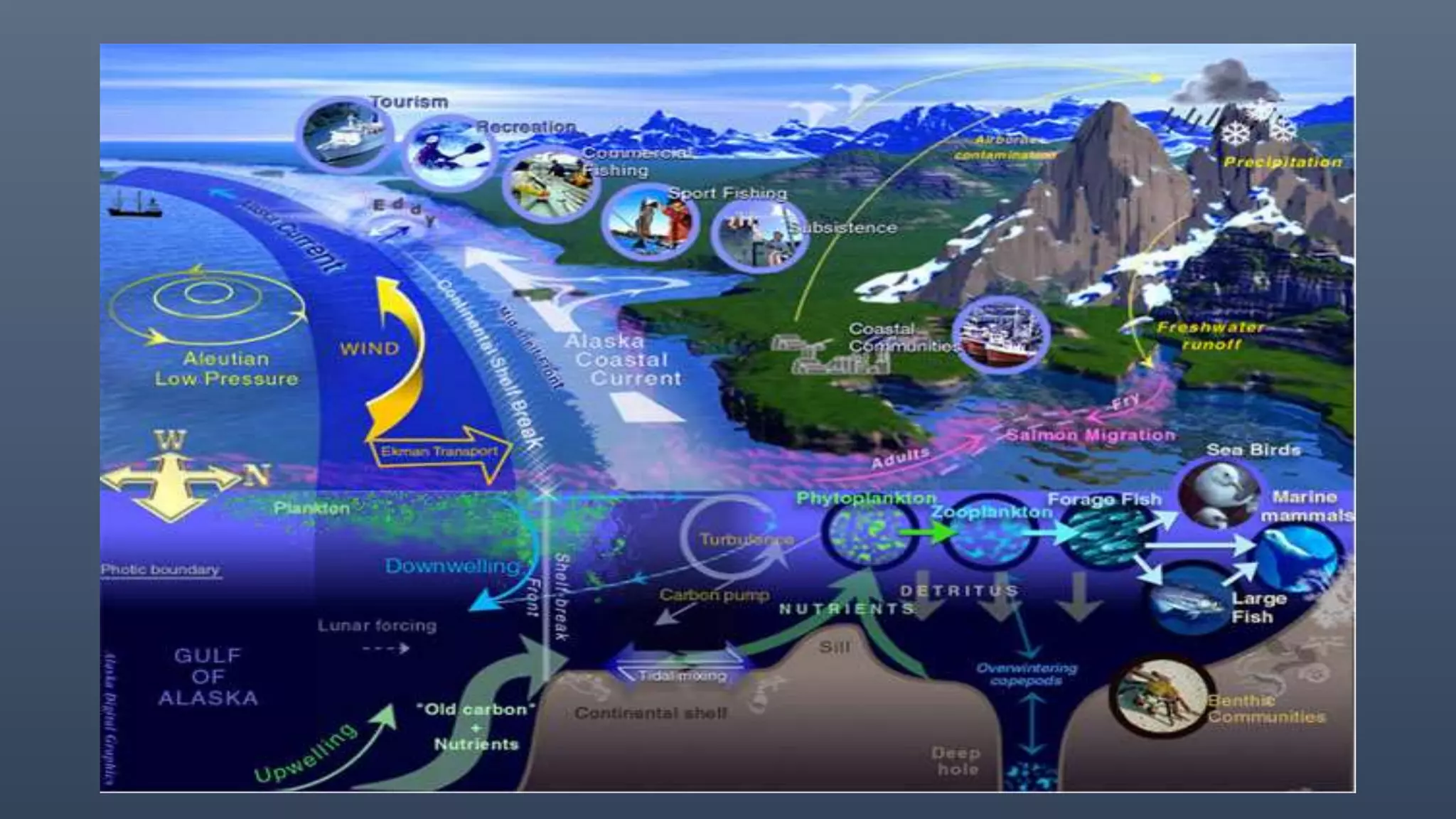
Marine
• Marine ecosystems 71% of the Earth's surface
• 97% of the planet's water.
• They generate 32% of the world's net primary production.
• 85% of the dissolved materials in seawater are sodium and chlorine.
• Seawater has an average salinity of 35 parts per thousand (ppt) of
water.
Freshwater
• Freshwater ecosystems cover 0.78% of the Earth's surface
• Inhabit 0.009% of its total water
• They generate nearly 3% of its net primary production
• Freshwater ecosystems contain 41% of the world's known fish species.
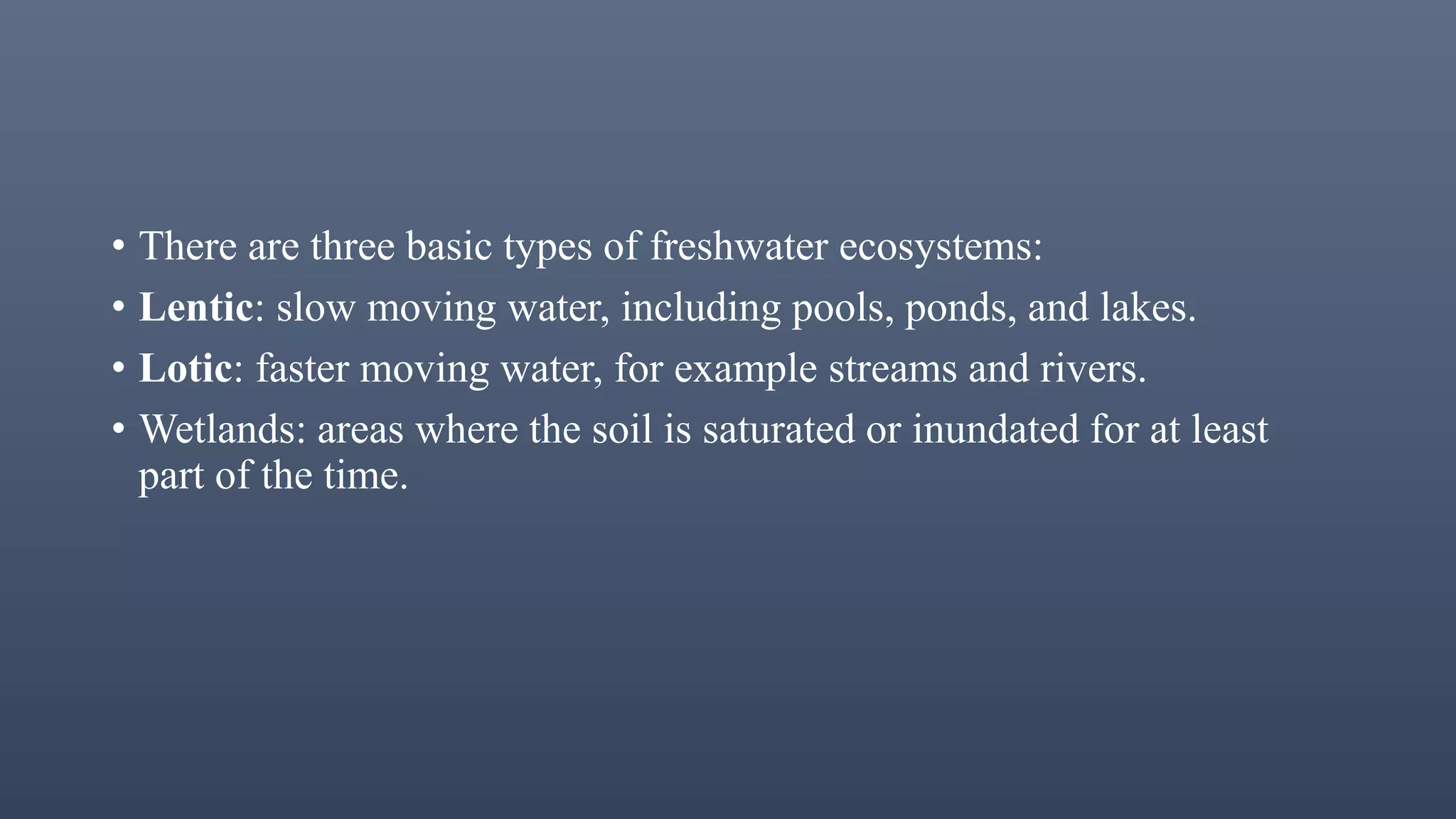
• There are three basic types of freshwater ecosystems:
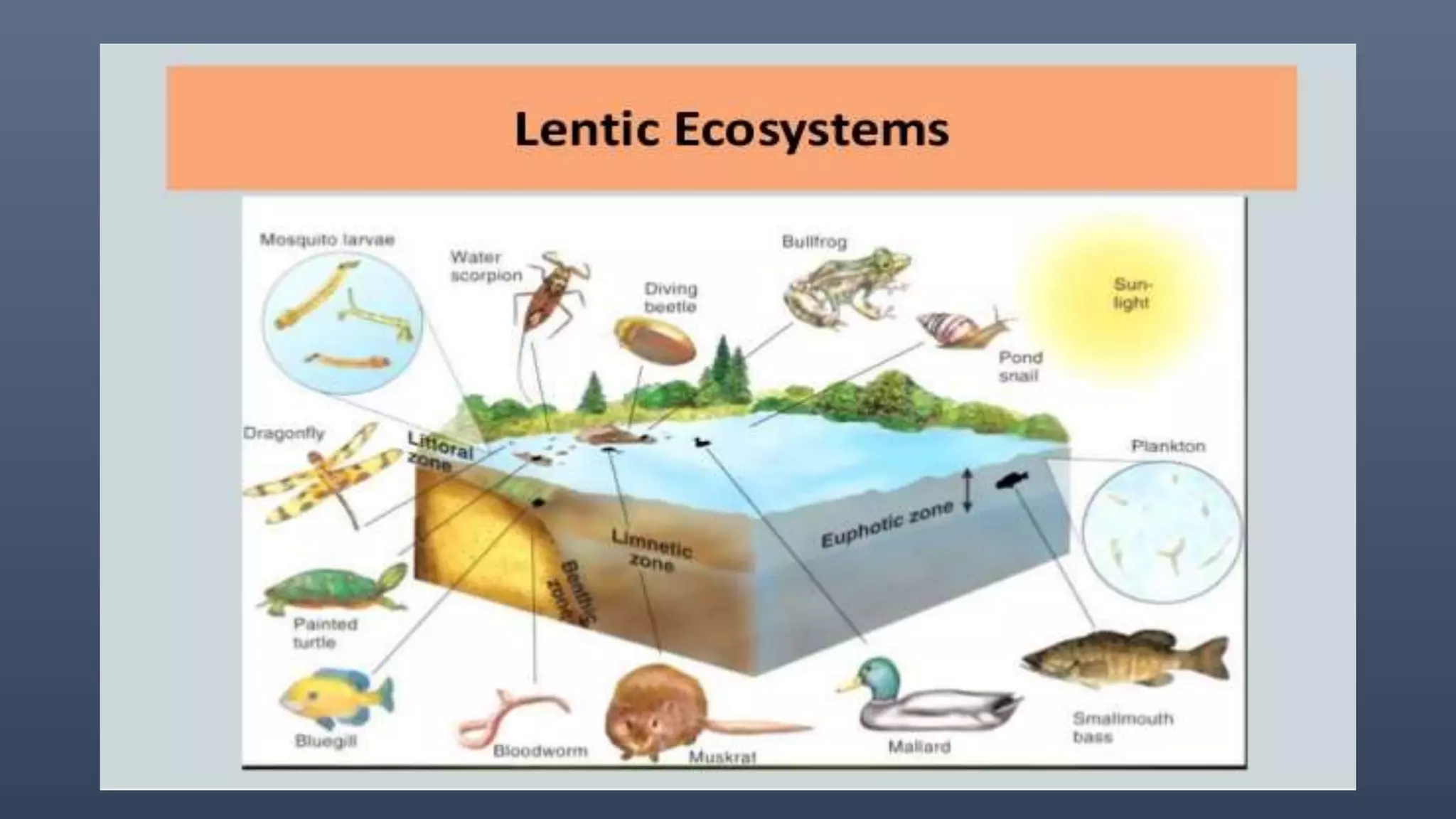
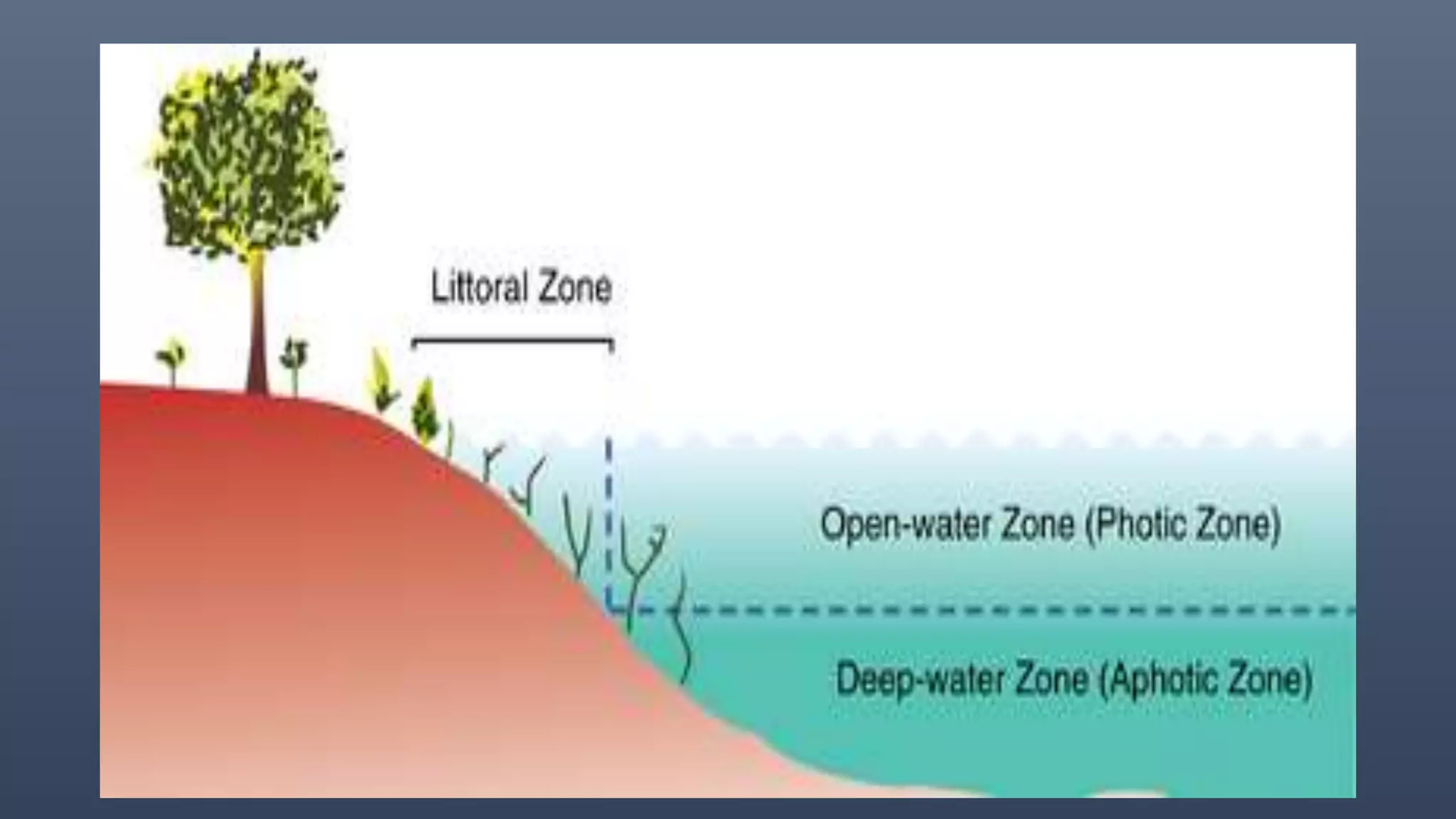
• Lentic: slow moving water, including pools, ponds, and lakes.
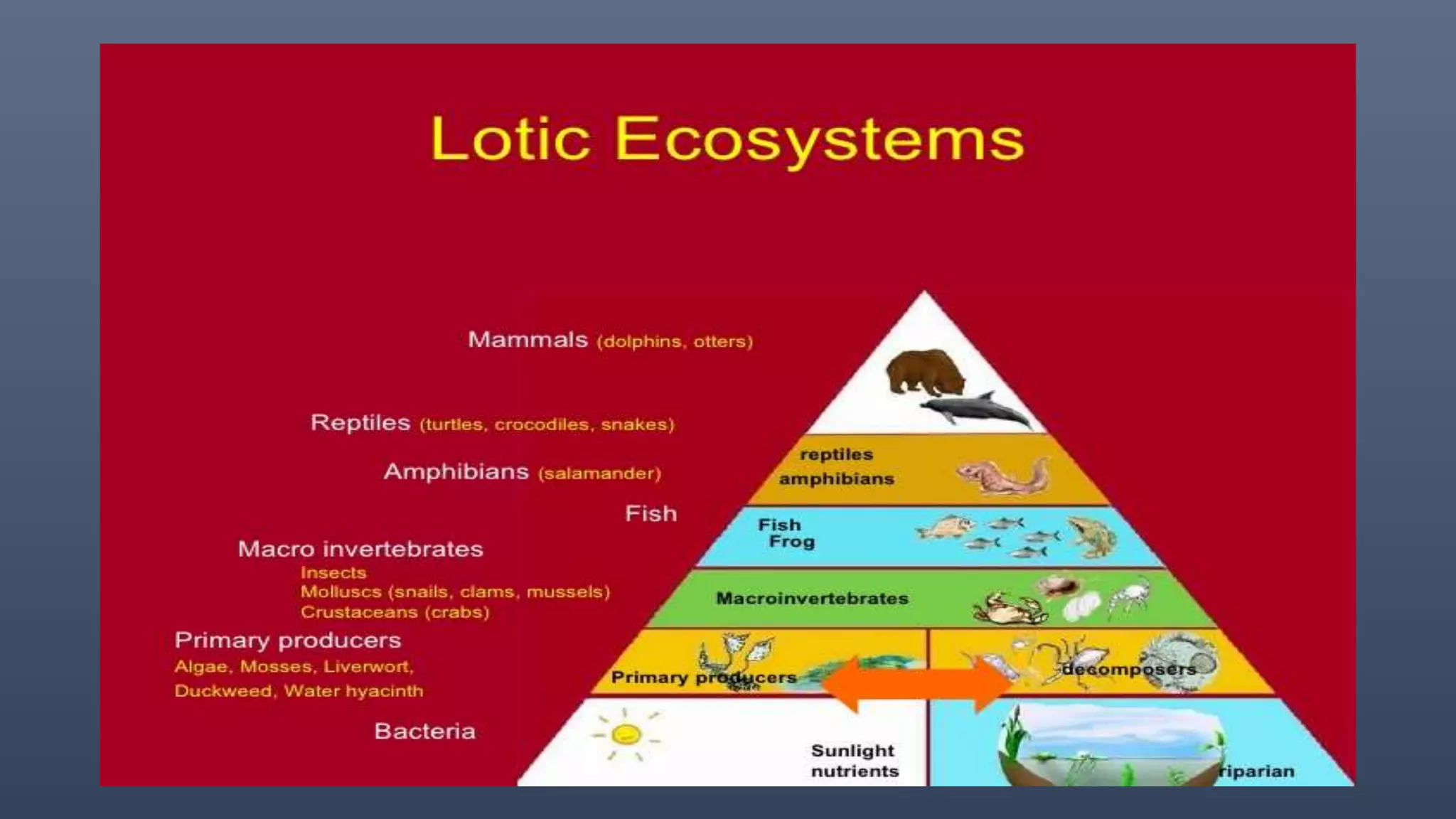
• Lotic: faster moving water, for example streams and rivers.
• Wetlands: areas where the soil is saturated or inundated for at least
part of the time.
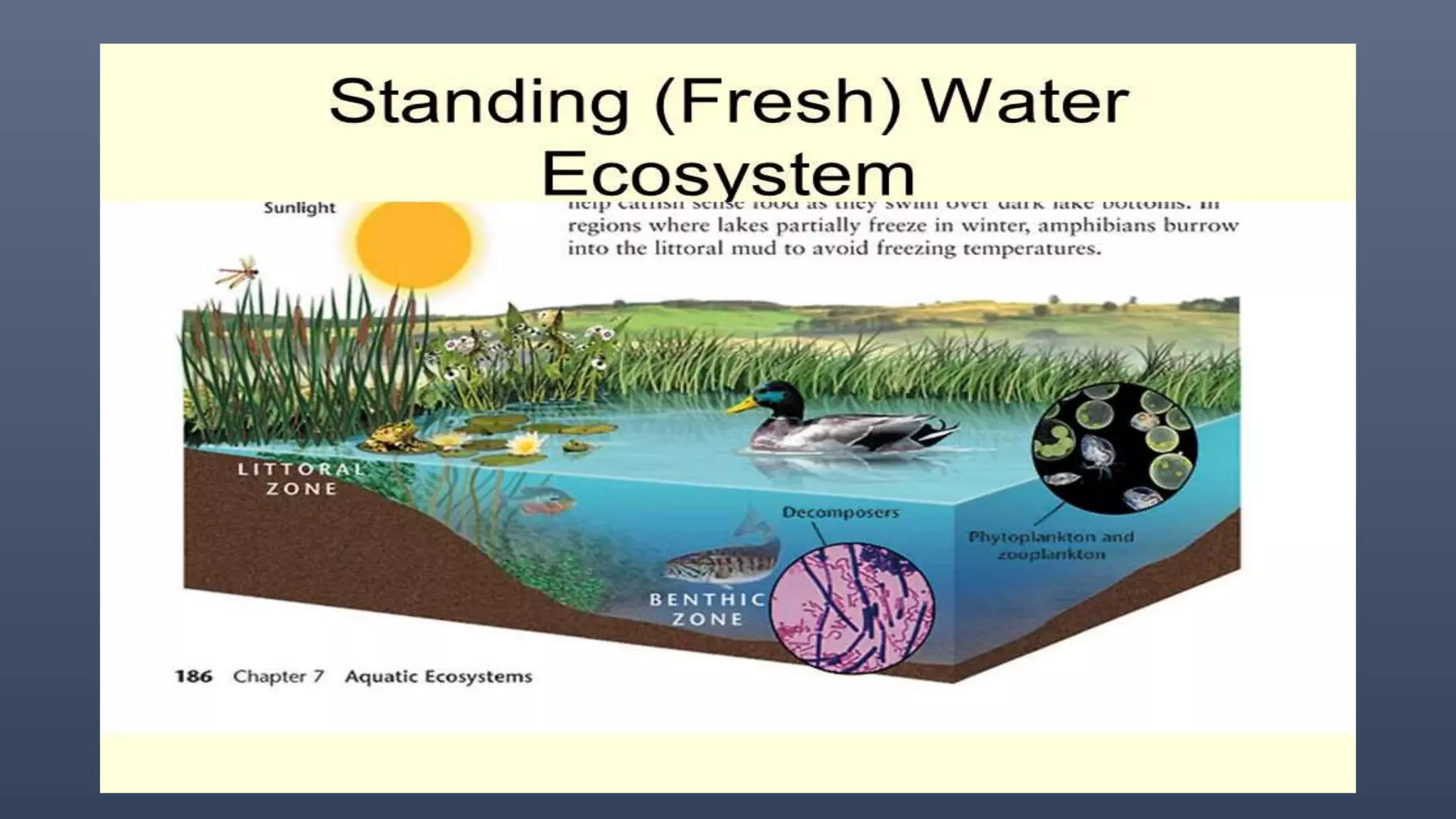
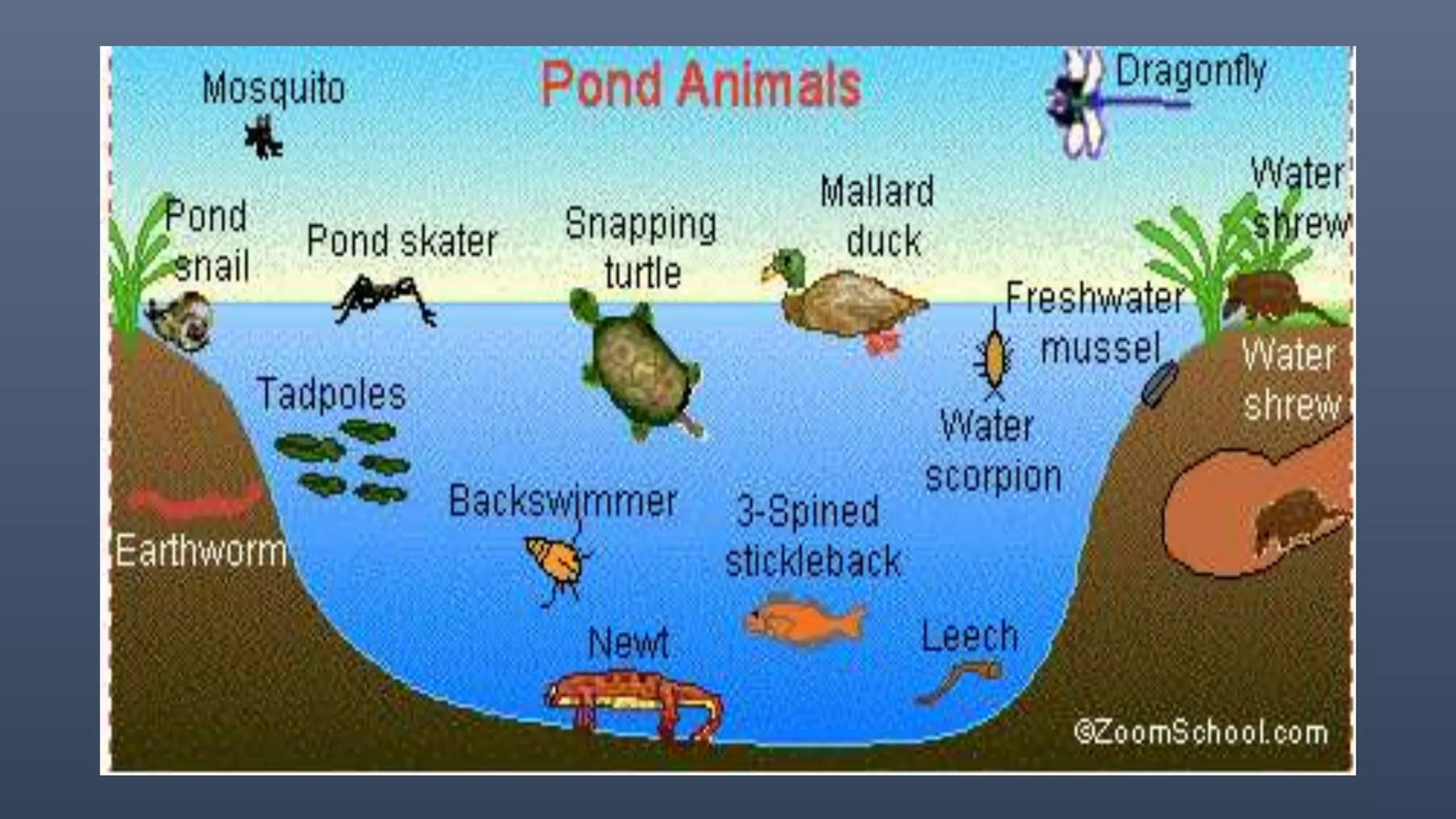
Ponds
• Ponds are small bodies of freshwater with shallow and still
water, marsh, and aquatic plants.
• They can be further divided into four zones:
• vegetation zone
• open water
• bottom mud
• surface film
• The size and depth of ponds often varies greatly with the time of year;
many ponds are produced by spring flooding from rivers.
Wetlands
• Wetlands are dominated by vascular plants that have adapted to
saturated soil.
• There are four main types of wetlands:
• Swamp
• Marsh
• Fen
• Bog
Swamp
A swamp is a type of wetland that is forested. Swamps are considered to
be transition zones because both land and water play a role in creating
this environment.
Marsh:
• A marsh is a type of wetland that is dominated by herbaceous plants
rather than woody plants.
• Marshes can be found at the edges of lakes and streams where they
form transition between the aquatic and terrestrial ecosystems.
Fen
• A fen is one of the main type of wetlands.
• Fens are minerotrophic peatlands, usually fed by mineral-rich surface
water or groundwater
Bog
• A bog is a wetland that accumulates peat, a deposit of dead plant
material-often mosses and in a majority of cases, sphagnum moss.
Functions
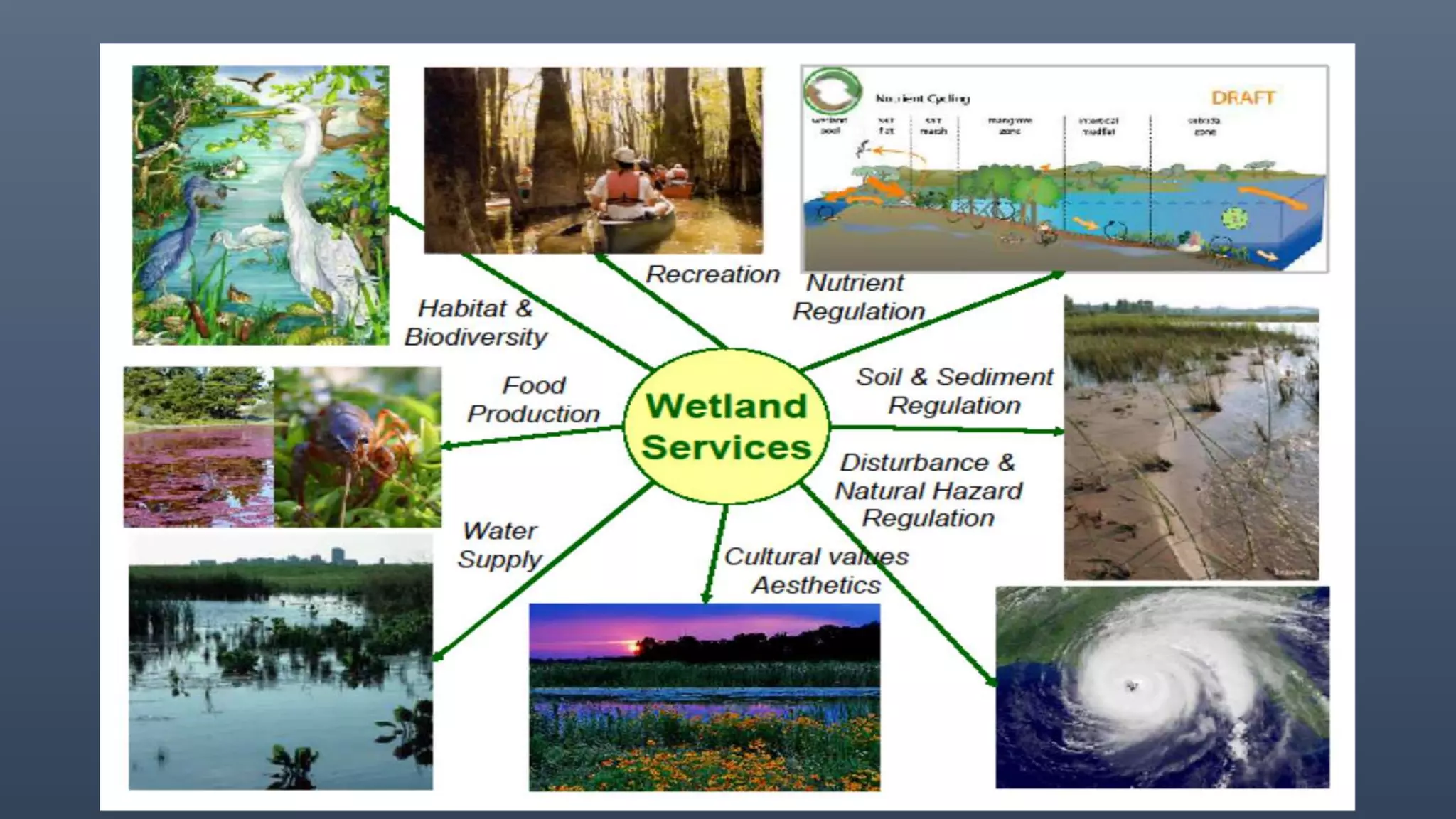
• They recycle nutrients
• purify water
• attenuate floods
• recharge ground water
• provide habitats for wildlife
• Aquatic ecosystems are also used for human recreation, and are very
important to the tourism industry, especially in coastal regions.
Abiotic characteristics
• An ecosystem is composed of biotic communities that are structured
by biological interactions and abiotic environmental factors
• Some of the important abiotic environmental factors of aquatic
ecosystems include substrate type
• water depth
• nutrient levels
• Temperature
• Salinity
• Flow
Biotic characteristics
The biotic characteristics are mainly determined by the organisms that
occur. For example, many wetland plants must produce aerenchyma to
carry oxygen to roots. Other biotic characteristics are more subtle and
difficult to measure, such as the relative importance of competition,
mutualism or predation.
1603638128-lecture-26-compartmentalization-of-ecosystem.pptx

1603638128-lecture-26-compartmentalization-of-ecosystem.pptx

  • 1.
  • 2.
    Aquatic ecosystem • Anaquatic ecosystem is an ecosystem in a body of water. • Communities of organisms that are dependent on each other and on their environment live in aquatic ecosystems. • The two main types of aquatic ecosystems are marine ecosystems and freshwater ecosystems. • Types • 1 Marine • 2 Freshwater • 3 Lentic
  • 5.
    Marine • Marine ecosystems71% of the Earth's surface • 97% of the planet's water. • They generate 32% of the world's net primary production. • 85% of the dissolved materials in seawater are sodium and chlorine. • Seawater has an average salinity of 35 parts per thousand (ppt) of water.
  • 8.
    Freshwater • Freshwater ecosystemscover 0.78% of the Earth's surface • Inhabit 0.009% of its total water • They generate nearly 3% of its net primary production • Freshwater ecosystems contain 41% of the world's known fish species.
  • 9.
    • There arethree basic types of freshwater ecosystems: • Lentic: slow moving water, including pools, ponds, and lakes. • Lotic: faster moving water, for example streams and rivers. • Wetlands: areas where the soil is saturated or inundated for at least part of the time.
  • 13.
    Ponds • Ponds aresmall bodies of freshwater with shallow and still water, marsh, and aquatic plants. • They can be further divided into four zones: • vegetation zone • open water • bottom mud • surface film • The size and depth of ponds often varies greatly with the time of year; many ponds are produced by spring flooding from rivers.
  • 16.
    Wetlands • Wetlands aredominated by vascular plants that have adapted to saturated soil. • There are four main types of wetlands: • Swamp • Marsh • Fen • Bog
  • 17.
    Swamp A swamp isa type of wetland that is forested. Swamps are considered to be transition zones because both land and water play a role in creating this environment.
  • 18.
    Marsh: • A marshis a type of wetland that is dominated by herbaceous plants rather than woody plants. • Marshes can be found at the edges of lakes and streams where they form transition between the aquatic and terrestrial ecosystems.
  • 19.
    Fen • A fenis one of the main type of wetlands. • Fens are minerotrophic peatlands, usually fed by mineral-rich surface water or groundwater
  • 20.
    Bog • A bogis a wetland that accumulates peat, a deposit of dead plant material-often mosses and in a majority of cases, sphagnum moss.
  • 22.
    Functions • They recyclenutrients • purify water • attenuate floods • recharge ground water • provide habitats for wildlife • Aquatic ecosystems are also used for human recreation, and are very important to the tourism industry, especially in coastal regions.
  • 23.
    Abiotic characteristics • Anecosystem is composed of biotic communities that are structured by biological interactions and abiotic environmental factors • Some of the important abiotic environmental factors of aquatic ecosystems include substrate type • water depth • nutrient levels • Temperature • Salinity • Flow
  • 24.
    Biotic characteristics The bioticcharacteristics are mainly determined by the organisms that occur. For example, many wetland plants must produce aerenchyma to carry oxygen to roots. Other biotic characteristics are more subtle and difficult to measure, such as the relative importance of competition, mutualism or predation.