




Welcome to a Breakthrough Year! Lee Middle & High School
2007-08 How will  we  spend our  dash ?
Old Mission Provide access for all to a basic education and access for a relatively small elite to a university education.
New Mission Get  all  students to meet high standards of education that do not have the built-in obsolescence of old-style curriculum, thereby equipping them to be  lifelong learners.
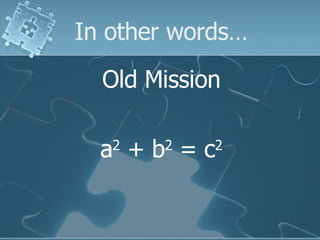
In other words… Old Mission a 2  + b 2  = c 2
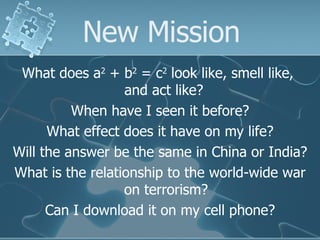
New Mission What does a 2  + b 2  = c 2  look like, smell like,  and act like?  When have I seen it before? What effect does it have on my life? Will the answer be the same in China or India? What is the relationship to the world-wide war on terrorism? Can I download it on my cell phone?
“ If it is worth doing, there’s probably a dip.” - Seth Godin
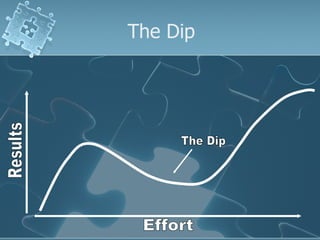
The Dip Effort Results The Dip
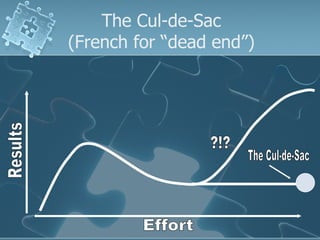
The Cul-de-Sac (French for “dead end”) Effort Results The Cul-de-Sac ?!?
“ No one quits the Boston Marathon at Mile 25.” - Seth Godin
Cost of Failure There are substantial economic and social costs associated with  failure  to learn and failure to achieve one’s full potential.
“ If you are not going to get to #1, you might as well quit now.” - Seth Godin
How do we Breakthrough? By establishing a system of expert, data-driven instruction that will result in  daily  continuous improvement for  all  students in  all  classrooms.
 
“ So think about this long and hard; are there things you’d like to  change ?”
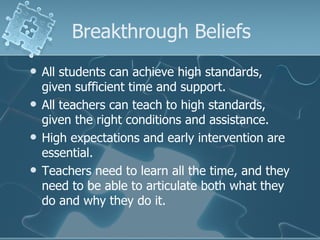
Breakthrough Beliefs All students can achieve high standards, given sufficient time and support. All teachers can teach to high standards, given the right conditions and assistance. High expectations and early intervention are essential. Teachers need to learn all the time, and they need to be able to articulate both what they do and why they do it.
Breakthrough Components Personalization Precision Professional Learning
Student Achievement Factors Motivation to learn and high expectations. Belief in the capacity of all students to achieve high standards. Using methods that accurately monitor progress towards those standards. Time on task and opportunity to learn. Different students need different amounts of time. Good classroom organization and strong routines for ensuring on-task behaviors that maximize learning time.
Student Achievement Factors Focused teaching. Knowing in a precise way the strengths and weaknesses of each student at the point of instruction through accurate formative assessment. Knowing the appropriate instructional response, particularly when and how to use which instructional strategies and matched resources. Classroom structures, routines and tools to help deliver differentiated instruction and focused teaching on a daily basis.
“  In school education, there is less evidence of systematic attention to design leading to gradual improvement of its core technology, classroom instruction.  Classrooms have changed very little over the decades, and apart from some injection of new technologies, which are often more primitive than the homes from which the students come, teaching looks much the same from one generation to the next.” Michael Fullan
Making a Breakthrough A detailed map of a given segment of curriculum with clear specifications of the learning objectives, associated standards and targets, and indicators of student progress. A detailed knowledge of how best to teach to these learning objectives in regular classroom settings, including explicit teaching strategies, methods, classroom routines, and practices.
Making a Breakthrough Powerful and aligned assessment tools tied to the learning objectives of each lesson that provides accurate and comprehensive information on student progress daily. A method of allowing formative assessment data to be captured in a way that is not time consuming.
Making a Breakthrough A means of using the assessment information on each student to design and implement personalized instruction. A built-in means of monitoring and managing learning, of testing what works, and of systematically improving the effectiveness of classroom instruction.
Initial Breakthrough Steps Conversations focused on changing classroom instruction to achieve academic goals. Classroom syllabus that outlines the learning standards, academic expectations, essential questions, assessment methods, and support. Lesson planning based on the backward planning methods of  Understanding by Design
Initial Breakthrough Steps Peer support, observation, and accountability Assessments for learning Grading based on achievement Data-based decision-making Student goal-setting and portfolios Professional inquiry (A.R.T.S.)
District-Wide Goal All students reading at grade level. Theory of Action If classroom teachers have greater knowledge about teaching and assessing reading skills and see the connection to their respective content areas, then they will be more likely to integrate reading instruction within their classroom; and if classroom teachers incorporate more reading instruction in their classrooms, then student reading skills will improve.
212 ◦
“ One extra degree makes all the difference.”
“ One extra degree separates the good from the great.”
“ It’s time to turn up the heat…”
“ To get what we’ve never had, we must do what we’ve never done.”
Details Discipline & Attendance Kids in the Hallways Misuse of the Media Center Securing the World’s Most Poorly Designed School Building Communications Extra-duties and Committees Meeting Days Faculty Meetings

Welcome To A Breakthrough Year!

  • 1.
    Welcome to aBreakthrough Year! Lee Middle & High School
  • 2.
    2007-08 How will we spend our dash ?
  • 3.
    Old Mission Provideaccess for all to a basic education and access for a relatively small elite to a university education.
  • 4.
    New Mission Get all students to meet high standards of education that do not have the built-in obsolescence of old-style curriculum, thereby equipping them to be lifelong learners.
  • 5.
    In other words…Old Mission a 2 + b 2 = c 2
  • 6.
    New Mission Whatdoes a 2 + b 2 = c 2 look like, smell like, and act like? When have I seen it before? What effect does it have on my life? Will the answer be the same in China or India? What is the relationship to the world-wide war on terrorism? Can I download it on my cell phone?
  • 7.
    “ If itis worth doing, there’s probably a dip.” - Seth Godin
  • 8.
    The Dip EffortResults The Dip
  • 9.
    The Cul-de-Sac (Frenchfor “dead end”) Effort Results The Cul-de-Sac ?!?
  • 10.
    “ No onequits the Boston Marathon at Mile 25.” - Seth Godin
  • 11.
    Cost of FailureThere are substantial economic and social costs associated with failure to learn and failure to achieve one’s full potential.
  • 12.
    “ If youare not going to get to #1, you might as well quit now.” - Seth Godin
  • 13.
    How do weBreakthrough? By establishing a system of expert, data-driven instruction that will result in daily continuous improvement for all students in all classrooms.
  • 14.
  • 15.
    “ So thinkabout this long and hard; are there things you’d like to change ?”
  • 16.
    Breakthrough Beliefs Allstudents can achieve high standards, given sufficient time and support. All teachers can teach to high standards, given the right conditions and assistance. High expectations and early intervention are essential. Teachers need to learn all the time, and they need to be able to articulate both what they do and why they do it.
  • 17.
    Breakthrough Components PersonalizationPrecision Professional Learning
  • 18.
    Student Achievement FactorsMotivation to learn and high expectations. Belief in the capacity of all students to achieve high standards. Using methods that accurately monitor progress towards those standards. Time on task and opportunity to learn. Different students need different amounts of time. Good classroom organization and strong routines for ensuring on-task behaviors that maximize learning time.
  • 19.
    Student Achievement FactorsFocused teaching. Knowing in a precise way the strengths and weaknesses of each student at the point of instruction through accurate formative assessment. Knowing the appropriate instructional response, particularly when and how to use which instructional strategies and matched resources. Classroom structures, routines and tools to help deliver differentiated instruction and focused teaching on a daily basis.
  • 20.
    “ Inschool education, there is less evidence of systematic attention to design leading to gradual improvement of its core technology, classroom instruction. Classrooms have changed very little over the decades, and apart from some injection of new technologies, which are often more primitive than the homes from which the students come, teaching looks much the same from one generation to the next.” Michael Fullan
  • 21.
    Making a BreakthroughA detailed map of a given segment of curriculum with clear specifications of the learning objectives, associated standards and targets, and indicators of student progress. A detailed knowledge of how best to teach to these learning objectives in regular classroom settings, including explicit teaching strategies, methods, classroom routines, and practices.
  • 22.
    Making a BreakthroughPowerful and aligned assessment tools tied to the learning objectives of each lesson that provides accurate and comprehensive information on student progress daily. A method of allowing formative assessment data to be captured in a way that is not time consuming.
  • 23.
    Making a BreakthroughA means of using the assessment information on each student to design and implement personalized instruction. A built-in means of monitoring and managing learning, of testing what works, and of systematically improving the effectiveness of classroom instruction.
  • 24.
    Initial Breakthrough StepsConversations focused on changing classroom instruction to achieve academic goals. Classroom syllabus that outlines the learning standards, academic expectations, essential questions, assessment methods, and support. Lesson planning based on the backward planning methods of Understanding by Design
  • 25.
    Initial Breakthrough StepsPeer support, observation, and accountability Assessments for learning Grading based on achievement Data-based decision-making Student goal-setting and portfolios Professional inquiry (A.R.T.S.)
  • 26.
    District-Wide Goal Allstudents reading at grade level. Theory of Action If classroom teachers have greater knowledge about teaching and assessing reading skills and see the connection to their respective content areas, then they will be more likely to integrate reading instruction within their classroom; and if classroom teachers incorporate more reading instruction in their classrooms, then student reading skills will improve.
  • 27.
  • 28.
    “ One extradegree makes all the difference.”
  • 29.
    “ One extradegree separates the good from the great.”
  • 30.
    “ It’s timeto turn up the heat…”
  • 31.
    “ To getwhat we’ve never had, we must do what we’ve never done.”
  • 32.
    Details Discipline &Attendance Kids in the Hallways Misuse of the Media Center Securing the World’s Most Poorly Designed School Building Communications Extra-duties and Committees Meeting Days Faculty Meetings