Leadership:  The Ideas of Michael Fullan Presented by William Allan Kritsonis, PhD Professor PhD Program in Educational Leadership Prairie View A&M University Texas A&M University System EDUL 7043 Organizational Development and Change Spring 2010                             
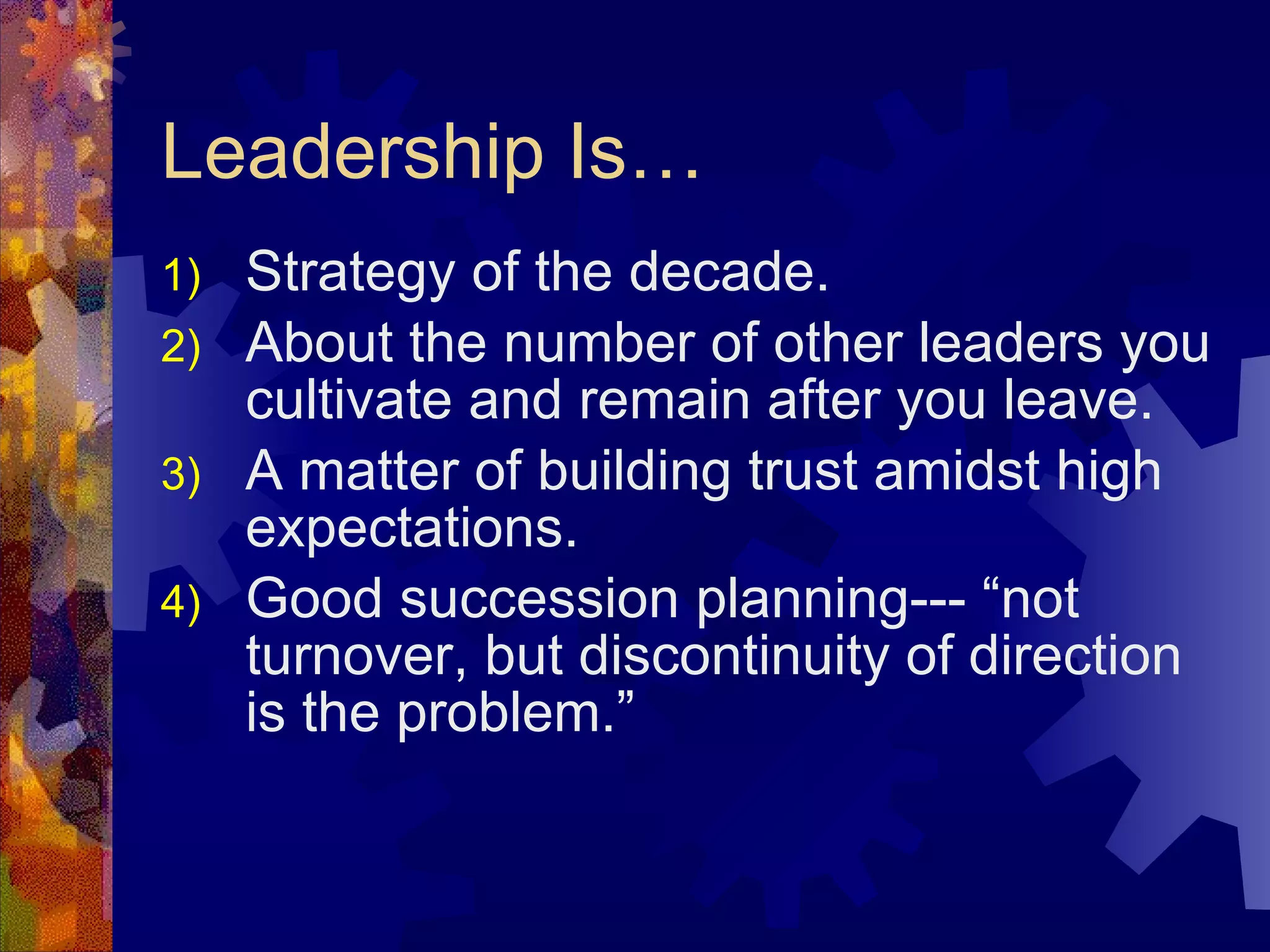
Leadership Is… Strategy of the decade. About the number of other leaders you cultivate and remain after you leave. A matter of building trust amidst high expectations. Good succession planning--- “not turnover, but discontinuity of direction is the problem.”
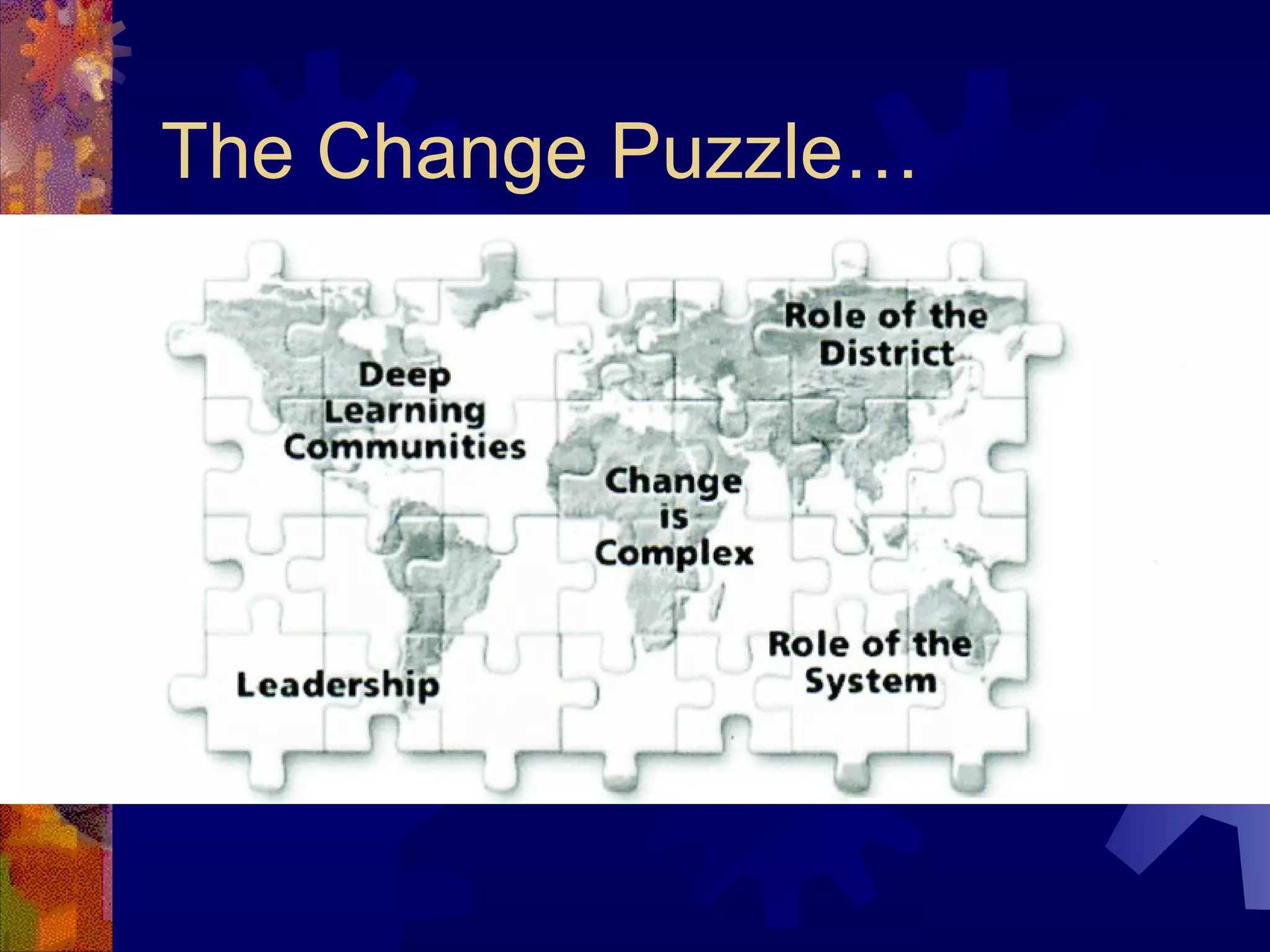
The Change Puzzle…
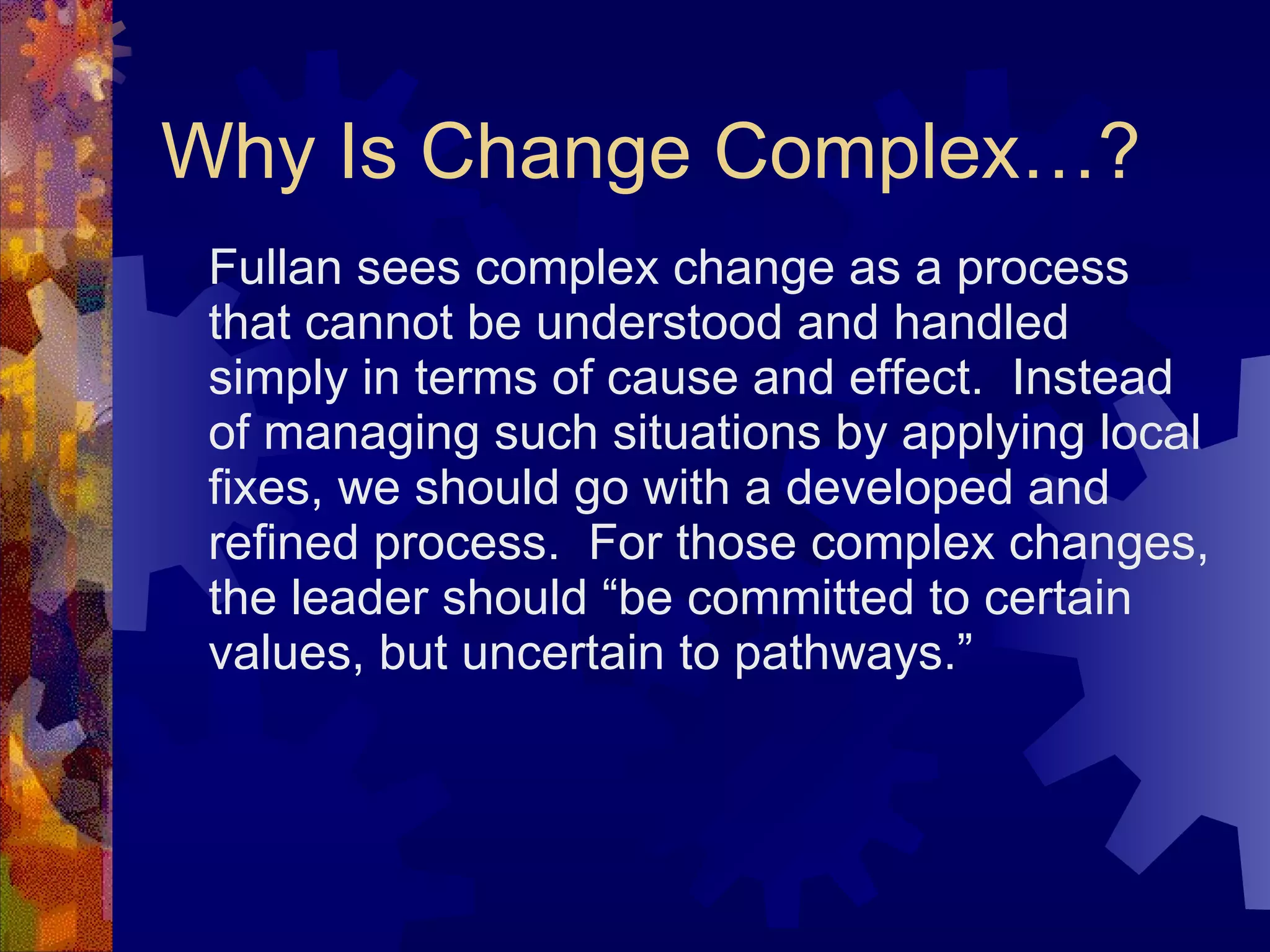
Why Is Change Complex…? Fullan sees complex change as a process that cannot be understood and handled simply in terms of cause and effect.  Instead of managing such situations by applying local fixes, we should go with a developed and refined process.  For those complex changes, the leader should “be committed to certain values, but uncertain to pathways.”
What is Change…? New Materials New Behaviors/Practices New Beliefs and Understandings
New Insights… Fullan is a proponent of mentoring.  He believes that mentors gain as much from their protégés as their protégés do from them. He believes that thinking outside of the box is sometimes difficult because of overload and vulnerability but a new mindset on new insights can help a person truly lead.
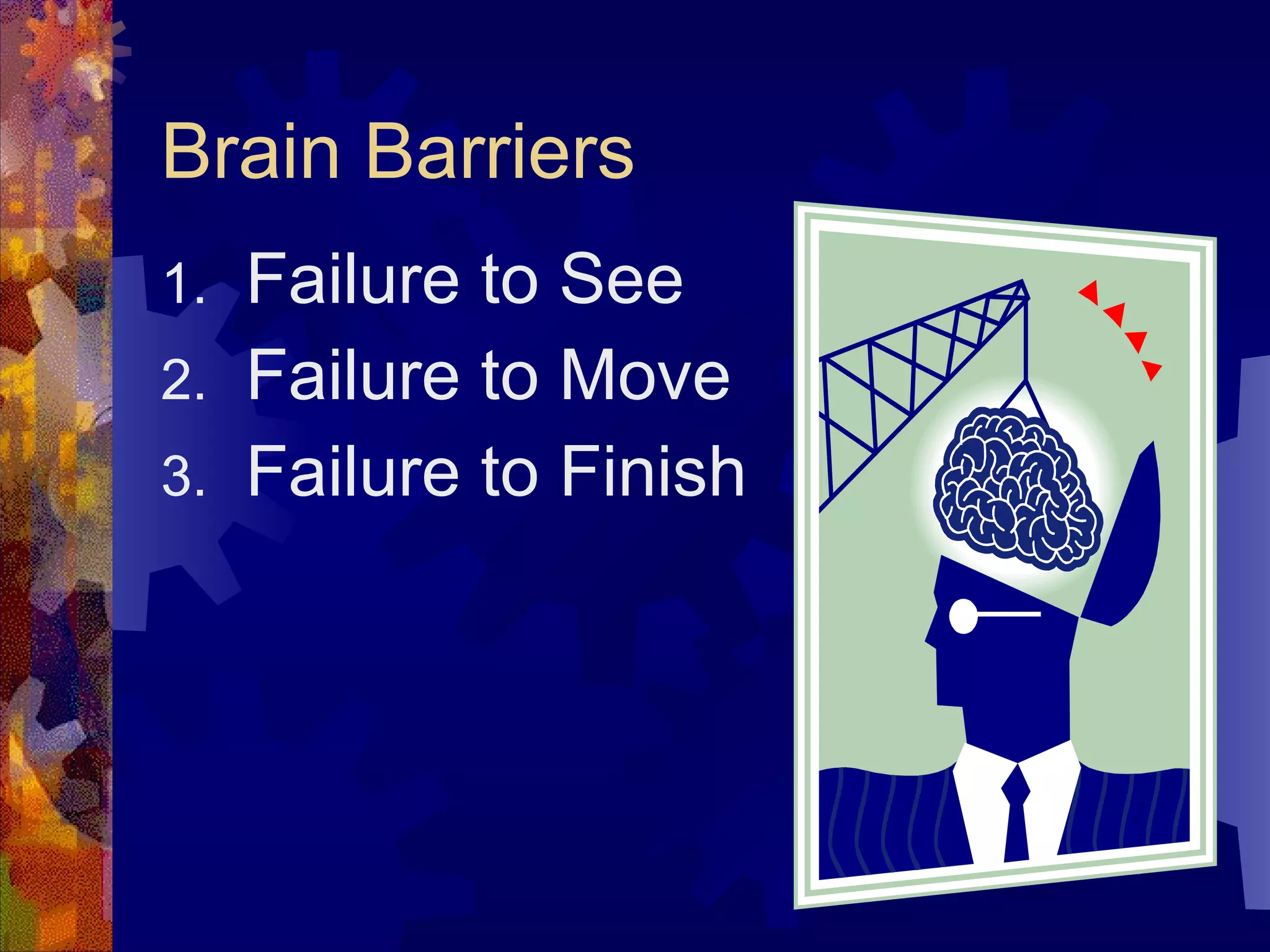
Brain Barriers Failure to See Failure to Move Failure to Finish
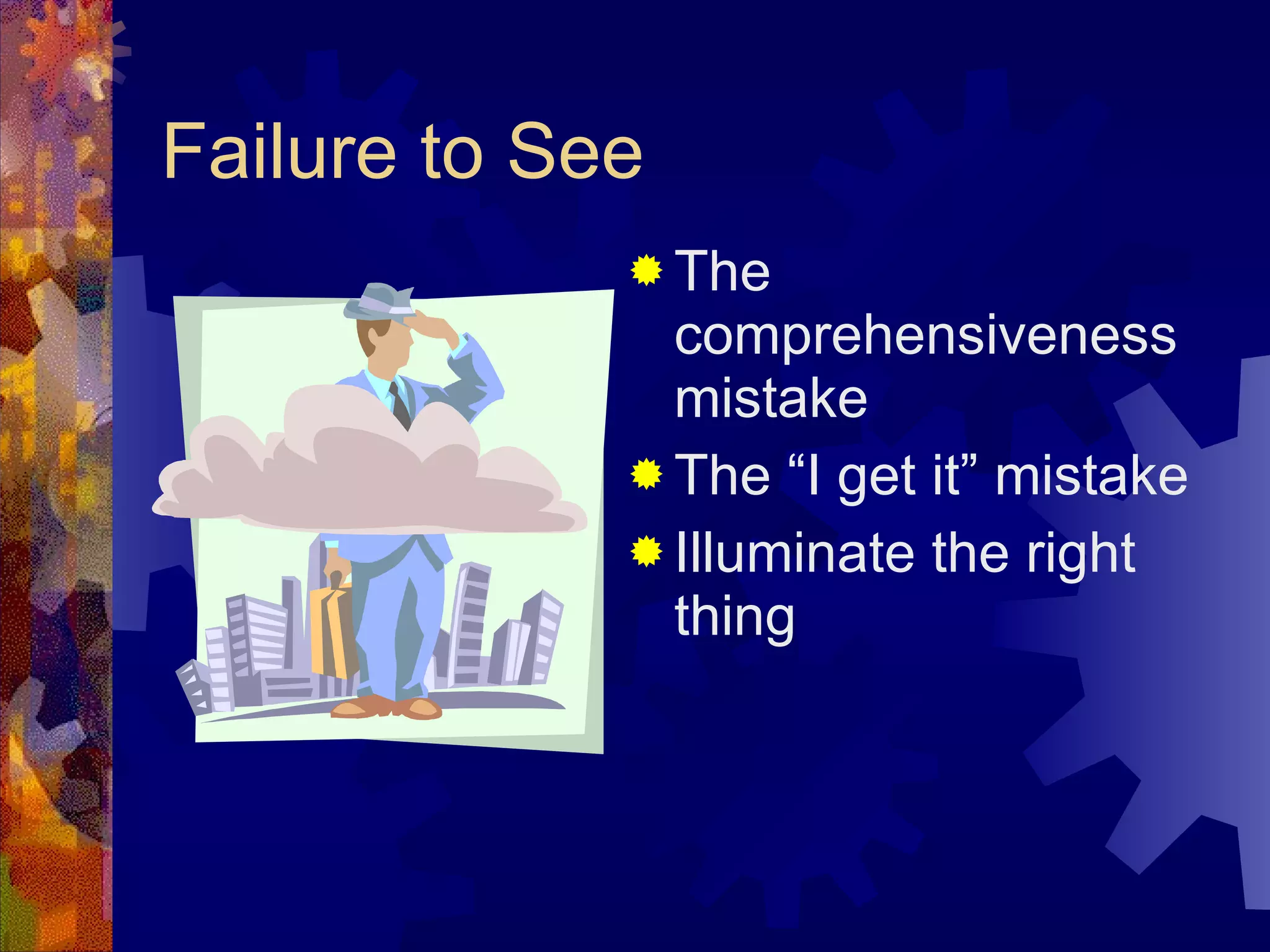
Failure to See The comprehensiveness mistake The “I get it” mistake Illuminate the right thing
Failure to Move The clearer the new vision, the more immobilized people become.
Right Thing Poorly The clearer the new vision, the easier it is for people to see all the specific ways in which they will be incompetent and look stupid.  Many prefer to be competent at the wrong thing than incompetent at the right thing.
Failure to Finish People get tired. People get lost.
Ways to Break Through Barriers Conceive Believe  Achieve
Eight Elements of Sustainability Sustainability is the capacity of the system to engage in the complexities of continuous improvement with values of deep human purpose (Fullan, 2005).
1. Public service with moral purpose. Raise the bar & close the gap of student learning Be respectful Improve the social environment
2. Commitment to changing context at all levels Mandatory initiatives such as NCLB only change a tiny slice of the context. In order for transformational change to occur, it must motivate or give people the ability to succeed.
3. Lateral capacity building through networks Collaboration rather than competition Link the ineffective with the effective
4. Vertical and co-development relationships. Vertical relationships (state/district, district/school, etc.) must be strengthened through… SUPPORT & RESOURCES
5. Deep learning Learn from your actions. Fail intelligently.  Exchange of ideas fosters the cohesiveness of a group.
6. Dual commitment to short-term and long-term results Ascertain long-term results while committing to short-term objectives
7. Cyclical energizing Sustainability is cyclical and continuous. Energy (physical, emotional, mental, spiritual) is required. Time and ingenuity are required for the next breakthrough.
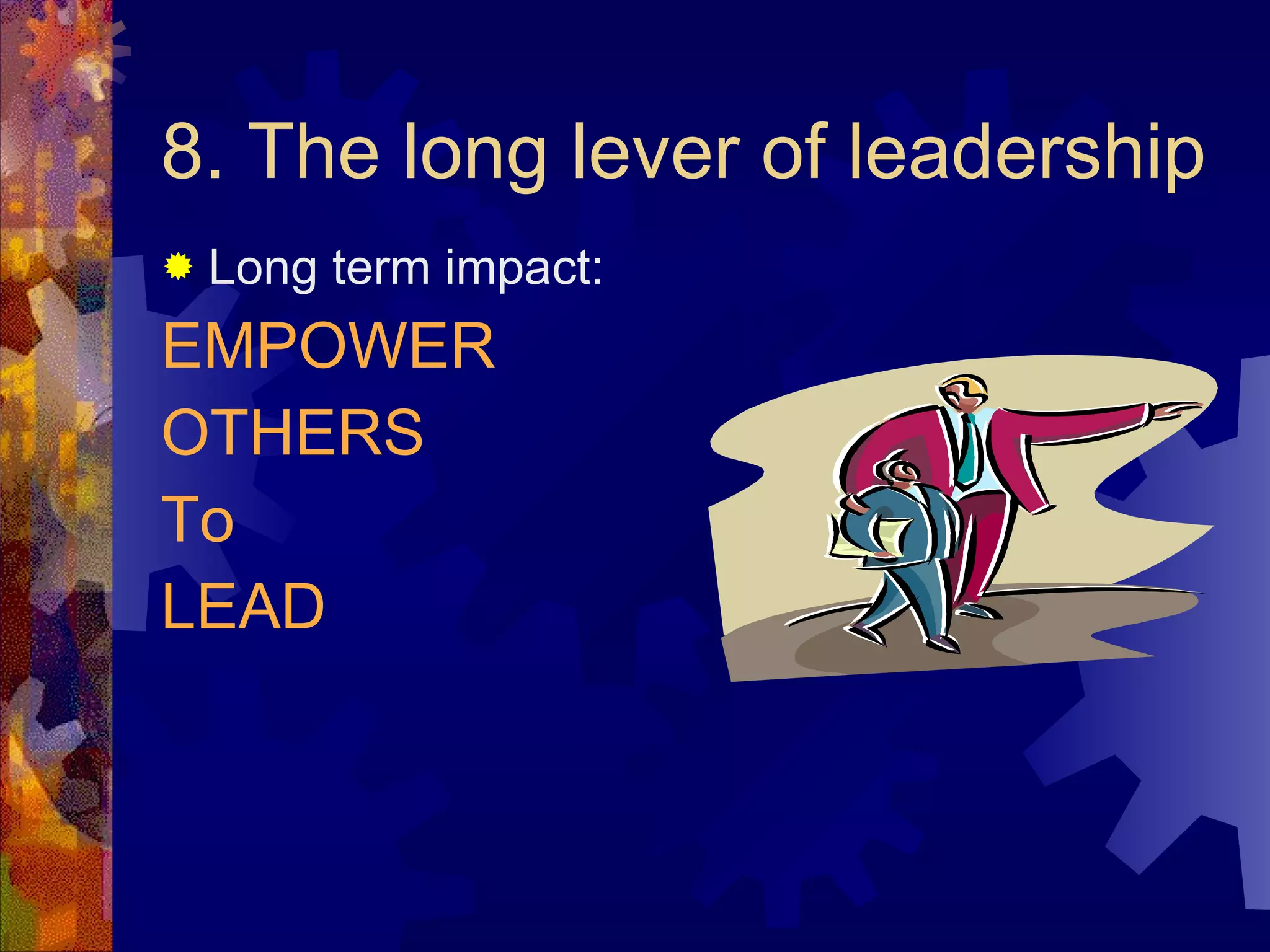
8. The long lever of leadership Long term impact: EMPOWER OTHERS To LEAD
Relationship Building as a Change Agent Successful principals reach out to their parents and community and work hard to expand the professional capacity of the teachers to develop a coherent professional community.
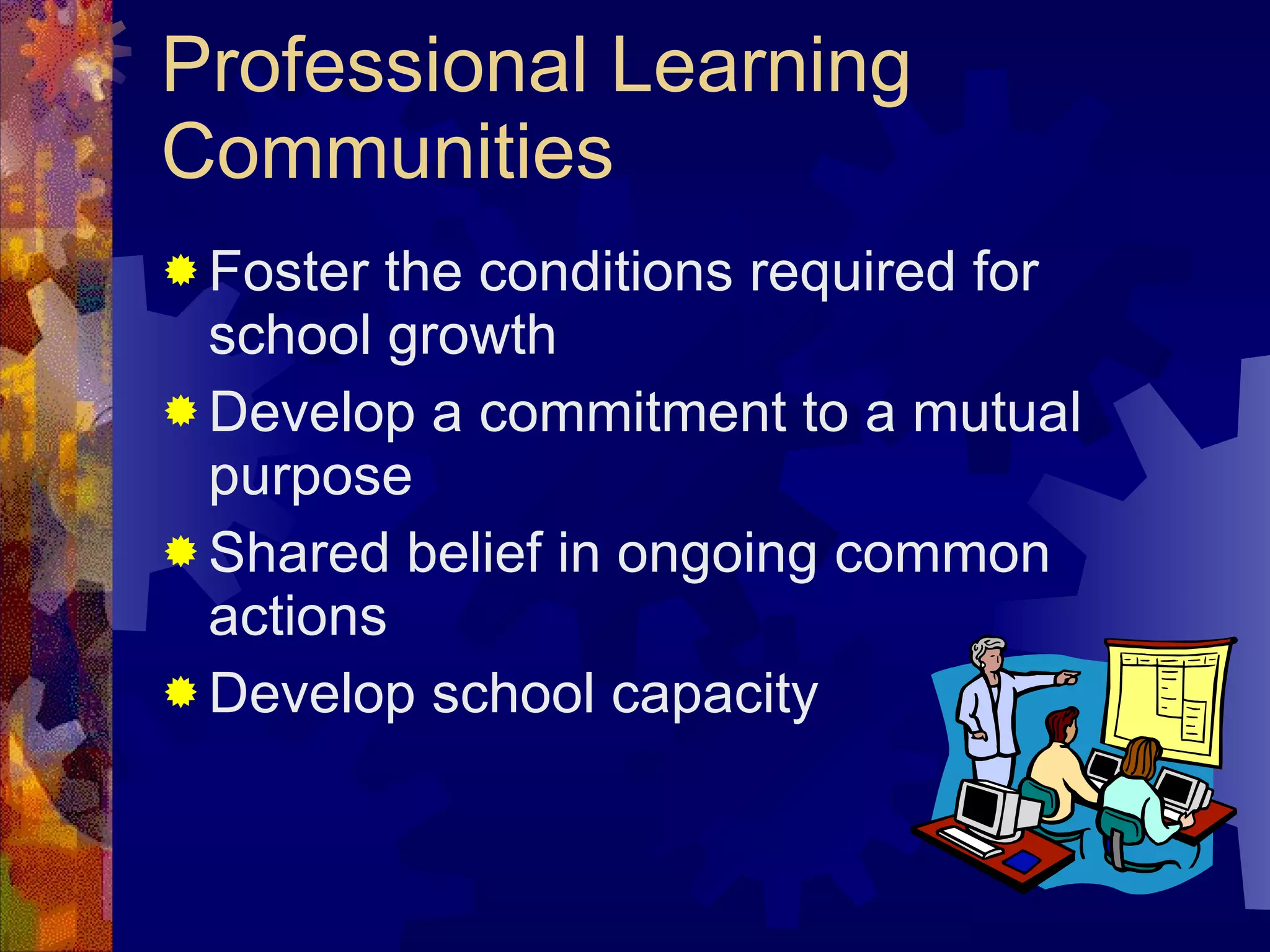
Professional Learning Communities Foster the conditions required for school growth  Develop a commitment to a mutual purpose Shared belief in ongoing common actions Develop school capacity
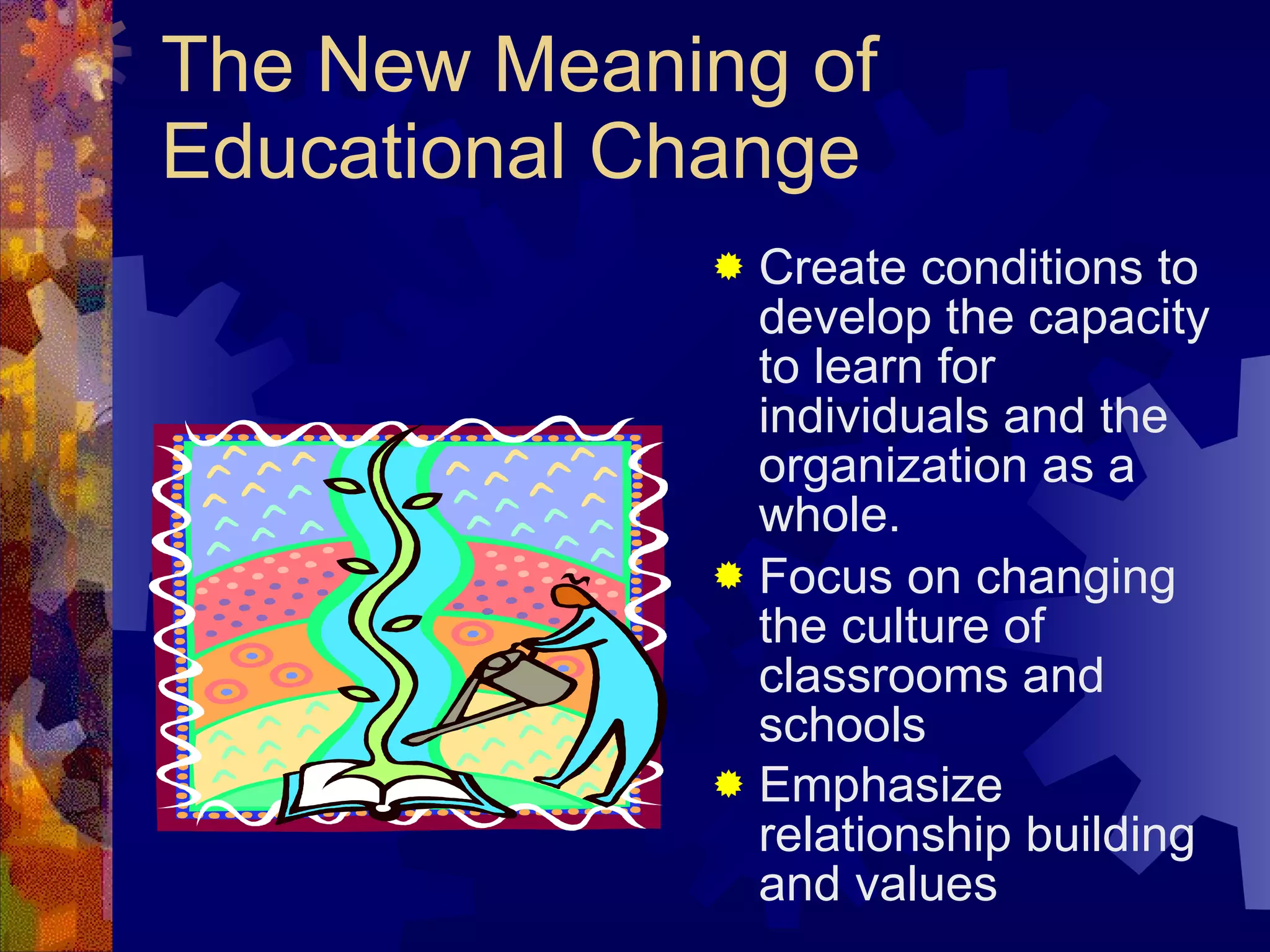
The New Meaning of Educational Change Create conditions to develop the capacity to learn for individuals and the organization as a whole. Focus on changing the culture of classrooms and schools Emphasize relationship building and values
Develop Shared Meaning All learning is a continual process of making meaning Share and sustain ideas within the organization Avoid the imposition of top-down reform Teacher and schools should be seen as moral change agents Make democratic communities possible
Change and the Pedagogy of Constructivism Always involve your teachers in the process!  Never innovate the most. You can’t just have the best ideas. Appreciate the implementation dip. Involve those that resist you and transform culture.
Key Players of Change:  School Principals- Teachers- Schools School Principals-  Gatekeeper of change.  Teachers-  It depends on what each individual thinks and do! Teachers’ skills and dispositions are important to the success of the organization. Schools - Must build professional learning communities, have program coherence, and technical resources.
Key Words Extinction Moral purpose  Understanding change Developing relationships Knowledge building Coherence making
Dr. Fullan’s Beliefs “ Leadership, then, is not mobilizing others to solve problems we already know how to solve, but to help them confront problems that have never yet been successfully addressed.”  Moral purpose cannot just be stated, it must be accompanied by strategies for realizing it, and those strategies are the leadership actions that energize people to pursue a desired goal. Leading in a culture of change is judged by what leadership you produce in others.
Causes of Ineffective Change Leaders not guided by moral purpose. Leaders that do not fully understand the change process, but may have moral purpose. Leaders that innovate the most and do not improve relationships. Leaders who think that it is enough to have the best ideas. Leaders who do not appreciate early difficulties when trying something new. Leaders who do not redefine resistance as a potential positive force and never re-culture.
Main Agent of Change in Schools “ The single most important factor ensuring that all students meet performance goals at the site level is the leadership of the principal.” Michael Fullan
Leadership for Change Engage people’s moral purpose  Build capacity Understand the change process Develop cultures for learning  Develop cultures of evaluation Focus on leadership for change Foster coherence making Cultivate tri-level development
On Going Journey to Better Schools Reform in schools through cultural change and school capacity is the key to success Component 1- teacher’s knowledge and skills Component 2- professional community Component 3- program coherence Component 4- teacher resources Component 5- principal leadership
Recommendations for the Future There must be a moral purpose Understand the change process Build relationships Knowledge building Coherence making
Summary Leadership building and knowledge building will continue to be the twin buzzwords for the future.

Fullan group project answers 1 5[1]

  • 1.
    Leadership: TheIdeas of Michael Fullan Presented by William Allan Kritsonis, PhD Professor PhD Program in Educational Leadership Prairie View A&M University Texas A&M University System EDUL 7043 Organizational Development and Change Spring 2010                             
  • 2.
    Leadership Is… Strategyof the decade. About the number of other leaders you cultivate and remain after you leave. A matter of building trust amidst high expectations. Good succession planning--- “not turnover, but discontinuity of direction is the problem.”
  • 3.
  • 4.
    Why Is ChangeComplex…? Fullan sees complex change as a process that cannot be understood and handled simply in terms of cause and effect. Instead of managing such situations by applying local fixes, we should go with a developed and refined process. For those complex changes, the leader should “be committed to certain values, but uncertain to pathways.”
  • 5.
    What is Change…?New Materials New Behaviors/Practices New Beliefs and Understandings
  • 6.
    New Insights… Fullanis a proponent of mentoring. He believes that mentors gain as much from their protégés as their protégés do from them. He believes that thinking outside of the box is sometimes difficult because of overload and vulnerability but a new mindset on new insights can help a person truly lead.
  • 7.
    Brain Barriers Failureto See Failure to Move Failure to Finish
  • 8.
    Failure to SeeThe comprehensiveness mistake The “I get it” mistake Illuminate the right thing
  • 9.
    Failure to MoveThe clearer the new vision, the more immobilized people become.
  • 10.
    Right Thing PoorlyThe clearer the new vision, the easier it is for people to see all the specific ways in which they will be incompetent and look stupid. Many prefer to be competent at the wrong thing than incompetent at the right thing.
  • 11.
    Failure to FinishPeople get tired. People get lost.
  • 12.
    Ways to BreakThrough Barriers Conceive Believe Achieve
  • 13.
    Eight Elements ofSustainability Sustainability is the capacity of the system to engage in the complexities of continuous improvement with values of deep human purpose (Fullan, 2005).
  • 14.
    1. Public servicewith moral purpose. Raise the bar & close the gap of student learning Be respectful Improve the social environment
  • 15.
    2. Commitment tochanging context at all levels Mandatory initiatives such as NCLB only change a tiny slice of the context. In order for transformational change to occur, it must motivate or give people the ability to succeed.
  • 16.
    3. Lateral capacitybuilding through networks Collaboration rather than competition Link the ineffective with the effective
  • 17.
    4. Vertical andco-development relationships. Vertical relationships (state/district, district/school, etc.) must be strengthened through… SUPPORT & RESOURCES
  • 18.
    5. Deep learningLearn from your actions. Fail intelligently. Exchange of ideas fosters the cohesiveness of a group.
  • 19.
    6. Dual commitmentto short-term and long-term results Ascertain long-term results while committing to short-term objectives
  • 20.
    7. Cyclical energizingSustainability is cyclical and continuous. Energy (physical, emotional, mental, spiritual) is required. Time and ingenuity are required for the next breakthrough.
  • 21.
    8. The longlever of leadership Long term impact: EMPOWER OTHERS To LEAD
  • 22.
    Relationship Building asa Change Agent Successful principals reach out to their parents and community and work hard to expand the professional capacity of the teachers to develop a coherent professional community.
  • 23.
    Professional Learning CommunitiesFoster the conditions required for school growth Develop a commitment to a mutual purpose Shared belief in ongoing common actions Develop school capacity
  • 24.
    The New Meaningof Educational Change Create conditions to develop the capacity to learn for individuals and the organization as a whole. Focus on changing the culture of classrooms and schools Emphasize relationship building and values
  • 25.
    Develop Shared MeaningAll learning is a continual process of making meaning Share and sustain ideas within the organization Avoid the imposition of top-down reform Teacher and schools should be seen as moral change agents Make democratic communities possible
  • 26.
    Change and thePedagogy of Constructivism Always involve your teachers in the process! Never innovate the most. You can’t just have the best ideas. Appreciate the implementation dip. Involve those that resist you and transform culture.
  • 27.
    Key Players ofChange: School Principals- Teachers- Schools School Principals- Gatekeeper of change. Teachers- It depends on what each individual thinks and do! Teachers’ skills and dispositions are important to the success of the organization. Schools - Must build professional learning communities, have program coherence, and technical resources.
  • 28.
    Key Words ExtinctionMoral purpose Understanding change Developing relationships Knowledge building Coherence making
  • 29.
    Dr. Fullan’s Beliefs“ Leadership, then, is not mobilizing others to solve problems we already know how to solve, but to help them confront problems that have never yet been successfully addressed.” Moral purpose cannot just be stated, it must be accompanied by strategies for realizing it, and those strategies are the leadership actions that energize people to pursue a desired goal. Leading in a culture of change is judged by what leadership you produce in others.
  • 30.
    Causes of IneffectiveChange Leaders not guided by moral purpose. Leaders that do not fully understand the change process, but may have moral purpose. Leaders that innovate the most and do not improve relationships. Leaders who think that it is enough to have the best ideas. Leaders who do not appreciate early difficulties when trying something new. Leaders who do not redefine resistance as a potential positive force and never re-culture.
  • 31.
    Main Agent ofChange in Schools “ The single most important factor ensuring that all students meet performance goals at the site level is the leadership of the principal.” Michael Fullan
  • 32.
    Leadership for ChangeEngage people’s moral purpose Build capacity Understand the change process Develop cultures for learning Develop cultures of evaluation Focus on leadership for change Foster coherence making Cultivate tri-level development
  • 33.
    On Going Journeyto Better Schools Reform in schools through cultural change and school capacity is the key to success Component 1- teacher’s knowledge and skills Component 2- professional community Component 3- program coherence Component 4- teacher resources Component 5- principal leadership
  • 34.
    Recommendations for theFuture There must be a moral purpose Understand the change process Build relationships Knowledge building Coherence making
  • 35.
    Summary Leadership buildingand knowledge building will continue to be the twin buzzwords for the future.

Editor's Notes

  • #8 Brain barriers stunt the growth of organizational change.
  • #9 Many people only see what they want to see. Those who fear change are often unable to perceive the vision.
  • #10 People are afraid to move out of their comfort zone.
  • #11 Many individuals would prefer to remain complacent rather than taking a risk.
  • #12 Change requires sustainability.
  • #14 Key words: Continuous Improvement and Purpose.
  • #15 The bar has been raised through the efforts of NCLB, but statistics indicate that the achievement gap still exists.
  • #16 This goes back to the need for improving the social environment. How can we close the academic achievement gap when the socioeconomic gap is vast? How can we compare the deprived to the affluent and still call it norm-referenced? It is the same concept as comparing apples to oranges. Education can only be effectively reformed if we begin with the restructuring of the social environment.
  • #22 True Leaders are not intimidated by exceptional employees. Rather than adopting the old “crab” mentality, put your best employees in the best position to be promoted.
  • #23 In order to convince others to follow your vision, you must first develop a relationship with your employees.
  • #25 No longer is the principal regarded as merely the instructional leader, the leader is an agent of change.