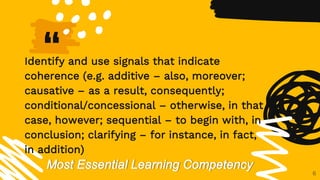
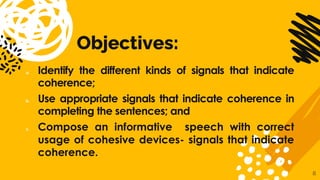
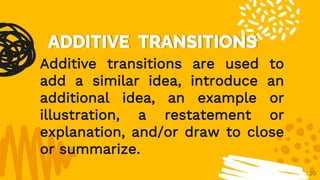
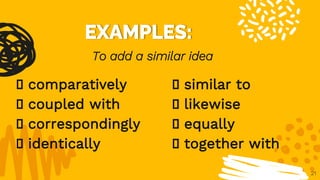
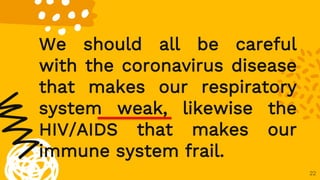
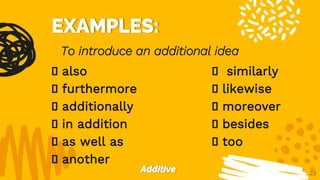
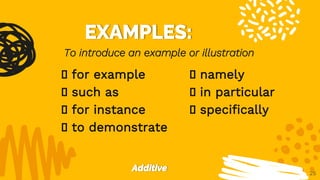
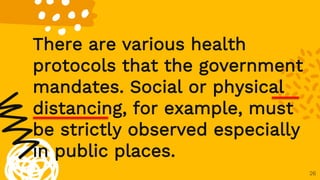
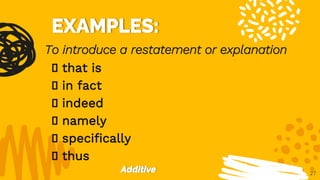
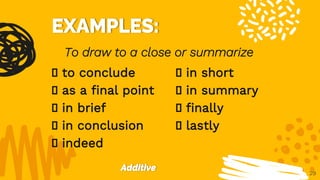
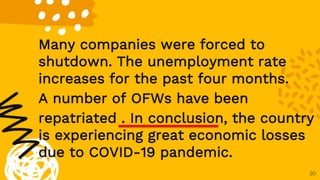
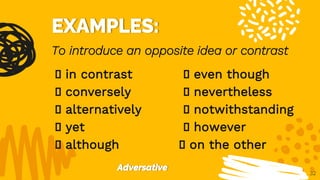
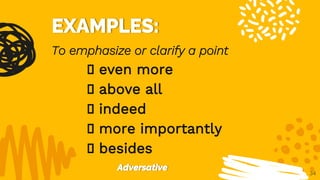
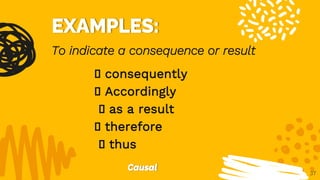
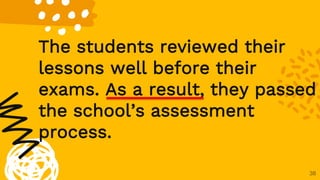
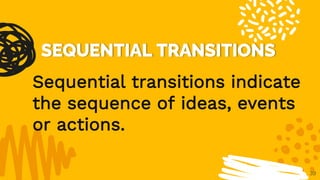
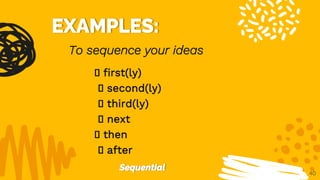
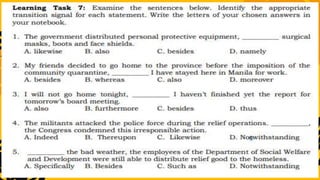
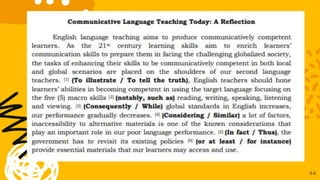
The document discusses coherence in composing informative speeches. It defines coherence as the systematic logical connection between sentences and ideas in a text. It identifies different types of signals that indicate coherence, including additive, adversative, causal, and sequential transitions. Examples are provided for each type of transition signal to demonstrate how they can connect ideas and establish coherence when composing a speech or writing a text. The objective is to learn to use these signals correctly to ensure clear presentation of information and smooth flow between sentences, paragraphs, and ideas.