LITTLE DIDDLE,
TRANSITION DOODLE
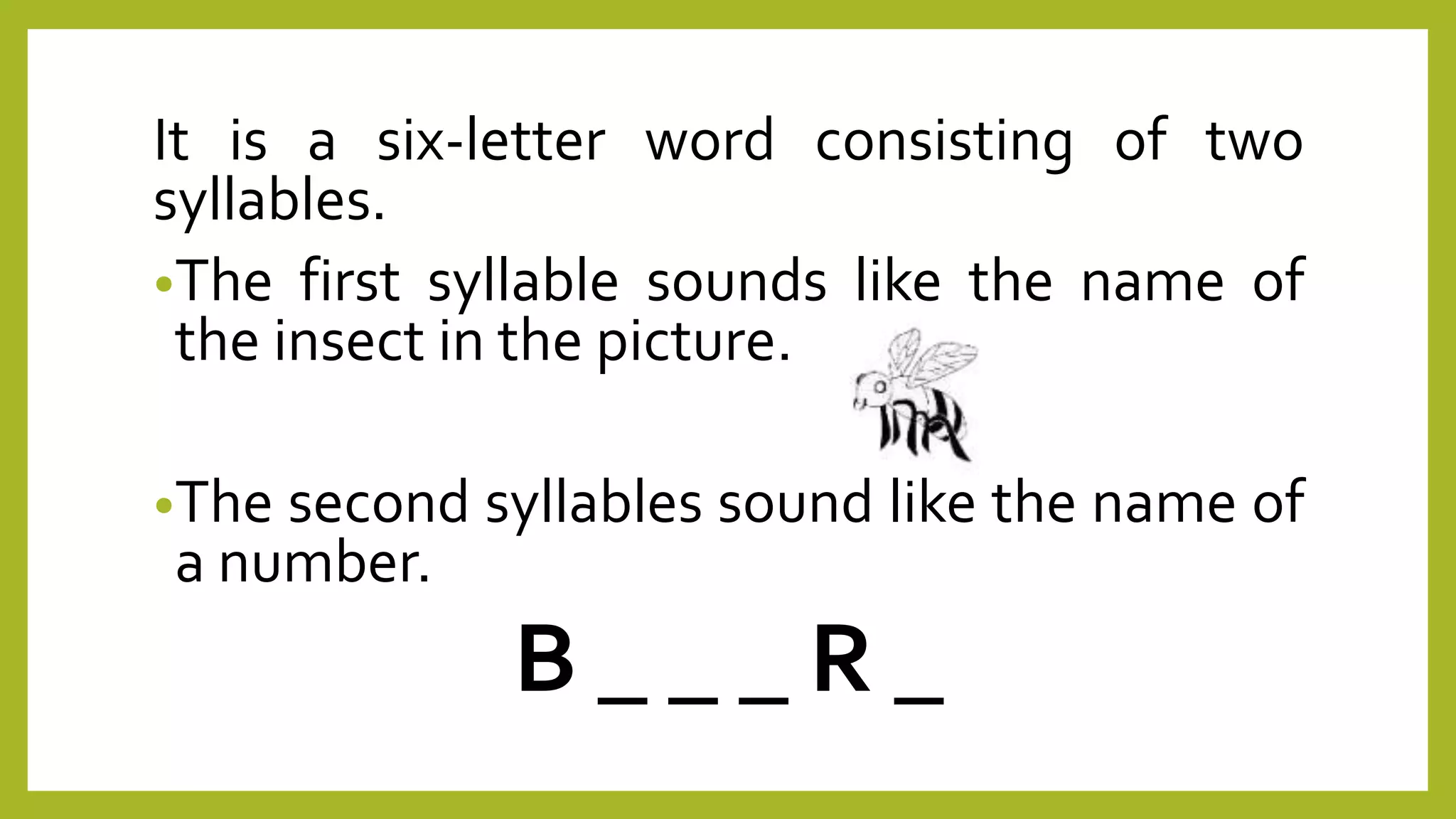
It is a six-letter word consisting of two
syllables.
•The first syllable sounds like the name of
the insect in the picture.
•The second syllables sound like the name of
a number.
B _ _ _ R _
It consists of two words.
•The first word is already given
•The first syllable of the second word are the last
two letters of the word ‘within’.
•The last syllable of the second word is to be
replaced by the underlined letter of the word
‘stand’ with ce.
F O R _ _ _ _ _ _ __
It consists of two words
The first word is synonymous
with the word ‘equal’
_ _ _ _ _ THOUGH
It is a four-syllable word that if broken can
create three new words
•The first is the opposite of the word
‘always’.
•The second is already given.
•The third is the opposite of the word
‘more’.
_ _ _ _ _THE _ _ _ _
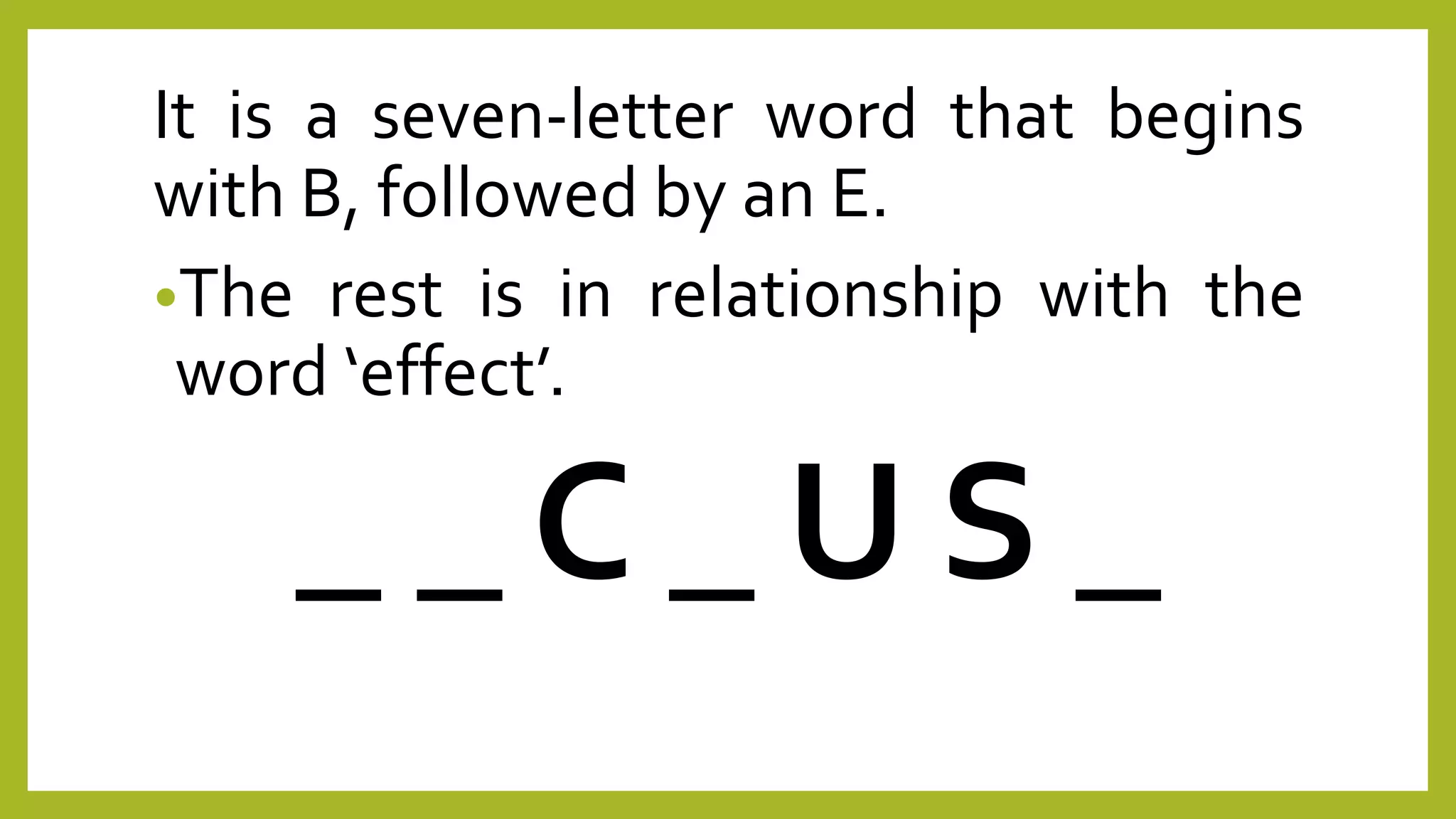
It is a seven-letter word that begins
with B, followed by an E.
•The rest is in relationship with the
word ‘effect’.
_ _ C _ U S _
TRANSITION SIGNALS
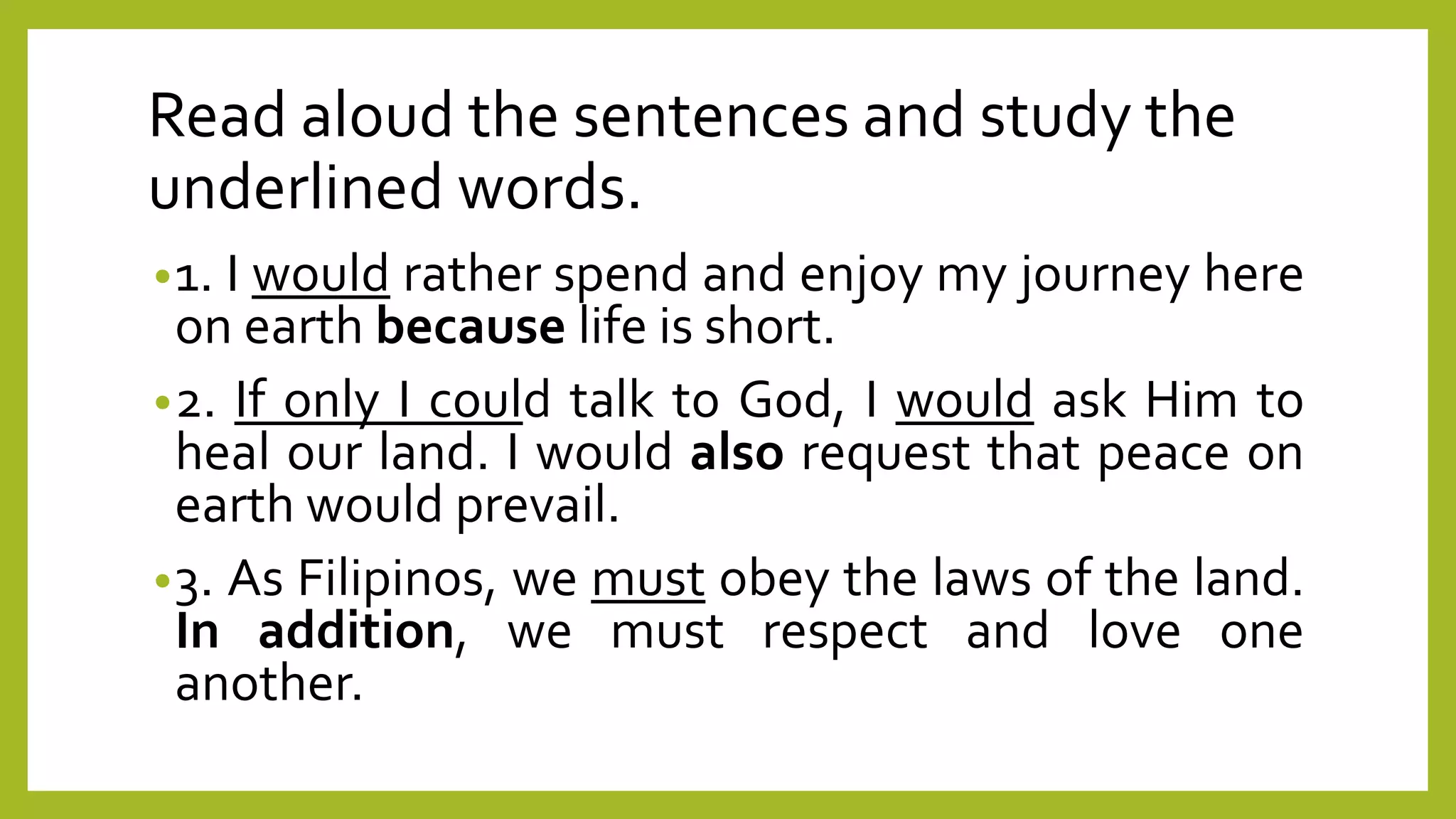
Read aloud the sentences and study the
underlined words.
•1. I would rather spend and enjoy my journey here
on earth because life is short.
•2. If only I could talk to God, I would ask Him to
heal our land. I would also request that peace on
earth would prevail.
•3. As Filipinos, we must obey the laws of the land.
In addition, we must respect and love one
another.
SUNSHINE
Simultaneously, we all made a stop
Unfortunately, threats and trials were rough
Nonetheless, to keep everyone safe
Similarly, stay at home is what we make
However, with lots of twists and turns
In other words, it’s full of challenges
Nevertheless, it all went well
Eventually, life is back as well
TRANSITION SIGNALS
•are words and phrases that connect
ideas of sentences and paragraphs for
coherence.
•They also indicate building up new idea
or thought or compare ideas or draw
conclusions.
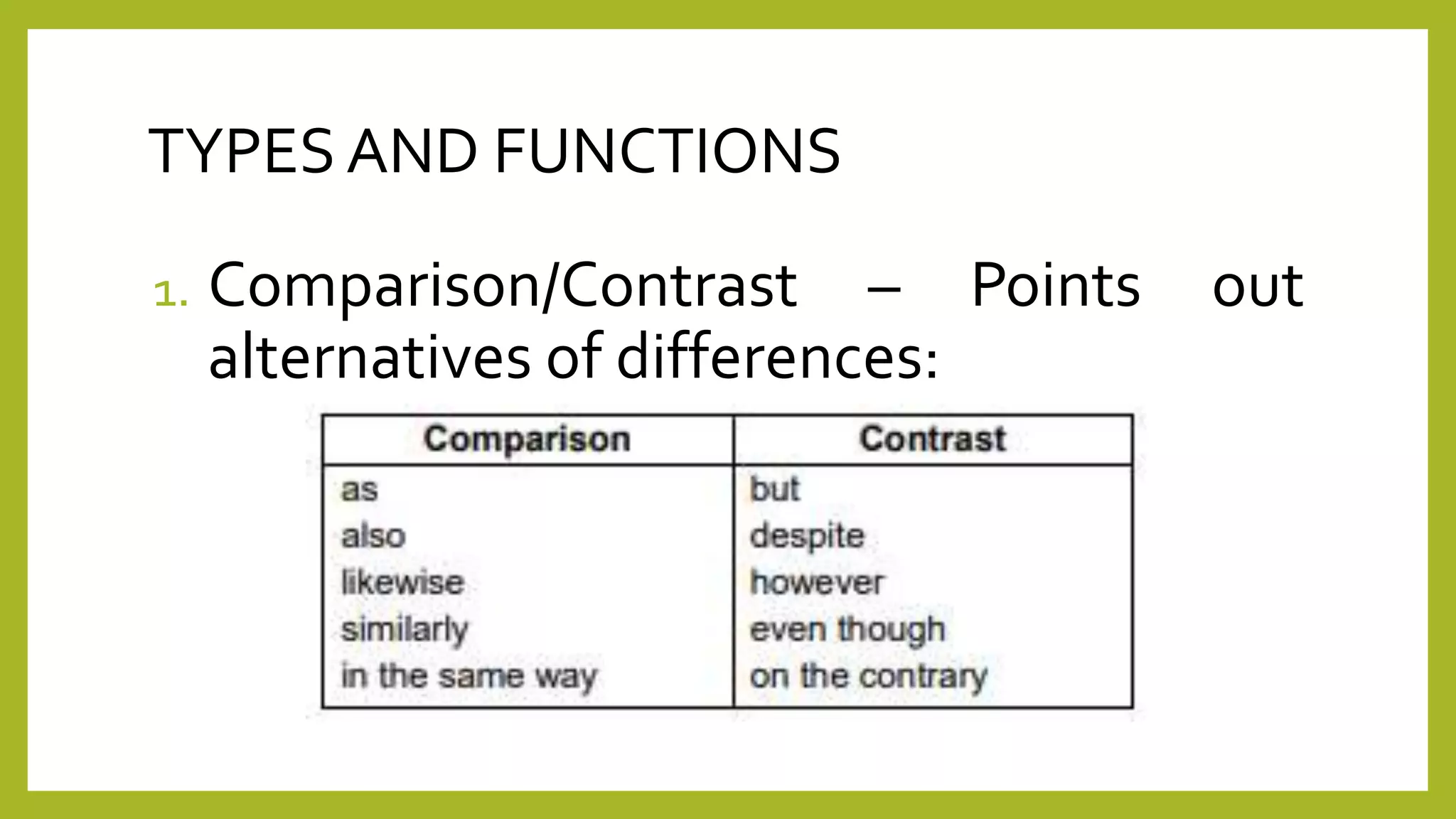
TYPES AND FUNCTIONS
1. Comparison/Contrast – Points out
alternatives of differences:
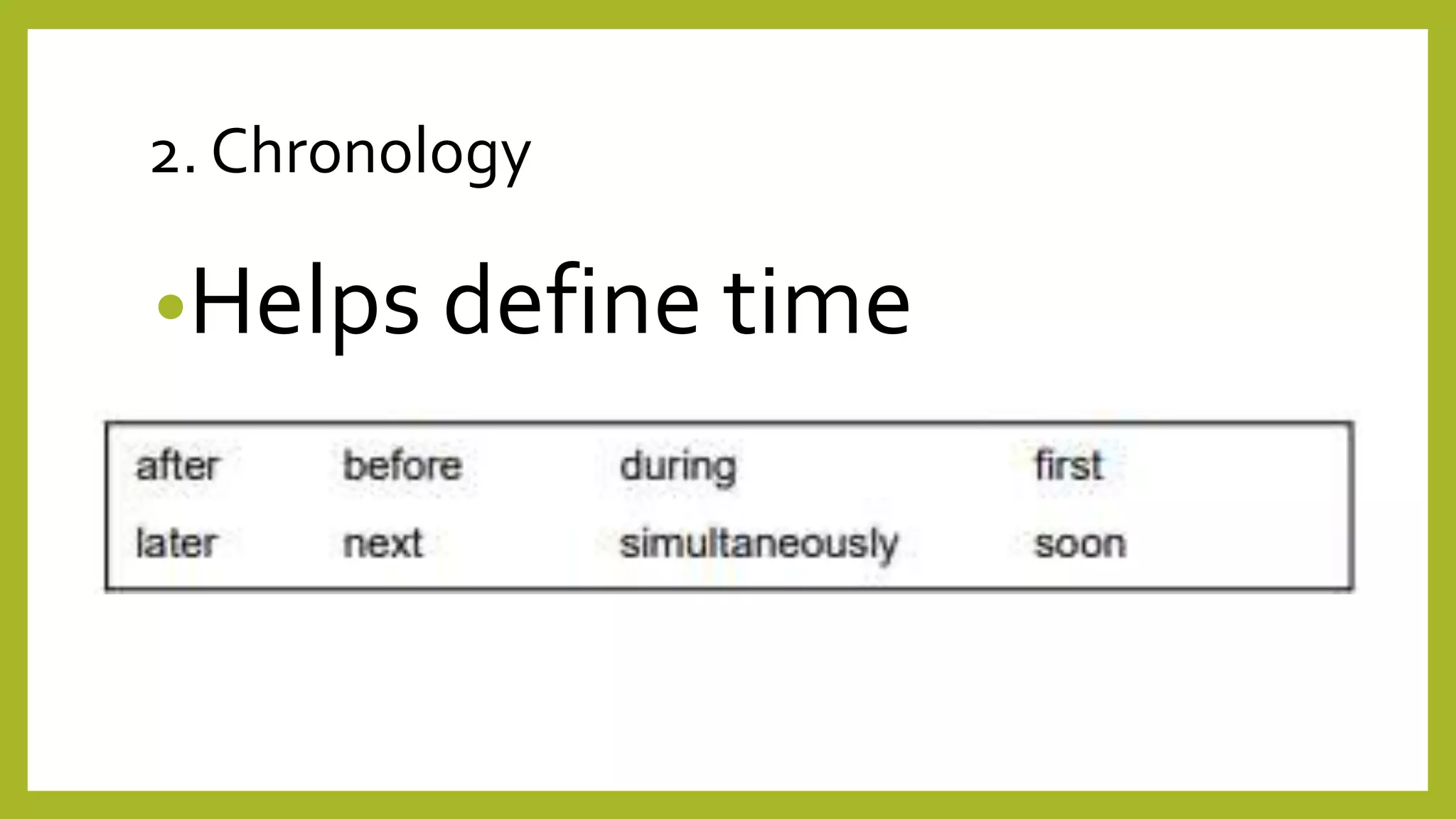
2. Chronology
•Helps define time
3. Cause/Effect
•Shows the consequences of
an action
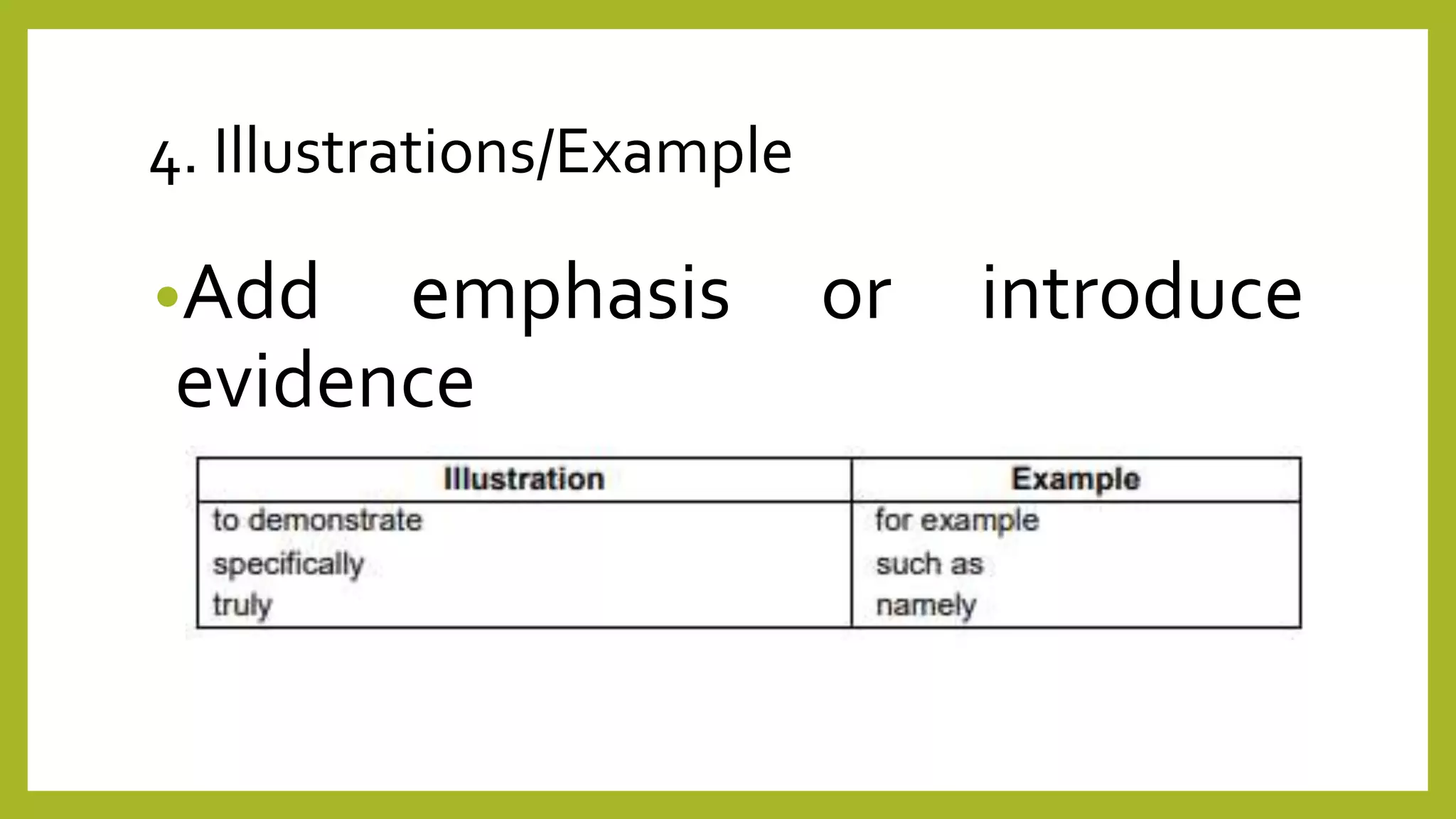
4. Illustrations/Example
•Add emphasis or introduce
evidence
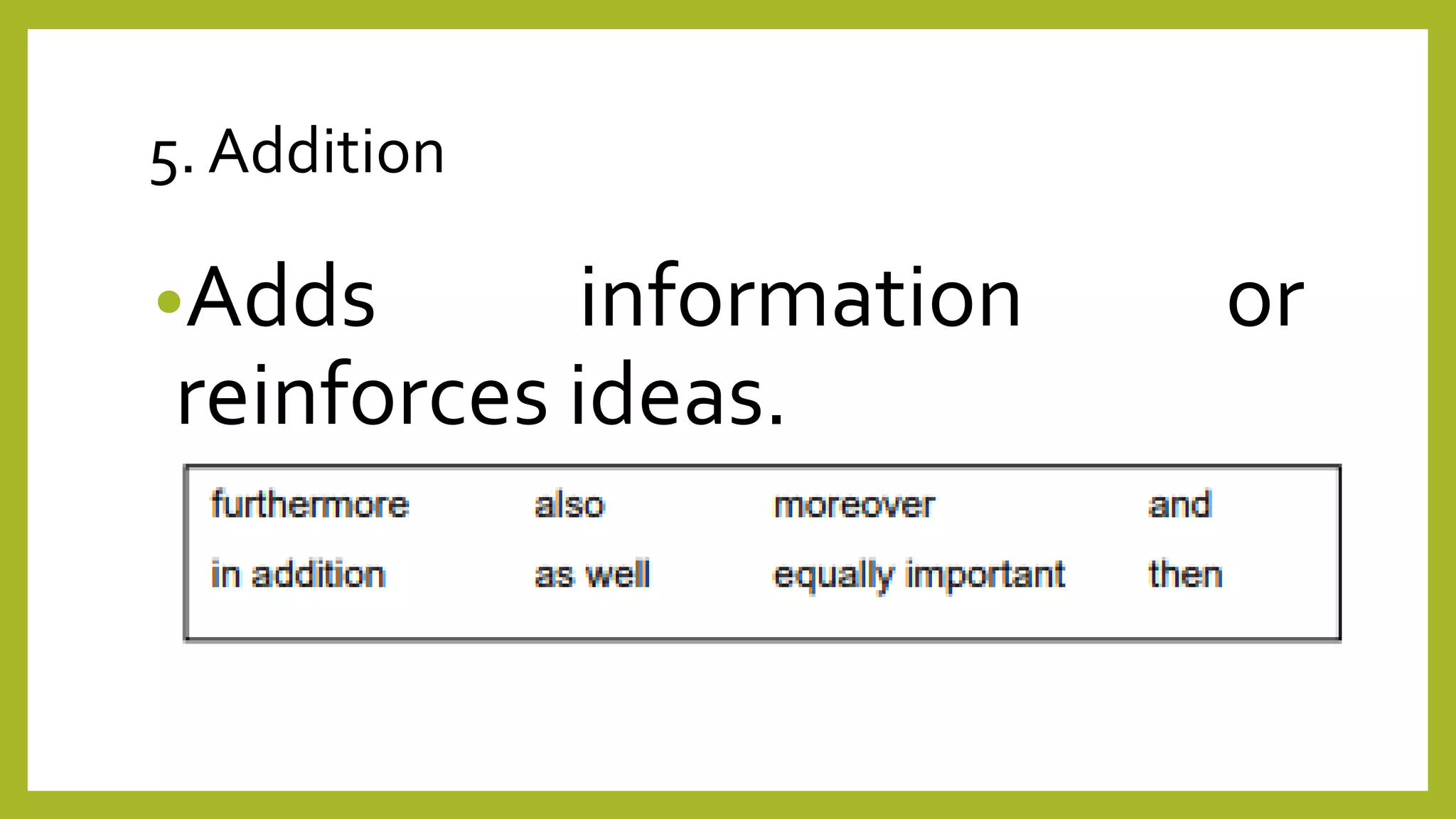
5. Addition
•Adds information or
reinforces ideas.
6. Clarification
•Shows support
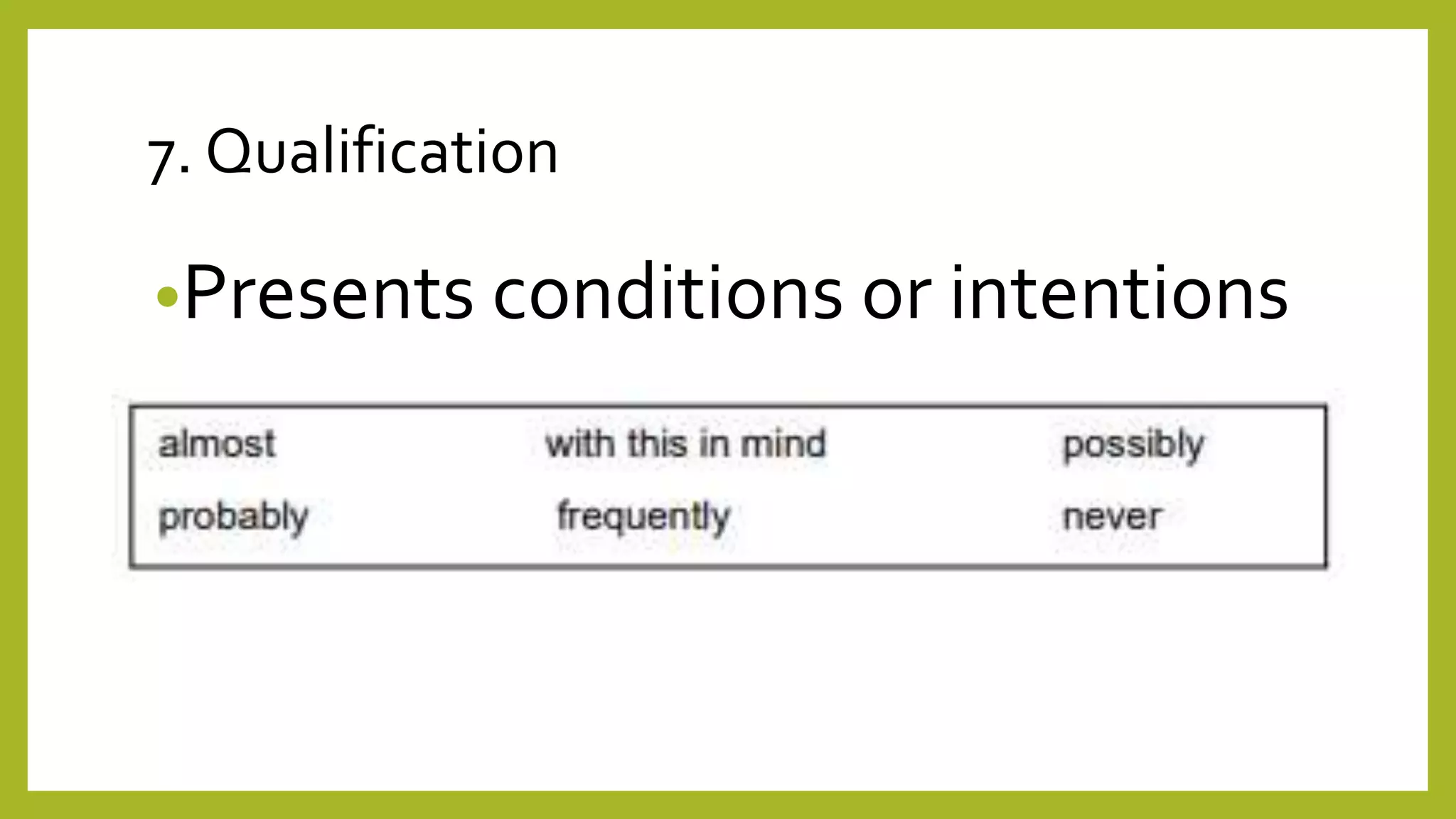
7. Qualification
•Presents conditions or intentions
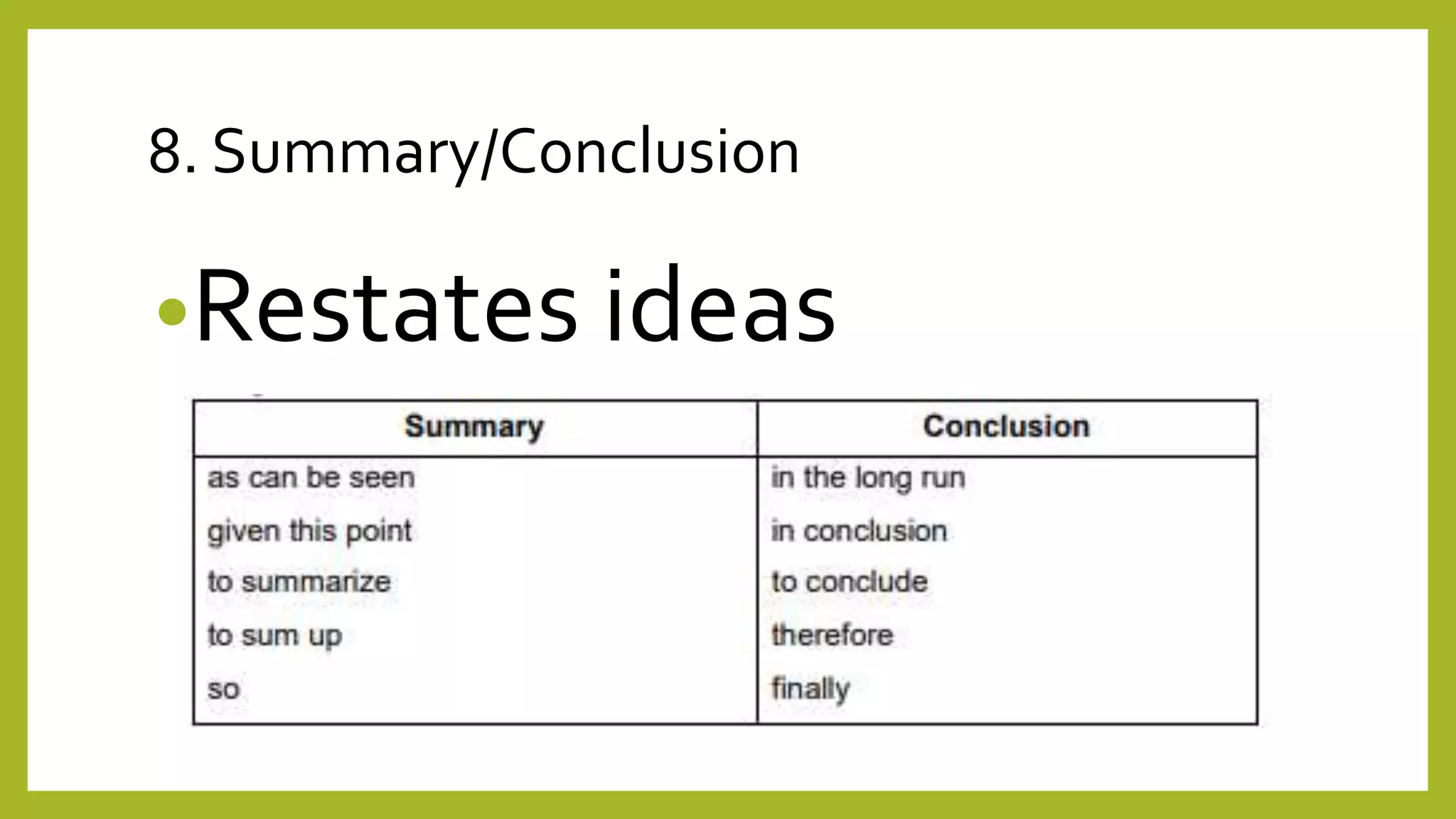
8. Summary/Conclusion
•Restates ideas
As a learner, it is important to develop a
good study habit. You may start before the
beginning of the school year. Here are some
tips for you. First, you need to plan and
organize your activities. For example, plan
when you will do your assignments, tests,
projects, outputs, and other activities. Also,
you need to think about how much time
you will spend to each.
Second, find a place where you will
not be disturbed to study. For
instance, studying in front of a
television, or with noisy and
crowded areas will not be helpful.
In addition, texting, online gaming,
and facebooking while studying are
also forms of disruptions.
Third, develop a study plan, knowing the
lessons will be easier. Similarly, knowing
the different test types will help set your
mind. Furthermore, having review-
strategies will make studying easier during
examinations. Fourth, read a lot. It pays to
develop the habit of reading. Lastly, think
positive. Having the right mindset will
make things different. To sum it up,
developing a good study habit will help
you succeed.

Transition signals.pptx

  • 1.
  • 2.
    It is asix-letter word consisting of two syllables. •The first syllable sounds like the name of the insect in the picture. •The second syllables sound like the name of a number. B _ _ _ R _
  • 3.
    It consists oftwo words. •The first word is already given •The first syllable of the second word are the last two letters of the word ‘within’. •The last syllable of the second word is to be replaced by the underlined letter of the word ‘stand’ with ce. F O R _ _ _ _ _ _ __
  • 4.
    It consists oftwo words The first word is synonymous with the word ‘equal’ _ _ _ _ _ THOUGH
  • 5.
    It is afour-syllable word that if broken can create three new words •The first is the opposite of the word ‘always’. •The second is already given. •The third is the opposite of the word ‘more’. _ _ _ _ _THE _ _ _ _
  • 6.
    It is aseven-letter word that begins with B, followed by an E. •The rest is in relationship with the word ‘effect’. _ _ C _ U S _
  • 7.
  • 8.
    Read aloud thesentences and study the underlined words. •1. I would rather spend and enjoy my journey here on earth because life is short. •2. If only I could talk to God, I would ask Him to heal our land. I would also request that peace on earth would prevail. •3. As Filipinos, we must obey the laws of the land. In addition, we must respect and love one another.
  • 9.
    SUNSHINE Simultaneously, we allmade a stop Unfortunately, threats and trials were rough Nonetheless, to keep everyone safe Similarly, stay at home is what we make However, with lots of twists and turns In other words, it’s full of challenges Nevertheless, it all went well Eventually, life is back as well
  • 10.
    TRANSITION SIGNALS •are wordsand phrases that connect ideas of sentences and paragraphs for coherence. •They also indicate building up new idea or thought or compare ideas or draw conclusions.
  • 11.
    TYPES AND FUNCTIONS 1.Comparison/Contrast – Points out alternatives of differences:
  • 12.
  • 13.
    3. Cause/Effect •Shows theconsequences of an action
  • 14.
  • 15.
    5. Addition •Adds informationor reinforces ideas.
  • 16.
  • 17.
  • 18.
  • 19.
    As a learner,it is important to develop a good study habit. You may start before the beginning of the school year. Here are some tips for you. First, you need to plan and organize your activities. For example, plan when you will do your assignments, tests, projects, outputs, and other activities. Also, you need to think about how much time you will spend to each.
  • 20.
    Second, find aplace where you will not be disturbed to study. For instance, studying in front of a television, or with noisy and crowded areas will not be helpful. In addition, texting, online gaming, and facebooking while studying are also forms of disruptions.
  • 21.
    Third, develop astudy plan, knowing the lessons will be easier. Similarly, knowing the different test types will help set your mind. Furthermore, having review- strategies will make studying easier during examinations. Fourth, read a lot. It pays to develop the habit of reading. Lastly, think positive. Having the right mindset will make things different. To sum it up, developing a good study habit will help you succeed.

Editor's Notes