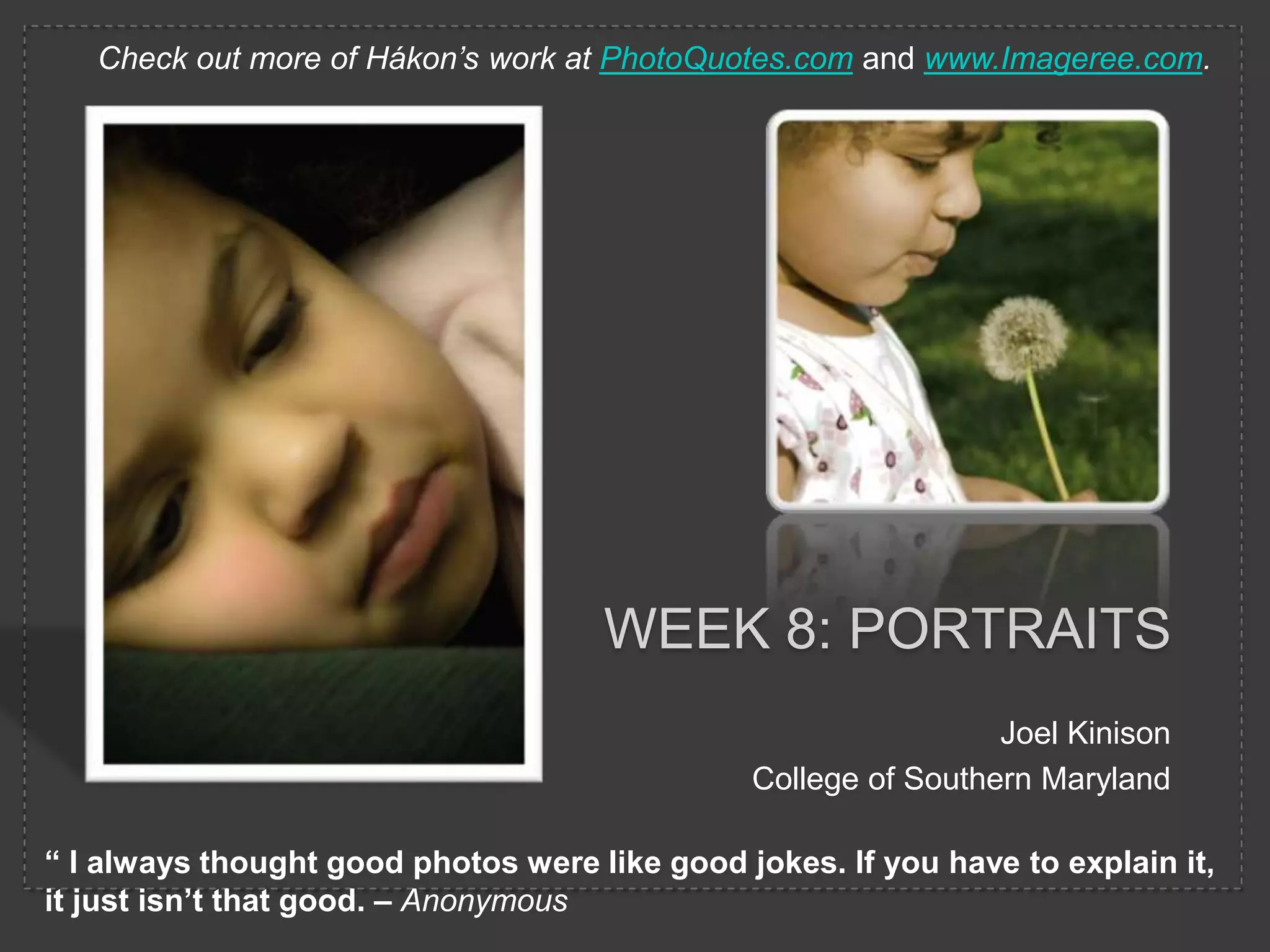
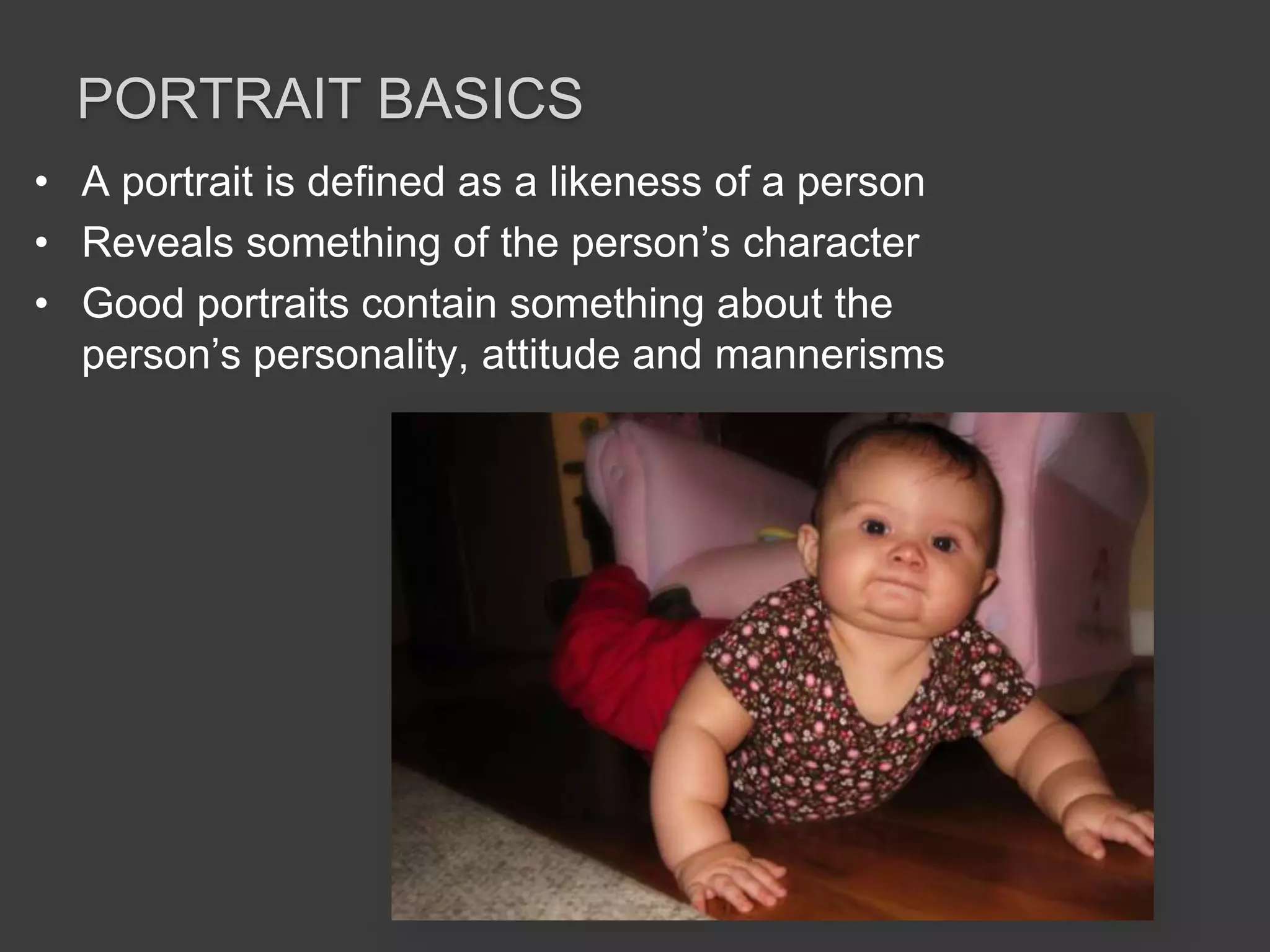
Week 8: PortraitsJoel KinisonCollege of Southern MarylandCheck out more of Hákon’s work atPhotoQuotes.com and www.Imageree.com.“ I always thought good photos were like good jokes. If you have to explain it, it just isn’t that good. –Anonymous
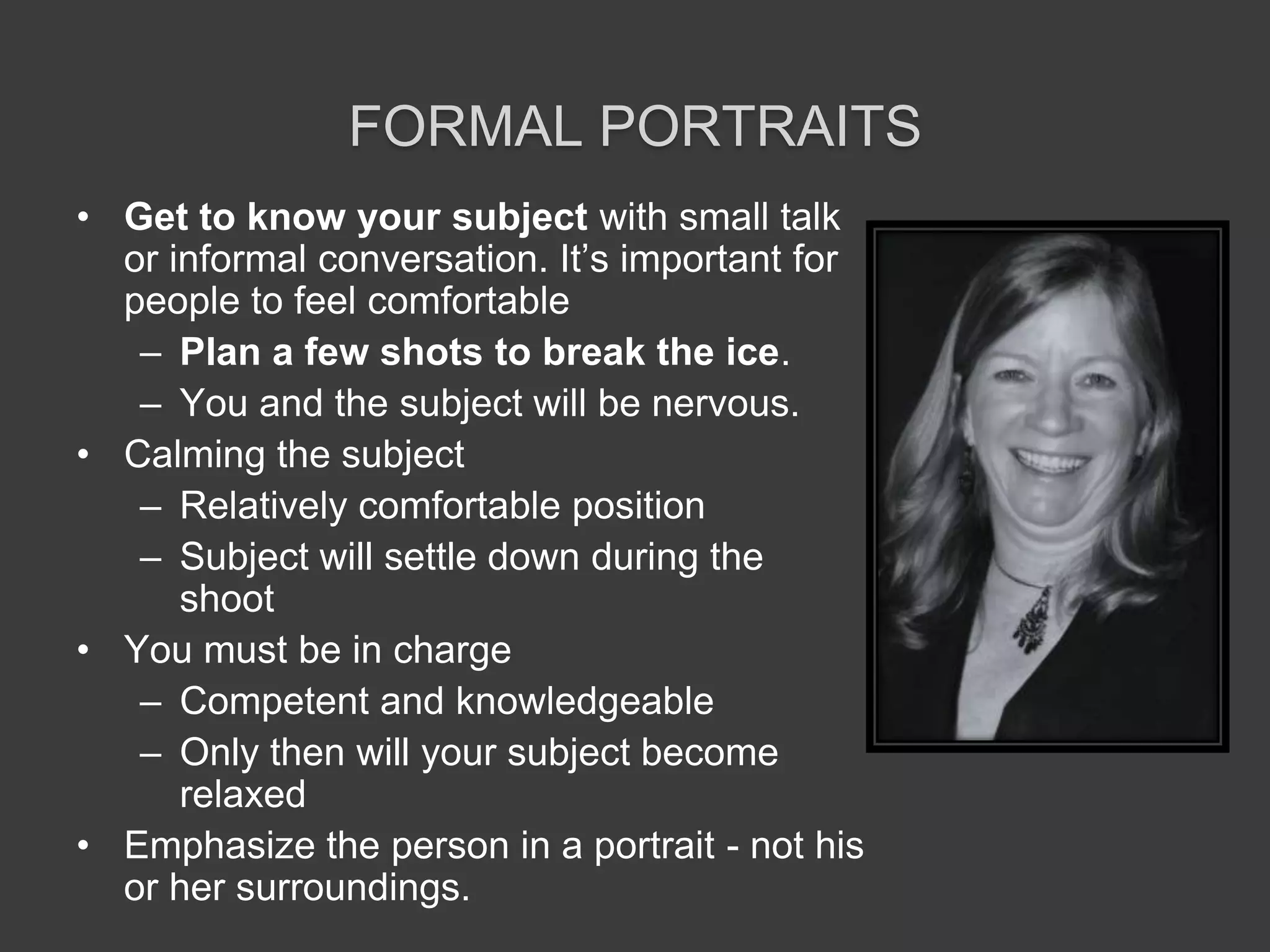
Portrait BasicsA portrait is defined as a likeness of a person Reveals something of the person’s characterGood portraits contain something about the person’s personality, attitude and mannerisms
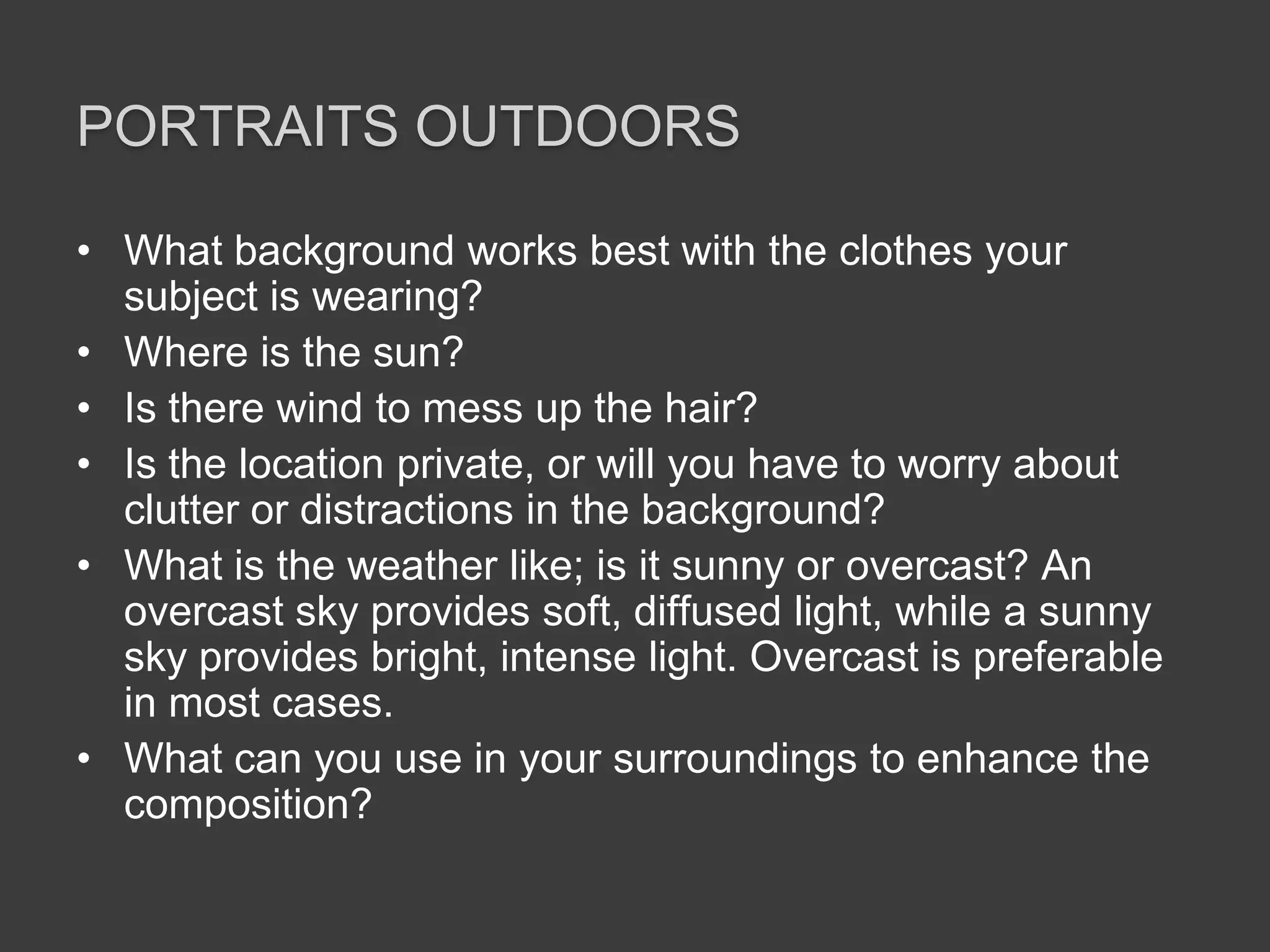
Formal PortraitsGet to know your subject with small talk or informal conversation. It’s important for people to feel comfortablePlan a few shots to break the ice.You and the subject will be nervous. Calming the subjectRelatively comfortable positionSubject will settle down during the shootYou must be in charge Competent and knowledgeableOnly then will your subject become relaxedEmphasize the person in a portrait - not his or her surroundings.
Help it happen.  Give them basic direction and tell them to be themselves. Make them laugh, make them smile. Give them an activity to participate in.
Contrast and Tone –High contrastMojo from Flickrhttp://flickr.com/photos/mojo74/1182205597/
Portraits outdoorsWhat background works best with the clothes your subject is wearing? Where is the sun? Is there wind to mess up the hair?Is the location private, or will you have to worry about clutter or distractions in the background? What is the weather like; is it sunny or overcast? An overcast sky provides soft, diffused light, while a sunny sky provides bright, intense light. Overcast is preferable in most cases. What can you use in your surroundings to enhance the composition?
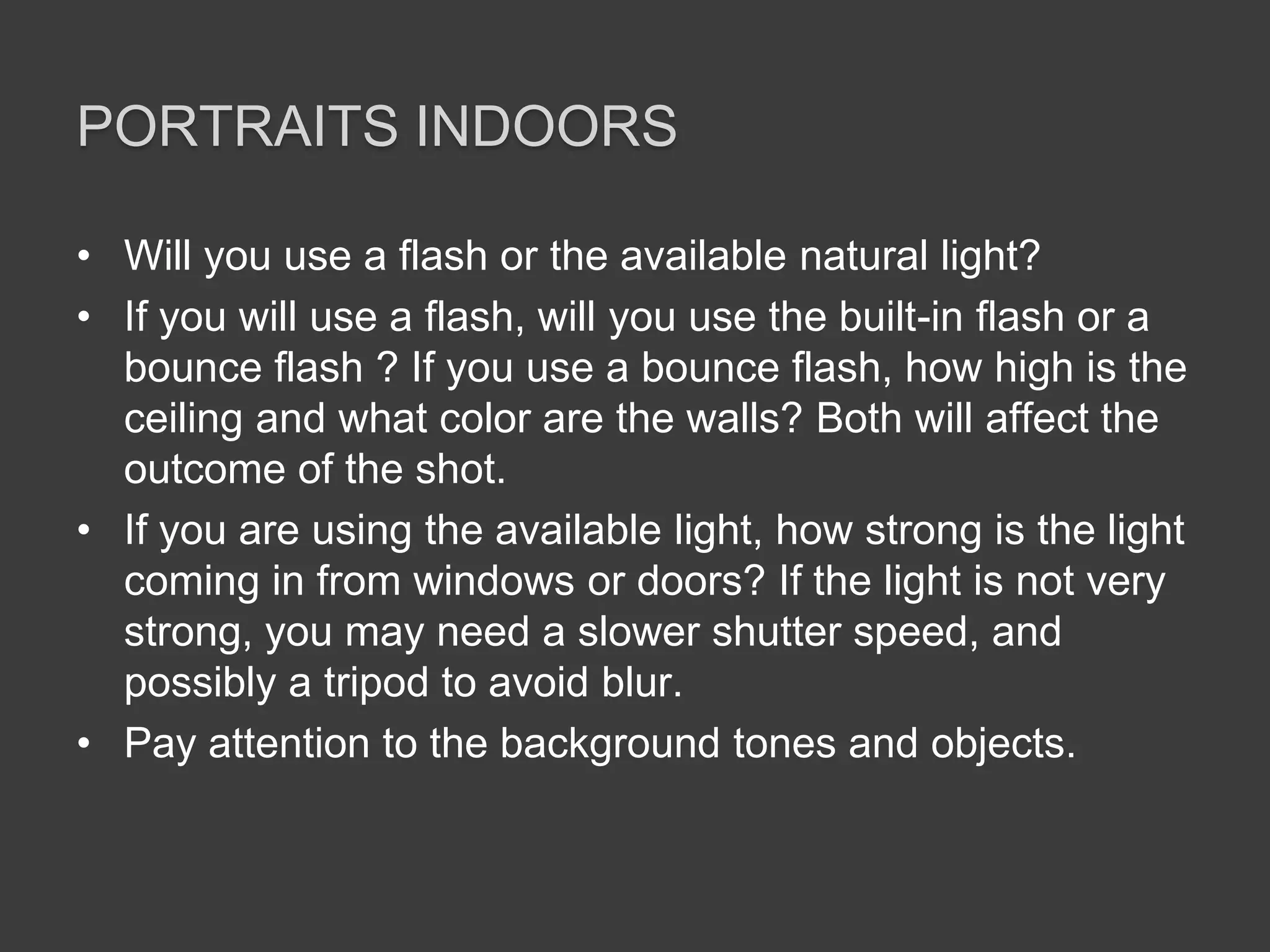
Portraits indoorsWill you use a flash or the available natural light? If you will use a flash, will you use the built-in flash or a bounce flash ? If you use a bounce flash, how high is the ceiling and what color are the walls? Both will affect the outcome of the shot. If you are using the available light, how strong is the light coming in from windows or doors? If the light is not very strong, you may need a slower shutter speed, and possibly a tripod to avoid blur. Pay attention to the background tones and objects.
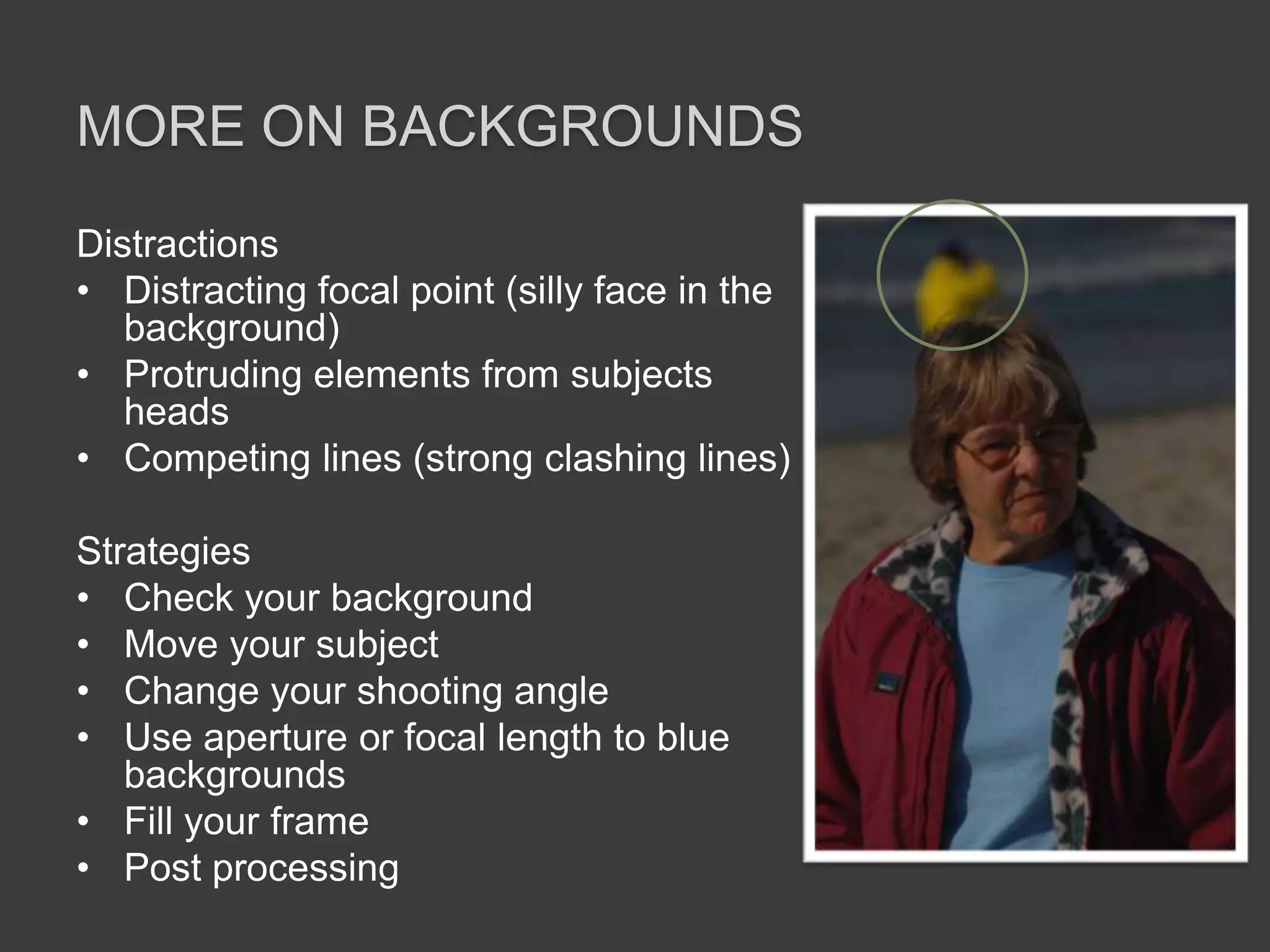
More on backgroundsDistractionsDistracting focal point (silly face in the background)Protruding elements from subjects headsCompeting lines (strong clashing lines)StrategiesCheck your backgroundMove your subjectChange your shooting angleUse aperture or focal length to blue backgroundsFill your framePost processing
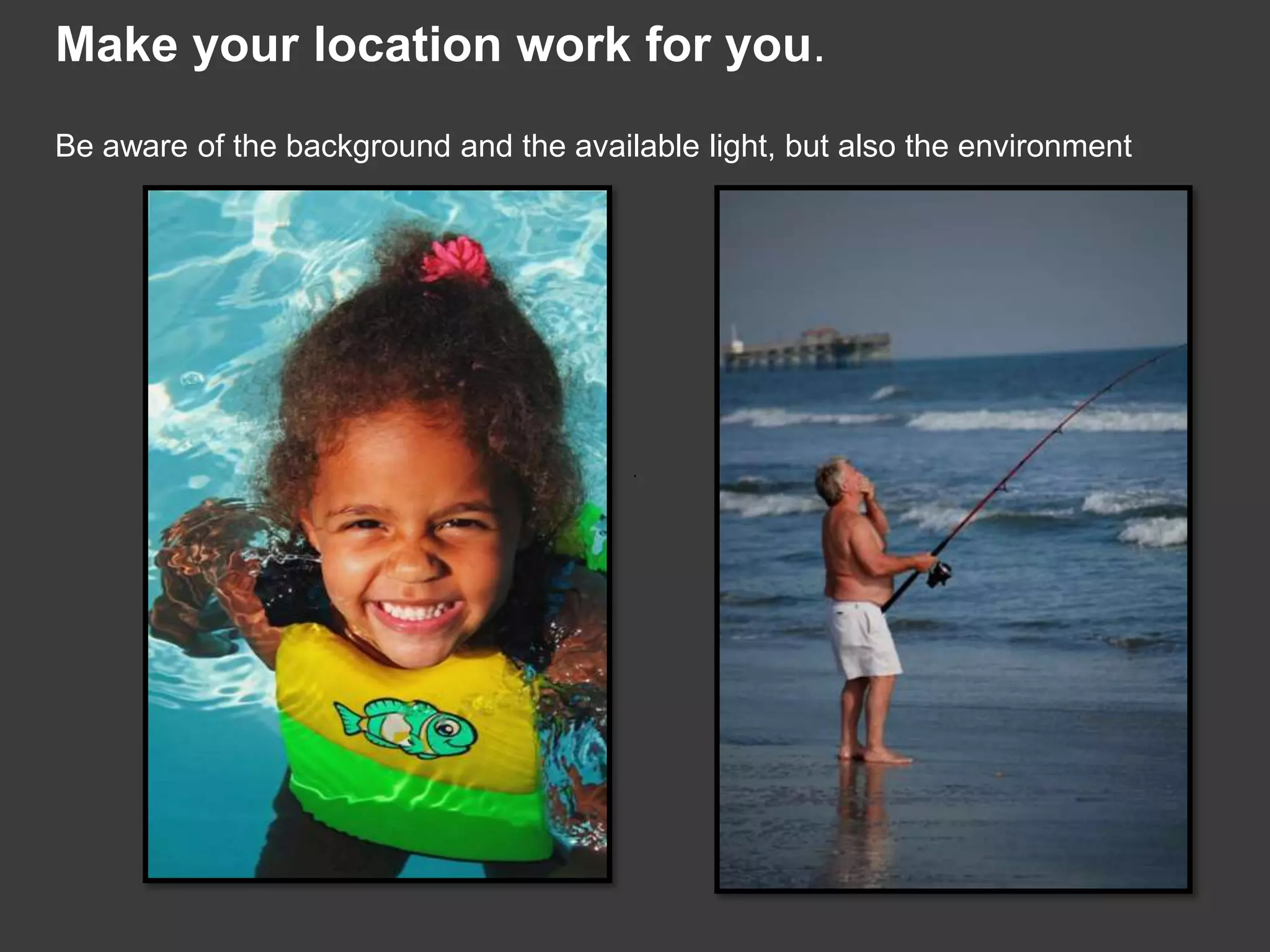
Make your location work for you. Be aware of the background and the available light, but also the environment
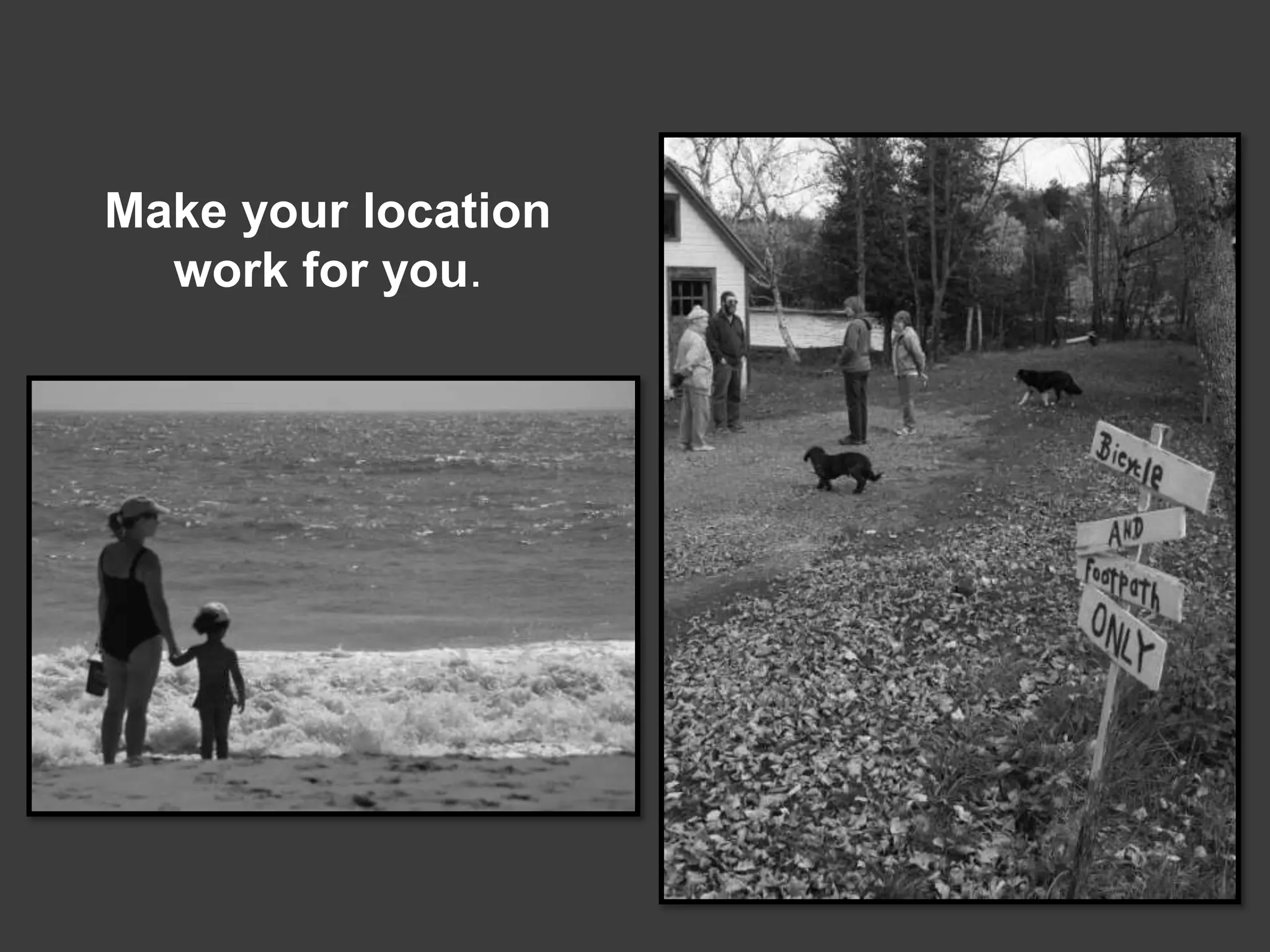
Make your location work for you.
Life – Digital Photography School contest resultshttp://digital-photography-school.com/life-winners-announcedPhoto bybigmakoy
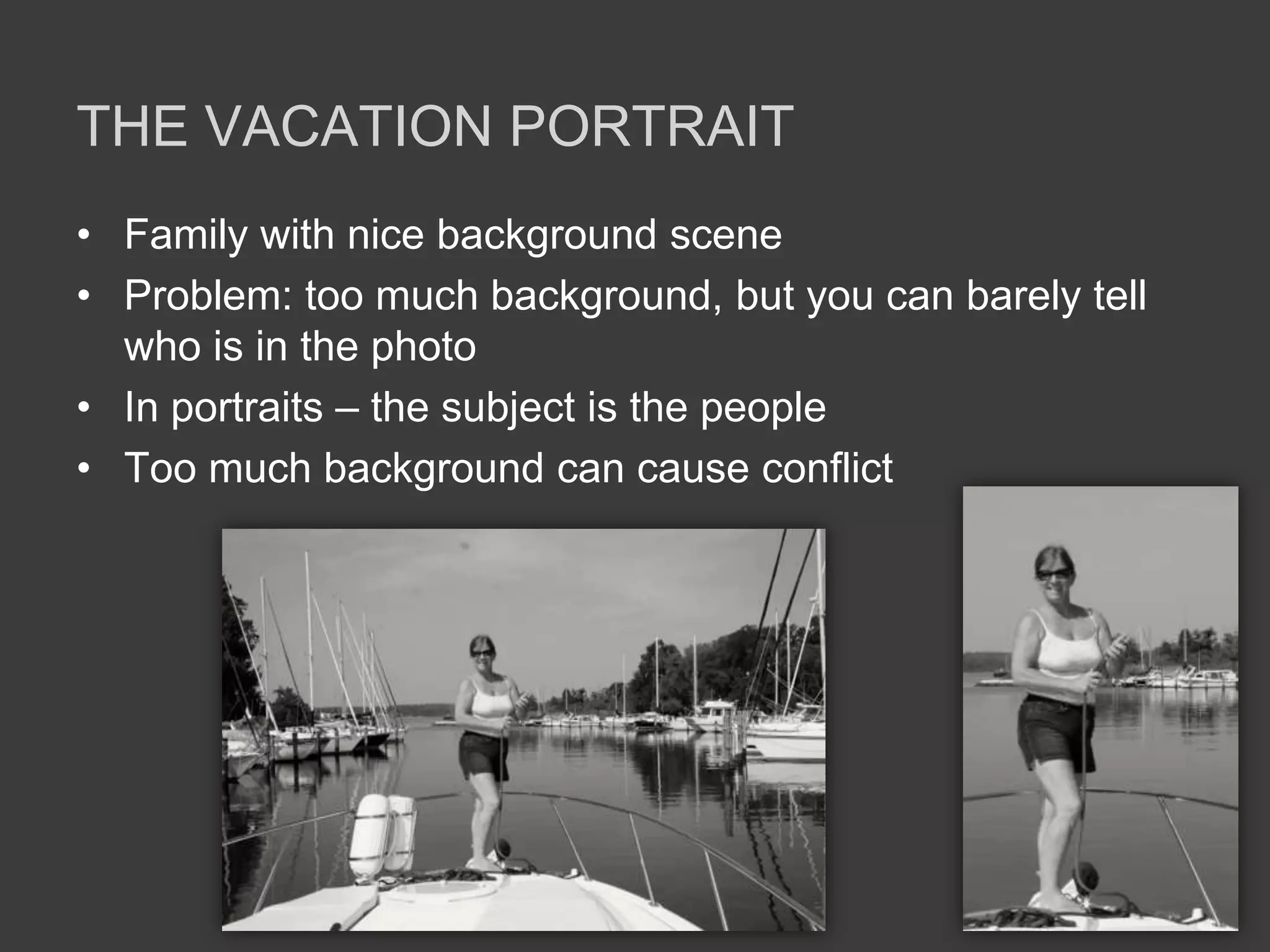
The Vacation PortraitFamily with nice background sceneProblem: too much background, but you can barely tell who is in the photoIn portraits – the subject is the peopleToo much background can cause conflict
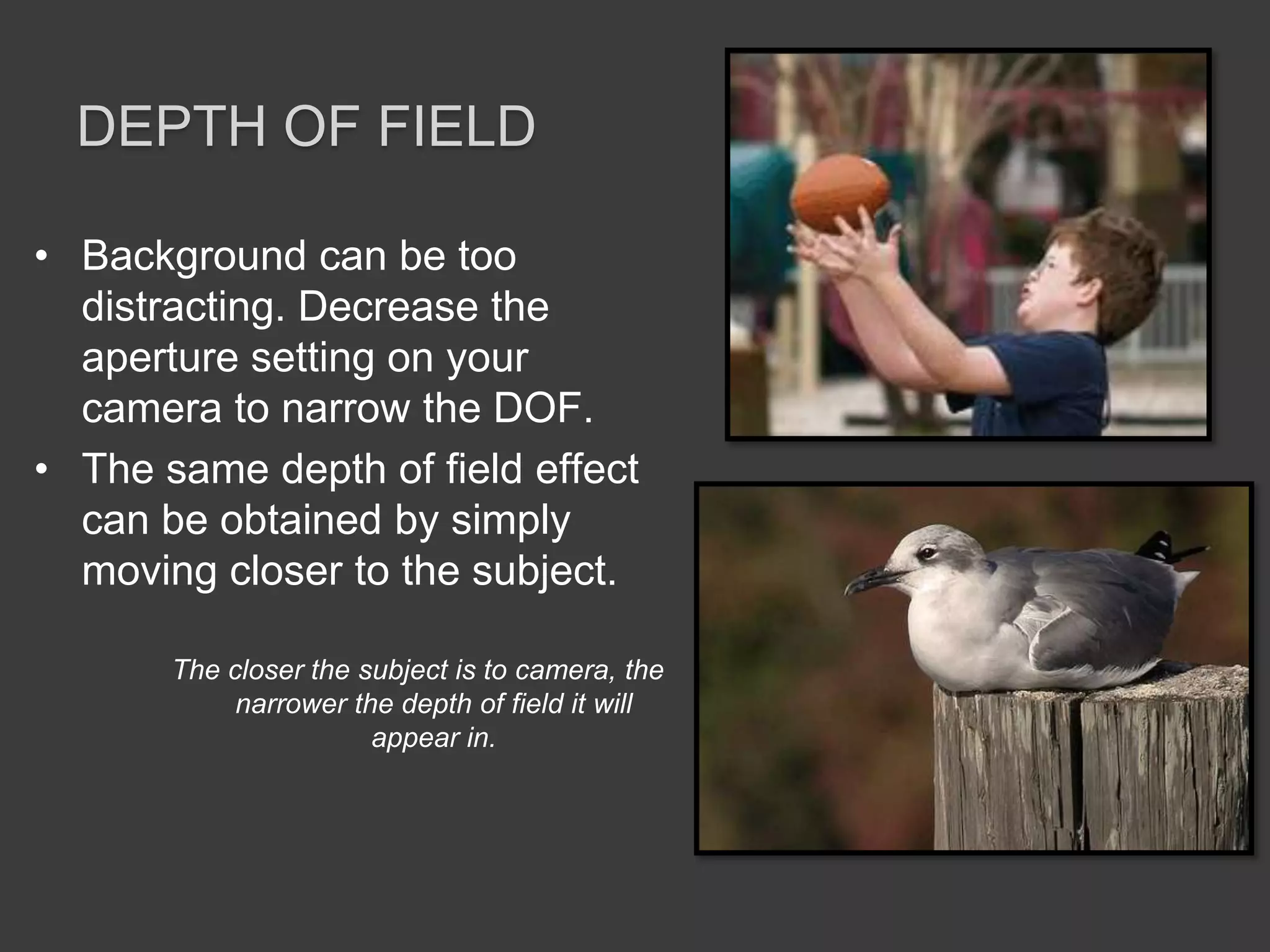
Depth of fieldBackground can be too distracting. Decrease the aperture setting on your camera to narrow the DOF. The same depth of field effect can be obtained by simply moving closer to the subject. The closer the subject is to camera, the narrower the depth of field it will appear in.
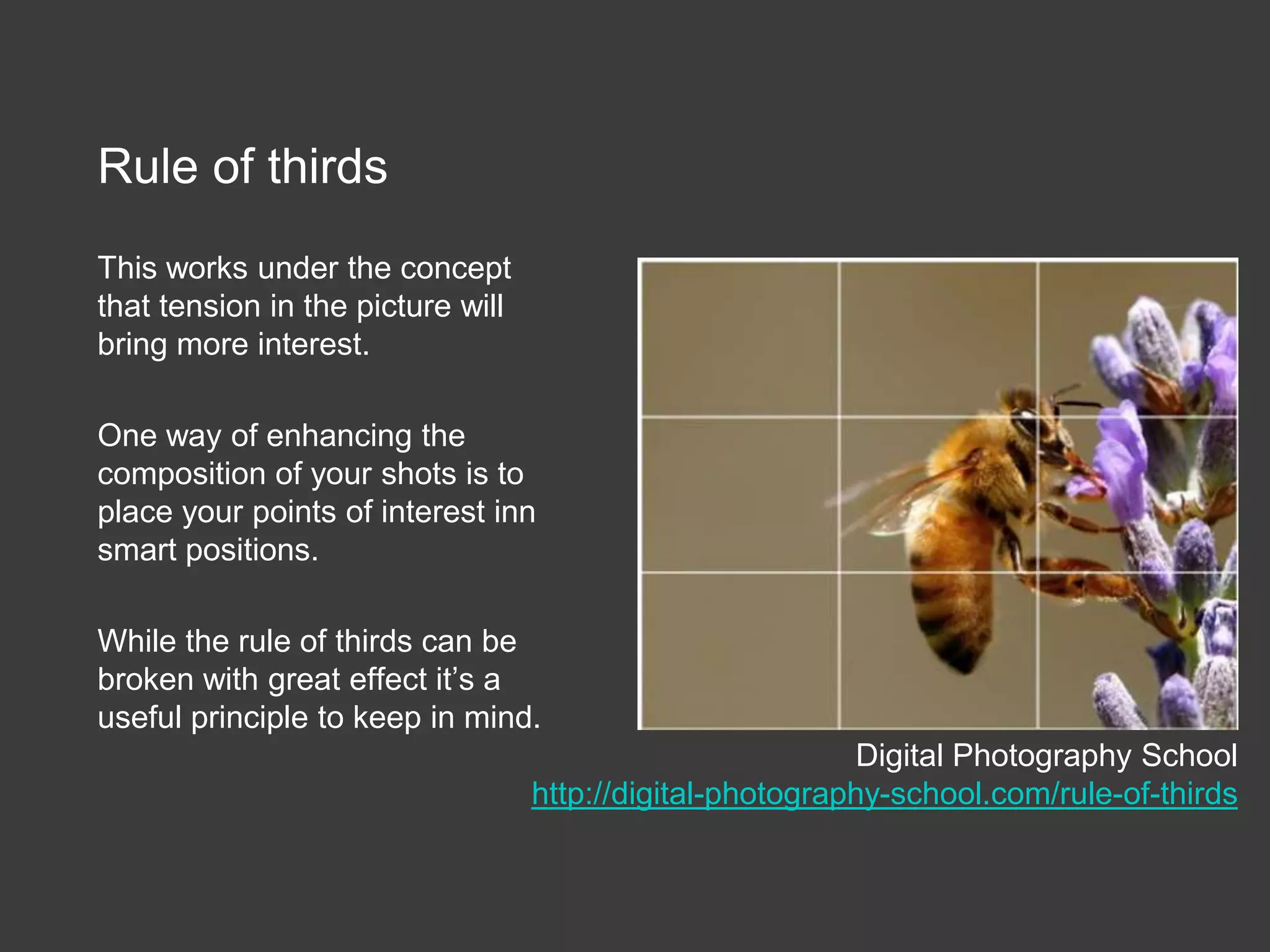
Rule of thirdsThis works under the concept that tension in the picture will bring more interest. One way of enhancing the composition of your shots is to place your points of interest inn smart positions. While the rule of thirds can be broken with great effect it’s a useful principle to keep in mind. Digital Photography Schoolhttp://digital-photography-school.com/rule-of-thirds
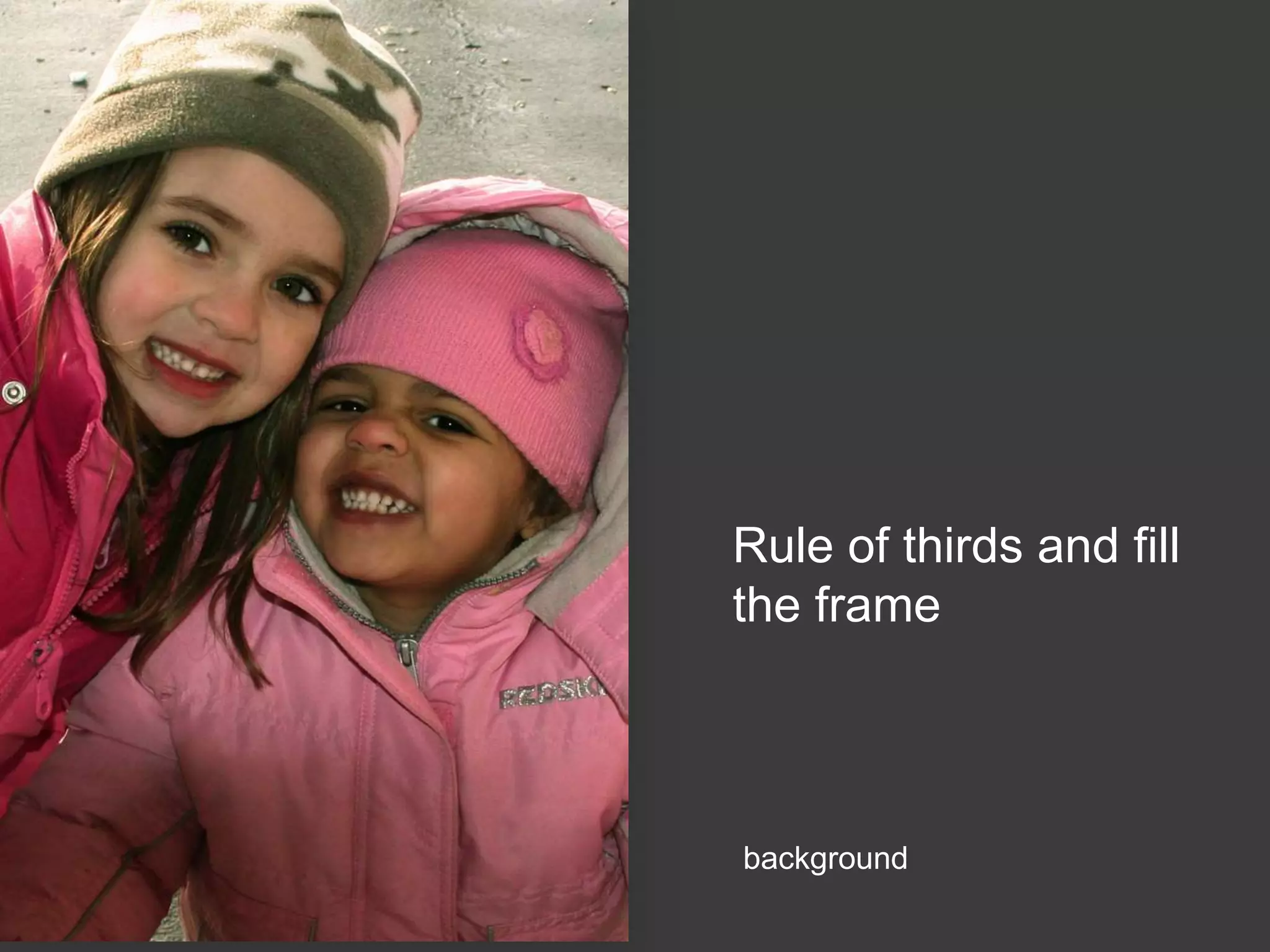
backgroundRule of thirds and fill the frame
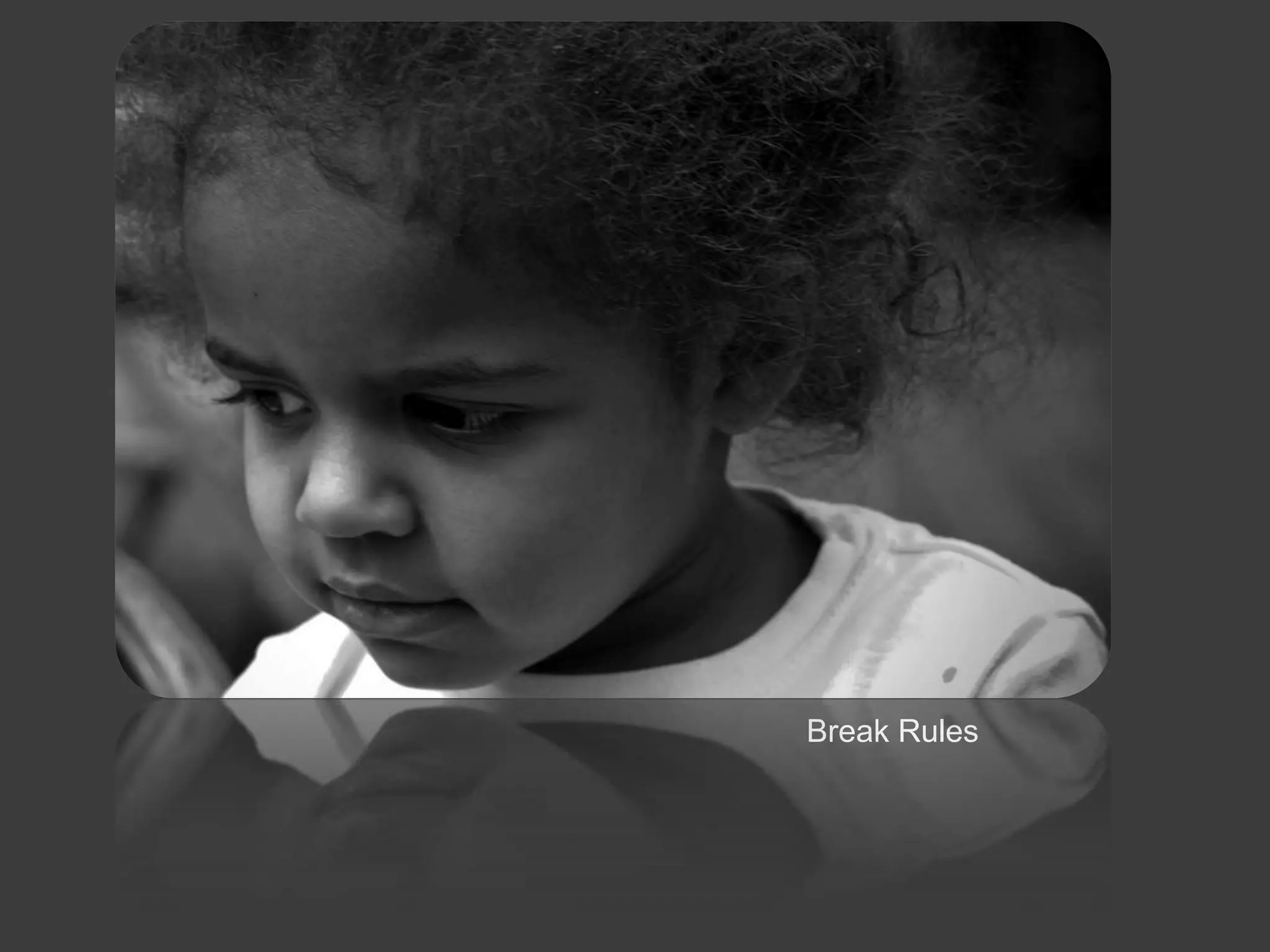
Break Rules
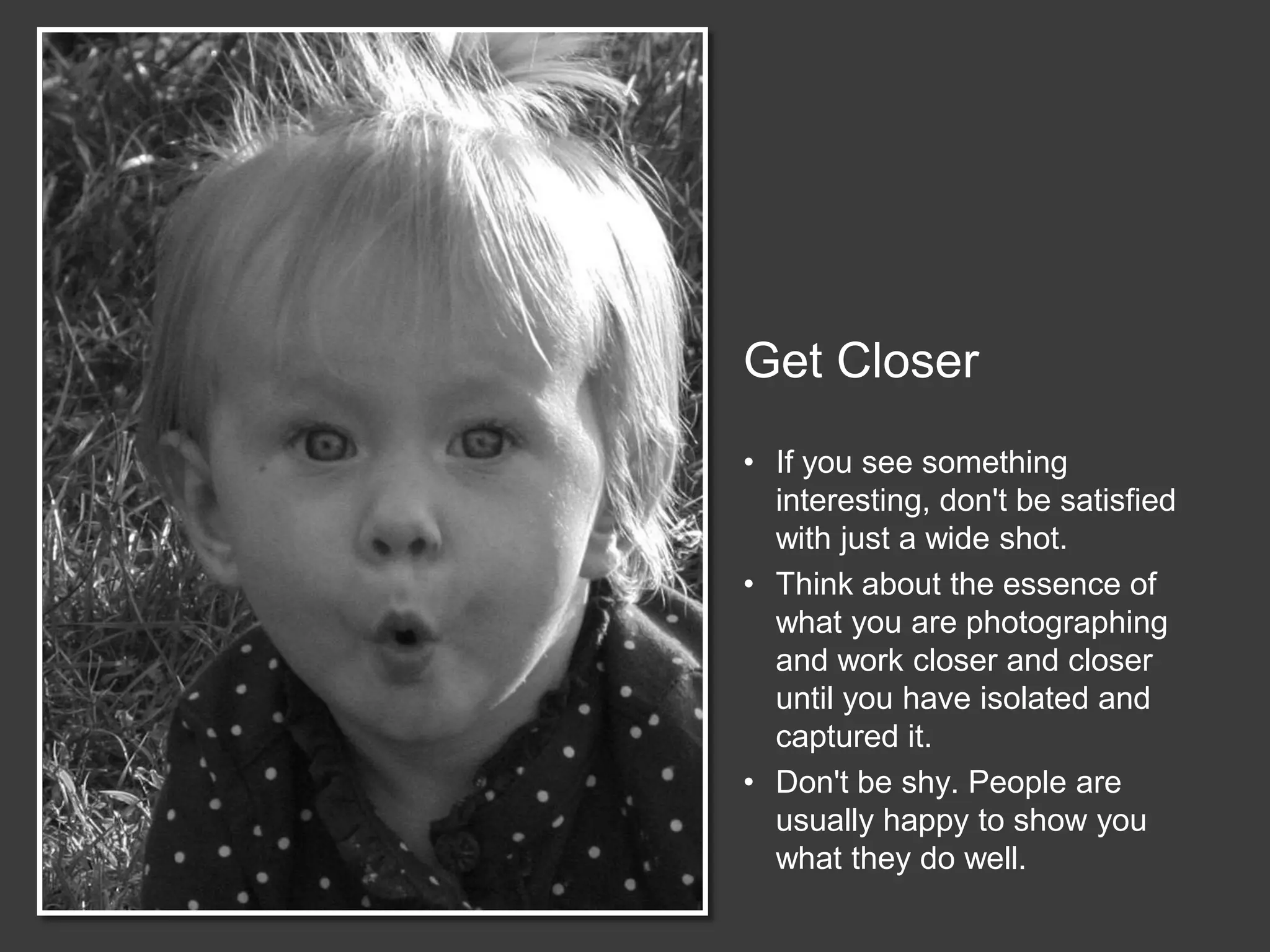
Get CloserIf you see something interesting, don't be satisfied with just a wide shot.
Think about the essence of what you are photographing and work closer and closer until you have isolated and captured it.
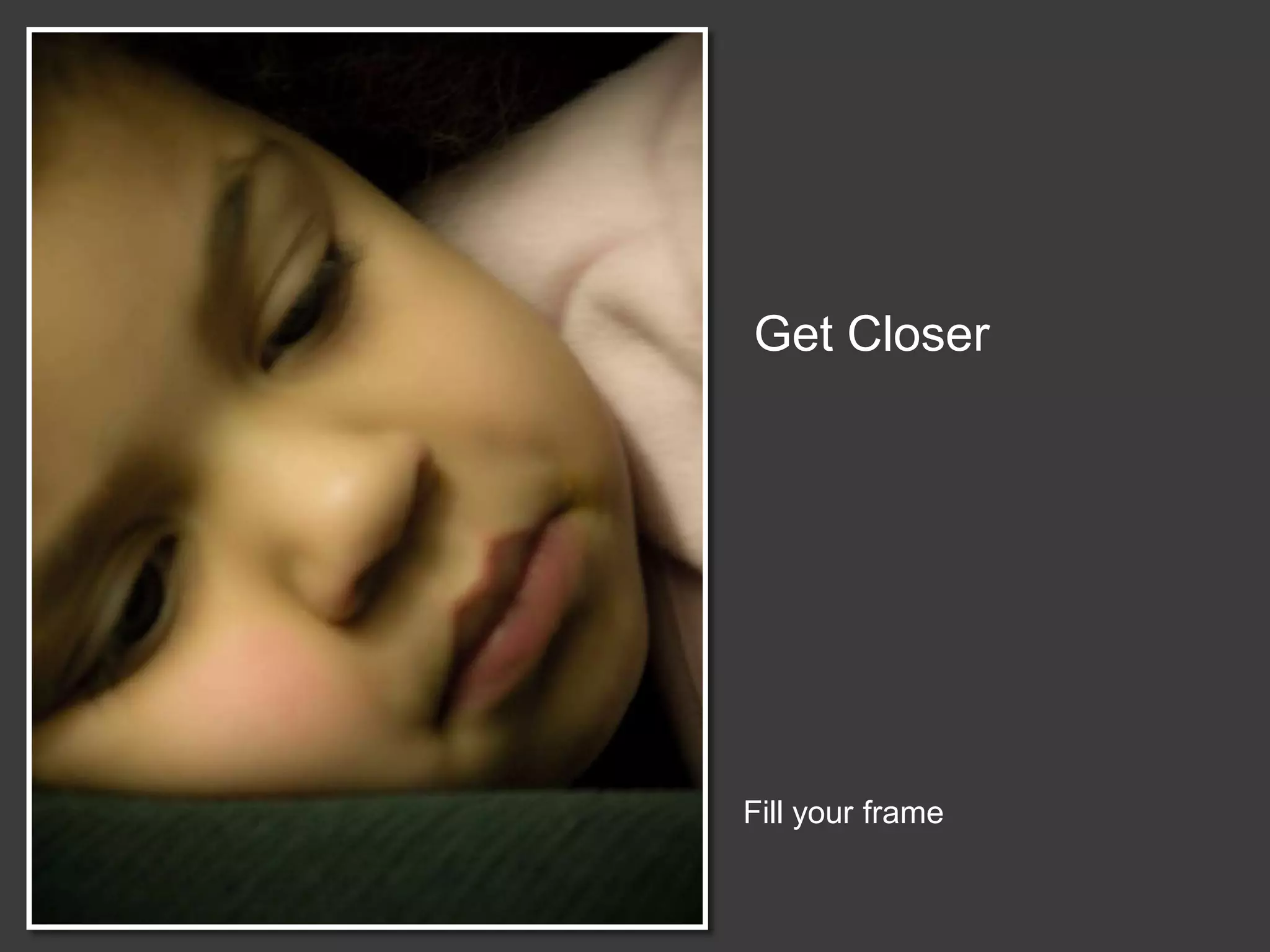
Don't be shy. People are usually happy to show you what they do well.Fill your frameGet Closer
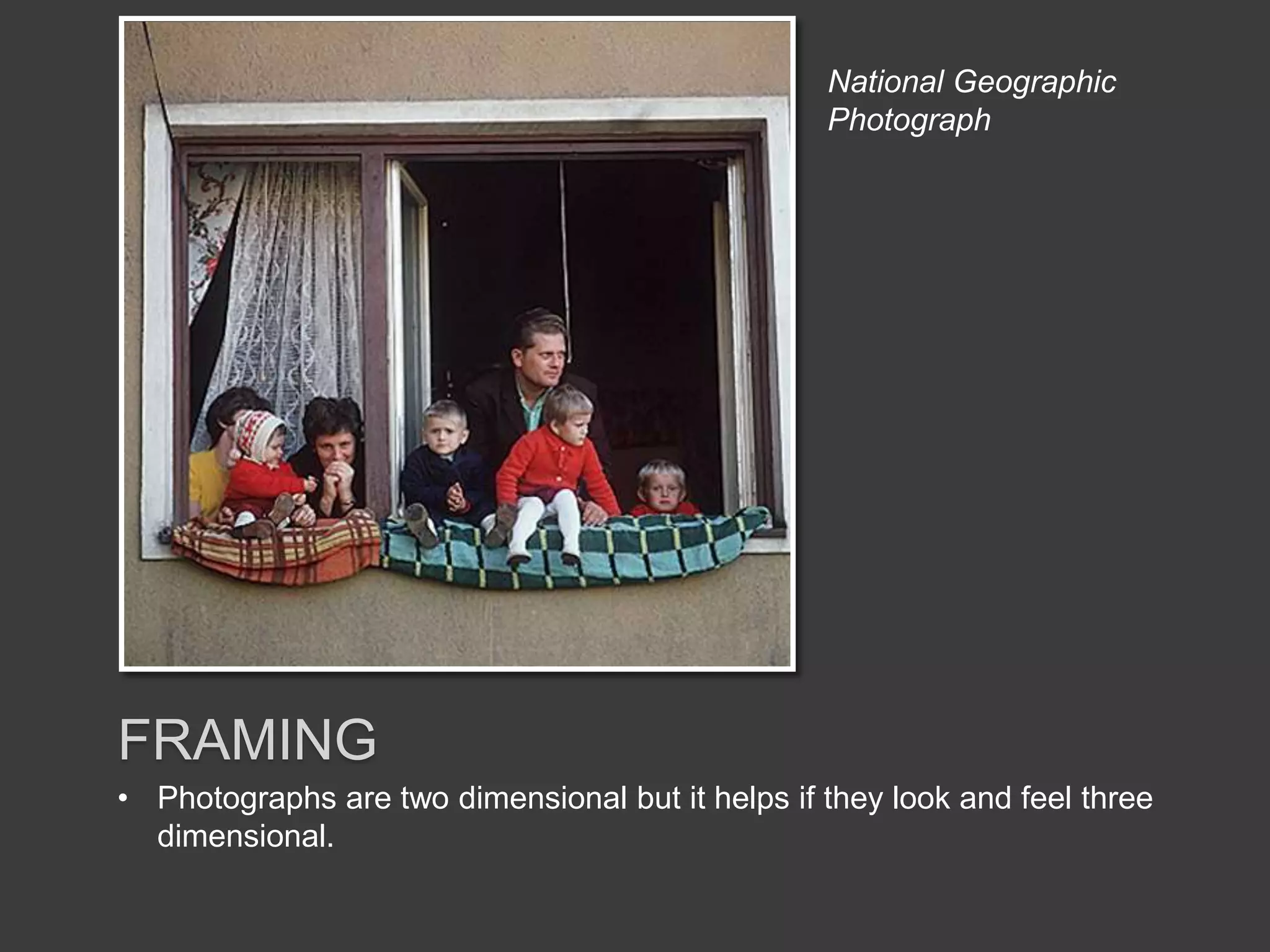
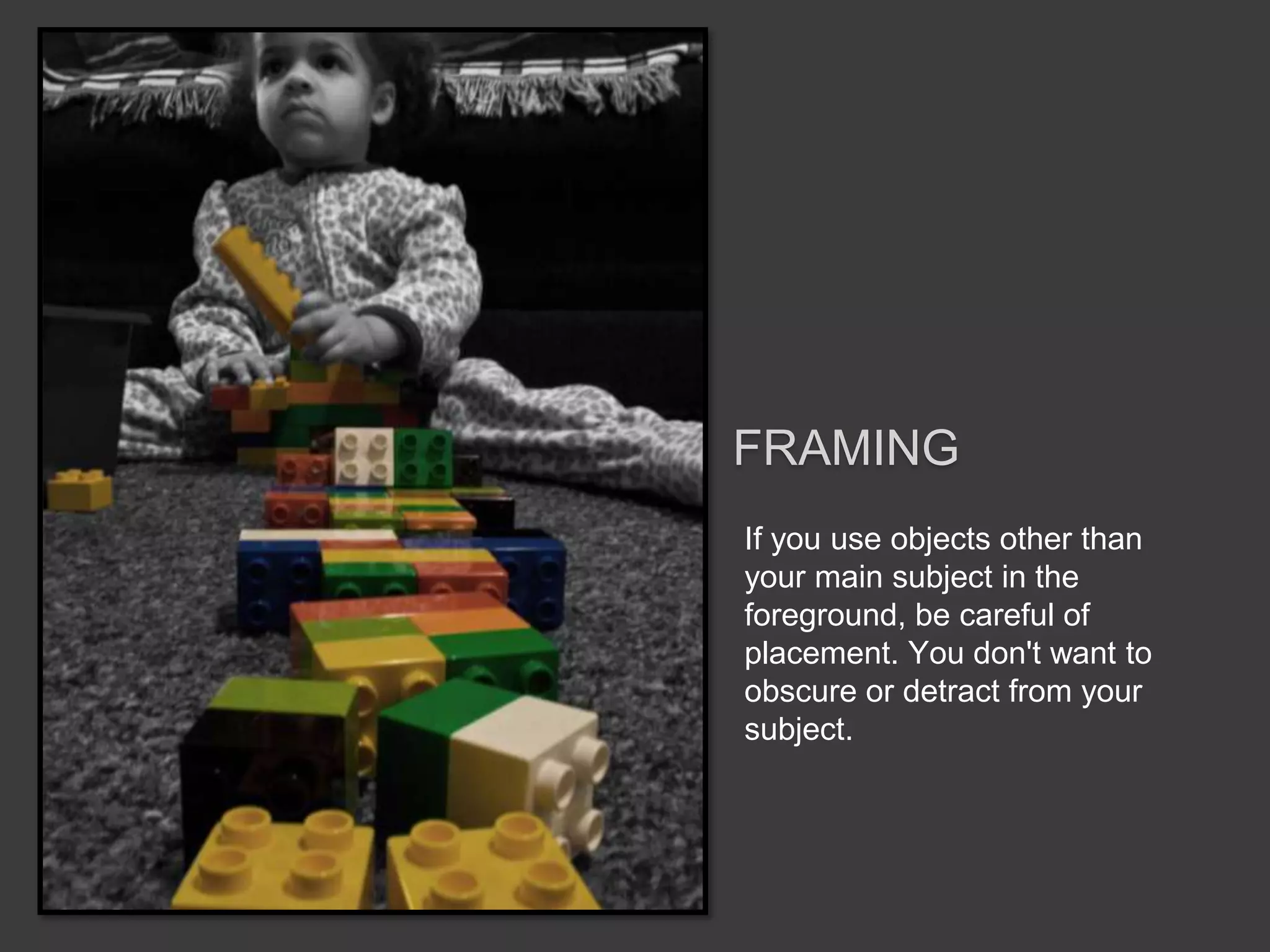
FramingNational GeographicPhotographPhotographs are two dimensional but it helps if they look and feel three dimensional. FramingIf you use objects other than your main subject in the foreground, be careful of placement. You don't want to obscure or detract from your subject.
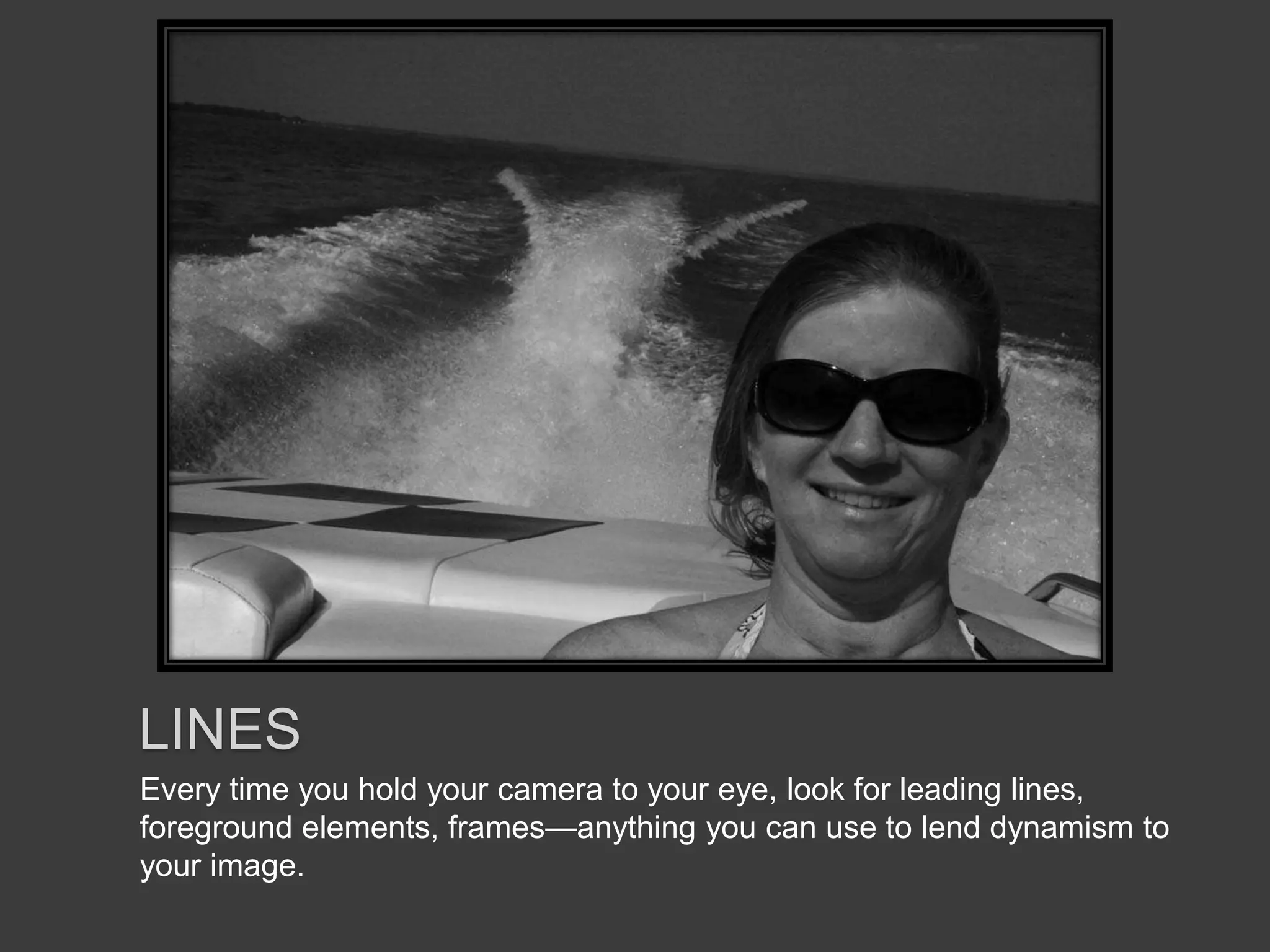
LinesEvery time you hold your camera to your eye, look for leading lines, foreground elements, frames—anything you can use to lend dynamism to your image.
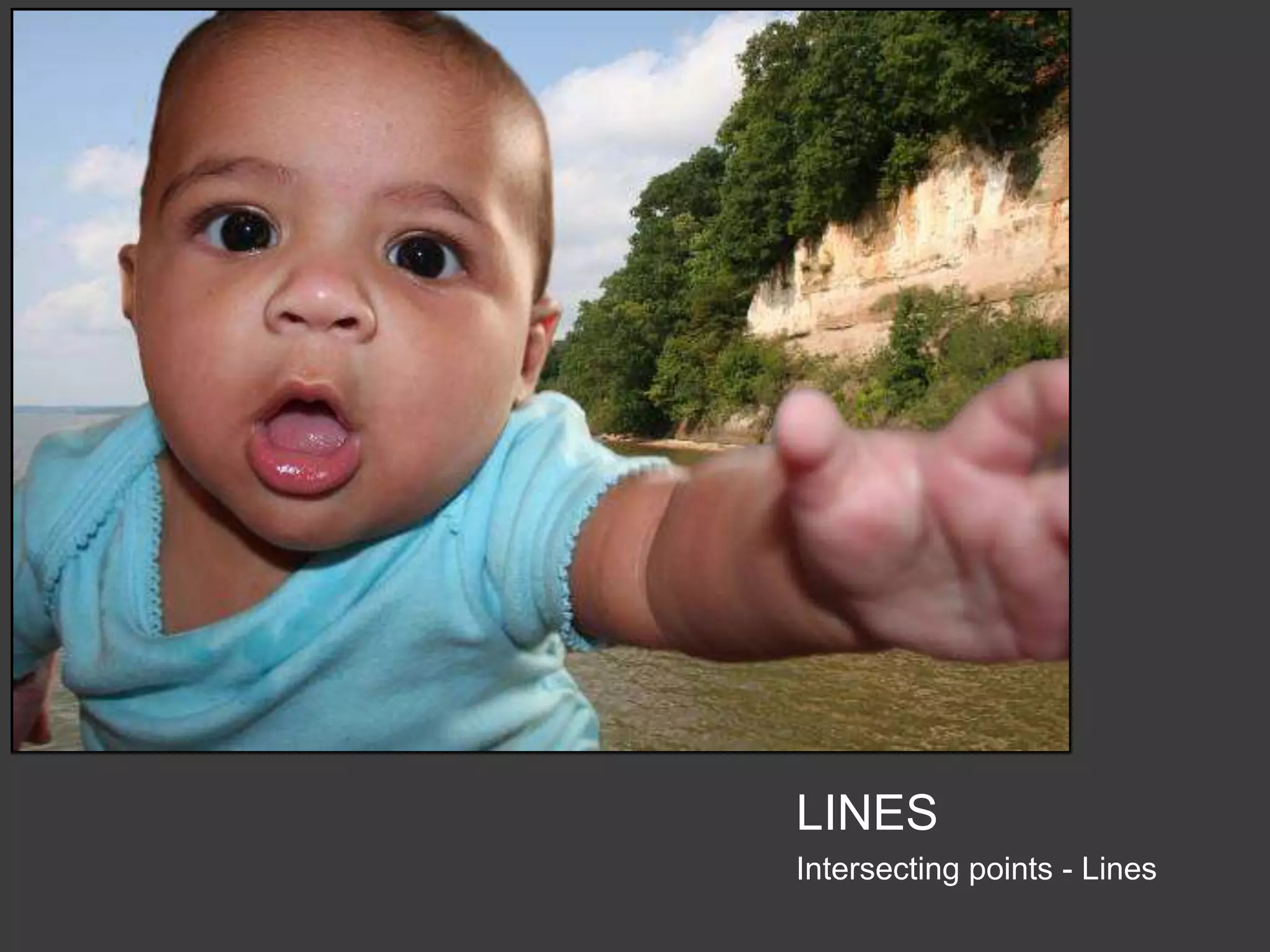
LINESIntersecting points - Lines
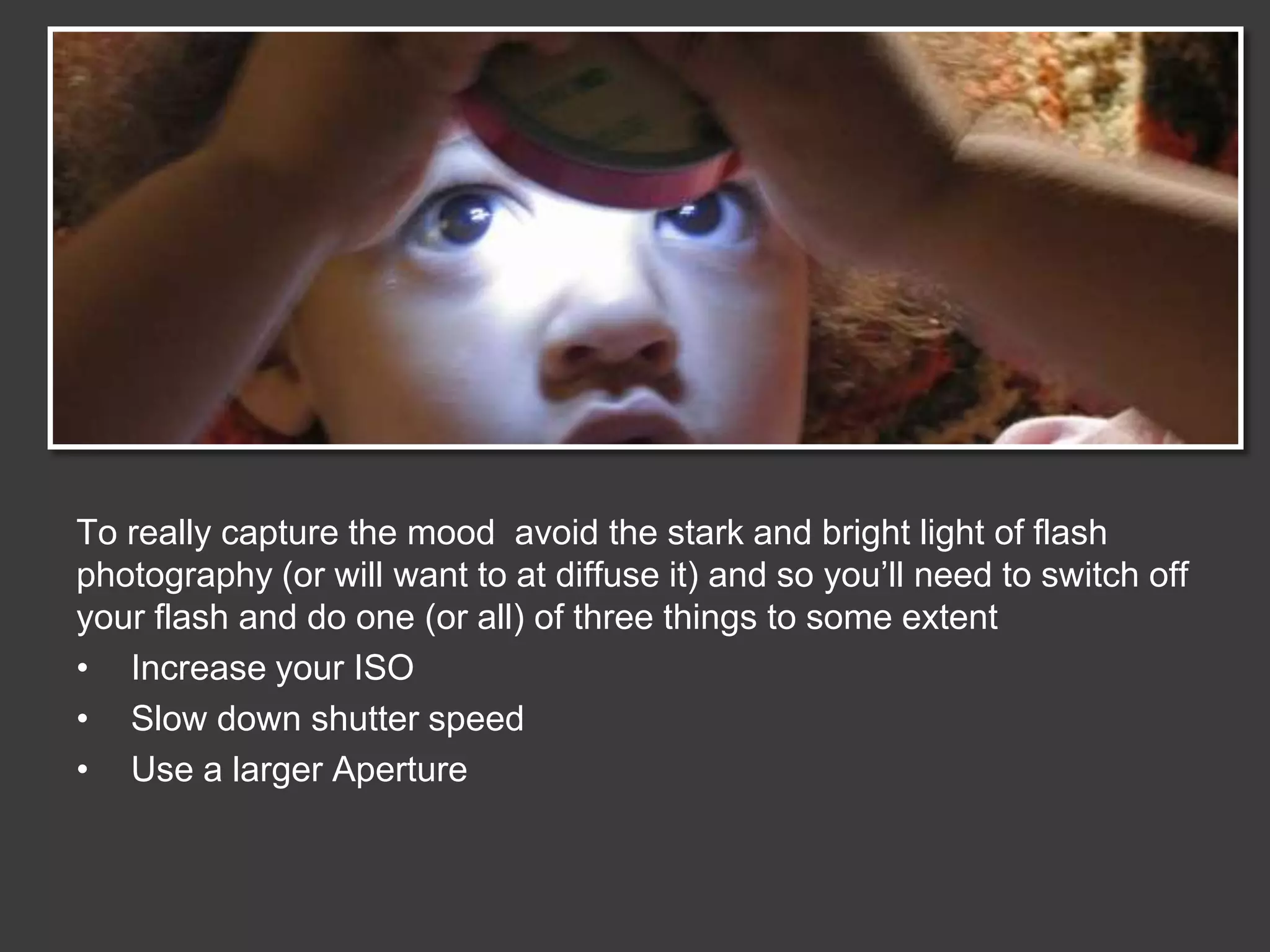
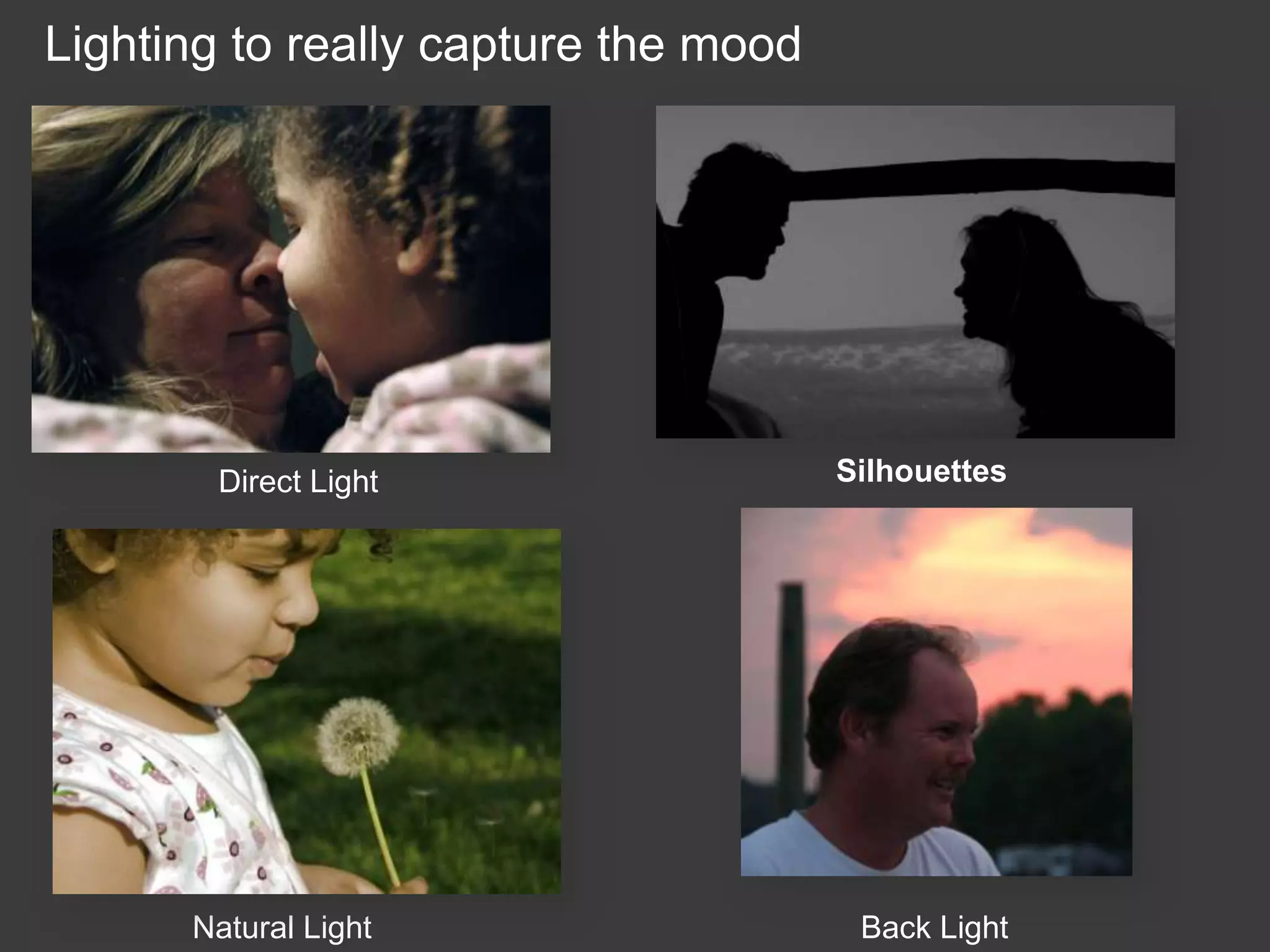
To really capture the mood  avoid the stark and bright light of flash photography (or will want to at diffuse it) and so you’ll need to switch off your flash and do one (or all) of three things to some extent Increase your ISO
Slow down shutter speed
Use a larger ApertureLighting to really capture the mood SilhouettesDirect LightNatural LightBack Light
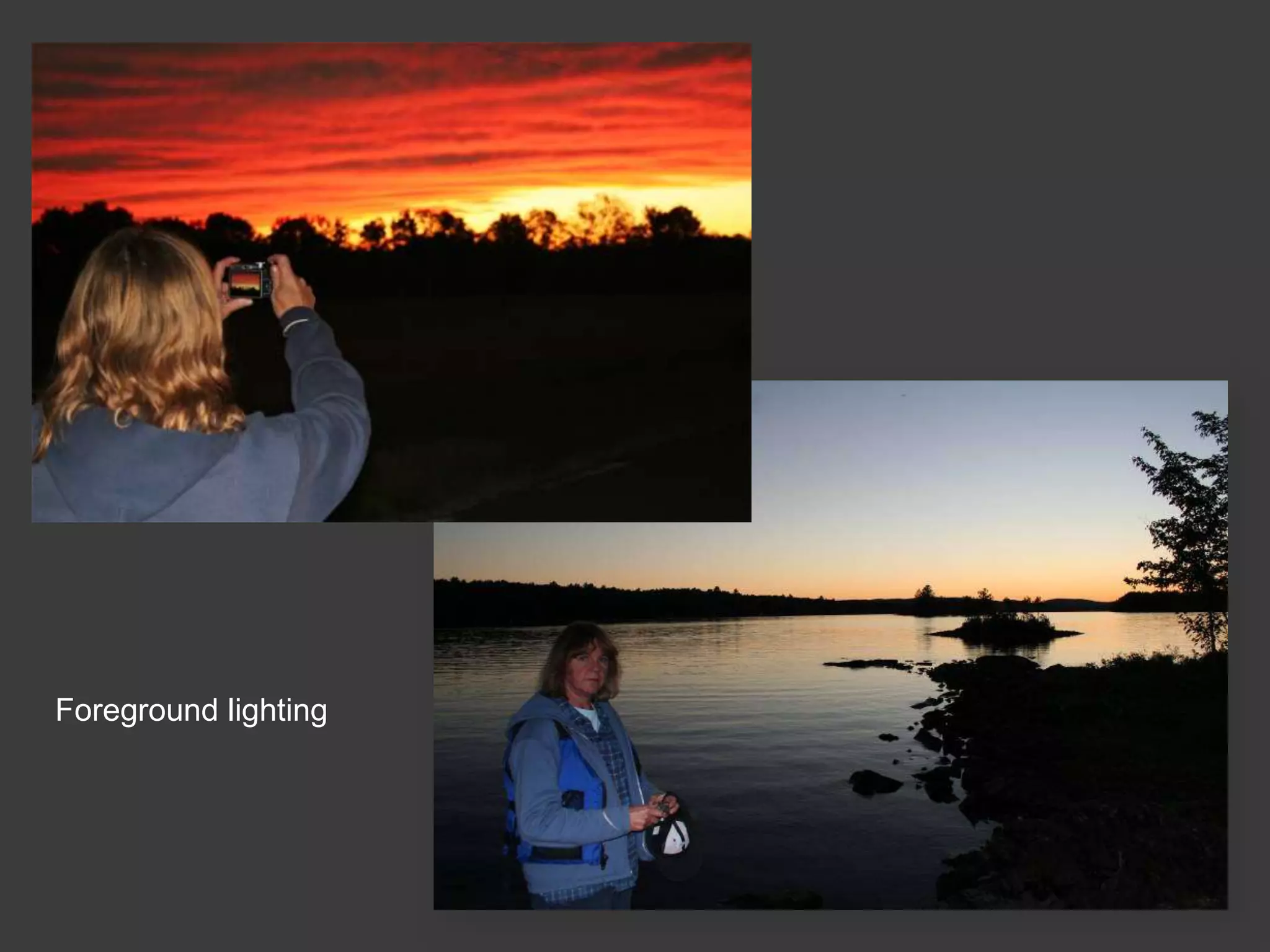
Foreground lighting
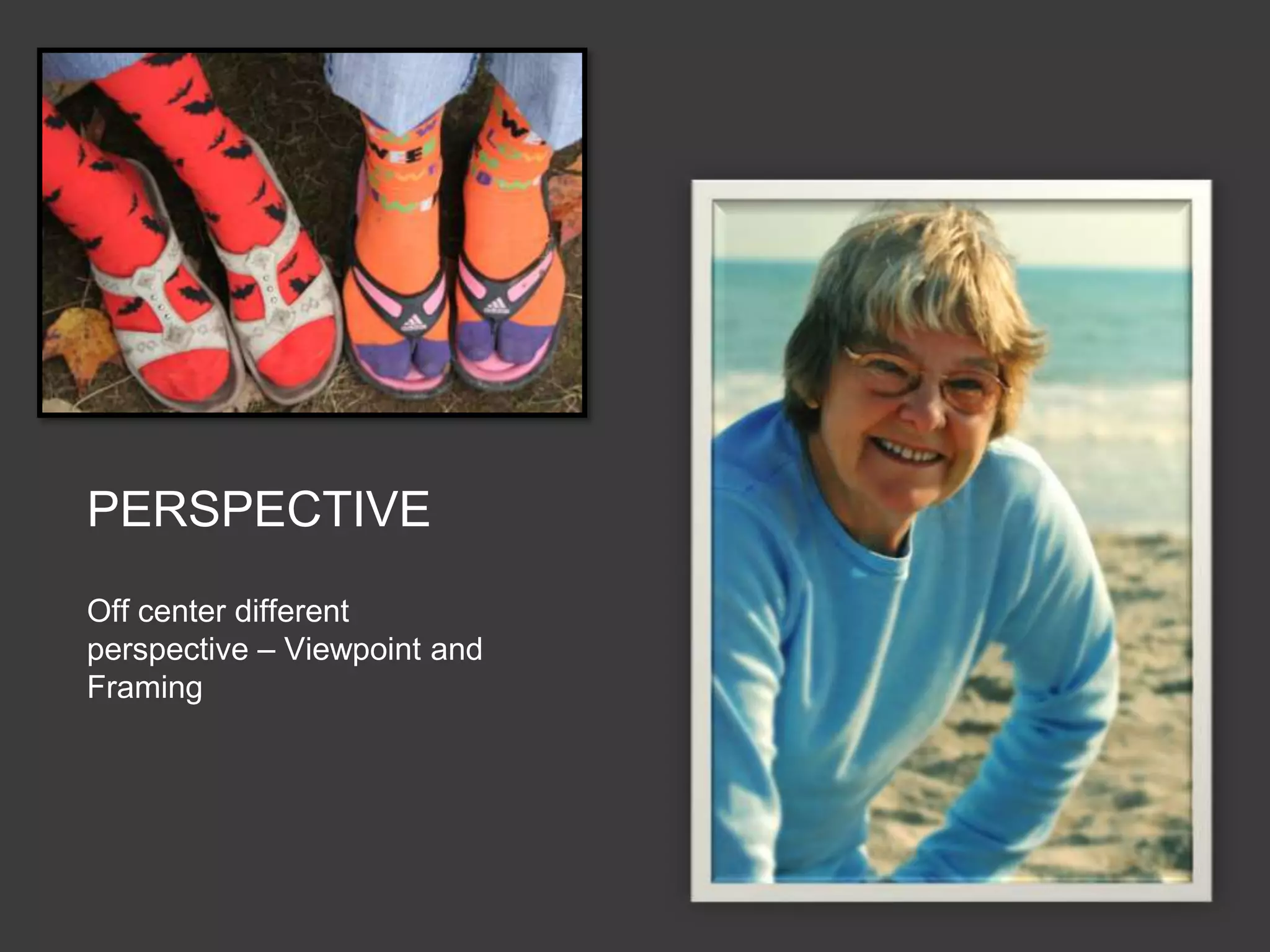
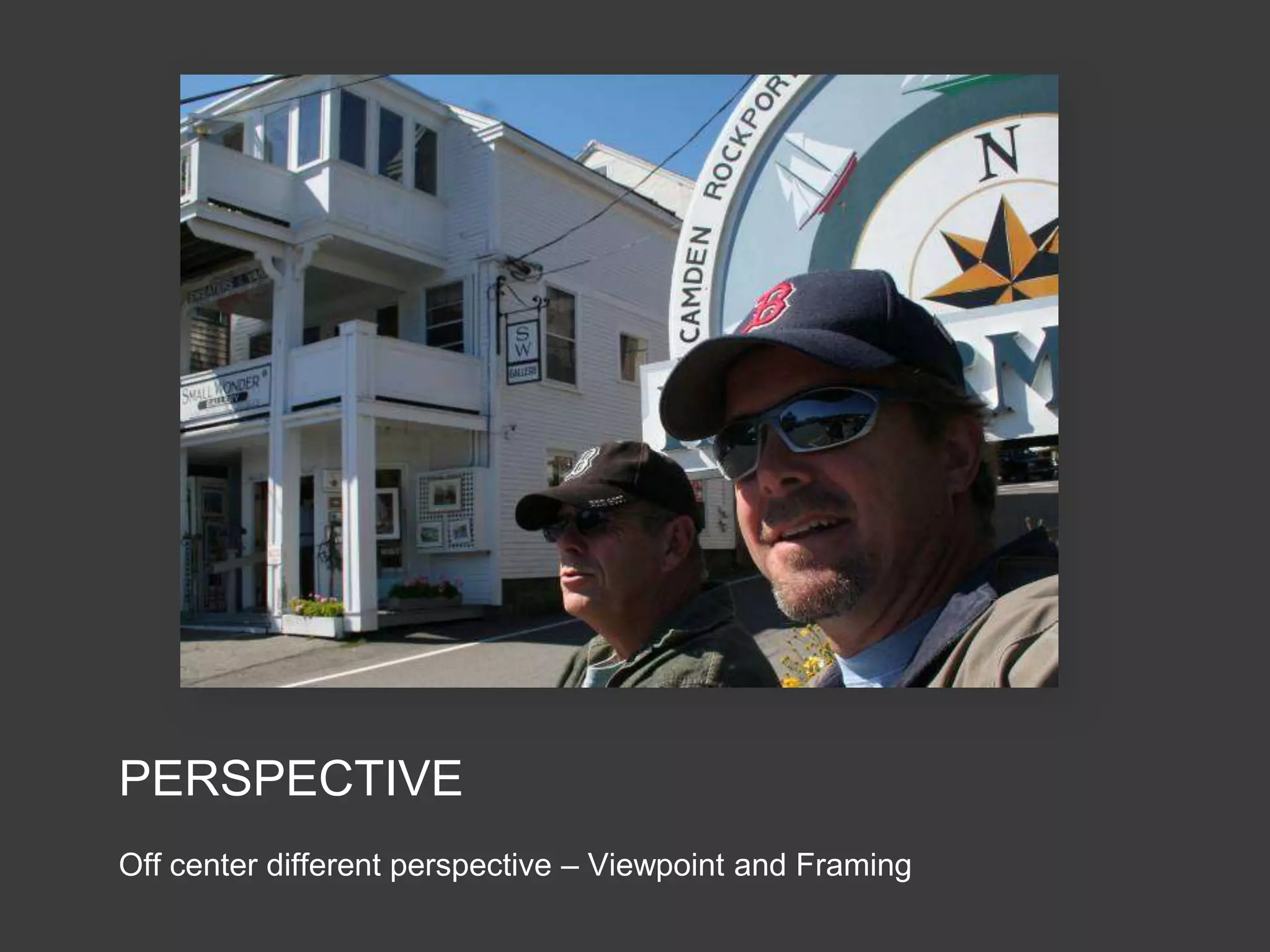
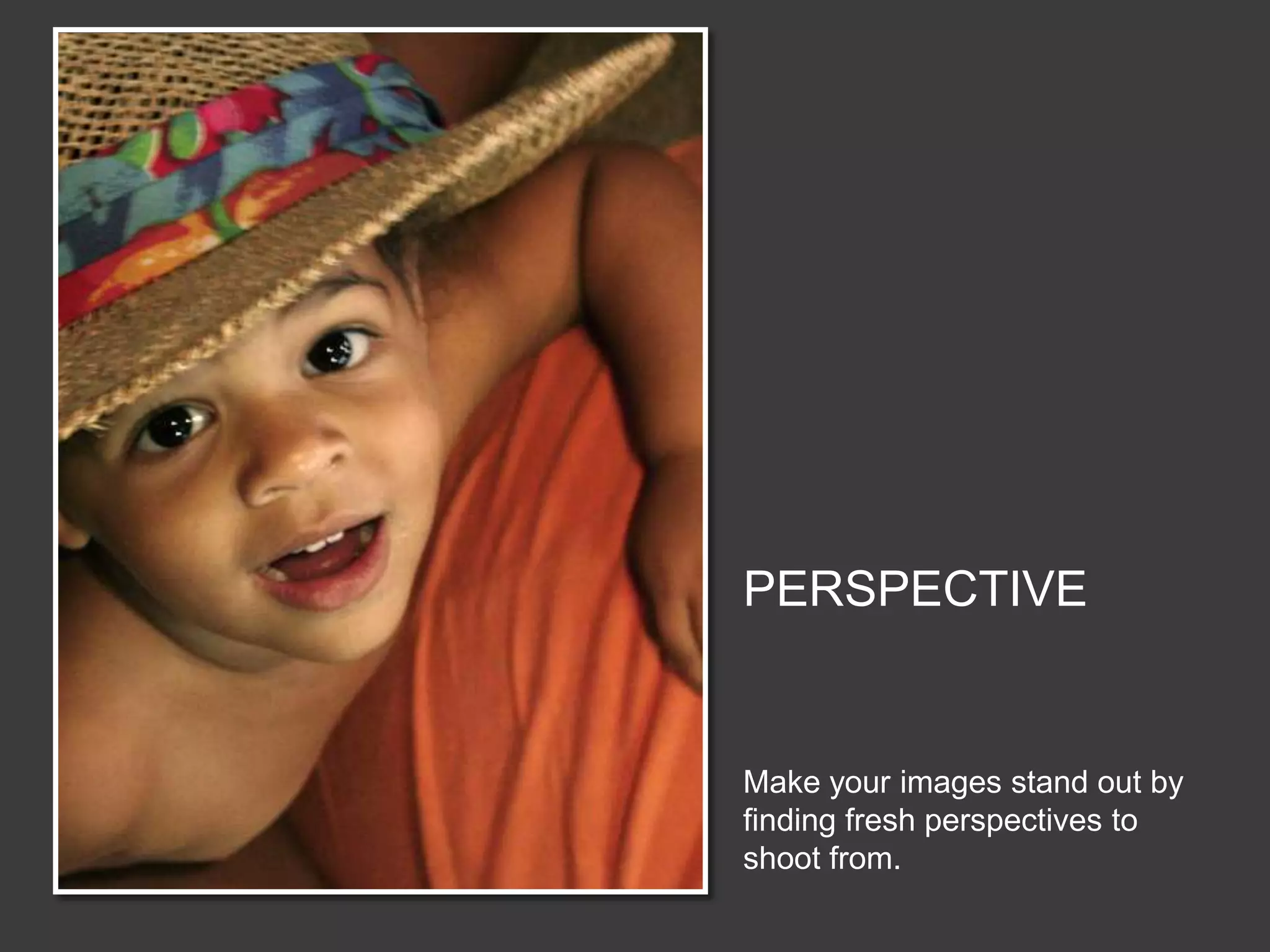
PERSPECTIVEOff center different perspective – Viewpoint and Framing
PERSPECTIVEMake your images stand out byfinding fresh perspectives to shoot from.
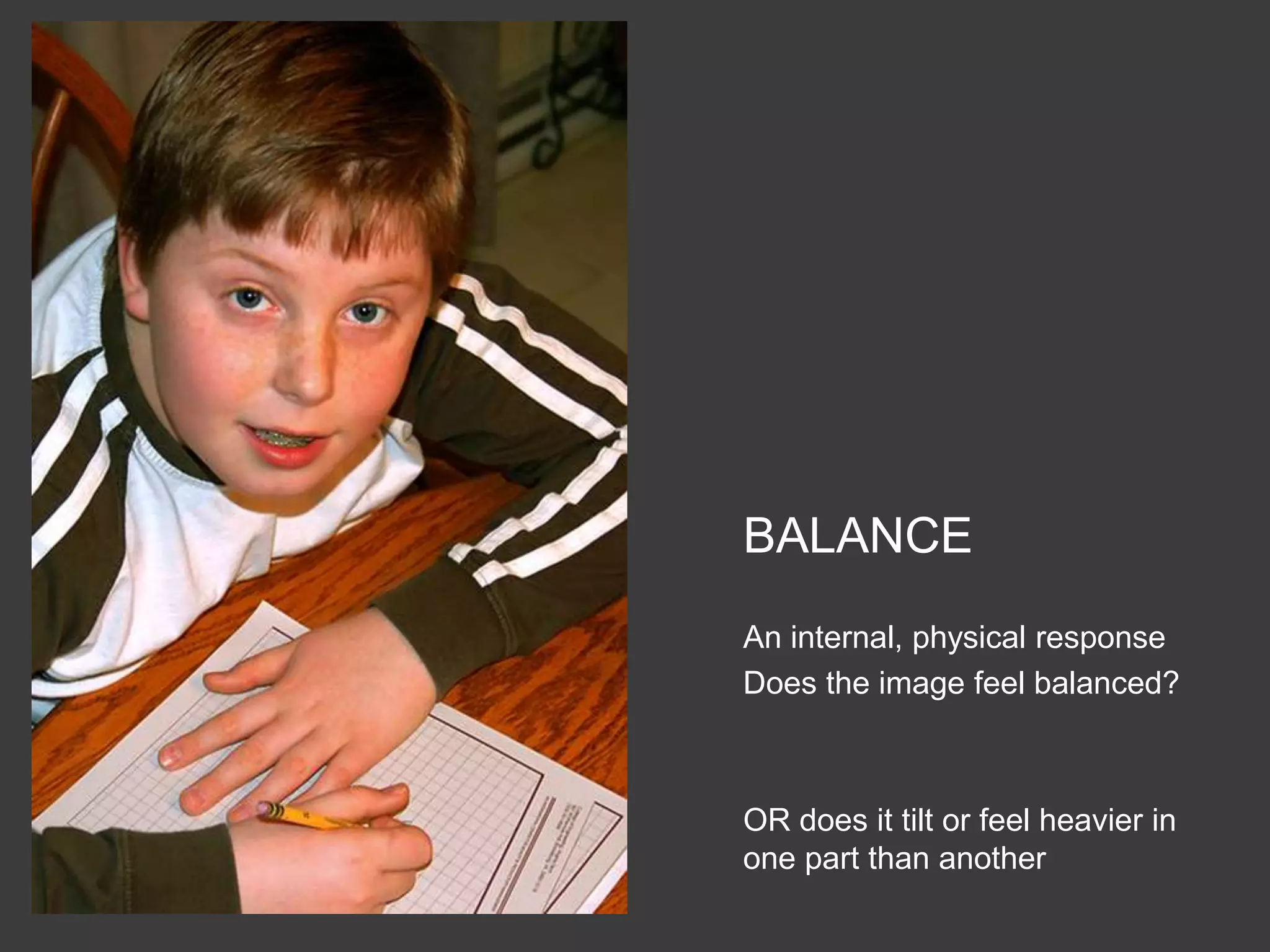
BALANCEAn internal, physical responseDoes the image feel balanced? OR does it tilt or feel heavier in one part than another
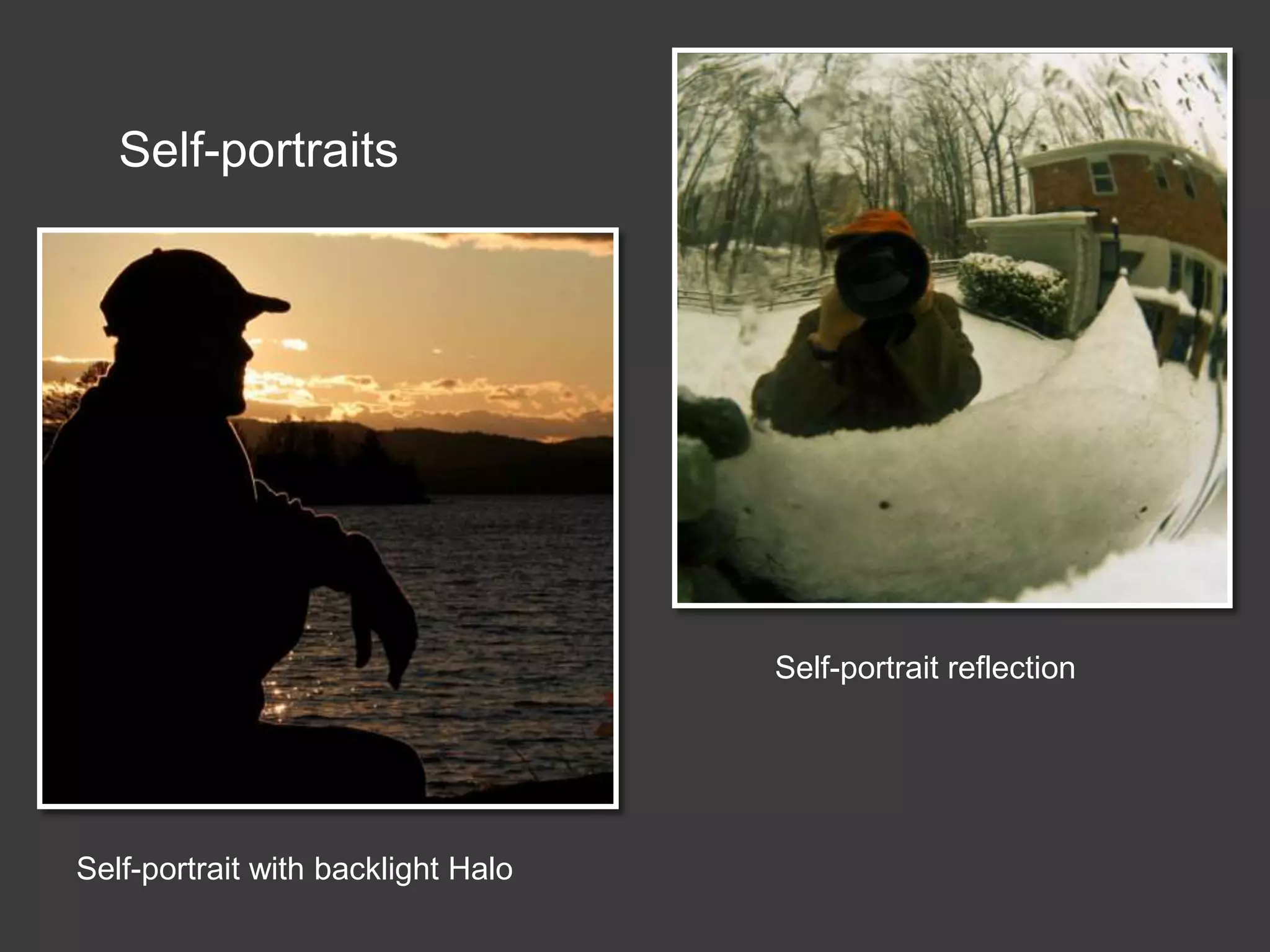
Self-portraitsSelf-portrait reflectionSelf-portrait with backlight Halo
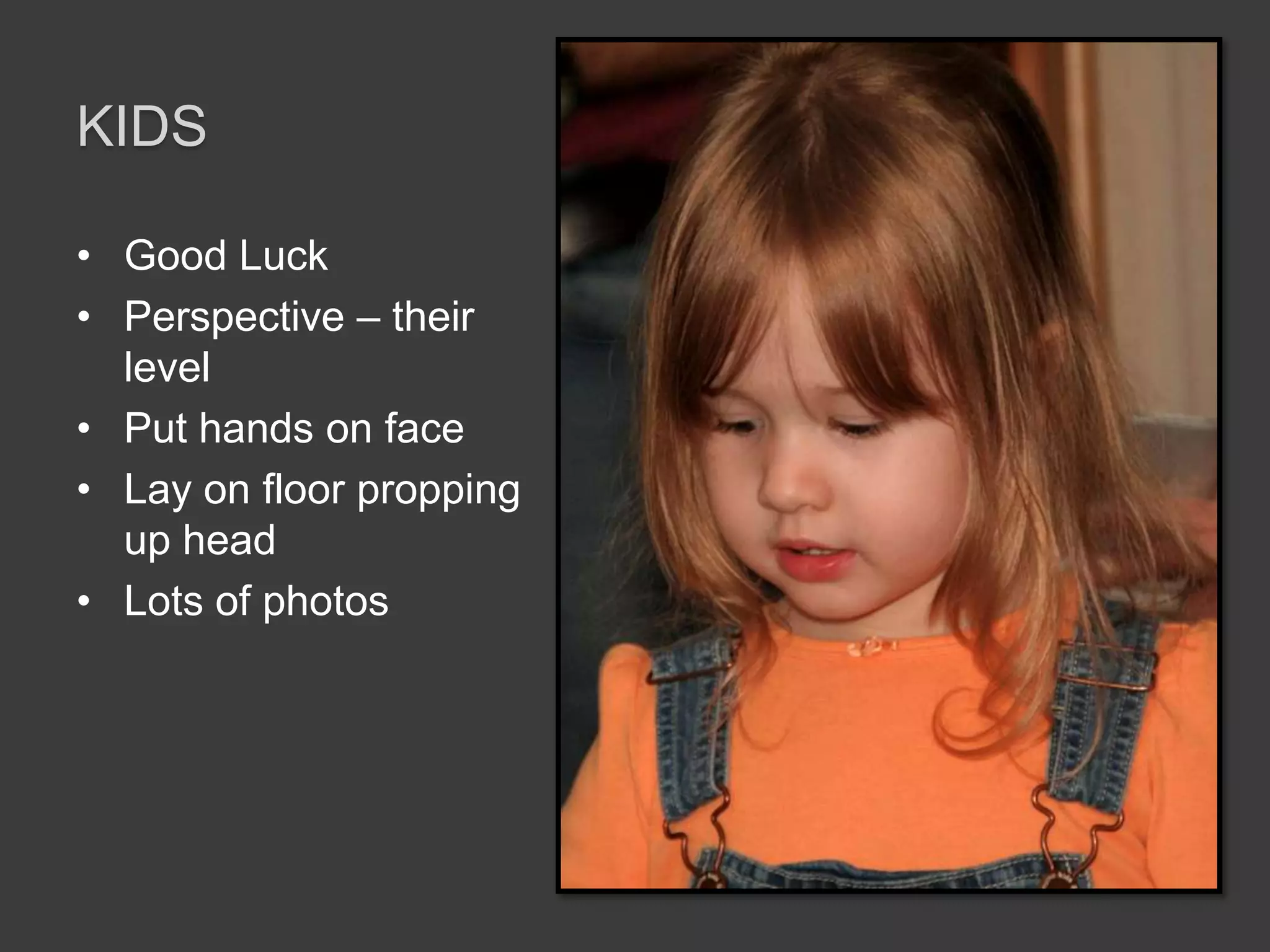
KidsGood LuckPerspective – their levelPut hands on faceLay on floor propping up headLots of photos
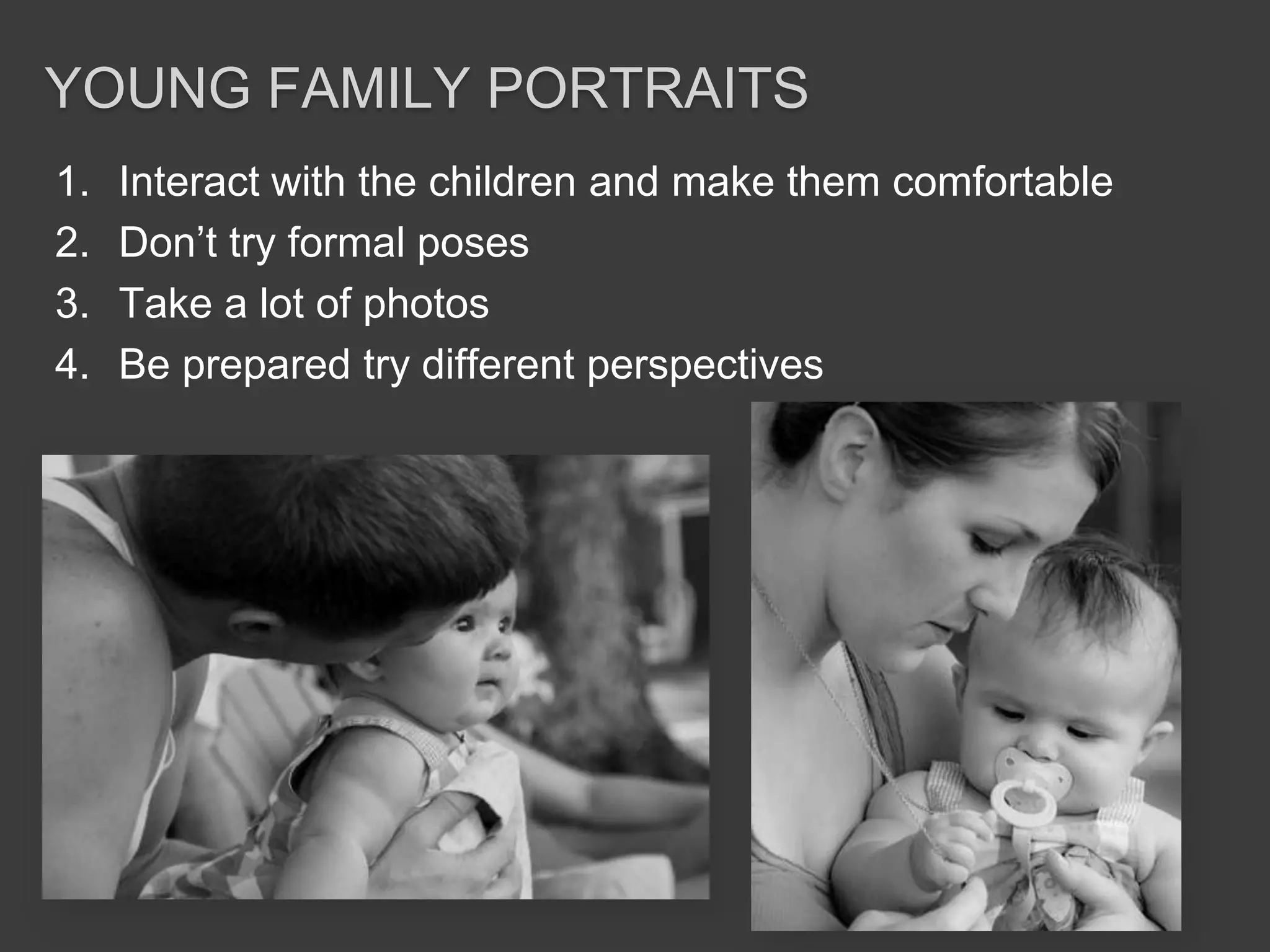
Young family portraitsInteract with the children and make them comfortableDon’t try formal posesTake a lot of photosBe prepared try different perspectives
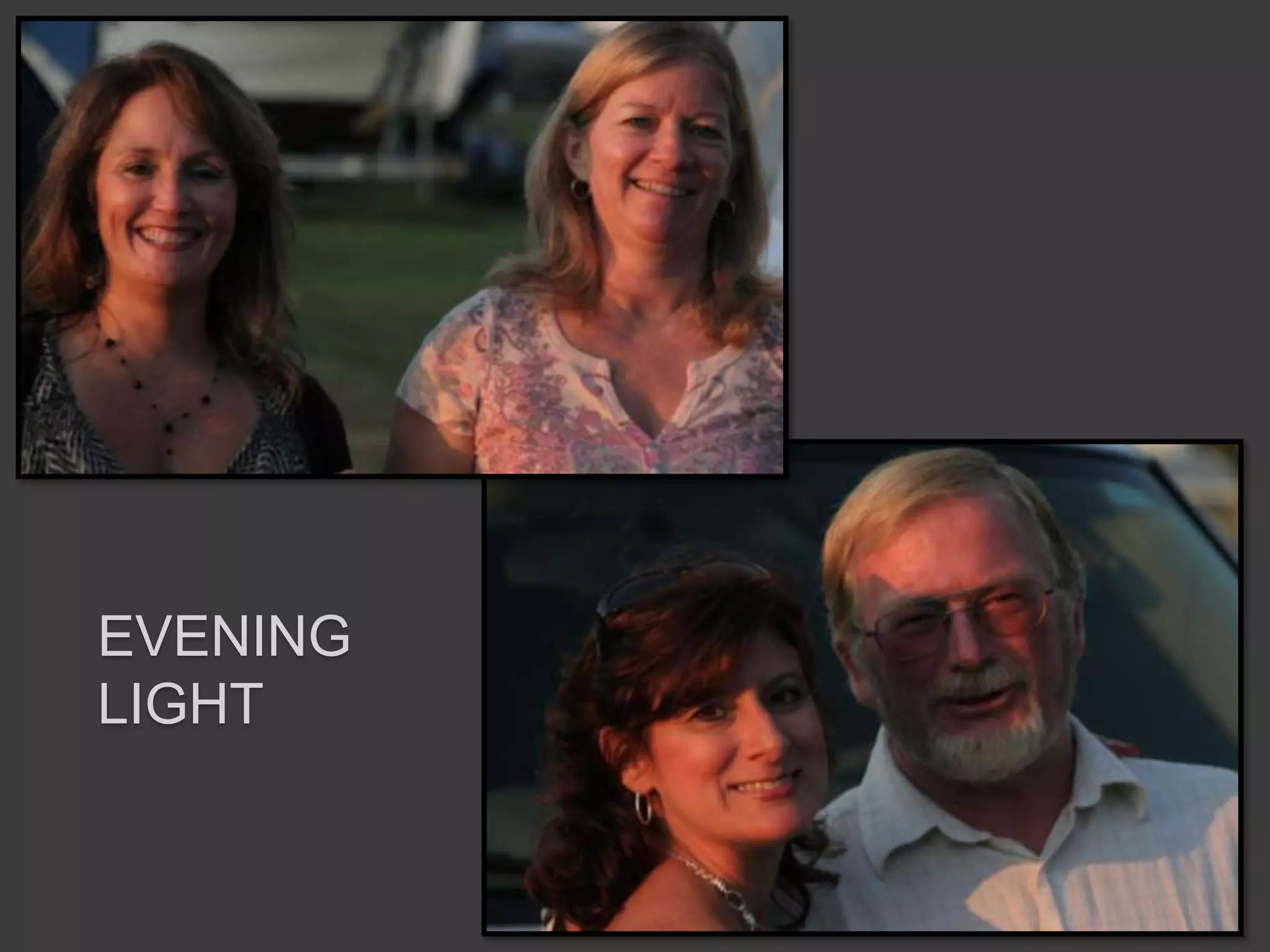
Evening Light

Week 7 Portraits

  • 1.
    Week 8: PortraitsJoelKinisonCollege of Southern MarylandCheck out more of Hákon’s work atPhotoQuotes.com and www.Imageree.com.“ I always thought good photos were like good jokes. If you have to explain it, it just isn’t that good. –Anonymous
  • 2.
    Portrait BasicsA portraitis defined as a likeness of a person Reveals something of the person’s characterGood portraits contain something about the person’s personality, attitude and mannerisms
  • 3.
    Formal PortraitsGet toknow your subject with small talk or informal conversation. It’s important for people to feel comfortablePlan a few shots to break the ice.You and the subject will be nervous. Calming the subjectRelatively comfortable positionSubject will settle down during the shootYou must be in charge Competent and knowledgeableOnly then will your subject become relaxedEmphasize the person in a portrait - not his or her surroundings.
  • 4.
    Help it happen. Give them basic direction and tell them to be themselves. Make them laugh, make them smile. Give them an activity to participate in.
  • 5.
    Contrast and Tone–High contrastMojo from Flickrhttp://flickr.com/photos/mojo74/1182205597/
  • 6.
    Portraits outdoorsWhat backgroundworks best with the clothes your subject is wearing? Where is the sun? Is there wind to mess up the hair?Is the location private, or will you have to worry about clutter or distractions in the background? What is the weather like; is it sunny or overcast? An overcast sky provides soft, diffused light, while a sunny sky provides bright, intense light. Overcast is preferable in most cases. What can you use in your surroundings to enhance the composition?
  • 7.
    Portraits indoorsWill youuse a flash or the available natural light? If you will use a flash, will you use the built-in flash or a bounce flash ? If you use a bounce flash, how high is the ceiling and what color are the walls? Both will affect the outcome of the shot. If you are using the available light, how strong is the light coming in from windows or doors? If the light is not very strong, you may need a slower shutter speed, and possibly a tripod to avoid blur. Pay attention to the background tones and objects.
  • 8.
    More on backgroundsDistractionsDistractingfocal point (silly face in the background)Protruding elements from subjects headsCompeting lines (strong clashing lines)StrategiesCheck your backgroundMove your subjectChange your shooting angleUse aperture or focal length to blue backgroundsFill your framePost processing
  • 9.
    Make your locationwork for you. Be aware of the background and the available light, but also the environment
  • 10.
    Make your locationwork for you.
  • 11.
    Life – DigitalPhotography School contest resultshttp://digital-photography-school.com/life-winners-announcedPhoto bybigmakoy
  • 12.
    The Vacation PortraitFamilywith nice background sceneProblem: too much background, but you can barely tell who is in the photoIn portraits – the subject is the peopleToo much background can cause conflict
  • 13.
    Depth of fieldBackgroundcan be too distracting. Decrease the aperture setting on your camera to narrow the DOF. The same depth of field effect can be obtained by simply moving closer to the subject. The closer the subject is to camera, the narrower the depth of field it will appear in.
  • 14.
    Rule of thirdsThisworks under the concept that tension in the picture will bring more interest. One way of enhancing the composition of your shots is to place your points of interest inn smart positions. While the rule of thirds can be broken with great effect it’s a useful principle to keep in mind. Digital Photography Schoolhttp://digital-photography-school.com/rule-of-thirds
  • 15.
    backgroundRule of thirdsand fill the frame
  • 16.
  • 17.
    Get CloserIf yousee something interesting, don't be satisfied with just a wide shot.
  • 18.
    Think about theessence of what you are photographing and work closer and closer until you have isolated and captured it.
  • 19.
    Don't be shy.People are usually happy to show you what they do well.Fill your frameGet Closer
  • 20.
    FramingNational GeographicPhotographPhotographs aretwo dimensional but it helps if they look and feel three dimensional. FramingIf you use objects other than your main subject in the foreground, be careful of placement. You don't want to obscure or detract from your subject.
  • 21.
    LinesEvery time youhold your camera to your eye, look for leading lines, foreground elements, frames—anything you can use to lend dynamism to your image.
  • 22.
  • 23.
    To really capturethe mood avoid the stark and bright light of flash photography (or will want to at diffuse it) and so you’ll need to switch off your flash and do one (or all) of three things to some extent Increase your ISO
  • 24.
  • 25.
    Use a largerApertureLighting to really capture the mood SilhouettesDirect LightNatural LightBack Light
  • 26.
  • 27.
    PERSPECTIVEOff center differentperspective – Viewpoint and Framing
  • 28.
    PERSPECTIVEOff center differentperspective – Viewpoint and Framing
  • 29.
    PERSPECTIVEMake your imagesstand out byfinding fresh perspectives to shoot from.
  • 30.
    BALANCEAn internal, physicalresponseDoes the image feel balanced? OR does it tilt or feel heavier in one part than another
  • 31.
  • 32.
    KidsGood LuckPerspective –their levelPut hands on faceLay on floor propping up headLots of photos
  • 33.
    Young family portraitsInteractwith the children and make them comfortableDon’t try formal posesTake a lot of photosBe prepared try different perspectives
  • 34.
  • 35.
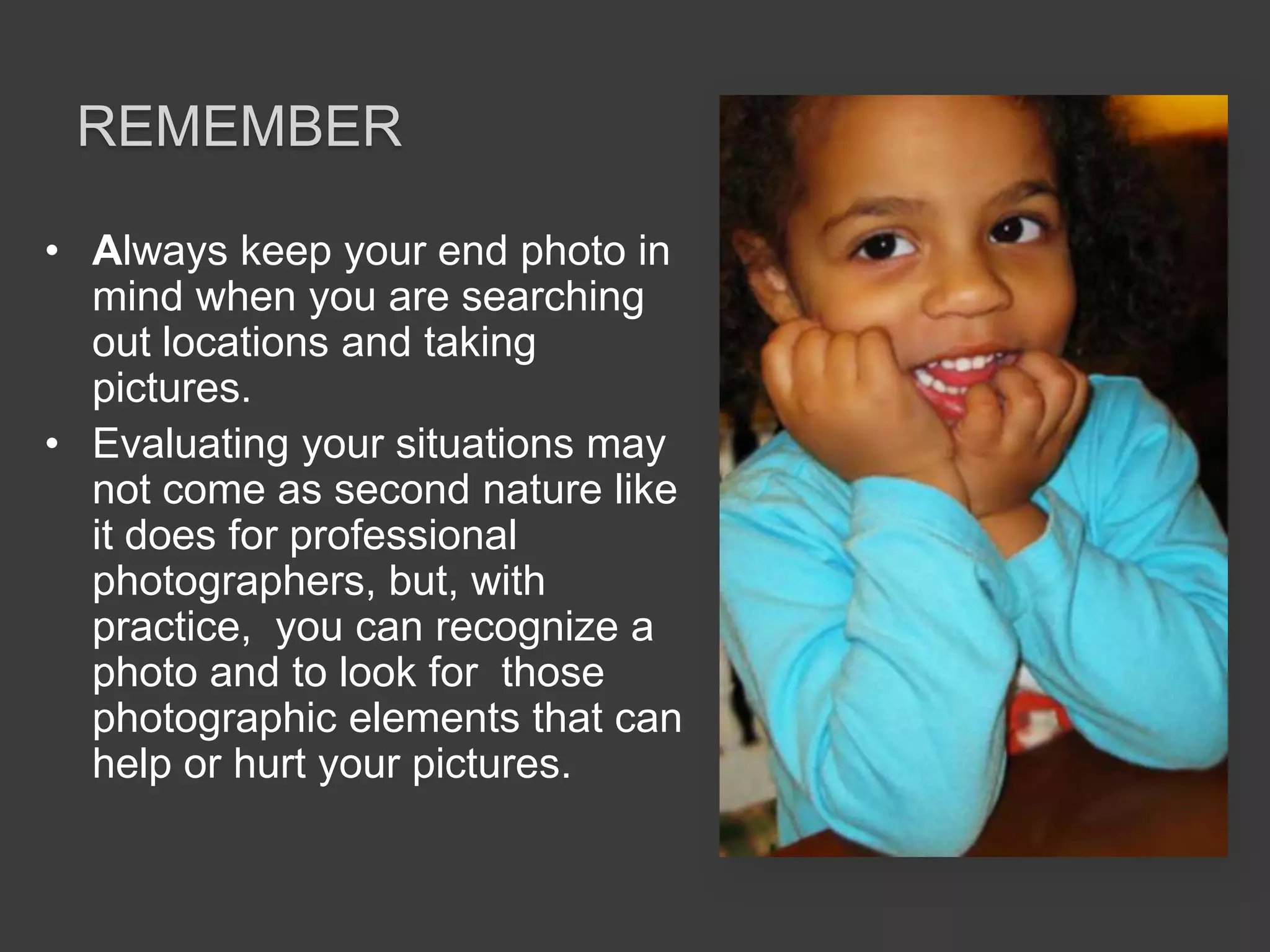
    rememberAlways keep yourend photo in mind when you are searching out locations and taking pictures. Evaluating your situations may not come as second nature like it does for professional photographers, but, with practice, you can recognize a photo and to look for those photographic elements that can help or hurt your pictures.
  • 36.
  • 37.
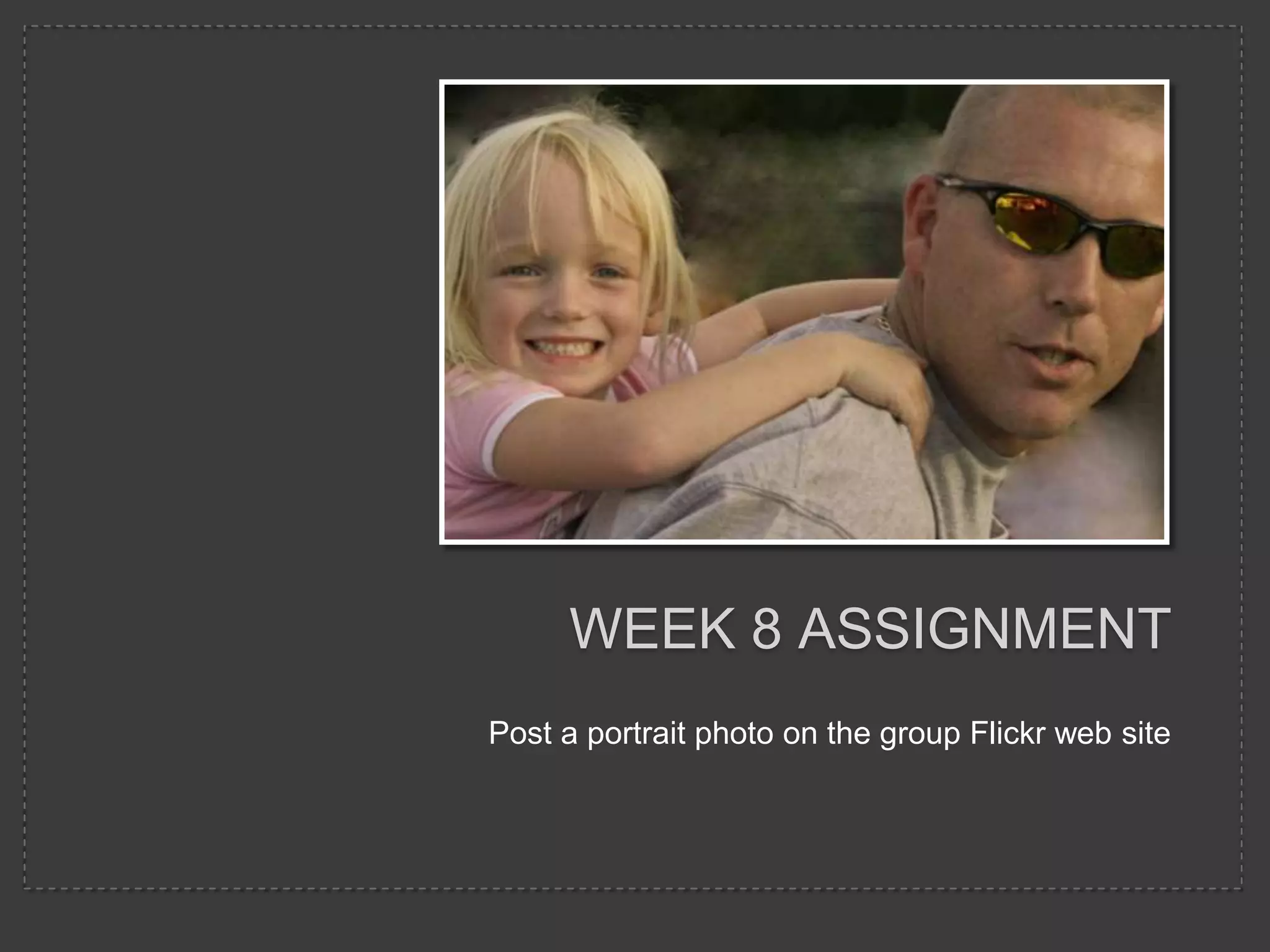
    Week 8 AssignmentPosta portrait photo on the group Flickr web site

Editor's Notes

  • #2 Sometimes it is interesting to hear the story behind the photo and you see the photo in a new light. But in most cases a photo shouldn’t need a story to back it up. It has to speak for itself.
  • #12 don’t be afraid to zoom in close!
  • #15 You can also capture “tight”, close up shots of your subject
  • #19 Use framing to concentrate all attention on your subject
  • #21 Keep in mind that any “line” used in a portrait is strongest when it comes outside the frame and leads to the subject.