Choreographing the Camera 
PER007-1 Applied Choreography: Dance and Innovation 
Dr Louise Douse
When the frame become a shot 
• The frame is the rectangle created by the camera lens 
• The frame never remains the same for more than a split second. 
• Either the subject of the frame will move 
• Monday’s workshop – camera is static, dancers moving 
• Or, the camera moves 
• Choreography of the camera 
• Or, in most cases, both will move. 
• Choreography of the camera and the subject 
University of Bedfordshire 2
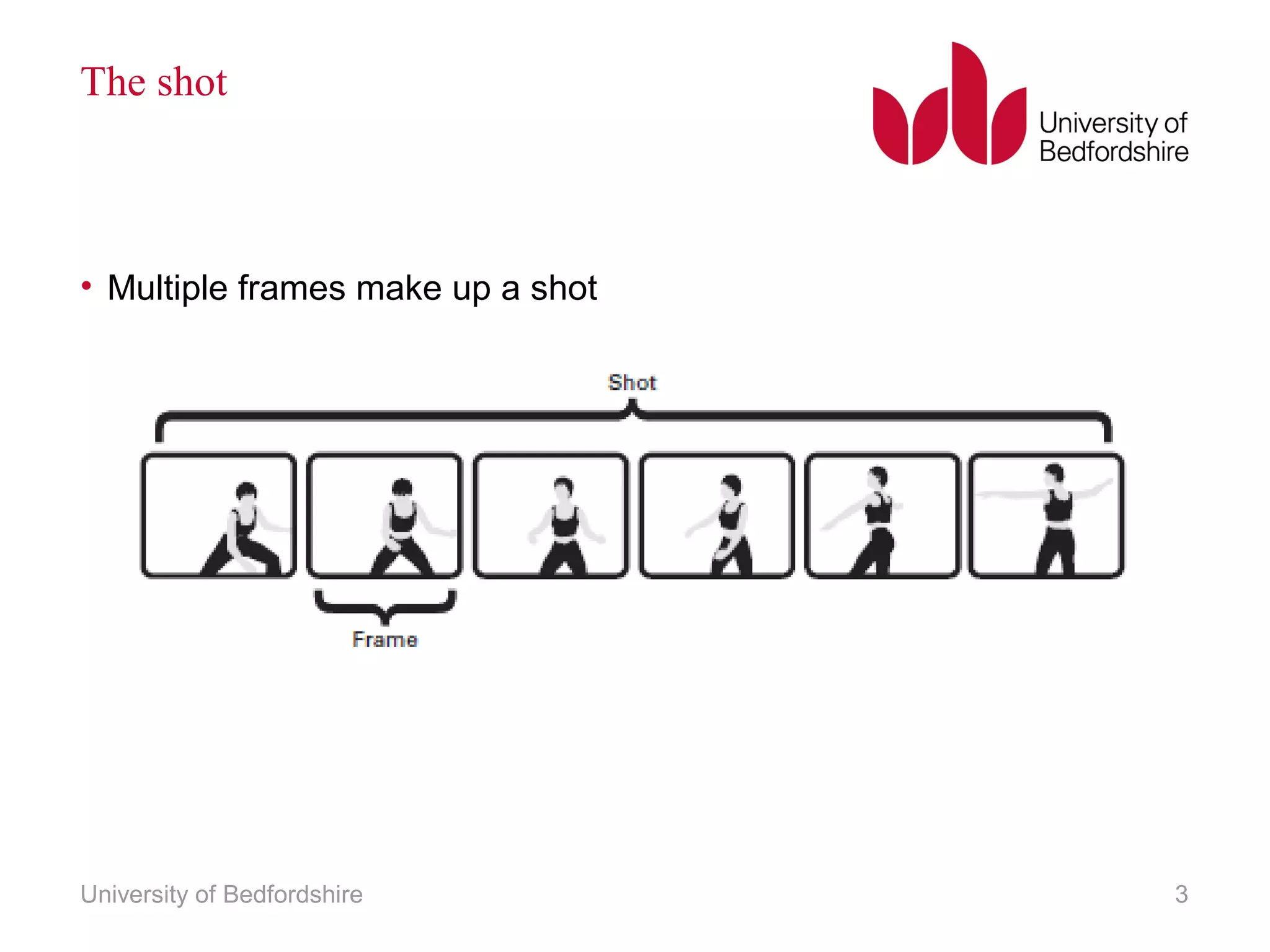
The shot 
• Multiple frames make up a shot 
University of Bedfordshire 3
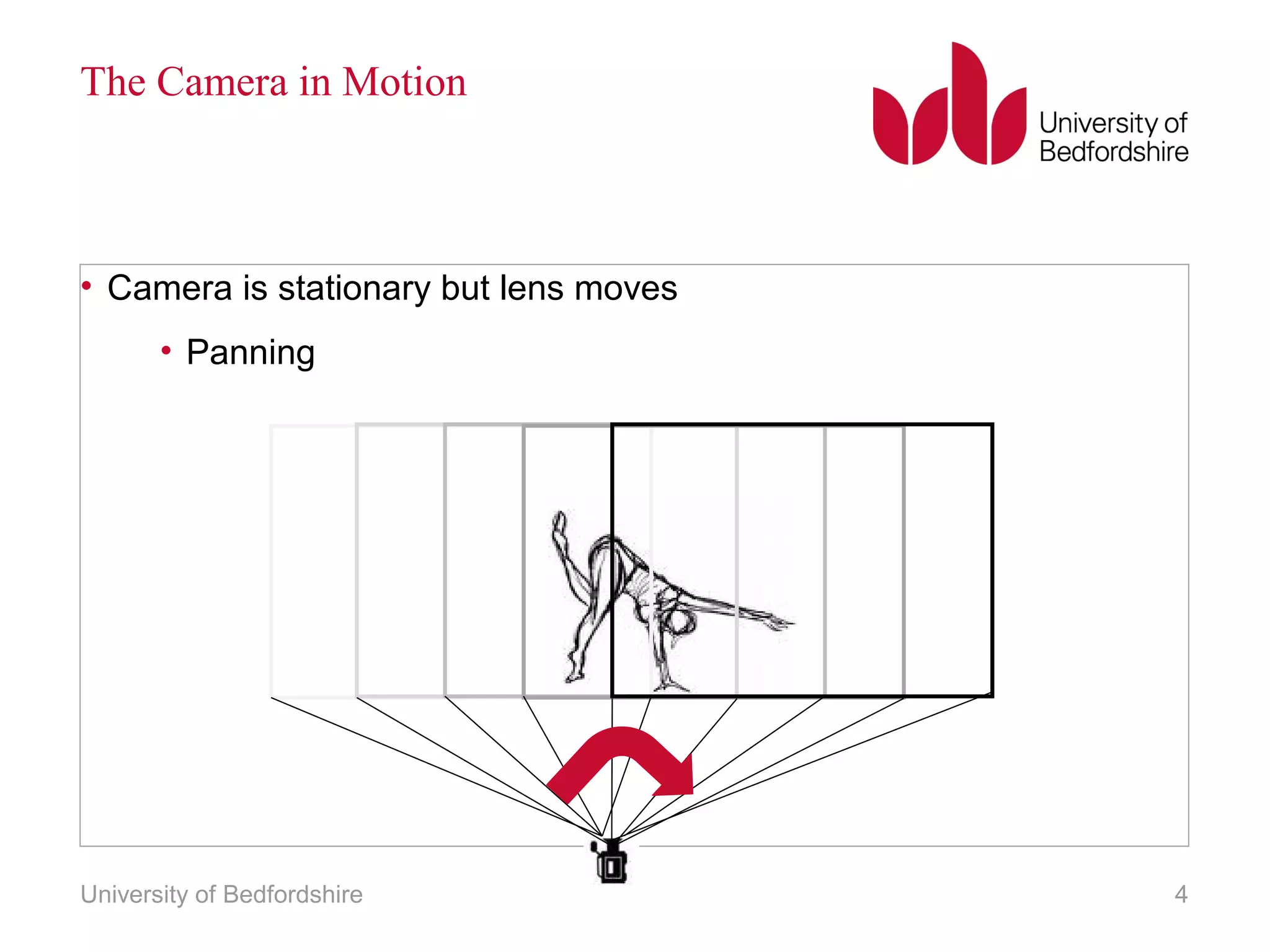
The Camera in Motion 
• Camera is stationary but lens moves 
• Panning 
University of Bedfordshire 4
The Camera in Motion 
• Camera is stationary but lens moves 
• Panning 
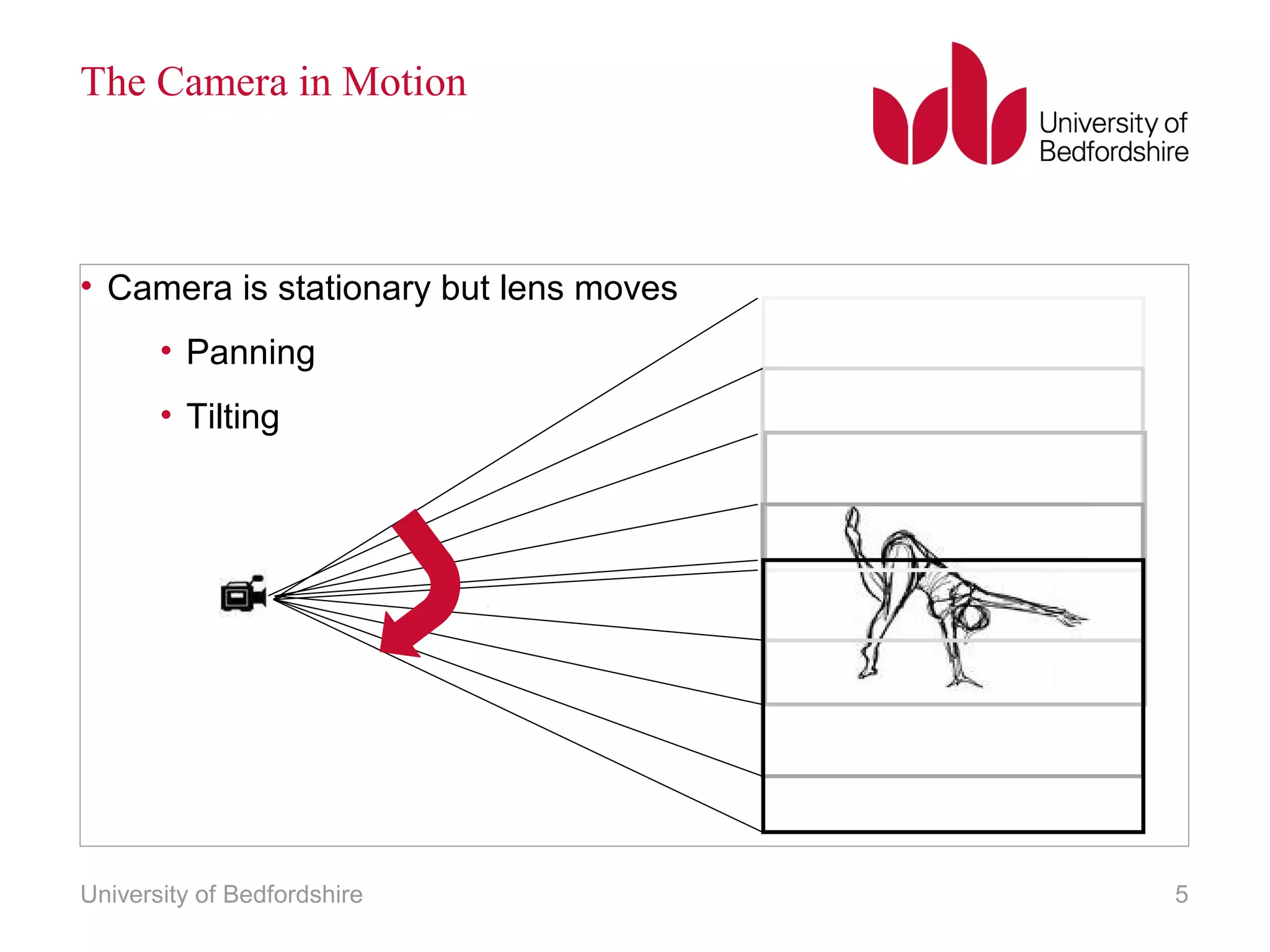
• Tilting 
University of Bedfordshire 5
The Camera in Motion 
• Camera is stationary but lens moves 
• Panning 
• Tilting 
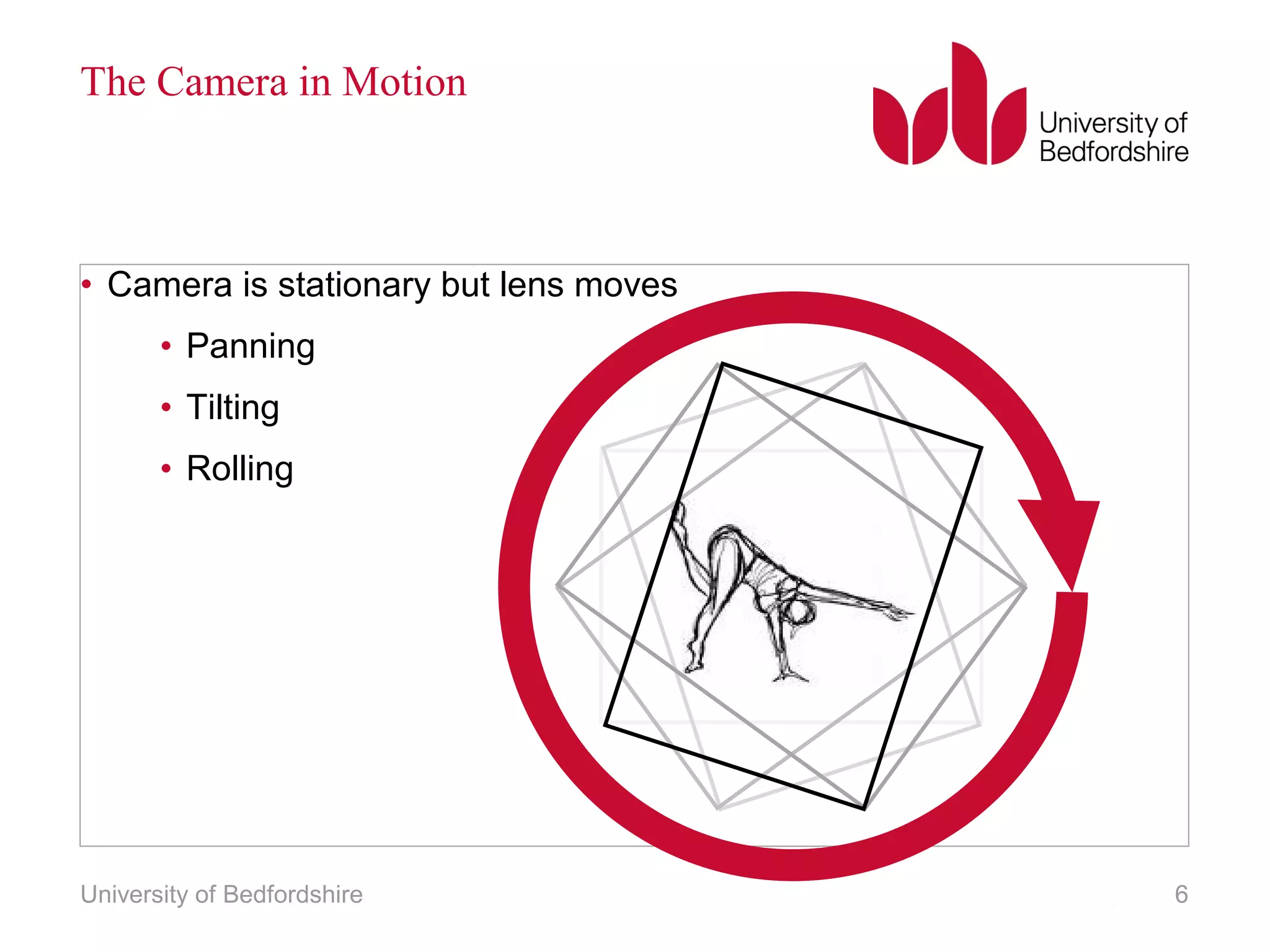
• Rolling 
University of Bedfordshire 6
The Camera in Motion 
• Camera is fixed in space but lens moves 
• Panning/ Whip pan 
• Tilting 
• Rolling 
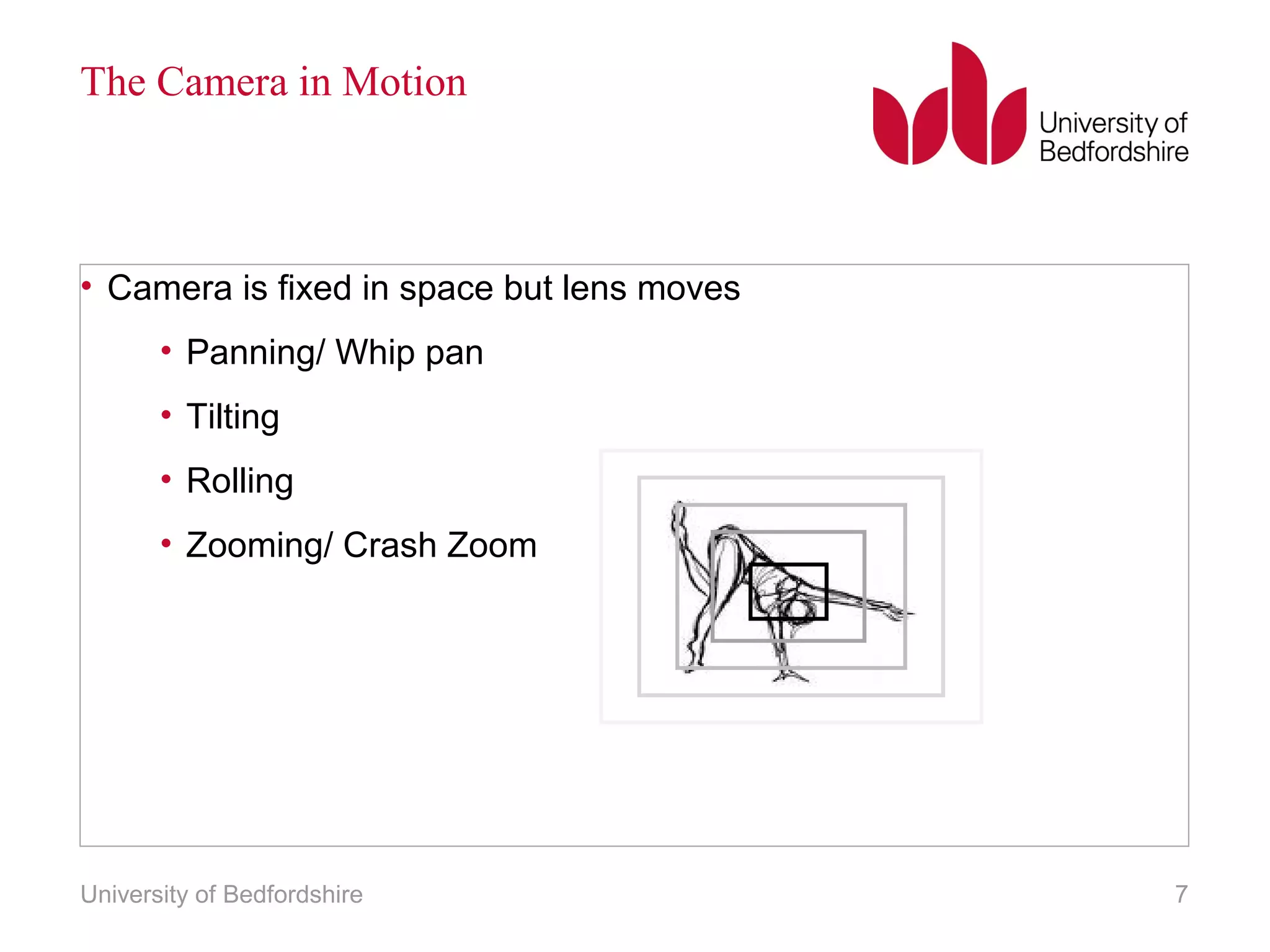
• Zooming/ Crash Zoom 
University of Bedfordshire 7
The Camera in Motion 
• Camera is fixed in space but lens moves 
• Panning/ Whip pan, Tilting, Rolling, Zooming/ Crash Zoom 
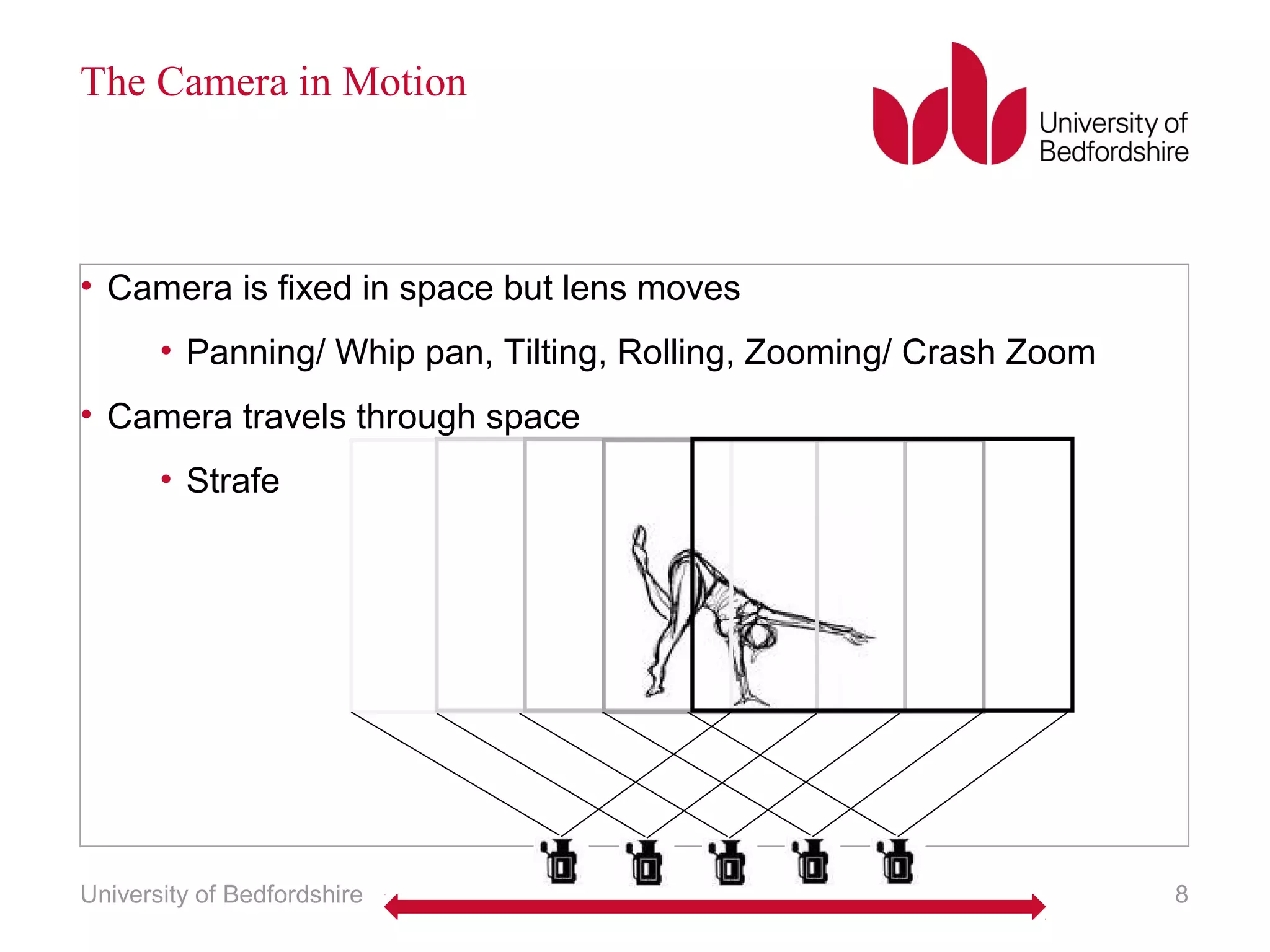
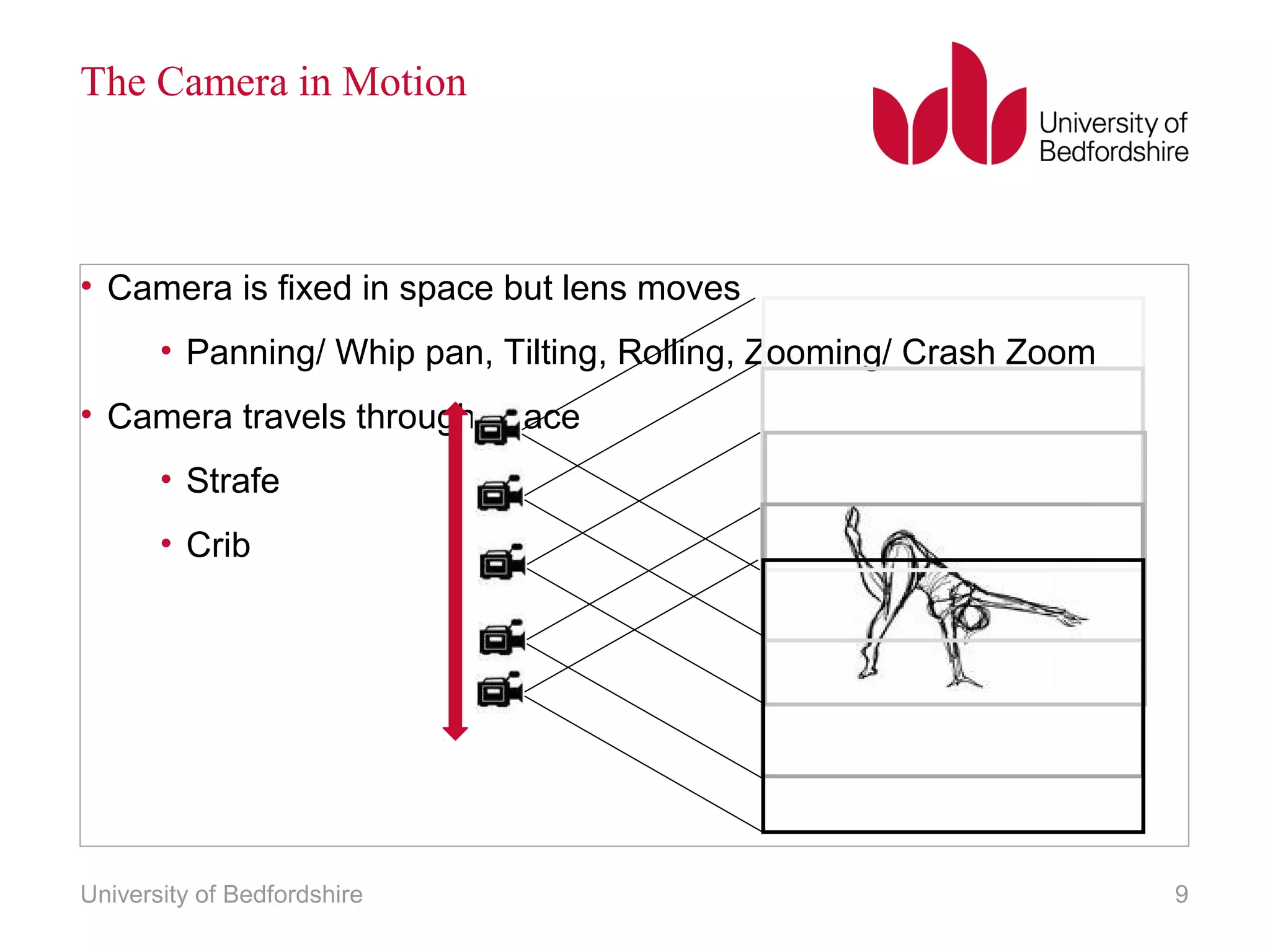
• Camera travels through space 
• Strafe 
University of Bedfordshire 8
The Camera in Motion 
• Camera is fixed in space but lens moves 
• Panning/ Whip pan, Tilting, Rolling, Zooming/ Crash Zoom 
• Camera travels through space 
• Strafe 
• Crib 
University of Bedfordshire 9
The Camera in Motion 
• Camera is fixed in space but lens moves 
• Panning/ Whip pan, Tilting, Rolling, Zooming/ Crash Zoom 
• Camera travels through space 
• Strafe 
• Crib 
• Tracking 
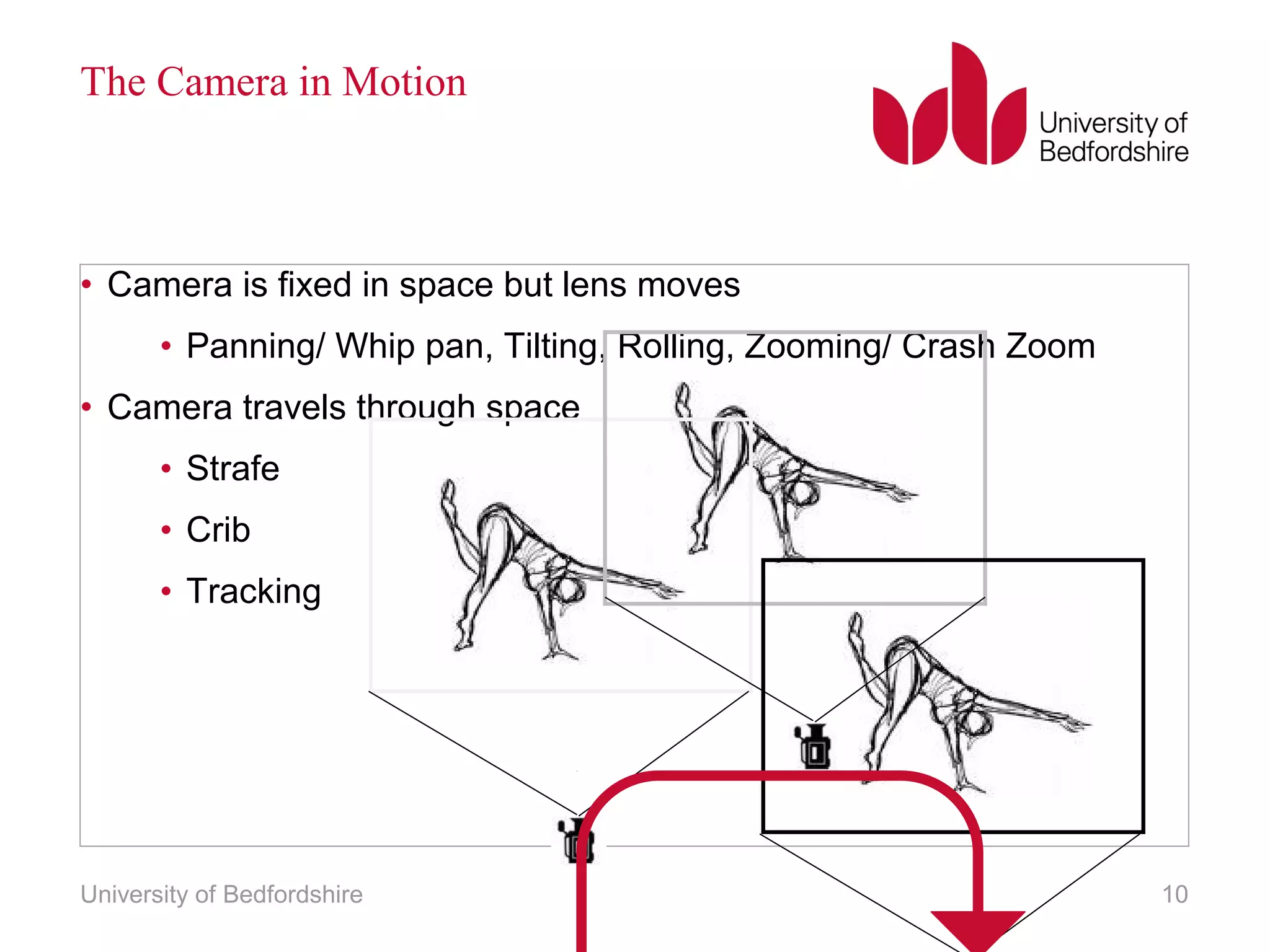
University of Bedfordshire 10
The Camera in Motion 
• Camera is fixed in space but lens moves 
• Panning/ Whip pan, Tilting, Rolling, Zooming/ Crash Zoom 
• Camera travels through space 
• Strafe 
• Crib 
• Tracking 
• Circling (around the action) 
University of Bedfordshire 11
The Camera in Motion 
• Camera is fixed in space but lens moves 
• Panning/ Whip pan, Tilting, Rolling, Zooming/ Crash Zoom 
• Camera travels through space 
• Strafe, Crib, Tracking, Circling 
• Camera shot styles 
• Handheld 
• Steadicam 
University of Bedfordshire 12
Task 1 – Moving Camera / Single Shot 
• Choreograph and film a minute-long continuous shot involving one or 
more dancers and in which the camera is in constant motion for the 
duration. 
• The camera movement can be the result of panning, tilting and 
zooming or tracking, strafing, circling etc. and combinations thereof. 
For flexibility, handhold the camera or carry it on your shoulder. 
University of Bedfordshire 13
Task 2 – In-camera montage 
• Choreograph and film and video dance made up of the following 
shots in the order that they appear below: 
1. CU, Low, Tilting 
2. Birds Eye View, Rolling, Zooming 
3. Tracking, Back, MS 
4. Pan, WS, Front 
• You need to ‘edit in camera’, which means that the shots must be 
filmed consecutively. You should rehearse each different shot before 
recording as you only want one take of each shot on tape. 
University of Bedfordshire 14
Next Workshop 
Teaching week 7 
Calendar week 47 
Week beginning 
Monday 17th 
November 
Workshop 2: 
Pre-Production, 
Production, Post- 
Production 
McPherson, K. (2006) 
‘Developing the work,’ in 
Making video dance: a 
step-by-step guide to 
creating dance for the 
screen. London: 
Routledge, pp. 43-60. 
University of Bedfordshire 15

Week 6 Workshop 2 - Choreographing the Camera

  • 1.
    Choreographing the Camera PER007-1 Applied Choreography: Dance and Innovation Dr Louise Douse
  • 2.
    When the framebecome a shot • The frame is the rectangle created by the camera lens • The frame never remains the same for more than a split second. • Either the subject of the frame will move • Monday’s workshop – camera is static, dancers moving • Or, the camera moves • Choreography of the camera • Or, in most cases, both will move. • Choreography of the camera and the subject University of Bedfordshire 2
  • 3.
    The shot •Multiple frames make up a shot University of Bedfordshire 3
  • 4.
    The Camera inMotion • Camera is stationary but lens moves • Panning University of Bedfordshire 4
  • 5.
    The Camera inMotion • Camera is stationary but lens moves • Panning • Tilting University of Bedfordshire 5
  • 6.
    The Camera inMotion • Camera is stationary but lens moves • Panning • Tilting • Rolling University of Bedfordshire 6
  • 7.
    The Camera inMotion • Camera is fixed in space but lens moves • Panning/ Whip pan • Tilting • Rolling • Zooming/ Crash Zoom University of Bedfordshire 7
  • 8.
    The Camera inMotion • Camera is fixed in space but lens moves • Panning/ Whip pan, Tilting, Rolling, Zooming/ Crash Zoom • Camera travels through space • Strafe University of Bedfordshire 8
  • 9.
    The Camera inMotion • Camera is fixed in space but lens moves • Panning/ Whip pan, Tilting, Rolling, Zooming/ Crash Zoom • Camera travels through space • Strafe • Crib University of Bedfordshire 9
  • 10.
    The Camera inMotion • Camera is fixed in space but lens moves • Panning/ Whip pan, Tilting, Rolling, Zooming/ Crash Zoom • Camera travels through space • Strafe • Crib • Tracking University of Bedfordshire 10
  • 11.
    The Camera inMotion • Camera is fixed in space but lens moves • Panning/ Whip pan, Tilting, Rolling, Zooming/ Crash Zoom • Camera travels through space • Strafe • Crib • Tracking • Circling (around the action) University of Bedfordshire 11
  • 12.
    The Camera inMotion • Camera is fixed in space but lens moves • Panning/ Whip pan, Tilting, Rolling, Zooming/ Crash Zoom • Camera travels through space • Strafe, Crib, Tracking, Circling • Camera shot styles • Handheld • Steadicam University of Bedfordshire 12
  • 13.
    Task 1 –Moving Camera / Single Shot • Choreograph and film a minute-long continuous shot involving one or more dancers and in which the camera is in constant motion for the duration. • The camera movement can be the result of panning, tilting and zooming or tracking, strafing, circling etc. and combinations thereof. For flexibility, handhold the camera or carry it on your shoulder. University of Bedfordshire 13
  • 14.
    Task 2 –In-camera montage • Choreograph and film and video dance made up of the following shots in the order that they appear below: 1. CU, Low, Tilting 2. Birds Eye View, Rolling, Zooming 3. Tracking, Back, MS 4. Pan, WS, Front • You need to ‘edit in camera’, which means that the shots must be filmed consecutively. You should rehearse each different shot before recording as you only want one take of each shot on tape. University of Bedfordshire 14
  • 15.
    Next Workshop Teachingweek 7 Calendar week 47 Week beginning Monday 17th November Workshop 2: Pre-Production, Production, Post- Production McPherson, K. (2006) ‘Developing the work,’ in Making video dance: a step-by-step guide to creating dance for the screen. London: Routledge, pp. 43-60. University of Bedfordshire 15