EDUC 8P20 
Week 2 
2014-15
Professional Learning 
Conversations 
 15 minute discussion at tables 
 Follow-up question for class
Going Deeper 
 Why this now for them? 
 In other words, why use Bitstrips and Storyline at this 
time for this group of students?
Why this? Now? For them? 
 Bitstrips is appropriate app for developing persuasive 
argument 
 Common Core stresses argument – pressure from 
school district 
 Cartoon strip fit short time frame for project but still fit 
persuasive argument 
 Suitable for grade 5/6 
 Provided both engagement and support
Scaffolding Instruction 
 Studied persuasive strategies with students 
 Watched television commercials – connected to 
students’ lives 
 Brainstormed possible topics 
 Students worked collaboratively to gain background 
knowledge on issue 
 “Persuasion Map” graphic organizer
Literacy 
 What does it mean to be literate in the 21st. Century?
Malala 
 Print text of Malala’s speech to the UN 
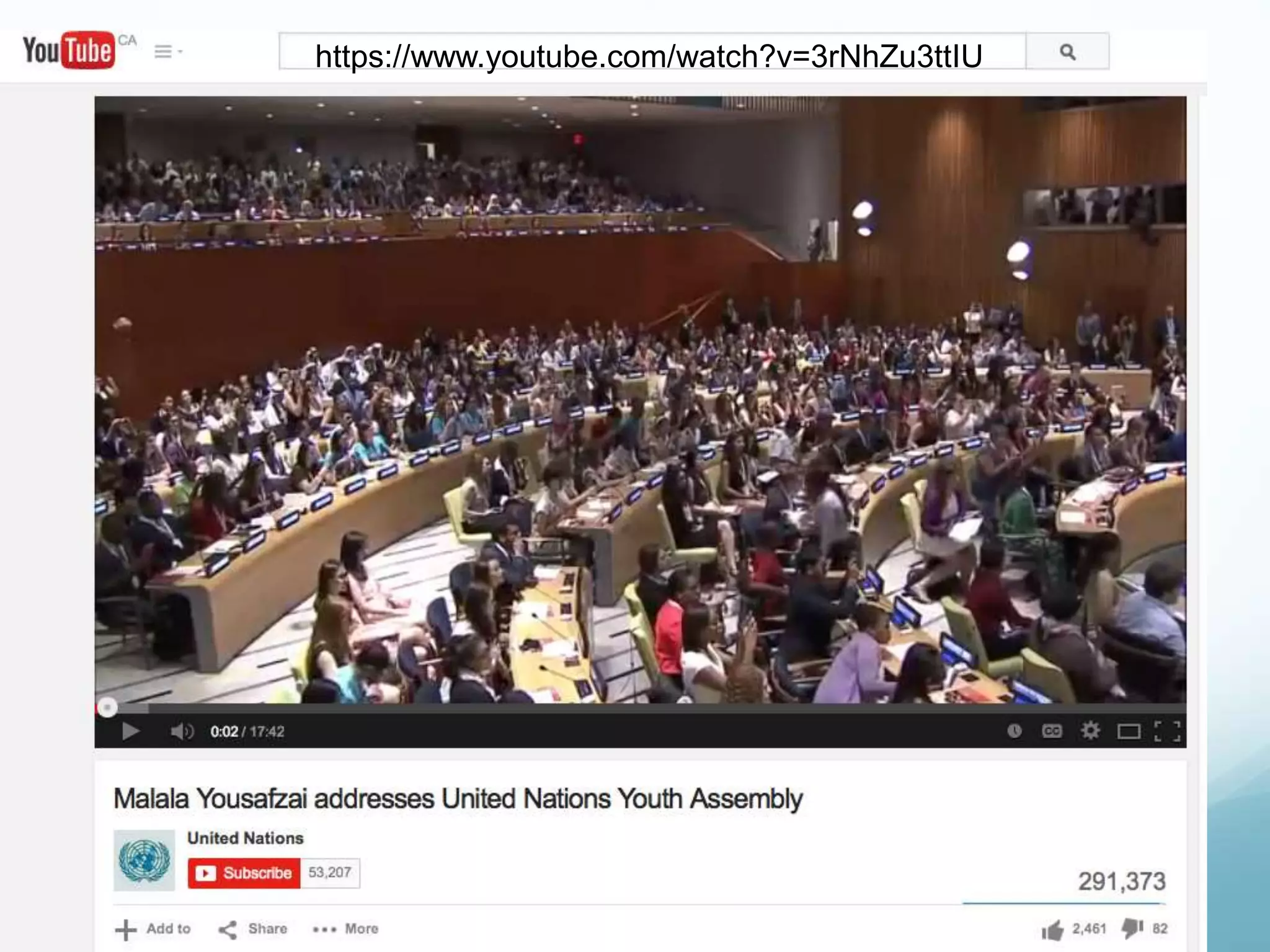
 YouTube clip of address to United Nations, July, 2013 
 Zen Pencil version of Malala’s story 
 Online petition 
 E-book: Every day is Malala Day
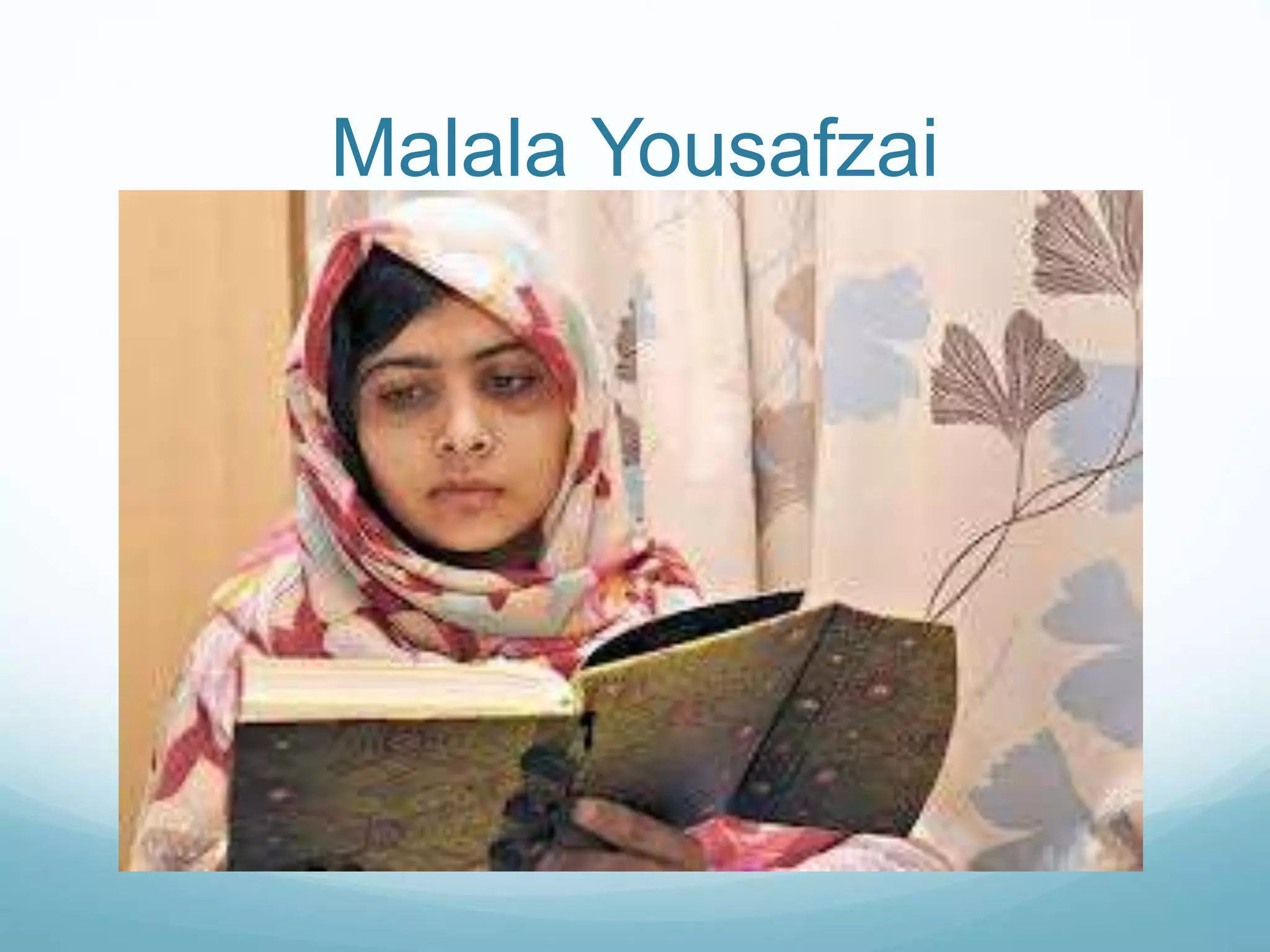
Malala Yousafzai
Global Literacy 
 The student’s ability to connect people, places, 
problems, and possibilities 
 Investigate the world 
 Recognize perspectives 
 Communicate ideas 
 Take action 
 http://explore.tandfonline.com/page/ah/literacy-day 
(wide selection of articles on Global Literacy 
available free until Oct. 10)
https://www.youtube.com/watch?v=3rNhZu3ttIU
Malala at UN: July, 2013 
 https://www.youtube.com/watch?v=3rNhZu3ttIU 
 As you watch, fill in viewing sheet 
 Group adds to its definition of literacy
In addition to reading & 
writing 
 Visual Literacy 
 Media Literacy
Literacy is about more than reading and 
writing – it is about how we communicate 
in society. It is about social practices and 
relationships, about knowledge, language 
and culture. Literacy ... finds its place in 
our lives alongside other ways of 
communicating. Indeed, literacy itself takes 
many forms: on paper, on the computer 
screen, on TV, on posters and signs. 
Those who use literacy take it for granted – 
but those who cannot use it are excluded 
from much communication in today’s world. 
Indeed, it is the excluded who can best 
appreciate the notion of “literacy as 
freedom”. 
(UNESCO, Statement for the United 
Nations Literacy Decade, 2003–2012; 
italics added)
Consider… 
 How might you feel about Malala’s UN address if you 
were a member of the Taliban or a government official 
in Pakistan?
Critical Literacy 
 All texts are constructions 
 All texts contain belief and value messages 
 Each person interprets messages differently 
 Texts serve different interests 
 Each medium develops its own “language” in order to 
position readers/viewers in certain ways
Other representations… 
 Social media – online petitions 
 Zen Pencils 
 E-books
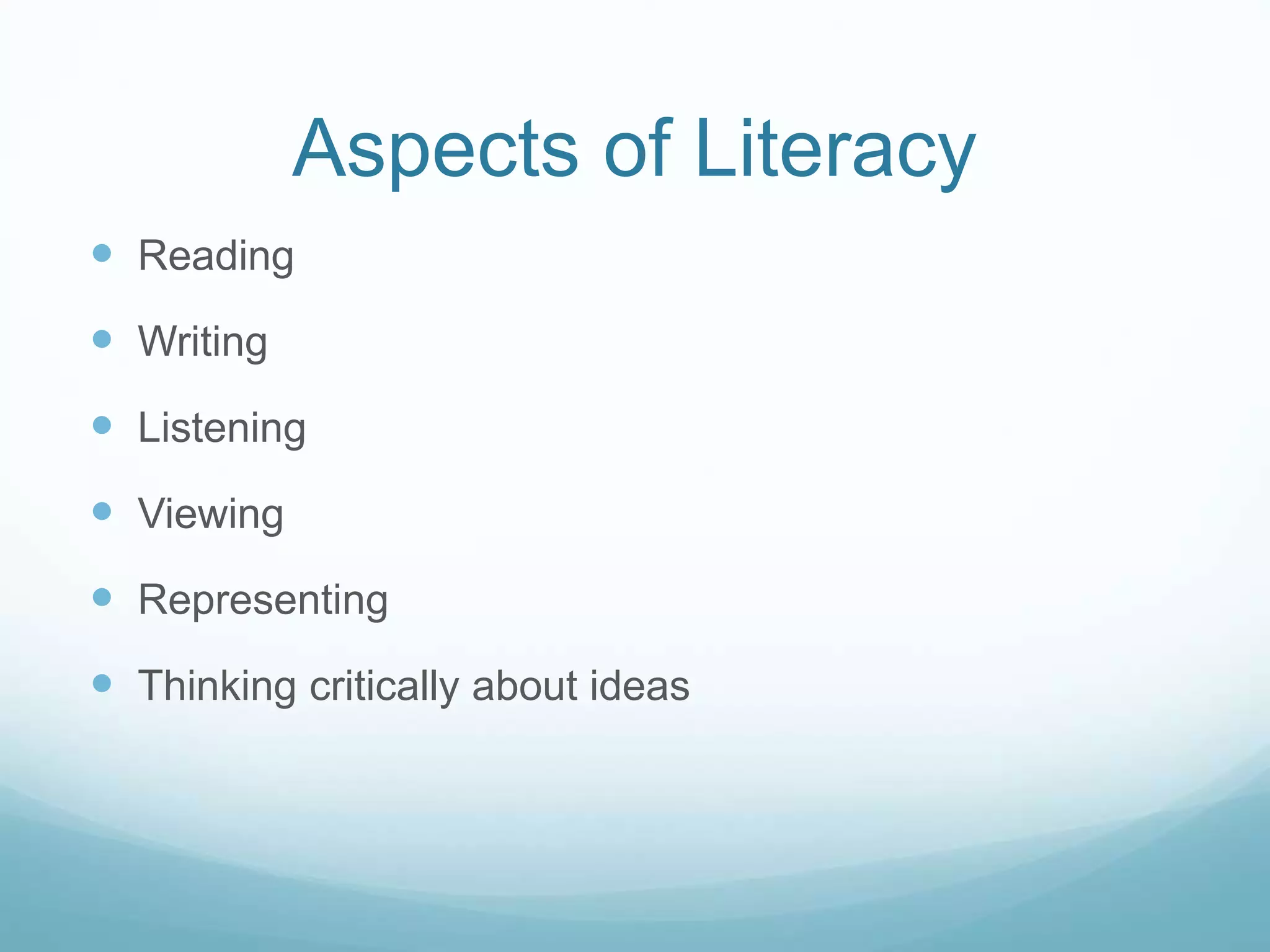
Aspects of Literacy 
 Reading 
 Writing 
 Listening 
 Viewing 
 Representing 
 Thinking critically about ideas
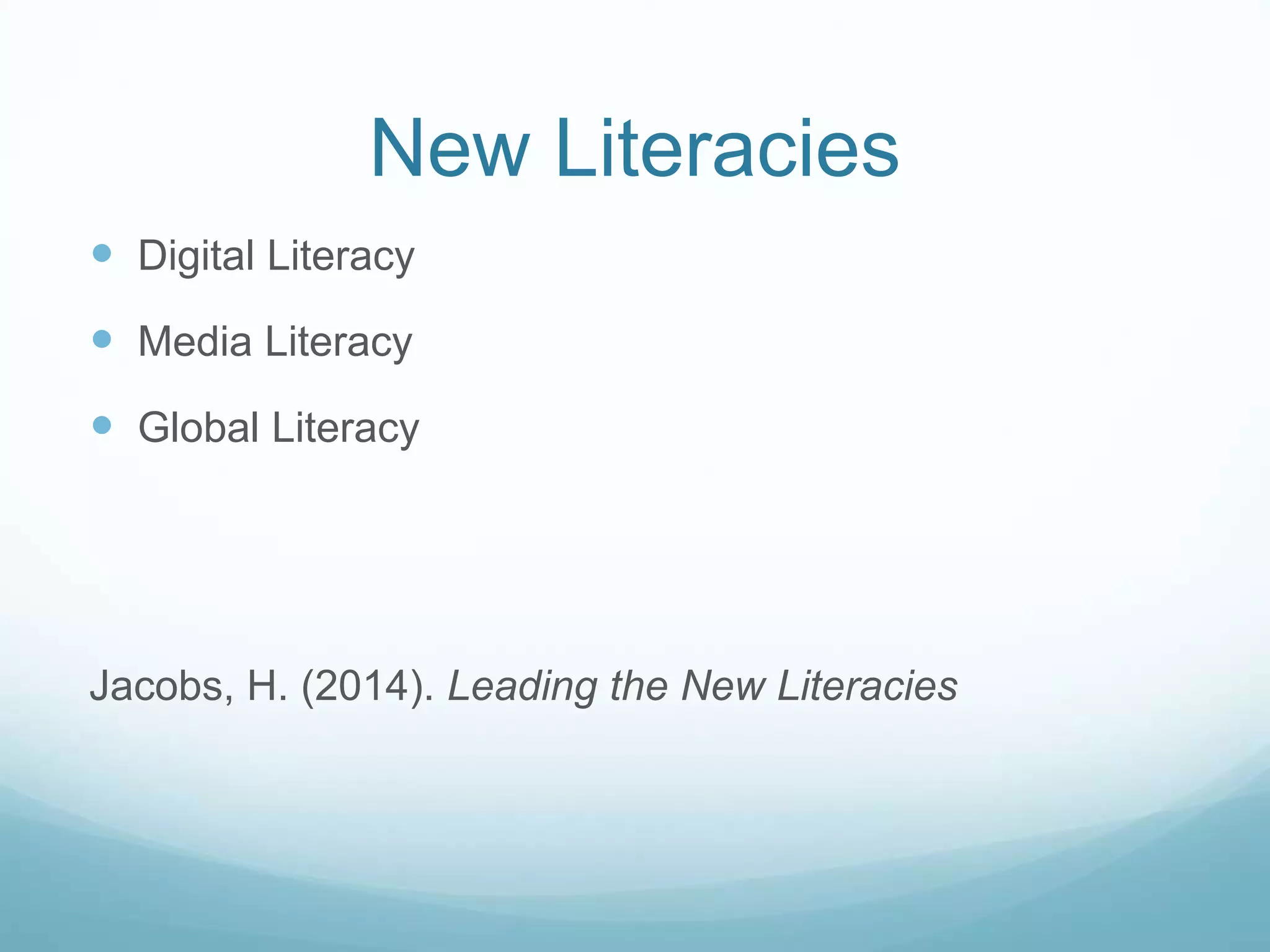
New Literacies 
 Digital Literacy 
 Media Literacy 
 Global Literacy 
Jacobs, H. (2014). Leading the New Literacies
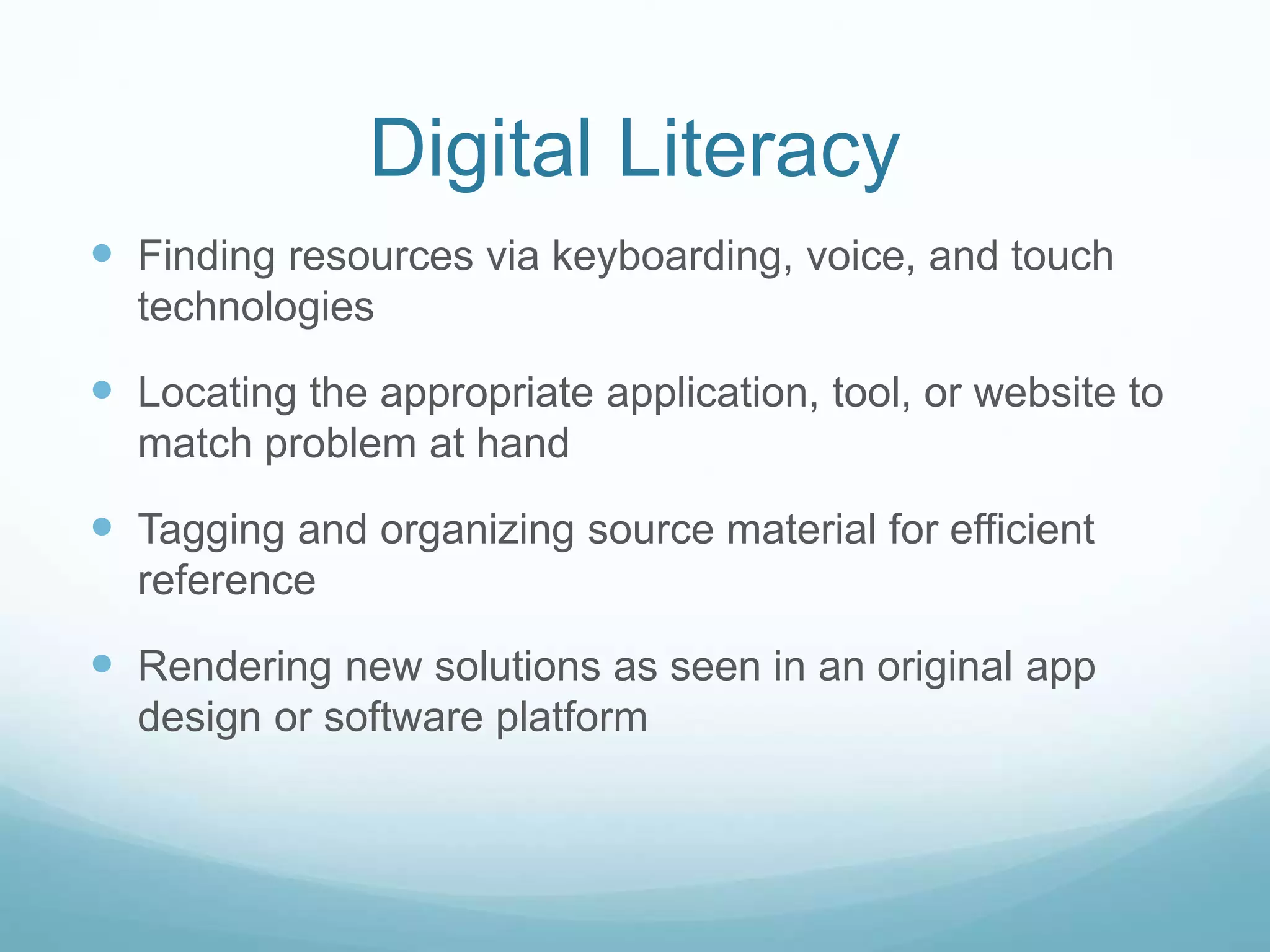
Digital Literacy 
 Finding resources via keyboarding, voice, and touch 
technologies 
 Locating the appropriate application, tool, or website to 
match problem at hand 
 Tagging and organizing source material for efficient 
reference 
 Rendering new solutions as seen in an original app 
design or software platform
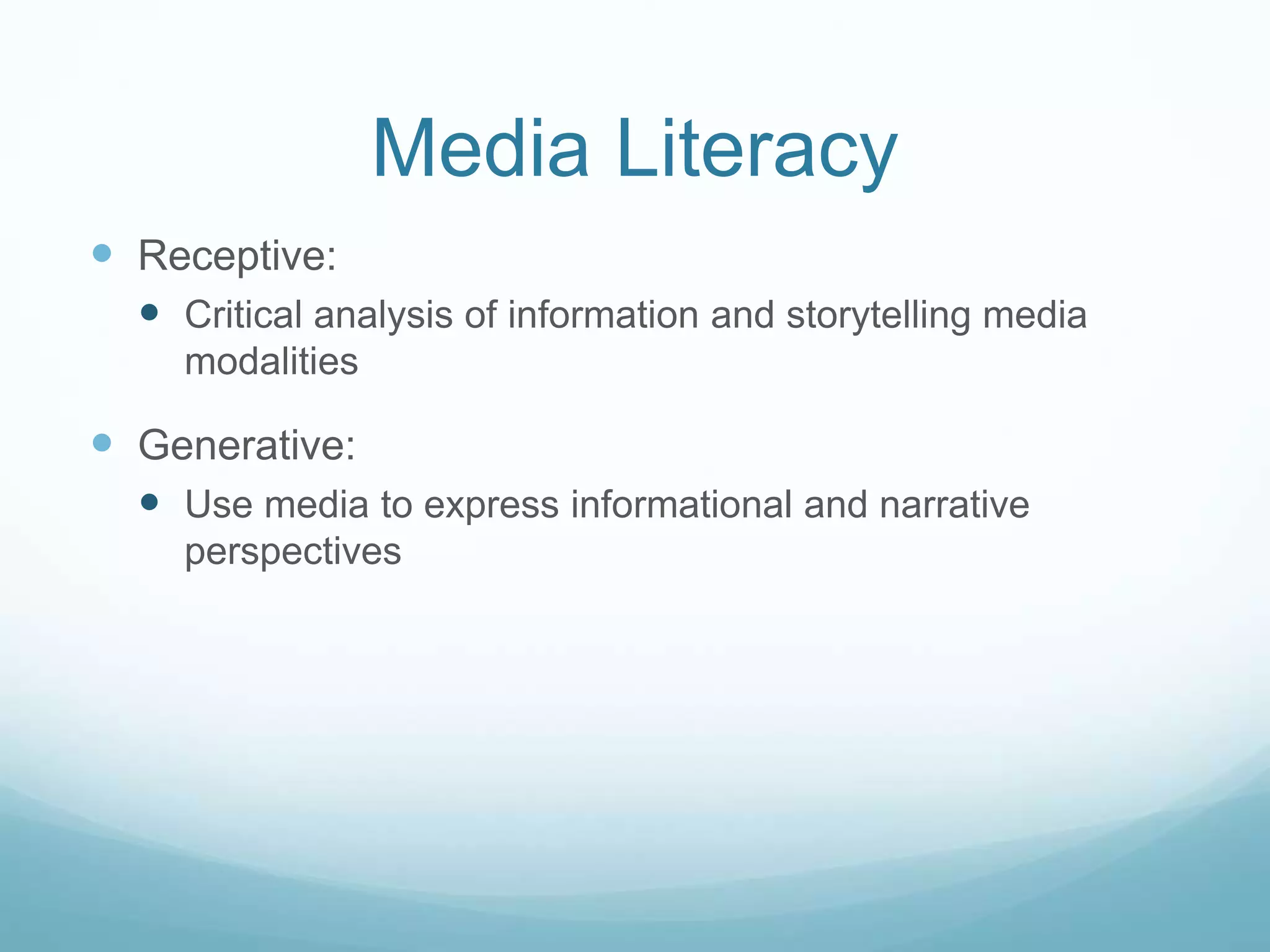
Media Literacy 
 Receptive: 
 Critical analysis of information and storytelling media 
modalities 
 Generative: 
 Use media to express informational and narrative 
perspectives
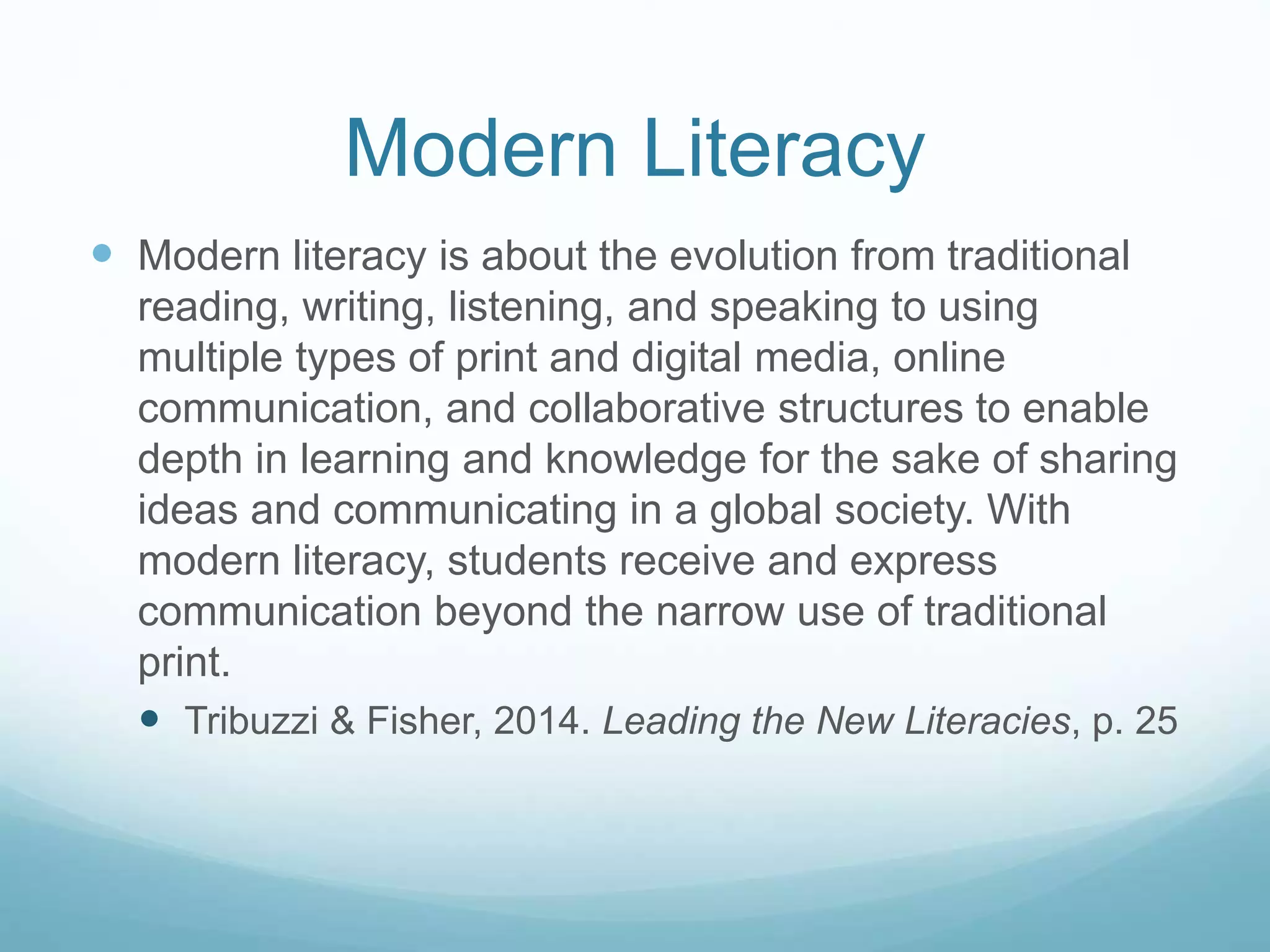
Modern Literacy 
 Modern literacy is about the evolution from traditional 
reading, writing, listening, and speaking to using 
multiple types of print and digital media, online 
communication, and collaborative structures to enable 
depth in learning and knowledge for the sake of sharing 
ideas and communicating in a global society. With 
modern literacy, students receive and express 
communication beyond the narrow use of traditional 
print. 
 Tribuzzi & Fisher, 2014. Leading the New Literacies, p. 25
The Ontario Curriculum: 
Grades 1-8 - Language 
 http://www.edu.gov.on.ca/eng/curriculum/elementary/la 
nguage18currb.pdf 
 Launched in 2006
Ontario Curriculum – 
Language 1-8 
 Oral Communication 
 1. 
 2. 
 Media Studies 
 1. 
 2. 
 Reading 
 1. 
 2. 
 Writing 
 1. 
 2.
Ontario Curriculum – 
Language 1-8 
 Oral Communication 
 1. 
 2. 
 Media Studies 
 1. 
 2. 
 Reading 
 1. 
 2. 
 Writing 
 1. 
 2.
Curriculum expectations 
are mandatory. 
Overall expectations 
 Describe in general terms 
the knowledge and skills 
students are expected to 
achieve by the end of each 
grade 
Specific expectations 
 Describe the expected 
knowledge and skills in 
greater detail often with 
specific examples 
25
Writing 
 1. Generate, gather, 
and organize ideas and 
information to write for 
an intended purpose 
and audience 
 3. Use editing, proofreading, 
and publishing skills and 
strategies, and knowledge of 
language conventions, to 
correct errors, refine 
expression, and present their 
work effectively 
 2. Draft and revise their 
writing, using a variety of 
informational, literary, and 
graphic forms and stylistic 
elements appropriate for 
the purpose and audience 
 4. Reflect on and identify 
their strengths as writers, 
areas for improvement, and 
the strategies they found 
most helpful at different 
stages in the writing 
process
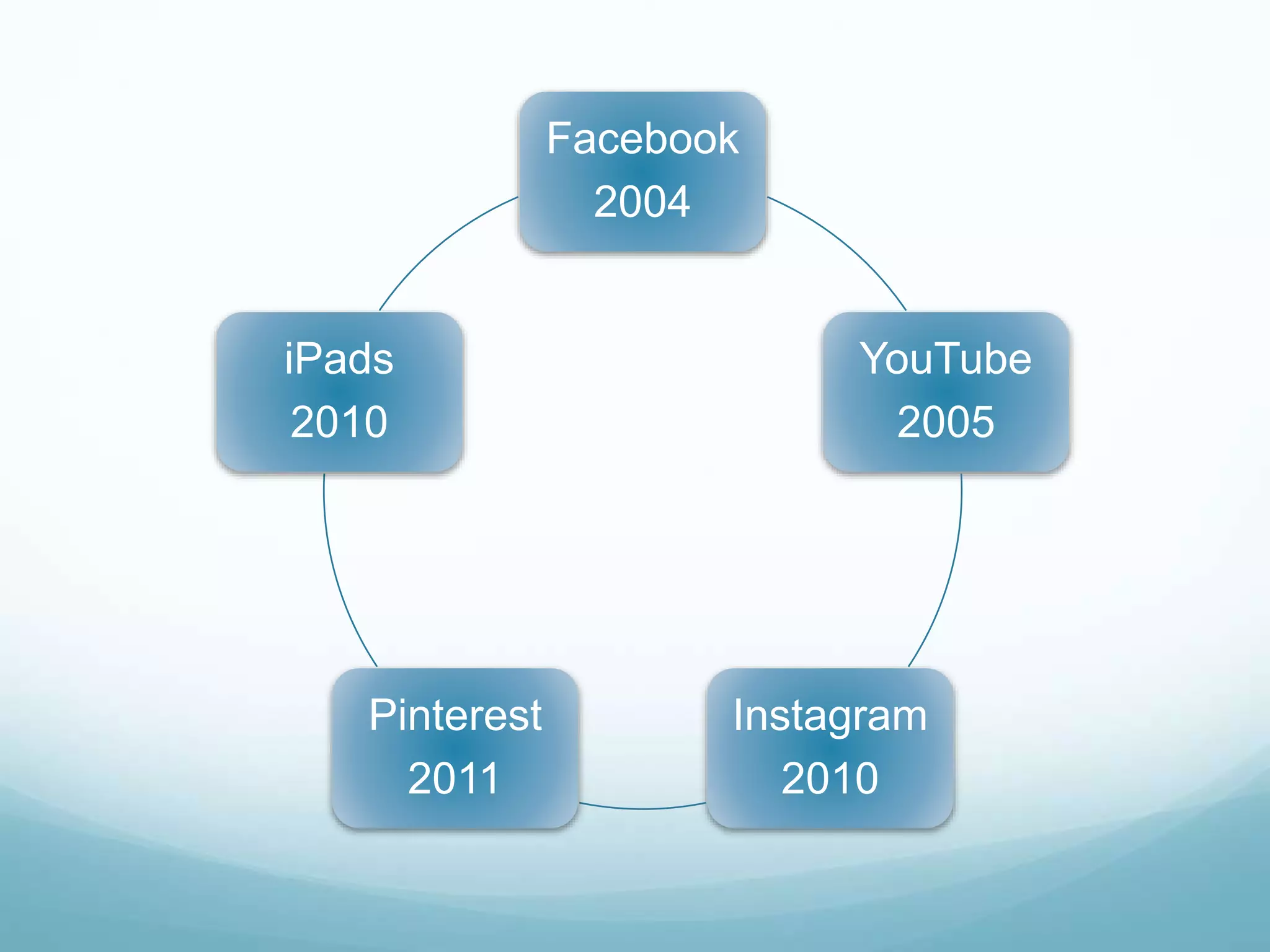
Facebook 
2004 
YouTube 
2005 
Instagram 
2010 
iPads 
2010 
Pinterest 
2011
Infographic 
 Information to be found in Sakai: 
 Syllabus Folder 
 Evaluation Component of 8P20 
 Assessment tool
Infographic: 
Each teacher candidate will create an 
infographic that represents key messages 
related to either the Oral Language or 
Media Studies strand of the Language 
curriculum. Your infographic must be 
comprehensive and include pertinent 
references to ministry documents, how the 
strand fits into the literacy program, 
connections to assessment, instructional 
strategies, cross-curricular applications, 
differentiated instruction, etc. 
Marks for Infographic: 20% 
Due: Nov. 11/12 
See Appendix B for assessment tool

Week 2 ruth - 2014-15

  • 1.
    EDUC 8P20 Week2 2014-15
  • 2.
    Professional Learning Conversations  15 minute discussion at tables  Follow-up question for class
  • 3.
    Going Deeper Why this now for them?  In other words, why use Bitstrips and Storyline at this time for this group of students?
  • 4.
    Why this? Now?For them?  Bitstrips is appropriate app for developing persuasive argument  Common Core stresses argument – pressure from school district  Cartoon strip fit short time frame for project but still fit persuasive argument  Suitable for grade 5/6  Provided both engagement and support
  • 5.
    Scaffolding Instruction Studied persuasive strategies with students  Watched television commercials – connected to students’ lives  Brainstormed possible topics  Students worked collaboratively to gain background knowledge on issue  “Persuasion Map” graphic organizer
  • 6.
    Literacy  Whatdoes it mean to be literate in the 21st. Century?
  • 7.
    Malala  Printtext of Malala’s speech to the UN  YouTube clip of address to United Nations, July, 2013  Zen Pencil version of Malala’s story  Online petition  E-book: Every day is Malala Day
  • 8.
  • 9.
    Global Literacy The student’s ability to connect people, places, problems, and possibilities  Investigate the world  Recognize perspectives  Communicate ideas  Take action  http://explore.tandfonline.com/page/ah/literacy-day (wide selection of articles on Global Literacy available free until Oct. 10)
  • 10.
  • 11.
    Malala at UN:July, 2013  https://www.youtube.com/watch?v=3rNhZu3ttIU  As you watch, fill in viewing sheet  Group adds to its definition of literacy
  • 12.
    In addition toreading & writing  Visual Literacy  Media Literacy
  • 13.
    Literacy is aboutmore than reading and writing – it is about how we communicate in society. It is about social practices and relationships, about knowledge, language and culture. Literacy ... finds its place in our lives alongside other ways of communicating. Indeed, literacy itself takes many forms: on paper, on the computer screen, on TV, on posters and signs. Those who use literacy take it for granted – but those who cannot use it are excluded from much communication in today’s world. Indeed, it is the excluded who can best appreciate the notion of “literacy as freedom”. (UNESCO, Statement for the United Nations Literacy Decade, 2003–2012; italics added)
  • 14.
    Consider…  Howmight you feel about Malala’s UN address if you were a member of the Taliban or a government official in Pakistan?
  • 15.
    Critical Literacy All texts are constructions  All texts contain belief and value messages  Each person interprets messages differently  Texts serve different interests  Each medium develops its own “language” in order to position readers/viewers in certain ways
  • 16.
    Other representations… Social media – online petitions  Zen Pencils  E-books
  • 17.
    Aspects of Literacy  Reading  Writing  Listening  Viewing  Representing  Thinking critically about ideas
  • 18.
    New Literacies Digital Literacy  Media Literacy  Global Literacy Jacobs, H. (2014). Leading the New Literacies
  • 19.
    Digital Literacy Finding resources via keyboarding, voice, and touch technologies  Locating the appropriate application, tool, or website to match problem at hand  Tagging and organizing source material for efficient reference  Rendering new solutions as seen in an original app design or software platform
  • 20.
    Media Literacy Receptive:  Critical analysis of information and storytelling media modalities  Generative:  Use media to express informational and narrative perspectives
  • 21.
    Modern Literacy Modern literacy is about the evolution from traditional reading, writing, listening, and speaking to using multiple types of print and digital media, online communication, and collaborative structures to enable depth in learning and knowledge for the sake of sharing ideas and communicating in a global society. With modern literacy, students receive and express communication beyond the narrow use of traditional print.  Tribuzzi & Fisher, 2014. Leading the New Literacies, p. 25
  • 22.
    The Ontario Curriculum: Grades 1-8 - Language  http://www.edu.gov.on.ca/eng/curriculum/elementary/la nguage18currb.pdf  Launched in 2006
  • 23.
    Ontario Curriculum – Language 1-8  Oral Communication  1.  2.  Media Studies  1.  2.  Reading  1.  2.  Writing  1.  2.
  • 24.
    Ontario Curriculum – Language 1-8  Oral Communication  1.  2.  Media Studies  1.  2.  Reading  1.  2.  Writing  1.  2.
  • 25.
    Curriculum expectations aremandatory. Overall expectations  Describe in general terms the knowledge and skills students are expected to achieve by the end of each grade Specific expectations  Describe the expected knowledge and skills in greater detail often with specific examples 25
  • 26.
    Writing  1.Generate, gather, and organize ideas and information to write for an intended purpose and audience  3. Use editing, proofreading, and publishing skills and strategies, and knowledge of language conventions, to correct errors, refine expression, and present their work effectively  2. Draft and revise their writing, using a variety of informational, literary, and graphic forms and stylistic elements appropriate for the purpose and audience  4. Reflect on and identify their strengths as writers, areas for improvement, and the strategies they found most helpful at different stages in the writing process
  • 27.
    Facebook 2004 YouTube 2005 Instagram 2010 iPads 2010 Pinterest 2011
  • 28.
    Infographic  Informationto be found in Sakai:  Syllabus Folder  Evaluation Component of 8P20  Assessment tool
  • 29.
    Infographic: Each teachercandidate will create an infographic that represents key messages related to either the Oral Language or Media Studies strand of the Language curriculum. Your infographic must be comprehensive and include pertinent references to ministry documents, how the strand fits into the literacy program, connections to assessment, instructional strategies, cross-curricular applications, differentiated instruction, etc. Marks for Infographic: 20% Due: Nov. 11/12 See Appendix B for assessment tool

Editor's Notes

  • #8 Read text of speech independently
  • #9 Read text of UN speech silently; view address (with viewing guide – discuss; read Taliban response – discuss Refer to supplementary pages in course readings
  • #15 Distribute newspaper coverage of her remarks – backlash from Taliban
  • #17 Add to literacy definitions
  • #18 Reflect on what aspects of literacy we have addressed in this class: Reading (text of Malala’s speech etc.); Writing (memoir etc.), Listening (to me! + YouTube); Viewing (YouTube clip; Gami); Representing (Tellagami); Thinking critically (Malala’s speech – text vs YouTube; newspaper articles).