FROM LITERACY INTO
LITERACIES: WHY AND HOW?
LA SALLE UNIVERSITY – SCHOOL OF EDUCATION SCIENCES – BA IN SPANISH, ENGLISH, AND FRENCH
Yamith José Fandiño – Bogotá, Colombia – Feb. 2020
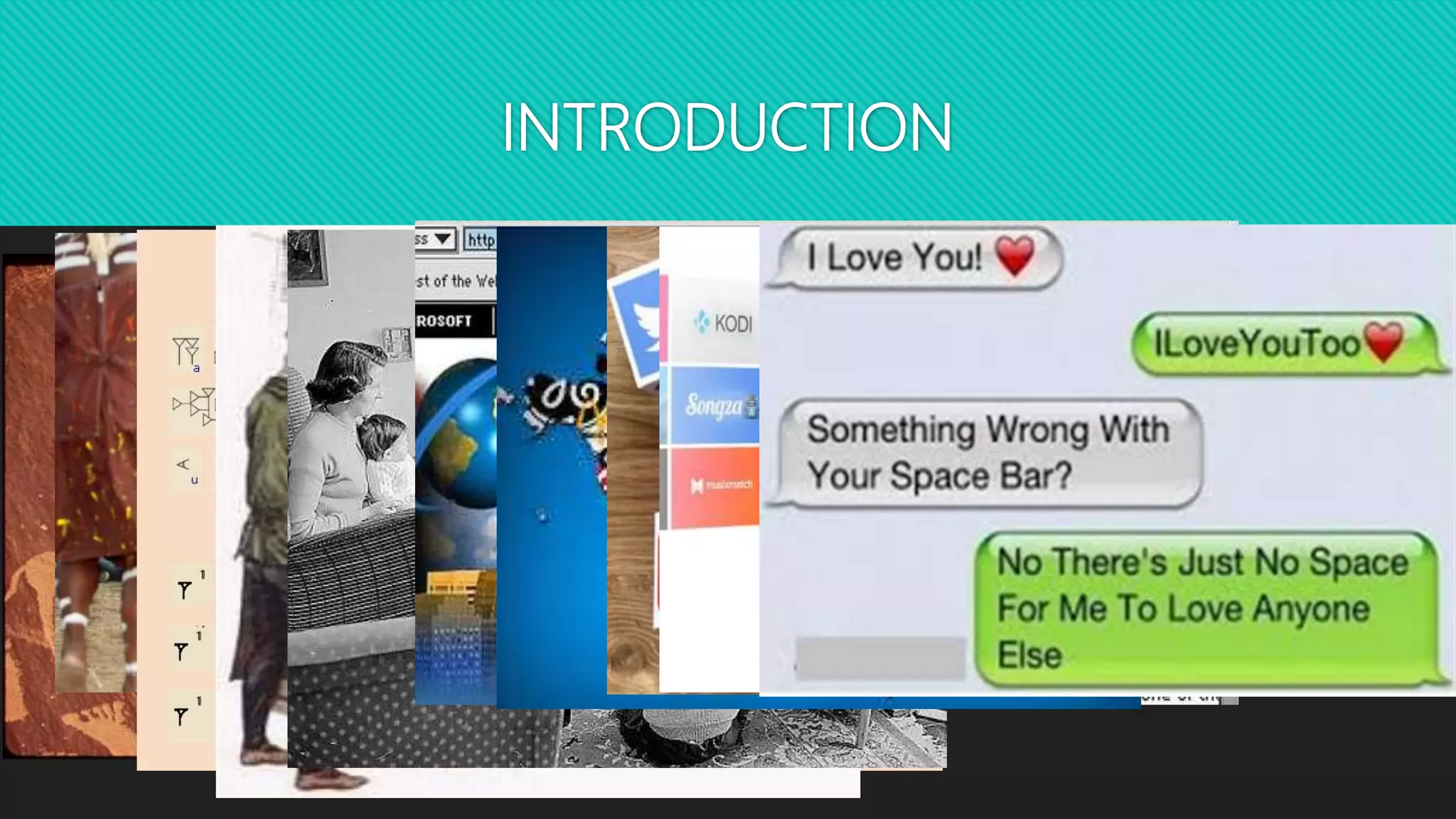
INTRODUCTION
WHY?
1. Education must prepare all students so they all
- have fair and social chances (Equity)
- receive realistic and tangible opportunities (Equality).
2. Education must help all students get ready for employment (work), civil participation
(citizenship), and personal growth (everyday life).
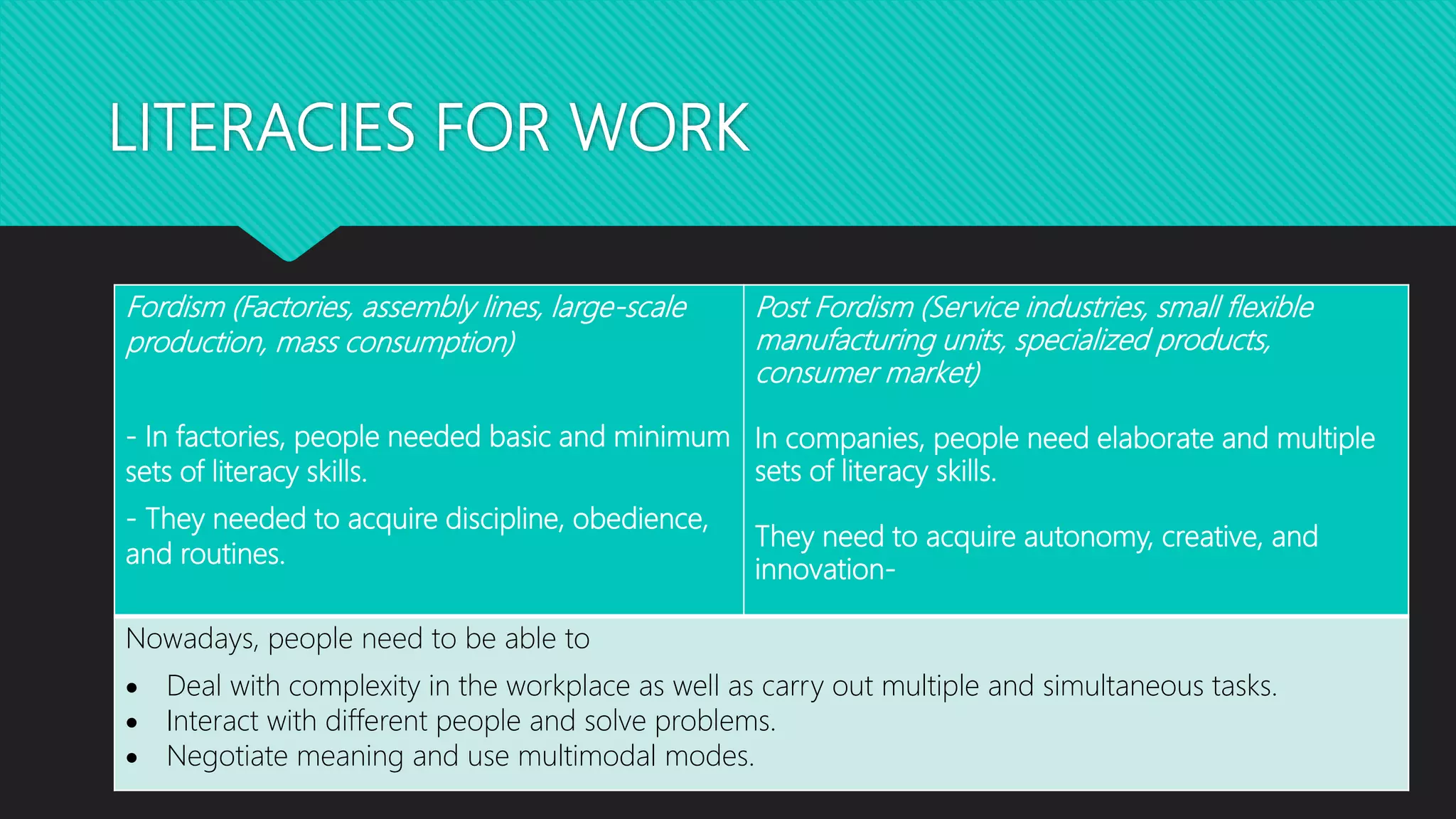
LITERACIES FOR WORK
Fordism (Factories, assembly lines, large-scale
production, mass consumption)
- In factories, people needed basic and minimum
sets of literacy skills.
- They needed to acquire discipline, obedience,
and routines.
Post Fordism (Service industries, small flexible
manufacturing units, specialized products,
consumer market)
In companies, people need elaborate and multiple
sets of literacy skills.
They need to acquire autonomy, creative, and
innovation-
Nowadays, people need to be able to
 Deal with complexity in the workplace as well as carry out multiple and simultaneous tasks.
 Interact with different people and solve problems.
 Negotiate meaning and use multimodal modes.
LITERACIES FOR CITIZENSHIP
Nation state (Cohesive and adhesive
countrywide agenda).
- Linguistic standardization / Social similarity /
Cultural homogeneity.
Globalization and diversity
- Shrinking of the state / Appearance of
multinational companies / Migration and
mobility.
- Diverse and local communities / Identity policies
/ Rights to difference and identity.
Nowadays, people need to be able to:
 Mediate differences and produce inclusion and respect.
 Compromise and negotiate
 Communicate and understand amid diverse sociocultural and linguistic contexts.
LITERACISE FOR EVERYDAY LIFE
Mass media
Newspapers, radio shows, and TV channels with
the same limited information.
One way and one medium communication
(From the journalist, radio host or tv presenter to
the audience // Reading, listening, or watching).
New media
Websites, platforms, and social communities with
different and infinite information.
Multiple-way and multimodal channel (all users and
producers / Texts, images, sounds, graphics, etc.)
Nowadays, people need to be able to:
• Deal with multiple subjectivities.
• Navigate new modes and modalities.
• Discern ambiguity and information overload.
• Balance agency in participatory media.
How?
 How literacy fits in human history
- Language as an innate, natural capacity to make and understand meaning.
- When language becomes symbols, it takes a manufactured form that can be transported, that
lasts.
- First, we had oral, visual, and gestural communication.
- Then, we had reading and writing as an artifact, a piece of technology.
- Now, we have new ways of communicating simultaneously through different modes.
- 3 historical moments or phases of globalization.
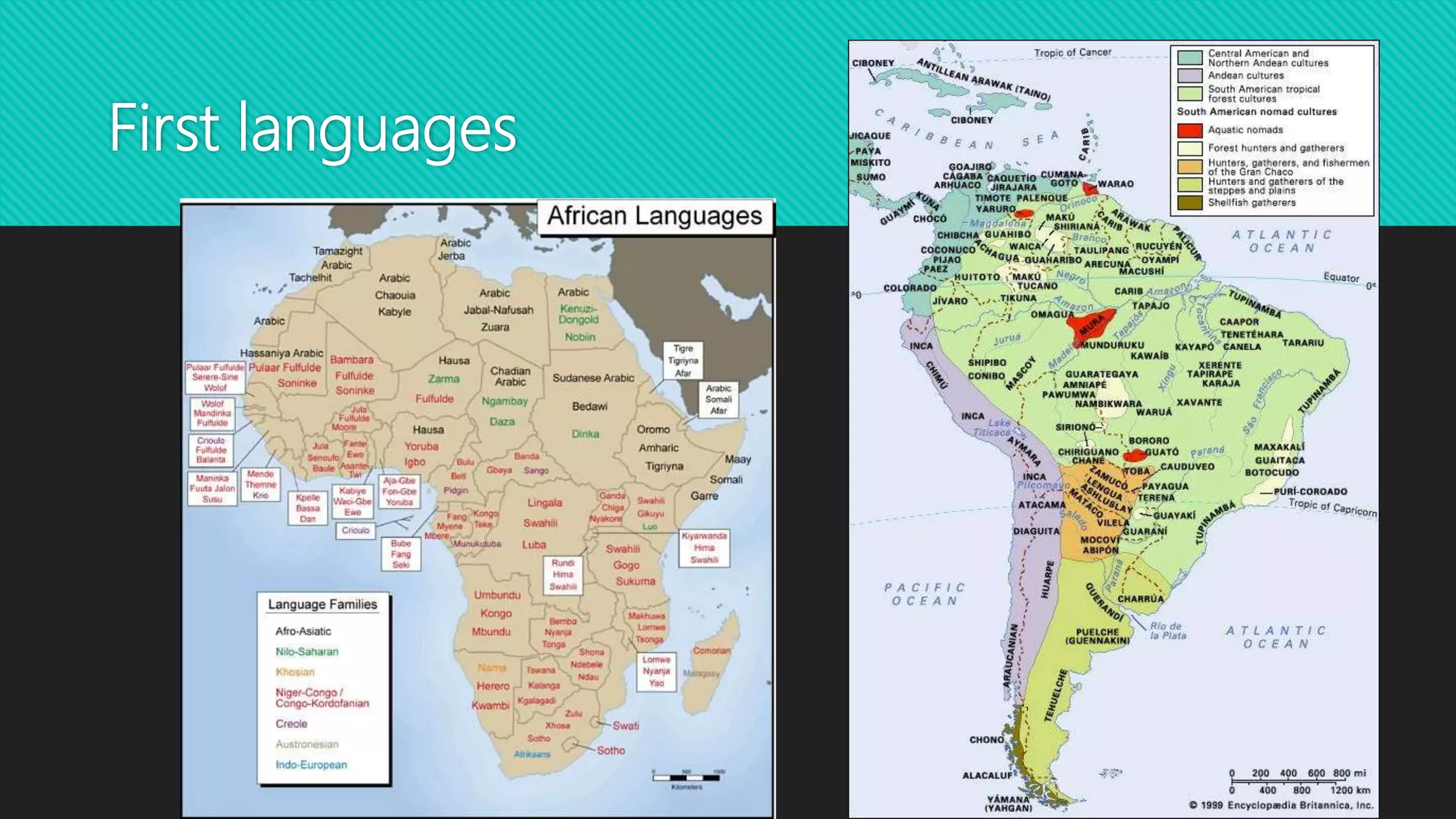
First languages
First languages
 Humans as a species = creative, but isolated  Different ways of expressing meanings.
First languages
 Small populations = Unique languages with - large differences among themselves
- internal differences (age, gender, clan)
- Dynamic = Complex cultures and epistemologies.
- Logic = My specific relationship with the world is the specific way in which I speak about the world.
 Extraordinary multilingualism = Lingua francas  Speak 3, 4 or 5 languages.
 Great dynamism = No dictionaries, grammars or literacy practices. Renaming as result of changes in
meaning (life, seasons, relationships).
 Immense multimodality = Elaborate symbolic systems  Images, body paints, dances, gestures.
Starting to write
Starting to write
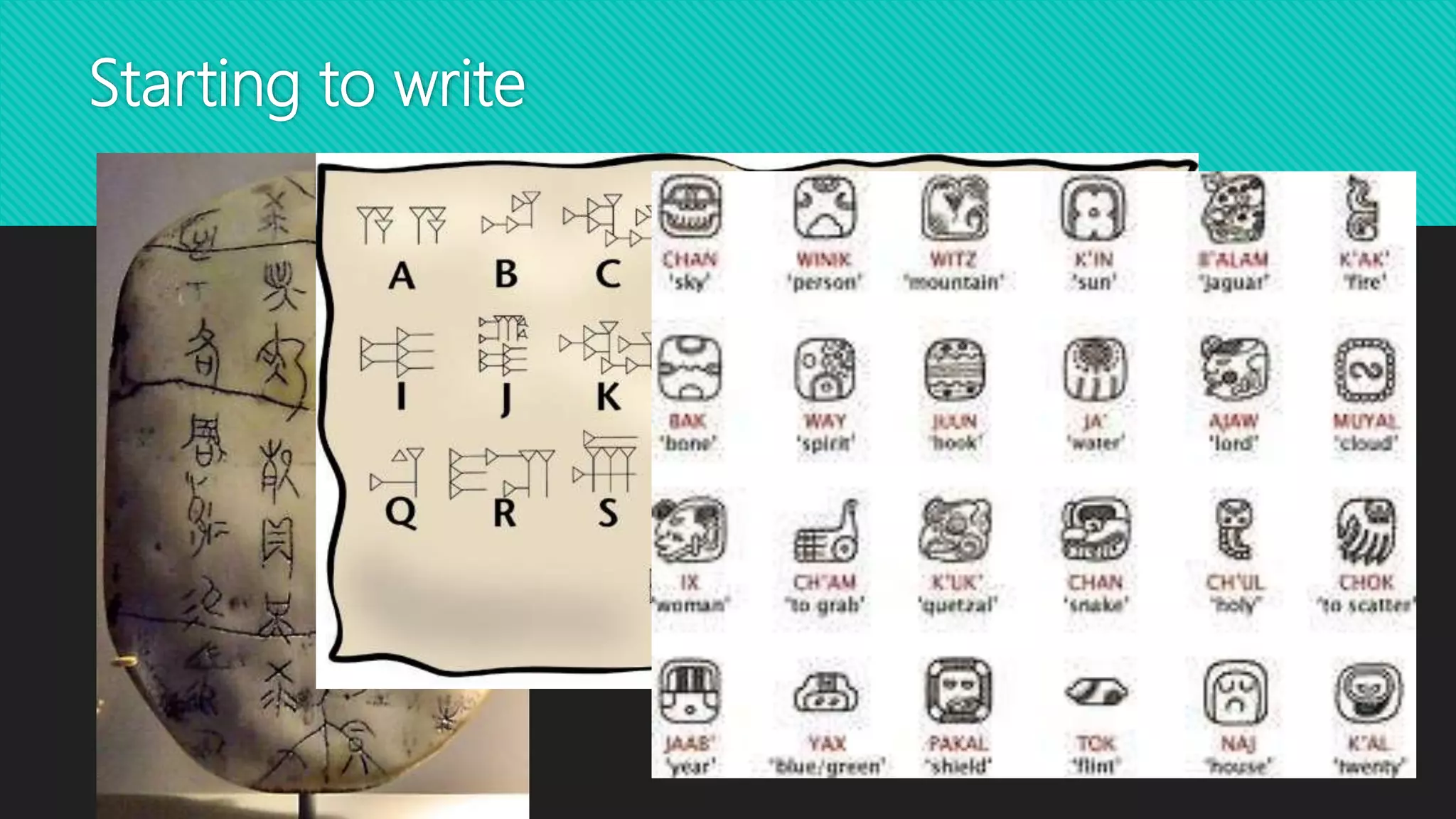
 Writing = a restrictive form of meaning making.
- Spreading of first language systems with some form of writing (Chinese in Asia, Mesopotamia in Egypt,
Aztecs in Central America, etc.)
 Writing = 1. Elites and religion  Inequality because just a few had that knowledge.
2. Control  Canonical texts and standardization.
3. Uses  List properties and taxes.
 Progressive advance of writing = the death of small languages.
- Modernity = The rise of nation states  Individuals should be able to communicate with strangers.
Common languages = Strong political agendas.
Starting to write
 Writing = Institutionalize textbook-based education system.
knowledge that mattes.
Rules and skills that are needed.
Ways of testing.
School = A place to teach a standard language that everybody shares.
Not going and learning that language means marginalization.
Digital literacies
Digital literacies
 Digitalization = A means of manufacturing meanings
Signs, images, sounds produced by the same tools.
Organization, work, relationships change.
Challenging written language as a privilege form of meaning making.
 Second half of the 20th C
Photolithography = Images and texts together.
New visual and oral modes = Telegraph, telephone, radio, TV = Communication across distances.
Digital literacies
Digital literacies
 The Internet
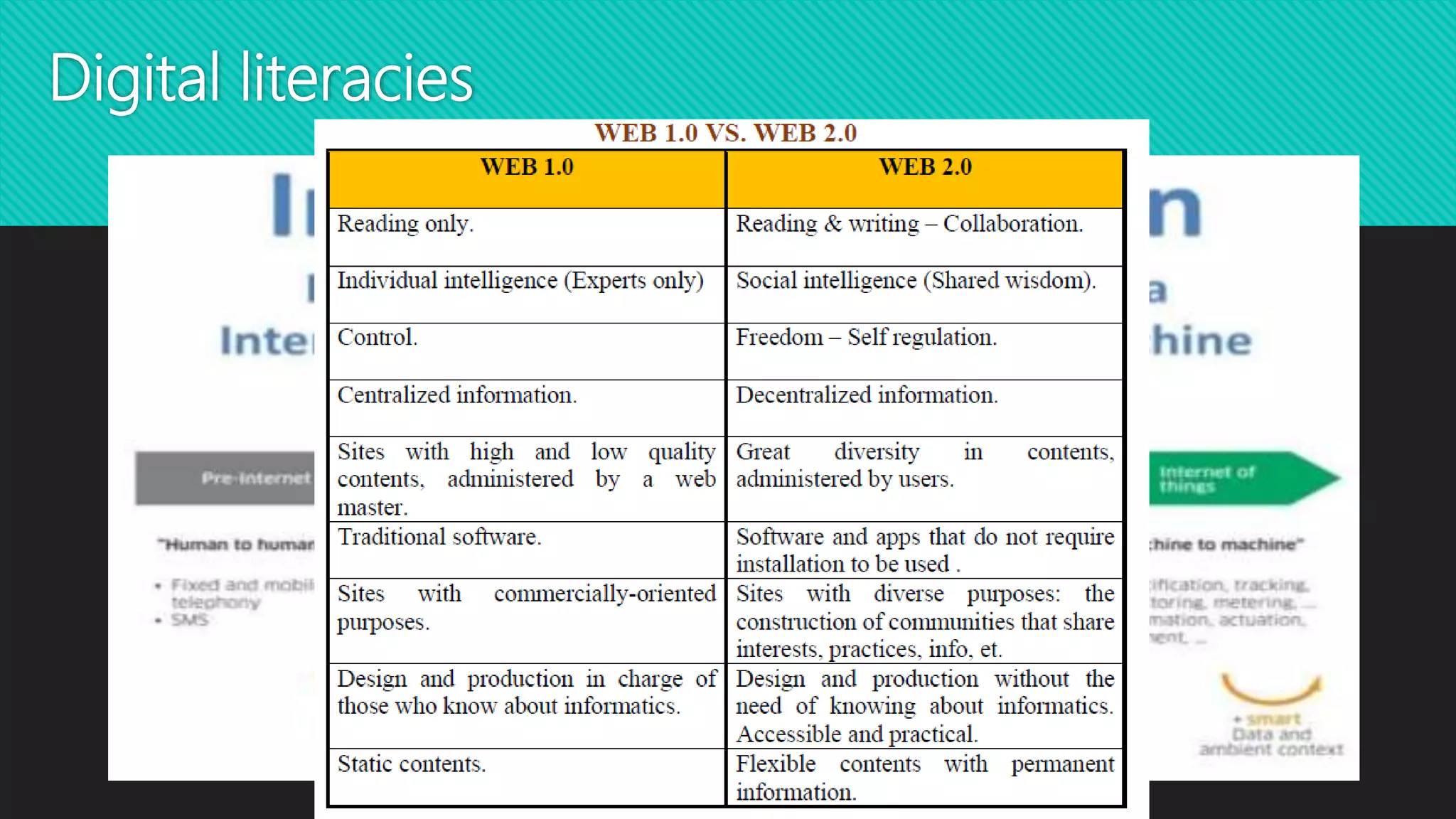
Web 1.0 = a transmission model of putting messages in the world through images and texts together
Searching, navigating, looking.
Web 2.0 = Interactive and dialogical model  Primarily oral and in real time.
 New media
Synaesthetic (Switching between modes)
Images are predominant.
Communication anywhere, any time.
New power and relationships = Social media, news feeds, video instruction, apps.
Receive an deliver information in multimodal ways.
Digital literacies
 Multimodality
Wherever we are, there is a mixture and interleaving of images, texts, colors, sounds in media.
 Writing
Originally, a privilege of an elite = The priest, the lords  Inequality
Modern times = Journalists, writers, specialists  Makers of most literate culture and the others were
consumers.
Now = We are ALL readers and writers of multimodal texts.
No passive receivers, but active communicators.
English, Spanish, Arabic altogether in life-like spaces.
Digital literacies
Digital literacies
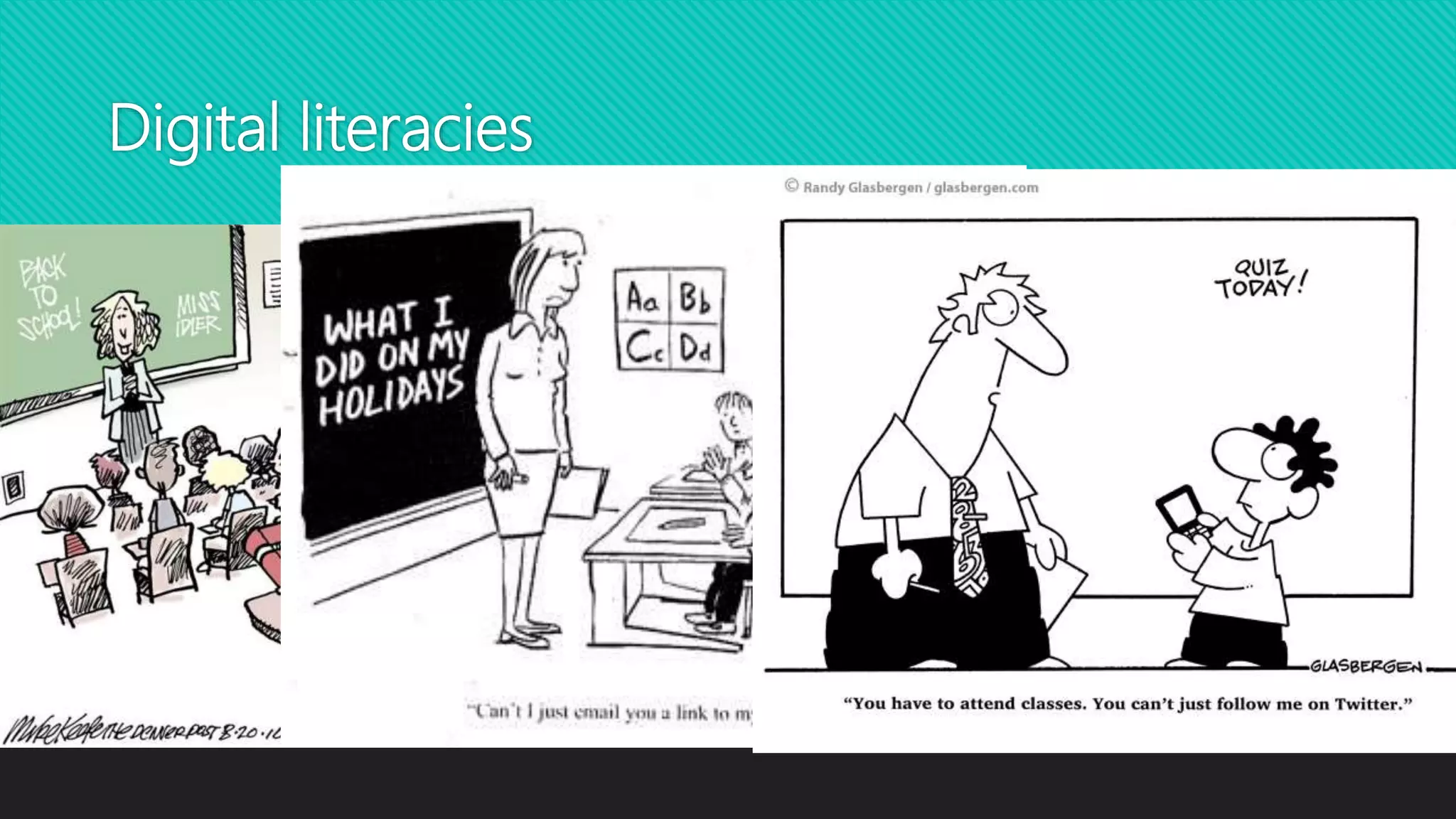
 Are educators prepared to enable learners to make meaning through new technologies?
Across all disciplines? (Science, Maths, Languages, etc.)
Across all social domains (Personal, family, friendship, work, love, academia, etc.)
 What does it mean to prepare anyone with a repertoire of digital meaning making modes?
What values?
What skills?
What sensibilities?
How to do it successfully?
Reference
Kalantzis, M., & Cope, B. (2016). Literacies. Cambridge:
Cambridge University Press.

From literacy to literacies: Why and how?

  • 1.
    FROM LITERACY INTO LITERACIES:WHY AND HOW? LA SALLE UNIVERSITY – SCHOOL OF EDUCATION SCIENCES – BA IN SPANISH, ENGLISH, AND FRENCH Yamith José Fandiño – Bogotá, Colombia – Feb. 2020
  • 2.
  • 3.
    WHY? 1. Education mustprepare all students so they all - have fair and social chances (Equity) - receive realistic and tangible opportunities (Equality). 2. Education must help all students get ready for employment (work), civil participation (citizenship), and personal growth (everyday life).
  • 4.
    LITERACIES FOR WORK Fordism(Factories, assembly lines, large-scale production, mass consumption) - In factories, people needed basic and minimum sets of literacy skills. - They needed to acquire discipline, obedience, and routines. Post Fordism (Service industries, small flexible manufacturing units, specialized products, consumer market) In companies, people need elaborate and multiple sets of literacy skills. They need to acquire autonomy, creative, and innovation- Nowadays, people need to be able to  Deal with complexity in the workplace as well as carry out multiple and simultaneous tasks.  Interact with different people and solve problems.  Negotiate meaning and use multimodal modes.
  • 5.
    LITERACIES FOR CITIZENSHIP Nationstate (Cohesive and adhesive countrywide agenda). - Linguistic standardization / Social similarity / Cultural homogeneity. Globalization and diversity - Shrinking of the state / Appearance of multinational companies / Migration and mobility. - Diverse and local communities / Identity policies / Rights to difference and identity. Nowadays, people need to be able to:  Mediate differences and produce inclusion and respect.  Compromise and negotiate  Communicate and understand amid diverse sociocultural and linguistic contexts.
  • 6.
    LITERACISE FOR EVERYDAYLIFE Mass media Newspapers, radio shows, and TV channels with the same limited information. One way and one medium communication (From the journalist, radio host or tv presenter to the audience // Reading, listening, or watching). New media Websites, platforms, and social communities with different and infinite information. Multiple-way and multimodal channel (all users and producers / Texts, images, sounds, graphics, etc.) Nowadays, people need to be able to: • Deal with multiple subjectivities. • Navigate new modes and modalities. • Discern ambiguity and information overload. • Balance agency in participatory media.
  • 7.
    How?  How literacyfits in human history - Language as an innate, natural capacity to make and understand meaning. - When language becomes symbols, it takes a manufactured form that can be transported, that lasts. - First, we had oral, visual, and gestural communication. - Then, we had reading and writing as an artifact, a piece of technology. - Now, we have new ways of communicating simultaneously through different modes. - 3 historical moments or phases of globalization.
  • 8.
  • 9.
    First languages  Humansas a species = creative, but isolated  Different ways of expressing meanings. First languages  Small populations = Unique languages with - large differences among themselves - internal differences (age, gender, clan) - Dynamic = Complex cultures and epistemologies. - Logic = My specific relationship with the world is the specific way in which I speak about the world.  Extraordinary multilingualism = Lingua francas  Speak 3, 4 or 5 languages.  Great dynamism = No dictionaries, grammars or literacy practices. Renaming as result of changes in meaning (life, seasons, relationships).  Immense multimodality = Elaborate symbolic systems  Images, body paints, dances, gestures.
  • 10.
  • 11.
    Starting to write Writing = a restrictive form of meaning making. - Spreading of first language systems with some form of writing (Chinese in Asia, Mesopotamia in Egypt, Aztecs in Central America, etc.)  Writing = 1. Elites and religion  Inequality because just a few had that knowledge. 2. Control  Canonical texts and standardization. 3. Uses  List properties and taxes.  Progressive advance of writing = the death of small languages. - Modernity = The rise of nation states  Individuals should be able to communicate with strangers. Common languages = Strong political agendas.
  • 12.
    Starting to write Writing = Institutionalize textbook-based education system. knowledge that mattes. Rules and skills that are needed. Ways of testing. School = A place to teach a standard language that everybody shares. Not going and learning that language means marginalization.
  • 13.
  • 14.
    Digital literacies  Digitalization= A means of manufacturing meanings Signs, images, sounds produced by the same tools. Organization, work, relationships change. Challenging written language as a privilege form of meaning making.  Second half of the 20th C Photolithography = Images and texts together. New visual and oral modes = Telegraph, telephone, radio, TV = Communication across distances.
  • 15.
  • 16.
    Digital literacies  TheInternet Web 1.0 = a transmission model of putting messages in the world through images and texts together Searching, navigating, looking. Web 2.0 = Interactive and dialogical model  Primarily oral and in real time.  New media Synaesthetic (Switching between modes) Images are predominant. Communication anywhere, any time. New power and relationships = Social media, news feeds, video instruction, apps. Receive an deliver information in multimodal ways.
  • 17.
    Digital literacies  Multimodality Whereverwe are, there is a mixture and interleaving of images, texts, colors, sounds in media.  Writing Originally, a privilege of an elite = The priest, the lords  Inequality Modern times = Journalists, writers, specialists  Makers of most literate culture and the others were consumers. Now = We are ALL readers and writers of multimodal texts. No passive receivers, but active communicators. English, Spanish, Arabic altogether in life-like spaces.
  • 18.
  • 19.
    Digital literacies  Areeducators prepared to enable learners to make meaning through new technologies? Across all disciplines? (Science, Maths, Languages, etc.) Across all social domains (Personal, family, friendship, work, love, academia, etc.)  What does it mean to prepare anyone with a repertoire of digital meaning making modes? What values? What skills? What sensibilities? How to do it successfully?
  • 20.
    Reference Kalantzis, M., &Cope, B. (2016). Literacies. Cambridge: Cambridge University Press.