












Wednesday, 11 July 12
WHY              should we
               incorporate insights about
               psychology to drive design?


Wednesday, 11 July 12
So,
               what can psychology teach us
               about how we make decisions?


Wednesday, 11 July 12
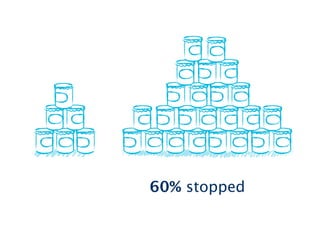
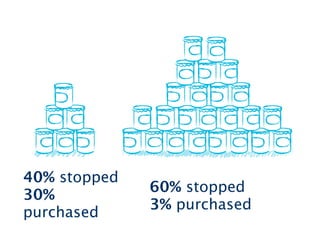
40% stopped   60% stopped


Wednesday, 11 July 12
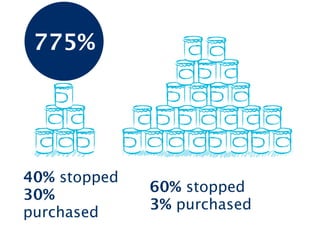
775%
               INCREASE


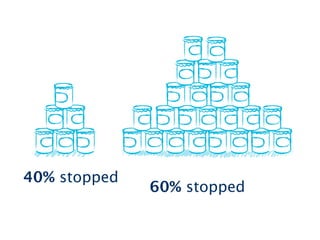
           40% stopped     60% stopped
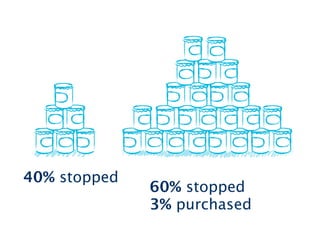
           30% purchased   3% purchased

Wednesday, 11 July 12
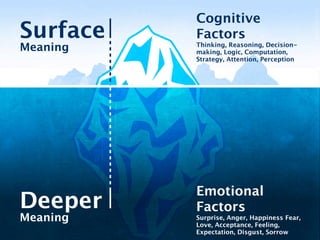
Surface        Cognitive Factors
                        Thinking, Reasoning, Decision-
         Meaning        making, Logic, Computation,
                        Strategy, Attention, Perception


         Deeper         Emotional Factors
                        Surprise, Anger, Happiness Fear, Love,
         Meaning        Acceptance, Feeling, Expectation,
                        Disgust, Sorrow

Wednesday, 11 July 12
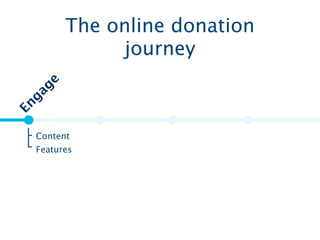
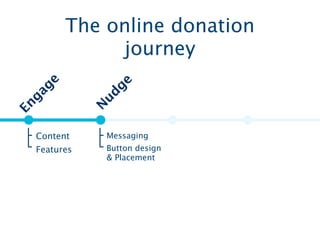
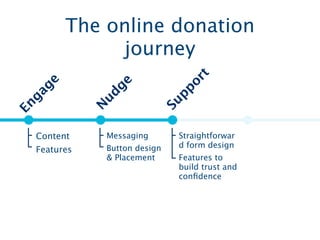
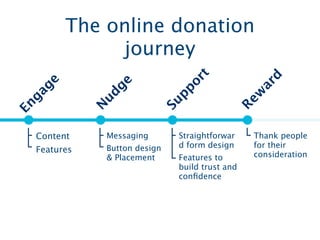
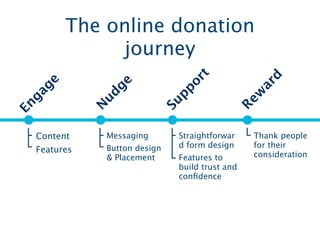
The online donation journey


                                                     t


                                                                        d
                                                     or
          ge


                                ge


                                                                     ar
                                                 pp
        ga


                                                                     w
                            ud


                                                                   Re
                                                Su
      En


                            N

                 Content        Messaging        Straightforward     Thank people
                                Button design    form design         for their
                 Features
                                & Placement      Features to         consideration
                                                 build trust and
                                                 confidence


Wednesday, 11 July 12
BUILDING
                 emotional ENGAGEMENT


Wednesday, 11 July 12
Building emotional engagement


Wednesday, 11 July 12
Building emotional engagement


                        £20
                        will help save
                                         About 1440 acres are
                                          cut down every day.
                                           That’s about 700
                                           football pitches.
                        1000 trees!
                                                     A NI C!
                                                    P

Wednesday, 11 July 12
Building emotional engagement


                        It could have
                          been me...


Wednesday, 11 July 12
Building emotional engagement


Wednesday, 11 July 12
Building emotional engagement


                69 Tigers saved!       = 3 Tigers


Wednesday, 11 July 12
TURNING
                engagement
                        into DONATION


Wednesday, 11 July 12
Turning engagement into donations


Wednesday, 11 July 12
Turning engagement into donations


                        80%
                        will go directly
                        to the charity


Wednesday, 11 July 12
Turning engagement into donations

                                t!
                               an
                             rt
                           po


                                                 £20
                        im
                   ill
               St


                                                 will help save
                                 £10
                                will help save
                                                 1000 trees!
                  £5save        500 trees!
             will help
              250 trees!


Wednesday, 11 July 12
Turning engagement into donations


Wednesday, 11 July 12
Turning engagement into donations


Wednesday, 11 July 12
Internally we think: The website exists
                to give as much information about
                Merlin to the outside world as possible.
                We want people to leave knowing
                exactly what our mission and policies
                are and what great things we have been
                doing recently.
                Externally donors think: What
                problems is Merlin solving and if I’m
                moved, how can I help?

Wednesday, 11 July 12
the first 10 seconds are critical!


Wednesday, 11 July 12
The 2 roads to optimisation


                    •   Bespoke usability testing
                    • Learn from others


Wednesday, 11 July 12
98.7%
                        UPLIFT


Wednesday, 11 July 12
9%
                        UPLIFT


Wednesday, 11 July 12
162%            22%
                         DECREASE
             UPLIFT     bounce rate


Wednesday, 11 July 12
•   Simon@nomensa.com
             •          deniz.hassan@merlin.org.uk
                                                     •   @simon_norris
             •          www.merlin.org.uk
                                                     •   www.nomensa.com
             •          @MerlinUK
                                                     •   @we_are_nomensa


Wednesday, 11 July 12

Website conversion optimisation

  • 1.
  • 2.
    WHY should we incorporate insights about psychology to drive design? Wednesday, 11 July 12
  • 3.
    So, what can psychology teach us about how we make decisions? Wednesday, 11 July 12
  • 4.
  • 5.
    40% stopped 60% stopped Wednesday, 11 July 12
  • 6.
    775% INCREASE 40% stopped 60% stopped 30% purchased 3% purchased Wednesday, 11 July 12
  • 7.
    Surface Cognitive Factors Thinking, Reasoning, Decision- Meaning making, Logic, Computation, Strategy, Attention, Perception Deeper Emotional Factors Surprise, Anger, Happiness Fear, Love, Meaning Acceptance, Feeling, Expectation, Disgust, Sorrow Wednesday, 11 July 12
  • 8.
    The online donationjourney t d or ge ge ar pp ga w ud Re Su En N Content Messaging Straightforward Thank people Button design form design for their Features & Placement Features to consideration build trust and confidence Wednesday, 11 July 12
  • 9.
    BUILDING emotional ENGAGEMENT Wednesday, 11 July 12
  • 10.
  • 11.
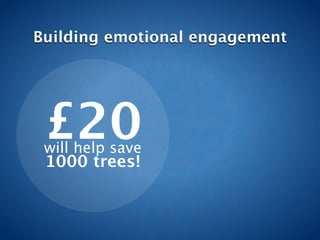
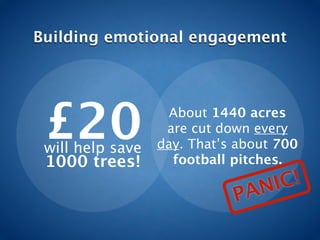
    Building emotional engagement £20 will help save About 1440 acres are cut down every day. That’s about 700 football pitches. 1000 trees! A NI C! P Wednesday, 11 July 12
  • 12.
    Building emotional engagement It could have been me... Wednesday, 11 July 12
  • 13.
  • 14.
    Building emotional engagement 69 Tigers saved! = 3 Tigers Wednesday, 11 July 12
  • 15.
    TURNING engagement into DONATION Wednesday, 11 July 12
  • 16.
    Turning engagement intodonations Wednesday, 11 July 12
  • 17.
    Turning engagement intodonations 80% will go directly to the charity Wednesday, 11 July 12
  • 18.
    Turning engagement intodonations t! an rt po £20 im ill St will help save £10 will help save 1000 trees! £5save 500 trees! will help 250 trees! Wednesday, 11 July 12
  • 19.
    Turning engagement intodonations Wednesday, 11 July 12
  • 20.
    Turning engagement intodonations Wednesday, 11 July 12
  • 21.
  • 22.
    Internally we think:The website exists to give as much information about Merlin to the outside world as possible. We want people to leave knowing exactly what our mission and policies are and what great things we have been doing recently. Externally donors think: What problems is Merlin solving and if I’m moved, how can I help? Wednesday, 11 July 12
  • 23.
  • 24.
    the first 10seconds are critical! Wednesday, 11 July 12
  • 25.
  • 26.
    The 2 roadsto optimisation • Bespoke usability testing • Learn from others Wednesday, 11 July 12
  • 27.
  • 28.
    98.7% UPLIFT Wednesday, 11 July 12
  • 29.
  • 30.
    9% UPLIFT Wednesday, 11 July 12
  • 31.
    162% 22% DECREASE UPLIFT bounce rate Wednesday, 11 July 12
  • 32.
    Simon@nomensa.com • deniz.hassan@merlin.org.uk • @simon_norris • www.merlin.org.uk • www.nomensa.com • @MerlinUK • @we_are_nomensa Wednesday, 11 July 12

Editor's Notes

  • #2 \n
  • #3 \n
  • #4 \n
  • #5 \n
  • #6 \n
  • #7 \n
  • #8 \n
  • #9 \n
  • #10 \n
  • #11 \n
  • #12 \n
  • #13 \n
  • #14 \n
  • #15 \n
  • #16 \n
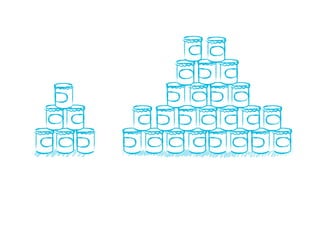
  • #17 When Choice is Demotivating: Can One Desire Too Much of a Good Thing? (Iyengar and Lepper, 2000).\n\nChoice Overload is a cognitive bias\n\nSelection vs Purchase\n\nLimited-choice condition (260p) 60% (145 ppl) stopped > 3% (4 ppl) purchased £2.19 = £8.76\nExtended-choice condition (242p) 40% (104 ppl) stopped > 30% (31 ppl) purchased £2.19 = £67.89\n\nDifference 775% increase in LCC vs EXC\n\nMotivation for selection - extended choice condition\n\nMotivation for purchasing - limited choice selection\n
  • #18 When Choice is Demotivating: Can One Desire Too Much of a Good Thing? (Iyengar and Lepper, 2000).\n\nChoice Overload is a cognitive bias\n\nSelection vs Purchase\n\nLimited-choice condition (260p) 60% (145 ppl) stopped > 3% (4 ppl) purchased £2.19 = £8.76\nExtended-choice condition (242p) 40% (104 ppl) stopped > 30% (31 ppl) purchased £2.19 = £67.89\n\nDifference 775% increase in LCC vs EXC\n\nMotivation for selection - extended choice condition\n\nMotivation for purchasing - limited choice selection\n
  • #19 When Choice is Demotivating: Can One Desire Too Much of a Good Thing? (Iyengar and Lepper, 2000).\n\nChoice Overload is a cognitive bias\n\nSelection vs Purchase\n\nLimited-choice condition (260p) 60% (145 ppl) stopped > 3% (4 ppl) purchased £2.19 = £8.76\nExtended-choice condition (242p) 40% (104 ppl) stopped > 30% (31 ppl) purchased £2.19 = £67.89\n\nDifference 775% increase in LCC vs EXC\n\nMotivation for selection - extended choice condition\n\nMotivation for purchasing - limited choice selection\n
  • #20 When Choice is Demotivating: Can One Desire Too Much of a Good Thing? (Iyengar and Lepper, 2000).\n\nChoice Overload is a cognitive bias\n\nSelection vs Purchase\n\nLimited-choice condition (260p) 60% (145 ppl) stopped > 3% (4 ppl) purchased £2.19 = £8.76\nExtended-choice condition (242p) 40% (104 ppl) stopped > 30% (31 ppl) purchased £2.19 = £67.89\n\nDifference 775% increase in LCC vs EXC\n\nMotivation for selection - extended choice condition\n\nMotivation for purchasing - limited choice selection\n
  • #21 When Choice is Demotivating: Can One Desire Too Much of a Good Thing? (Iyengar and Lepper, 2000).\n\nChoice Overload is a cognitive bias\n\nSelection vs Purchase\n\nLimited-choice condition (260p) 60% (145 ppl) stopped > 3% (4 ppl) purchased £2.19 = £8.76\nExtended-choice condition (242p) 40% (104 ppl) stopped > 30% (31 ppl) purchased £2.19 = £67.89\n\nDifference 775% increase in LCC vs EXC\n\nMotivation for selection - extended choice condition\n\nMotivation for purchasing - limited choice selection\n
  • #22 When Choice is Demotivating: Can One Desire Too Much of a Good Thing? (Iyengar and Lepper, 2000).\n\nChoice Overload is a cognitive bias\n\nSelection vs Purchase\n\nLimited-choice condition (260p) 60% (145 ppl) stopped > 3% (4 ppl) purchased £2.19 = £8.76\nExtended-choice condition (242p) 40% (104 ppl) stopped > 30% (31 ppl) purchased £2.19 = £67.89\n\nDifference 775% increase in LCC vs EXC\n\nMotivation for selection - extended choice condition\n\nMotivation for purchasing - limited choice selection\n
  • #23 When Choice is Demotivating: Can One Desire Too Much of a Good Thing? (Iyengar and Lepper, 2000).\n\nChoice Overload is a cognitive bias\n\nSelection vs Purchase\n\nLimited-choice condition (260p) 60% (145 ppl) stopped > 3% (4 ppl) purchased £2.19 = £8.76\nExtended-choice condition (242p) 40% (104 ppl) stopped > 30% (31 ppl) purchased £2.19 = £67.89\n\nDifference 775% increase in LCC vs EXC\n\nMotivation for selection - extended choice condition\n\nMotivation for purchasing - limited choice selection\n
  • #24 When Choice is Demotivating: Can One Desire Too Much of a Good Thing? (Iyengar and Lepper, 2000).\n\nChoice Overload is a cognitive bias\n\nSelection vs Purchase\n\nLimited-choice condition (260p) 60% (145 ppl) stopped > 3% (4 ppl) purchased £2.19 = £8.76\nExtended-choice condition (242p) 40% (104 ppl) stopped > 30% (31 ppl) purchased £2.19 = £67.89\n\nDifference 775% increase in LCC vs EXC\n\nMotivation for selection - extended choice condition\n\nMotivation for purchasing - limited choice selection\n
  • #25 When Choice is Demotivating: Can One Desire Too Much of a Good Thing? (Iyengar and Lepper, 2000).\n\nChoice Overload is a cognitive bias\n\nSelection vs Purchase\n\nLimited-choice condition (260p) 60% (145 ppl) stopped > 3% (4 ppl) purchased £2.19 = £8.76\nExtended-choice condition (242p) 40% (104 ppl) stopped > 30% (31 ppl) purchased £2.19 = £67.89\n\nDifference 775% increase in LCC vs EXC\n\nMotivation for selection - extended choice condition\n\nMotivation for purchasing - limited choice selection\n
  • #26 When Choice is Demotivating: Can One Desire Too Much of a Good Thing? (Iyengar and Lepper, 2000).\n\nChoice Overload is a cognitive bias\n\nSelection vs Purchase\n\nLimited-choice condition (260p) 60% (145 ppl) stopped > 3% (4 ppl) purchased £2.19 = £8.76\nExtended-choice condition (242p) 40% (104 ppl) stopped > 30% (31 ppl) purchased £2.19 = £67.89\n\nDifference 775% increase in LCC vs EXC\n\nMotivation for selection - extended choice condition\n\nMotivation for purchasing - limited choice selection\n
  • #27 When Choice is Demotivating: Can One Desire Too Much of a Good Thing? (Iyengar and Lepper, 2000).\n\nChoice Overload is a cognitive bias\n\nSelection vs Purchase\n\nLimited-choice condition (260p) 60% (145 ppl) stopped > 3% (4 ppl) purchased £2.19 = £8.76\nExtended-choice condition (242p) 40% (104 ppl) stopped > 30% (31 ppl) purchased £2.19 = £67.89\n\nDifference 775% increase in LCC vs EXC\n\nMotivation for selection - extended choice condition\n\nMotivation for purchasing - limited choice selection\n
  • #28 When Choice is Demotivating: Can One Desire Too Much of a Good Thing? (Iyengar and Lepper, 2000).\n\nChoice Overload is a cognitive bias\n\nSelection vs Purchase\n\nLimited-choice condition (260p) 60% (145 ppl) stopped > 3% (4 ppl) purchased £2.19 = £8.76\nExtended-choice condition (242p) 40% (104 ppl) stopped > 30% (31 ppl) purchased £2.19 = £67.89\n\nDifference 775% increase in LCC vs EXC\n\nMotivation for selection - extended choice condition\n\nMotivation for purchasing - limited choice selection\n
  • #29 When Choice is Demotivating: Can One Desire Too Much of a Good Thing? (Iyengar and Lepper, 2000).\n\nChoice Overload is a cognitive bias\n\nSelection vs Purchase\n\nLimited-choice condition (260p) 60% (145 ppl) stopped > 3% (4 ppl) purchased £2.19 = £8.76\nExtended-choice condition (242p) 40% (104 ppl) stopped > 30% (31 ppl) purchased £2.19 = £67.89\n\nDifference 775% increase in LCC vs EXC\n\nMotivation for selection - extended choice condition\n\nMotivation for purchasing - limited choice selection\n
  • #30 When Choice is Demotivating: Can One Desire Too Much of a Good Thing? (Iyengar and Lepper, 2000).\n\nChoice Overload is a cognitive bias\n\nSelection vs Purchase\n\nLimited-choice condition (260p) 60% (145 ppl) stopped > 3% (4 ppl) purchased £2.19 = £8.76\nExtended-choice condition (242p) 40% (104 ppl) stopped > 30% (31 ppl) purchased £2.19 = £67.89\n\nDifference 775% increase in LCC vs EXC\n\nMotivation for selection - extended choice condition\n\nMotivation for purchasing - limited choice selection\n
  • #31 When Choice is Demotivating: Can One Desire Too Much of a Good Thing? (Iyengar and Lepper, 2000).\n\nChoice Overload is a cognitive bias\n\nSelection vs Purchase\n\nLimited-choice condition (260p) 60% (145 ppl) stopped > 3% (4 ppl) purchased £2.19 = £8.76\nExtended-choice condition (242p) 40% (104 ppl) stopped > 30% (31 ppl) purchased £2.19 = £67.89\n\nDifference 775% increase in LCC vs EXC\n\nMotivation for selection - extended choice condition\n\nMotivation for purchasing - limited choice selection\n
  • #32 When Choice is Demotivating: Can One Desire Too Much of a Good Thing? (Iyengar and Lepper, 2000).\n\nChoice Overload is a cognitive bias\n\nSelection vs Purchase\n\nLimited-choice condition (260p) 60% (145 ppl) stopped > 3% (4 ppl) purchased £2.19 = £8.76\nExtended-choice condition (242p) 40% (104 ppl) stopped > 30% (31 ppl) purchased £2.19 = £67.89\n\nDifference 775% increase in LCC vs EXC\n\nMotivation for selection - extended choice condition\n\nMotivation for purchasing - limited choice selection\n
  • #33 When Choice is Demotivating: Can One Desire Too Much of a Good Thing? (Iyengar and Lepper, 2000).\n\nChoice Overload is a cognitive bias\n\nSelection vs Purchase\n\nLimited-choice condition (260p) 60% (145 ppl) stopped > 3% (4 ppl) purchased £2.19 = £8.76\nExtended-choice condition (242p) 40% (104 ppl) stopped > 30% (31 ppl) purchased £2.19 = £67.89\n\nDifference 775% increase in LCC vs EXC\n\nMotivation for selection - extended choice condition\n\nMotivation for purchasing - limited choice selection\n
  • #34 When Choice is Demotivating: Can One Desire Too Much of a Good Thing? (Iyengar and Lepper, 2000).\n\nChoice Overload is a cognitive bias\n\nSelection vs Purchase\n\nLimited-choice condition (260p) 60% (145 ppl) stopped > 3% (4 ppl) purchased £2.19 = £8.76\nExtended-choice condition (242p) 40% (104 ppl) stopped > 30% (31 ppl) purchased £2.19 = £67.89\n\nDifference 775% increase in LCC vs EXC\n\nMotivation for selection - extended choice condition\n\nMotivation for purchasing - limited choice selection\n
  • #35 When Choice is Demotivating: Can One Desire Too Much of a Good Thing? (Iyengar and Lepper, 2000).\n\nChoice Overload is a cognitive bias\n\nSelection vs Purchase\n\nLimited-choice condition (260p) 60% (145 ppl) stopped > 3% (4 ppl) purchased £2.19 = £8.76\nExtended-choice condition (242p) 40% (104 ppl) stopped > 30% (31 ppl) purchased £2.19 = £67.89\n\nDifference 775% increase in LCC vs EXC\n\nMotivation for selection - extended choice condition\n\nMotivation for purchasing - limited choice selection\n
  • #36 When Choice is Demotivating: Can One Desire Too Much of a Good Thing? (Iyengar and Lepper, 2000).\n\nChoice Overload is a cognitive bias\n\nSelection vs Purchase\n\nLimited-choice condition (260p) 60% (145 ppl) stopped > 3% (4 ppl) purchased £2.19 = £8.76\nExtended-choice condition (242p) 40% (104 ppl) stopped > 30% (31 ppl) purchased £2.19 = £67.89\n\nDifference 775% increase in LCC vs EXC\n\nMotivation for selection - extended choice condition\n\nMotivation for purchasing - limited choice selection\n
  • #37 When Choice is Demotivating: Can One Desire Too Much of a Good Thing? (Iyengar and Lepper, 2000).\n\nChoice Overload is a cognitive bias\n\nSelection vs Purchase\n\nLimited-choice condition (260p) 60% (145 ppl) stopped > 3% (4 ppl) purchased £2.19 = £8.76\nExtended-choice condition (242p) 40% (104 ppl) stopped > 30% (31 ppl) purchased £2.19 = £67.89\n\nDifference 775% increase in LCC vs EXC\n\nMotivation for selection - extended choice condition\n\nMotivation for purchasing - limited choice selection\n
  • #38 When Choice is Demotivating: Can One Desire Too Much of a Good Thing? (Iyengar and Lepper, 2000).\n\nChoice Overload is a cognitive bias\n\nSelection vs Purchase\n\nLimited-choice condition (260p) 60% (145 ppl) stopped > 3% (4 ppl) purchased £2.19 = £8.76\nExtended-choice condition (242p) 40% (104 ppl) stopped > 30% (31 ppl) purchased £2.19 = £67.89\n\nDifference 775% increase in LCC vs EXC\n\nMotivation for selection - extended choice condition\n\nMotivation for purchasing - limited choice selection\n
  • #39 When Choice is Demotivating: Can One Desire Too Much of a Good Thing? (Iyengar and Lepper, 2000).\n\nChoice Overload is a cognitive bias\n\nSelection vs Purchase\n\nLimited-choice condition (260p) 60% (145 ppl) stopped > 3% (4 ppl) purchased £2.19 = £8.76\nExtended-choice condition (242p) 40% (104 ppl) stopped > 30% (31 ppl) purchased £2.19 = £67.89\n\nDifference 775% increase in LCC vs EXC\n\nMotivation for selection - extended choice condition\n\nMotivation for purchasing - limited choice selection\n
  • #40 When Choice is Demotivating: Can One Desire Too Much of a Good Thing? (Iyengar and Lepper, 2000).\n\nChoice Overload is a cognitive bias\n\nSelection vs Purchase\n\nLimited-choice condition (260p) 60% (145 ppl) stopped > 3% (4 ppl) purchased £2.19 = £8.76\nExtended-choice condition (242p) 40% (104 ppl) stopped > 30% (31 ppl) purchased £2.19 = £67.89\n\nDifference 775% increase in LCC vs EXC\n\nMotivation for selection - extended choice condition\n\nMotivation for purchasing - limited choice selection\n
  • #41 When Choice is Demotivating: Can One Desire Too Much of a Good Thing? (Iyengar and Lepper, 2000).\n\nChoice Overload is a cognitive bias\n\nSelection vs Purchase\n\nLimited-choice condition (260p) 60% (145 ppl) stopped > 3% (4 ppl) purchased £2.19 = £8.76\nExtended-choice condition (242p) 40% (104 ppl) stopped > 30% (31 ppl) purchased £2.19 = £67.89\n\nDifference 775% increase in LCC vs EXC\n\nMotivation for selection - extended choice condition\n\nMotivation for purchasing - limited choice selection\n
  • #42 When Choice is Demotivating: Can One Desire Too Much of a Good Thing? (Iyengar and Lepper, 2000).\n\nChoice Overload is a cognitive bias\n\nSelection vs Purchase\n\nLimited-choice condition (260p) 60% (145 ppl) stopped > 3% (4 ppl) purchased £2.19 = £8.76\nExtended-choice condition (242p) 40% (104 ppl) stopped > 30% (31 ppl) purchased £2.19 = £67.89\n\nDifference 775% increase in LCC vs EXC\n\nMotivation for selection - extended choice condition\n\nMotivation for purchasing - limited choice selection\n
  • #43 When Choice is Demotivating: Can One Desire Too Much of a Good Thing? (Iyengar and Lepper, 2000).\n\nChoice Overload is a cognitive bias\n\nSelection vs Purchase\n\nLimited-choice condition (260p) 60% (145 ppl) stopped > 3% (4 ppl) purchased £2.19 = £8.76\nExtended-choice condition (242p) 40% (104 ppl) stopped > 30% (31 ppl) purchased £2.19 = £67.89\n\nDifference 775% increase in LCC vs EXC\n\nMotivation for selection - extended choice condition\n\nMotivation for purchasing - limited choice selection\n
  • #44 When Choice is Demotivating: Can One Desire Too Much of a Good Thing? (Iyengar and Lepper, 2000).\n\nChoice Overload is a cognitive bias\n\nSelection vs Purchase\n\nLimited-choice condition (260p) 60% (145 ppl) stopped > 3% (4 ppl) purchased £2.19 = £8.76\nExtended-choice condition (242p) 40% (104 ppl) stopped > 30% (31 ppl) purchased £2.19 = £67.89\n\nDifference 775% increase in LCC vs EXC\n\nMotivation for selection - extended choice condition\n\nMotivation for purchasing - limited choice selection\n
  • #45 When Choice is Demotivating: Can One Desire Too Much of a Good Thing? (Iyengar and Lepper, 2000).\n\nChoice Overload is a cognitive bias\n\nSelection vs Purchase\n\nLimited-choice condition (260p) 60% (145 ppl) stopped > 3% (4 ppl) purchased £2.19 = £8.76\nExtended-choice condition (242p) 40% (104 ppl) stopped > 30% (31 ppl) purchased £2.19 = £67.89\n\nDifference 775% increase in LCC vs EXC\n\nMotivation for selection - extended choice condition\n\nMotivation for purchasing - limited choice selection\n
  • #46 When Choice is Demotivating: Can One Desire Too Much of a Good Thing? (Iyengar and Lepper, 2000).\n\nChoice Overload is a cognitive bias\n\nSelection vs Purchase\n\nLimited-choice condition (260p) 60% (145 ppl) stopped > 3% (4 ppl) purchased £2.19 = £8.76\nExtended-choice condition (242p) 40% (104 ppl) stopped > 30% (31 ppl) purchased £2.19 = £67.89\n\nDifference 775% increase in LCC vs EXC\n\nMotivation for selection - extended choice condition\n\nMotivation for purchasing - limited choice selection\n
  • #47 When Choice is Demotivating: Can One Desire Too Much of a Good Thing? (Iyengar and Lepper, 2000).\n\nChoice Overload is a cognitive bias\n\nSelection vs Purchase\n\nLimited-choice condition (260p) 60% (145 ppl) stopped > 3% (4 ppl) purchased £2.19 = £8.76\nExtended-choice condition (242p) 40% (104 ppl) stopped > 30% (31 ppl) purchased £2.19 = £67.89\n\nDifference 775% increase in LCC vs EXC\n\nMotivation for selection - extended choice condition\n\nMotivation for purchasing - limited choice selection\n
  • #48 When Choice is Demotivating: Can One Desire Too Much of a Good Thing? (Iyengar and Lepper, 2000).\n\nChoice Overload is a cognitive bias\n\nSelection vs Purchase\n\nLimited-choice condition (260p) 60% (145 ppl) stopped > 3% (4 ppl) purchased £2.19 = £8.76\nExtended-choice condition (242p) 40% (104 ppl) stopped > 30% (31 ppl) purchased £2.19 = £67.89\n\nDifference 775% increase in LCC vs EXC\n\nMotivation for selection - extended choice condition\n\nMotivation for purchasing - limited choice selection\n
  • #49 When Choice is Demotivating: Can One Desire Too Much of a Good Thing? (Iyengar and Lepper, 2000).\n\nChoice Overload is a cognitive bias\n\nSelection vs Purchase\n\nLimited-choice condition (260p) 60% (145 ppl) stopped > 3% (4 ppl) purchased £2.19 = £8.76\nExtended-choice condition (242p) 40% (104 ppl) stopped > 30% (31 ppl) purchased £2.19 = £67.89\n\nDifference 775% increase in LCC vs EXC\n\nMotivation for selection - extended choice condition\n\nMotivation for purchasing - limited choice selection\n
  • #50 When Choice is Demotivating: Can One Desire Too Much of a Good Thing? (Iyengar and Lepper, 2000).\n\nChoice Overload is a cognitive bias\n\nSelection vs Purchase\n\nLimited-choice condition (260p) 60% (145 ppl) stopped > 3% (4 ppl) purchased £2.19 = £8.76\nExtended-choice condition (242p) 40% (104 ppl) stopped > 30% (31 ppl) purchased £2.19 = £67.89\n\nDifference 775% increase in LCC vs EXC\n\nMotivation for selection - extended choice condition\n\nMotivation for purchasing - limited choice selection\n
  • #51 When Choice is Demotivating: Can One Desire Too Much of a Good Thing? (Iyengar and Lepper, 2000).\n\nChoice Overload is a cognitive bias\n\nSelection vs Purchase\n\nLimited-choice condition (260p) 60% (145 ppl) stopped > 3% (4 ppl) purchased £2.19 = £8.76\nExtended-choice condition (242p) 40% (104 ppl) stopped > 30% (31 ppl) purchased £2.19 = £67.89\n\nDifference 775% increase in LCC vs EXC\n\nMotivation for selection - extended choice condition\n\nMotivation for purchasing - limited choice selection\n
  • #52 When Choice is Demotivating: Can One Desire Too Much of a Good Thing? (Iyengar and Lepper, 2000).\n\nChoice Overload is a cognitive bias\n\nSelection vs Purchase\n\nLimited-choice condition (260p) 60% (145 ppl) stopped > 3% (4 ppl) purchased £2.19 = £8.76\nExtended-choice condition (242p) 40% (104 ppl) stopped > 30% (31 ppl) purchased £2.19 = £67.89\n\nDifference 775% increase in LCC vs EXC\n\nMotivation for selection - extended choice condition\n\nMotivation for purchasing - limited choice selection\n
  • #53 When Choice is Demotivating: Can One Desire Too Much of a Good Thing? (Iyengar and Lepper, 2000).\n\nChoice Overload is a cognitive bias\n\nSelection vs Purchase\n\nLimited-choice condition (260p) 60% (145 ppl) stopped > 3% (4 ppl) purchased £2.19 = £8.76\nExtended-choice condition (242p) 40% (104 ppl) stopped > 30% (31 ppl) purchased £2.19 = £67.89\n\nDifference 775% increase in LCC vs EXC\n\nMotivation for selection - extended choice condition\n\nMotivation for purchasing - limited choice selection\n
  • #54 Iceberg Model of meaning\n\nSurface and deeper meaning\n\nAnnabelle story.\n
  • #55 Iceberg Model of meaning\n\nSurface and deeper meaning\n\nAnnabelle story.\n
  • #56 Iceberg Model of meaning\n\nSurface and deeper meaning\n\nAnnabelle story.\n
  • #57 Iceberg Model of meaning\n\nSurface and deeper meaning\n\nAnnabelle story.\n
  • #58 Iceberg Model of meaning\n\nSurface and deeper meaning\n\nAnnabelle story.\n
  • #59 Iceberg Model of meaning\n\nSurface and deeper meaning\n\nAnnabelle story.\n
  • #60 Iceberg Model of meaning\n\nSurface and deeper meaning\n\nAnnabelle story.\n
  • #61 \n
  • #62 \n
  • #63 \n
  • #64 \n
  • #65 \n
  • #66 \n
  • #67 \n
  • #68 \n
  • #69 \n
  • #70 \n
  • #71 \n
  • #72 \n
  • #73 \n
  • #74 \n
  • #75 \n
  • #76 \n
  • #77 \n
  • #78 \n
  • #79 \n
  • #80 \n
  • #81 \n
  • #82 \n
  • #83 This is not just about getting people engaged with the charity in the short-term to make a donation, but also about building a longer term relationship.\n\nYou want eventually to turn people into supporters, fundraisers, members and perhaps even to be remembered in their will. \n
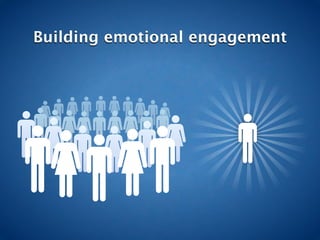
  • #84 When we can identify a specific cause this typically leads to greater engagement.\n\nWe should avoid overwhelming people or making them feel futile.\n\nWe know that people do not feel engaged to help a crowd. Even the pictures used on a site can affect this, with pictures of individuals being the most effective - adding even a single extra person can diminish engagement. \n\nFocus in on individuals in case studies, messages, etc. \n
  • #85 When we can identify a specific cause this typically leads to greater engagement.\n\nWe should avoid overwhelming people or making them feel futile.\n\nWe know that people do not feel engaged to help a crowd. Even the pictures used on a site can affect this, with pictures of individuals being the most effective - adding even a single extra person can diminish engagement. \n\nFocus in on individuals in case studies, messages, etc. \n
  • #86 When we can identify a specific cause this typically leads to greater engagement.\n\nWe should avoid overwhelming people or making them feel futile.\n\nWe know that people do not feel engaged to help a crowd. Even the pictures used on a site can affect this, with pictures of individuals being the most effective - adding even a single extra person can diminish engagement. \n\nFocus in on individuals in case studies, messages, etc. \n
  • #87 Evoke empathy, not guilt!\n\nProvide the facts and let people make their own conclusions.\n
  • #88 Evoke empathy, not guilt!\n\nProvide the facts and let people make their own conclusions.\n
  • #89 Evoke empathy, not guilt!\n\nProvide the facts and let people make their own conclusions.\n
  • #90 Make it matter to the donor (person)!\n\n“It could have been me” can be a very powerful motivator and triggers ‘empathy’.\n\nMake sure people can relate to the cause. Geographic proximity is one of the strongest triggers, but if you have an overseas cause, make sure that it is expressed in terms that are meaningful. \n
  • #91 Make it matter to the donor (person)!\n\n“It could have been me” can be a very powerful motivator and triggers ‘empathy’.\n\nMake sure people can relate to the cause. Geographic proximity is one of the strongest triggers, but if you have an overseas cause, make sure that it is expressed in terms that are meaningful. \n
  • #92 Reciprocity is more than a word it is a fundamental social glue. We need to be able to appeal to a person’s sense of reciprocity.\n\nGive something in return for the donation. Even a very small gift can increase the number and value of donations. However, this generally works best before the donation is given. However, online donations may be less appropriate but careful research would reveal the emotional triggers. \n\nThere are some specific cases though, such as where people are making a donation to adopt an animal (for example) and then receive an adoption pack. \n
  • #93 Use meaningful and achievable targets that people understand.\n\nProvide people with data they can relate to (e.g. 72 tigers saved this month).\n\nAvoid using large figures (e.g. £1,897,435 raised so far) because it does not mean very much, and also people may feel that their £10 donation will not make a difference. \n\nAgain, it’s all about making it meaningful and something people can relate with so they can ‘make a difference’.\n
  • #94 Use meaningful and achievable targets that people understand.\n\nProvide people with data they can relate to (e.g. 72 tigers saved this month).\n\nAvoid using large figures (e.g. £1,897,435 raised so far) because it does not mean very much, and also people may feel that their £10 donation will not make a difference. \n\nAgain, it’s all about making it meaningful and something people can relate with so they can ‘make a difference’.\n
  • #95 Use meaningful and achievable targets that people understand.\n\nProvide people with data they can relate to (e.g. 72 tigers saved this month).\n\nAvoid using large figures (e.g. £1,897,435 raised so far) because it does not mean very much, and also people may feel that their £10 donation will not make a difference. \n\nAgain, it’s all about making it meaningful and something people can relate with so they can ‘make a difference’.\n
  • #96 Use meaningful and achievable targets that people understand.\n\nProvide people with data they can relate to (e.g. 72 tigers saved this month).\n\nAvoid using large figures (e.g. £1,897,435 raised so far) because it does not mean very much, and also people may feel that their £10 donation will not make a difference. \n\nAgain, it’s all about making it meaningful and something people can relate with so they can ‘make a difference’.\n
  • #97 Use meaningful and achievable targets that people understand.\n\nProvide people with data they can relate to (e.g. 72 tigers saved this month).\n\nAvoid using large figures (e.g. £1,897,435 raised so far) because it does not mean very much, and also people may feel that their £10 donation will not make a difference. \n\nAgain, it’s all about making it meaningful and something people can relate with so they can ‘make a difference’.\n
  • #98 Use meaningful and achievable targets that people understand.\n\nProvide people with data they can relate to (e.g. 72 tigers saved this month).\n\nAvoid using large figures (e.g. £1,897,435 raised so far) because it does not mean very much, and also people may feel that their £10 donation will not make a difference. \n\nAgain, it’s all about making it meaningful and something people can relate with so they can ‘make a difference’.\n
  • #99 Use meaningful and achievable targets that people understand.\n\nProvide people with data they can relate to (e.g. 72 tigers saved this month).\n\nAvoid using large figures (e.g. £1,897,435 raised so far) because it does not mean very much, and also people may feel that their £10 donation will not make a difference. \n\nAgain, it’s all about making it meaningful and something people can relate with so they can ‘make a difference’.\n
  • #100 Use meaningful and achievable targets that people understand.\n\nProvide people with data they can relate to (e.g. 72 tigers saved this month).\n\nAvoid using large figures (e.g. £1,897,435 raised so far) because it does not mean very much, and also people may feel that their £10 donation will not make a difference. \n\nAgain, it’s all about making it meaningful and something people can relate with so they can ‘make a difference’.\n
  • #101 Use meaningful and achievable targets that people understand.\n\nProvide people with data they can relate to (e.g. 72 tigers saved this month).\n\nAvoid using large figures (e.g. £1,897,435 raised so far) because it does not mean very much, and also people may feel that their £10 donation will not make a difference. \n\nAgain, it’s all about making it meaningful and something people can relate with so they can ‘make a difference’.\n
  • #102 Use meaningful and achievable targets that people understand.\n\nProvide people with data they can relate to (e.g. 72 tigers saved this month).\n\nAvoid using large figures (e.g. £1,897,435 raised so far) because it does not mean very much, and also people may feel that their £10 donation will not make a difference. \n\nAgain, it’s all about making it meaningful and something people can relate with so they can ‘make a difference’.\n
  • #103 Use meaningful and achievable targets that people understand.\n\nProvide people with data they can relate to (e.g. 72 tigers saved this month).\n\nAvoid using large figures (e.g. £1,897,435 raised so far) because it does not mean very much, and also people may feel that their £10 donation will not make a difference. \n\nAgain, it’s all about making it meaningful and something people can relate with so they can ‘make a difference’.\n
  • #104 Use meaningful and achievable targets that people understand.\n\nProvide people with data they can relate to (e.g. 72 tigers saved this month).\n\nAvoid using large figures (e.g. £1,897,435 raised so far) because it does not mean very much, and also people may feel that their £10 donation will not make a difference. \n\nAgain, it’s all about making it meaningful and something people can relate with so they can ‘make a difference’.\n
  • #105 Use meaningful and achievable targets that people understand.\n\nProvide people with data they can relate to (e.g. 72 tigers saved this month).\n\nAvoid using large figures (e.g. £1,897,435 raised so far) because it does not mean very much, and also people may feel that their £10 donation will not make a difference. \n\nAgain, it’s all about making it meaningful and something people can relate with so they can ‘make a difference’.\n
  • #106 Use meaningful and achievable targets that people understand.\n\nProvide people with data they can relate to (e.g. 72 tigers saved this month).\n\nAvoid using large figures (e.g. £1,897,435 raised so far) because it does not mean very much, and also people may feel that their £10 donation will not make a difference. \n\nAgain, it’s all about making it meaningful and something people can relate with so they can ‘make a difference’.\n
  • #107 Use meaningful and achievable targets that people understand.\n\nProvide people with data they can relate to (e.g. 72 tigers saved this month).\n\nAvoid using large figures (e.g. £1,897,435 raised so far) because it does not mean very much, and also people may feel that their £10 donation will not make a difference. \n\nAgain, it’s all about making it meaningful and something people can relate with so they can ‘make a difference’.\n
  • #108 Use meaningful and achievable targets that people understand.\n\nProvide people with data they can relate to (e.g. 72 tigers saved this month).\n\nAvoid using large figures (e.g. £1,897,435 raised so far) because it does not mean very much, and also people may feel that their £10 donation will not make a difference. \n\nAgain, it’s all about making it meaningful and something people can relate with so they can ‘make a difference’.\n
  • #109 Use meaningful and achievable targets that people understand.\n\nProvide people with data they can relate to (e.g. 72 tigers saved this month).\n\nAvoid using large figures (e.g. £1,897,435 raised so far) because it does not mean very much, and also people may feel that their £10 donation will not make a difference. \n\nAgain, it’s all about making it meaningful and something people can relate with so they can ‘make a difference’.\n
  • #110 Use meaningful and achievable targets that people understand.\n\nProvide people with data they can relate to (e.g. 72 tigers saved this month).\n\nAvoid using large figures (e.g. £1,897,435 raised so far) because it does not mean very much, and also people may feel that their £10 donation will not make a difference. \n\nAgain, it’s all about making it meaningful and something people can relate with so they can ‘make a difference’.\n
  • #111 Use meaningful and achievable targets that people understand.\n\nProvide people with data they can relate to (e.g. 72 tigers saved this month).\n\nAvoid using large figures (e.g. £1,897,435 raised so far) because it does not mean very much, and also people may feel that their £10 donation will not make a difference. \n\nAgain, it’s all about making it meaningful and something people can relate with so they can ‘make a difference’.\n
  • #112 Use meaningful and achievable targets that people understand.\n\nProvide people with data they can relate to (e.g. 72 tigers saved this month).\n\nAvoid using large figures (e.g. £1,897,435 raised so far) because it does not mean very much, and also people may feel that their £10 donation will not make a difference. \n\nAgain, it’s all about making it meaningful and something people can relate with so they can ‘make a difference’.\n
  • #113 Use meaningful and achievable targets that people understand.\n\nProvide people with data they can relate to (e.g. 72 tigers saved this month).\n\nAvoid using large figures (e.g. £1,897,435 raised so far) because it does not mean very much, and also people may feel that their £10 donation will not make a difference. \n\nAgain, it’s all about making it meaningful and something people can relate with so they can ‘make a difference’.\n
  • #114 Use meaningful and achievable targets that people understand.\n\nProvide people with data they can relate to (e.g. 72 tigers saved this month).\n\nAvoid using large figures (e.g. £1,897,435 raised so far) because it does not mean very much, and also people may feel that their £10 donation will not make a difference. \n\nAgain, it’s all about making it meaningful and something people can relate with so they can ‘make a difference’.\n
  • #115 Use meaningful and achievable targets that people understand.\n\nProvide people with data they can relate to (e.g. 72 tigers saved this month).\n\nAvoid using large figures (e.g. £1,897,435 raised so far) because it does not mean very much, and also people may feel that their £10 donation will not make a difference. \n\nAgain, it’s all about making it meaningful and something people can relate with so they can ‘make a difference’.\n
  • #116 Use meaningful and achievable targets that people understand.\n\nProvide people with data they can relate to (e.g. 72 tigers saved this month).\n\nAvoid using large figures (e.g. £1,897,435 raised so far) because it does not mean very much, and also people may feel that their £10 donation will not make a difference. \n\nAgain, it’s all about making it meaningful and something people can relate with so they can ‘make a difference’.\n
  • #117 Use meaningful and achievable targets that people understand.\n\nProvide people with data they can relate to (e.g. 72 tigers saved this month).\n\nAvoid using large figures (e.g. £1,897,435 raised so far) because it does not mean very much, and also people may feel that their £10 donation will not make a difference. \n\nAgain, it’s all about making it meaningful and something people can relate with so they can ‘make a difference’.\n
  • #118 Use meaningful and achievable targets that people understand.\n\nProvide people with data they can relate to (e.g. 72 tigers saved this month).\n\nAvoid using large figures (e.g. £1,897,435 raised so far) because it does not mean very much, and also people may feel that their £10 donation will not make a difference. \n\nAgain, it’s all about making it meaningful and something people can relate with so they can ‘make a difference’.\n
  • #119 Use meaningful and achievable targets that people understand.\n\nProvide people with data they can relate to (e.g. 72 tigers saved this month).\n\nAvoid using large figures (e.g. £1,897,435 raised so far) because it does not mean very much, and also people may feel that their £10 donation will not make a difference. \n\nAgain, it’s all about making it meaningful and something people can relate with so they can ‘make a difference’.\n
  • #120 \n
  • #121 Avoid commanding and complex language.\n\nLet people make their own decisions. If they’ve decided to donate, they’re more likely to see it through. If they feel coerced, they’re more likely to give up at the first opportunity. \n\nAppeal to a sense of fairness!\n
  • #122 Establish trust.\n\nBe open and clear about where the money goes.\n\nUse charity “badges” and trust symbols where appropriate.\n
  • #123 Establish trust.\n\nBe open and clear about where the money goes.\n\nUse charity “badges” and trust symbols where appropriate.\n
  • #124 Establish trust.\n\nBe open and clear about where the money goes.\n\nUse charity “badges” and trust symbols where appropriate.\n
  • #125 Our own research has shown that how much a donation is worth (critical) can directly affect what people are willing to donate.\n\nIt is important to emphasise that even a small donation helps.\n\nIt is important to provide some larger numbers as well to encourage the big donations!\n
  • #126 Our own research has shown that how much a donation is worth (critical) can directly affect what people are willing to donate.\n\nIt is important to emphasise that even a small donation helps.\n\nIt is important to provide some larger numbers as well to encourage the big donations!\n
  • #127 Our own research has shown that how much a donation is worth (critical) can directly affect what people are willing to donate.\n\nIt is important to emphasise that even a small donation helps.\n\nIt is important to provide some larger numbers as well to encourage the big donations!\n
  • #128 Our own research has shown that how much a donation is worth (critical) can directly affect what people are willing to donate.\n\nIt is important to emphasise that even a small donation helps.\n\nIt is important to provide some larger numbers as well to encourage the big donations!\n
  • #129 Our own research has shown that how much a donation is worth (critical) can directly affect what people are willing to donate.\n\nIt is important to emphasise that even a small donation helps.\n\nIt is important to provide some larger numbers as well to encourage the big donations!\n
  • #130 Our own research has shown that how much a donation is worth (critical) can directly affect what people are willing to donate.\n\nIt is important to emphasise that even a small donation helps.\n\nIt is important to provide some larger numbers as well to encourage the big donations!\n
  • #131 Our own research has shown that how much a donation is worth (critical) can directly affect what people are willing to donate.\n\nIt is important to emphasise that even a small donation helps.\n\nIt is important to provide some larger numbers as well to encourage the big donations!\n
  • #132 Our own research has shown that how much a donation is worth (critical) can directly affect what people are willing to donate.\n\nIt is important to emphasise that even a small donation helps.\n\nIt is important to provide some larger numbers as well to encourage the big donations!\n
  • #133 Our own research has shown that how much a donation is worth (critical) can directly affect what people are willing to donate.\n\nIt is important to emphasise that even a small donation helps.\n\nIt is important to provide some larger numbers as well to encourage the big donations!\n
  • #134 Our own research has shown that how much a donation is worth (critical) can directly affect what people are willing to donate.\n\nIt is important to emphasise that even a small donation helps.\n\nIt is important to provide some larger numbers as well to encourage the big donations!\n
  • #135 Our own research has shown that how much a donation is worth (critical) can directly affect what people are willing to donate.\n\nIt is important to emphasise that even a small donation helps.\n\nIt is important to provide some larger numbers as well to encourage the big donations!\n
  • #136 Our own research has shown that how much a donation is worth (critical) can directly affect what people are willing to donate.\n\nIt is important to emphasise that even a small donation helps.\n\nIt is important to provide some larger numbers as well to encourage the big donations!\n
  • #137 Our own research has shown that how much a donation is worth (critical) can directly affect what people are willing to donate.\n\nIt is important to emphasise that even a small donation helps.\n\nIt is important to provide some larger numbers as well to encourage the big donations!\n
  • #138 \n
  • #139 \n
  • #140 \n
  • #141 \n
  • #142 \n
  • #143 \n
  • #144 \n
  • #145 \n
  • #146 \n
  • #147 \n
  • #148 \n
  • #149 \n
  • #150 \n
  • #151 \n
  • #152 \n
  • #153 \n
  • #154 \n
  • #155 \n
  • #156 \n
  • #157 \n