SERVERS
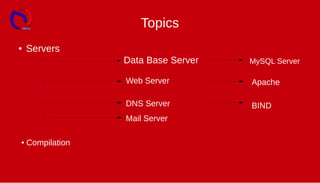
Topics
● Servers
Data Base Server
Web Server
MySQL Server
Apache
DNS Server BIND
● Compilation
Mail Server
What is a Server?
● A server is a computer program that provides services to
other computer programs (and their users) in the same or
other computers.
● Computer that runs a server program is a SERVER
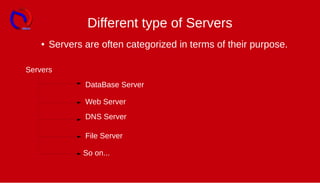
Different type of Servers
● Servers are often categorized in terms of their purpose.
Servers
DataBase Server
DNS Server
Web Server
File Server
So on...
WEB SERVERS
What is a web-Server ?
● Web-server is a computer that responds to web requests from a
client.
● Web server holds the web-pages that are written in html,php,asp or
jsp.
● Web requests using web-browsers like firefox, internet explorer etc...
● Web-server and web-browser uses "HTTP" or Hyper Text Transfer
Protocol to send and receive messages.
● Port number of HTTP protocol is 80.
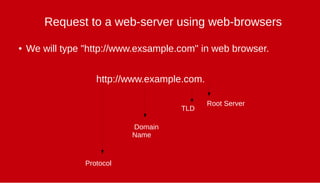
Request to a web-server using web-browsers
● We will type "http://www.exsample.com" in web browser.
http://www.example.com.
Protocol
Domain
Name
TLD
Root Server
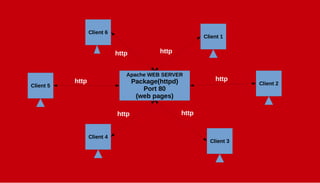
Apache WEB SERVER
Package(httpd)
Port 80
(web pages)
Client 3
Client 2
Client 1
Client 6
Client 5
Client 4
http http
httphttp
http http
web-Server
● Web pages can be accesed using two type of protocol.
1. http - Hyper Text Transfer Protocol – portno 80
2. https - HyperText Transfer Protocol Secure – portno 443
web-Server
● The web server needs some kind of program to handle all these
requests from the clients, "httpd" is a program or package which
can turn a computer into a web-server.
● httpd is developed by an organization known as apache software
foundation.
What are the benefits of apache web-server.?
● Apache web-server is an open source software.
● Apache web-server runs on many different operating systems
like linux,windows,mac,free BSD etc...
● There are large number of software developers who supports
apache web-server.
● Modular nature, apache web-server provides its features in a
modular way, so we can enable or disable features provided by
these modules.

Webserver

  • 1.
  • 2.
    Topics ● Servers Data BaseServer Web Server MySQL Server Apache DNS Server BIND ● Compilation Mail Server
  • 3.
    What is aServer? ● A server is a computer program that provides services to other computer programs (and their users) in the same or other computers. ● Computer that runs a server program is a SERVER
  • 4.
    Different type ofServers ● Servers are often categorized in terms of their purpose. Servers DataBase Server DNS Server Web Server File Server So on...
  • 5.
  • 6.
    What is aweb-Server ? ● Web-server is a computer that responds to web requests from a client. ● Web server holds the web-pages that are written in html,php,asp or jsp. ● Web requests using web-browsers like firefox, internet explorer etc... ● Web-server and web-browser uses "HTTP" or Hyper Text Transfer Protocol to send and receive messages. ● Port number of HTTP protocol is 80.
  • 7.
    Request to aweb-server using web-browsers ● We will type "http://www.exsample.com" in web browser. http://www.example.com. Protocol Domain Name TLD Root Server
  • 8.
    Apache WEB SERVER Package(httpd) Port80 (web pages) Client 3 Client 2 Client 1 Client 6 Client 5 Client 4 http http httphttp http http
  • 9.
    web-Server ● Web pagescan be accesed using two type of protocol. 1. http - Hyper Text Transfer Protocol – portno 80 2. https - HyperText Transfer Protocol Secure – portno 443
  • 10.
    web-Server ● The webserver needs some kind of program to handle all these requests from the clients, "httpd" is a program or package which can turn a computer into a web-server. ● httpd is developed by an organization known as apache software foundation.
  • 11.
    What are thebenefits of apache web-server.? ● Apache web-server is an open source software. ● Apache web-server runs on many different operating systems like linux,windows,mac,free BSD etc... ● There are large number of software developers who supports apache web-server. ● Modular nature, apache web-server provides its features in a modular way, so we can enable or disable features provided by these modules.