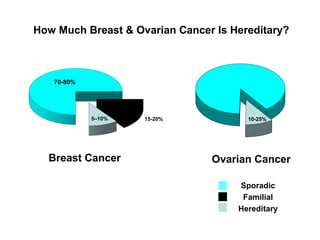
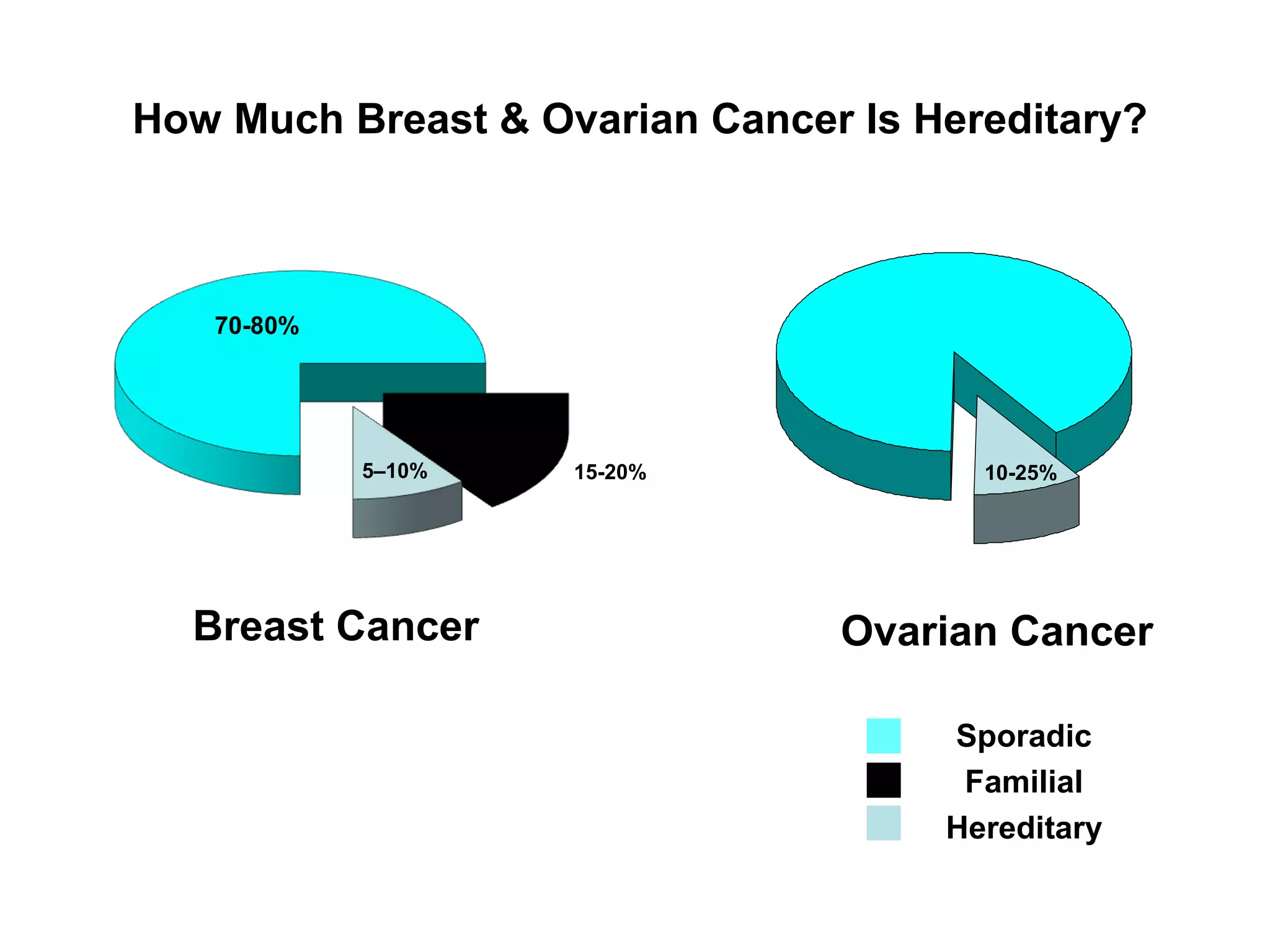
How Much Breast & Ovarian Cancer Is Hereditary?
Ovarian CancerBreast Cancer
10-25%
70-80%
5–10% 15-20%
Sporadic
Familial
Hereditary
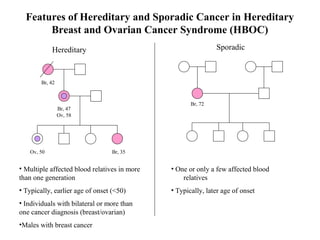
Features of Hereditary and Sporadic Cancer in Hereditary
Breast and Ovarian Cancer Syndrome (HBOC)
Hereditary Sporadic
• Multiple affected blood relatives in more
than one generation
• Typically, earlier age of onset (<50)
• Individuals with bilateral or more than
one cancer diagnosis (breast/ovarian)
•Males with breast cancer
• One or only a few affected blood
relatives
• Typically, later age of onset
Br, 42
Br, 47
Ov, 58
Br, 35Ov, 50
Br, 72
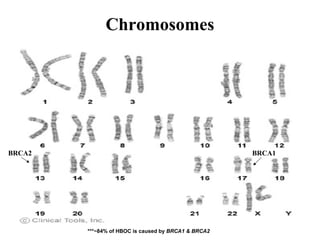
Chromosomes
BRCA1BRCA2
***~84% of HBOC is caused by BRCA1 & BRCA2
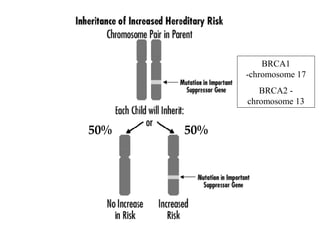
50% 50%
BRCA1
-chromosome 17
BRCA2 -
chromosome 13
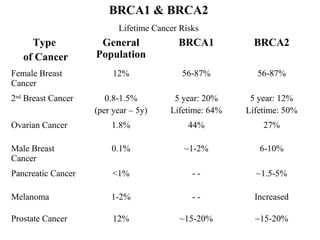
BRCA1 & BRCA2
Lifetime Cancer Risks
Type
of Cancer
General
Population
BRCA1 BRCA2
Female Breast
Cancer
12% 56-87% 56-87%
2nd
Breast Cancer 0.8-1.5%
(per year – 5y)
5 year: 20%
Lifetime: 64%
5 year: 12%
Lifetime: 50%
Ovarian Cancer 1.8% 44% 27%
Male Breast
Cancer
0.1% ~1-2% 6-10%
Pancreatic Cancer <1% - - ~1.5-5%
Melanoma 1-2% - - Increased
Prostate Cancer 12% ~15-20% ~15-20%
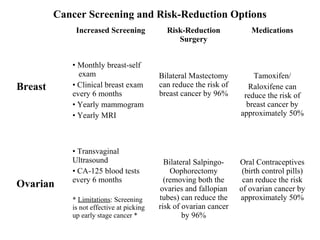
Cancer Screening and Risk-Reduction Options
Increased Screening Risk-Reduction
Surgery
Medications
Breast
• Monthly breast-self
exam
• Clinical breast exam
every 6 months
• Yearly mammogram
• Yearly MRI
Bilateral Mastectomy
can reduce the risk of
breast cancer by 96%
Tamoxifen/
Raloxifene can
reduce the risk of
breast cancer by
approximately 50%
Ovarian
• Transvaginal
Ultrasound
• CA-125 blood tests
every 6 months
* Limitations: Screening
is not effective at picking
up early stage cancer *
Bilateral Salpingo-
Oophorectomy
(removing both the
ovaries and fallopian
tubes) can reduce the
risk of ovarian cancer
by 96%
Oral Contraceptives
(birth control pills)
can reduce the risk
of ovarian cancer by
approximately 50%
Genetic Testing for Breast Cancer
BRCA1
BRCA2
ATGCCGTATAGCTAGTCGATGTACG
• Blood Test
• Misspellings, Deleted, or Added DNA [i.e., mutation]
• Tests offered:
-Analysis of BRCA1 & BRCA2 genes [3-4 weeks]
-Breast/Ovarian Panels [12 weeks]
-Targeted mutation analysis (when family mutation is known) [3 weeks]
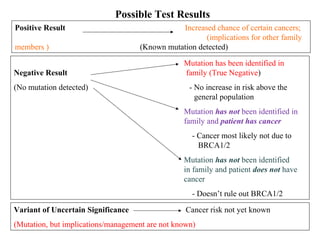
Possible Test Results
Positive Result Increased chance of certain cancers;
(implications for other family
members ) (Known mutation detected)
Mutation has been identified in
Negative Result family (True Negative)
(No mutation detected) - No increase in risk above the
general population
Mutation has not been identified in
family and patient has cancer
- Cancer most likely not due to
BRCA1/2
Mutation has not been identified
in family and patient does not have
cancer
- Doesn’t rule out BRCA1/2
Variant of Uncertain Significance Cancer risk not yet known
(Mutation, but implications/management are not known)
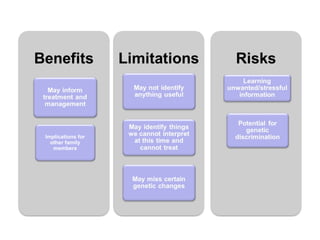
Implications for
other family
members
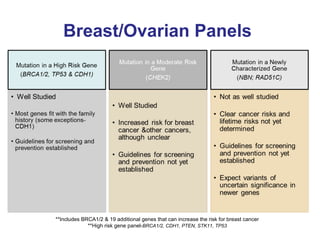
Breast/Ovarian Panels
**Includes BRCA1/2 & 19 additional genes that can increase the risk for breast cancer
**High risk gene panel-BRCA1/2, CDH1, PTEN, STK11, TP53

Web. hboc visual aids

  • 1.
    How Much Breast& Ovarian Cancer Is Hereditary? Ovarian CancerBreast Cancer 10-25% 70-80% 5–10% 15-20% Sporadic Familial Hereditary
  • 2.
    Features of Hereditaryand Sporadic Cancer in Hereditary Breast and Ovarian Cancer Syndrome (HBOC) Hereditary Sporadic • Multiple affected blood relatives in more than one generation • Typically, earlier age of onset (<50) • Individuals with bilateral or more than one cancer diagnosis (breast/ovarian) •Males with breast cancer • One or only a few affected blood relatives • Typically, later age of onset Br, 42 Br, 47 Ov, 58 Br, 35Ov, 50 Br, 72
  • 3.
    Chromosomes BRCA1BRCA2 ***~84% of HBOCis caused by BRCA1 & BRCA2
  • 4.
  • 5.
    BRCA1 & BRCA2 LifetimeCancer Risks Type of Cancer General Population BRCA1 BRCA2 Female Breast Cancer 12% 56-87% 56-87% 2nd Breast Cancer 0.8-1.5% (per year – 5y) 5 year: 20% Lifetime: 64% 5 year: 12% Lifetime: 50% Ovarian Cancer 1.8% 44% 27% Male Breast Cancer 0.1% ~1-2% 6-10% Pancreatic Cancer <1% - - ~1.5-5% Melanoma 1-2% - - Increased Prostate Cancer 12% ~15-20% ~15-20%
  • 6.
    Cancer Screening andRisk-Reduction Options Increased Screening Risk-Reduction Surgery Medications Breast • Monthly breast-self exam • Clinical breast exam every 6 months • Yearly mammogram • Yearly MRI Bilateral Mastectomy can reduce the risk of breast cancer by 96% Tamoxifen/ Raloxifene can reduce the risk of breast cancer by approximately 50% Ovarian • Transvaginal Ultrasound • CA-125 blood tests every 6 months * Limitations: Screening is not effective at picking up early stage cancer * Bilateral Salpingo- Oophorectomy (removing both the ovaries and fallopian tubes) can reduce the risk of ovarian cancer by 96% Oral Contraceptives (birth control pills) can reduce the risk of ovarian cancer by approximately 50%
  • 7.
    Genetic Testing forBreast Cancer BRCA1 BRCA2 ATGCCGTATAGCTAGTCGATGTACG • Blood Test • Misspellings, Deleted, or Added DNA [i.e., mutation] • Tests offered: -Analysis of BRCA1 & BRCA2 genes [3-4 weeks] -Breast/Ovarian Panels [12 weeks] -Targeted mutation analysis (when family mutation is known) [3 weeks]
  • 8.
    Possible Test Results PositiveResult Increased chance of certain cancers; (implications for other family members ) (Known mutation detected) Mutation has been identified in Negative Result family (True Negative) (No mutation detected) - No increase in risk above the general population Mutation has not been identified in family and patient has cancer - Cancer most likely not due to BRCA1/2 Mutation has not been identified in family and patient does not have cancer - Doesn’t rule out BRCA1/2 Variant of Uncertain Significance Cancer risk not yet known (Mutation, but implications/management are not known)
  • 9.
  • 10.
    Breast/Ovarian Panels **Includes BRCA1/2& 19 additional genes that can increase the risk for breast cancer **High risk gene panel-BRCA1/2, CDH1, PTEN, STK11, TP53