Downloaded 25 times

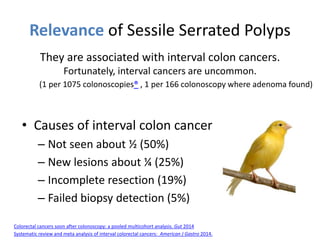

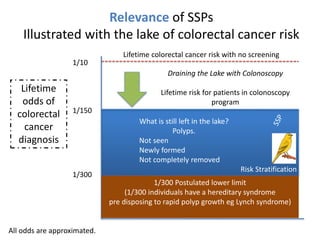
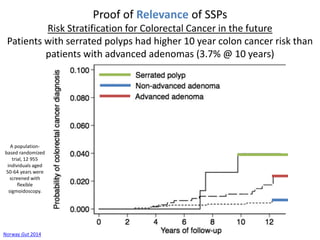
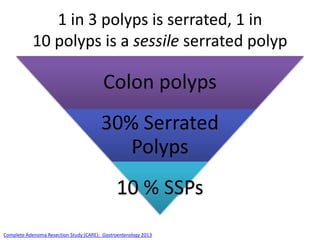
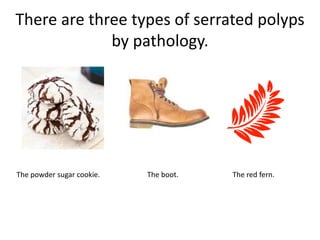
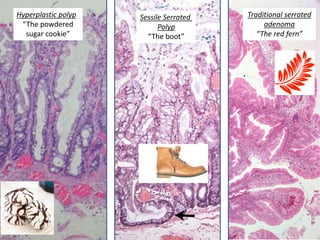

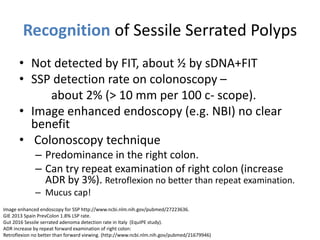
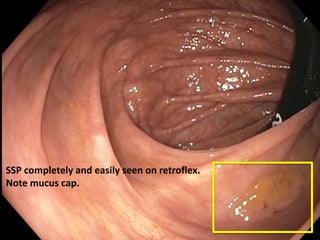

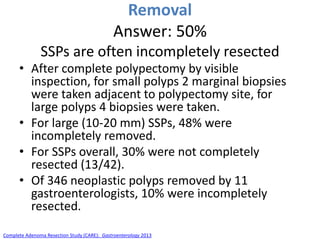
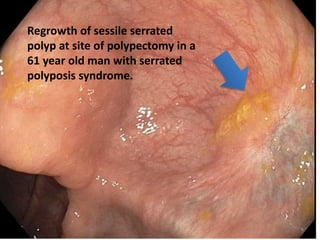

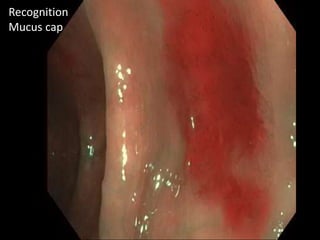



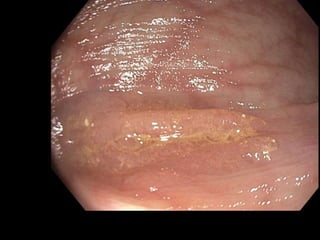
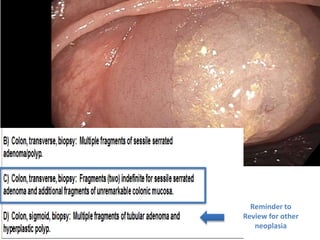
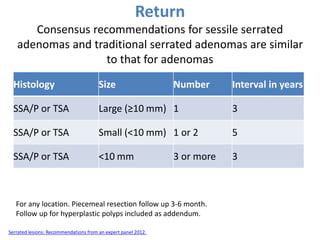

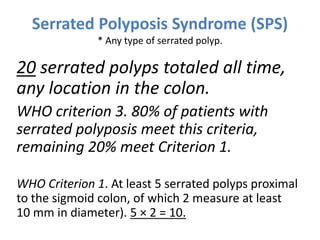
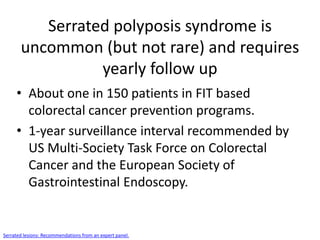
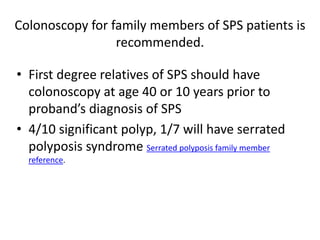




Sessile serrated polyps, or SSPs, are associated with interval colon cancers. SSPs represent about 10% of colon polyps and have a "boot-shaped" histopathology. They are often incompletely resected, with around 50% of large SSPs (10-20mm) being incompletely removed. Recognizing and completely removing SSPs is important due to their relevance as markers for missed lesions and future neoplasia. Proper technique including retroflexion examination of the right colon can help increase detection rates. Follow-up recommendations after removal are similar to adenomas, with larger SSPs requiring surveillance in 3 years. Serrated polyposis syndrome,


