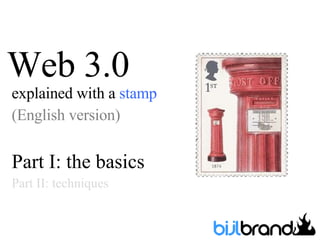
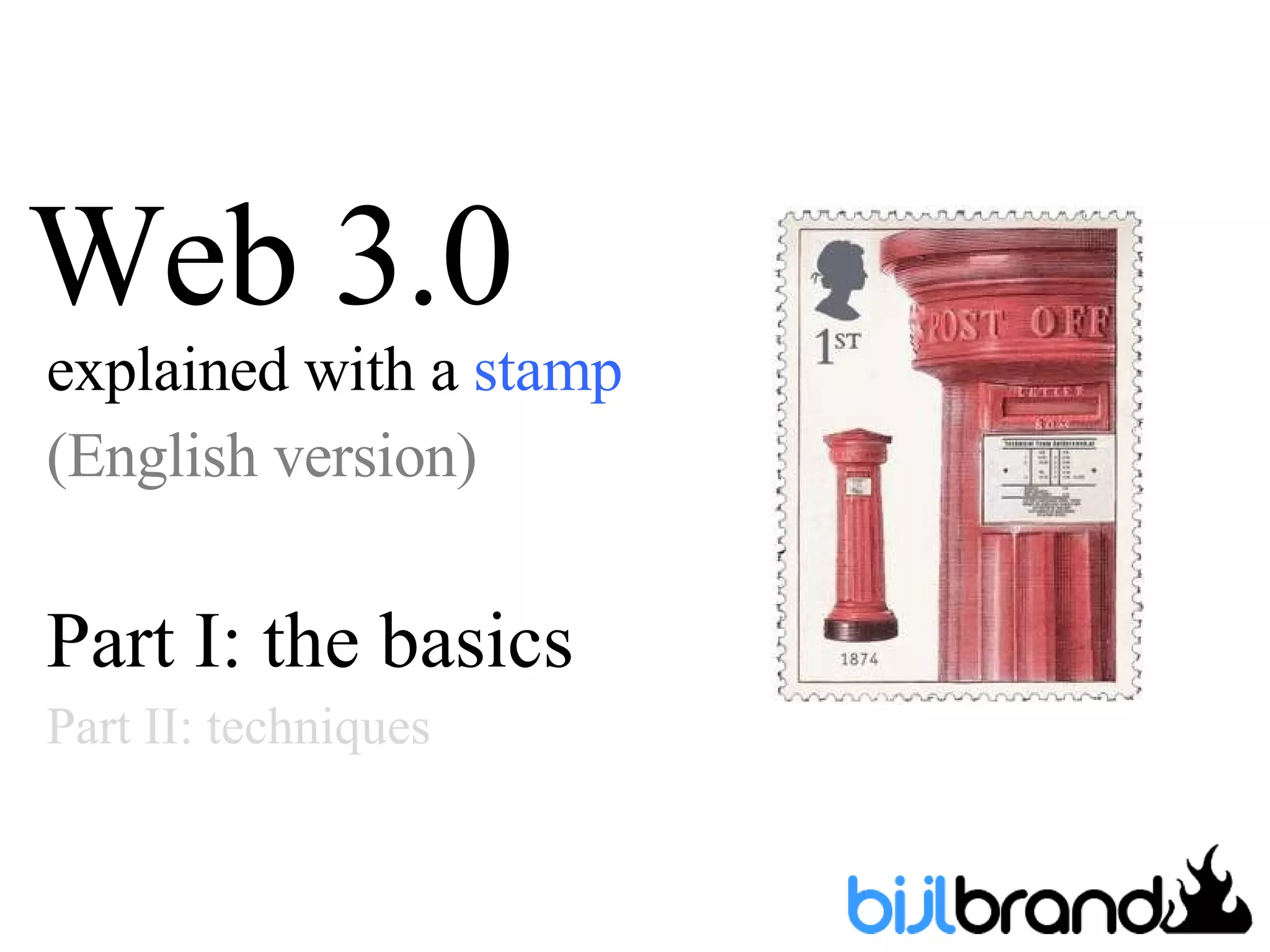
Web 3.0 explained with a  stamp (English version) Part I: the basics Part II: techniques
A presentation from:  Freek Bijl (Dutch) blog:  Bijlbrand.nl
When the web was in its early days, we didn’t know exactly what to show on a  computer screen
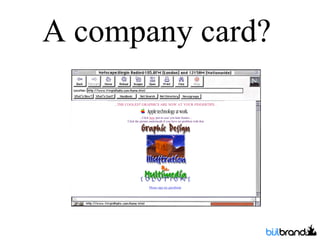
A company card?
A call to action?
A button ?
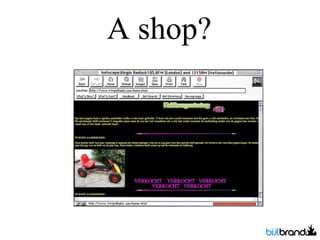
A shop?
We call this period  web 1.0.
Web 1.0 was all about our  search  for online viability.
When we got a grip on the technical part, the real possibilities of the web became more clear.
We discovered the power of  networks.
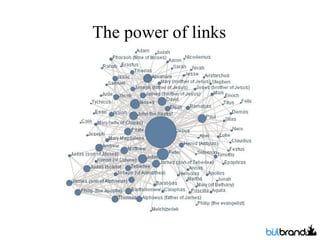
The power of links
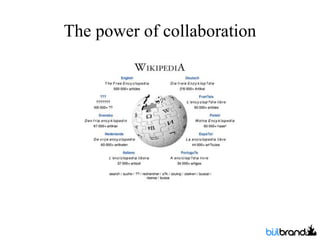
The power of collaboration
The power of content and reach
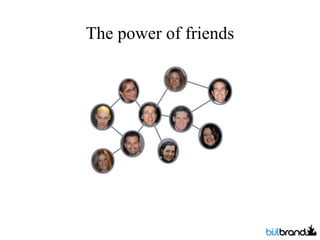
The power of friends
This is what we call  web 2.0.
Web 2.0 is all about the power of networks.
Basically, web 2.0 is a  social  change. The technical part of the web hasn’t changed very much.
But, web 3.0 will be driven by  technological  changes.
Web 3.0 - the semantic web - is about the  meaning  of data.
?
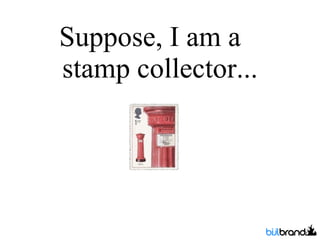
Suppose, I am a  stamp collector...
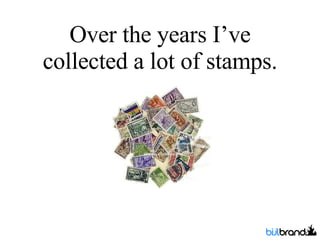
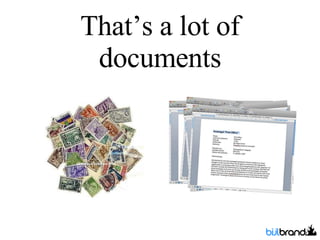
Over the years I’ve collected a lot of stamps.
About every stamp, I made a document
That’s a lot of documents
But…
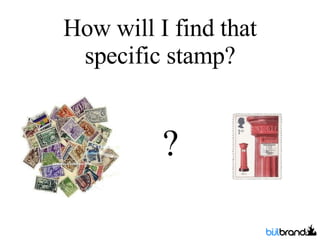
How will I find that specific stamp? ?
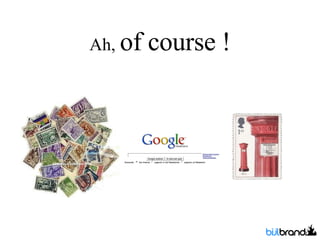
Ah,  of course !
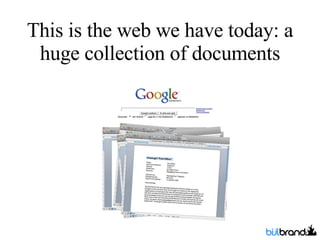
This is the web we have today: a huge collection of documents
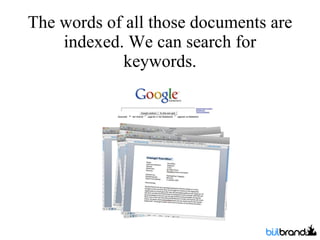
The words of all those documents are indexed. We can search for keywords.
Now, suppose I search for all red stamps…
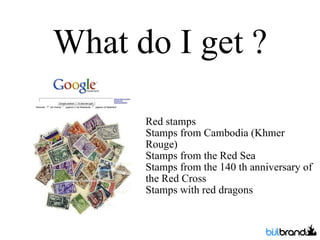
What do I get ? Red stamps Stamps from Cambodia (Khmer Rouge) Stamps from the Red Sea Stamps from the 140 th anniversary of the Red Cross Stamps with red dragons
Not very intelligent, but how can a computer know what I mean?
Answer:  when we  structurally  describe that a stamp is a stamp and red is a color .
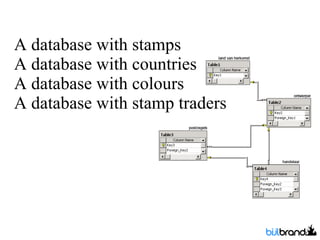
Describing data in a structured way can best be done in a  database.
Different databases can be connected.
A database with stamps A database with countries A database with colours A database with stamp traders
Web 3.0 creates a big  collection of databases  which can be connected on demand.
Agreements  are made on the  structure  of data and the way data is  described . Where the data is located is irrelevant. Linking data is the power of web 3.0.
So, “I want all the red stamps, designed in Europe, but used in the U.S.A., between 1980 and 1990” is a question that will get a  better answer  with web 3.0.
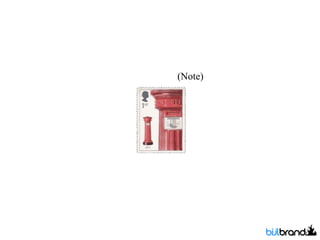
(Note)
This definition of web 3.0 is a  ‘narrow’  definition. Like web 2.0, web 3.0 stands for a range of developments.
A broader definition of web 3.0: A fast broadband connection to the internet, always and everywhere . Open source techniques and free data (Data as a Service) Open identities Software as a Service (e.g. Google docs)
.end more (in Dutch), check out:  http://www.bijlbrand.nl
Most important references: http://en.wikipedia.org/wiki/Web_3 http://www.frankwatching.com/archive/2008/04/11/de-betekenis-van-web-30-en-het-semantic-web/ http://novaspivack.typepad.com/ http://bekels.blog.com/3038326/

Web 3.0 explained with a stamp (pt I: the basics)