Downloaded 21 times
![References
http://www.kalfoglou.info/web123_.htm. [July 6, 2009].
http://evolvingtrends.wordpress.com/2006/11/19/web-30-update/.
[July 6, 2009].
http://www.youtube.com/watch?v=-dnL00TdmLY. [July 7, 2009].](https://image.slidesharecdn.com/web123-090707113734-phpapp01/85/Web-1-0-2-0-3-0-7-320.jpg)

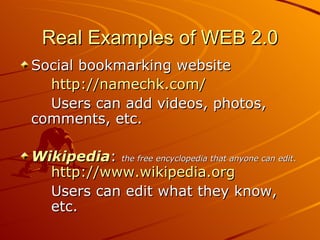
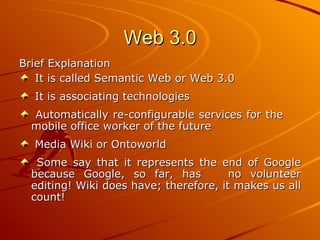
Web 1.0 allowed one-way communication where users could only consume information. Examples included encyclopedias that did not allow user contributions. Web 2.0 enabled two-way interaction and user-generated content through technologies like dynamic languages and RSS. Users could now socialize, bookmark web pages, create blogs, and contribute to sites like Wikipedia. Web 3.0, also called the Semantic Web, will associate data to automatically reconfigure mobile services. It could end Google's dominance by empowering volunteer-edited sites like Wikipedia that make all users count.


