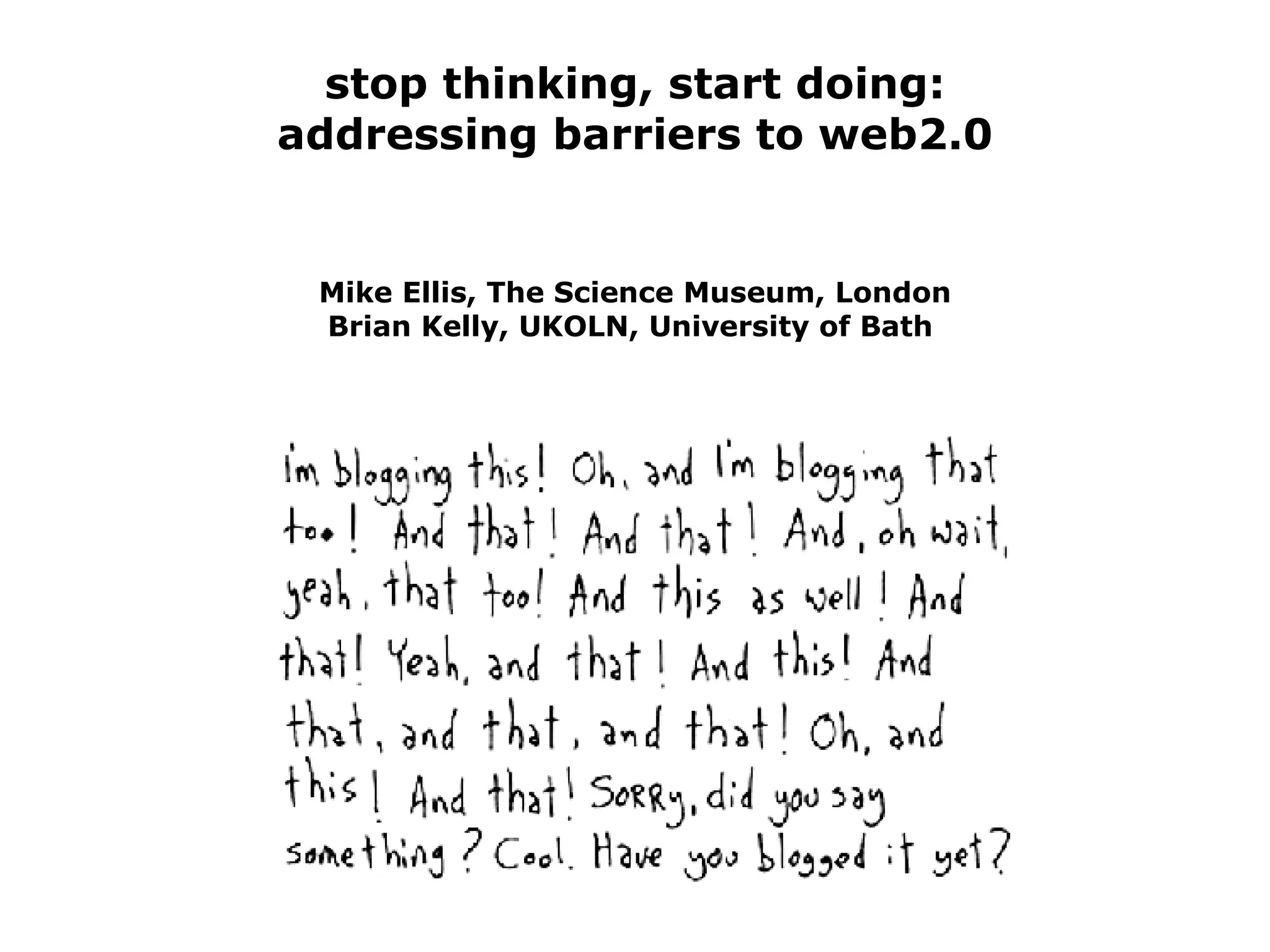
stop thinking, start doing: addressing barriers to web2.0 Mike Ellis, The Science Museum, London Brian Kelly, UKOLN, University of Bath
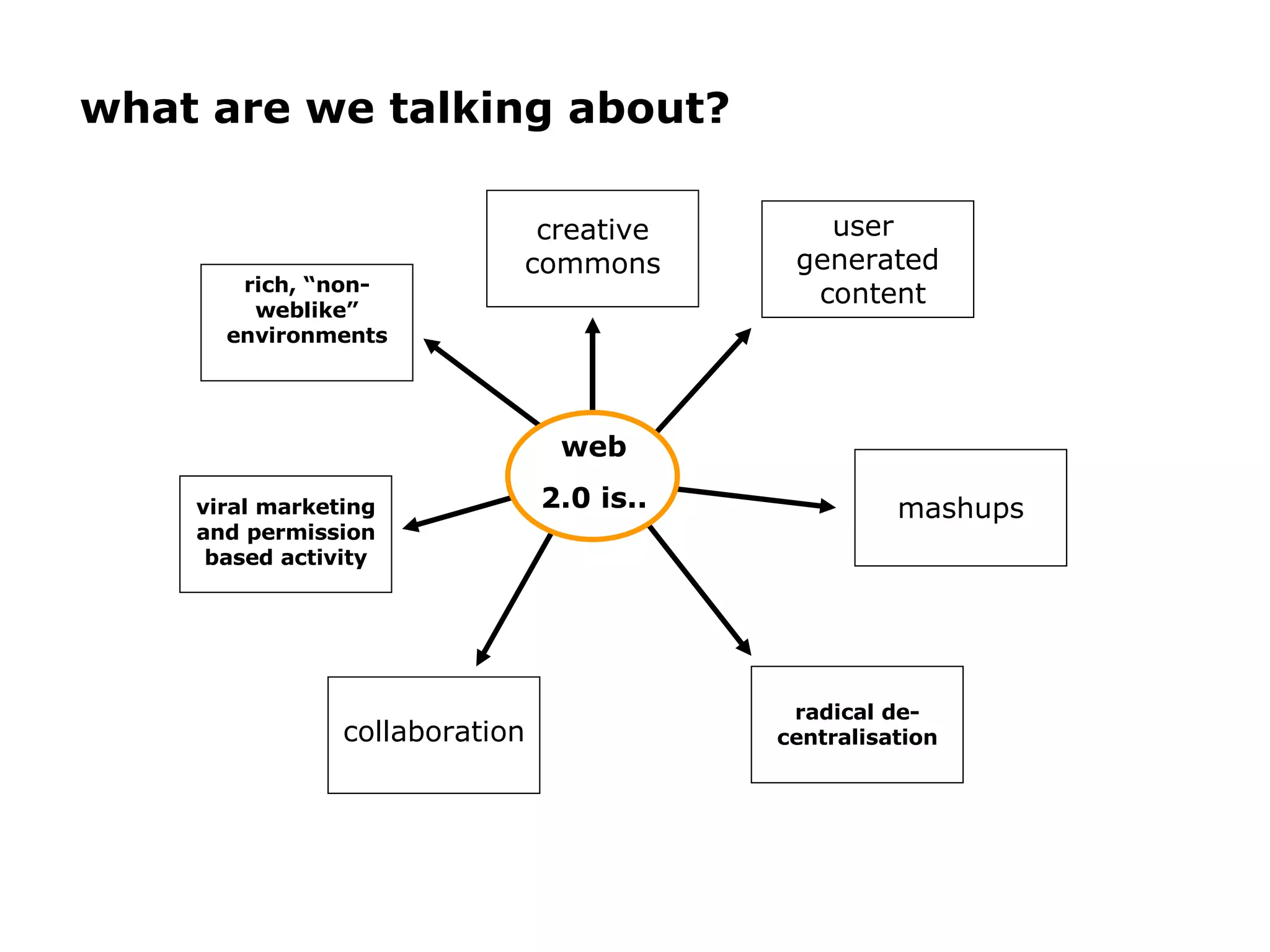
what are we talking about? web 2.0 is.. user  generated content rich, “non-weblike” environments mashups radical de-centralisation viral marketing and permission based activity collaboration creative commons
or just this: the social web
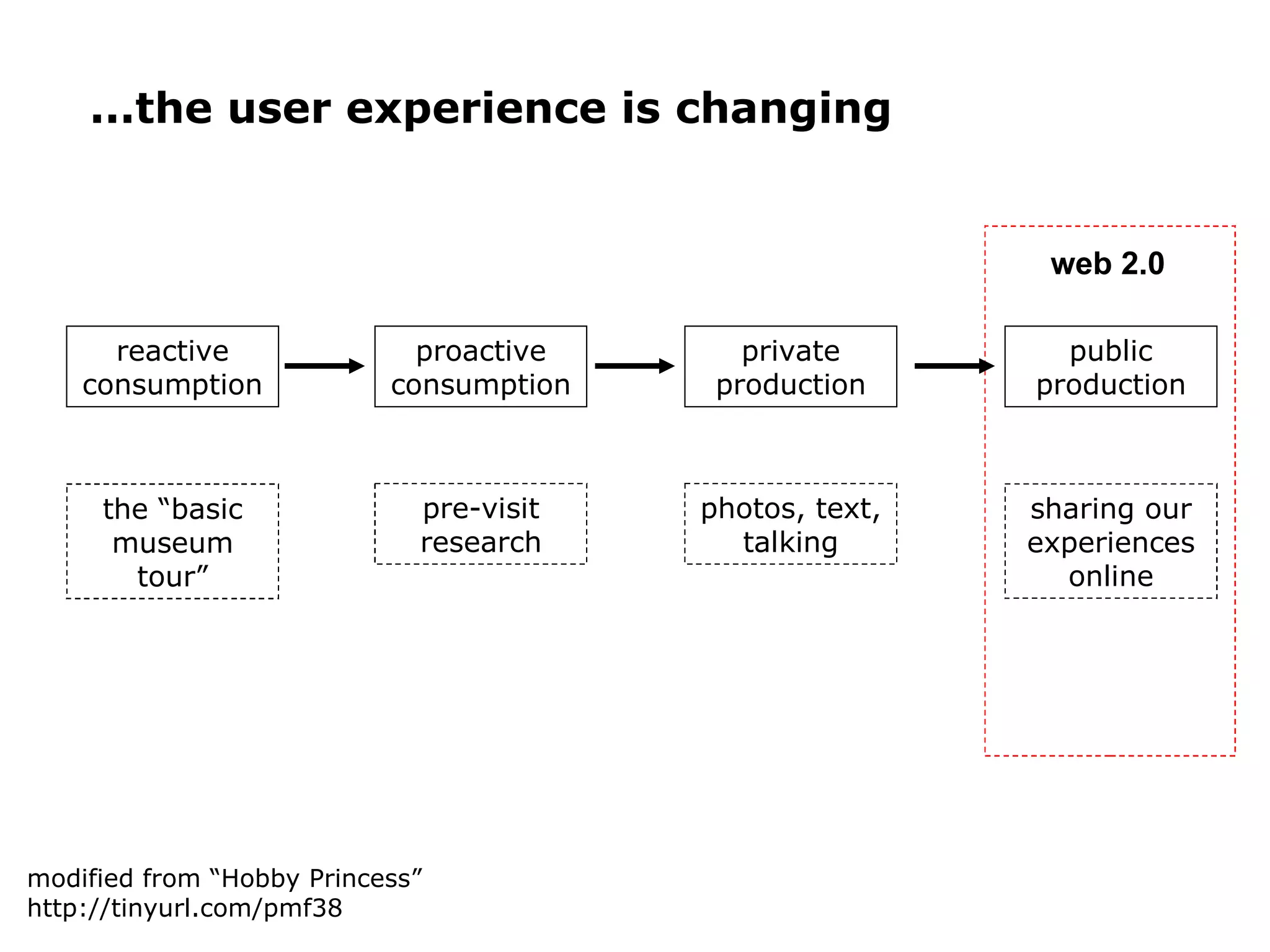
...the user experience is changing modified from “Hobby Princess”  http://tinyurl.com/pmf38  reactive consumption the “basic museum tour” proactive consumption pre-visit research private production photos, text, talking public production sharing our experiences online web 2.0
flickr, youtube, myspace: we want some of that! we have some of the best content that there is we have a willingness to get it out there we are holders of lots of niche stuff – the long tail is ours! we’re excited because...
but barriers feel very real for museums we are excited about the possibilities.. ..but have a number of issues with the realities these issues are often not present in small start-ups museum treacle we’re quite bad at change we feel a need to “protect” our audiences
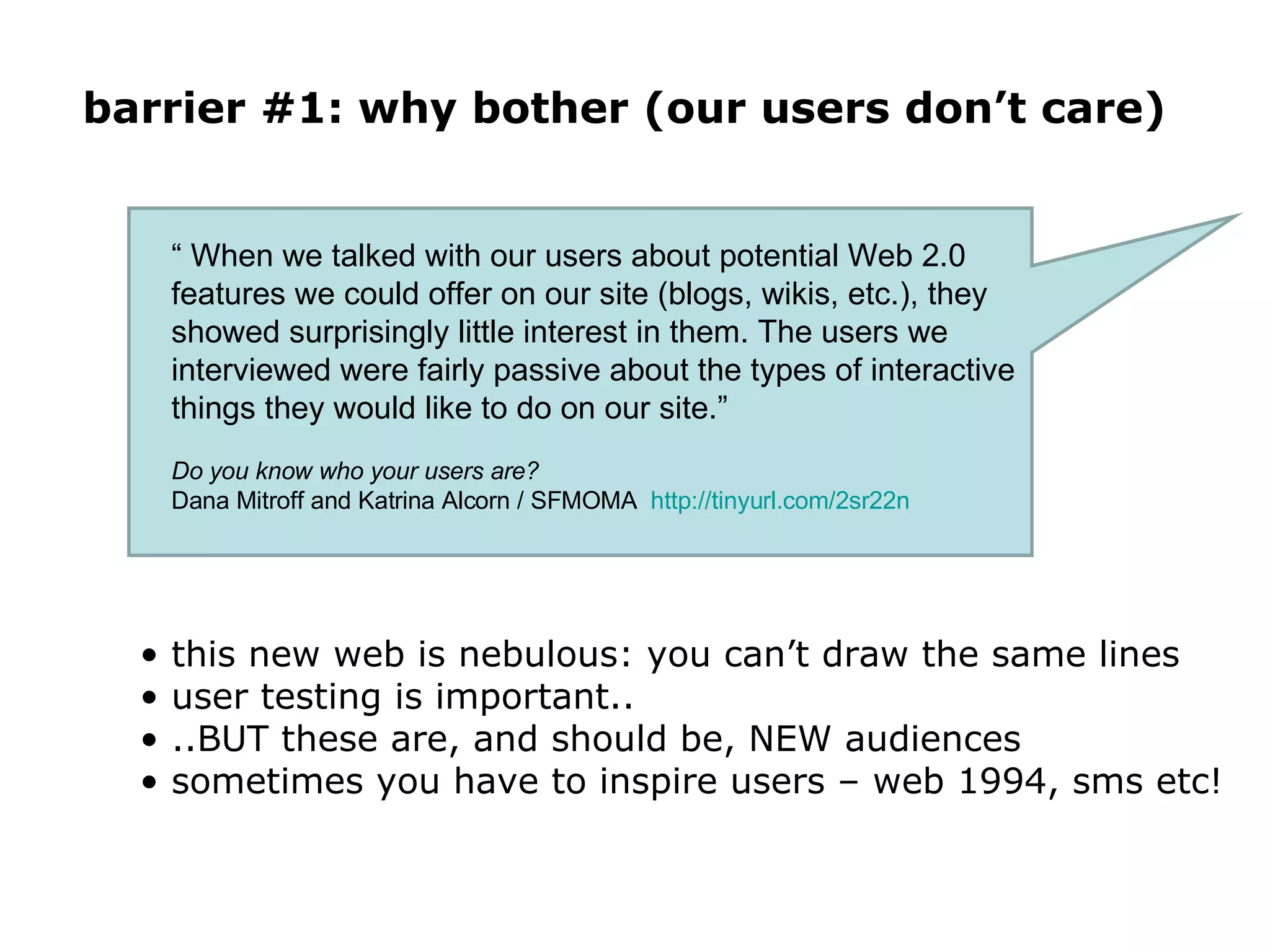
barrier #1: why bother (our users don’t care) this new web is nebulous: you can’t draw the same lines user testing is important.. ..BUT these are, and should be, NEW audiences sometimes you have to inspire users – web 1994, sms etc! “  When we talked with our users about potential Web 2.0 features we could offer on our site (blogs, wikis, etc.), they showed surprisingly little interest in them. The users we interviewed were fairly passive about the types of interactive things they would like to do on our site.”  Do you know who your users are?  Dana Mitroff and Katrina Alcorn / SFMOMA  http://tinyurl.com/2sr22n
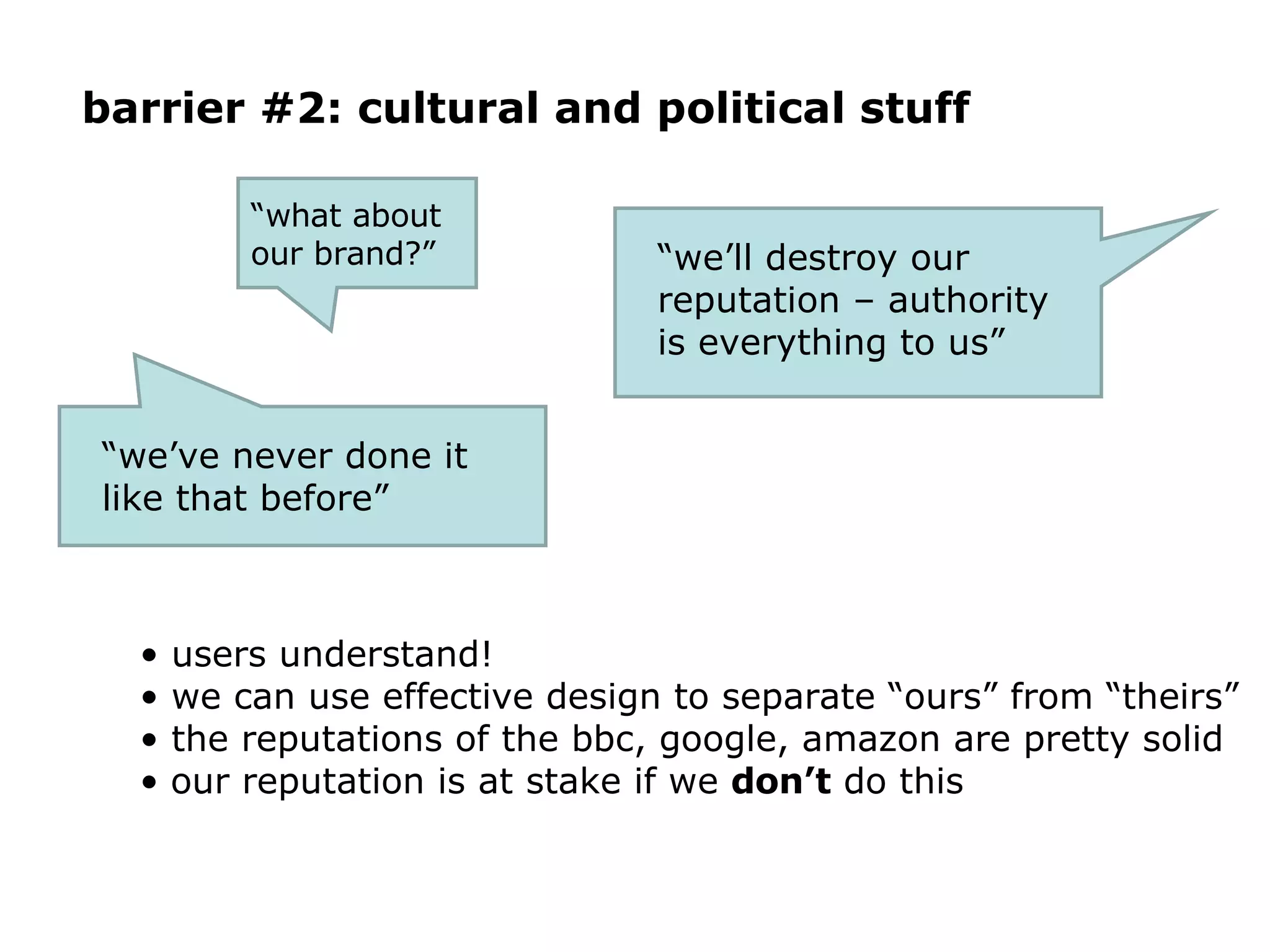
barrier #2: cultural and political stuff users understand! we can use effective design to separate “ours” from “theirs” the reputations of the bbc, google, amazon are pretty solid our reputation is at stake if we  don’t  do this “ we’ll destroy our reputation – authority is everything to us”  “ what about  our brand?” “ we’ve never done it like that before”
“ It's not wrong to wonder...whether a museum site modelled after the populist photo-sharing http://www.flickr.com -- with favourite artefacts and amateur points of view -- would diminish an institution's reputation...  ..the bigger question for all museums is how to flourish if they don't.” Washington Post http://tinyurl.com/mjply   barrier #2: cultural and political stuff
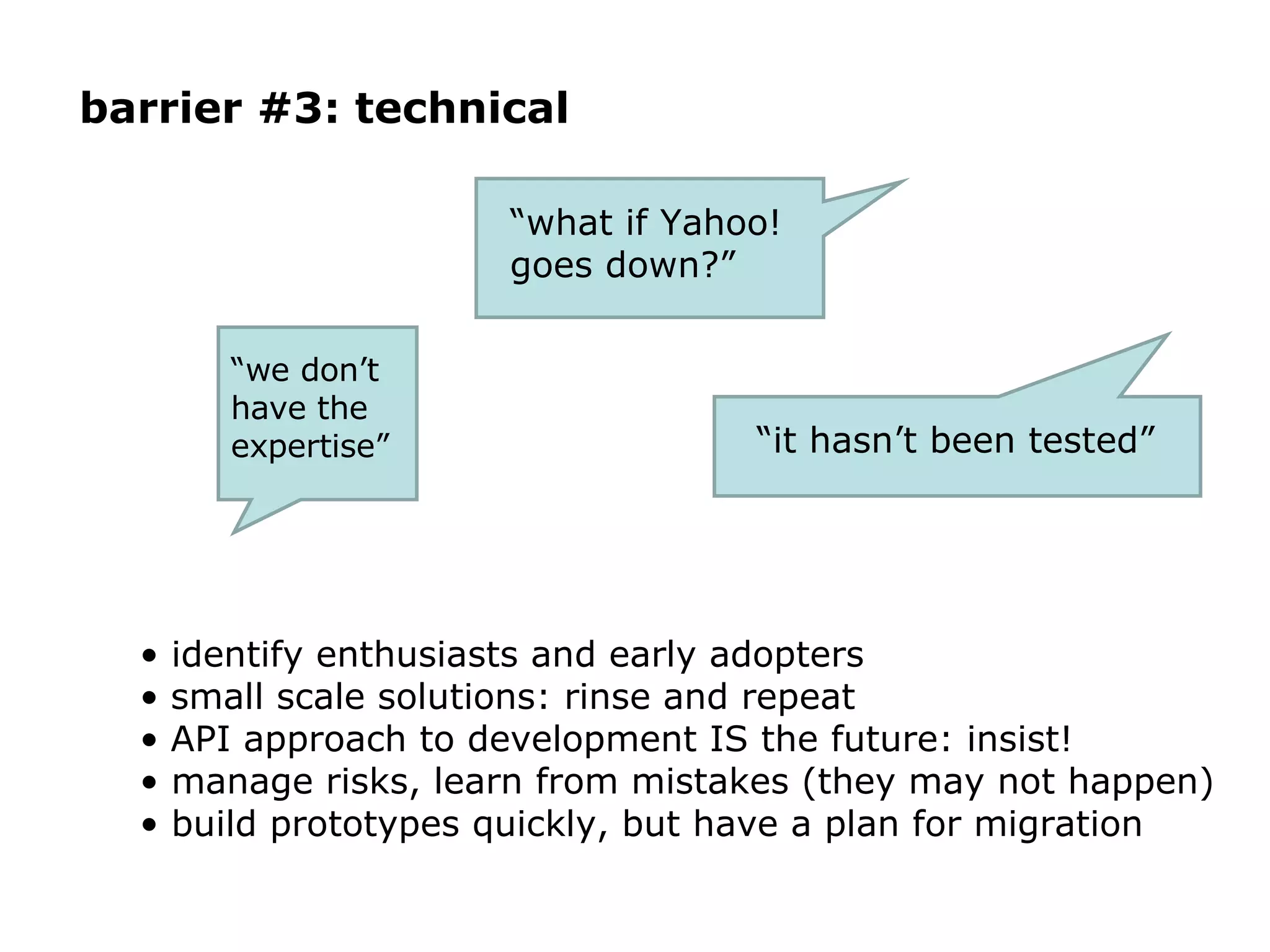
barrier #3: technical identify enthusiasts and early adopters small scale solutions: rinse and repeat API approach to development IS the future: insist! manage risks, learn from mistakes (they may not happen) build prototypes quickly, but have a plan for migration “ what if Yahoo! goes down?”  “ we don’t have the expertise” “ it hasn’t been tested”
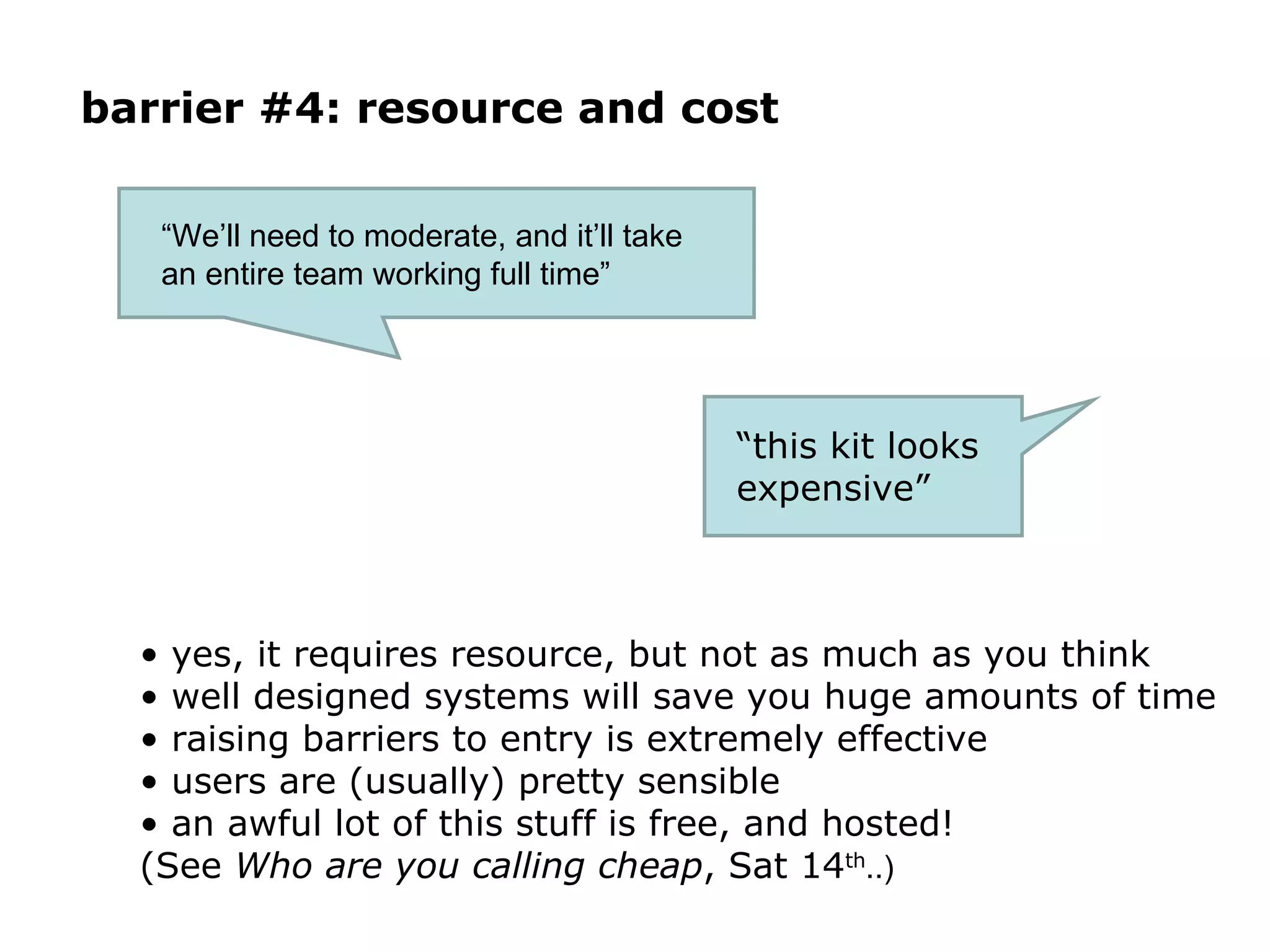
barrier #4: resource and cost yes, it requires resource, but not as much as you think well designed systems will save you huge amounts of time raising barriers to entry is extremely effective users are (usually) pretty sensible an awful lot of this stuff is free, and hosted!  (See  Who are you calling cheap , Sat 14 th ..) “ We’ll need to moderate, and it’ll take an entire team working full time” “ this kit looks expensive”
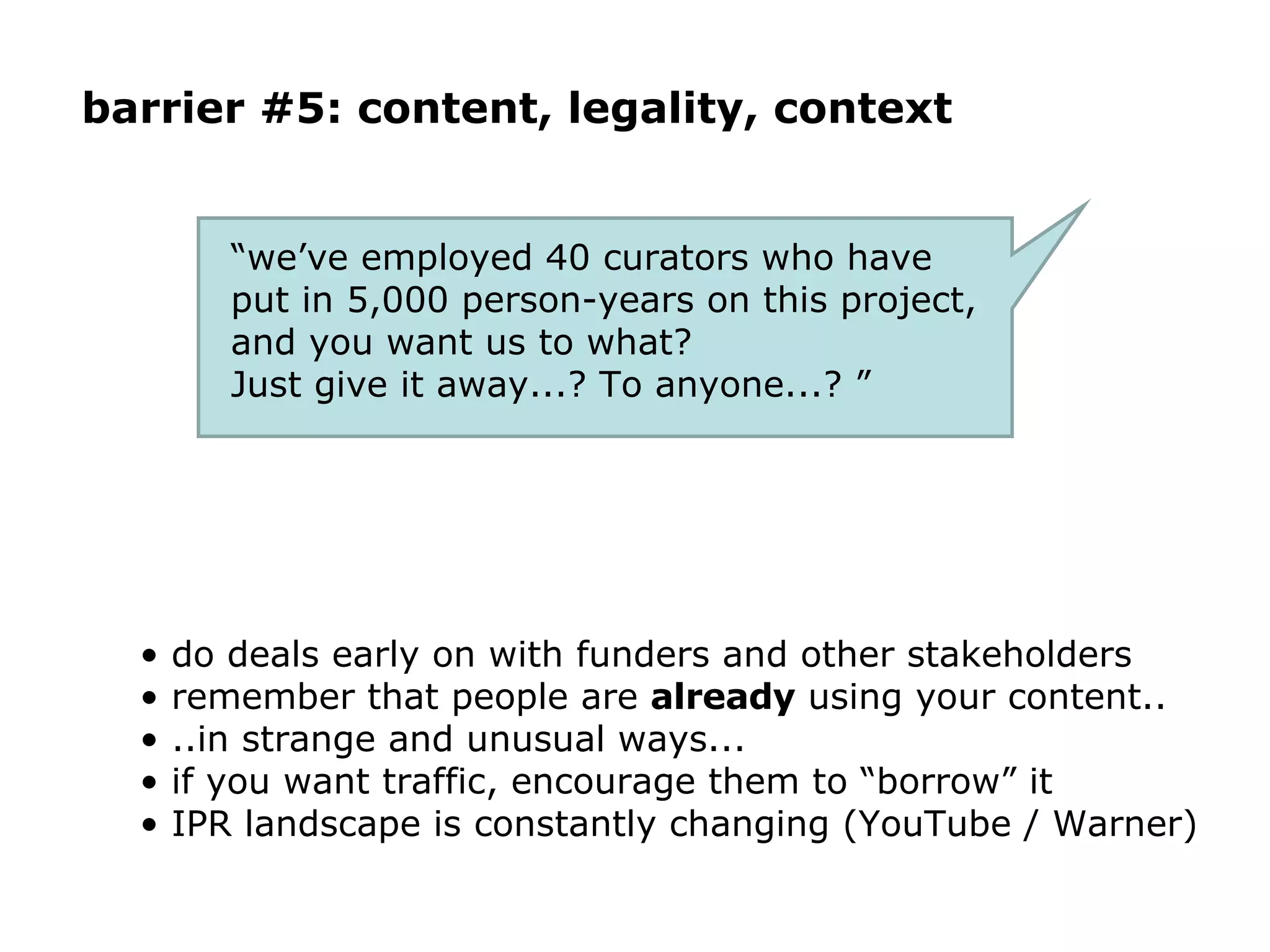
barrier #5: content, legality, context “ we’ve employed 40 curators who have put in 5,000 person-years on this project, and you want us to what?  Just give it away...? To anyone...? ” do deals early on with funders and other stakeholders remember that people are  already  using your content.. ..in strange and unusual ways... if you want traffic, encourage them to “borrow” it IPR landscape is constantly changing (YouTube / Warner)
we  must  continue to pioneer funding follows “significant social movement” if we don’t fill this space, someone else will continue to (and get better at) sharing our experiences – see for example  http://technorati.com/posts/tag/mw2007   start doing..
this is a change of state.  before, we understood the context:  it had walls, edges, surfaces.   now, we’re struggling with the fact  that we’ve got a gas.
stonetable.org [email_address] [email_address] thanks for listening questions, thoughts, etc – see http://www.slideshare.net/lisbk/  or  http://ukwebfocus.wordpress.com/

Web 2.0: How to Stop Thinking and Start Doing: Addressing Organisational Barriers

  • 1.
    stop thinking, startdoing: addressing barriers to web2.0 Mike Ellis, The Science Museum, London Brian Kelly, UKOLN, University of Bath
  • 2.
    what are wetalking about? web 2.0 is.. user generated content rich, “non-weblike” environments mashups radical de-centralisation viral marketing and permission based activity collaboration creative commons
  • 3.
    or just this:the social web
  • 4.
    ...the user experienceis changing modified from “Hobby Princess” http://tinyurl.com/pmf38 reactive consumption the “basic museum tour” proactive consumption pre-visit research private production photos, text, talking public production sharing our experiences online web 2.0
  • 5.
    flickr, youtube, myspace:we want some of that! we have some of the best content that there is we have a willingness to get it out there we are holders of lots of niche stuff – the long tail is ours! we’re excited because...
  • 6.
    but barriers feelvery real for museums we are excited about the possibilities.. ..but have a number of issues with the realities these issues are often not present in small start-ups museum treacle we’re quite bad at change we feel a need to “protect” our audiences
  • 7.
    barrier #1: whybother (our users don’t care) this new web is nebulous: you can’t draw the same lines user testing is important.. ..BUT these are, and should be, NEW audiences sometimes you have to inspire users – web 1994, sms etc! “ When we talked with our users about potential Web 2.0 features we could offer on our site (blogs, wikis, etc.), they showed surprisingly little interest in them. The users we interviewed were fairly passive about the types of interactive things they would like to do on our site.” Do you know who your users are? Dana Mitroff and Katrina Alcorn / SFMOMA http://tinyurl.com/2sr22n
  • 8.
    barrier #2: culturaland political stuff users understand! we can use effective design to separate “ours” from “theirs” the reputations of the bbc, google, amazon are pretty solid our reputation is at stake if we don’t do this “ we’ll destroy our reputation – authority is everything to us” “ what about our brand?” “ we’ve never done it like that before”
  • 9.
    “ It's notwrong to wonder...whether a museum site modelled after the populist photo-sharing http://www.flickr.com -- with favourite artefacts and amateur points of view -- would diminish an institution's reputation... ..the bigger question for all museums is how to flourish if they don't.” Washington Post http://tinyurl.com/mjply barrier #2: cultural and political stuff
  • 10.
    barrier #3: technicalidentify enthusiasts and early adopters small scale solutions: rinse and repeat API approach to development IS the future: insist! manage risks, learn from mistakes (they may not happen) build prototypes quickly, but have a plan for migration “ what if Yahoo! goes down?” “ we don’t have the expertise” “ it hasn’t been tested”
  • 11.
    barrier #4: resourceand cost yes, it requires resource, but not as much as you think well designed systems will save you huge amounts of time raising barriers to entry is extremely effective users are (usually) pretty sensible an awful lot of this stuff is free, and hosted! (See Who are you calling cheap , Sat 14 th ..) “ We’ll need to moderate, and it’ll take an entire team working full time” “ this kit looks expensive”
  • 12.
    barrier #5: content,legality, context “ we’ve employed 40 curators who have put in 5,000 person-years on this project, and you want us to what? Just give it away...? To anyone...? ” do deals early on with funders and other stakeholders remember that people are already using your content.. ..in strange and unusual ways... if you want traffic, encourage them to “borrow” it IPR landscape is constantly changing (YouTube / Warner)
  • 13.
    we must continue to pioneer funding follows “significant social movement” if we don’t fill this space, someone else will continue to (and get better at) sharing our experiences – see for example http://technorati.com/posts/tag/mw2007 start doing..
  • 14.
    this is achange of state. before, we understood the context: it had walls, edges, surfaces. now, we’re struggling with the fact that we’ve got a gas.
  • 15.
    stonetable.org [email_address] [email_address]thanks for listening questions, thoughts, etc – see http://www.slideshare.net/lisbk/ or http://ukwebfocus.wordpress.com/