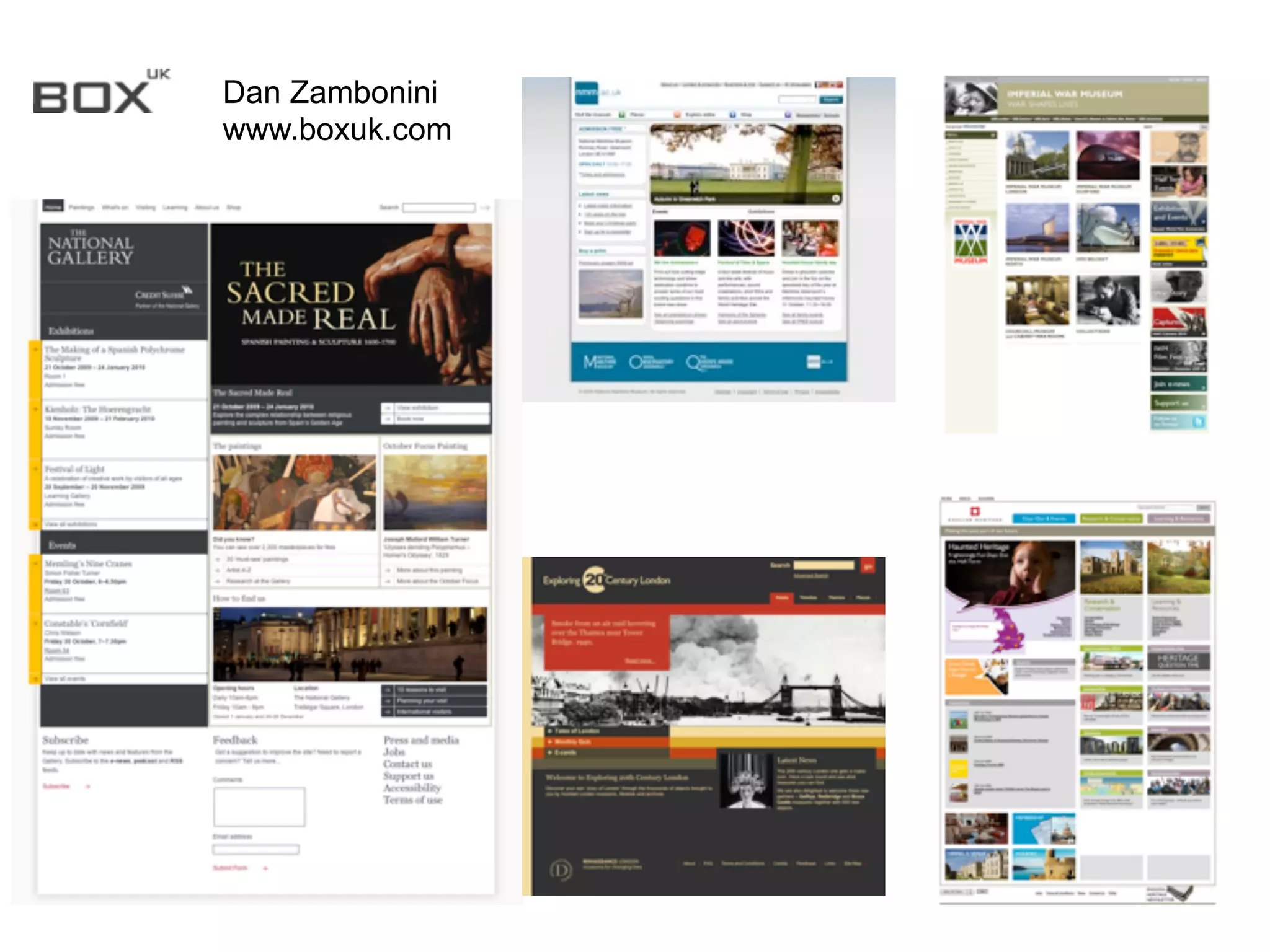
MUSEUM IN A DAY
      Building a Museum Website in 12 Hours


DISH 2009   11am – 1pm, Dec 10   museuminaday.com/slides
The Benefits of Doing Things Differently


DISH 2009   11am – 1pm, Dec 10   museuminaday.com/slides
Introduction:
 Who We Are
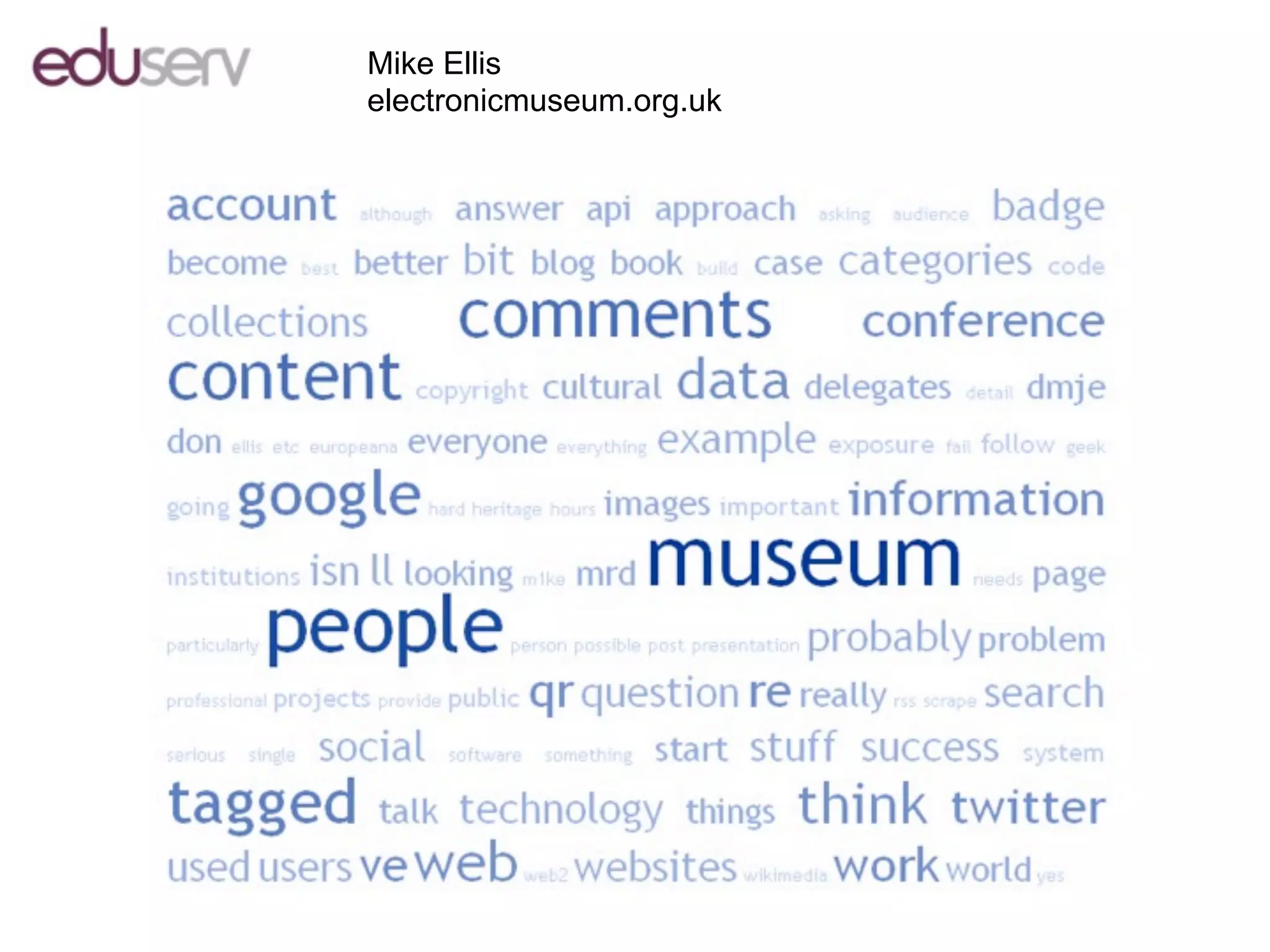
Mike Ellis
electronicmuseum.org.uk
Dan Zambonini
www.boxuk.com
And you are…?
What We’re Going To Talk
         About
What We’re Going To Talk
           About
• The Wider Context
• The Relevance of Museums in This
  Context
  – Where We Are
  – Where We Could Be
• Practical, Real-World Ideas
  – Including What We Tried: “Museum In a
    Day”
  – Issues & Risks
Wider Context (1 of 2):
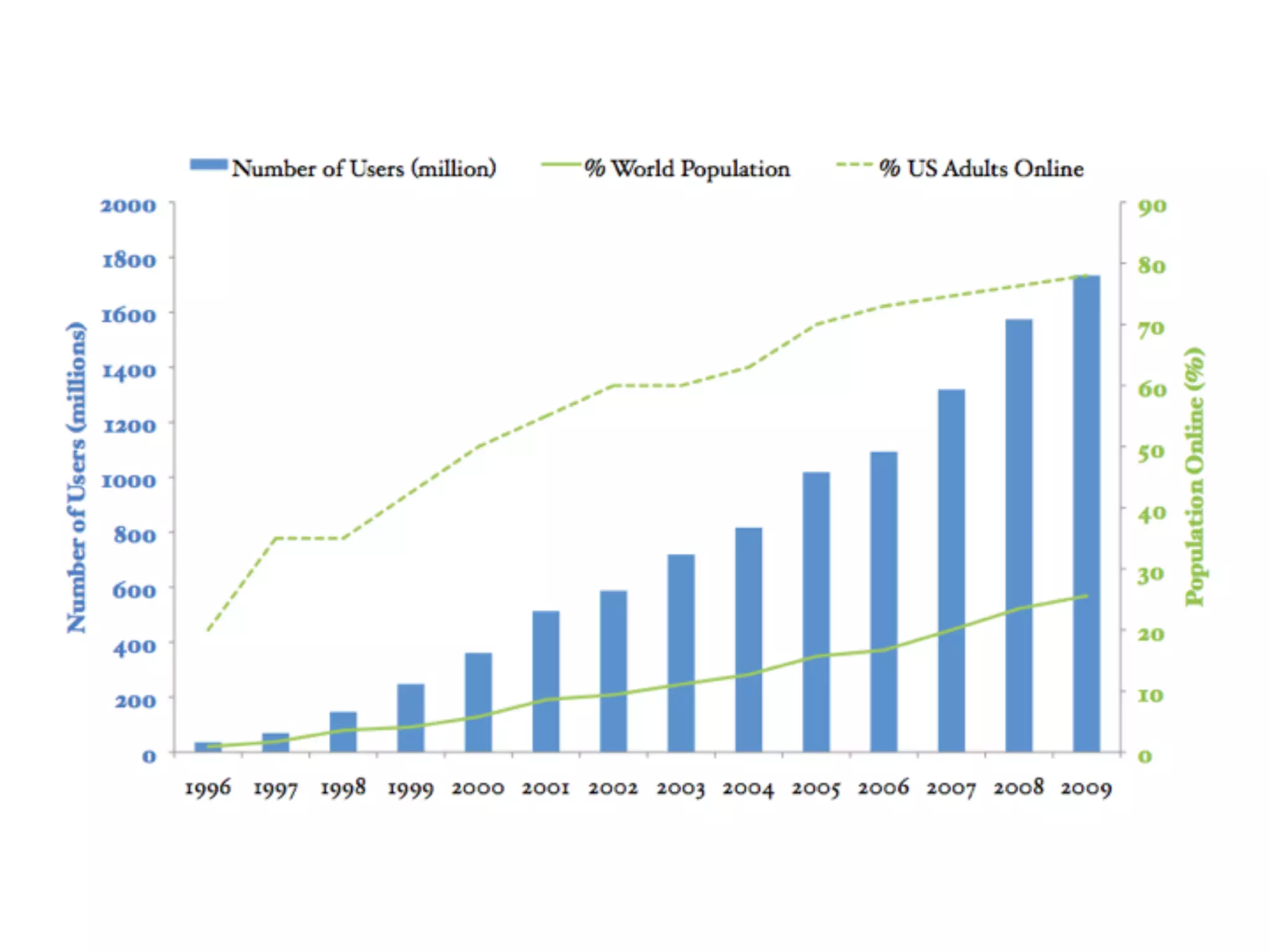
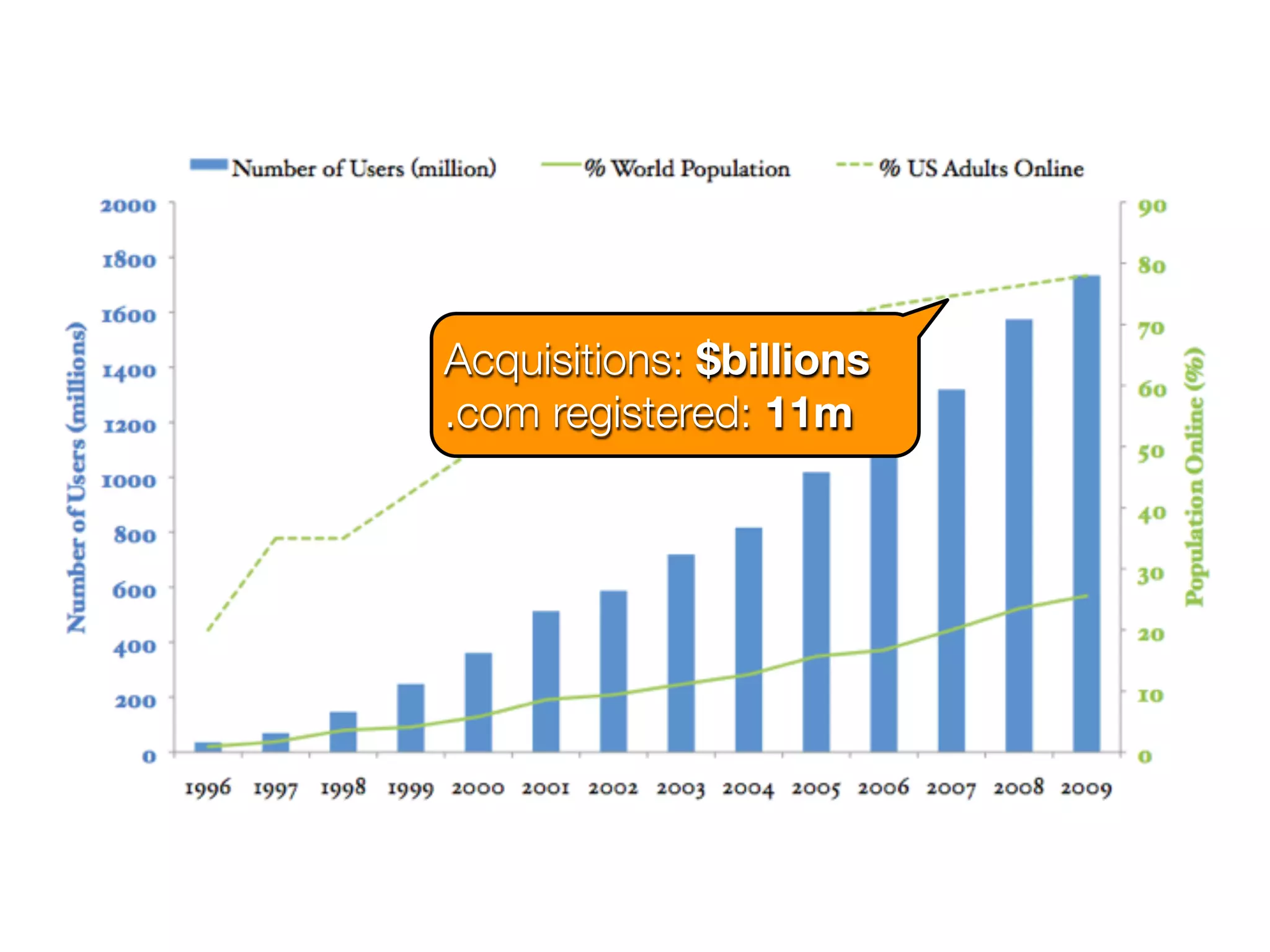
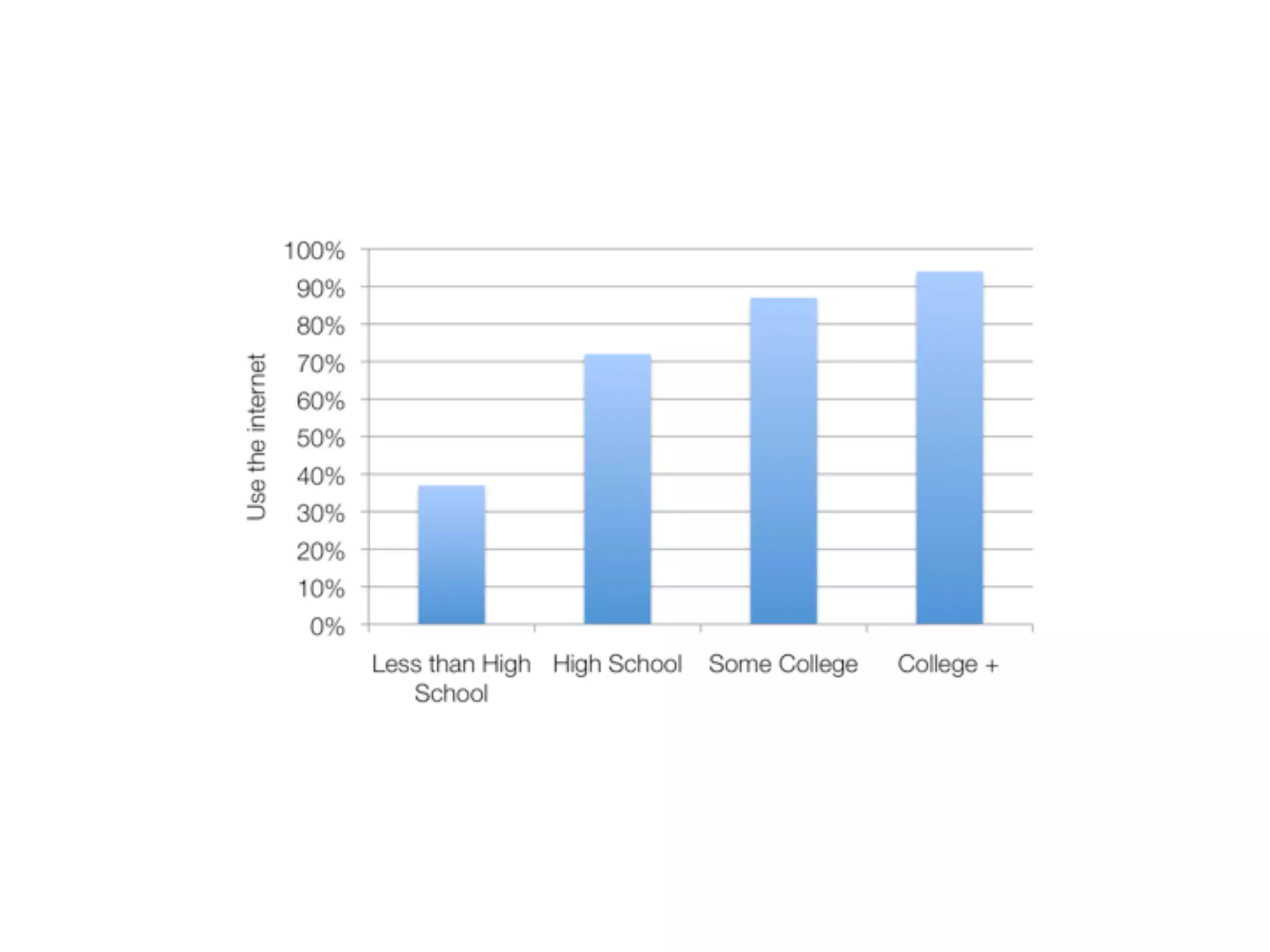
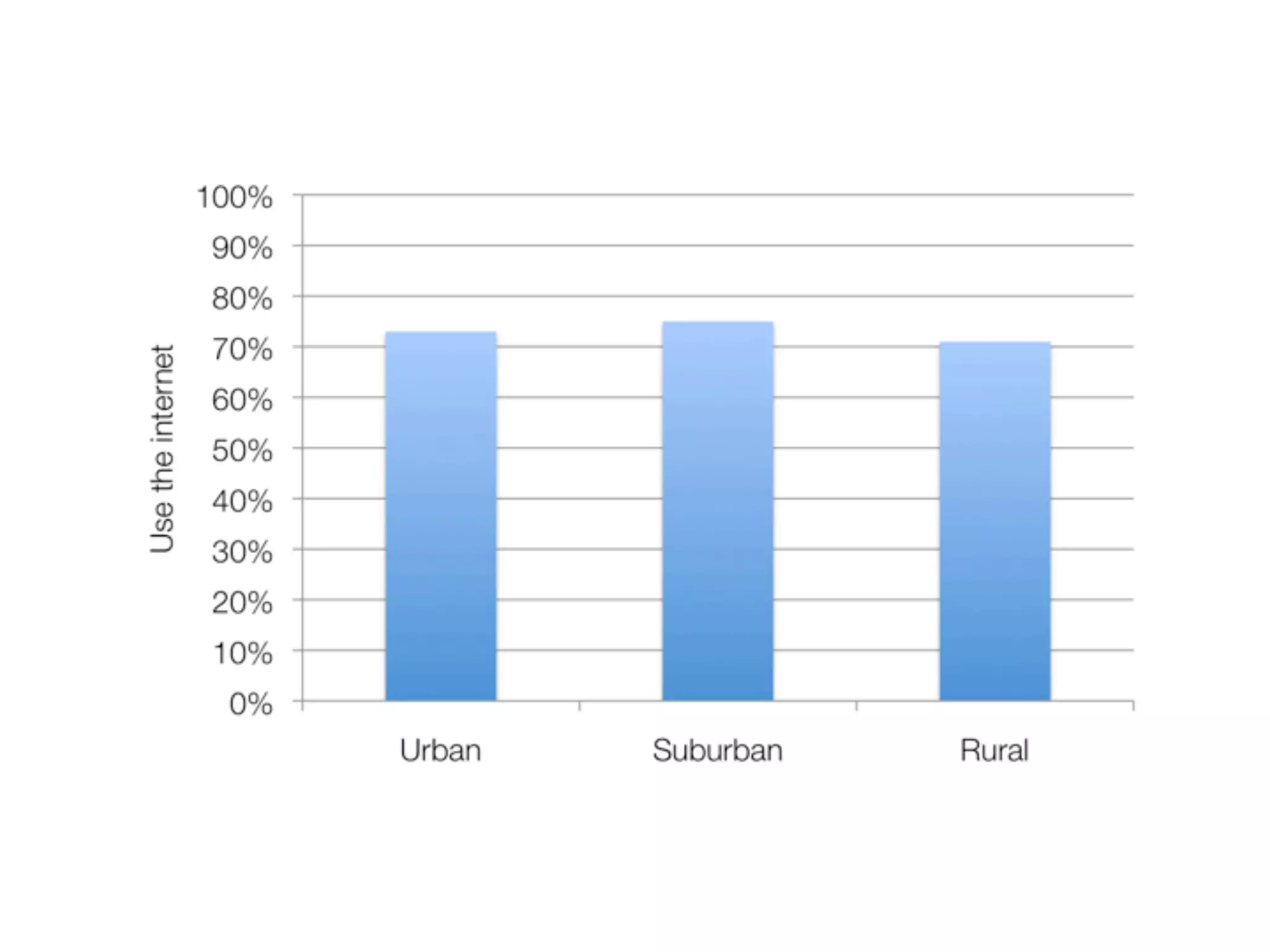
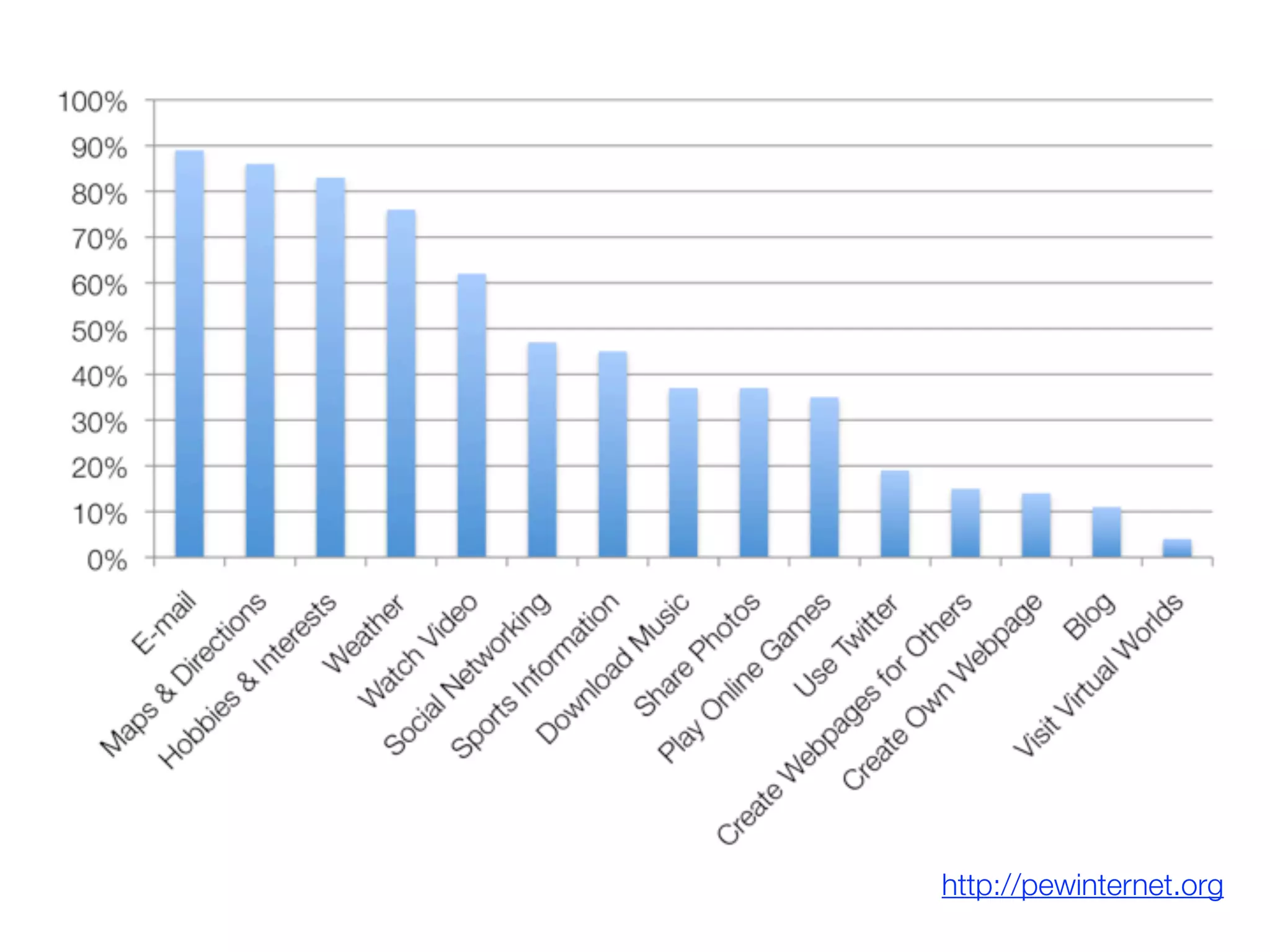
Where/Who is everyone?
Acquisitions: $billions
.com registered: 11m
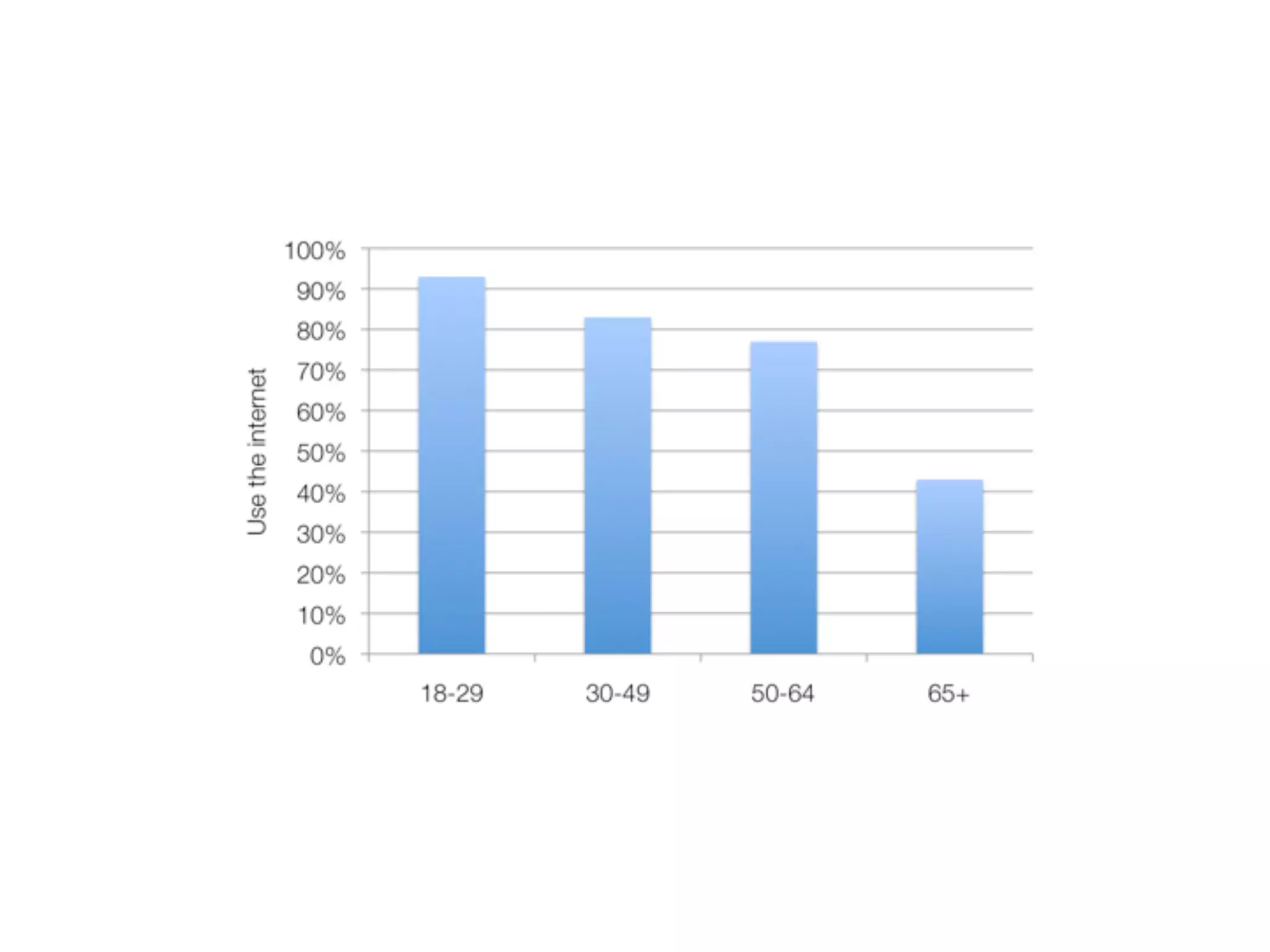
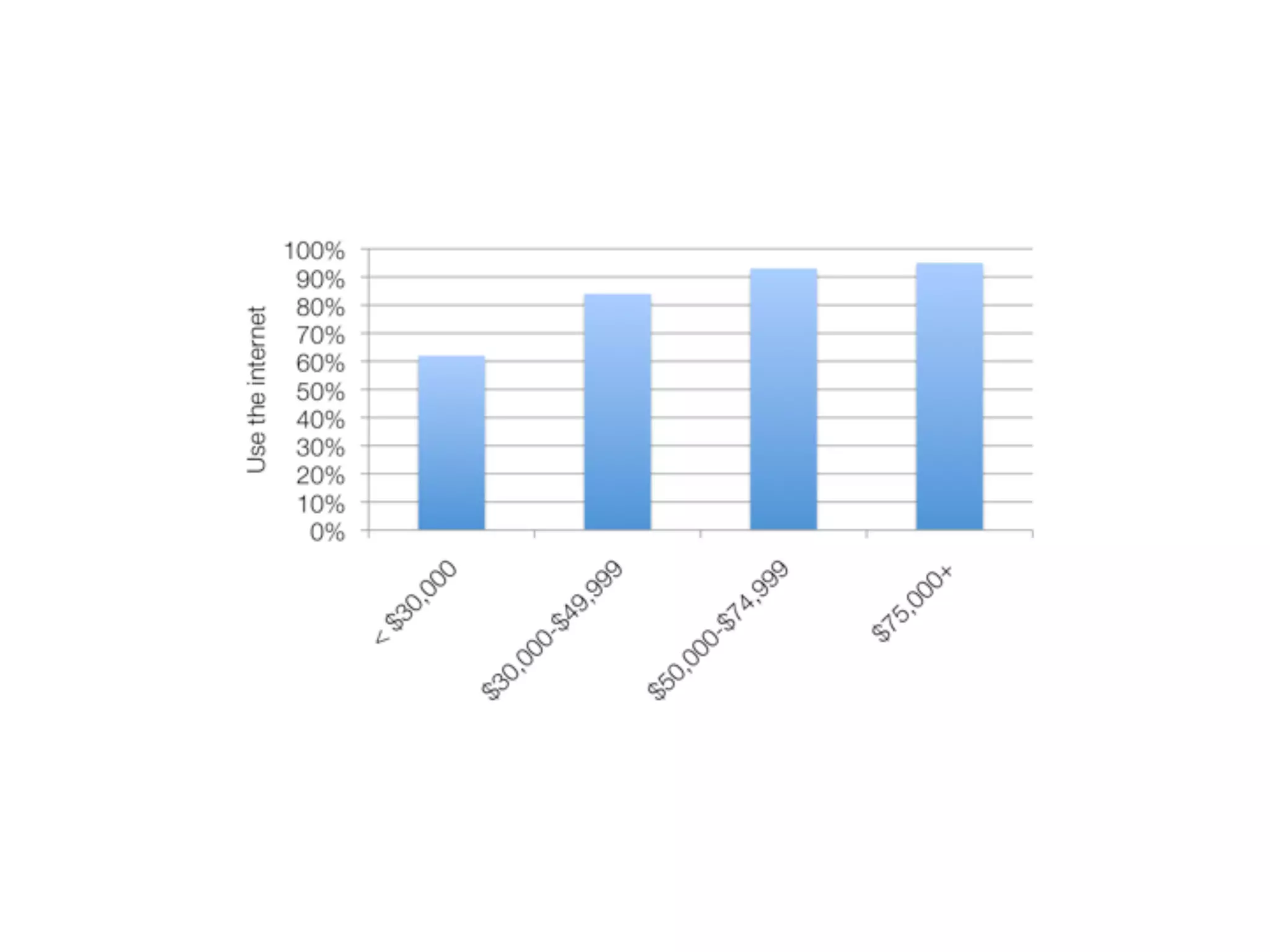
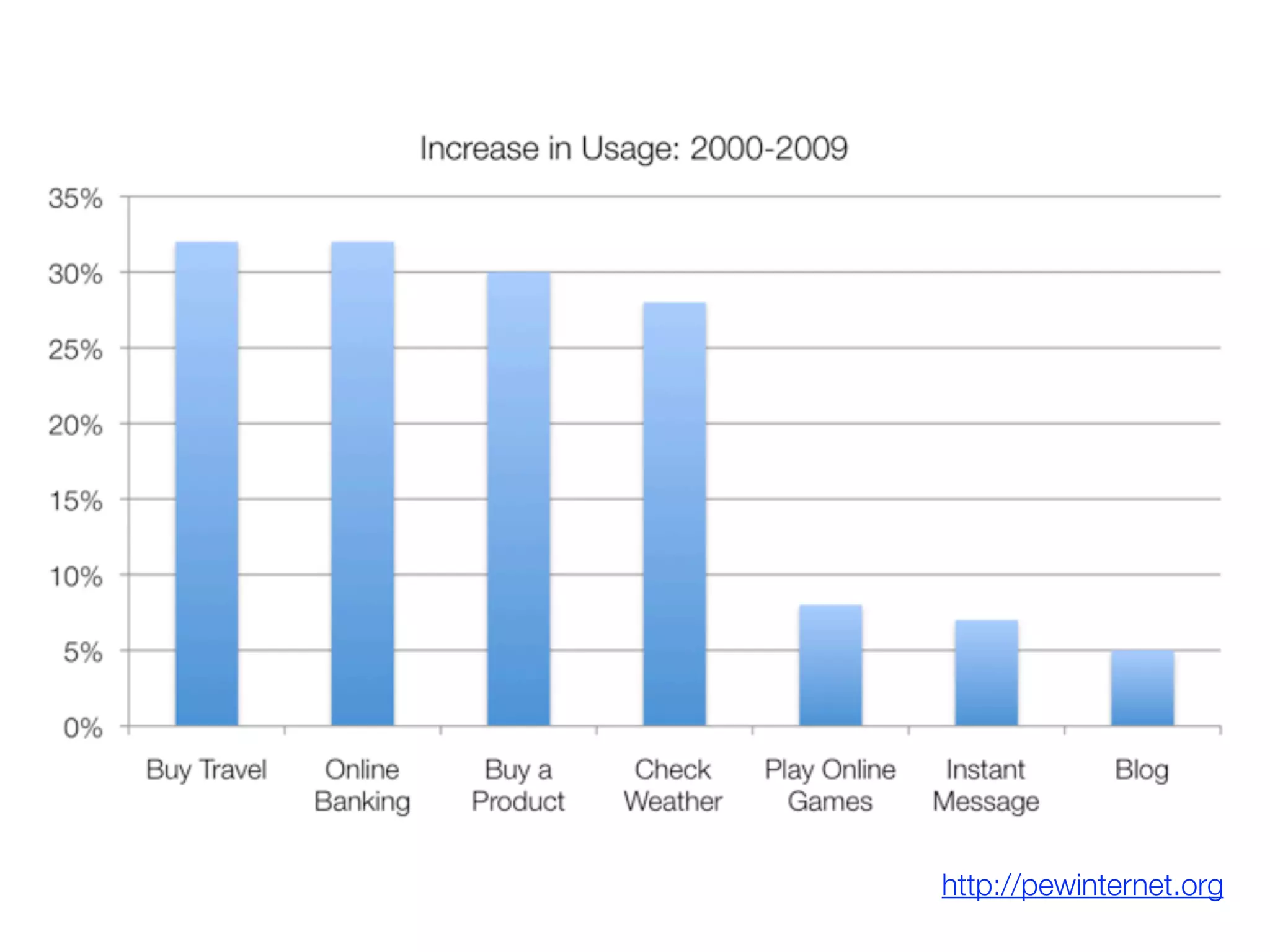
http://pewinternet.org
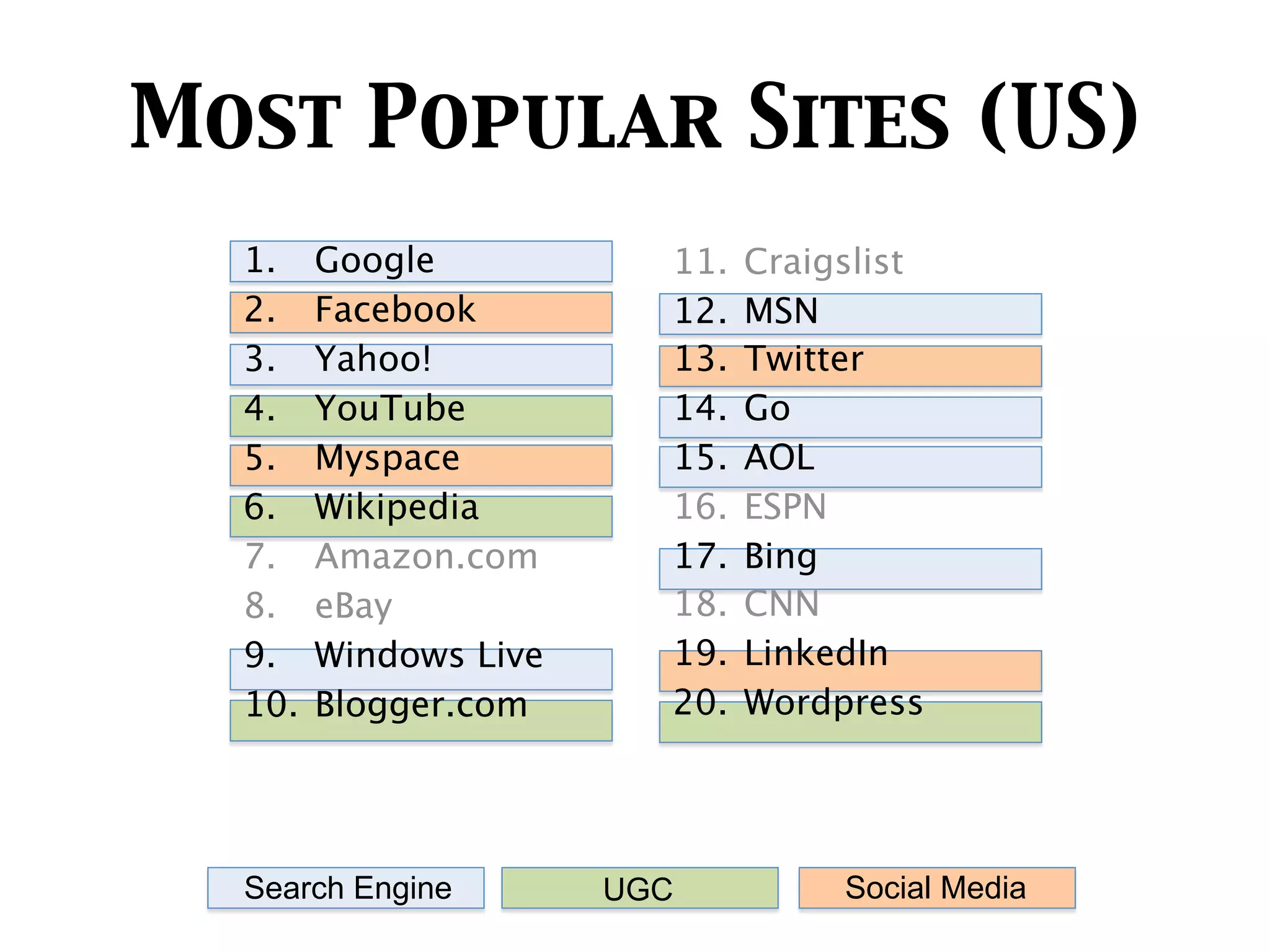
Most Popular Sites (US)
  1.    Google           11.   Craigslist
  2.    Facebook         12.   MSN
  3.    Yahoo!           13.   Twitter
  4.    YouTube          14.   Go
  5.    Myspace          15.   AOL
  6.    Wikipedia        16.   ESPN
  7.    Amazon.com       17.   Bing
  8.    eBay             18.   CNN
  9.    Windows Live     19.   LinkedIn
  10.   Blogger.com      20.   Wordpress


  Search Engine        UGC          Social Media
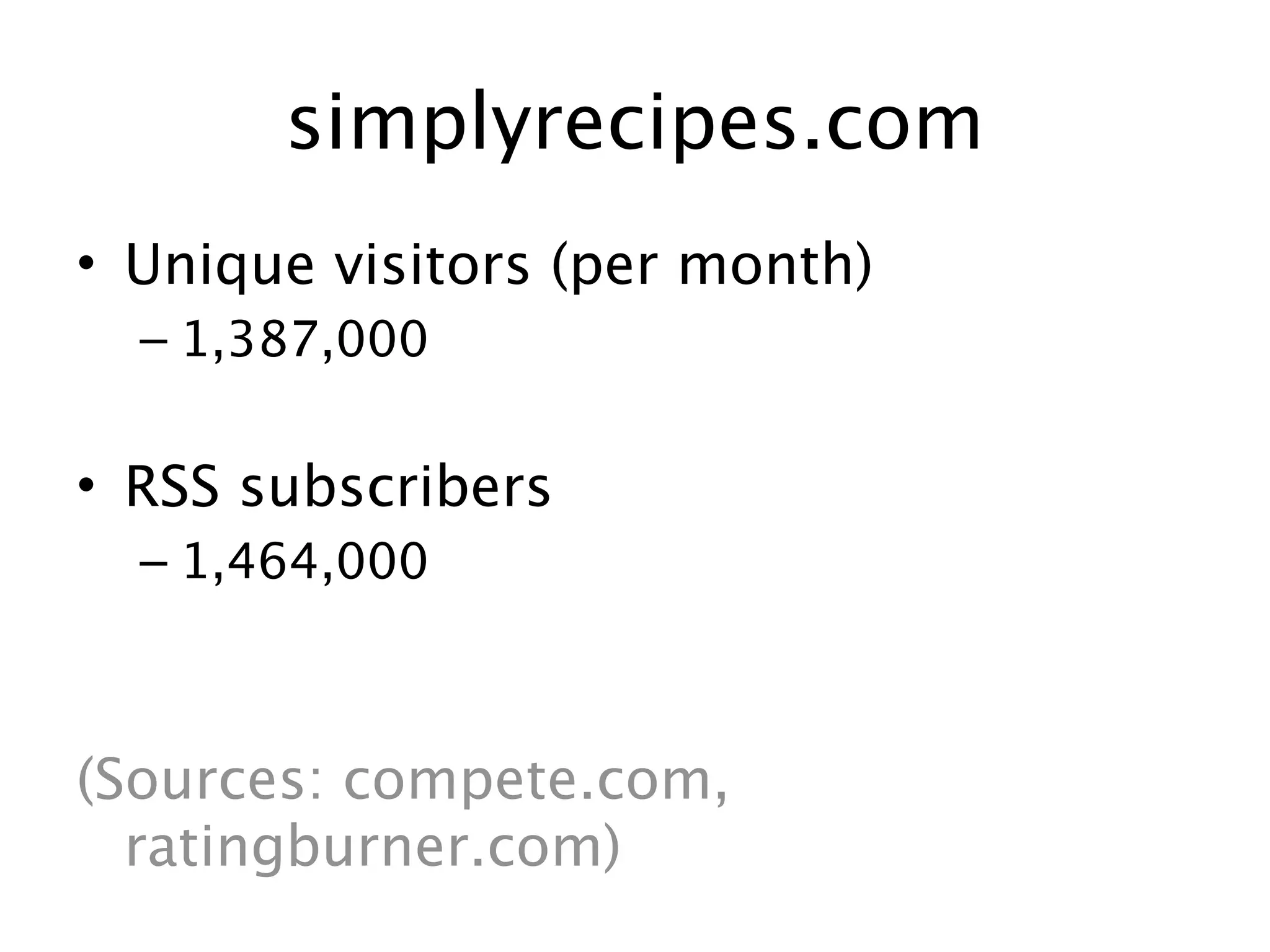
simplyrecipes.com
• Unique visitors (per month)
  – 1,387,000


• RSS subscribers
  – 1,464,000


(Sources: compete.com,
  ratingburner.com)
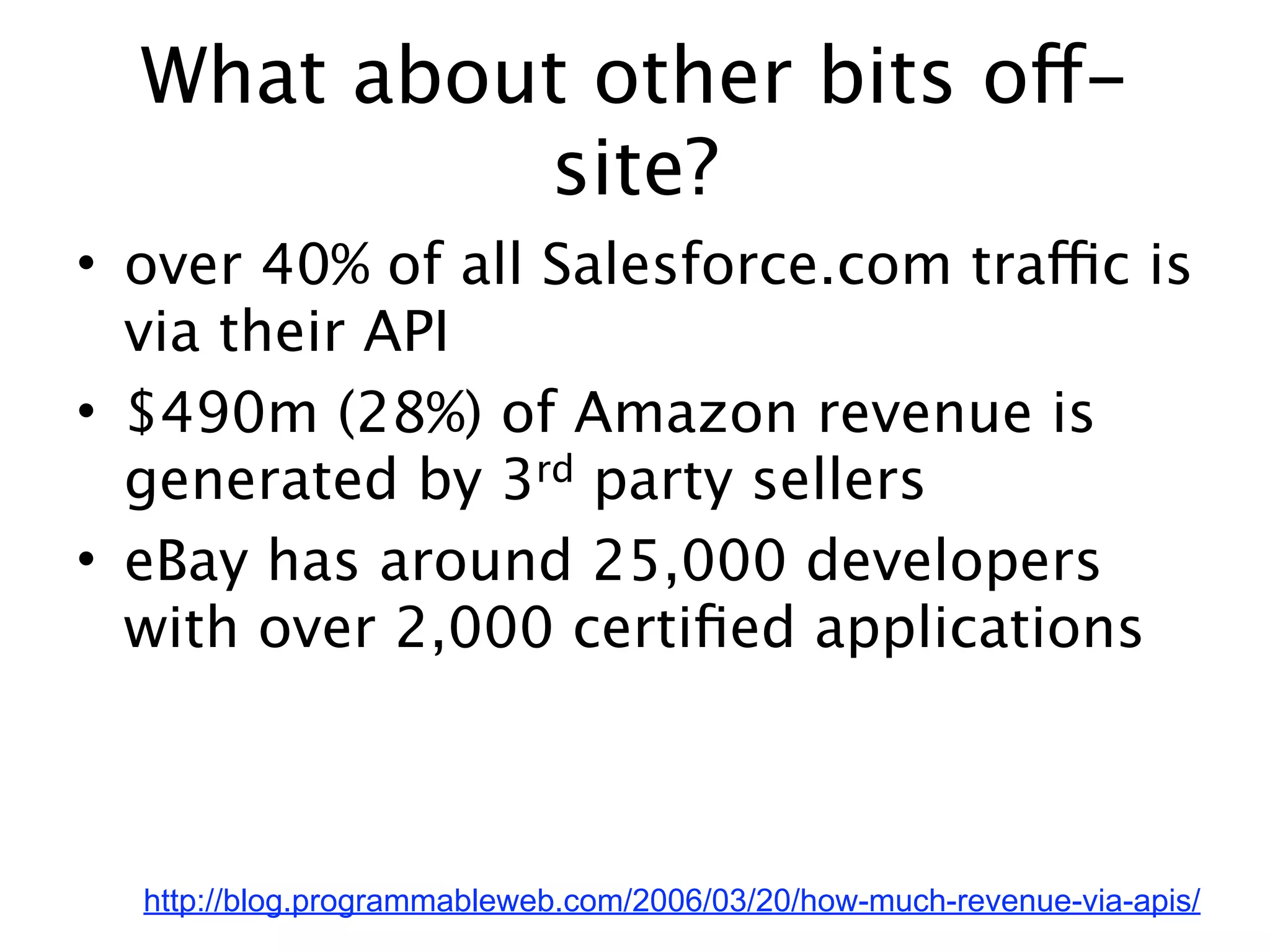
What about other bits off-
           site?
• over 40% of all Salesforce.com traffic is
  via their API
• $490m (28%) of Amazon revenue is
  generated by 3rd party sellers
• eBay has around 25,000 developers
  with over 2,000 certified applications


  http://blog.programmableweb.com/2006/03/20/how-much-revenue-via-apis/
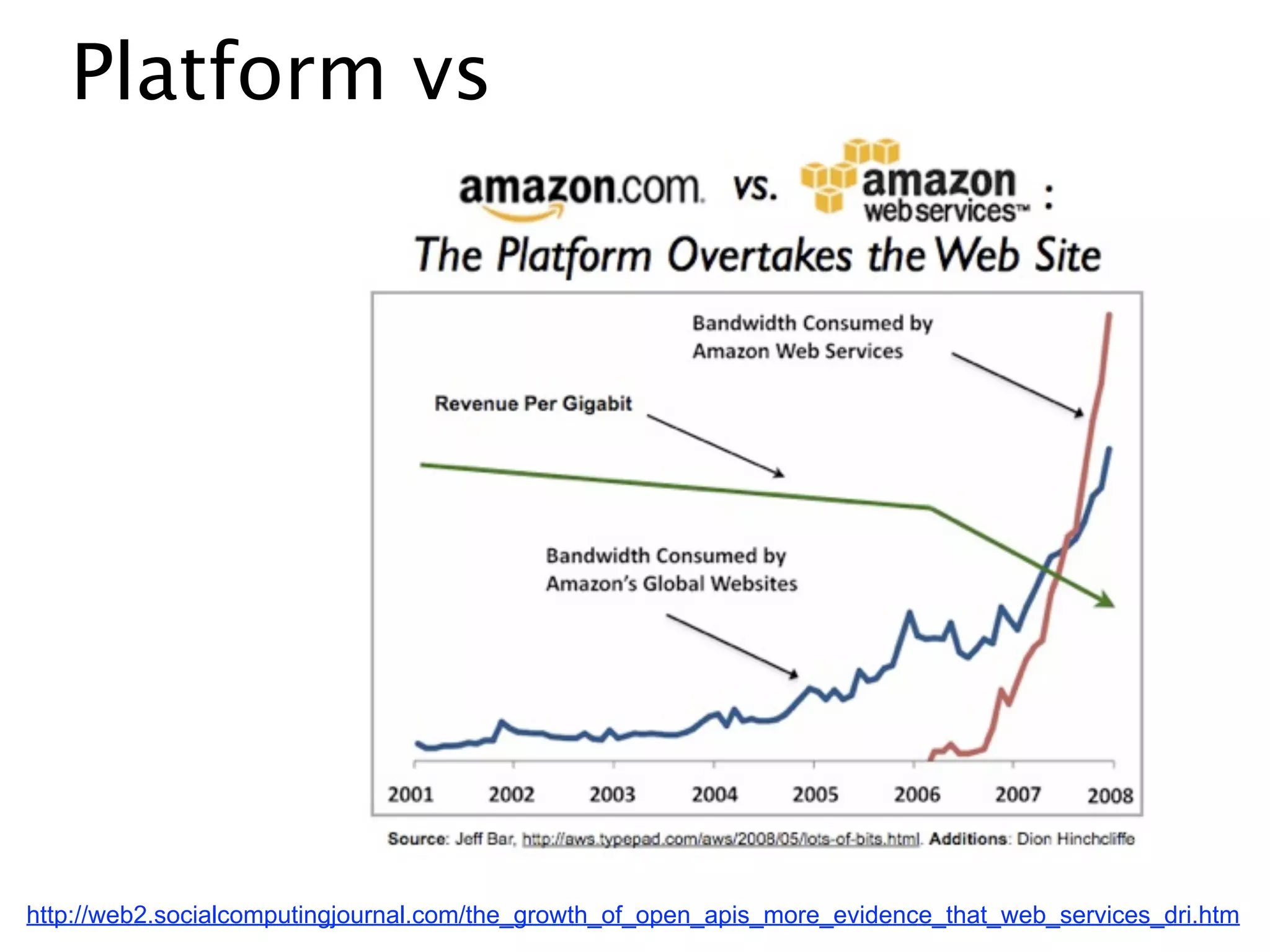
Platform vs


http://web2.socialcomputingjournal.com/the_growth_of_open_apis_more_evidence_that_web_services_dri.htm
Q: Where/Who are
   your audience?

                19
Wider Context (2 of 2):
  What is changing?
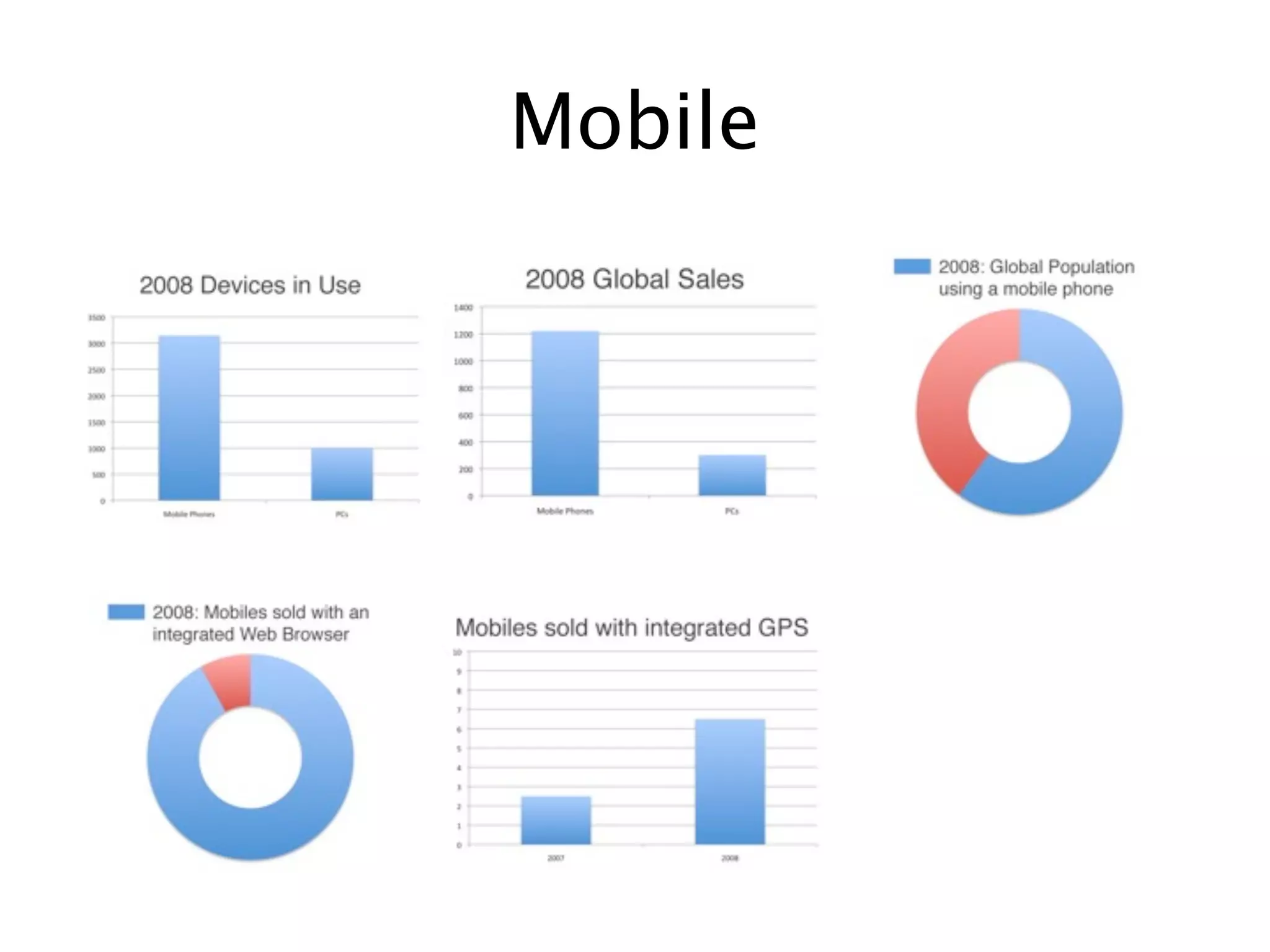
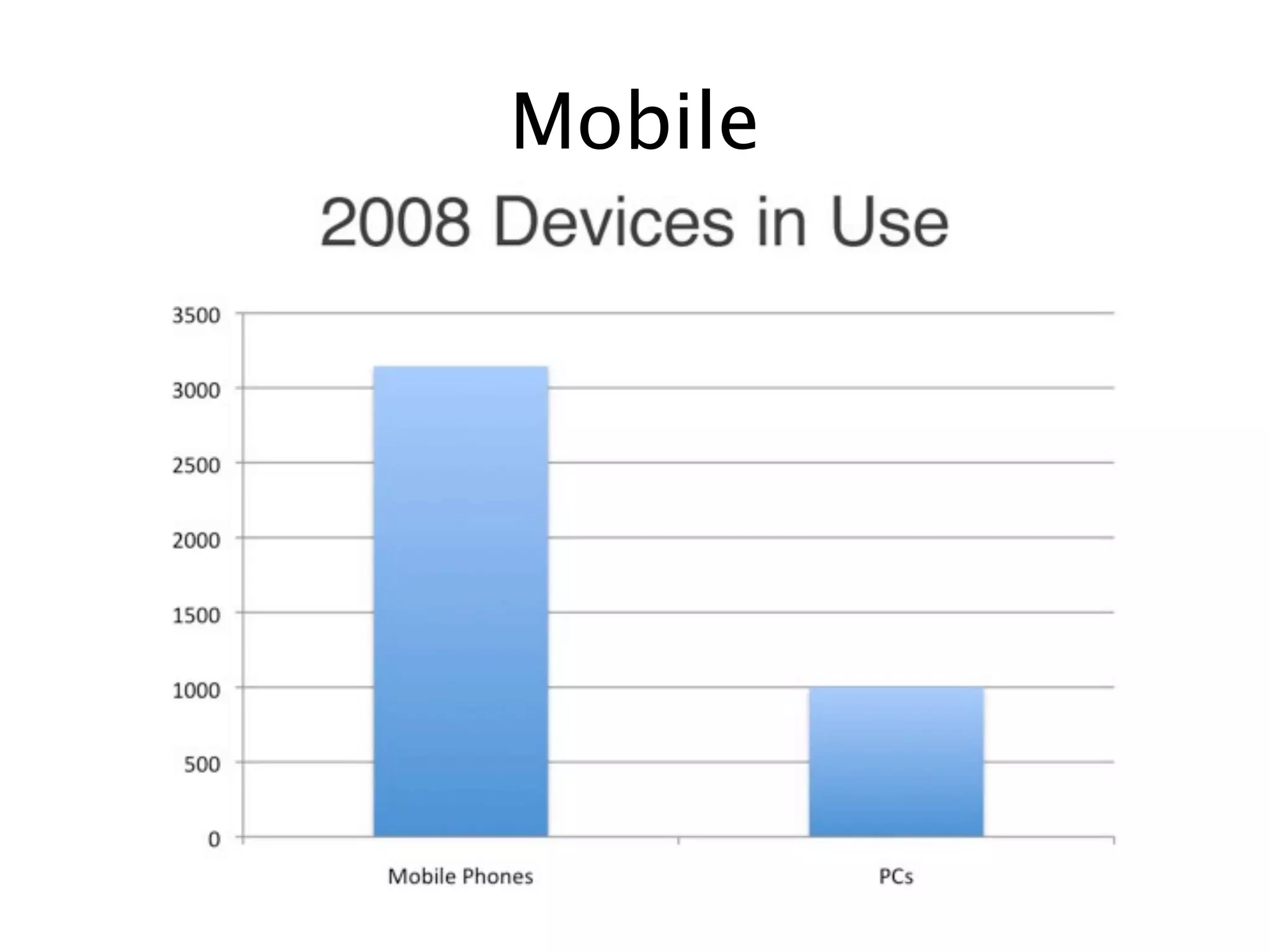
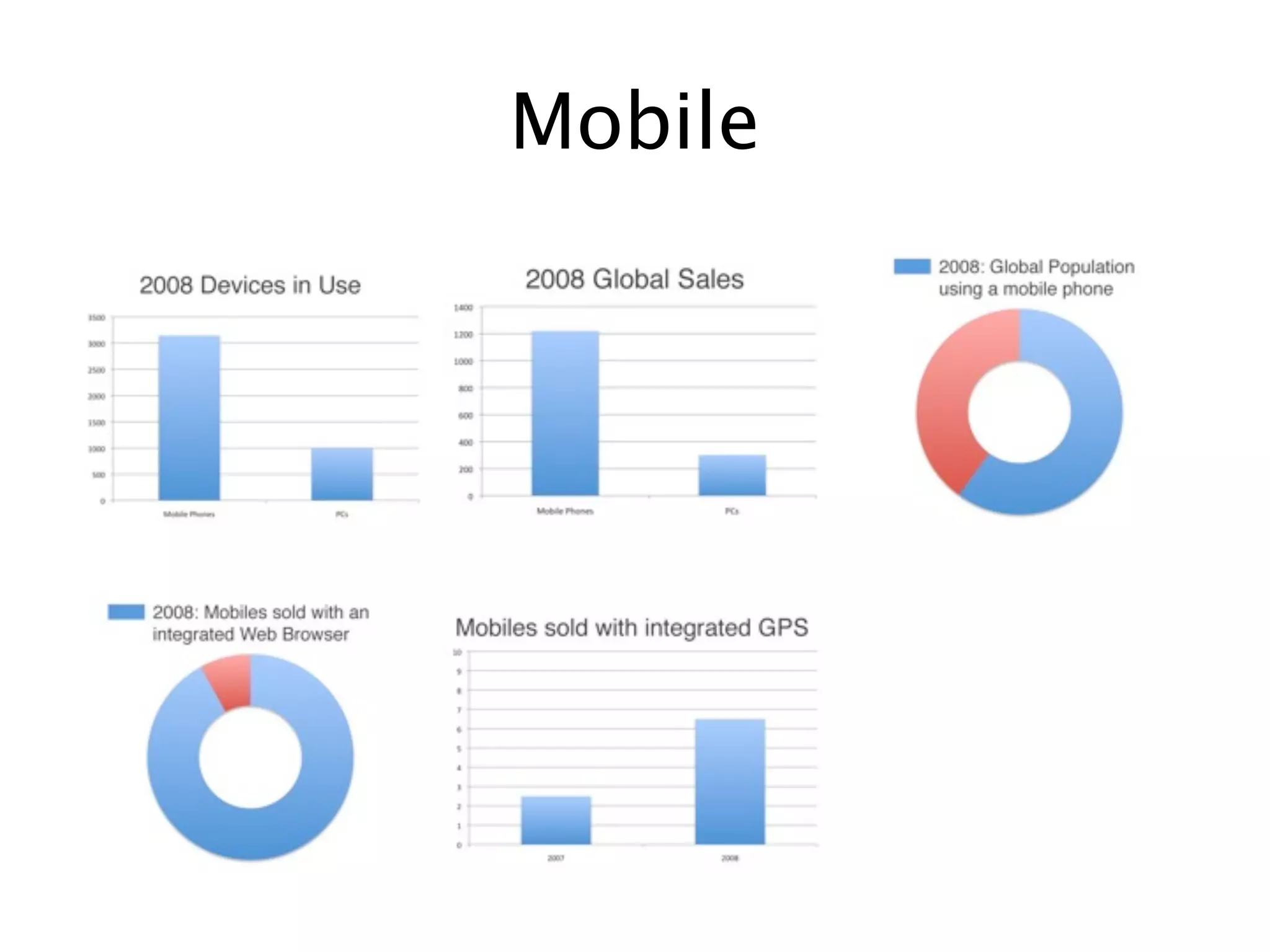
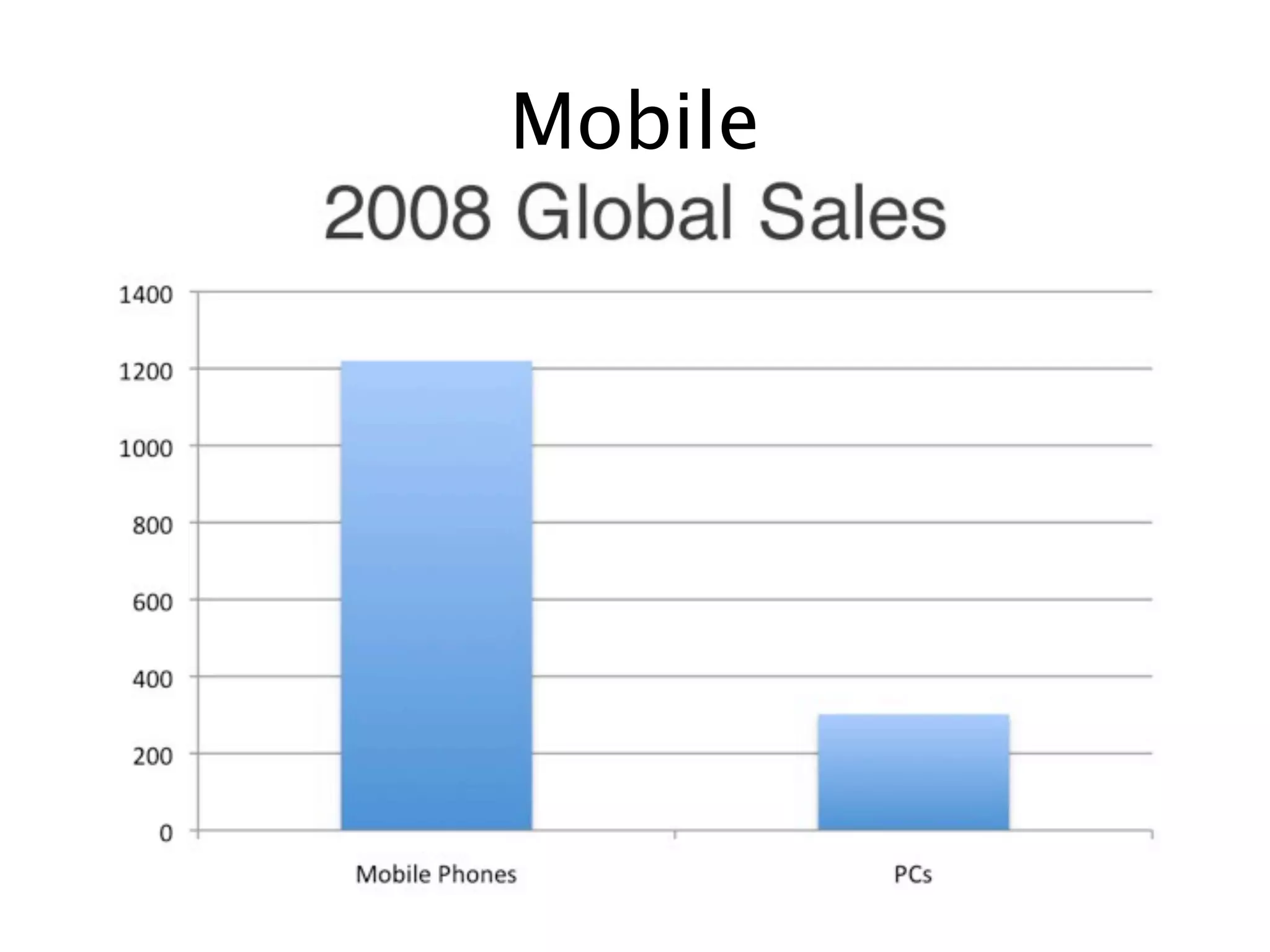
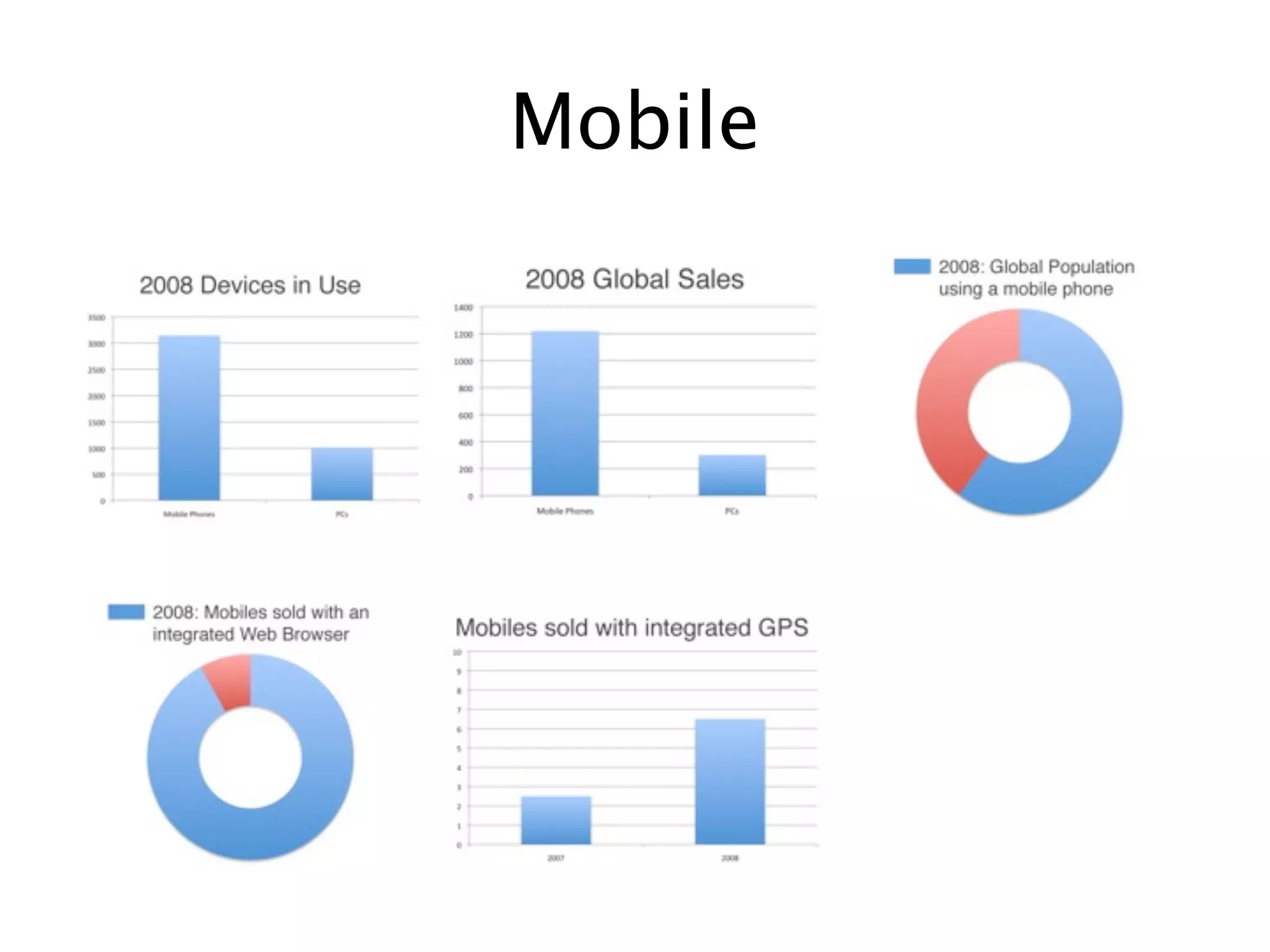
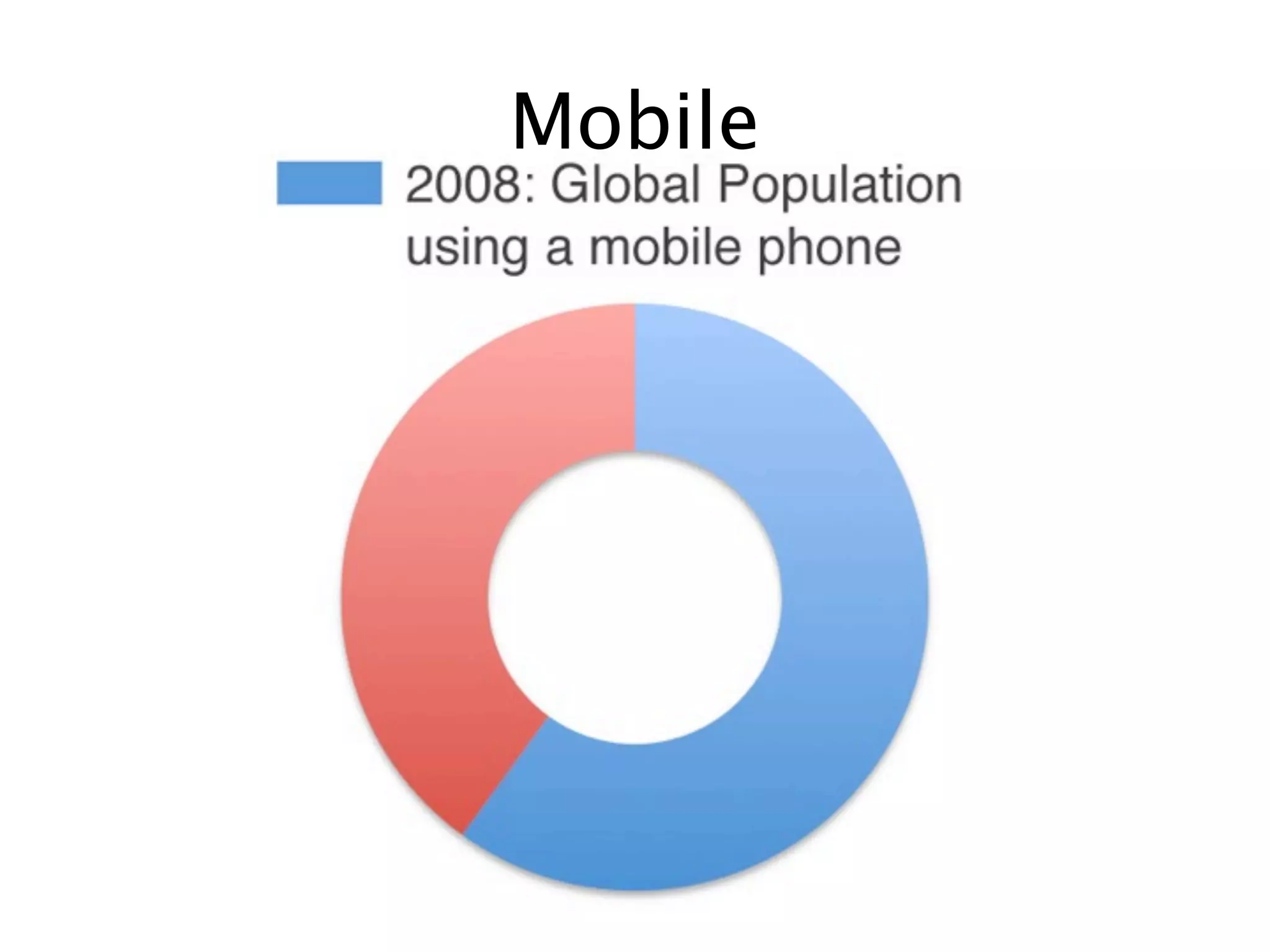
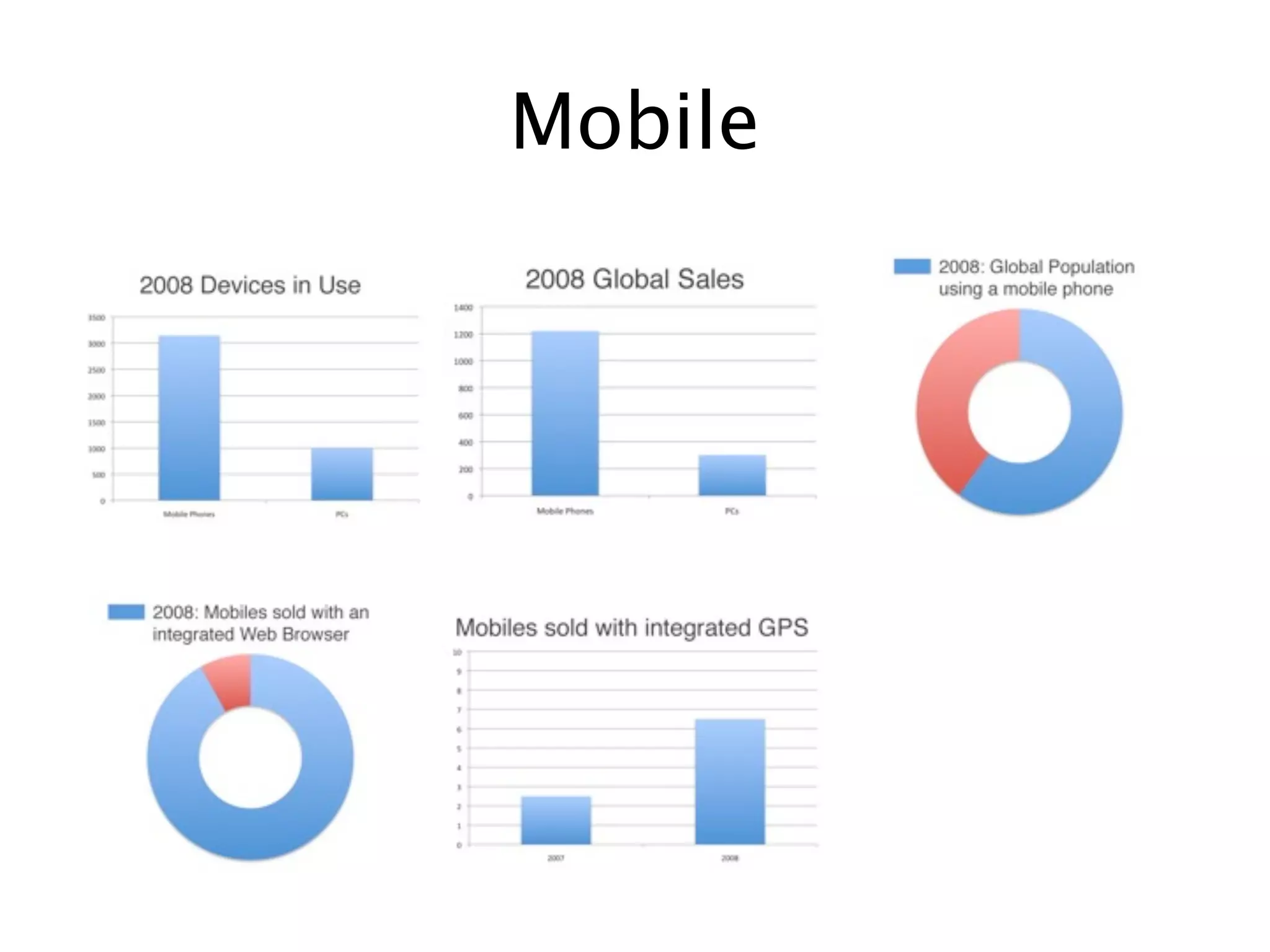
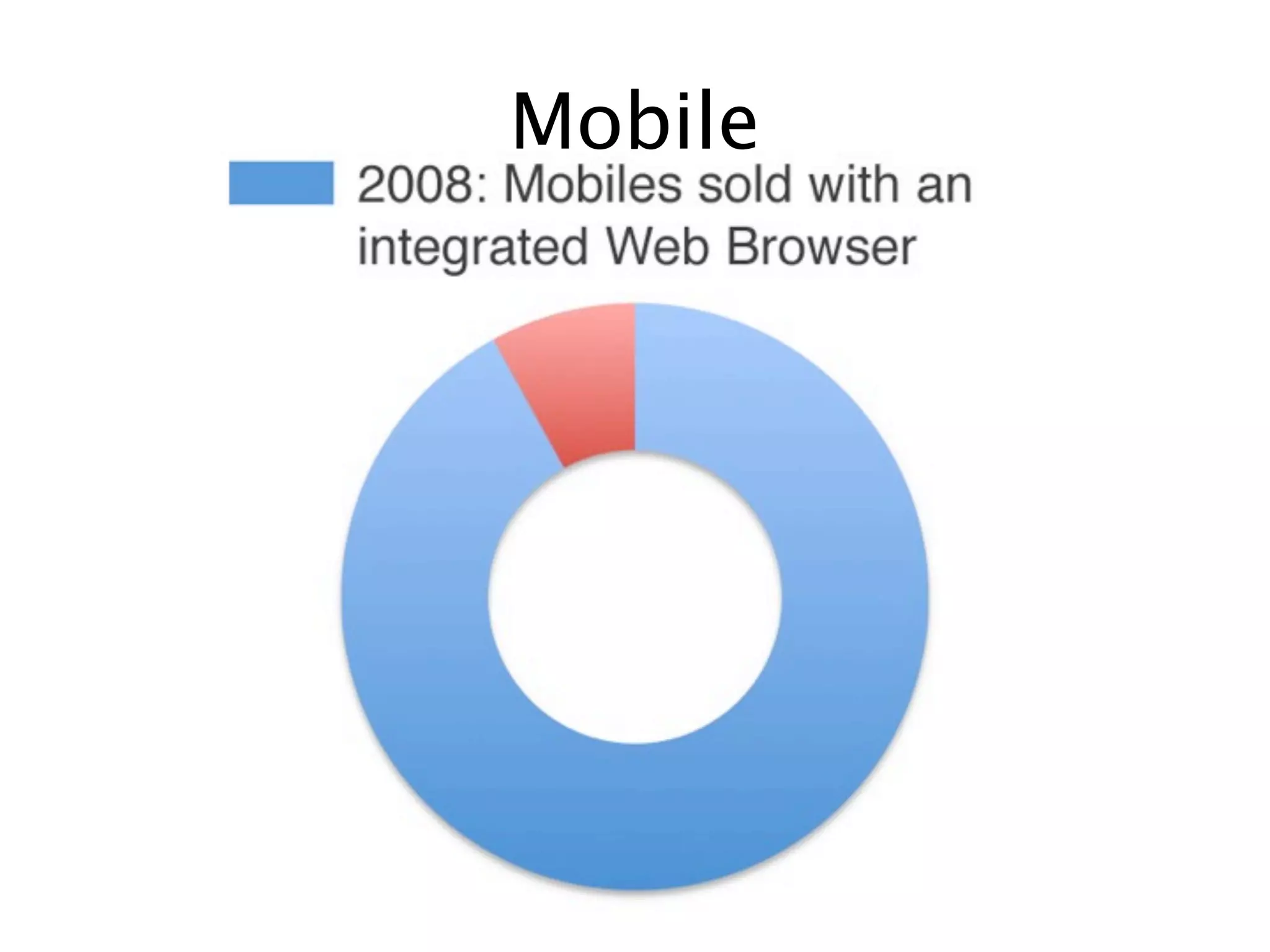
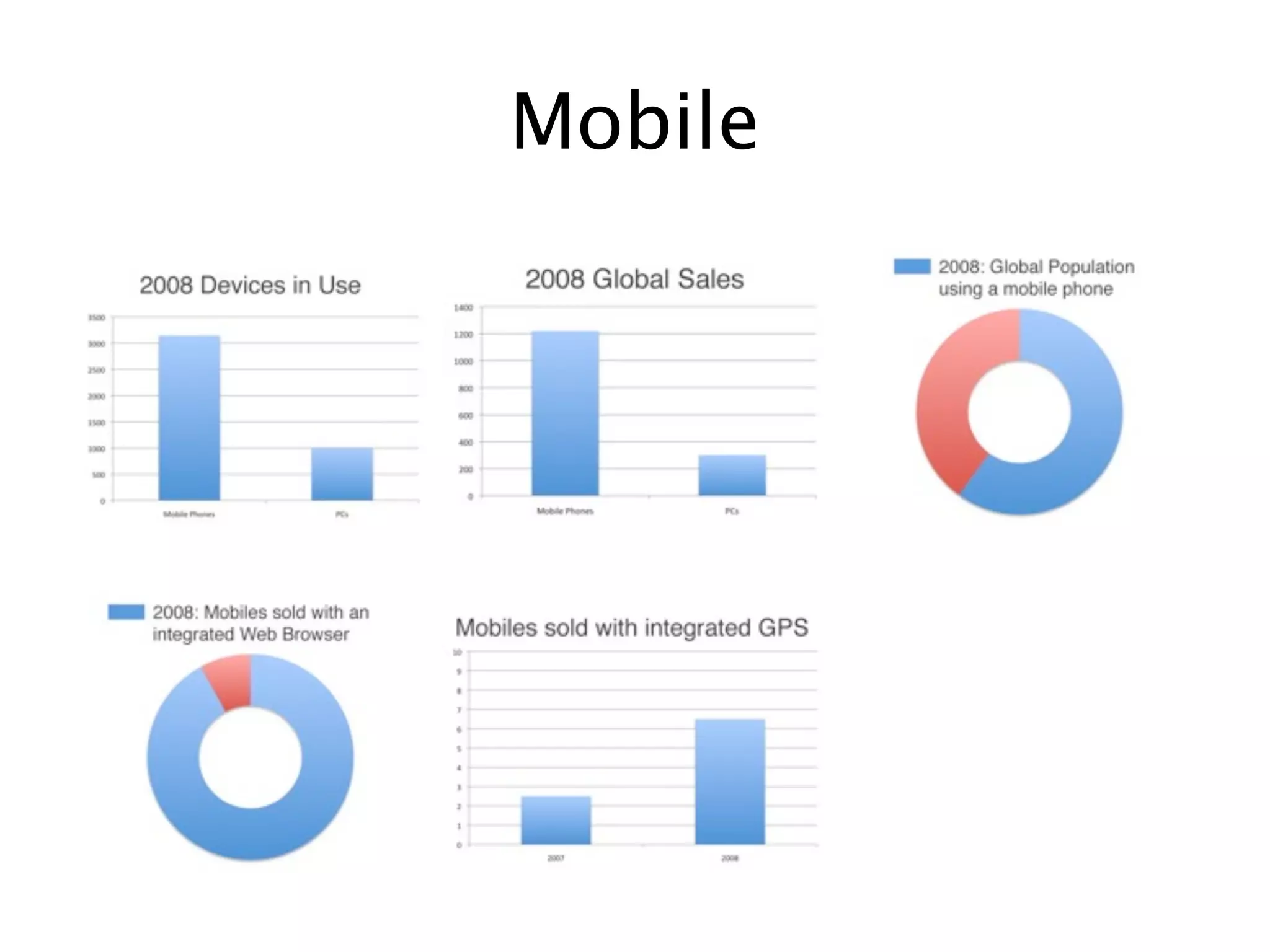
Mobile
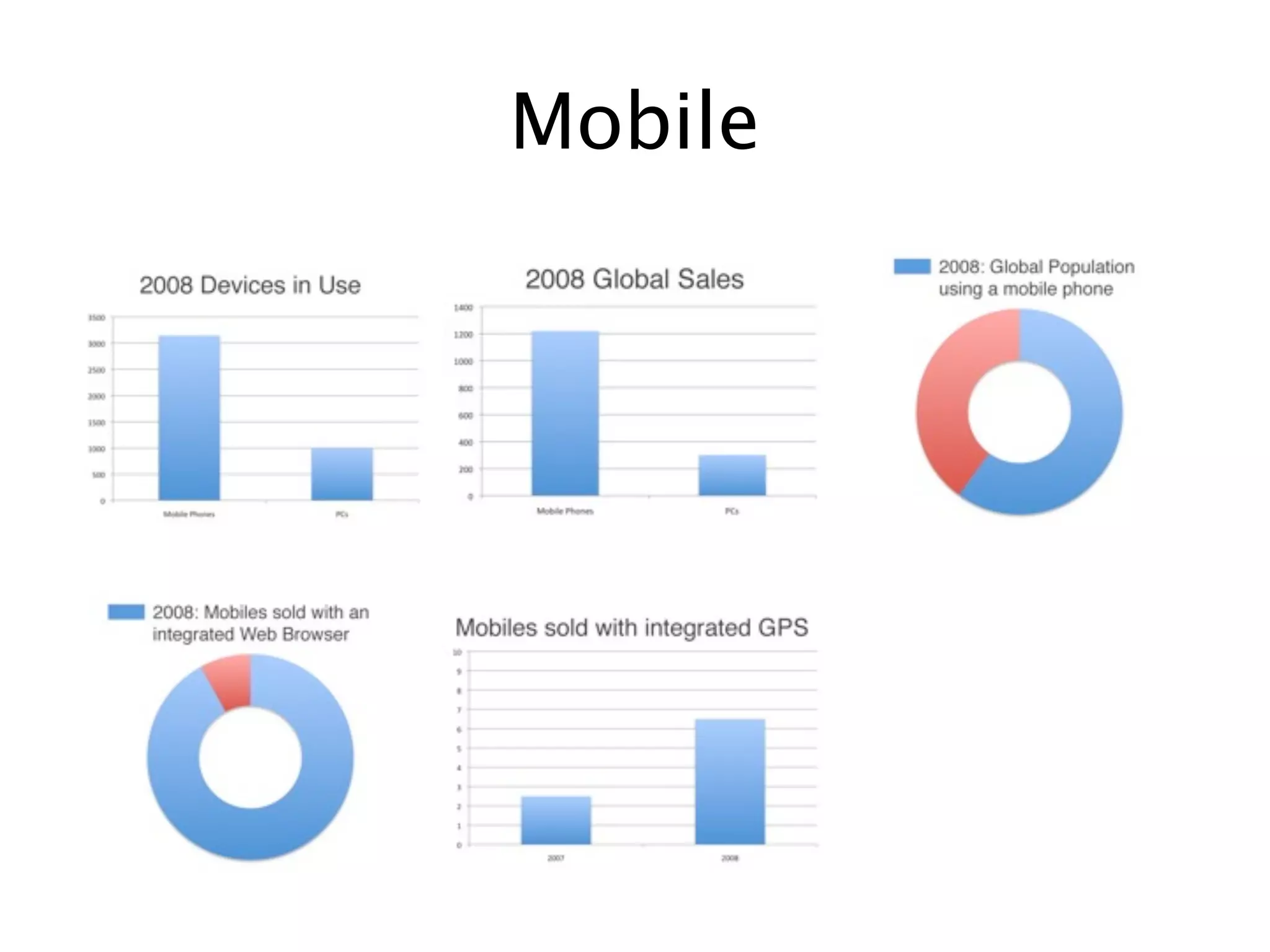
Mobile
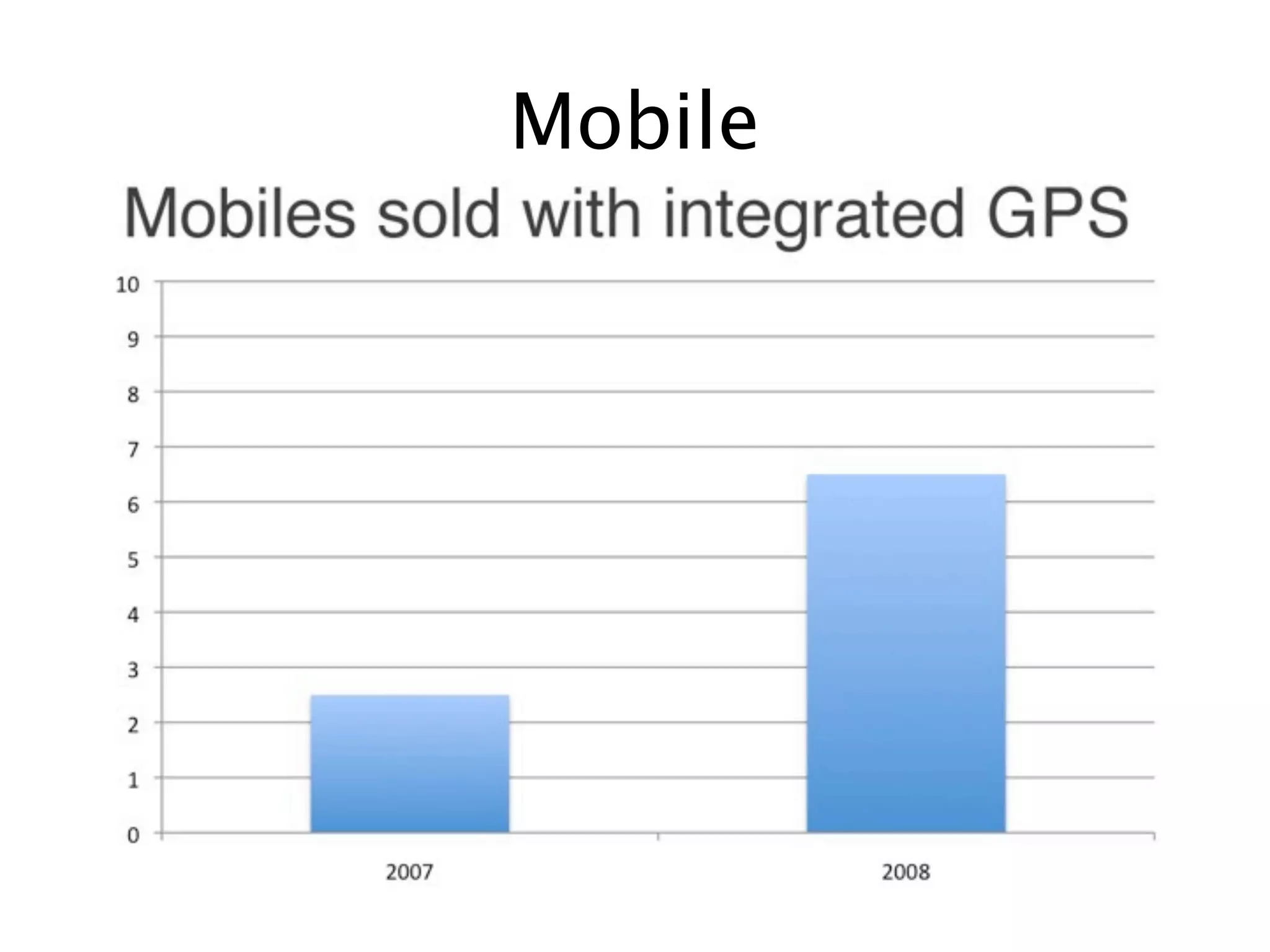
Mobile
Mobile
Mobile
Mobile
Mobile
Mobile
Mobile
Mobile
Mobile
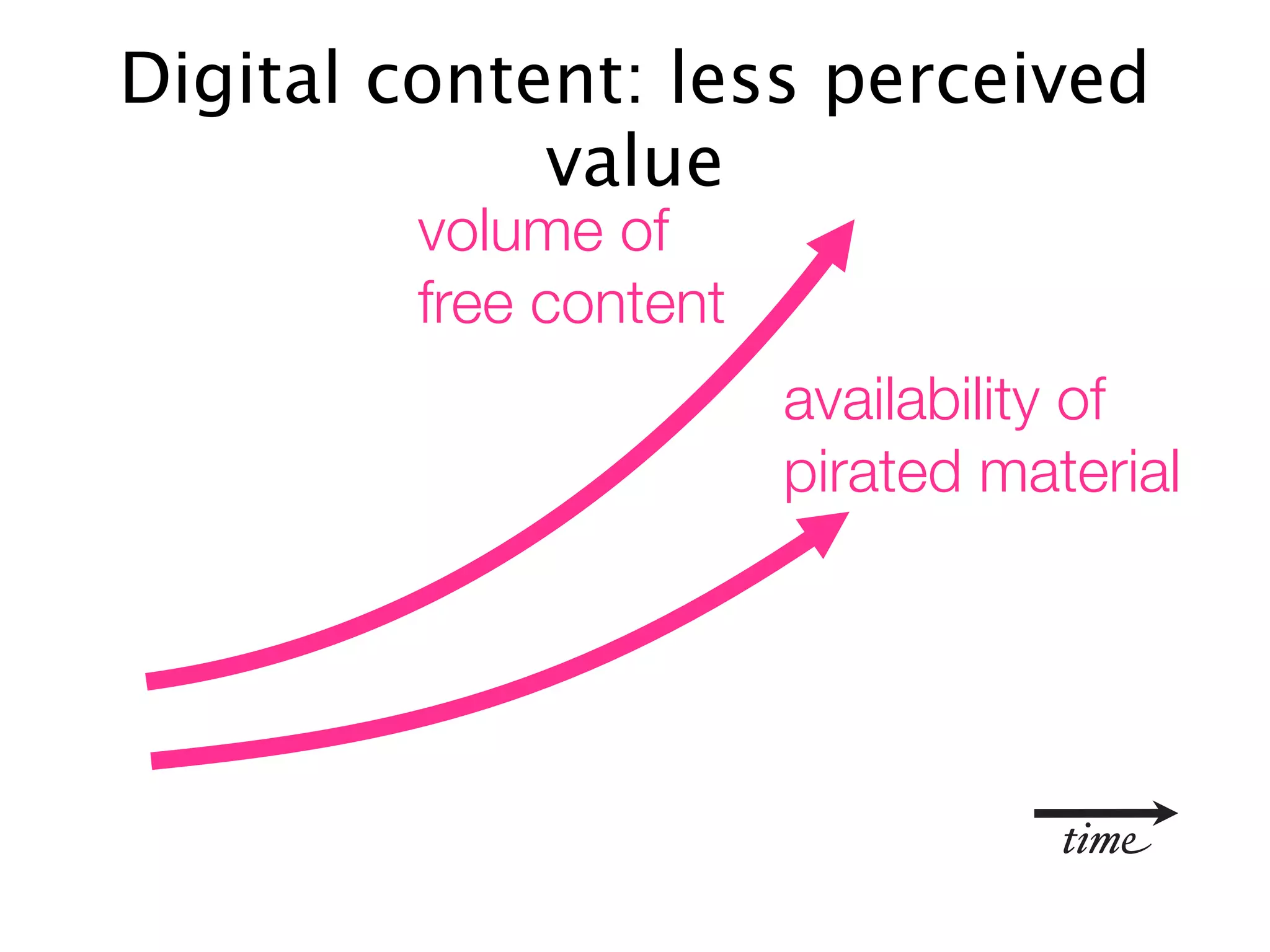
Digital content: less perceived
             value
        volume of
        free content
                       availability of
                       pirated material


                                  time
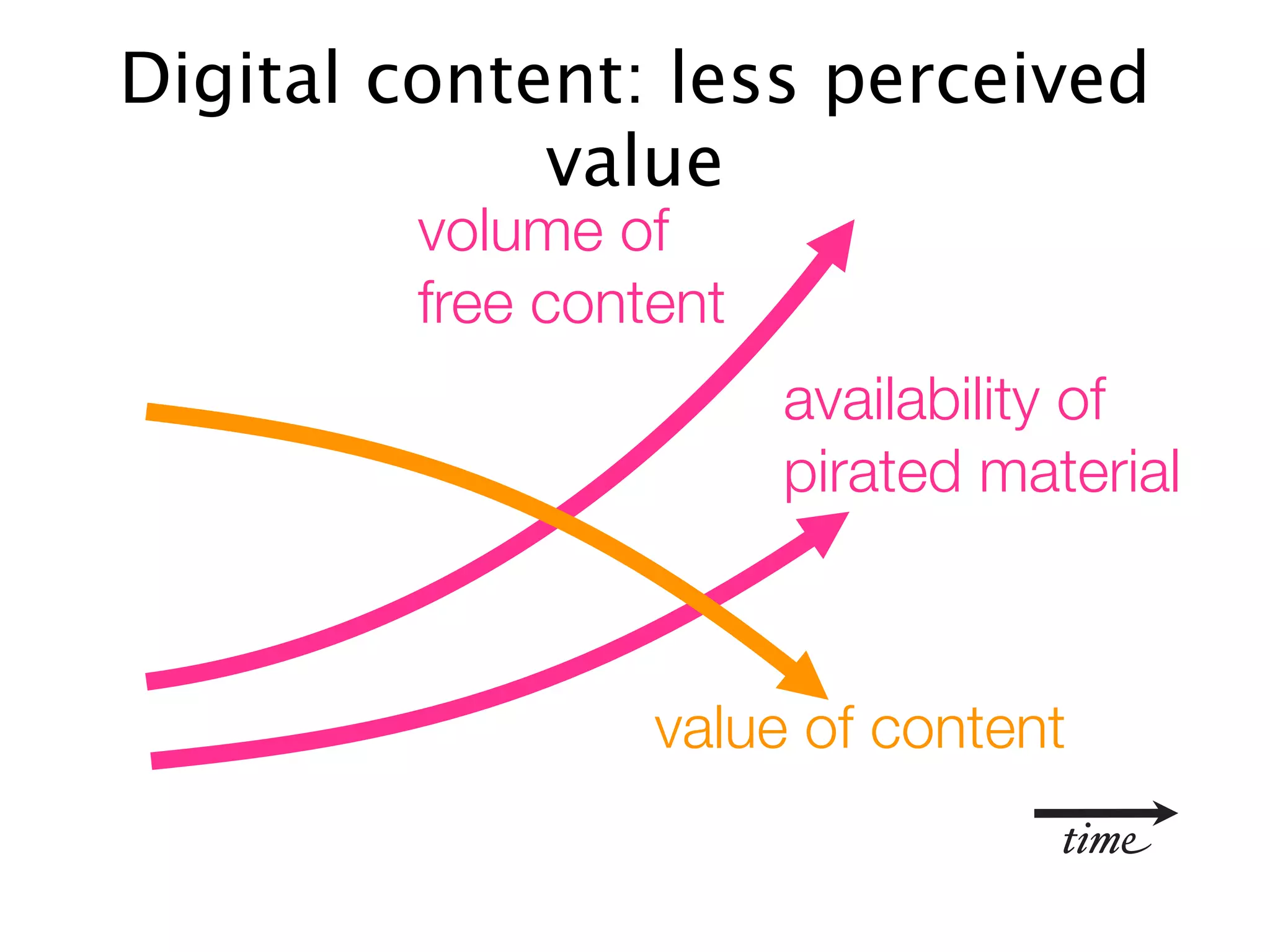
Digital content: less perceived
             value
        volume of
        free content
                       availability of
                       pirated material


                 value of content
                                  time
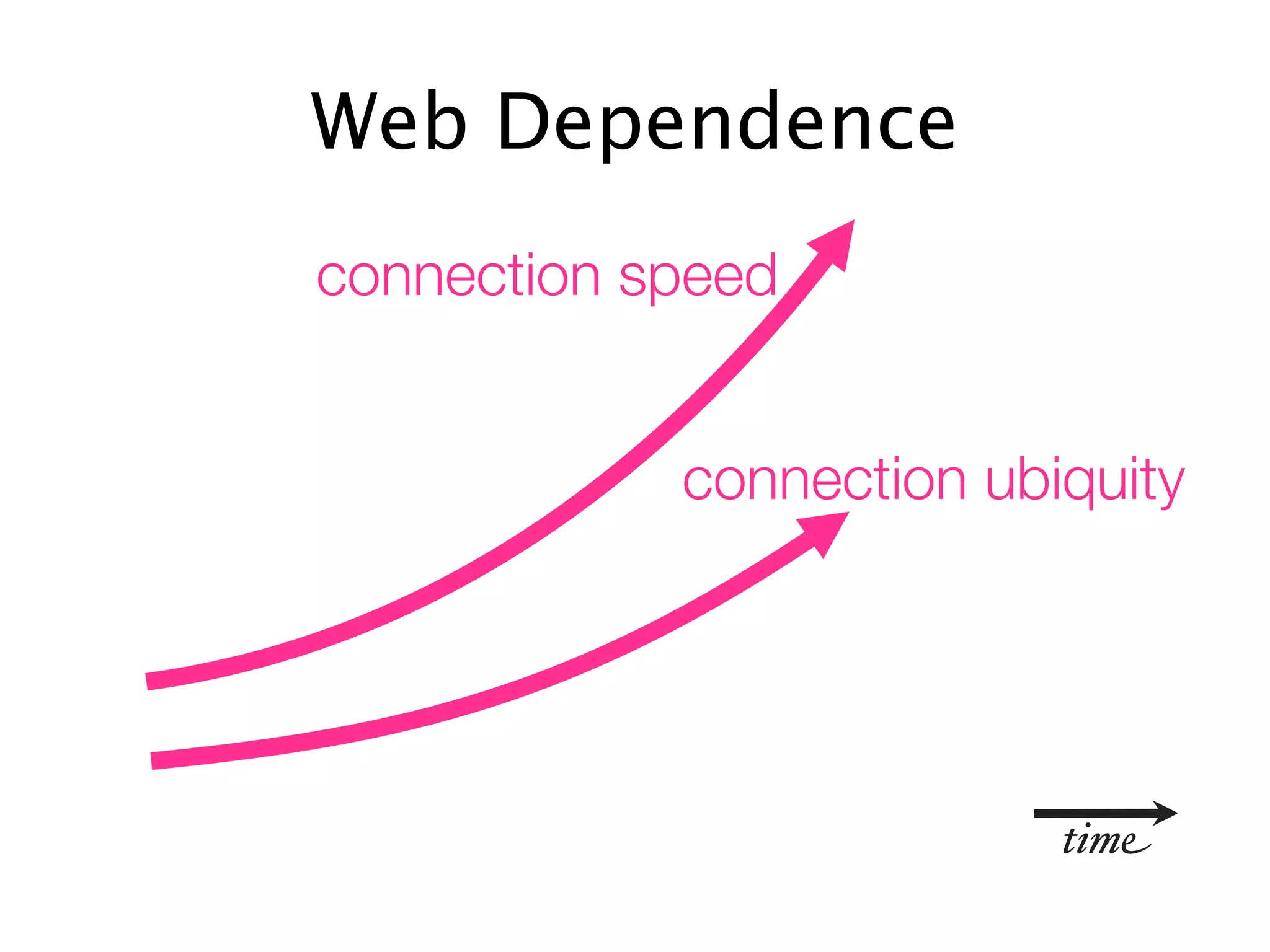
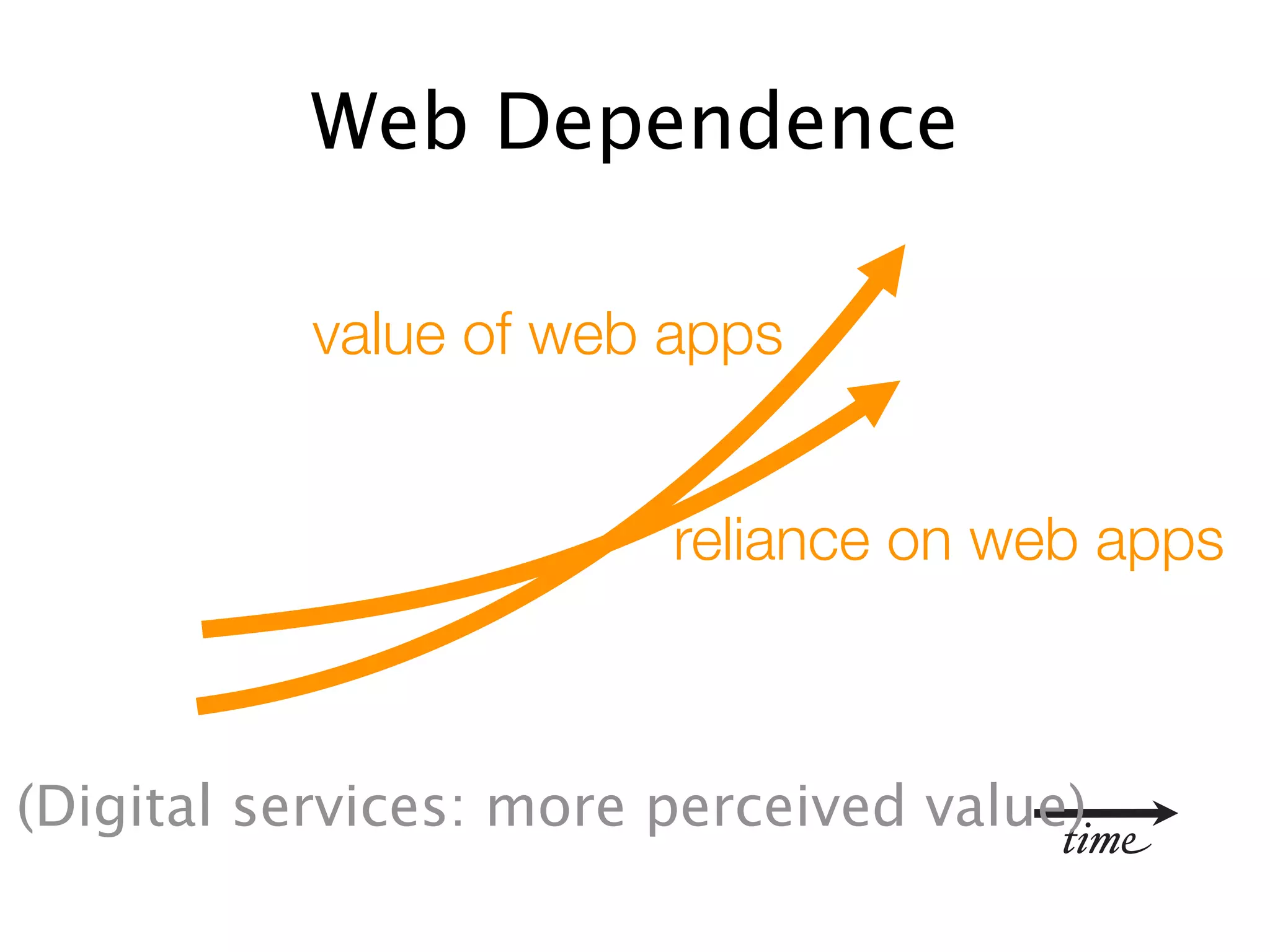
Web Dependence
connection speed


            connection ubiquity


                          time
Web Dependence

           value of web apps


                        reliance on web apps


(Digital services: more perceived value)
                                       time
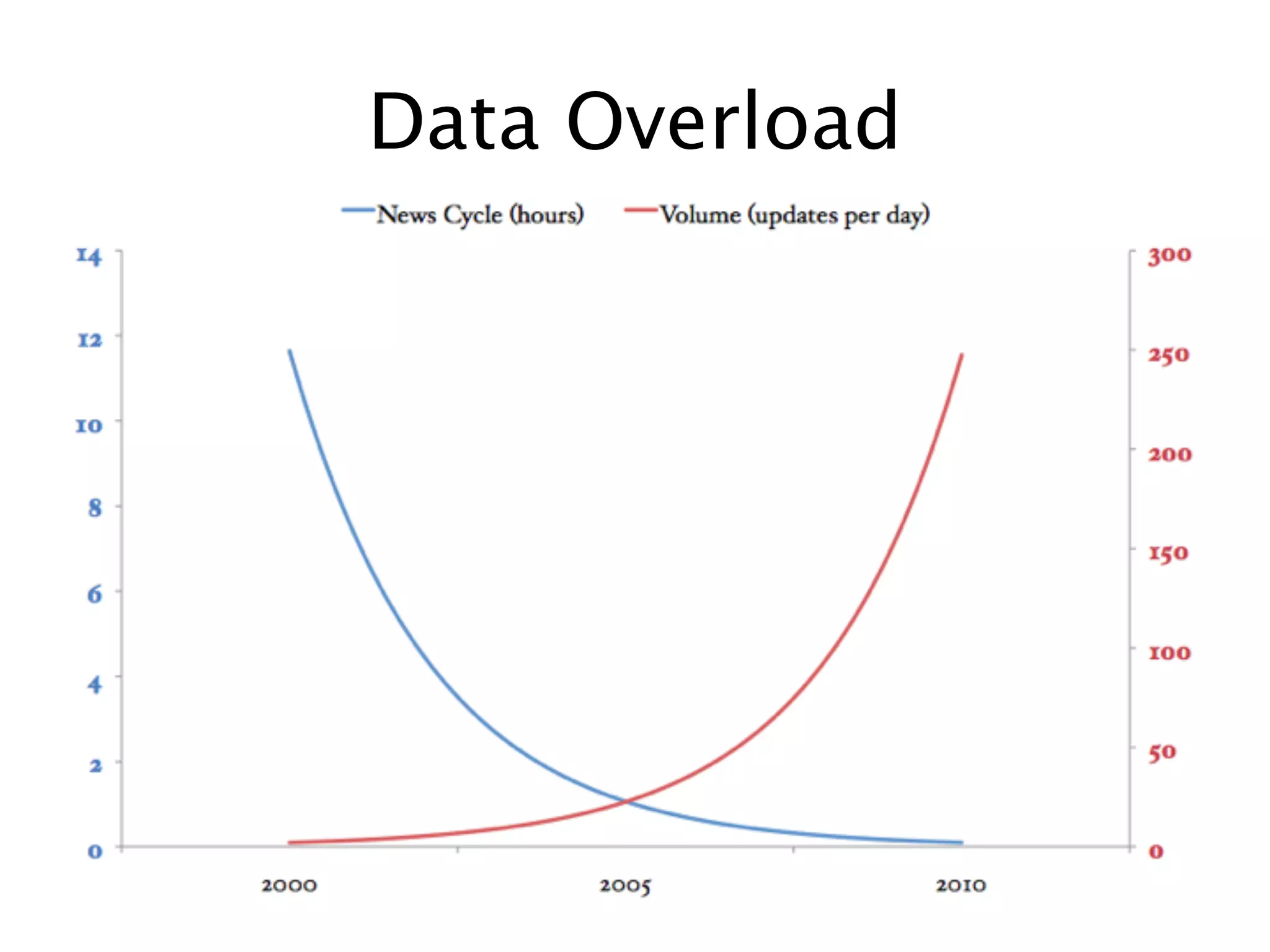
Data Overload
Data Overload
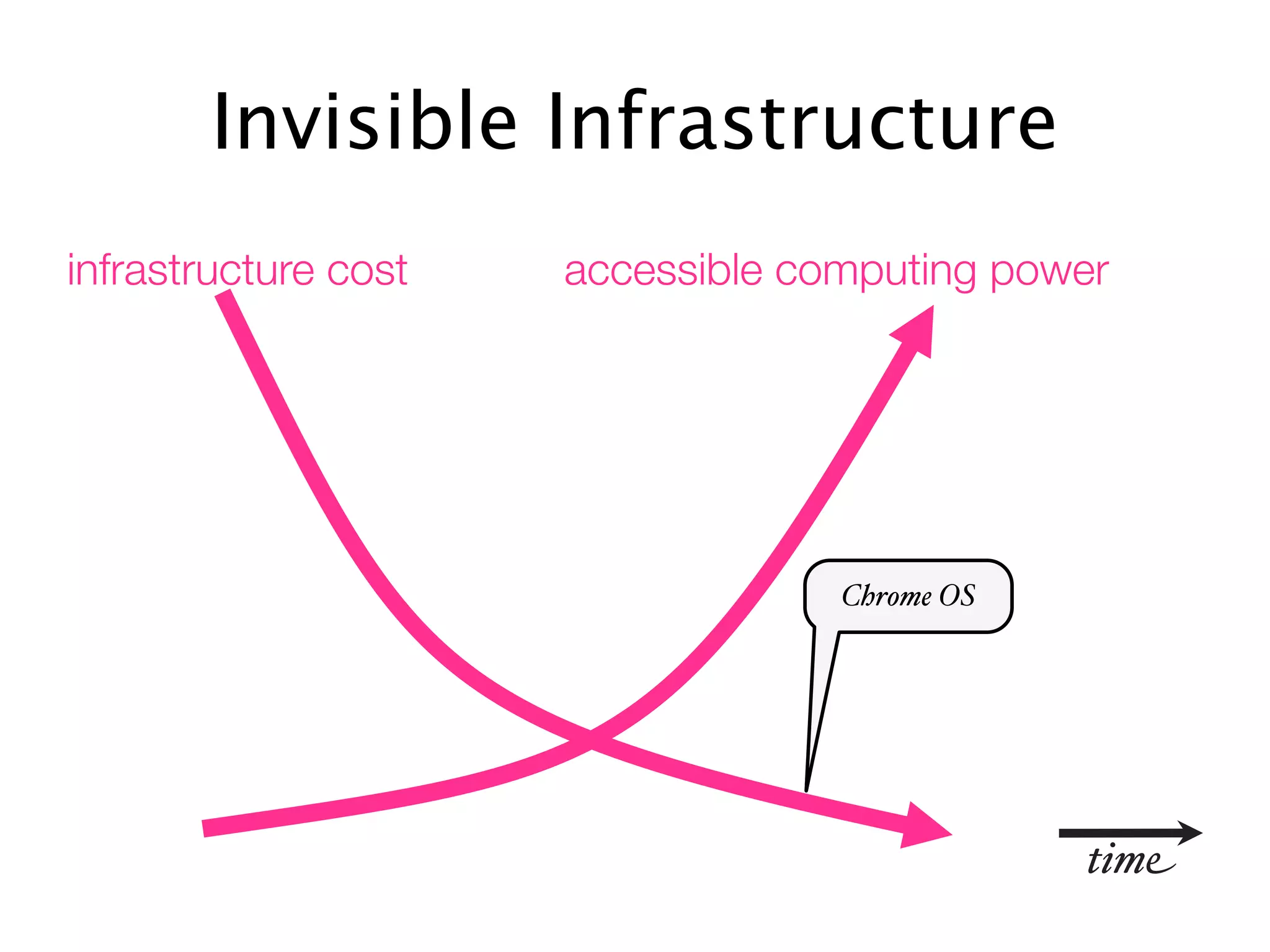
Invisible Infrastructure
infrastructure cost   accessible computing power


                                   Chrome OS


                                               time
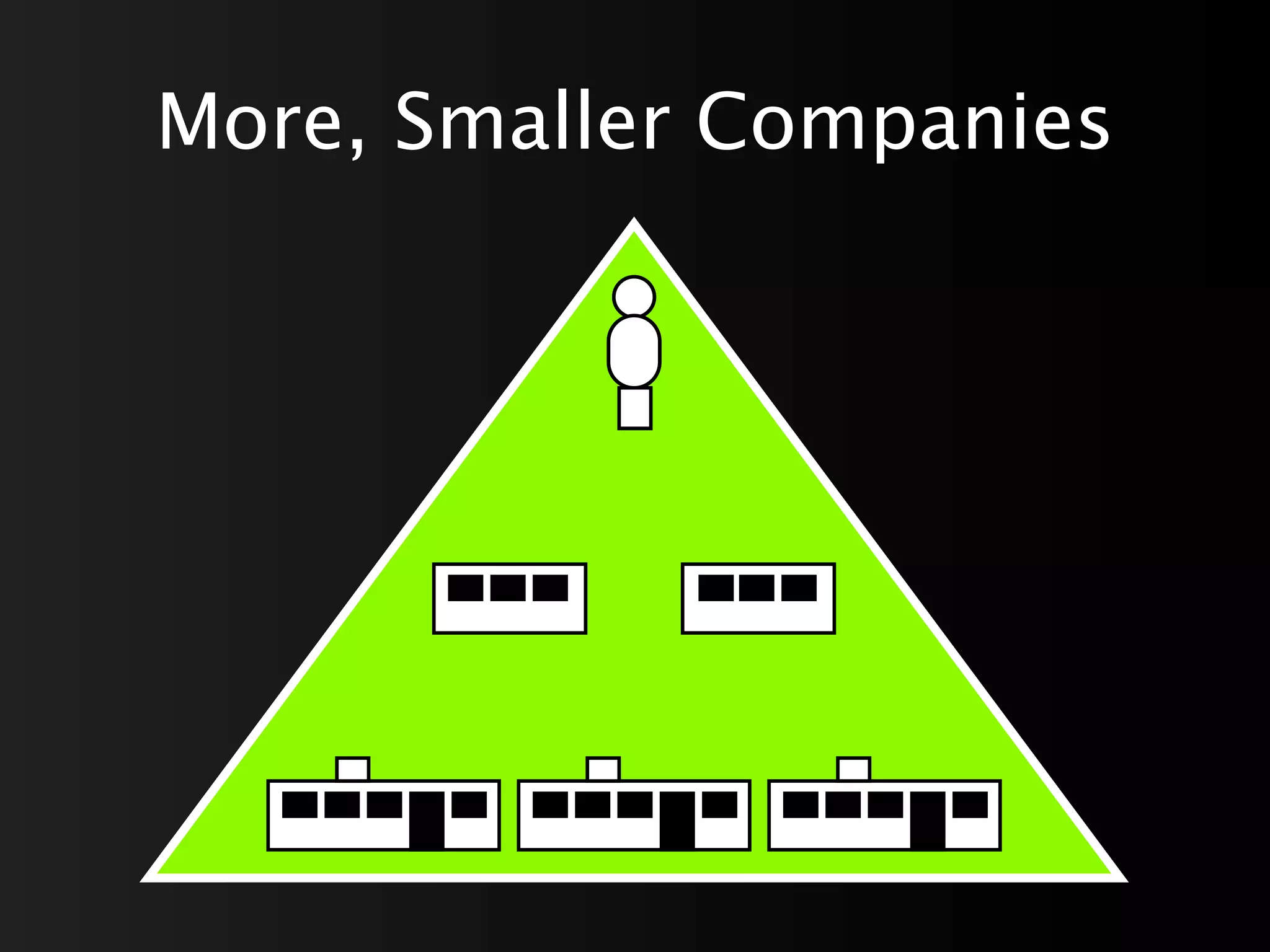
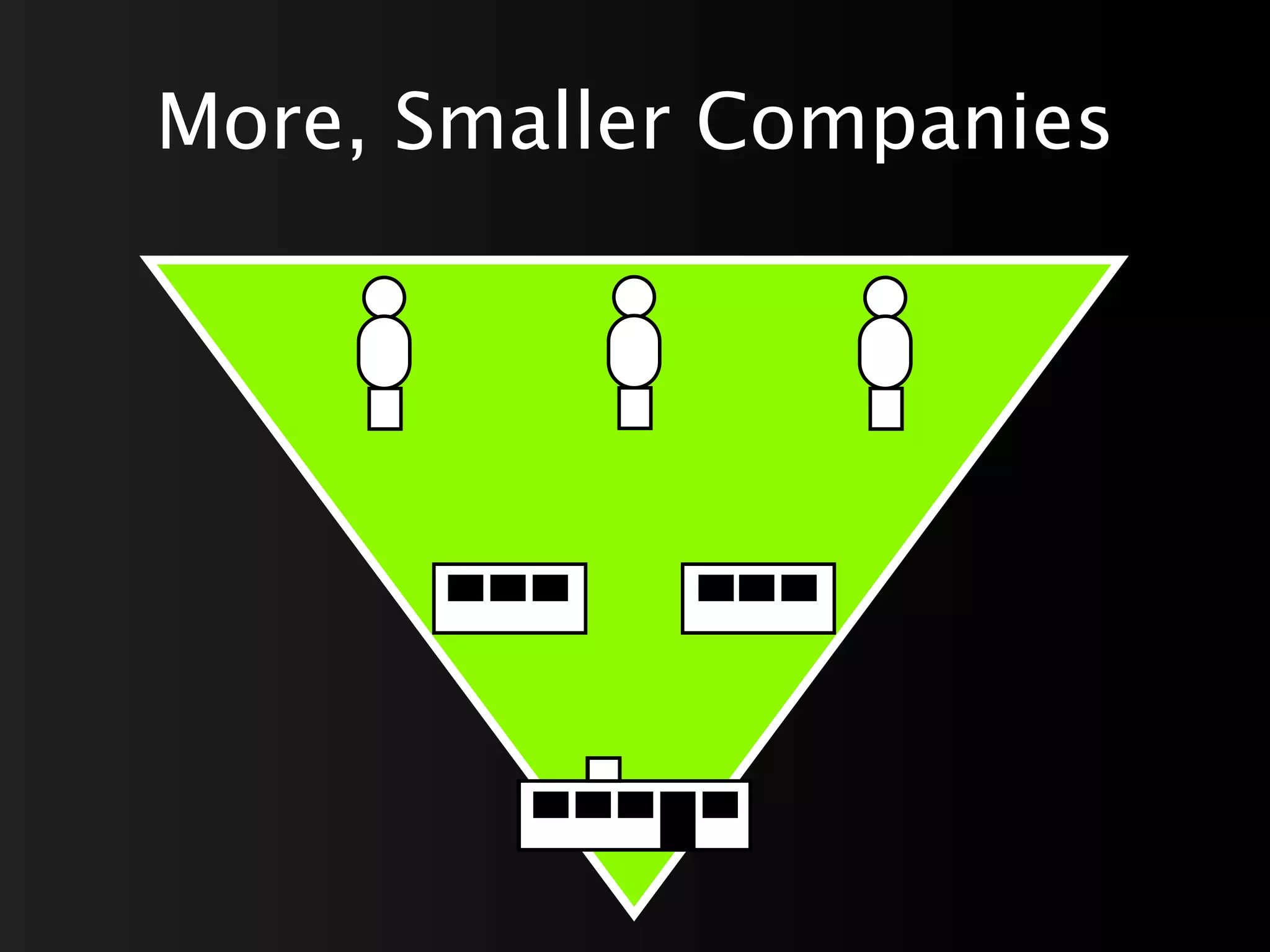
More, Smaller Companies
Possible Implications for
          Museums
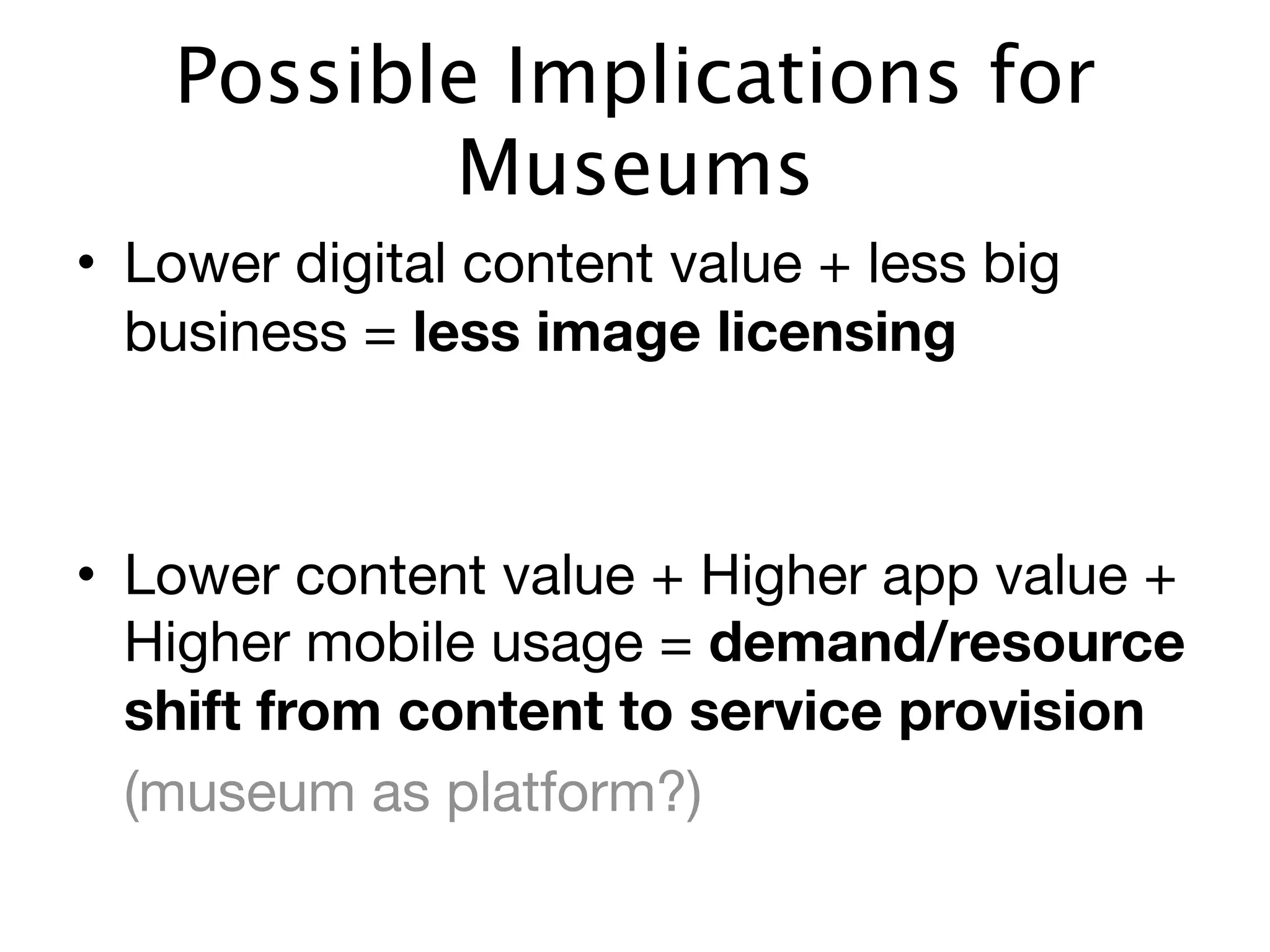
• Lower digital content value + less big
  business = less image licensing


• Lower content value + Higher app value +
  Higher mobile usage = demand/resource
  shift from content to service provision
	 (museum as platform?)
Possible Implications for
          Museums
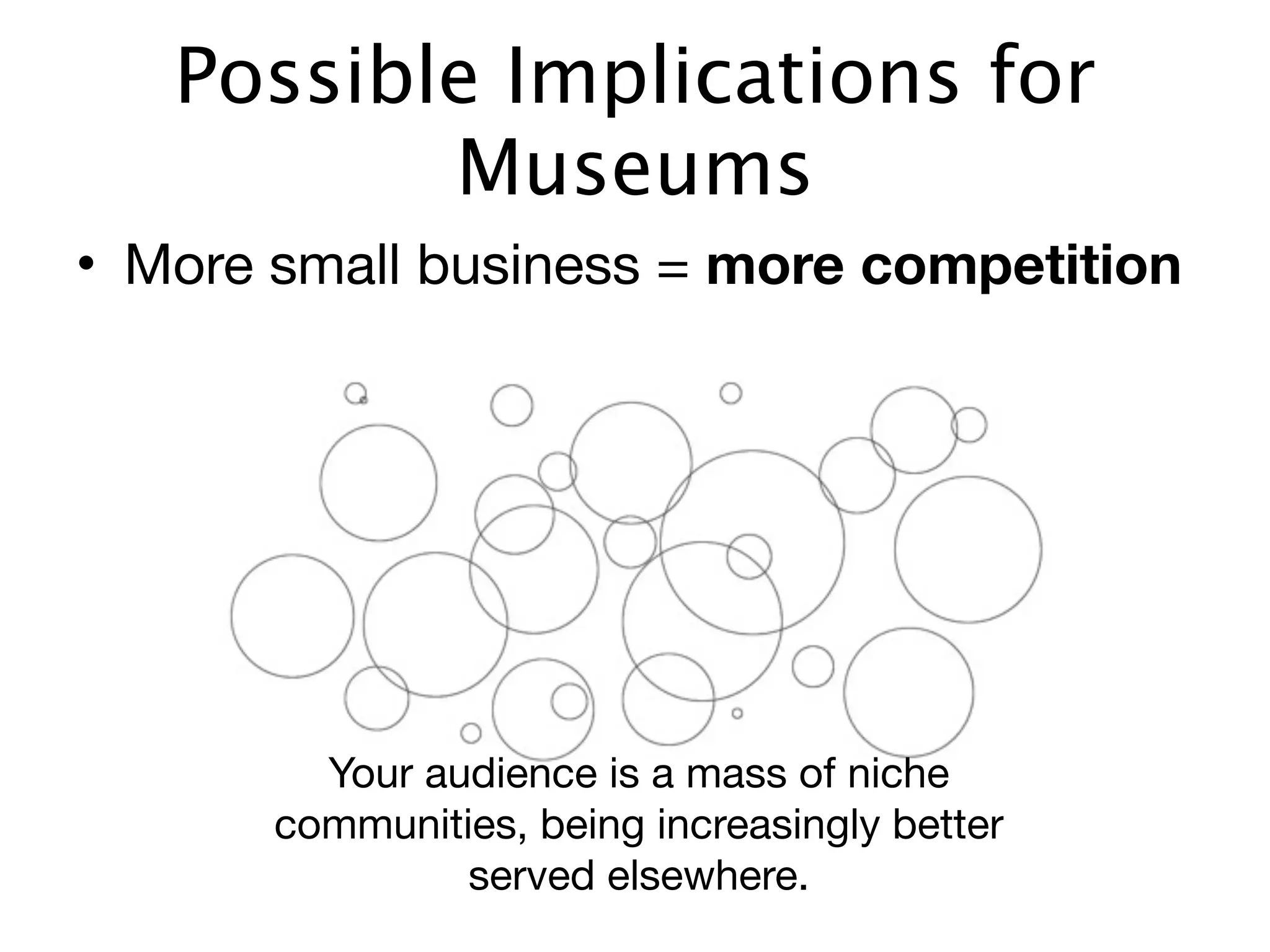
• More small business = more competition


         Your audience is a mass of niche
       communities, being increasingly better
                served elsewhere.
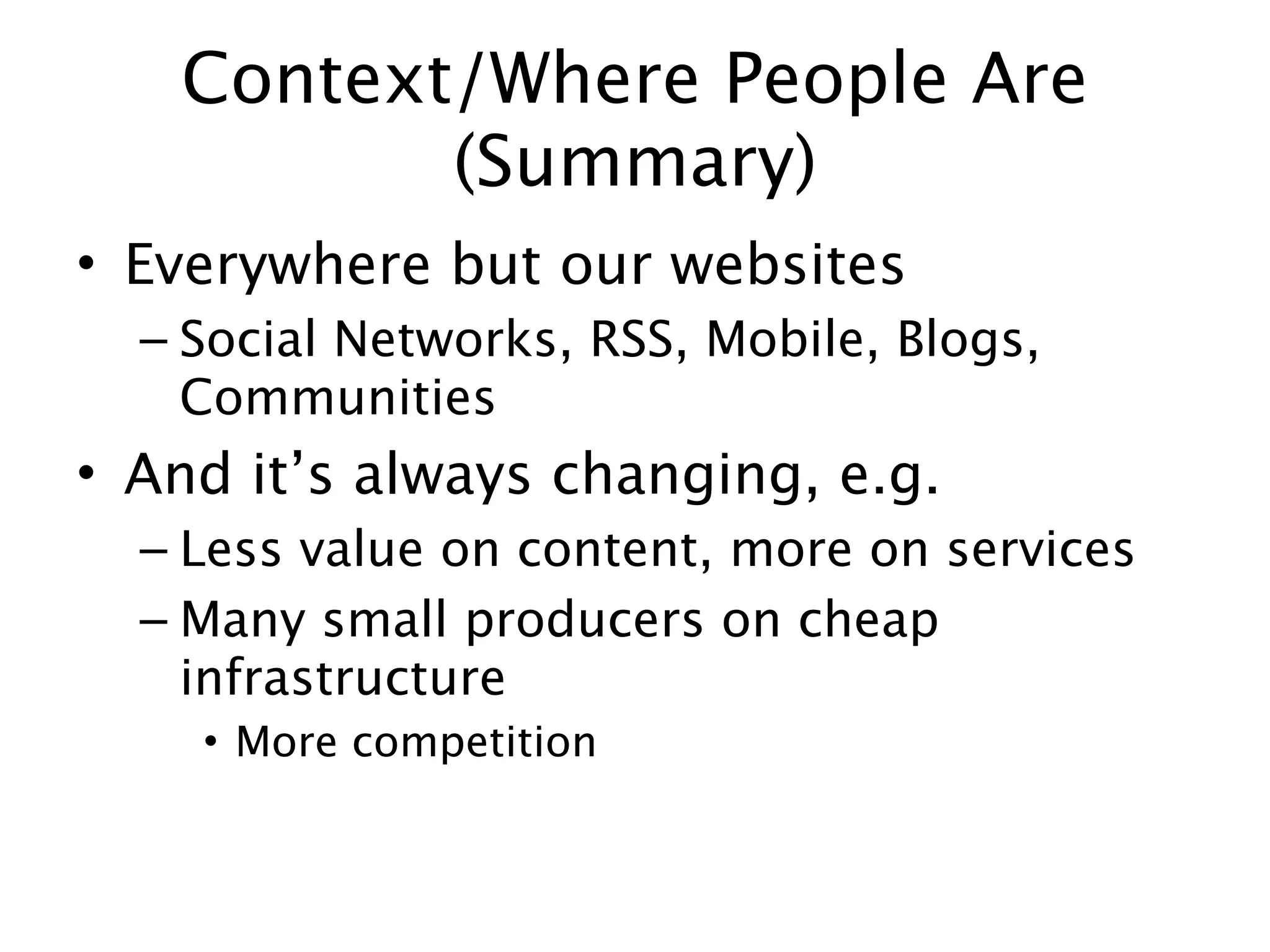
Context/Where People Are
          (Summary)
• Everywhere but our websites
  – Social Networks, RSS, Mobile, Blogs,
    Communities
• And it’s always changing, e.g.
  – Less value on content, more on services
  – Many small producers on cheap
    infrastructure
    • More competition
Q: What changes are
    you noticing?

Q: What implications
do these changes have?
                    31
The Relevance of
        Museums:
Where are museums online?
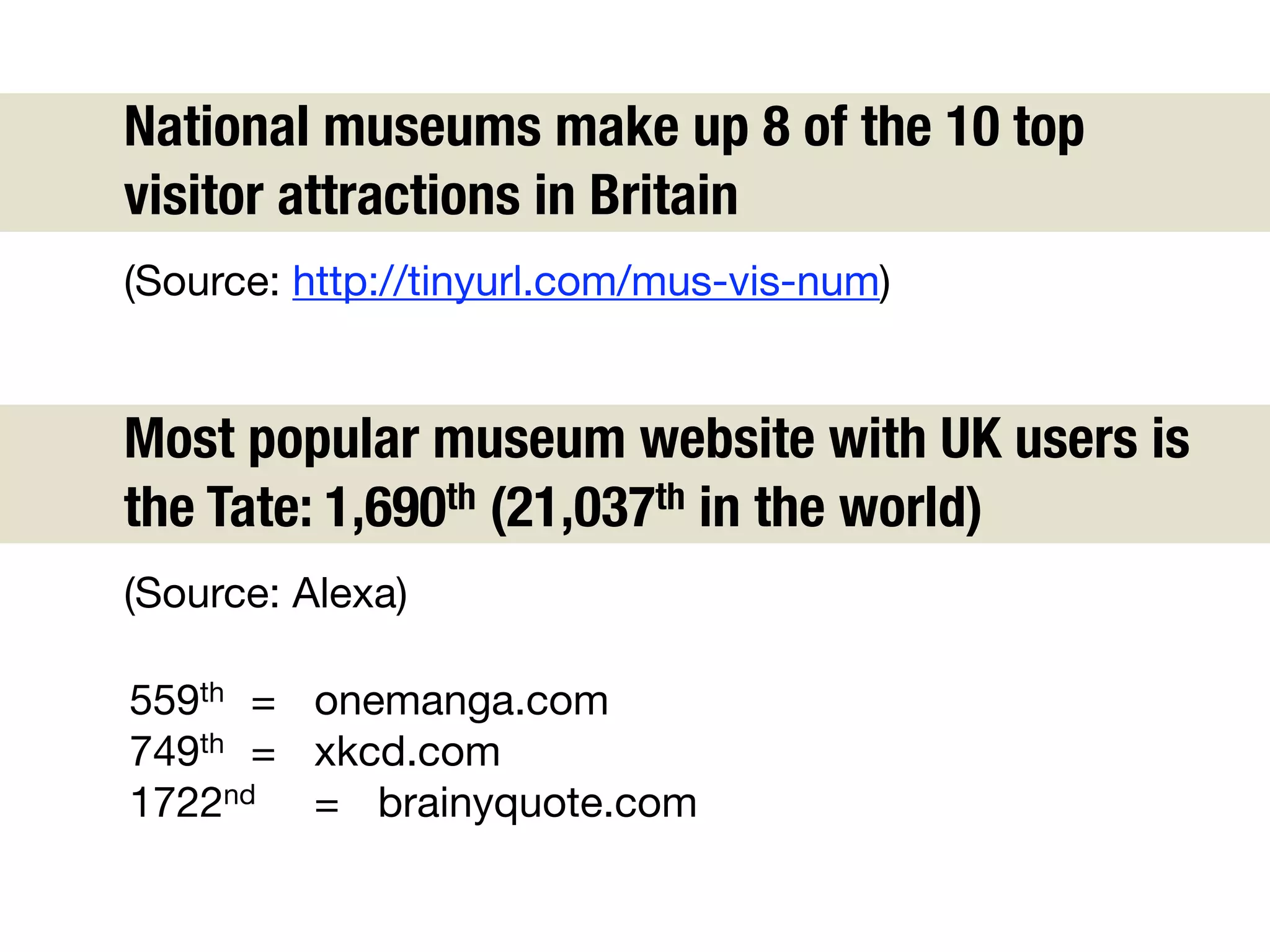
National museums make up 8 of the 10 top
  visitor attractions in Britain
	 (Source: http://tinyurl.com/mus-vis-num)

	 Most popular museum website with UK users is
  the Tate: 1,690th (21,037th in the world)
	 (Source: Alexa)
  559th	 =	 onemanga.com
  749th	 =	 xkcd.com
  1722nd	 =	 brainyquote.com
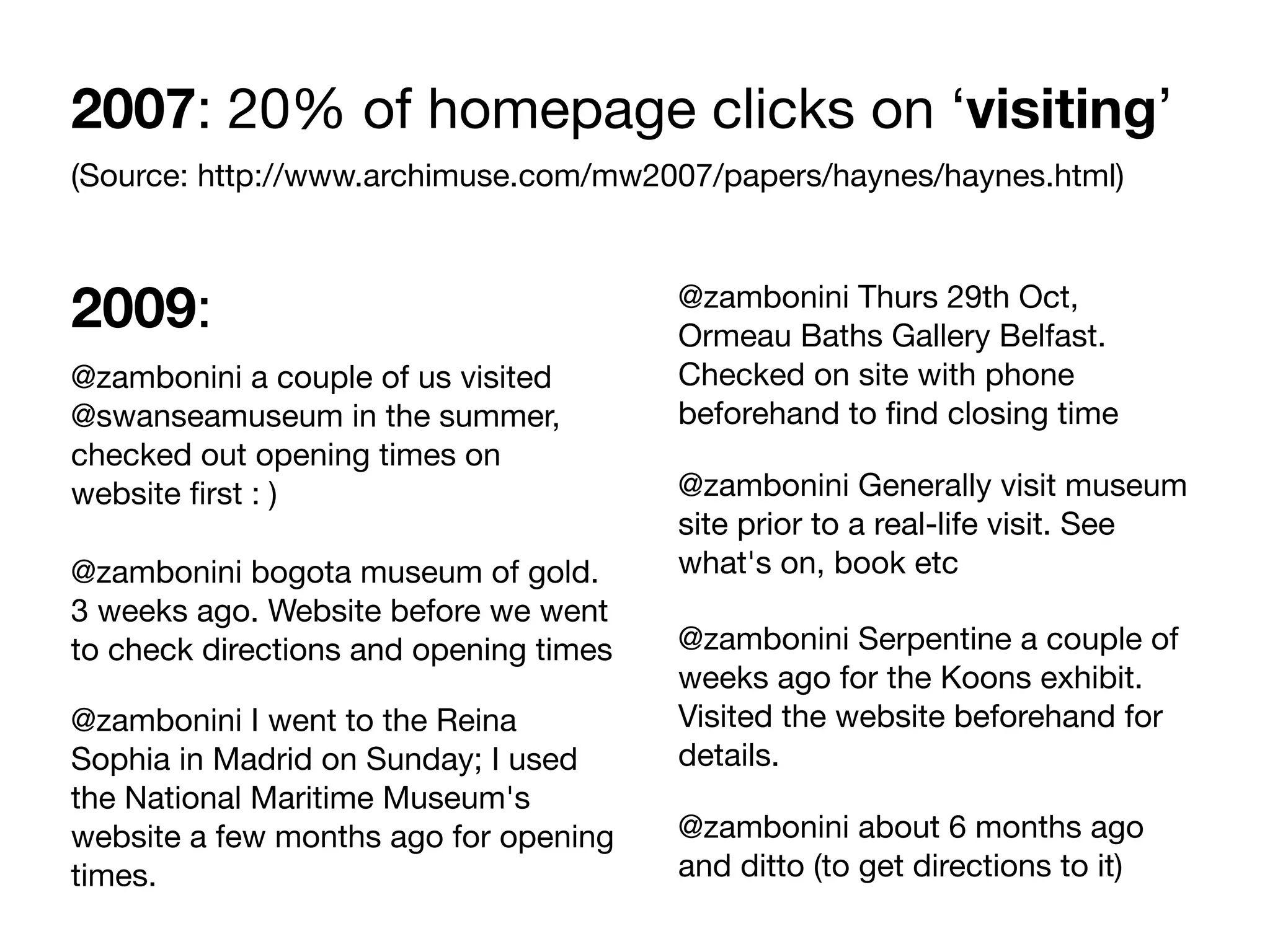
2007: 20% of homepage clicks on ‘visiting’
(Source: http://www.archimuse.com/mw2007/papers/haynes/haynes.html)


2009:                                   @zambonini Thurs 29th Oct,
                                        Ormeau Baths Gallery Belfast.
@zambonini a couple of us visited       Checked on site with phone
@swanseamuseum in the summer,           beforehand to find closing time
checked out opening times on
website first : )                        @zambonini Generally visit museum
                                        site prior to a real-life visit. See
@zambonini bogota museum of gold.       what's on, book etc
3 weeks ago. Website before we went
to check directions and opening times   @zambonini Serpentine a couple of
                                        weeks ago for the Koons exhibit.
@zambonini I went to the Reina          Visited the website beforehand for
Sophia in Madrid on Sunday; I used      details.
the National Maritime Museum's
website a few months ago for opening    @zambonini about 6 months ago
times.                                  and ditto (to get directions to it)
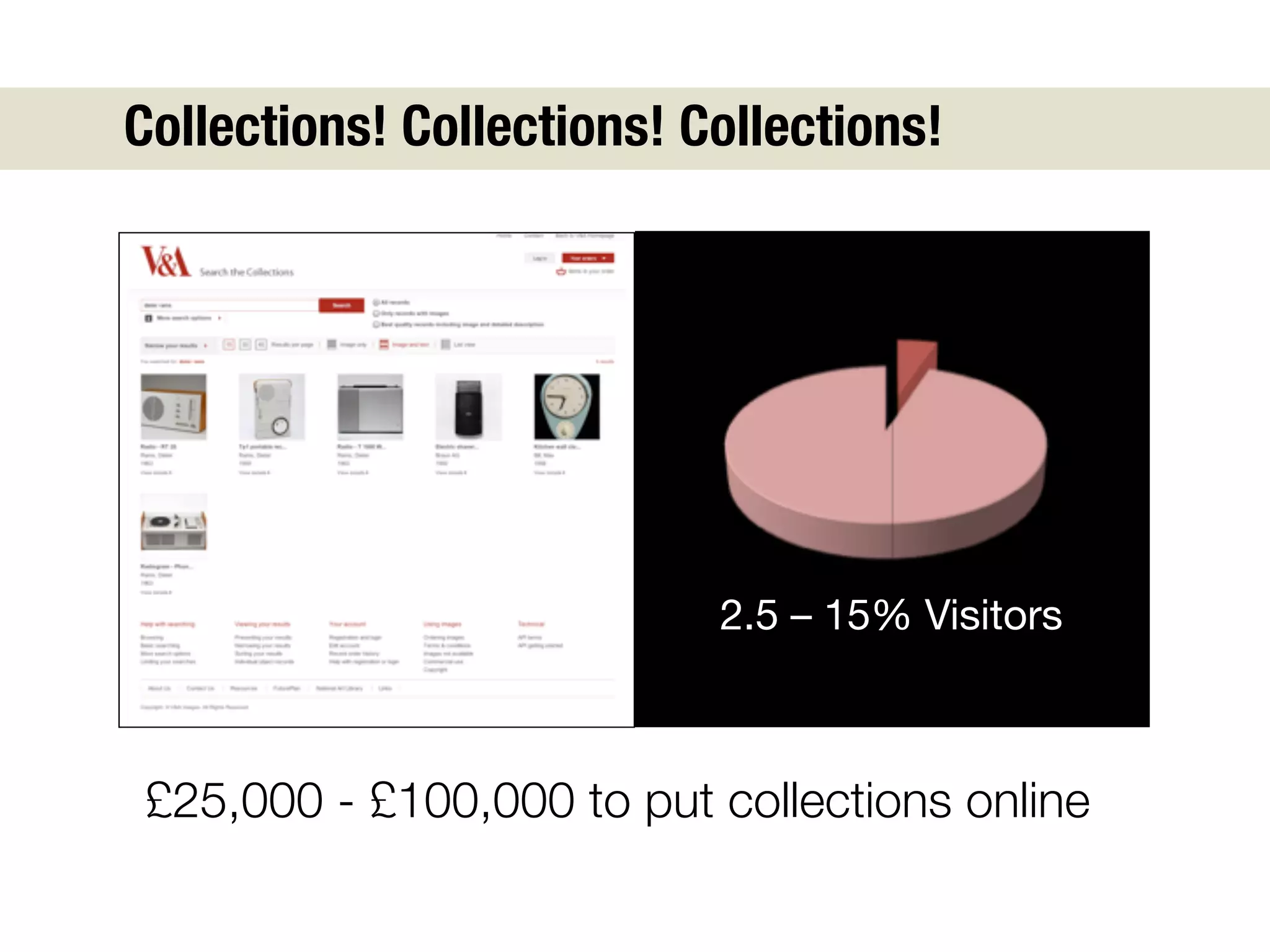
Collections! Collections! Collections!


                             2.5 – 15% Visitors


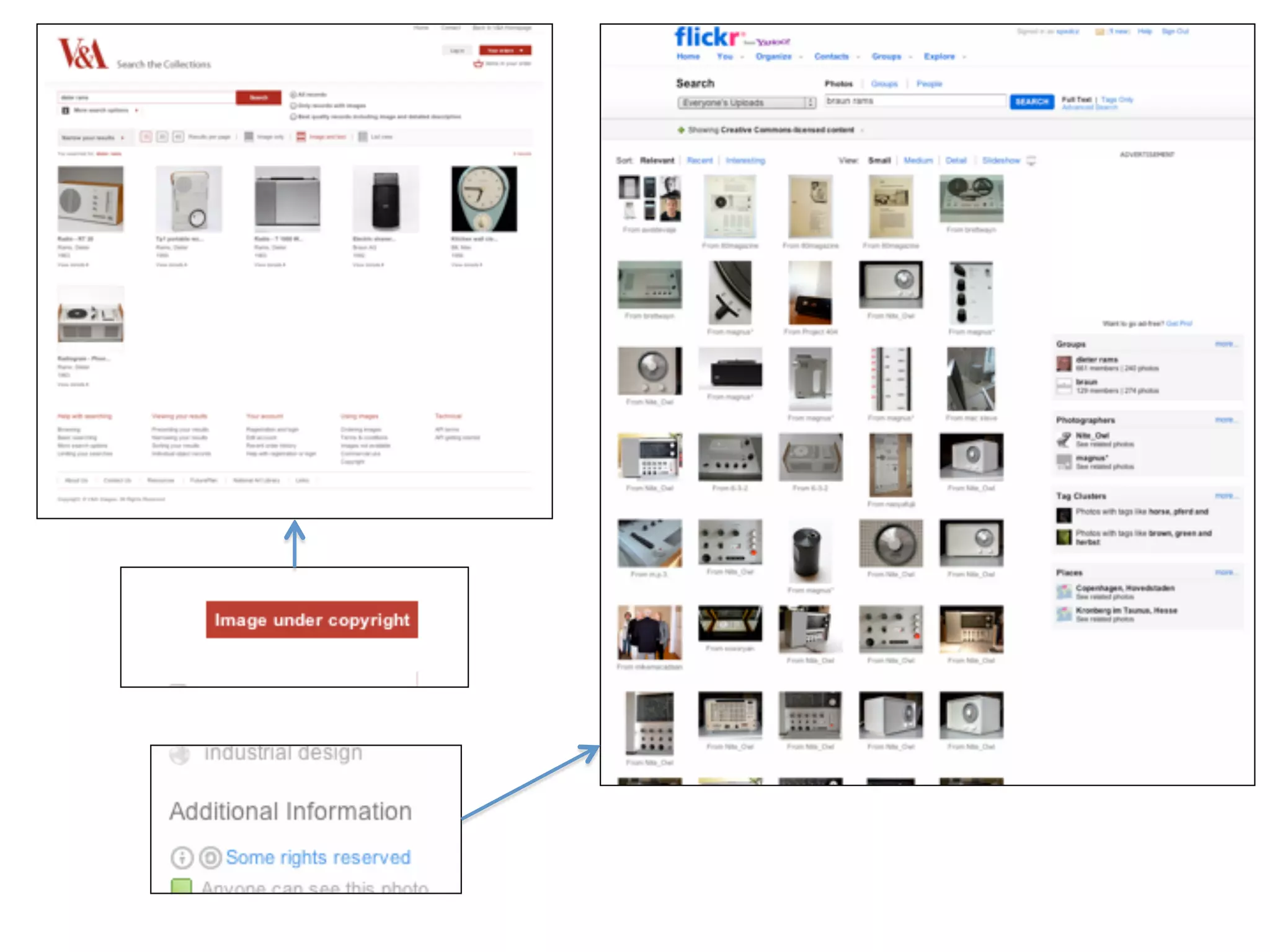
   £25,000 - £100,000 to put collections online
Where Museums Are
          (Summary)
• Physical museum more popular than
  website
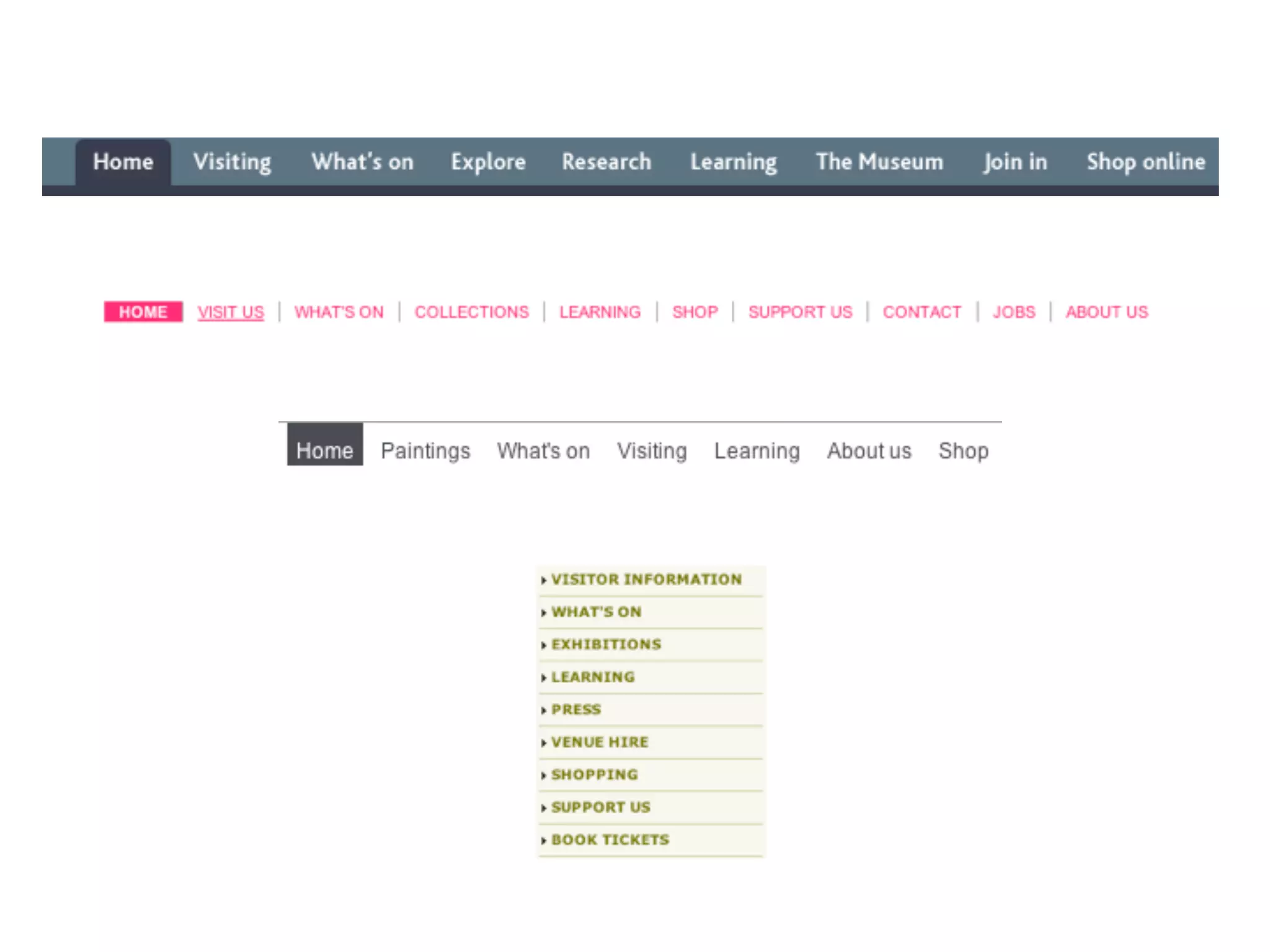
• Websites largely similar to 10 years
  ago
• Collections online, but...
Q: What is the purpose
  of museum websites?

 to advertise the physical experience?
     to educate / provide content?
          to generate revenue?
                                     40
Where We Could Be
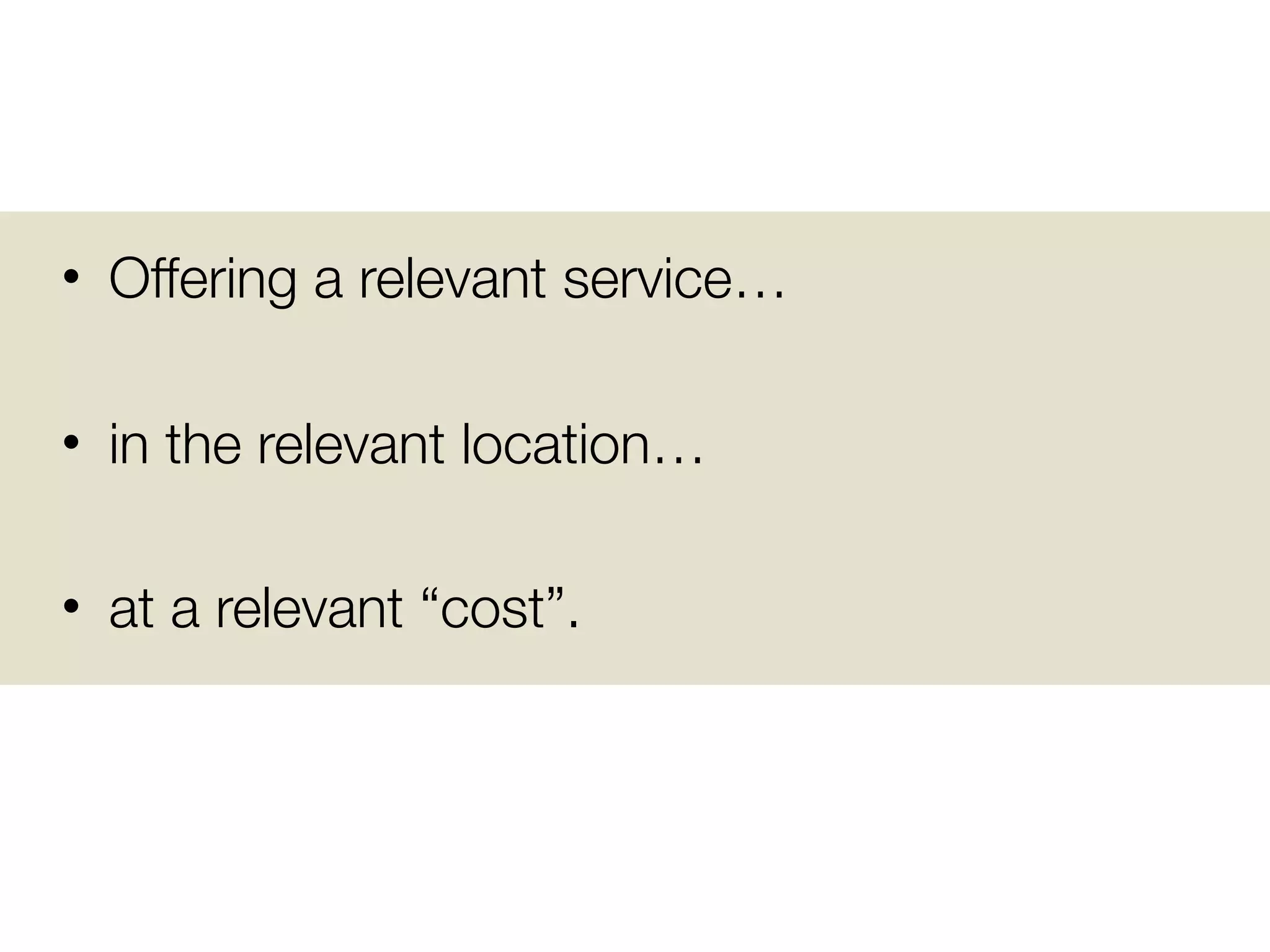
• Offering a relevant service…

• in the relevant location…

• at a relevant “cost”.
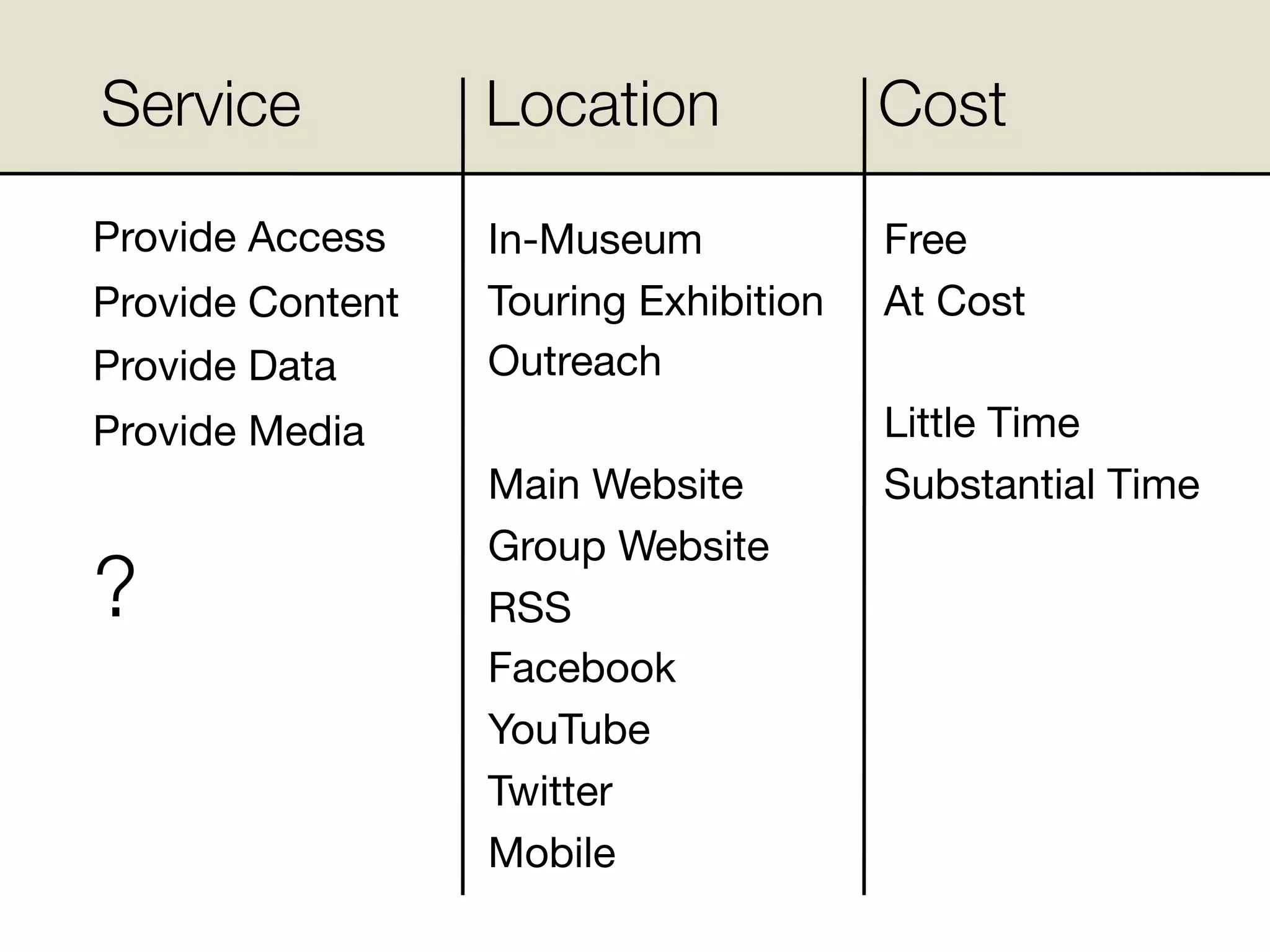
Service           Location             Cost
Provide Access    In-Museum            Free
Provide Content   Touring Exhibition   At Cost
Provide Data      Outreach
Provide Media                          Little Time
                  Main Website         Substantial Time
                  Group Website
?                 RSS
                  Facebook
                  YouTube
                  Twitter
                  Mobile
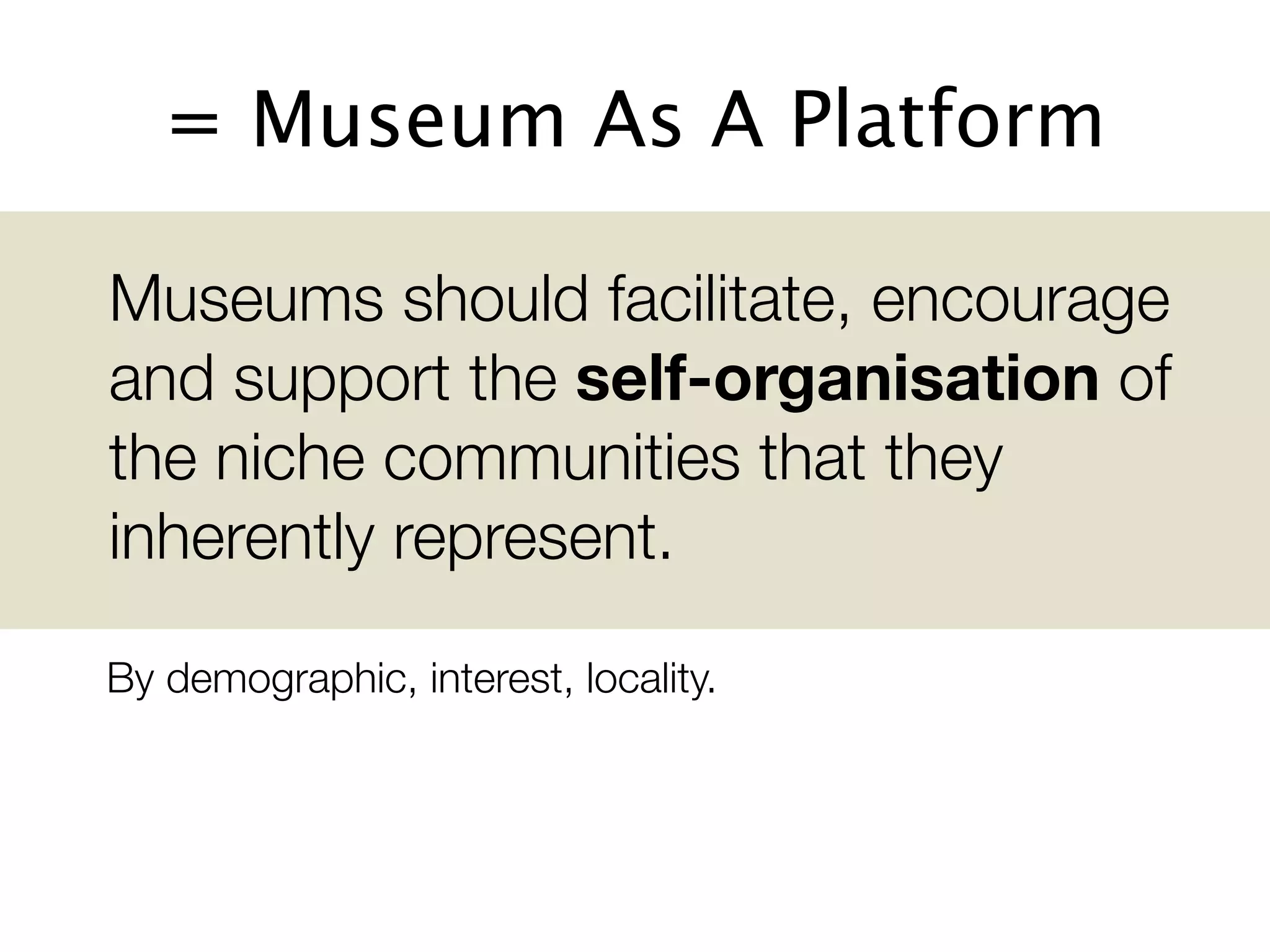
= Museum As A Platform

	 Museums should facilitate, encourage
  and support the self-organisation of
  the niche communities that they
  inherently represent.

 By demographic, interest, locality.
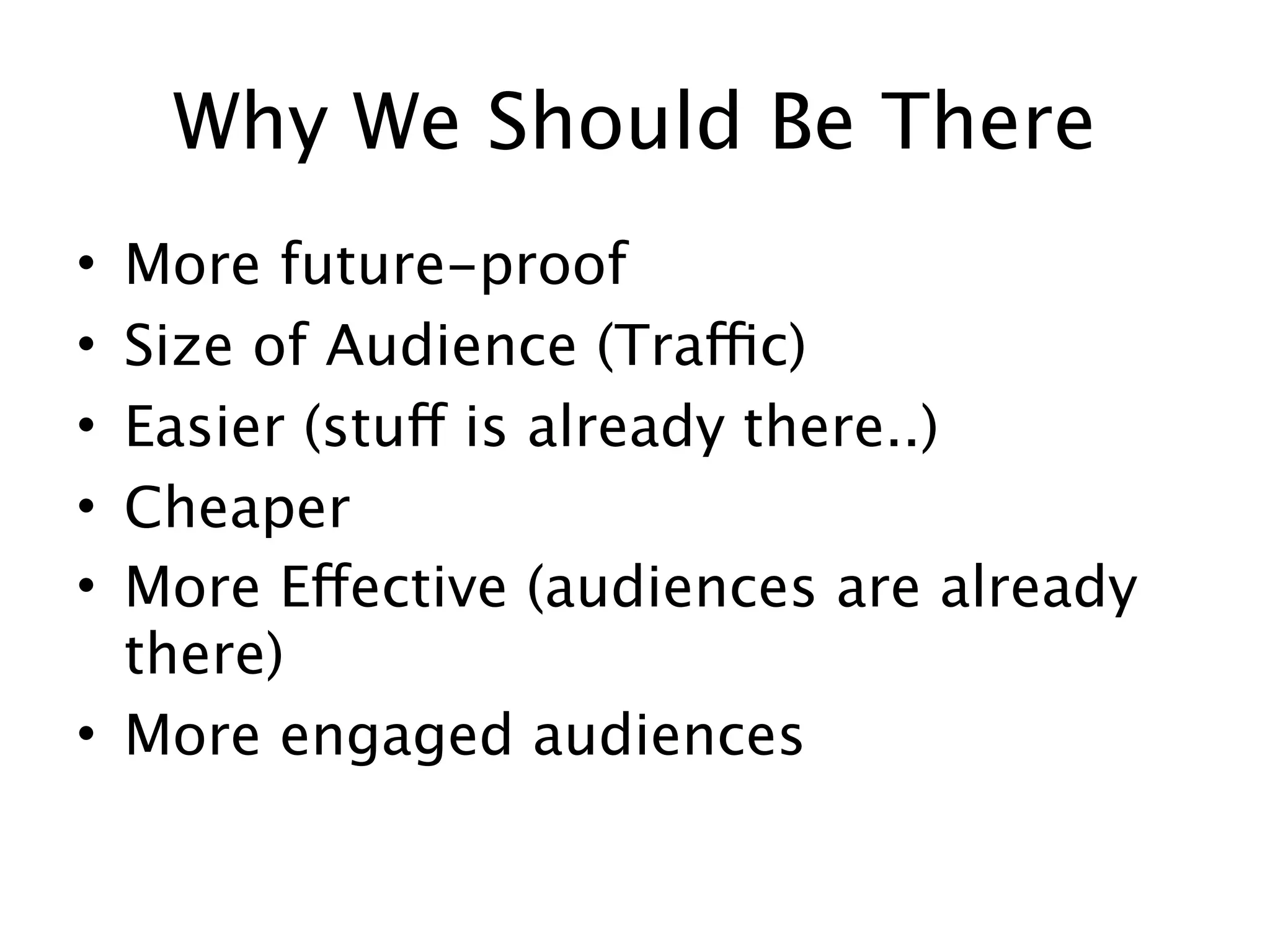
Why We Should Be There
• More future-proof
• Size of Audience (Traffic)
• Easier (stuff is already there..)
• Cheaper
• More Effective (audiences are already
  there)
• More engaged audiences
What The New Museum
          Looks Like
• Museum As A Platform
  – Content / Collections / Community
• Case Studies
  – Brooklyn
  – Launchball
  – V&A Design a Tile
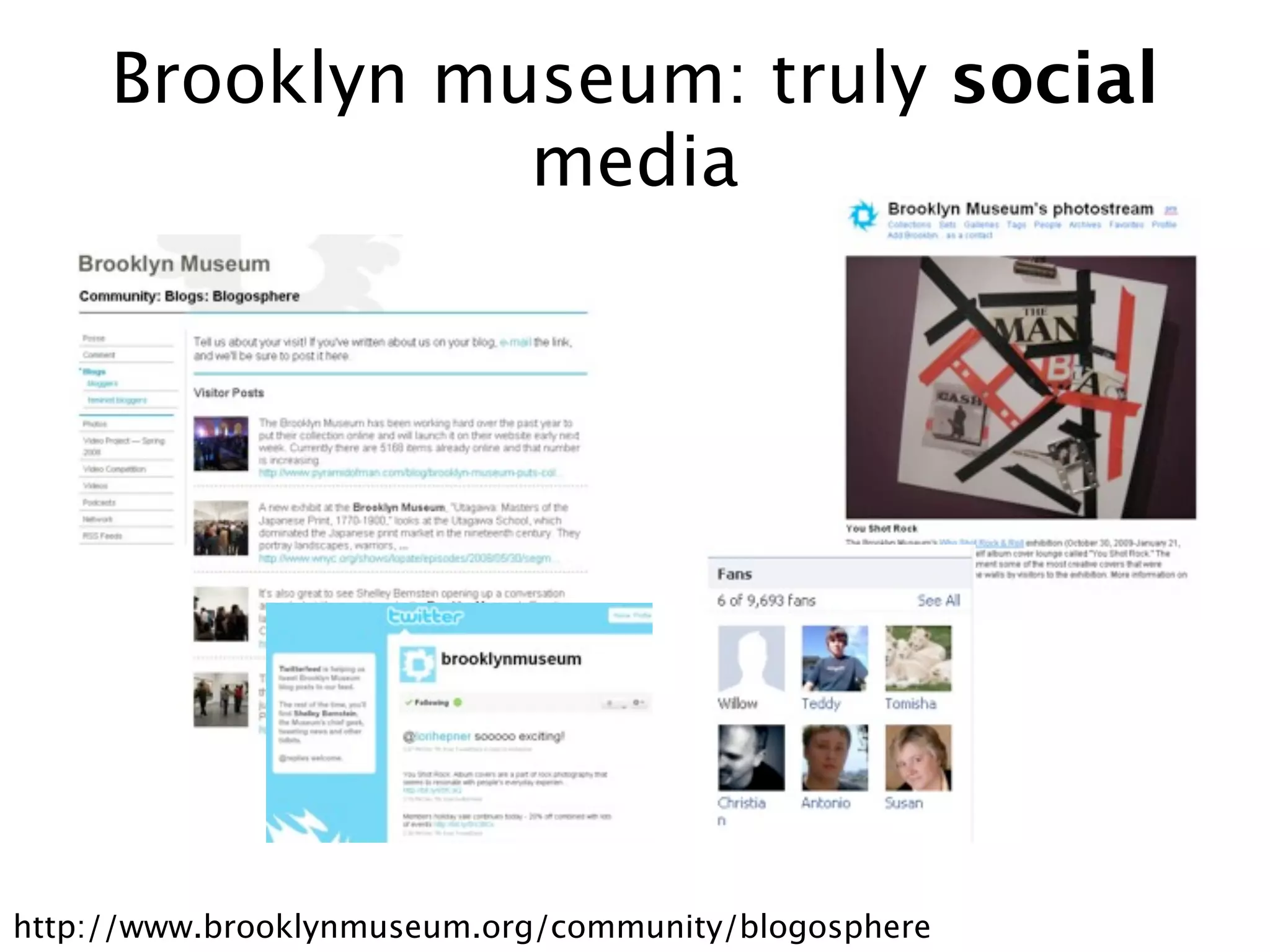
Brooklyn museum: truly social
                media


http://www.brooklynmuseum.org/community/blogosphere
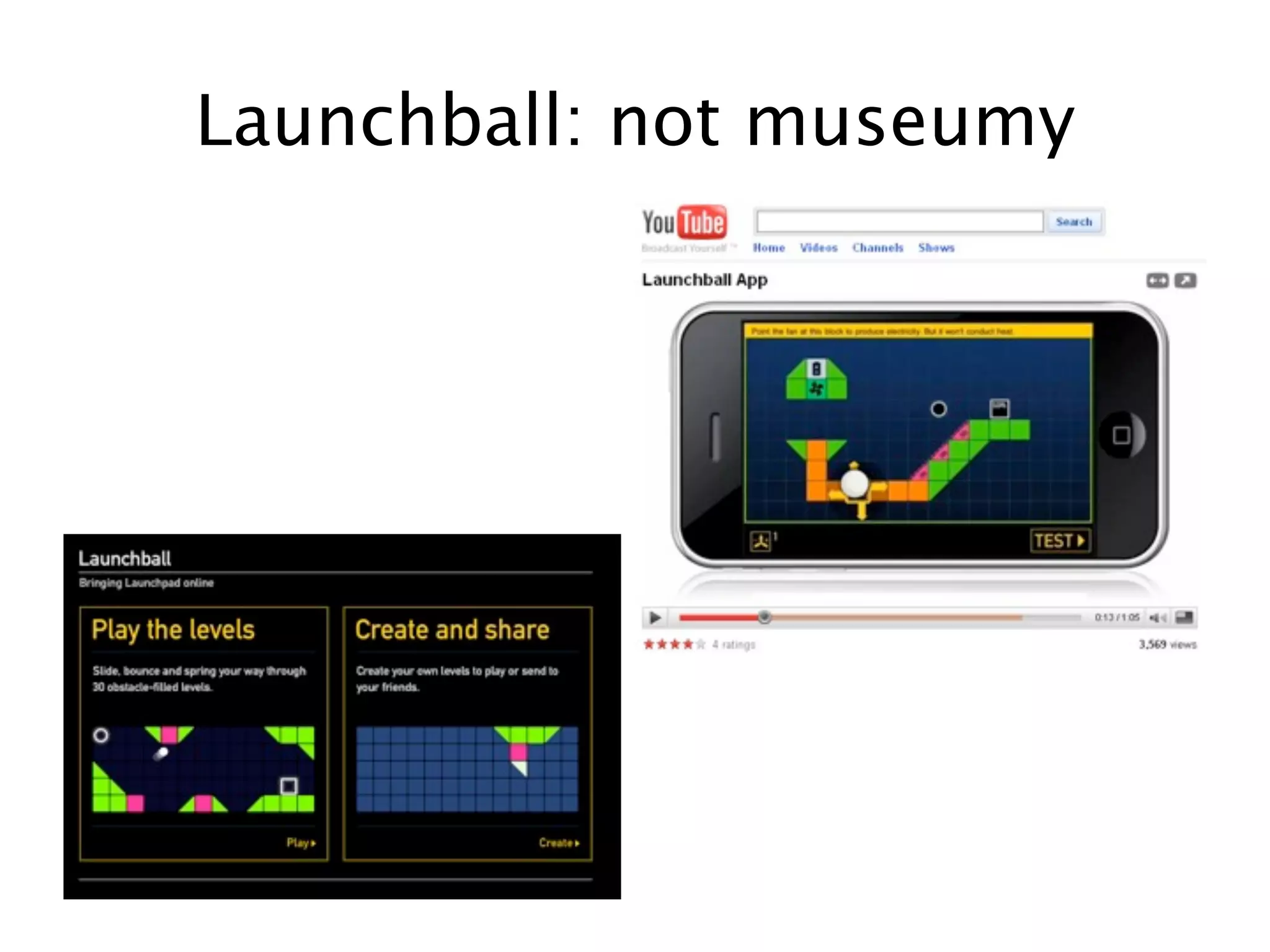
Launchball: not museumy
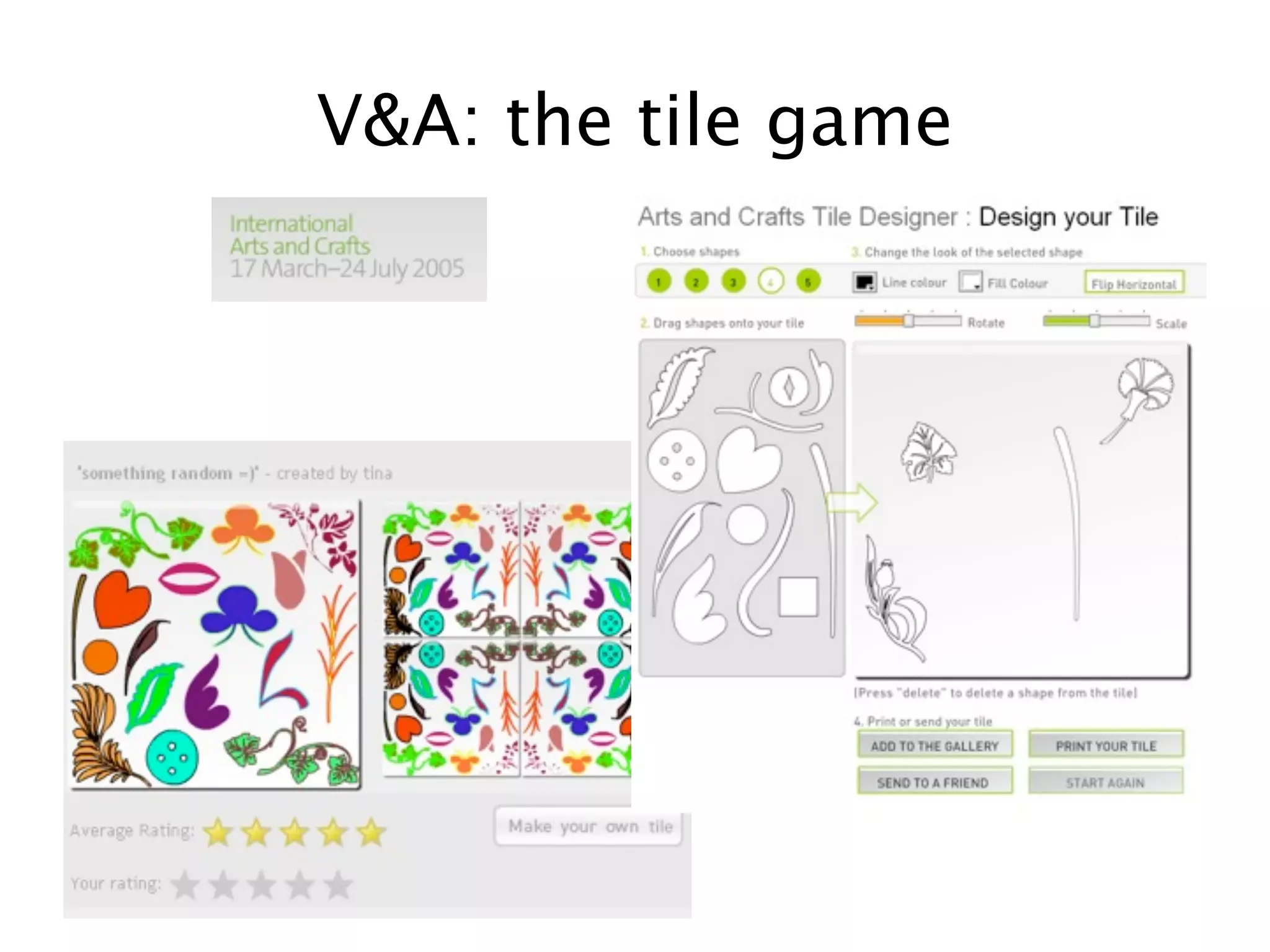
V&A: the tile game
We > Me
• From a Me-seum to a You-seum
• The Powerful Stories are from Real
  People
Where We Should Be (Summary)
• Where Everyone Else Is
• Servicing Our Communities
• The Museum Should Be A Platform
Q: What is a platform?

   Q: How can we support
        communities?

Q: What successful examples do
        you know of?
                            52
How We Get From Here To
        There
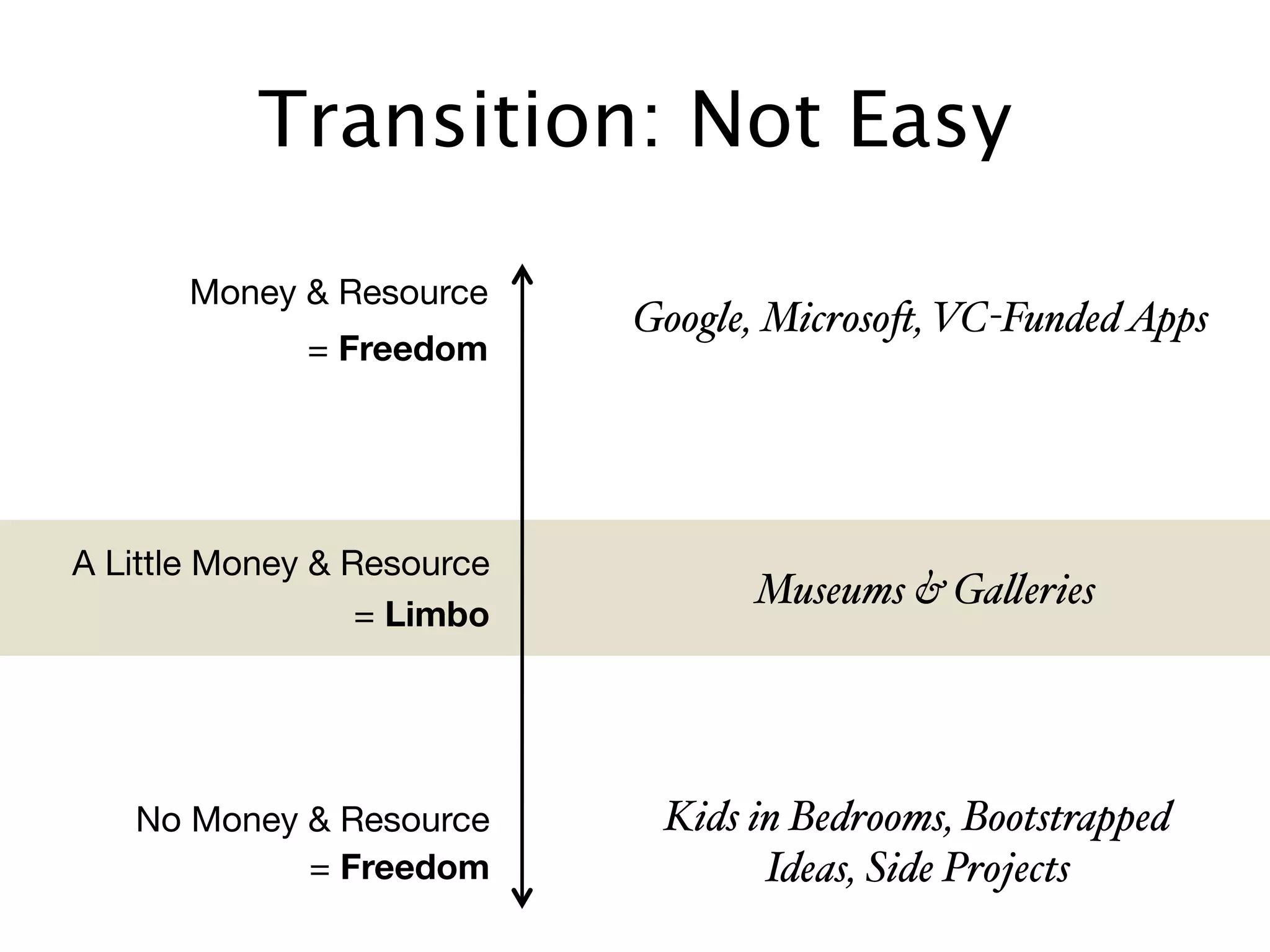
Transition: Not Easy

       Money & Resource
                            Google, Microso$, VC-Funded Apps
              = Freedom


A Little Money & Resource
                                  Museums & Ga#eries
                  = Limbo


   No Money & Resource       Kids in Bedrooms, Bootstrapped
            = Freedom              Ideas, Side Projects
The Mindset
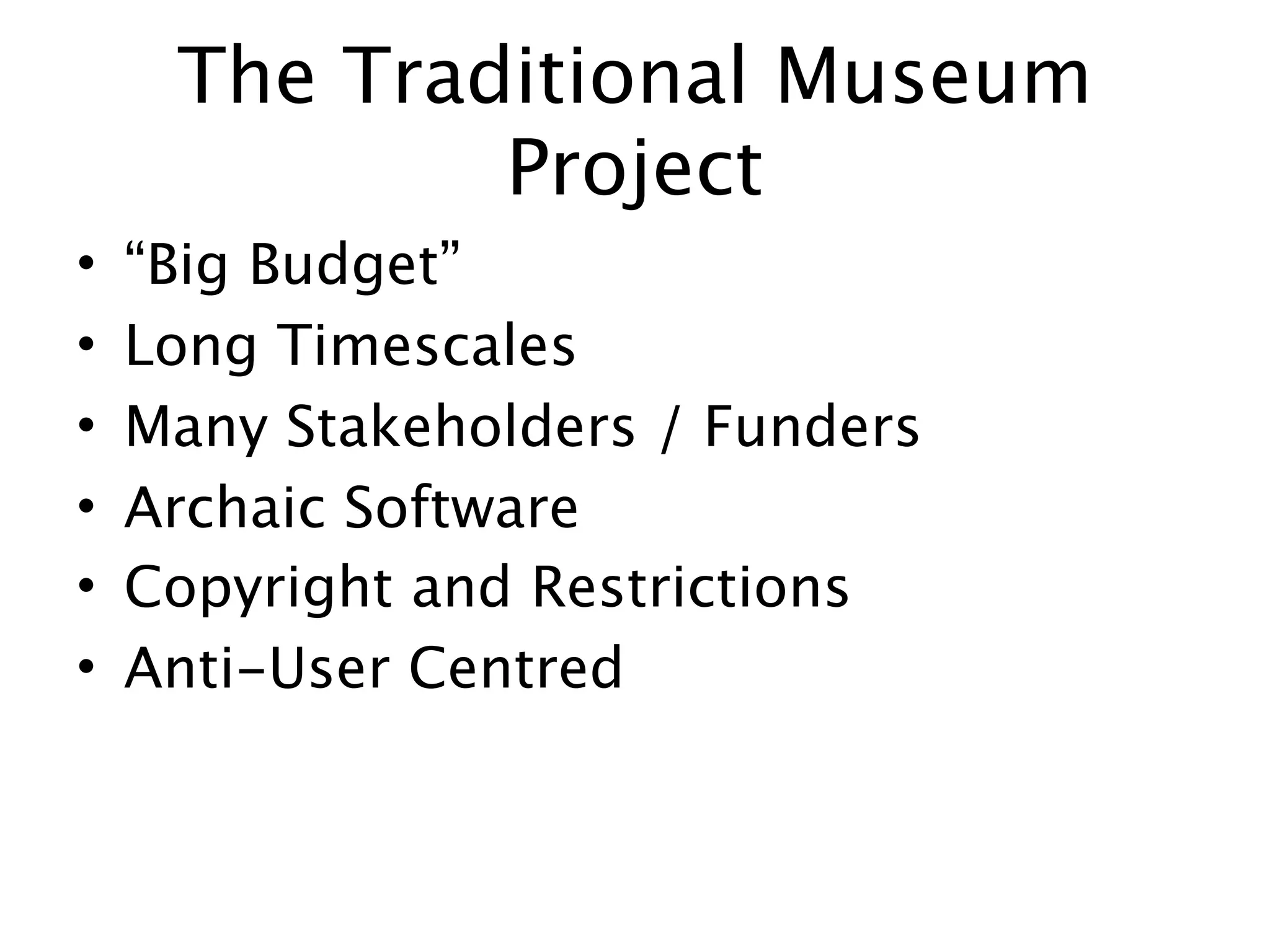
The Traditional Museum
             Project
•   “Big Budget”
•   Long Timescales
•   Many Stakeholders / Funders
•   Archaic Software
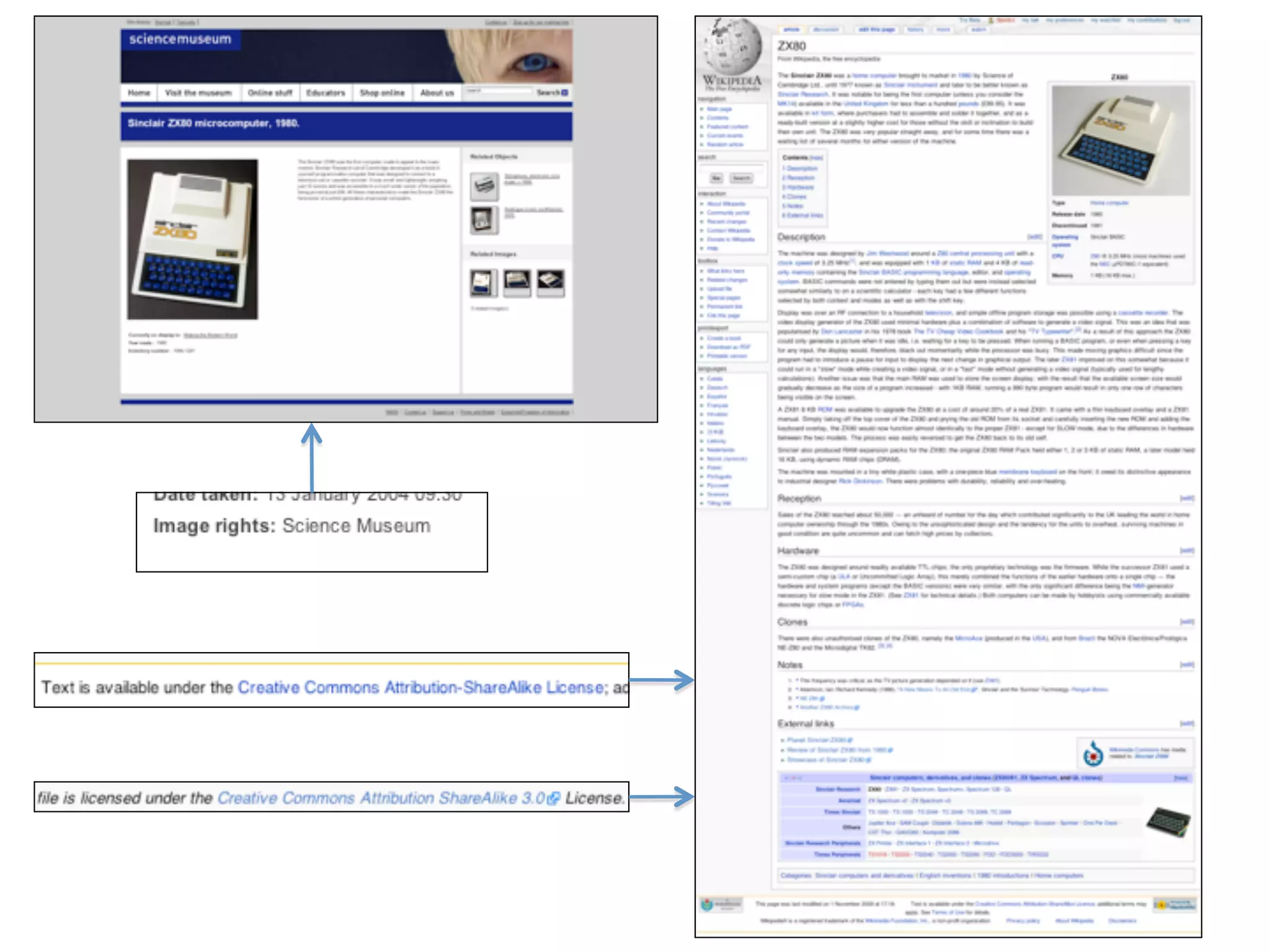
•   Copyright and Restrictions
•   Anti-User Centred
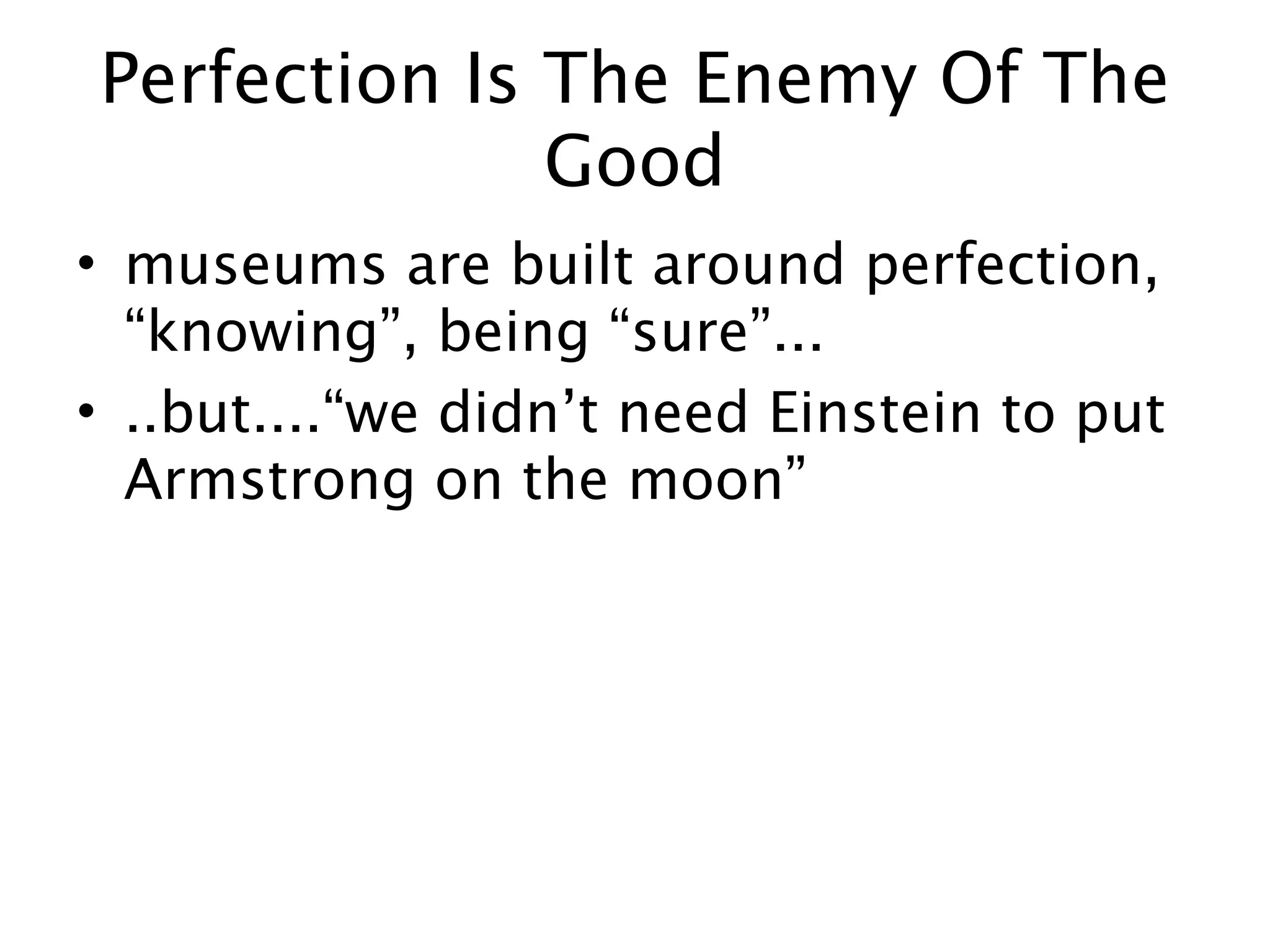
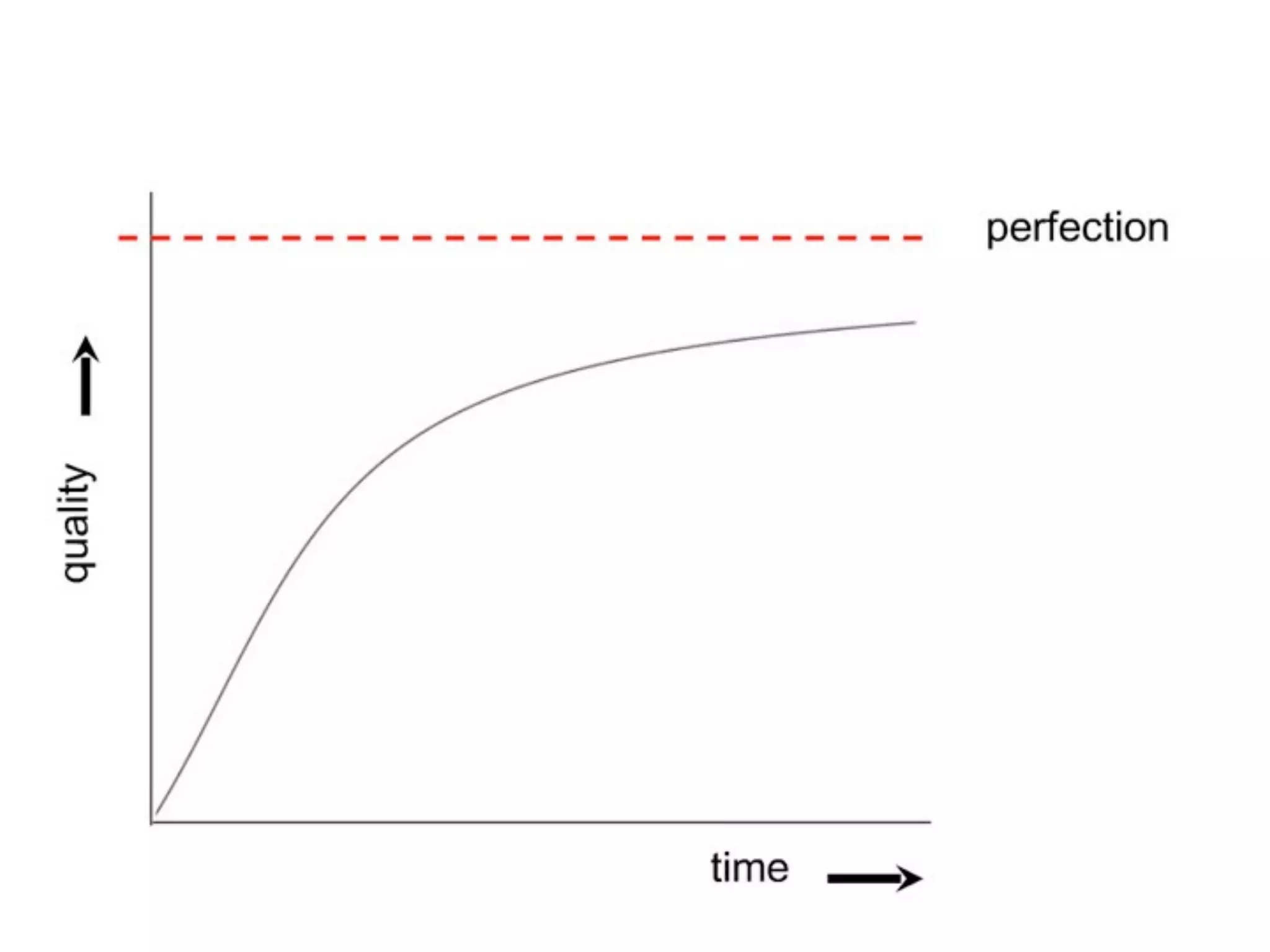
Perfection Is The Enemy Of The
              Good
• museums are built around perfection,
  “knowing”, being “sure”...
• ..but....“we didn’t need Einstein to put
  Armstrong on the moon”
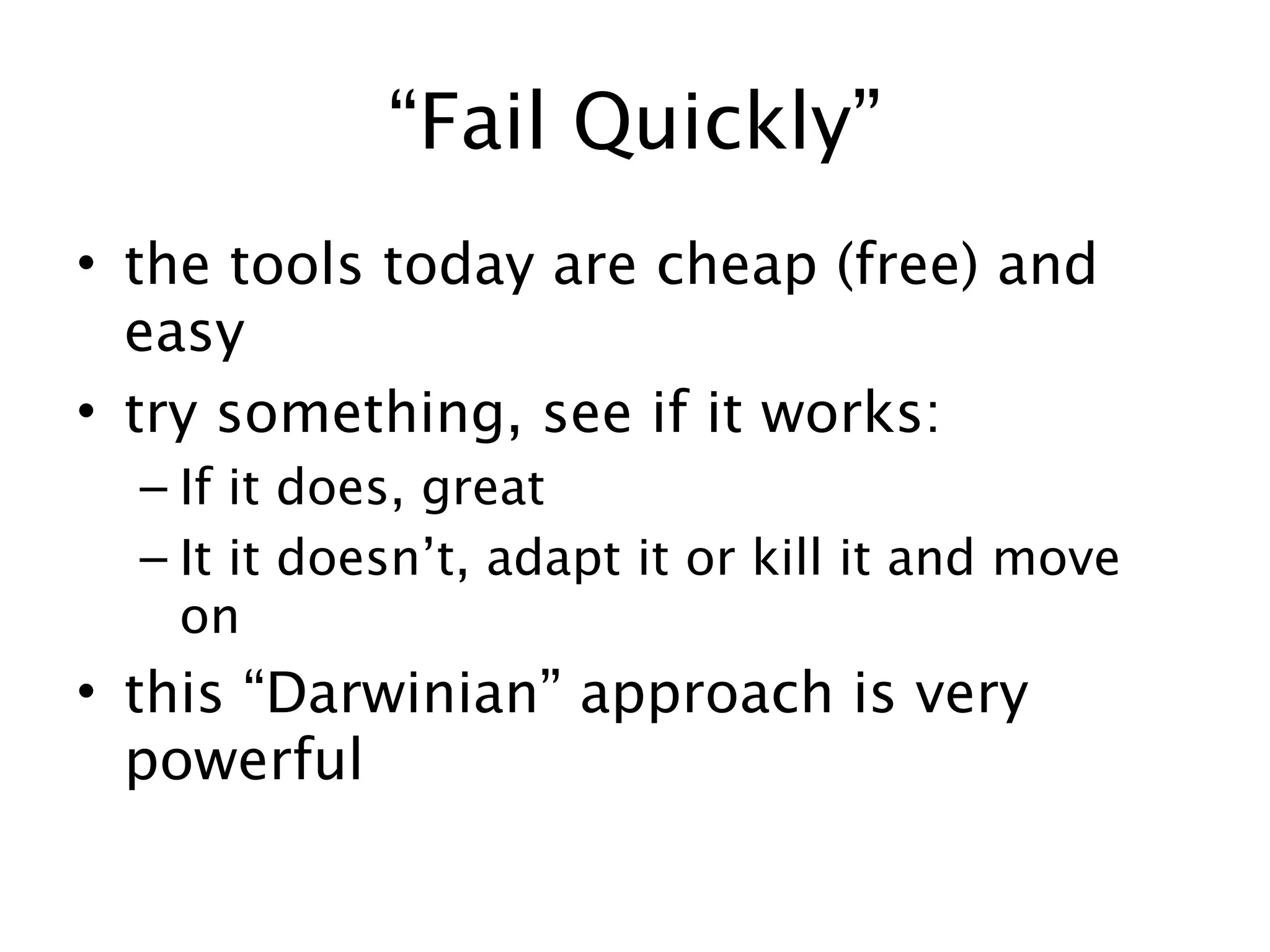
“Fail Quickly”
• the tools today are cheap (free) and
  easy
• try something, see if it works:
  – If it does, great
  – It it doesn’t, adapt it or kill it and move
    on
• this “Darwinian” approach is very
  powerful
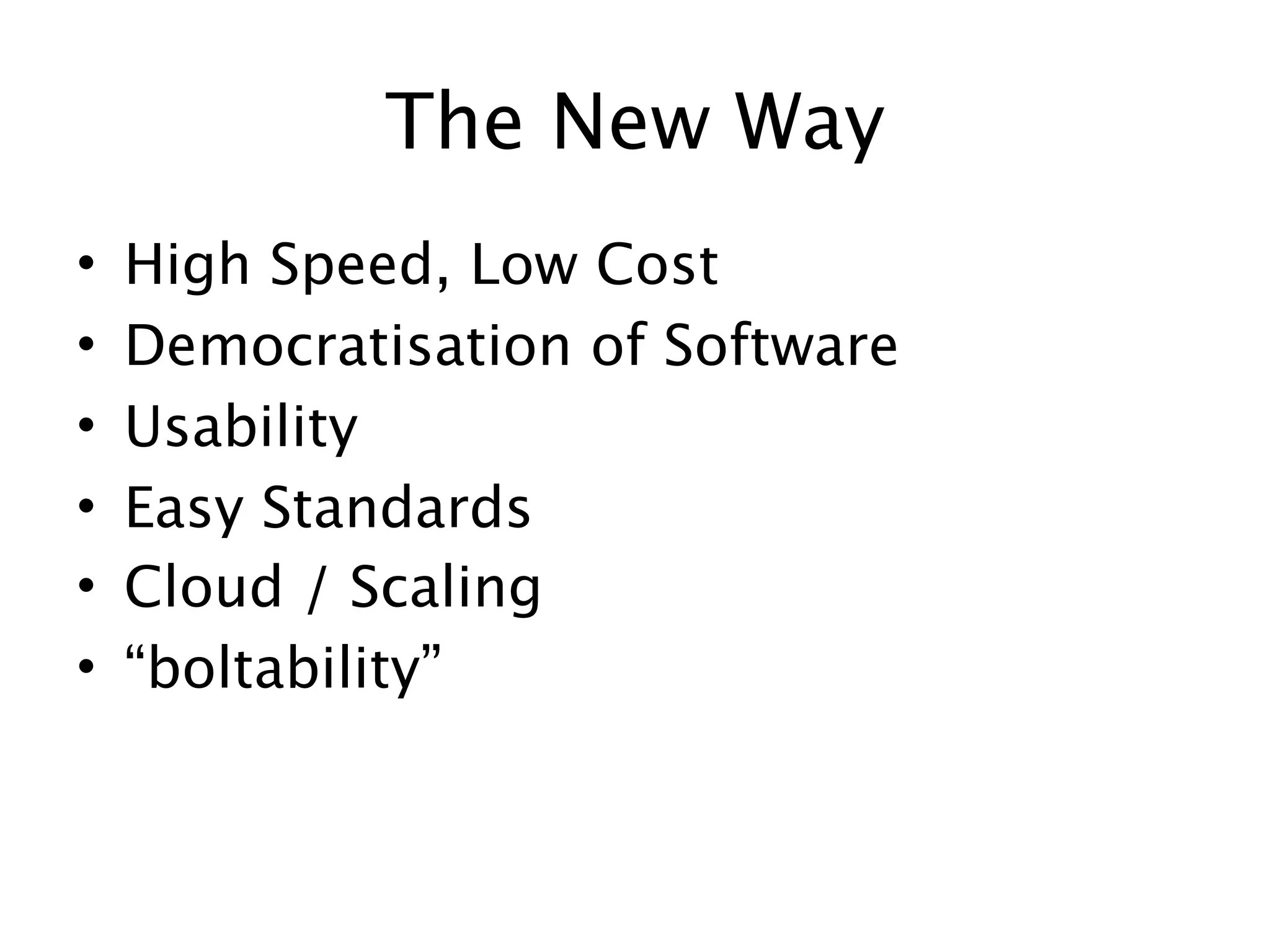
The New Way
•   High Speed, Low Cost
•   Democratisation of Software
•   Usability
•   Easy Standards
•   Cloud / Scaling
•   “boltability”
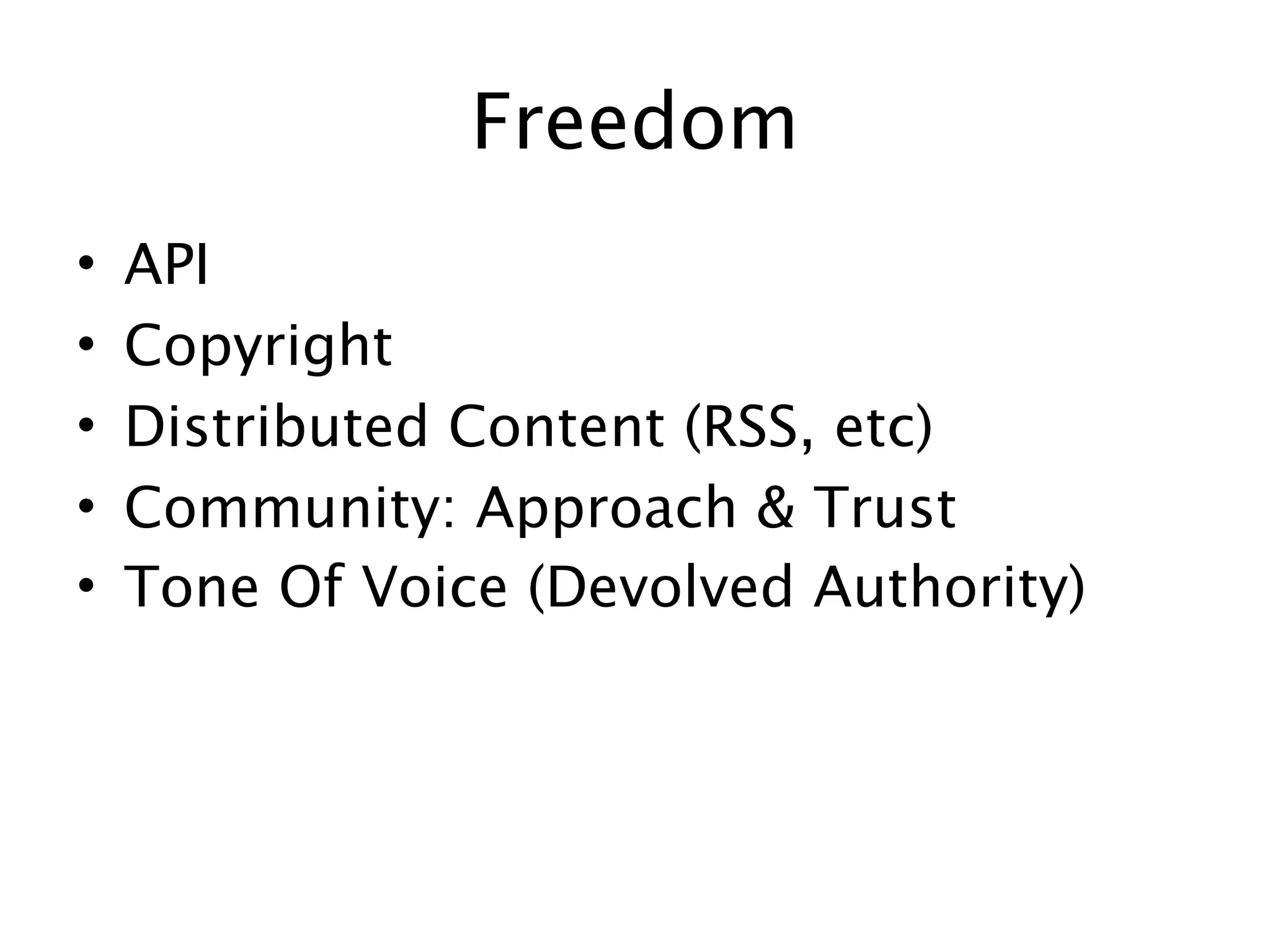
Freedom
•   API
•   Copyright
•   Distributed Content (RSS, etc)
•   Community: Approach & Trust
•   Tone Of Voice (Devolved Authority)
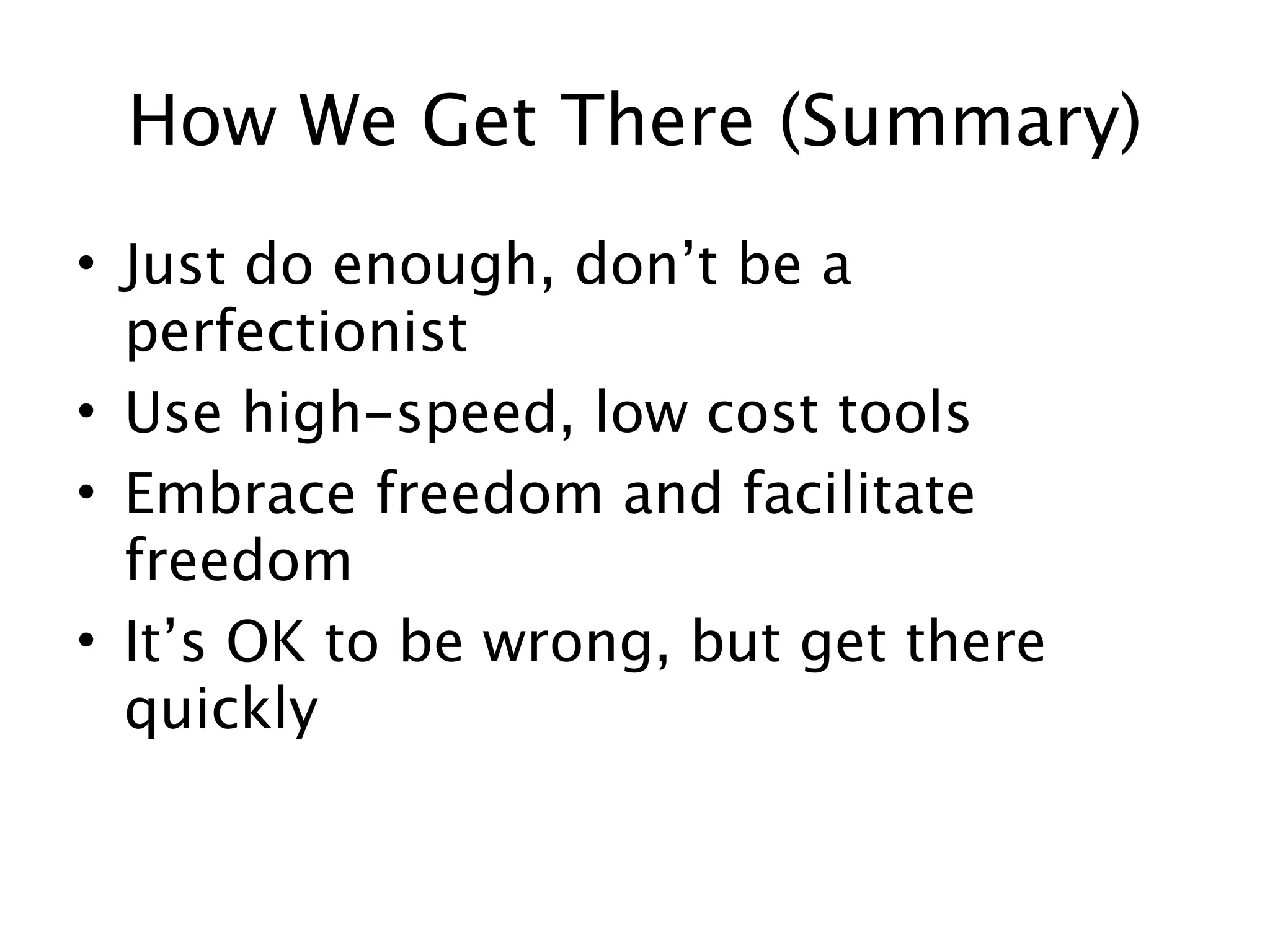
How We Get There (Summary)
• Just do enough, don’t be a
  perfectionist
• Use high-speed, low cost tools
• Embrace freedom and facilitate
  freedom
• It’s OK to be wrong, but get there
  quickly
Q: What stops us using agile/
       quick solutions?

Q: How can we start using them?

Q: How do you approach failed
          projects?
                             63
What We Tried To Do:
  Museum In A Day
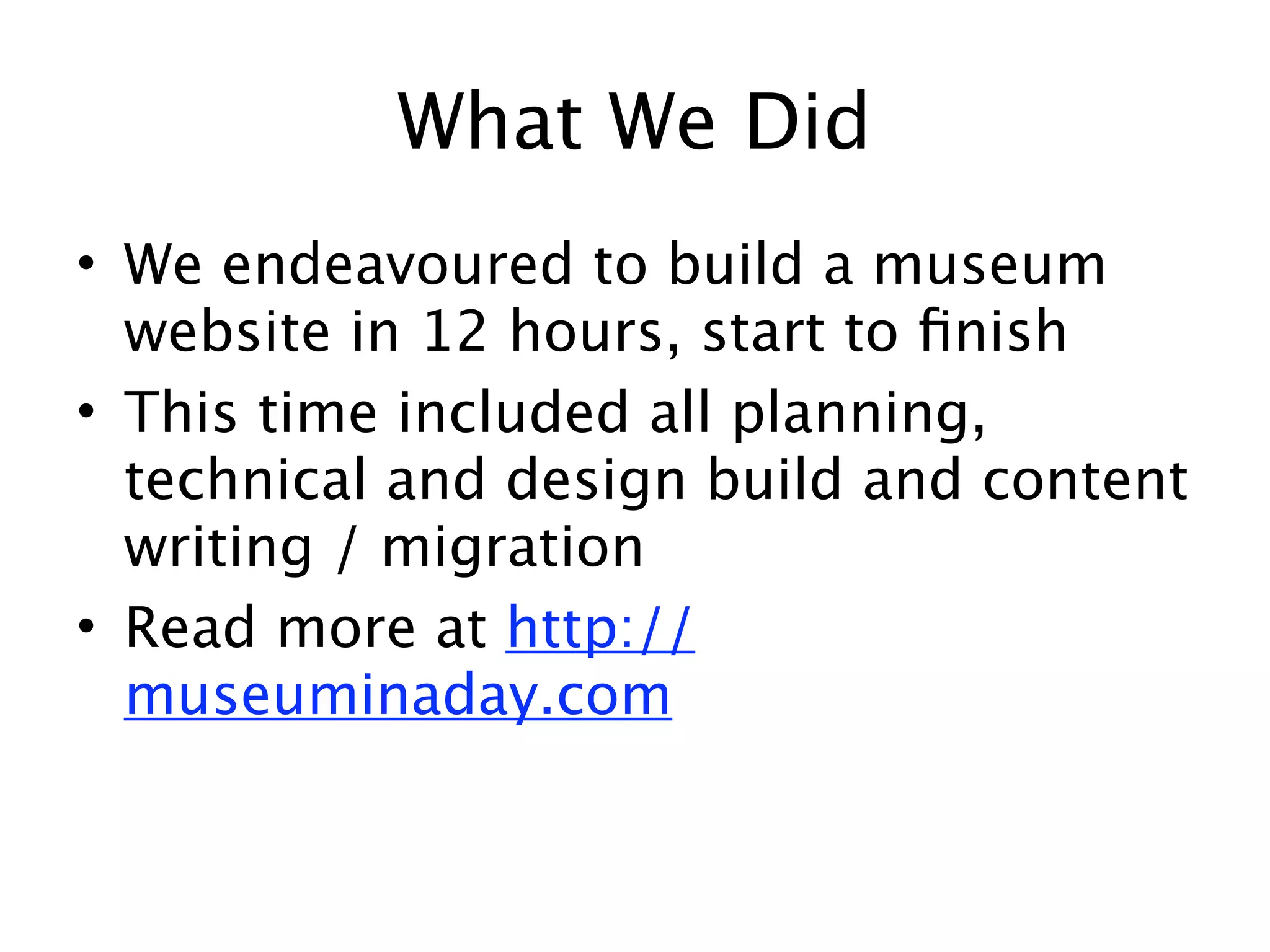
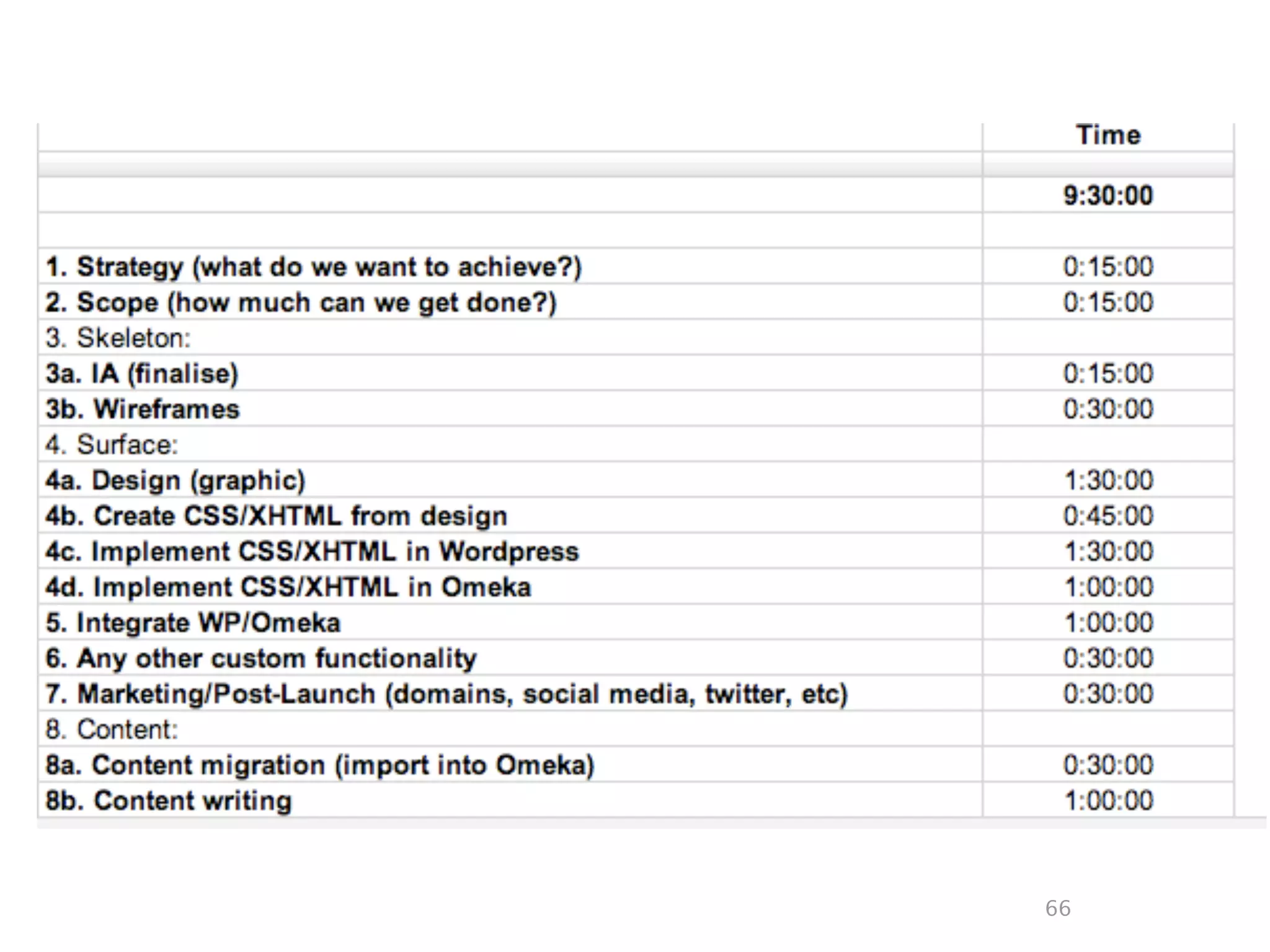
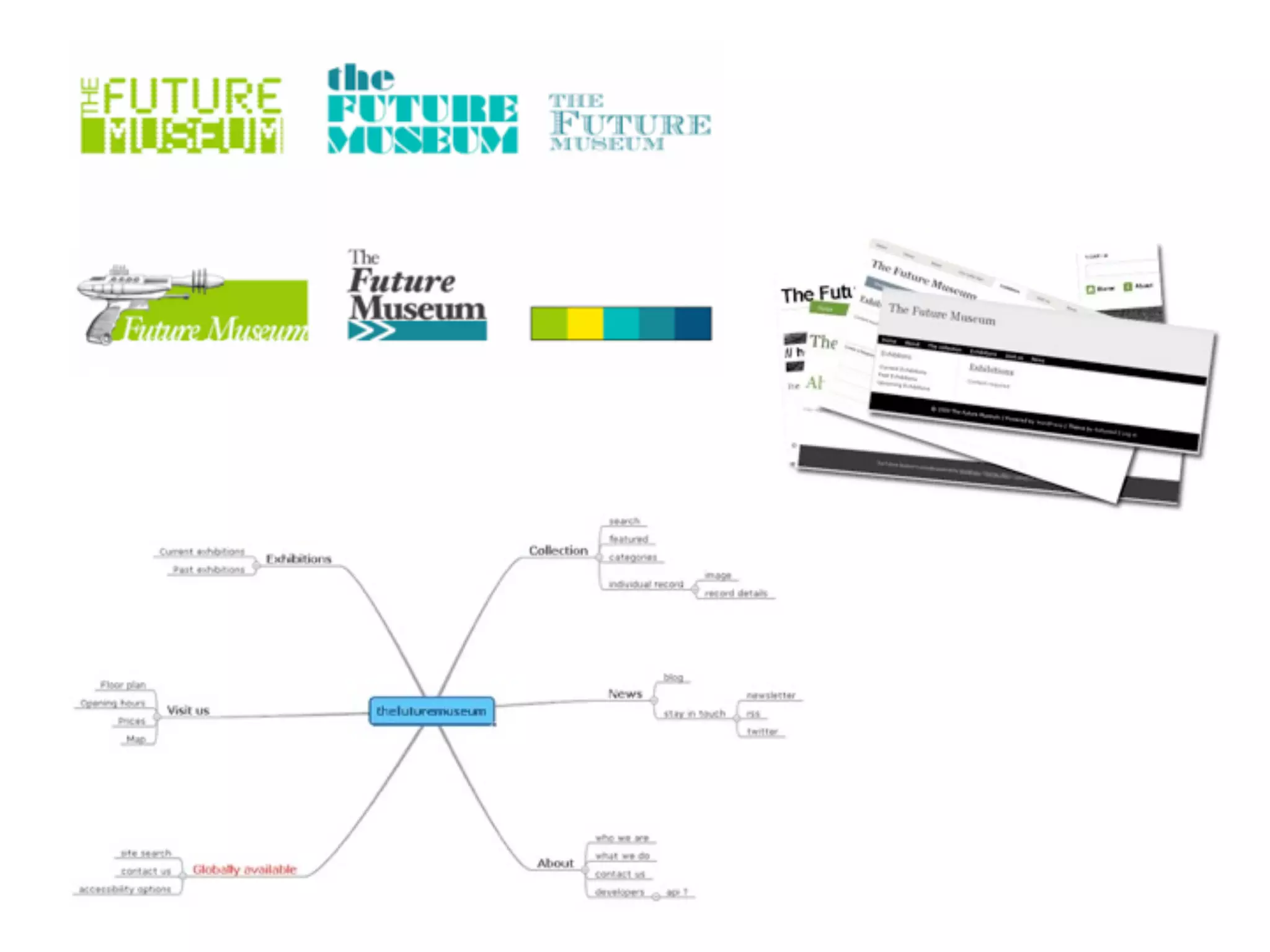
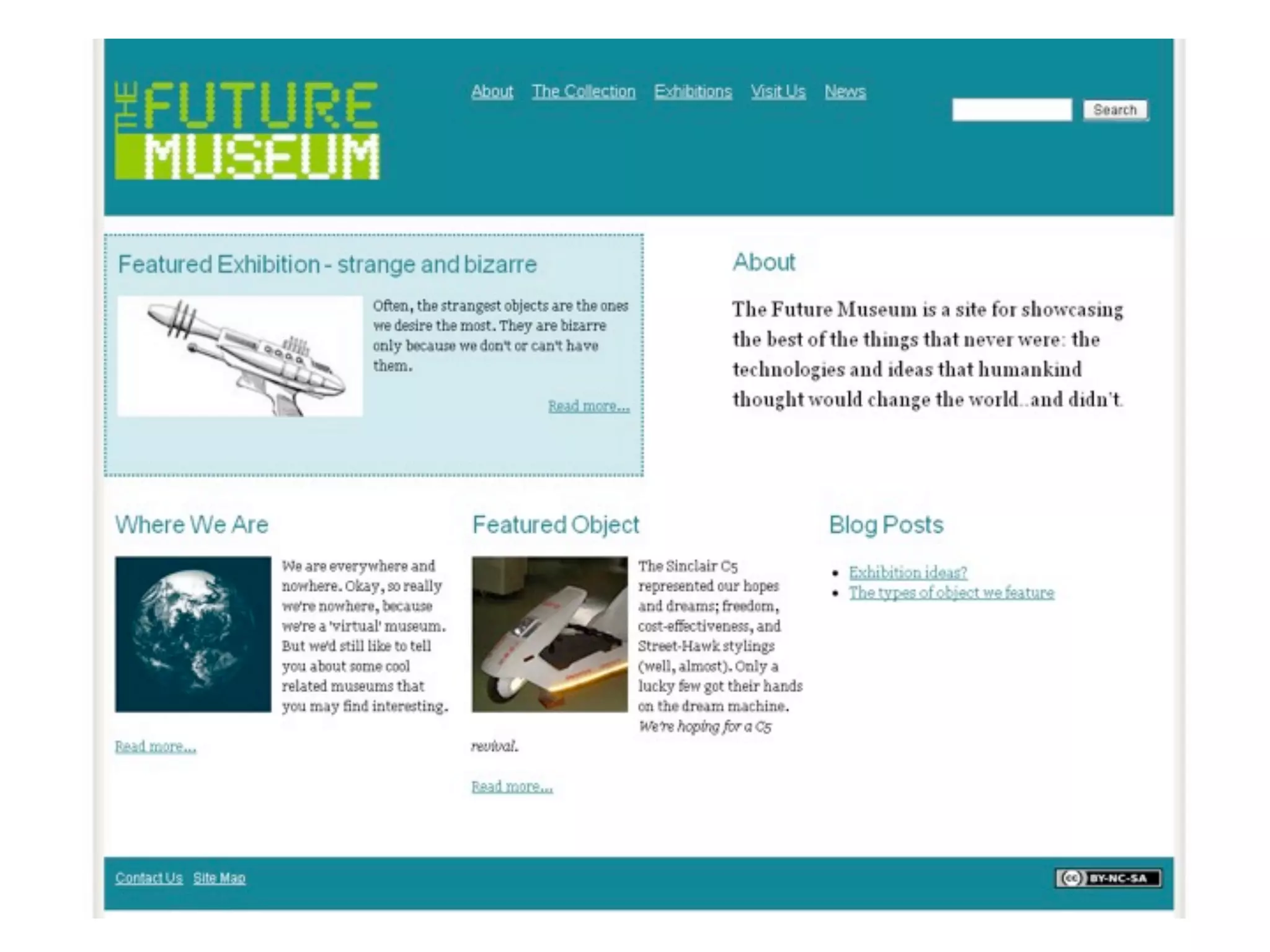
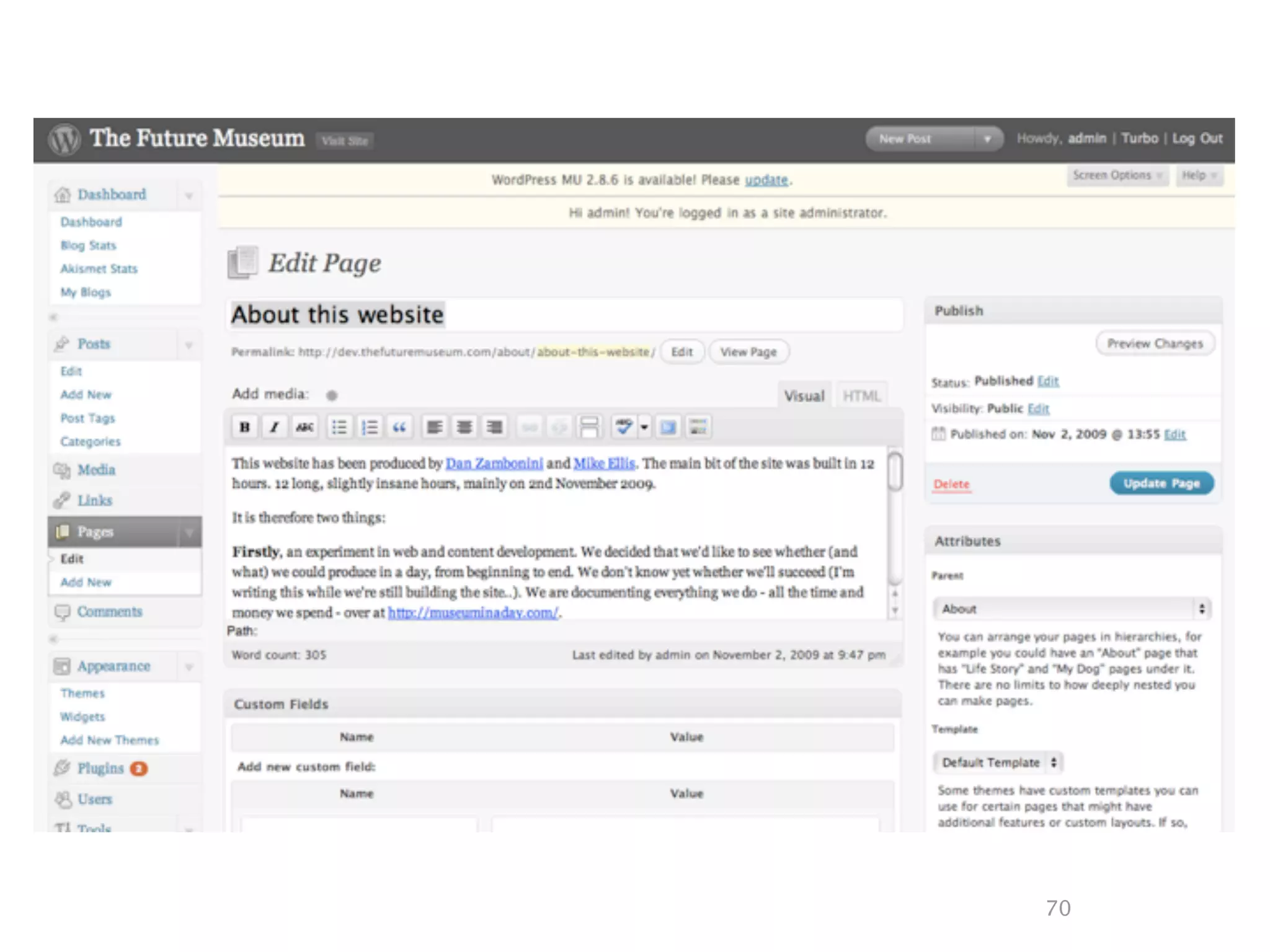
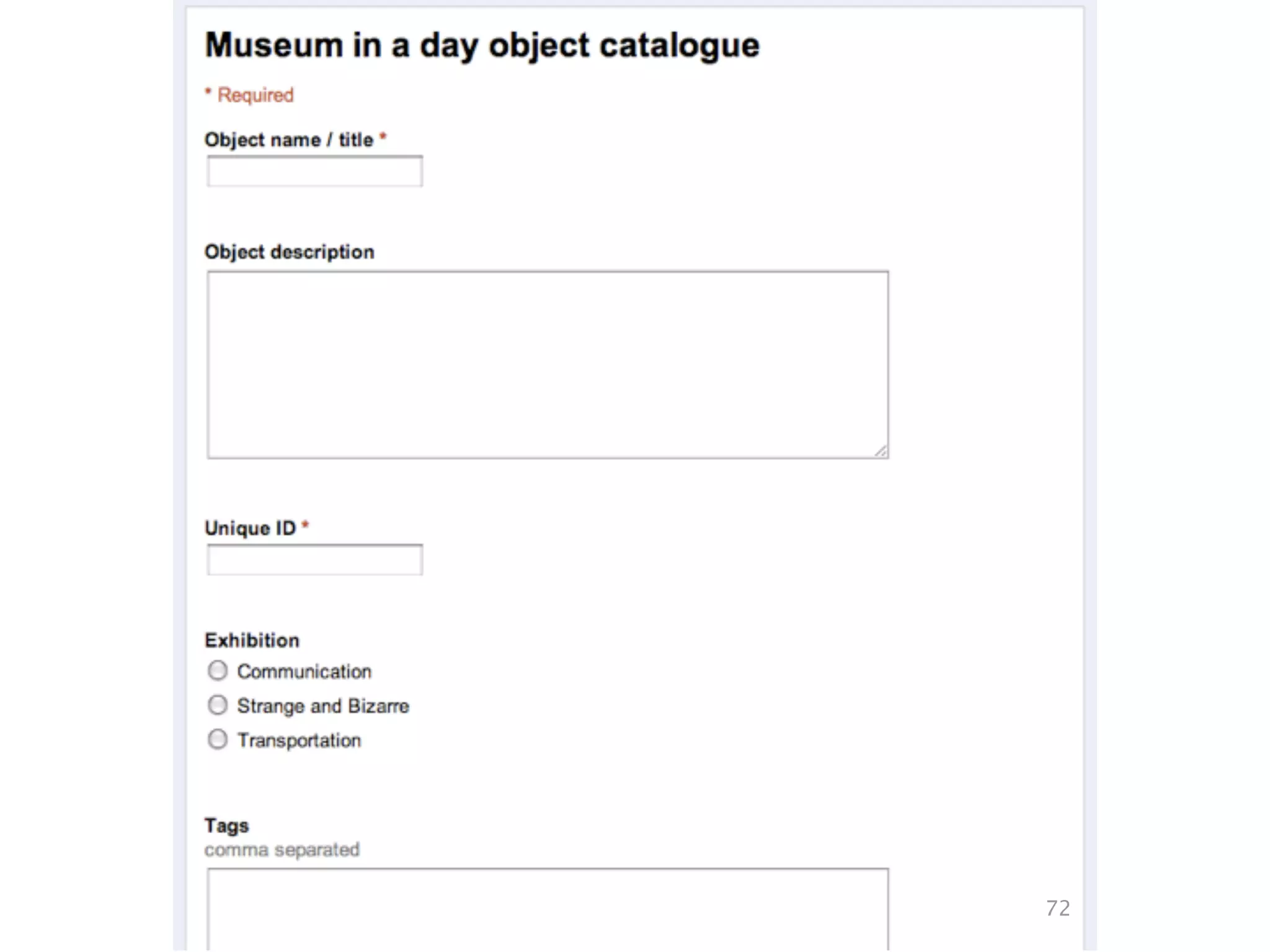
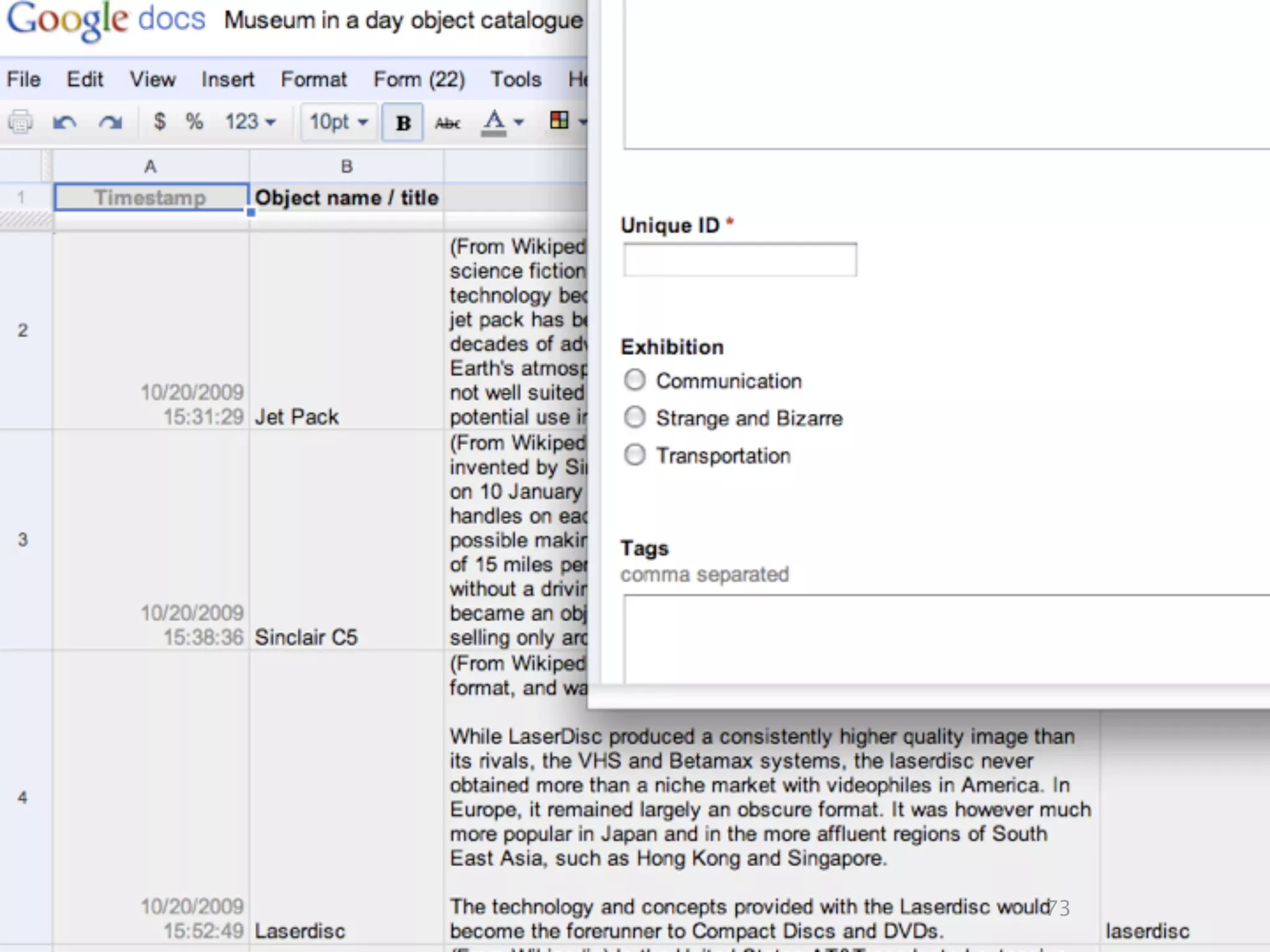
What We Did
• We endeavoured to build a museum
  website in 12 hours, start to finish
• This time included all planning,
  technical and design build and content
  writing / migration
• Read more at http://
  museuminaday.com
66
69
70
71
72
73
What We Didn’t Do (Yet)
• The Community Bit
Why We Did It
• Firstly, we’ve both talked a lot about
  how making (museum) websites
  should be easier, and wanted to see
  what we could do in reality
• Secondly, we have documented (and
  will continue to document) the project
  so that others can benefit from what
  we learnt...
...so what did we learn..?
• 12 hours isn’t long
• Even when software is good, Technical
  Integration is Always Hard
• Small details can take a long time
• Sustainability takes longer
• In 12 hours, we only managed 2 out of
  3 parts of ‘the new museum’ (no
  community)
Practical Ideas
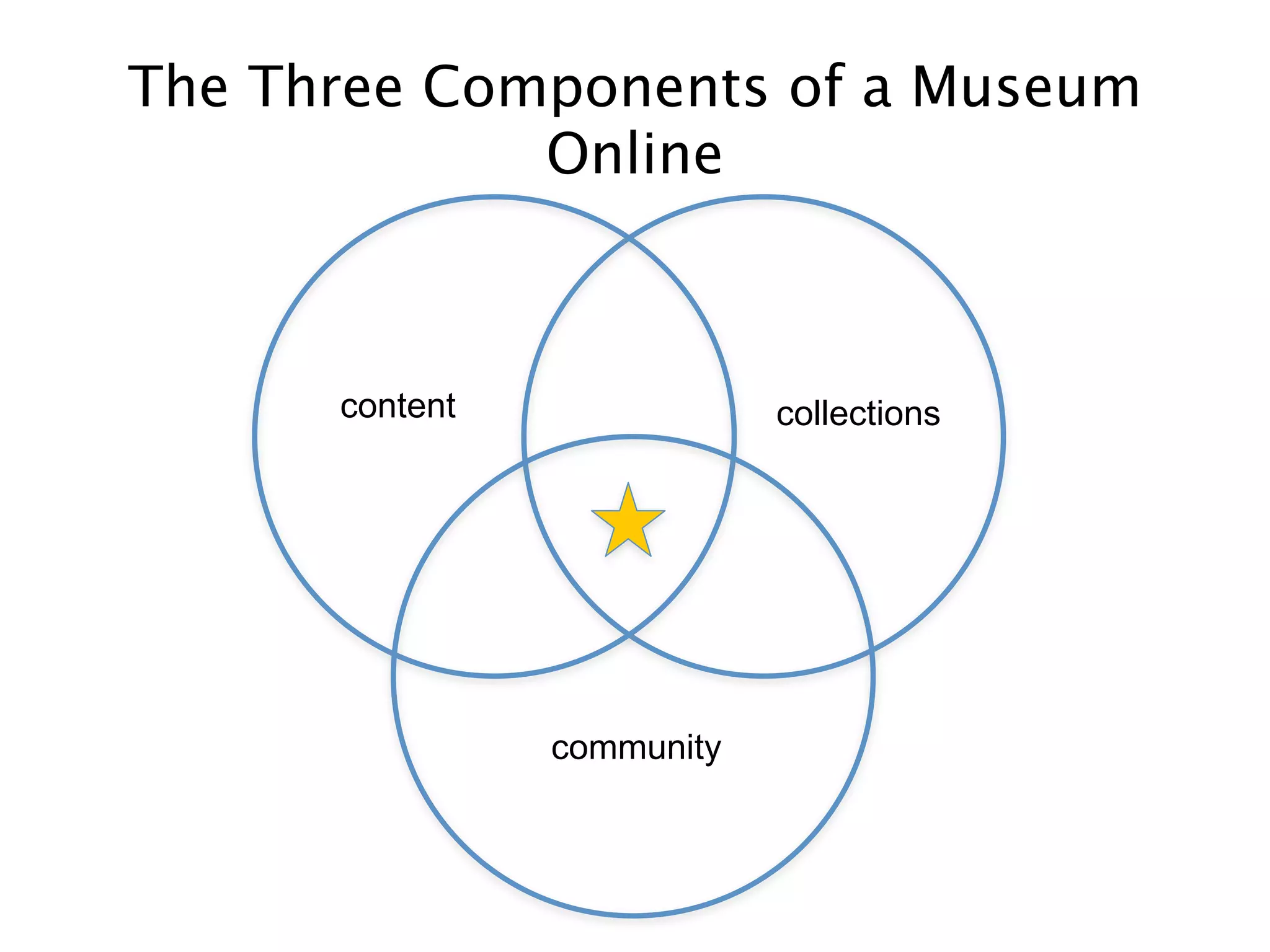
The Three Components of a Museum
             Online


      content               collections


                community
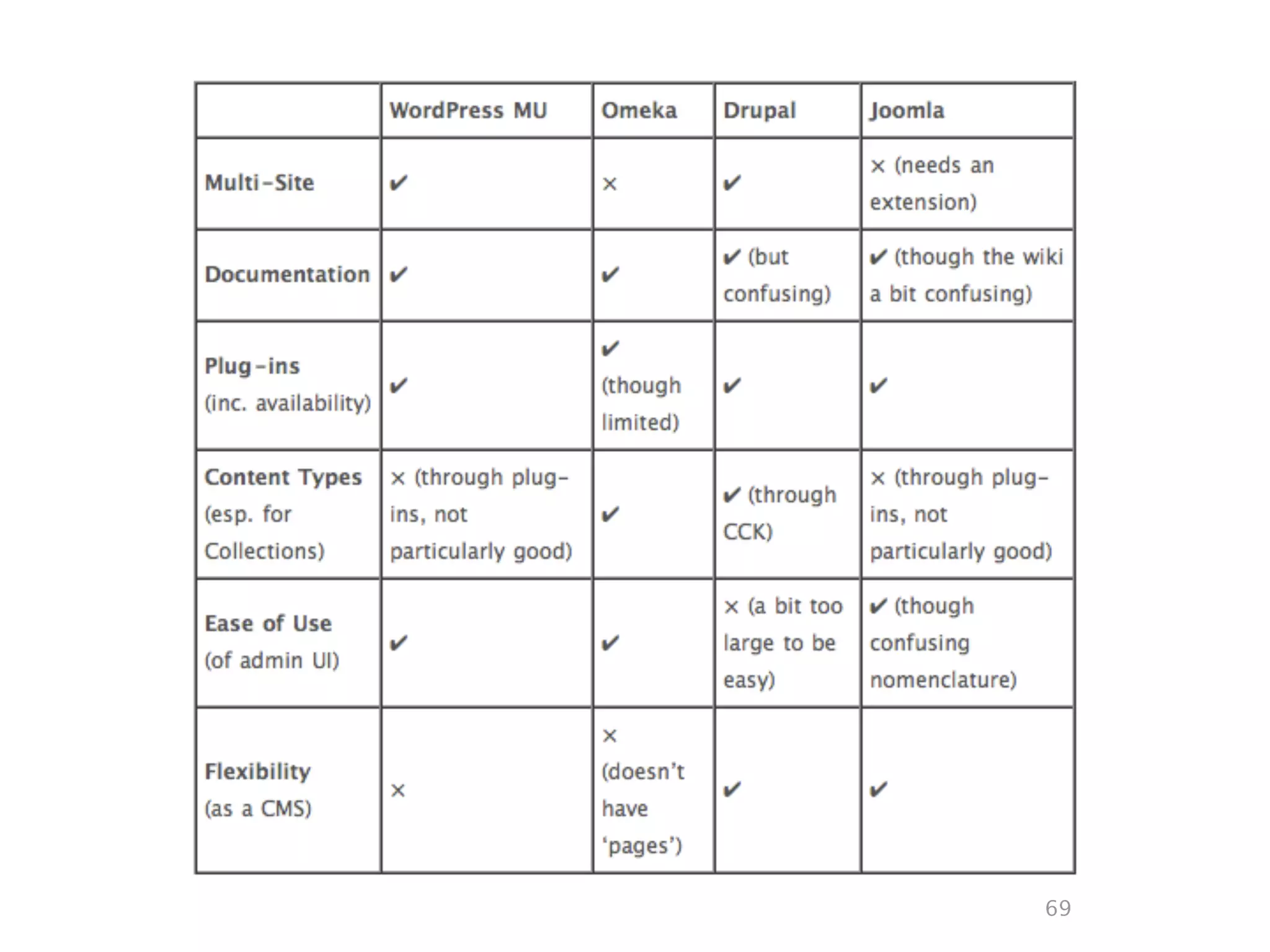
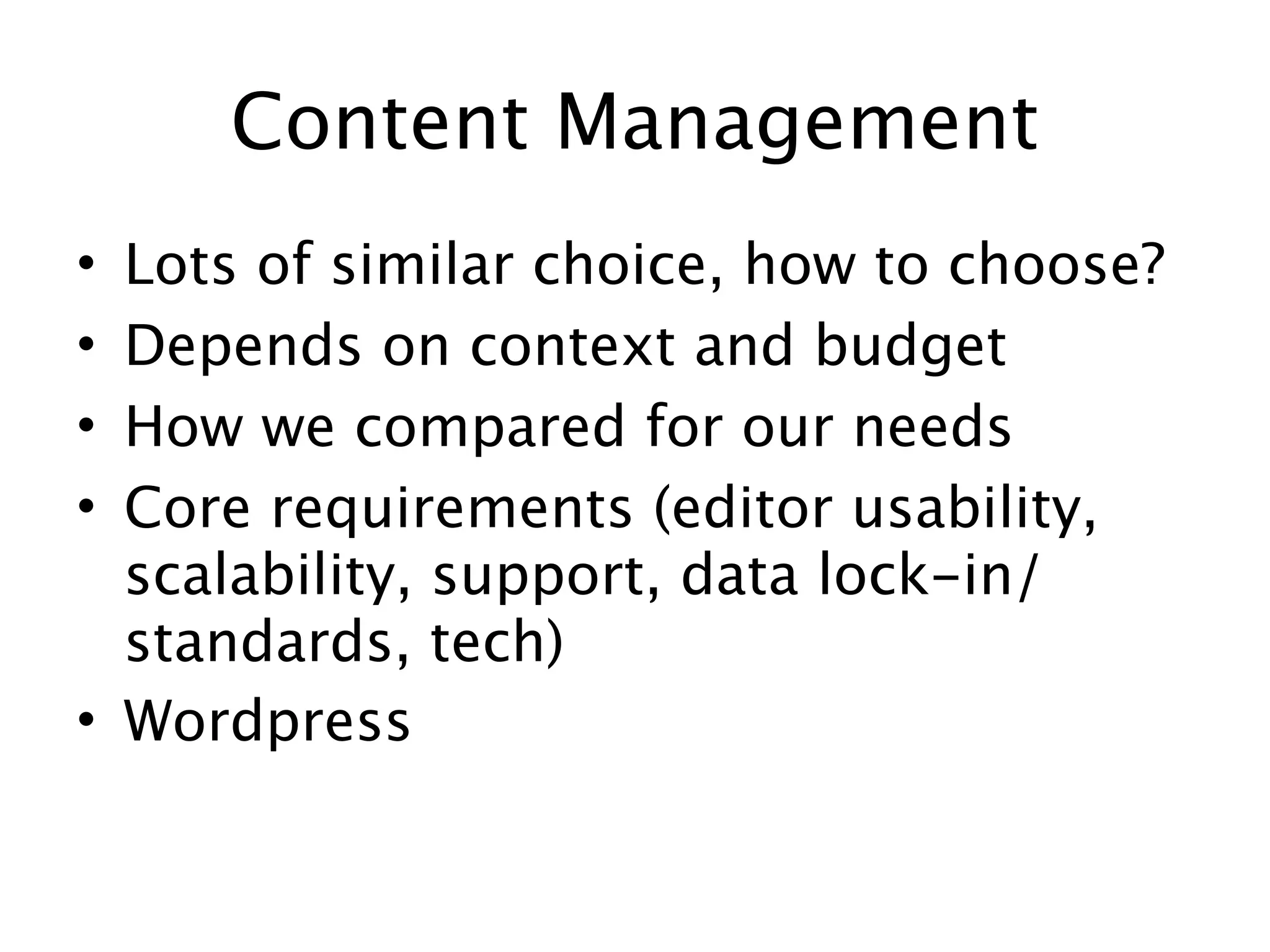
Content Management
• Lots of similar choice, how to choose?
• Depends on context and budget
• How we compared for our needs
• Core requirements (editor usability,
  scalability, support, data lock-in/
  standards, tech)
• Wordpress
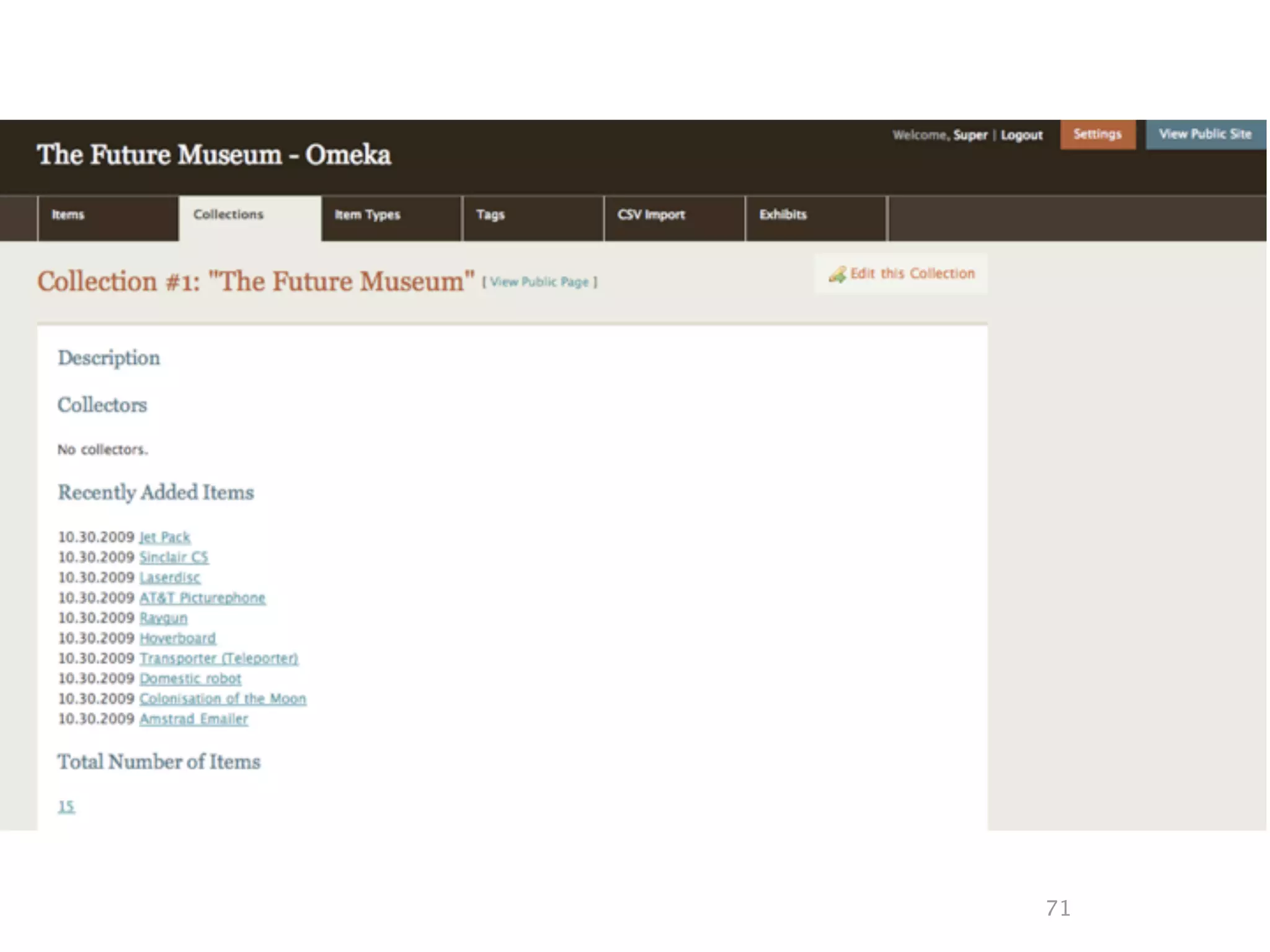
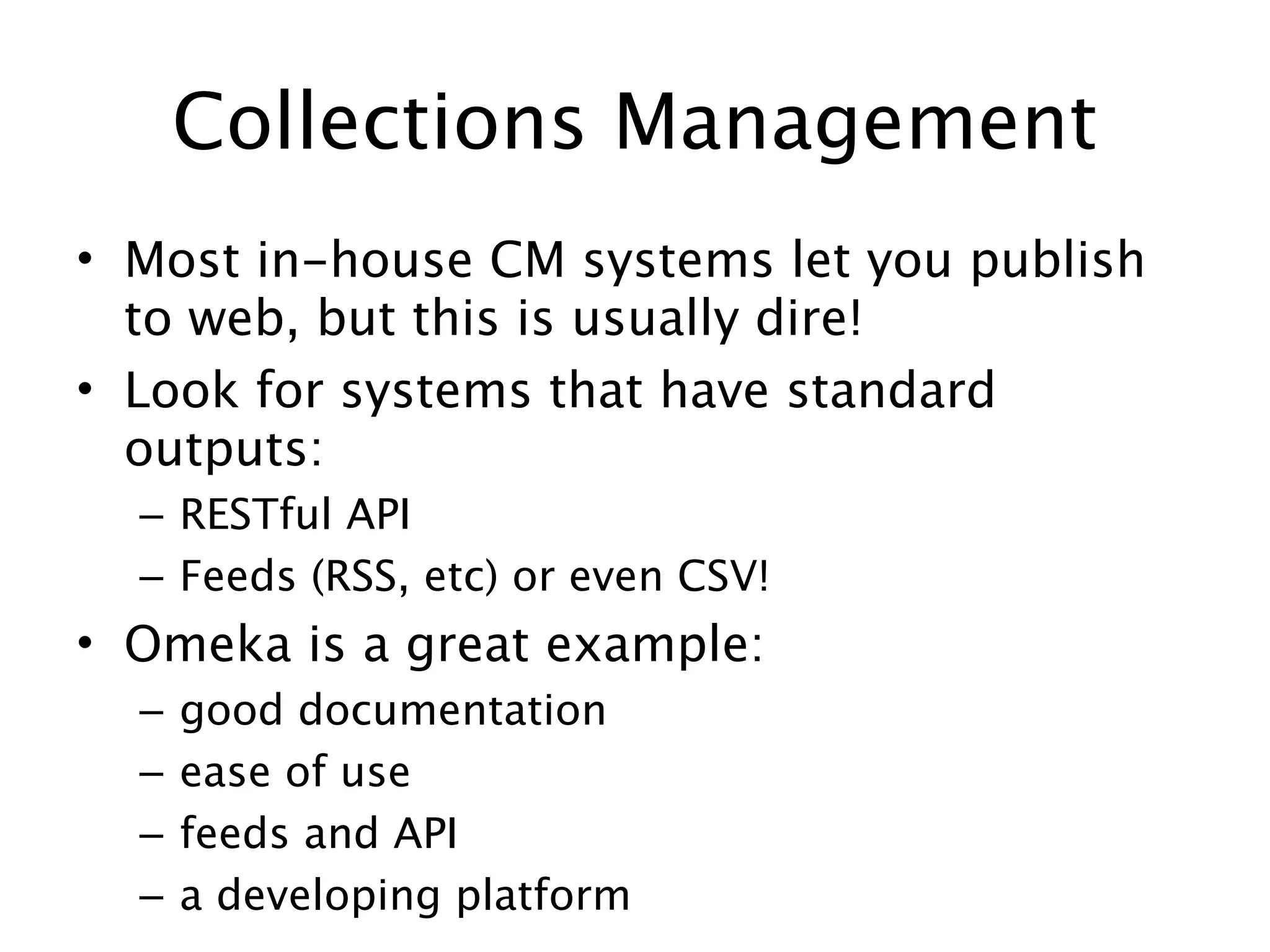
Collections Management
• Most in-house CM systems let you publish
  to web, but this is usually dire!
• Look for systems that have standard
  outputs:
  – RESTful API
  – Feeds (RSS, etc) or even CSV!
• Omeka is a great example:
  –   good documentation
  –   ease of use
  –   feeds and API
  –   a developing platform
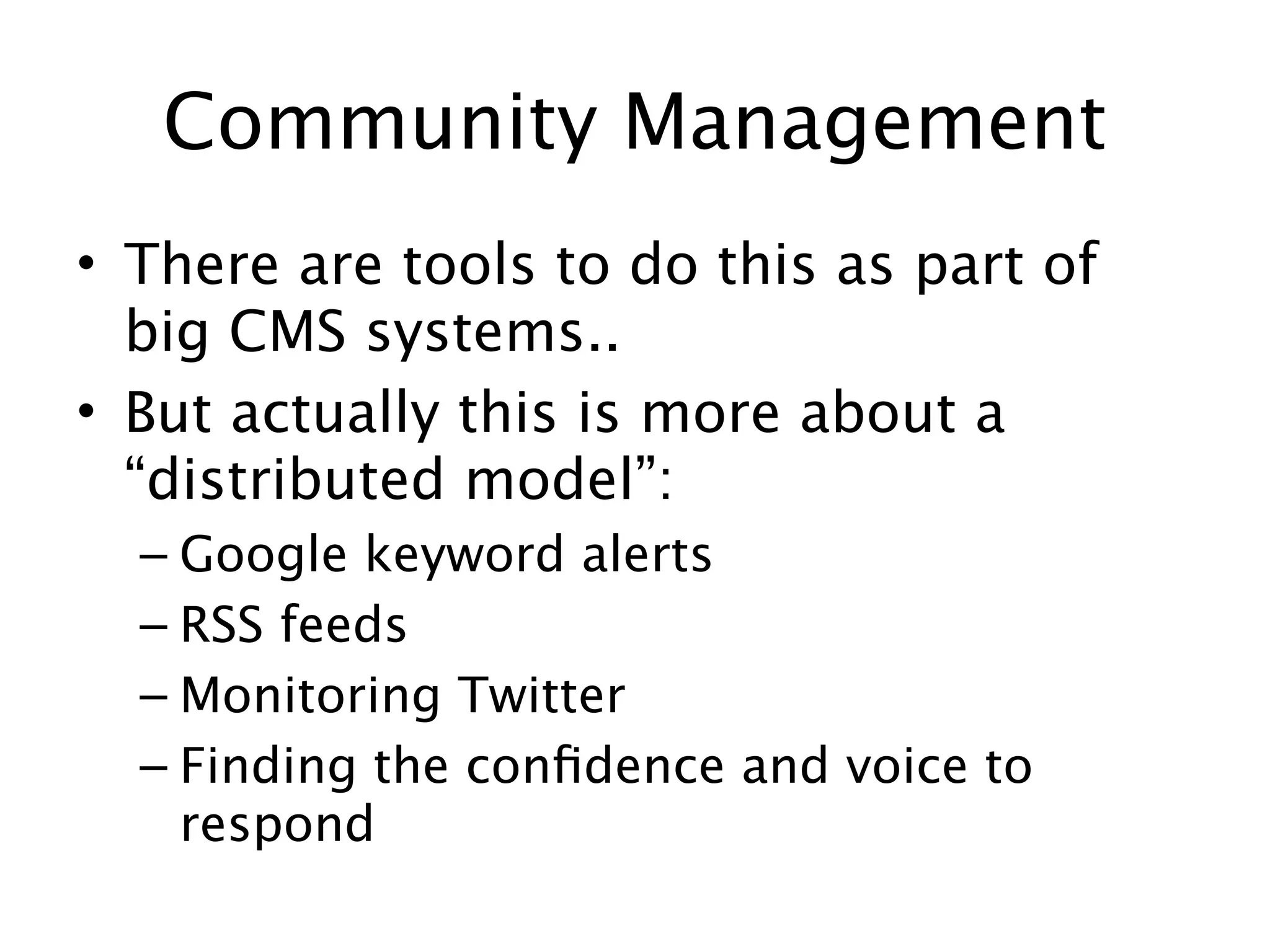
Community Management
• There are tools to do this as part of
  big CMS systems..
• But actually this is more about a
  “distributed model”:
  – Google keyword alerts
  – RSS feeds
  – Monitoring Twitter
  – Finding the confidence and voice to
    respond
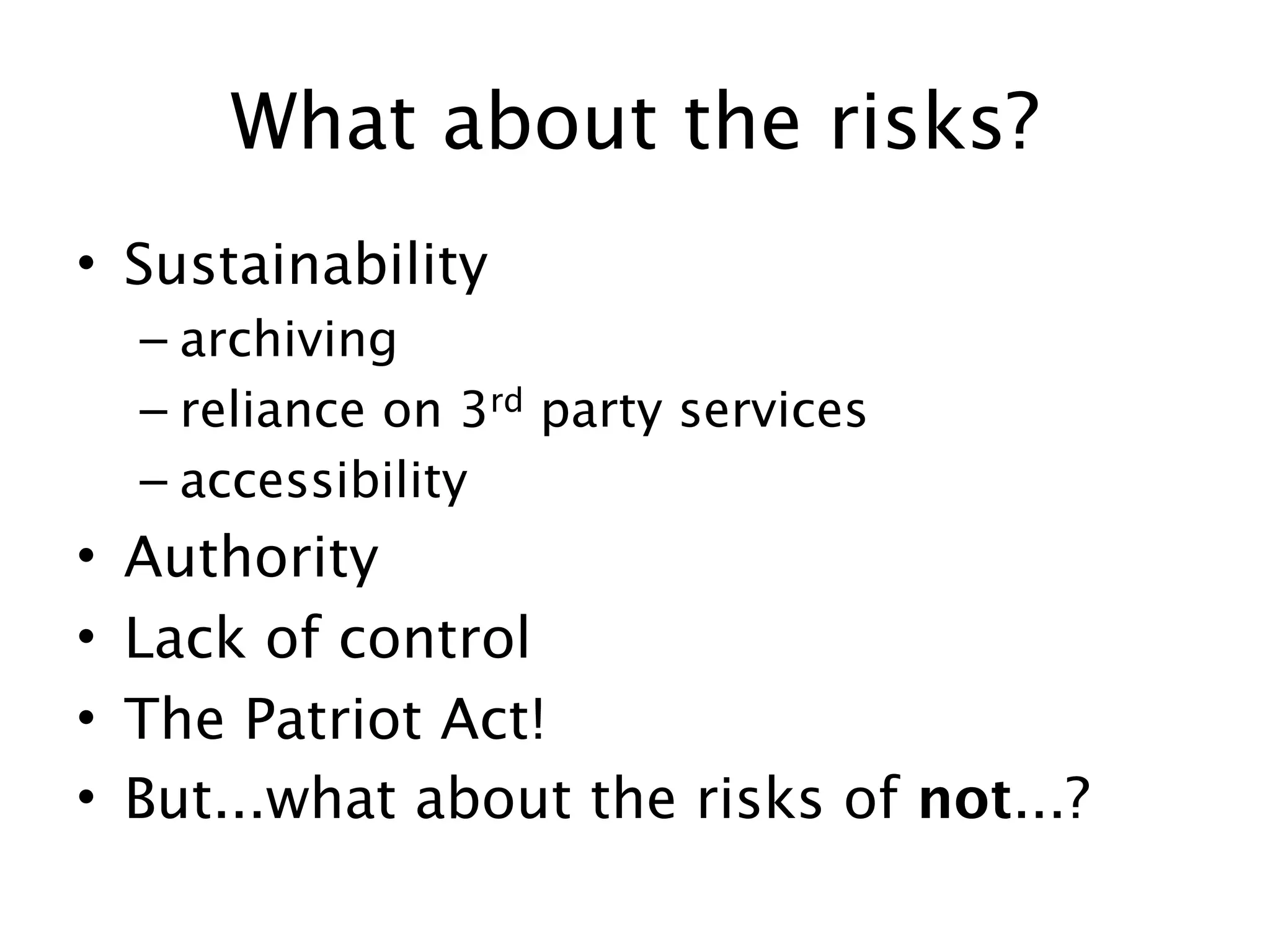
What about the risks?
• Sustainability
    – archiving
    – reliance on 3rd party services
    – accessibility
•   Authority
•   Lack of control
•   The Patriot Act!
•   But...what about the risks of not...?
Summary
Summary
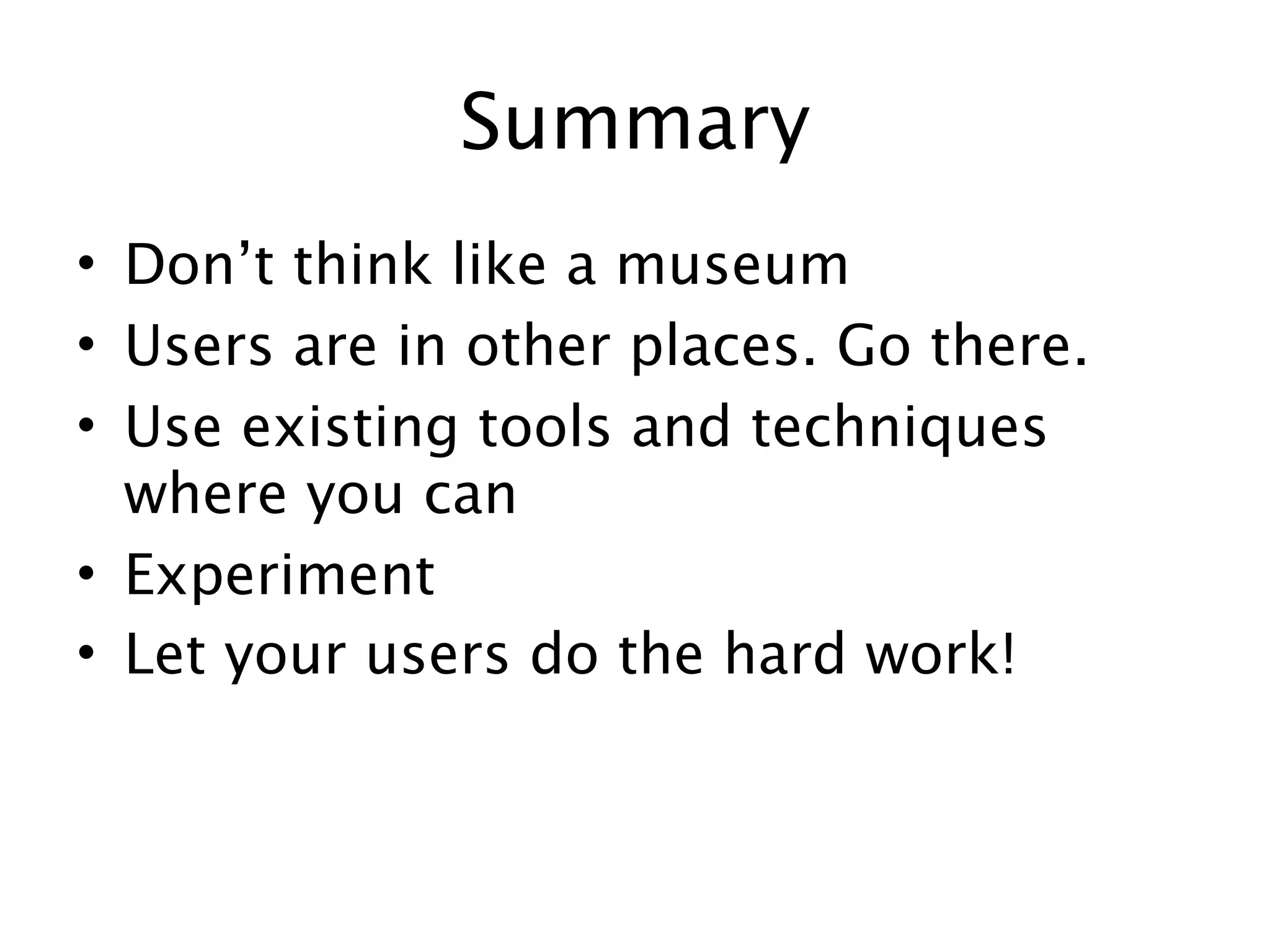
• Don’t think like a museum
• Users are in other places. Go there.
• Use existing tools and techniques
  where you can
• Experiment
• Let your users do the hard work!
Questions?
Thanks

The Benefits Of Doing Things Differently

  • 1.
    MUSEUM IN ADAY Building a Museum Website in 12 Hours DISH 2009 11am – 1pm, Dec 10 museuminaday.com/slides
  • 2.
    The Benefits ofDoing Things Differently DISH 2009 11am – 1pm, Dec 10 museuminaday.com/slides
  • 3.
  • 4.
  • 5.
  • 7.
  • 8.
    What We’re GoingTo Talk About
  • 9.
    What We’re GoingTo Talk About • The Wider Context • The Relevance of Museums in This Context – Where We Are – Where We Could Be • Practical, Real-World Ideas – Including What We Tried: “Museum In a Day” – Issues & Risks
  • 10.
    Wider Context (1of 2): Where/Who is everyone?
  • 12.
  • 17.
  • 18.
  • 19.
    Most Popular Sites(US) 1. Google 11. Craigslist 2. Facebook 12. MSN 3. Yahoo! 13. Twitter 4. YouTube 14. Go 5. Myspace 15. AOL 6. Wikipedia 16. ESPN 7. Amazon.com 17. Bing 8. eBay 18. CNN 9. Windows Live 19. LinkedIn 10. Blogger.com 20. Wordpress Search Engine UGC Social Media
  • 20.
    simplyrecipes.com • Unique visitors(per month) – 1,387,000 • RSS subscribers – 1,464,000 (Sources: compete.com, ratingburner.com)
  • 21.
    What about otherbits off- site? • over 40% of all Salesforce.com traffic is via their API • $490m (28%) of Amazon revenue is generated by 3rd party sellers • eBay has around 25,000 developers with over 2,000 certified applications http://blog.programmableweb.com/2006/03/20/how-much-revenue-via-apis/
  • 22.
  • 23.
    Q: Where/Who are your audience? 19
  • 24.
    Wider Context (2of 2): What is changing?
  • 25.
  • 26.
  • 27.
  • 28.
  • 29.
  • 30.
  • 31.
  • 32.
  • 33.
  • 34.
  • 35.
  • 36.
    Digital content: lessperceived value volume of free content availability of pirated material time
  • 37.
    Digital content: lessperceived value volume of free content availability of pirated material value of content time
  • 38.
    Web Dependence connection speed connection ubiquity time
  • 39.
    Web Dependence value of web apps reliance on web apps (Digital services: more perceived value) time
  • 40.
  • 41.
  • 42.
    Invisible Infrastructure infrastructure cost accessible computing power Chrome OS time
  • 43.
  • 44.
  • 45.
    Possible Implications for Museums • Lower digital content value + less big business = less image licensing • Lower content value + Higher app value + Higher mobile usage = demand/resource shift from content to service provision (museum as platform?)
  • 46.
    Possible Implications for Museums • More small business = more competition Your audience is a mass of niche communities, being increasingly better served elsewhere.
  • 47.
    Context/Where People Are (Summary) • Everywhere but our websites – Social Networks, RSS, Mobile, Blogs, Communities • And it’s always changing, e.g. – Less value on content, more on services – Many small producers on cheap infrastructure • More competition
  • 48.
    Q: What changesare you noticing? Q: What implications do these changes have? 31
  • 49.
    The Relevance of Museums: Where are museums online?
  • 50.
    National museums makeup 8 of the 10 top visitor attractions in Britain (Source: http://tinyurl.com/mus-vis-num) Most popular museum website with UK users is the Tate: 1,690th (21,037th in the world) (Source: Alexa) 559th = onemanga.com 749th = xkcd.com 1722nd = brainyquote.com
  • 52.
    2007: 20% ofhomepage clicks on ‘visiting’ (Source: http://www.archimuse.com/mw2007/papers/haynes/haynes.html) 2009: @zambonini Thurs 29th Oct, Ormeau Baths Gallery Belfast. @zambonini a couple of us visited Checked on site with phone @swanseamuseum in the summer, beforehand to find closing time checked out opening times on website first : ) @zambonini Generally visit museum site prior to a real-life visit. See @zambonini bogota museum of gold. what's on, book etc 3 weeks ago. Website before we went to check directions and opening times @zambonini Serpentine a couple of weeks ago for the Koons exhibit. @zambonini I went to the Reina Visited the website beforehand for Sophia in Madrid on Sunday; I used details. the National Maritime Museum's website a few months ago for opening @zambonini about 6 months ago times. and ditto (to get directions to it)
  • 53.
    Collections! Collections! Collections! 2.5 – 15% Visitors £25,000 - £100,000 to put collections online
  • 56.
    Where Museums Are (Summary) • Physical museum more popular than website • Websites largely similar to 10 years ago • Collections online, but...
  • 57.
    Q: What isthe purpose of museum websites? to advertise the physical experience? to educate / provide content? to generate revenue? 40
  • 58.
  • 59.
    • Offering arelevant service… • in the relevant location… • at a relevant “cost”.
  • 60.
    Service Location Cost Provide Access In-Museum Free Provide Content Touring Exhibition At Cost Provide Data Outreach Provide Media Little Time Main Website Substantial Time Group Website ? RSS Facebook YouTube Twitter Mobile
  • 61.
    = Museum AsA Platform Museums should facilitate, encourage and support the self-organisation of the niche communities that they inherently represent. By demographic, interest, locality.
  • 62.
    Why We ShouldBe There • More future-proof • Size of Audience (Traffic) • Easier (stuff is already there..) • Cheaper • More Effective (audiences are already there) • More engaged audiences
  • 63.
    What The NewMuseum Looks Like • Museum As A Platform – Content / Collections / Community • Case Studies – Brooklyn – Launchball – V&A Design a Tile
  • 64.
    Brooklyn museum: trulysocial media http://www.brooklynmuseum.org/community/blogosphere
  • 65.
  • 66.
  • 67.
    We > Me •From a Me-seum to a You-seum • The Powerful Stories are from Real People
  • 68.
    Where We ShouldBe (Summary) • Where Everyone Else Is • Servicing Our Communities • The Museum Should Be A Platform
  • 69.
    Q: What isa platform? Q: How can we support communities? Q: What successful examples do you know of? 52
  • 70.
    How We GetFrom Here To There
  • 71.
    Transition: Not Easy Money & Resource Google, Microso$, VC-Funded Apps = Freedom A Little Money & Resource Museums & Ga#eries = Limbo No Money & Resource Kids in Bedrooms, Bootstrapped = Freedom Ideas, Side Projects
  • 72.
  • 73.
    The Traditional Museum Project • “Big Budget” • Long Timescales • Many Stakeholders / Funders • Archaic Software • Copyright and Restrictions • Anti-User Centred
  • 74.
    Perfection Is TheEnemy Of The Good • museums are built around perfection, “knowing”, being “sure”... • ..but....“we didn’t need Einstein to put Armstrong on the moon”
  • 76.
    “Fail Quickly” • thetools today are cheap (free) and easy • try something, see if it works: – If it does, great – It it doesn’t, adapt it or kill it and move on • this “Darwinian” approach is very powerful
  • 77.
    The New Way • High Speed, Low Cost • Democratisation of Software • Usability • Easy Standards • Cloud / Scaling • “boltability”
  • 78.
    Freedom • API • Copyright • Distributed Content (RSS, etc) • Community: Approach & Trust • Tone Of Voice (Devolved Authority)
  • 79.
    How We GetThere (Summary) • Just do enough, don’t be a perfectionist • Use high-speed, low cost tools • Embrace freedom and facilitate freedom • It’s OK to be wrong, but get there quickly
  • 80.
    Q: What stopsus using agile/ quick solutions? Q: How can we start using them? Q: How do you approach failed projects? 63
  • 81.
    What We TriedTo Do: Museum In A Day
  • 82.
    What We Did •We endeavoured to build a museum website in 12 hours, start to finish • This time included all planning, technical and design build and content writing / migration • Read more at http:// museuminaday.com
  • 83.
  • 86.
  • 87.
  • 88.
  • 89.
  • 90.
  • 91.
    What We Didn’tDo (Yet) • The Community Bit
  • 92.
    Why We DidIt • Firstly, we’ve both talked a lot about how making (museum) websites should be easier, and wanted to see what we could do in reality • Secondly, we have documented (and will continue to document) the project so that others can benefit from what we learnt...
  • 93.
    ...so what didwe learn..? • 12 hours isn’t long • Even when software is good, Technical Integration is Always Hard • Small details can take a long time • Sustainability takes longer • In 12 hours, we only managed 2 out of 3 parts of ‘the new museum’ (no community)
  • 94.
  • 95.
    The Three Componentsof a Museum Online content collections community
  • 96.
    Content Management • Lotsof similar choice, how to choose? • Depends on context and budget • How we compared for our needs • Core requirements (editor usability, scalability, support, data lock-in/ standards, tech) • Wordpress
  • 97.
    Collections Management • Mostin-house CM systems let you publish to web, but this is usually dire! • Look for systems that have standard outputs: – RESTful API – Feeds (RSS, etc) or even CSV! • Omeka is a great example: – good documentation – ease of use – feeds and API – a developing platform
  • 98.
    Community Management • Thereare tools to do this as part of big CMS systems.. • But actually this is more about a “distributed model”: – Google keyword alerts – RSS feeds – Monitoring Twitter – Finding the confidence and voice to respond
  • 99.
    What about therisks? • Sustainability – archiving – reliance on 3rd party services – accessibility • Authority • Lack of control • The Patriot Act! • But...what about the risks of not...?
  • 100.
  • 101.
    Summary • Don’t thinklike a museum • Users are in other places. Go there. • Use existing tools and techniques where you can • Experiment • Let your users do the hard work!
  • 102.
  • 103.

Editor's Notes