WAYS TO INTEGRATE TECHNOLOGY INTO
PHYSICAL EDUCATION
Reporter:Mary Grace Mangao
Mabelle Lorenzo
Ester Gingco
Angelou Jamelarin
Khezia Gascon
6 Ways to Integrate Technology into
Physical Education
Teaching physical education can be
challenging for any number of reasons, from
a lack of equipment to keeping students
engaged. To meet these challenges, some
educators are turning to technology to
create more dynamic classes that work for
students with a wide range of fitness levels.
Here are some examples of technology and
how you can use them in your classes.
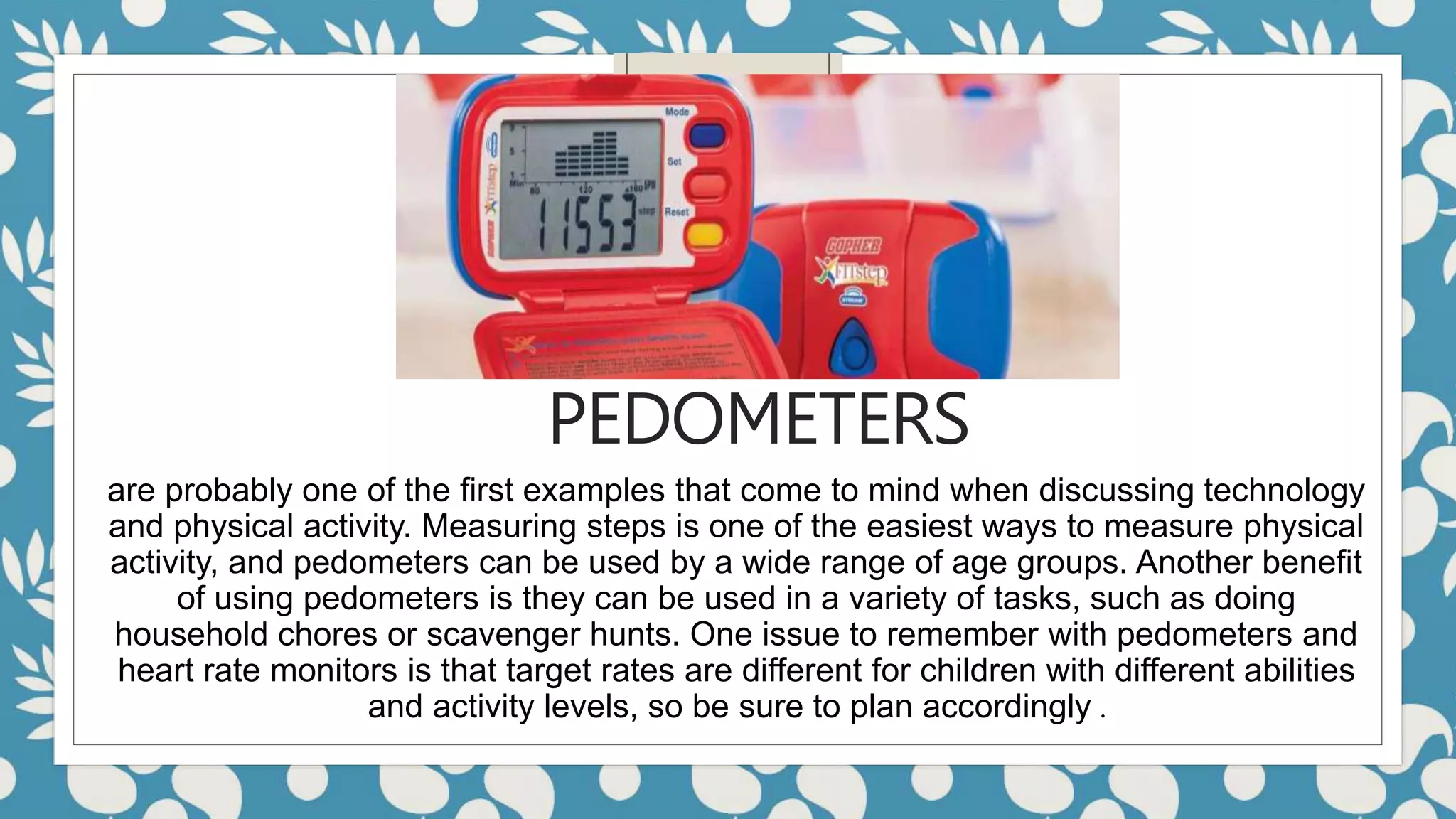
PEDOMETERS
are probably one of the first examples that come to mind when discussing technology
and physical activity. Measuring steps is one of the easiest ways to measure physical
activity, and pedometers can be used by a wide range of age groups. Another benefit
of using pedometers is they can be used in a variety of tasks, such as doing
household chores or scavenger hunts. One issue to remember with pedometers and
heart rate monitors is that target rates are different for children with different abilities
and activity levels, so be sure to plan accordingly .
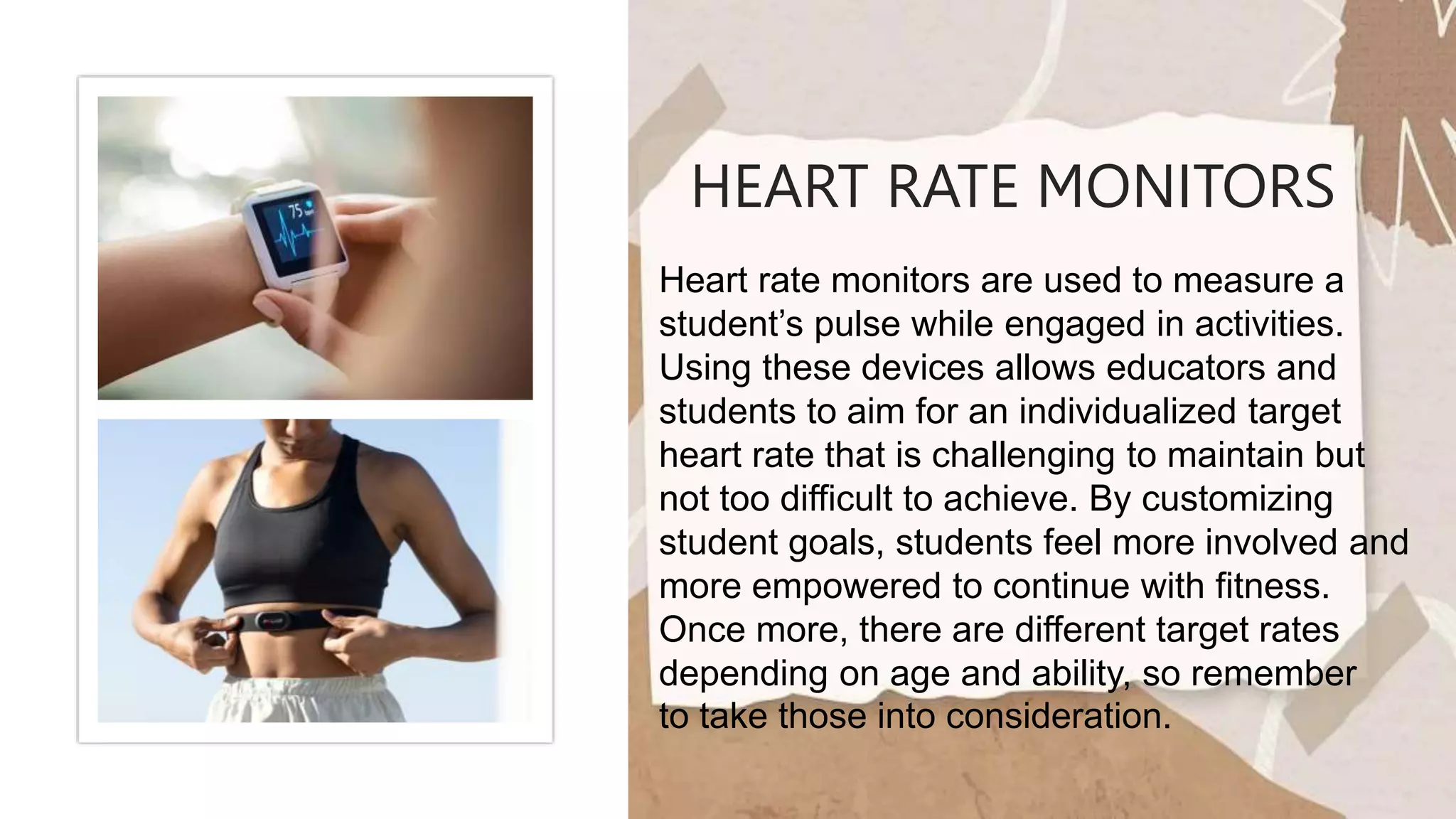
HEART RATE MONITORS
Heart rate monitors are used to measure a
student’s pulse while engaged in activities.
Using these devices allows educators and
students to aim for an individualized target
heart rate that is challenging to maintain but
not too difficult to achieve. By customizing
student goals, students feel more involved and
more empowered to continue with fitness.
Once more, there are different target rates
depending on age and ability, so remember
to take those into consideration.
HEALTH TRACKING
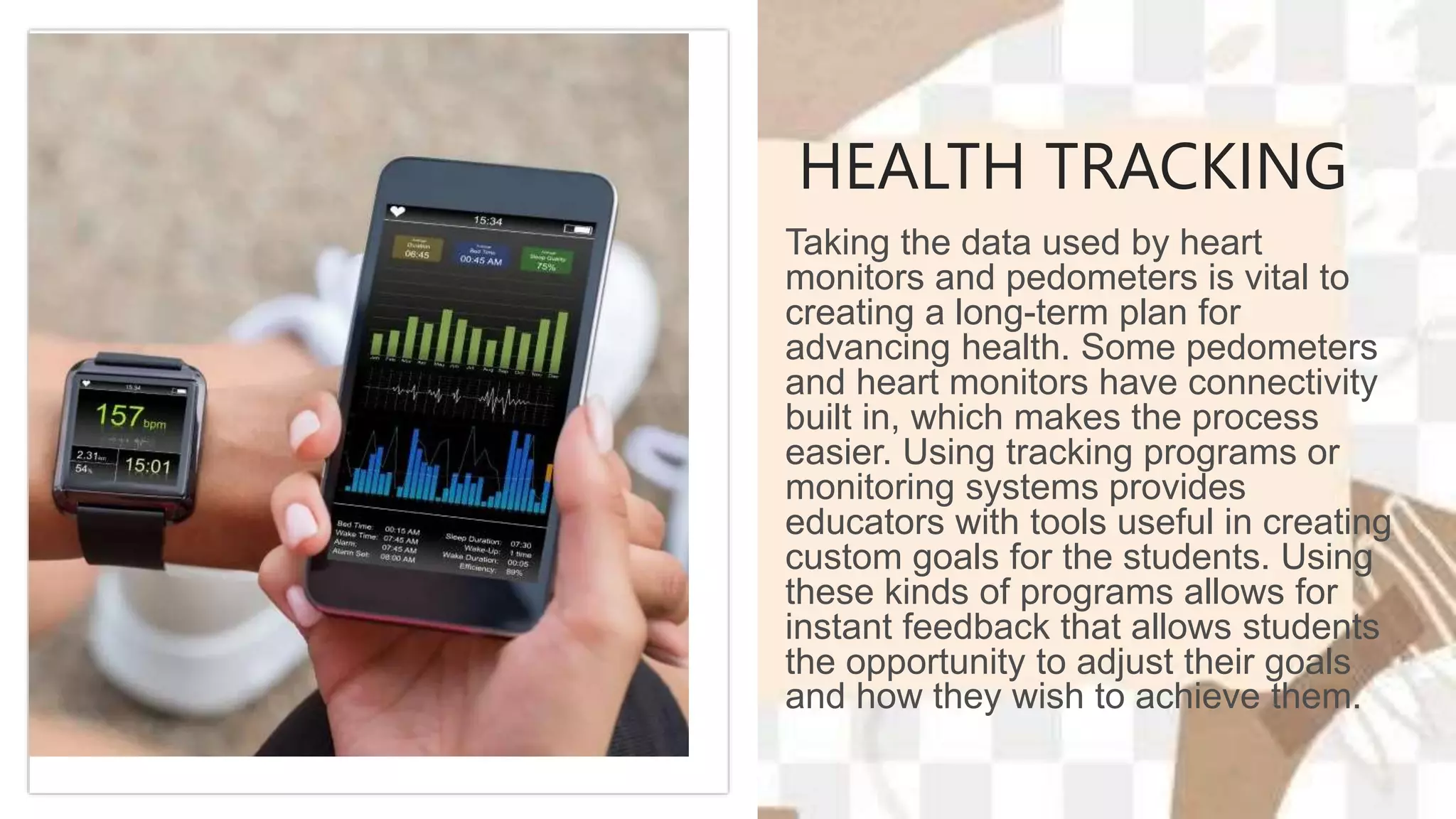
Taking the data used by heart
monitors and pedometers is vital to
creating a long-term plan for
advancing health. Some pedometers
and heart monitors have connectivity
built in, which makes the process
easier. Using tracking programs or
monitoring systems provides
educators with tools useful in creating
custom goals for the students. Using
these kinds of programs allows for
instant feedback that allows students
the opportunity to adjust their goals
and how they wish to achieve them.
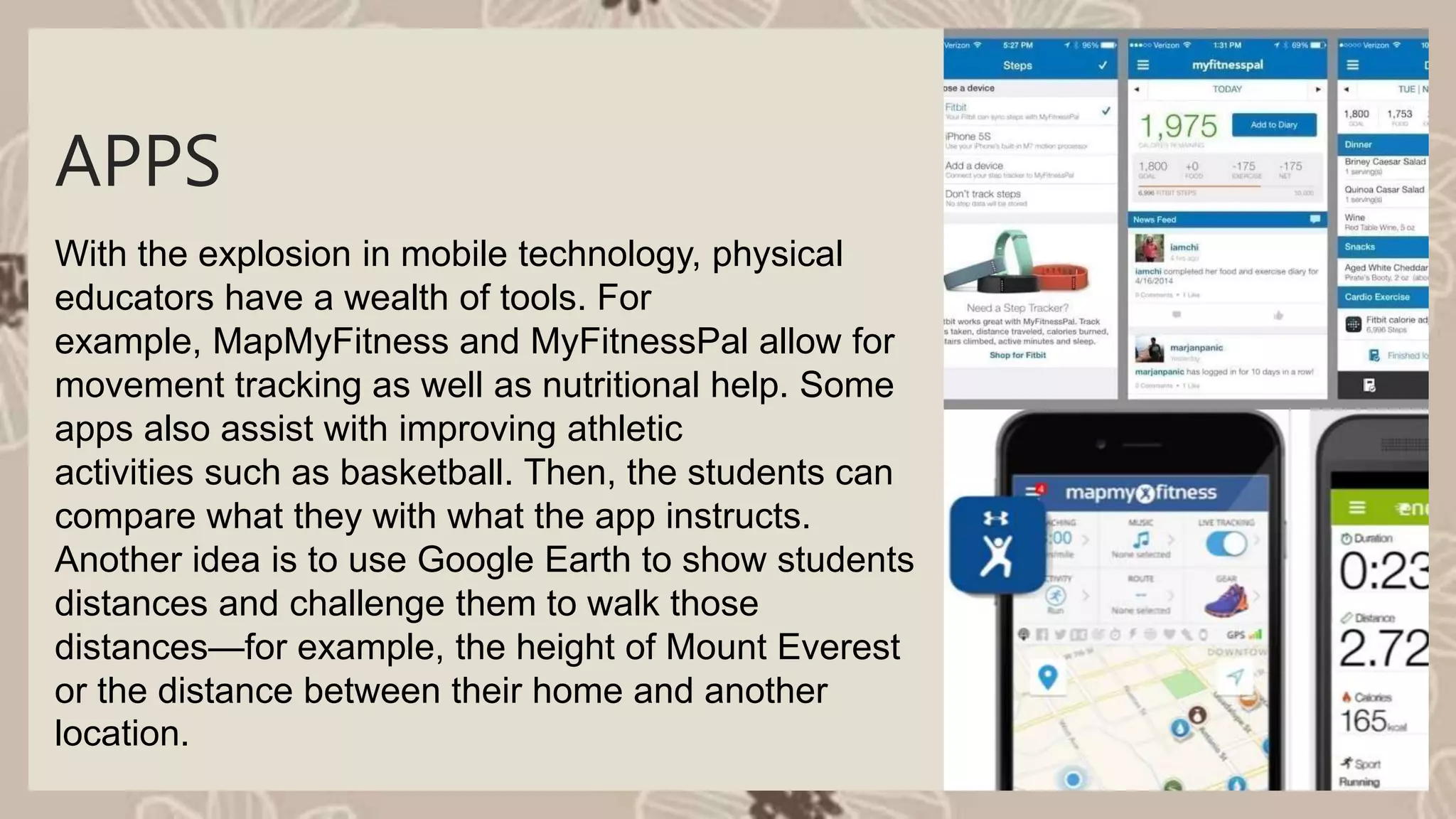
With the explosion in mobile technology, physical
educators have a wealth of tools. For
example, MapMyFitness and MyFitnessPal allow for
movement tracking as well as nutritional help. Some
apps also assist with improving athletic
activities such as basketball. Then, the students can
compare what they with what the app instructs.
Another idea is to use Google Earth to show students
distances and challenge them to walk those
distances—for example, the height of Mount Everest
or the distance between their home and another
location.
APPS
VIDEO RESOURCES
Sites such as YouTube and Vimeo offer a
wide range of tools for educators. If an
educator wants to teach something such
as dance or yoga, there is a wide variety
of how-to videos that can apply to any
age group. Additionally, some educators
create video projects where student
groups create an instructional video to
teach something to the rest of the class.
GAMES
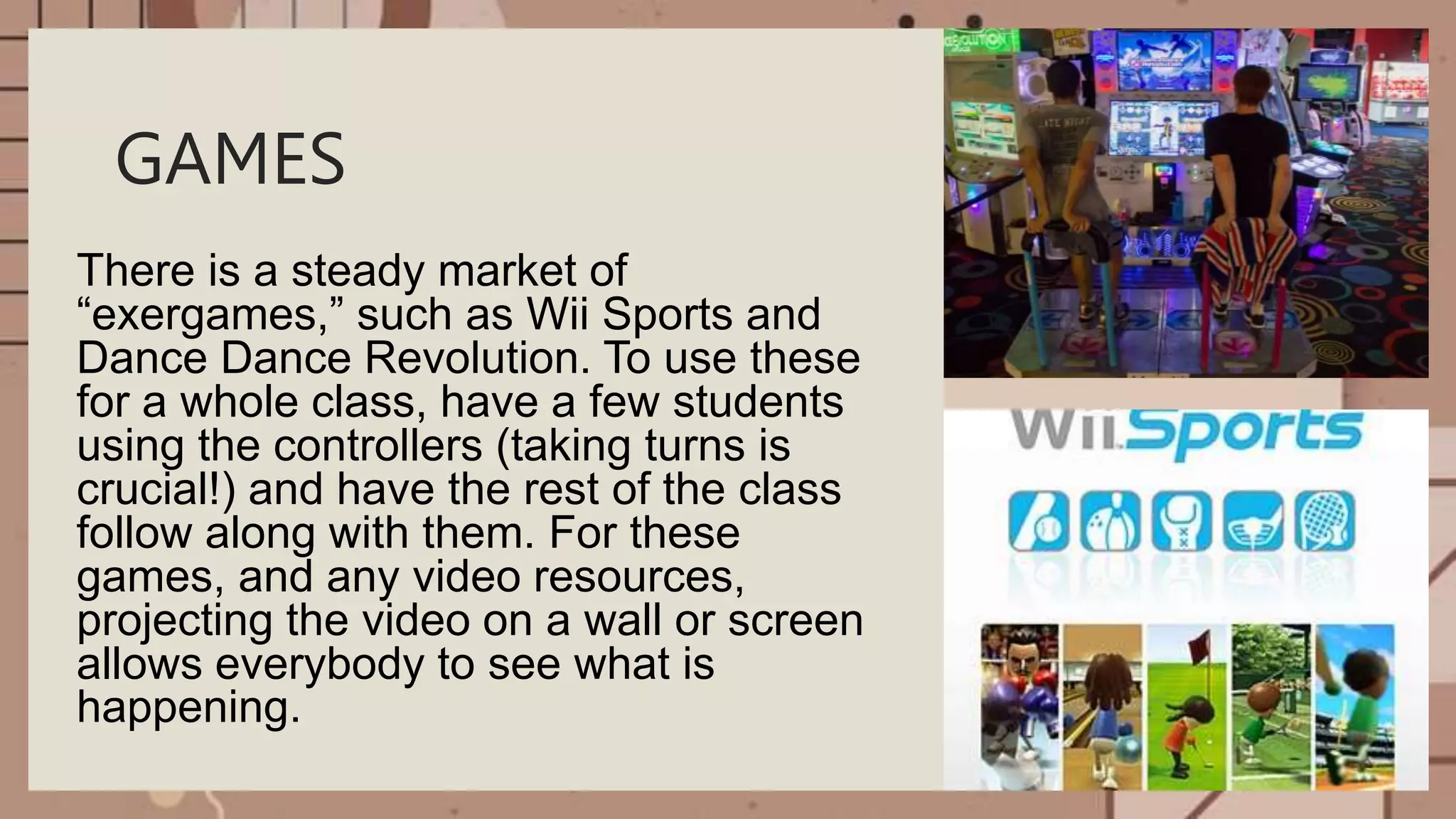
There is a steady market of
“exergames,” such as Wii Sports and
Dance Dance Revolution. To use these
for a whole class, have a few students
using the controllers (taking turns is
crucial!) and have the rest of the class
follow along with them. For these
games, and any video resources,
projecting the video on a wall or screen
allows everybody to see what is
happening.
Adapting to new technology can be challenging for
instructors. Sometimes, physical education instructors
can feel as if technology does not apply to their
subject. However, by embracing technology, physical
education instructors create a more varied and
dynamic classroom. They are also able to appeal to
the interests of many different students and ability
types. Using technology to teach physical health
allows educators to create more activities and show
how important their goals are.

Ways to integrate technology into physical education

  • 1.
    WAYS TO INTEGRATETECHNOLOGY INTO PHYSICAL EDUCATION Reporter:Mary Grace Mangao Mabelle Lorenzo Ester Gingco Angelou Jamelarin Khezia Gascon
  • 2.
    6 Ways toIntegrate Technology into Physical Education Teaching physical education can be challenging for any number of reasons, from a lack of equipment to keeping students engaged. To meet these challenges, some educators are turning to technology to create more dynamic classes that work for students with a wide range of fitness levels. Here are some examples of technology and how you can use them in your classes.
  • 3.
    PEDOMETERS are probably oneof the first examples that come to mind when discussing technology and physical activity. Measuring steps is one of the easiest ways to measure physical activity, and pedometers can be used by a wide range of age groups. Another benefit of using pedometers is they can be used in a variety of tasks, such as doing household chores or scavenger hunts. One issue to remember with pedometers and heart rate monitors is that target rates are different for children with different abilities and activity levels, so be sure to plan accordingly .
  • 4.
    HEART RATE MONITORS Heartrate monitors are used to measure a student’s pulse while engaged in activities. Using these devices allows educators and students to aim for an individualized target heart rate that is challenging to maintain but not too difficult to achieve. By customizing student goals, students feel more involved and more empowered to continue with fitness. Once more, there are different target rates depending on age and ability, so remember to take those into consideration.
  • 5.
    HEALTH TRACKING Taking thedata used by heart monitors and pedometers is vital to creating a long-term plan for advancing health. Some pedometers and heart monitors have connectivity built in, which makes the process easier. Using tracking programs or monitoring systems provides educators with tools useful in creating custom goals for the students. Using these kinds of programs allows for instant feedback that allows students the opportunity to adjust their goals and how they wish to achieve them.
  • 6.
    With the explosionin mobile technology, physical educators have a wealth of tools. For example, MapMyFitness and MyFitnessPal allow for movement tracking as well as nutritional help. Some apps also assist with improving athletic activities such as basketball. Then, the students can compare what they with what the app instructs. Another idea is to use Google Earth to show students distances and challenge them to walk those distances—for example, the height of Mount Everest or the distance between their home and another location. APPS
  • 7.
    VIDEO RESOURCES Sites suchas YouTube and Vimeo offer a wide range of tools for educators. If an educator wants to teach something such as dance or yoga, there is a wide variety of how-to videos that can apply to any age group. Additionally, some educators create video projects where student groups create an instructional video to teach something to the rest of the class.
  • 8.
    GAMES There is asteady market of “exergames,” such as Wii Sports and Dance Dance Revolution. To use these for a whole class, have a few students using the controllers (taking turns is crucial!) and have the rest of the class follow along with them. For these games, and any video resources, projecting the video on a wall or screen allows everybody to see what is happening.
  • 9.
    Adapting to newtechnology can be challenging for instructors. Sometimes, physical education instructors can feel as if technology does not apply to their subject. However, by embracing technology, physical education instructors create a more varied and dynamic classroom. They are also able to appeal to the interests of many different students and ability types. Using technology to teach physical health allows educators to create more activities and show how important their goals are.