Exercise Program Design
> Principles of Exercises Training
> FITT Principle
> Parts of an Exercise Program
Are there Guidelines to
help me improve my
fitness level safely and
effectively?
Principles of Exercises Training
•Principle of Overload
•Principle of Progression
•Principle of Specificity
•Principle of Individuality
•Principle of Reversibility
Overload
States that the body
must work harder than
what it is used to in
order for it to adapt.
Progression
States that the body
should experience a
gradual increase in
work load.
Specificity
States that the body
will adapt specifically
to the workload.
Individuality
States that no two persons
are the same and their rate
of adaptation to the same
workload differs.
Reversibility
It is another way of
stating the principle
of disuse.
What is the first step
in designing an
effective exercise
program?
Guidelines that can help in determining
fitness goals:
•Write short-term and long-
term performance goals
•Set realistic goals
•Write specific goals
How do I evaluate my
fitness level?
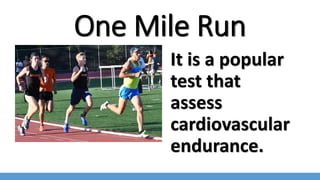
One Mile Run
It is a popular
test that
assess
cardiovascular
endurance.
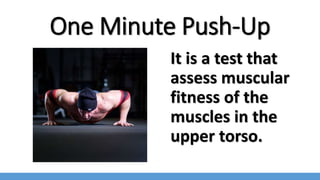
One Minute Push-Up
It is a test that
assess muscular
fitness of the
muscles in the
upper torso.
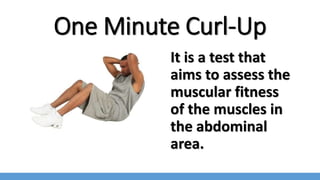
One Minute Curl-Up
It is a test that
aims to assess the
muscular fitness
of the muscles in
the abdominal
area.
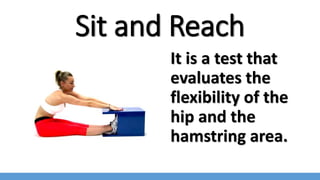
Sit and Reach
It is a test that
evaluates the
flexibility of the
hip and the
hamstring area.
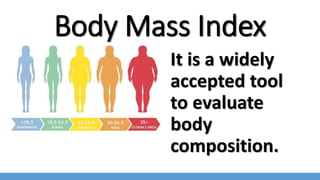
Body Mass Index
It is a widely
accepted tool
to evaluate
body
composition.
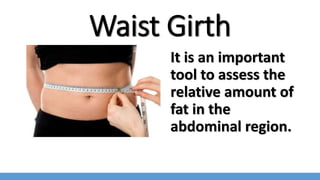
Waist Girth
It is an important
tool to assess the
relative amount of
fat in the
abdominal region.
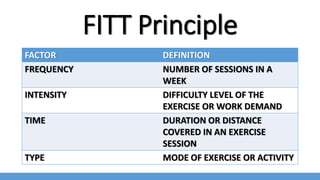
FITT Principle
FACTOR DEFINITION
FREQUENCY NUMBER OF SESSIONS IN A
WEEK
INTENSITY DIFFICULTY LEVEL OF THE
EXERCISE OR WORK DEMAND
TIME DURATION OR DISTANCE
COVERED IN AN EXERCISE
SESSION
TYPE MODE OF EXERCISE OR ACTIVITY
How can I evaluate muscle
weakness and imbalance?
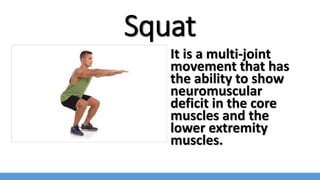
Squat
It is a multi-joint
movement that has
the ability to show
neuromuscular
deficit in the core
muscles and the
lower extremity
muscles.
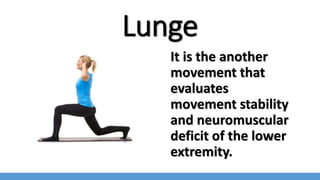
Lunge
It is the another
movement that
evaluates
movement stability
and neuromuscular
deficit of the lower
extremity.
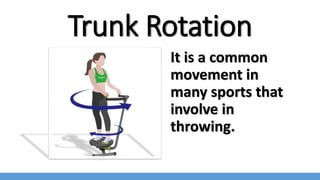
Trunk Rotation
It is a common
movement in
many sports that
involve in
throwing.
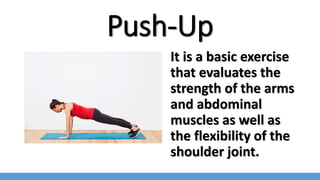
Push-Up
It is a basic exercise
that evaluates the
strength of the arms
and abdominal
muscles as well as
the flexibility of the
shoulder joint.
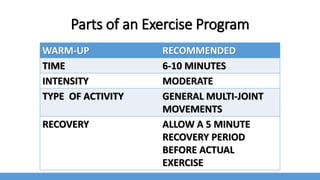
Parts of an Exercise Program
WARM-UP RECOMMENDED
TIME 6-10 MINUTES
INTENSITY MODERATE
TYPE OF ACTIVITY GENERAL MULTI-JOINT
MOVEMENTS
RECOVERY ALLOW A 5 MINUTE
RECOVERY PERIOD
BEFORE ACTUAL
EXERCISE

PHYSICAL EDUCATION (Exercise Program Design)

  • 1.
    Exercise Program Design >Principles of Exercises Training > FITT Principle > Parts of an Exercise Program
  • 2.
    Are there Guidelinesto help me improve my fitness level safely and effectively?
  • 3.
    Principles of ExercisesTraining •Principle of Overload •Principle of Progression •Principle of Specificity •Principle of Individuality •Principle of Reversibility
  • 4.
    Overload States that thebody must work harder than what it is used to in order for it to adapt.
  • 5.
    Progression States that thebody should experience a gradual increase in work load.
  • 6.
    Specificity States that thebody will adapt specifically to the workload.
  • 7.
    Individuality States that notwo persons are the same and their rate of adaptation to the same workload differs.
  • 8.
    Reversibility It is anotherway of stating the principle of disuse.
  • 9.
    What is thefirst step in designing an effective exercise program?
  • 10.
    Guidelines that canhelp in determining fitness goals: •Write short-term and long- term performance goals •Set realistic goals •Write specific goals
  • 11.
    How do Ievaluate my fitness level?
  • 12.
    One Mile Run Itis a popular test that assess cardiovascular endurance.
  • 13.
    One Minute Push-Up Itis a test that assess muscular fitness of the muscles in the upper torso.
  • 14.
    One Minute Curl-Up Itis a test that aims to assess the muscular fitness of the muscles in the abdominal area.
  • 15.
    Sit and Reach Itis a test that evaluates the flexibility of the hip and the hamstring area.
  • 16.
    Body Mass Index Itis a widely accepted tool to evaluate body composition.
  • 17.
    Waist Girth It isan important tool to assess the relative amount of fat in the abdominal region.
  • 18.
    FITT Principle FACTOR DEFINITION FREQUENCYNUMBER OF SESSIONS IN A WEEK INTENSITY DIFFICULTY LEVEL OF THE EXERCISE OR WORK DEMAND TIME DURATION OR DISTANCE COVERED IN AN EXERCISE SESSION TYPE MODE OF EXERCISE OR ACTIVITY
  • 19.
    How can Ievaluate muscle weakness and imbalance?
  • 20.
    Squat It is amulti-joint movement that has the ability to show neuromuscular deficit in the core muscles and the lower extremity muscles.
  • 21.
    Lunge It is theanother movement that evaluates movement stability and neuromuscular deficit of the lower extremity.
  • 22.
    Trunk Rotation It isa common movement in many sports that involve in throwing.
  • 23.
    Push-Up It is abasic exercise that evaluates the strength of the arms and abdominal muscles as well as the flexibility of the shoulder joint.
  • 24.
    Parts of anExercise Program WARM-UP RECOMMENDED TIME 6-10 MINUTES INTENSITY MODERATE TYPE OF ACTIVITY GENERAL MULTI-JOINT MOVEMENTS RECOVERY ALLOW A 5 MINUTE RECOVERY PERIOD BEFORE ACTUAL EXERCISE