Shusank Parihar
15020441253
D-53
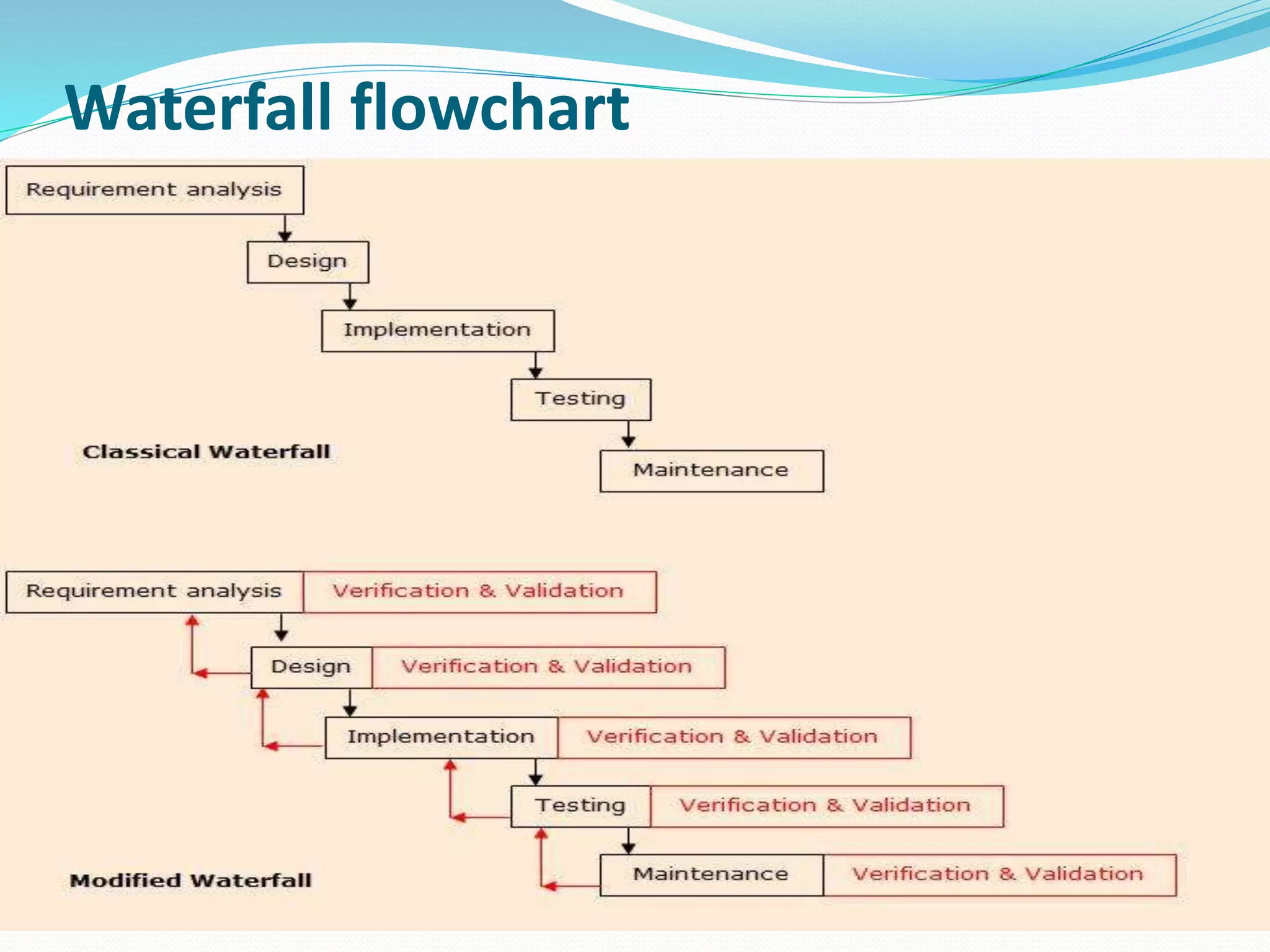
 Waterfall method is also known as Linear sequential
life cycle model.
 In this method, each phase need to be completed
before it proceeds to next phase.
 At the end of each phase, a review takes place to
determine if the project is on the right path and
whether to continue or discard the project.
 In this model the testing starts only after the
development is complete.
 In waterfall model phases do not overlap.
Waterfall flowchart
Advantages
 This model is simple and easy to understand and use.
 It is easy to manage due to the rigidity of the model –
each phase has specific deliverables and a review
process.
 In this model phases are processed and completed one
at a time. Phases do not overlap.
 Waterfall model works well for smaller projects where
requirements are very well understood.
Disadvantages
 Once an application is in the testing stage, it is very
difficult to go back and change something that was not
well-thought out in the concept stage.
 No working software is produced until late during the
life cycle.
 High amounts of risk and uncertainty.
 Not a good model for complex and object-oriented
projects.
 Poor model for long and ongoing projects.
 Not suitable for the projects where requirements are at
a moderate to high risk of changing.
When to use the waterfall model:
 This model is used only when the requirements are
very well known, clear and fixed.
 Product definition is stable.
 Technology is understood.
 There are no ambiguous requirements
 Ample resources with required expertise are available
freely
 The project is short.

Shushank

  • 1.
  • 2.
     Waterfall methodis also known as Linear sequential life cycle model.  In this method, each phase need to be completed before it proceeds to next phase.  At the end of each phase, a review takes place to determine if the project is on the right path and whether to continue or discard the project.  In this model the testing starts only after the development is complete.  In waterfall model phases do not overlap.
  • 3.
  • 4.
    Advantages  This modelis simple and easy to understand and use.  It is easy to manage due to the rigidity of the model – each phase has specific deliverables and a review process.  In this model phases are processed and completed one at a time. Phases do not overlap.  Waterfall model works well for smaller projects where requirements are very well understood.
  • 5.
    Disadvantages  Once anapplication is in the testing stage, it is very difficult to go back and change something that was not well-thought out in the concept stage.  No working software is produced until late during the life cycle.  High amounts of risk and uncertainty.  Not a good model for complex and object-oriented projects.  Poor model for long and ongoing projects.  Not suitable for the projects where requirements are at a moderate to high risk of changing.
  • 6.
    When to usethe waterfall model:  This model is used only when the requirements are very well known, clear and fixed.  Product definition is stable.  Technology is understood.  There are no ambiguous requirements  Ample resources with required expertise are available freely  The project is short.