Introduction to the
Waterfall Model
The Waterfall Model is a linear project management approach that
emphasizes a well-structured sequential approach to software development.
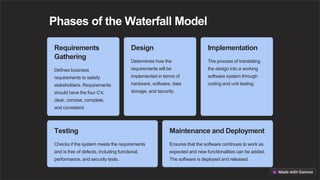
Phases of the Waterfall Model
Requirements
Gathering
Defines business
requirements to satisfy
stakeholders. Requirements
should have the four C's:
clear, concise, complete,
and consistent.
Design
Determines how the
requirements will be
implemented in terms of
hardware, software, data
storage, and security.
Implementation
The process of translating
the design into a working
software system through
coding and unit testing.
Testing
Checks if the system meets the requirements
and is free of defects, including functional,
performance, and security tests.
Maintenance and Deployment
Ensures that the software continues to work as
expected and new functionalities can be added.
The software is deployed and released.
Design Phase
Software Architecture
Defines the components, subsystems, and
interrelationships of a software system to ensure
compatibility with other systems, scalability, and
maintainability.
User Interface Design
Designs the visual and interactive aspects of the
system to ensure ease of use, intuitive navigation,
and accessibility.
Data Flow Diagram Network Design
Testing Phase
1
Unit Testing
Checks individual software components to
ensure that they work as expected, without
dependence on other components.
2
Integration Testing
Checks that integrated software modules
cooperate as expected, meeting assumptions
and constraints, without errors or conflicts.
3
Functional Testing
Validates that the software meets business
requirements and that users can perform tasks
correctly and efficiently.
Implementation Phase
Languages and
Frameworks
• Java
• C#
• Python
• PHP
IDEs and Tools
• Eclipse
• Visual Studio
• PyCharm
• NetBeans
Version Control
• GitLab
• GitHub
• Bitbucket
• SVN
Maintenance Phase
1 Bug Fixes
Identify and fix errors and
malfunctions discovered
during the testing and
operation of the software.
2 Updates and
Upgrades
Add new features or
functionalities to a software
system, enhance
performance or scalability,
or improve compatibility with
other systems.
3 User Support
Provide technical assistance, troubleshooting, and customer service
to users of the software system.
Requirements Gathering
Stakeholders
Identify and prioritize the needs of internal and
external stakeholders, such as customers,
managers, developers, and regulators.
Brainstorming
Generate ideas, proposals, and solutions to meet
the requirements of the stakeholders, using
techniques such as mind mapping, SWOT
analysis, and brainstorming.
Use Cases Prototyping
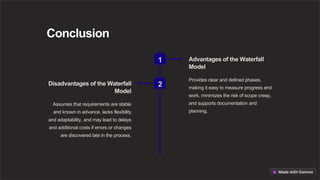
Conclusion
1 Advantages of the Waterfall
Model
Provides clear and defined phases,
making it easy to measure progress and
work, minimizes the risk of scope creep,
and supports documentation and
planning.
2
Disadvantages of the Waterfall
Model
Assumes that requirements are stable
and known in advance, lacks flexibility
and adaptability, and may lead to delays
and additional costs if errors or changes
are discovered late in the process.

Introduction-to-the-Waterfall-Model.pptx

  • 1.
    Introduction to the WaterfallModel The Waterfall Model is a linear project management approach that emphasizes a well-structured sequential approach to software development.
  • 2.
    Phases of theWaterfall Model Requirements Gathering Defines business requirements to satisfy stakeholders. Requirements should have the four C's: clear, concise, complete, and consistent. Design Determines how the requirements will be implemented in terms of hardware, software, data storage, and security. Implementation The process of translating the design into a working software system through coding and unit testing. Testing Checks if the system meets the requirements and is free of defects, including functional, performance, and security tests. Maintenance and Deployment Ensures that the software continues to work as expected and new functionalities can be added. The software is deployed and released.
  • 3.
    Design Phase Software Architecture Definesthe components, subsystems, and interrelationships of a software system to ensure compatibility with other systems, scalability, and maintainability. User Interface Design Designs the visual and interactive aspects of the system to ensure ease of use, intuitive navigation, and accessibility. Data Flow Diagram Network Design
  • 4.
    Testing Phase 1 Unit Testing Checksindividual software components to ensure that they work as expected, without dependence on other components. 2 Integration Testing Checks that integrated software modules cooperate as expected, meeting assumptions and constraints, without errors or conflicts. 3 Functional Testing Validates that the software meets business requirements and that users can perform tasks correctly and efficiently.
  • 5.
    Implementation Phase Languages and Frameworks •Java • C# • Python • PHP IDEs and Tools • Eclipse • Visual Studio • PyCharm • NetBeans Version Control • GitLab • GitHub • Bitbucket • SVN
  • 6.
    Maintenance Phase 1 BugFixes Identify and fix errors and malfunctions discovered during the testing and operation of the software. 2 Updates and Upgrades Add new features or functionalities to a software system, enhance performance or scalability, or improve compatibility with other systems. 3 User Support Provide technical assistance, troubleshooting, and customer service to users of the software system.
  • 7.
    Requirements Gathering Stakeholders Identify andprioritize the needs of internal and external stakeholders, such as customers, managers, developers, and regulators. Brainstorming Generate ideas, proposals, and solutions to meet the requirements of the stakeholders, using techniques such as mind mapping, SWOT analysis, and brainstorming. Use Cases Prototyping
  • 8.
    Conclusion 1 Advantages ofthe Waterfall Model Provides clear and defined phases, making it easy to measure progress and work, minimizes the risk of scope creep, and supports documentation and planning. 2 Disadvantages of the Waterfall Model Assumes that requirements are stable and known in advance, lacks flexibility and adaptability, and may lead to delays and additional costs if errors or changes are discovered late in the process.